
Missed medications are dangerous — and more common than you think. Here’s why the Windtrace 28-day smart pill dispenser is the medication management solution seniors actually use.
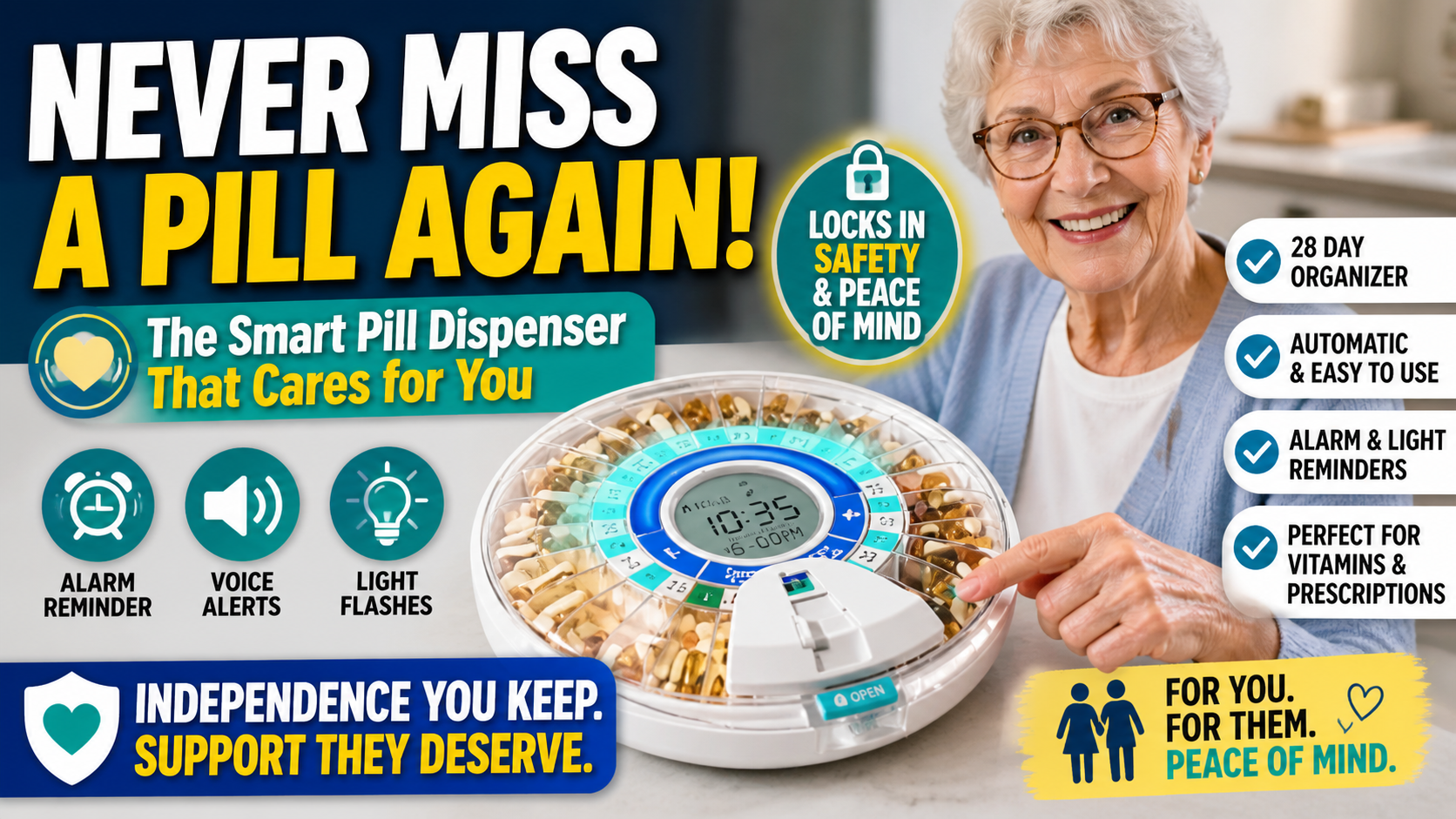
Medication errors in older adults aren’t usually dramatic events. They’re quiet ones — a dose missed because the day got busy, a double dose taken because the first one wasn’t remembered, the wrong day’s pills taken because the organizer is confusing to navigate. These small errors accumulate into real health consequences — hospitalizations, falls from blood pressure fluctuations, conditions that worsen because treatment was inconsistent. When these mistakes become recurring rather than occasional, warning signs of medication mistakes can help families decide when to take a closer look.
An automatic pill dispenser removes human memory from the medication equation. The right pills, at the right time, dispensed automatically with an alarm — no more wondering whether a dose was taken, no more missed medications because of a disrupted routine, no more caregiver worry about medication compliance from a distance.
This review covers the Windtrace Automatic Pill Dispenser — a 28-day smart lock medication dispenser with alarm and light alerts — and everything you need to know before buying one for yourself or a family member.
→ See the Windtrace Automatic Pill Dispenser on Amazon
Why Medication Management Matters More Than Most People Realize
Medication non-adherence — missing doses, taking wrong doses, taking medications at wrong times — is one of the most significant and least discussed health risks for older adults living independently. Studies estimate that medication errors contribute to approximately 125,000 deaths annually in the United States and are responsible for a significant proportion of hospitalizations in the elderly population.
The causes aren’t carelessness. They’re the entirely predictable results of managing multiple medications with different schedules, different instructions, and no built-in reminder system beyond a person’s own memory — which becomes less reliable with age and is additionally affected by many of the medications being managed.
The Specific Risks of Medication Errors in Seniors

Missed blood pressure medications cause blood pressure spikes that increase stroke and cardiac event risk. Missed blood thinners increase clotting risk. Double doses of sleep medications or sedatives cause over-sedation that significantly increases fall risk. Inconsistent diabetes medications cause blood sugar fluctuations that affect cognition and energy in ways that compound other safety risks. The connection between medication side effects and falls is explored in The #1 Reason Seniors Fall at Home — And It’s Not What You Think.
These aren’t edge cases — they’re the direct, predictable consequences of medication errors that happen in households managing multiple prescriptions without a systematic approach.
What to Look for in an Automatic Pill Dispenser
The automatic pill dispenser market ranges from simple timed boxes to sophisticated dispensing machines. Here’s what matters for genuine medication management effectiveness.
Capacity — Enough for Real Medication Schedules
Many older adults take medications multiple times per day across multiple medications. A dispenser needs enough compartments to handle the actual complexity of the schedule — not just one or two medications taken once daily. A 28-day capacity with multiple daily dosing slots is the meaningful standard for most real medication schedules.
Lock Mechanism
A dispenser without a lock provides no protection against taking the wrong dose or accessing other compartments accidentally. A smart lock that only opens the current dose compartment prevents double-dosing and accidental access to future doses — critical for anyone whose memory or cognition makes medication self-management unreliable.
Alarm and Alert System
The alarm needs to be loud enough to hear from the rooms where the person spends most of their time — not just audible if they’re standing next to the dispenser. Visual alerts — a flashing light — provide an additional signal for those with hearing reduction. Customizable alarm schedules accommodate medications taken at specific times including overnight doses.
Caregiver Notification
For families managing medication compliance remotely, a dispenser that notifies caregivers when a dose is missed provides meaningful oversight without requiring constant check-in calls. This feature transforms the dispenser from a reminder tool for the person taking medications into a compliance monitoring tool for the entire care team.
The Windtrace Automatic Pill Dispenser — Full Review
Windtrace Automatic Pill Dispenser — 28-Day Electronic Monthly Organizer With Alarm, Light Alert, and Smart Lock
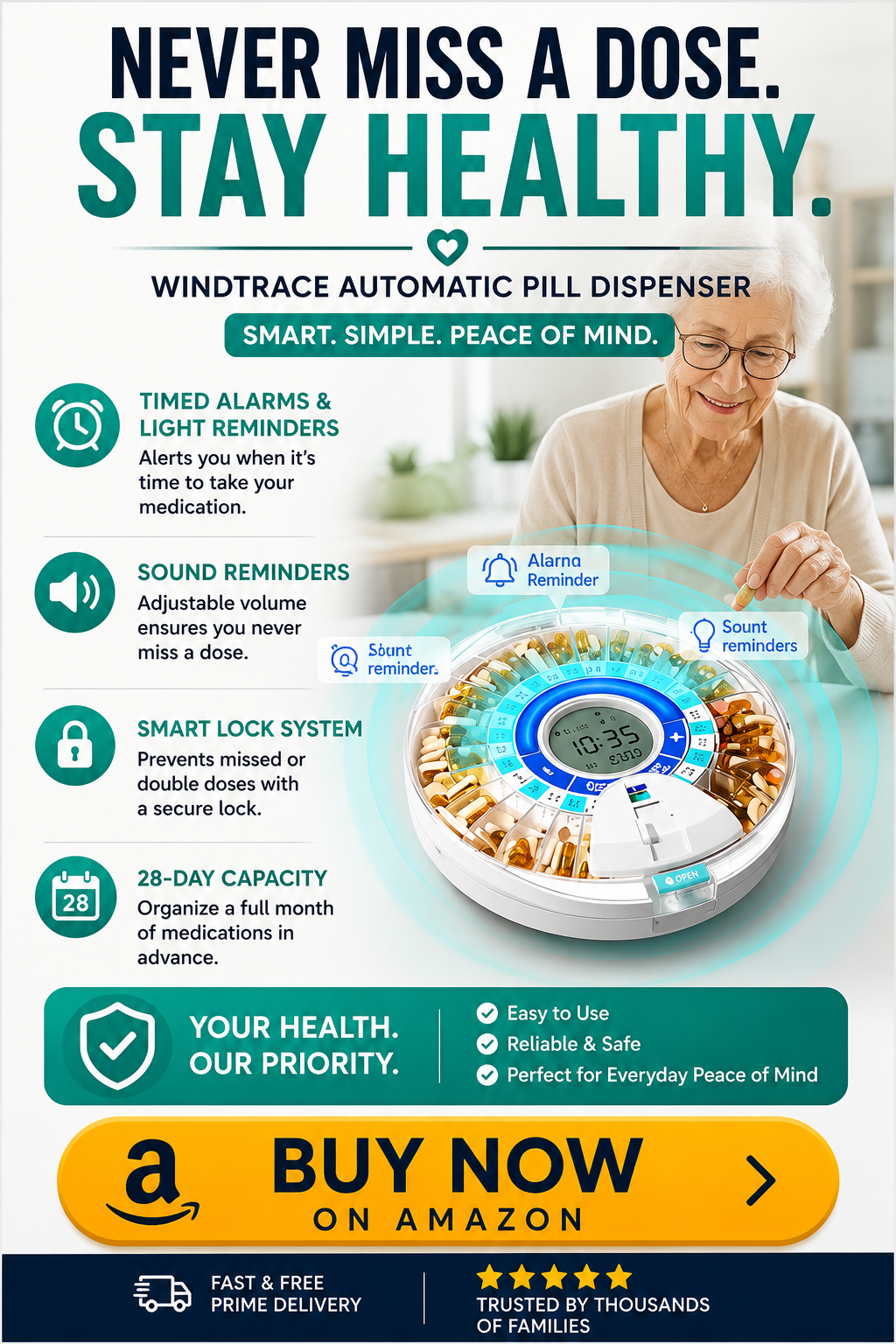
The Windtrace addresses every core specification for effective medication management — 28-day capacity, smart lock dispensing, alarm and light alerts, and a design that’s genuinely manageable for older adults without requiring technical sophistication to operate day to day.
→ Check current price and availability on Amazon
The 28-day capacity is the foundational feature. Most medication schedules run on monthly refill cycles — a dispenser that holds a full month of medications aligns with that cycle, allowing one loading session per month rather than weekly reloading that becomes its own management burden. For caregivers loading a parent’s dispenser during monthly visits, a 28-day capacity means one visit per cycle handles the medication loading entirely.
The smart lock mechanism is what separates this from a standard pill organizer. Only the current dose compartment opens when the alarm triggers — other compartments remain locked. This prevents double-dosing from forgetting a dose was already taken, prevents accessing tomorrow’s medications today, and prevents the confusion that comes from an unlocked organizer where any compartment can be opened at any time.
The alarm and light alert system works together to ensure the medication reminder is noticed. The audible alarm is loud enough to be heard from adjacent rooms. The flashing light provides a visual signal for those with hearing reduction or for situations where the alarm might be missed. The combination of audio and visual alert significantly improves the rate of on-time medication taking compared to either signal alone.
The alarm schedule is fully customizable to match the actual medication schedule — morning doses, noon doses, evening doses, and overnight doses can all be programmed independently. This flexibility accommodates the real complexity of most older adult medication schedules rather than forcing a simplified schedule that doesn’t match what the doctor actually prescribed.
The design is appropriate for independent use by older adults. The interface is straightforward — program it once and it runs automatically. The person using it doesn’t need to navigate settings or interact with technology beyond opening the compartment when the alarm sounds. That simplicity is exactly right for the intended use case.
→ Get the Windtrace Pill Dispenser on Amazon
Who Benefits Most From an Automatic Pill Dispenser
Anyone Managing Multiple Medications
The more medications in a daily schedule, the more valuable an automatic dispenser becomes. Managing two medications once daily is manageable with a standard weekly organizer. Managing five medications across three daily dosing times — which is not unusual for older adults with multiple chronic conditions — is where memory-dependent systems start breaking down and automatic dispensing provides real protection.
Seniors With Early Memory Changes

Early-stage cognitive changes affect medication management before they affect most other daily activities — because medication schedules are abstract and complex rather than routine and habitual. An automatic dispenser with a lock addresses medication compliance before memory issues have progressed to the point of requiring more significant support. Changes in another familiar routine, such as unopened mail in older adults, can also signal that daily life is becoming harder to manage.
Seniors Living Alone
When no one is present to notice a missed dose or to prompt medication taking, the automatic dispenser fills that role. The alarm functions as a built-in caregiver for the specific task of medication reminders — independent of whether anyone else is home.
Families Managing Medication Compliance Remotely
The missed dose notification feature — where the dispenser alerts a caregiver phone when a scheduled dose hasn’t been taken — provides real-time compliance monitoring without requiring daily check-in calls about medications. For adult children managing a parent’s medication schedule from a distance, this is one of the most valuable features available in this product category.


Setting Up the Windtrace Dispenser
Setup involves two phases: programming the alarm schedule and loading the medications. Both are worth doing carefully the first time — a correctly set up dispenser runs automatically from there with only monthly medication reloading required.
Programming the alarm schedule: Set the times for each daily dose based on the actual medication schedule. Be precise — medications prescribed for specific times have clinical reasons for those times. If you’re setting this up for a family member, do the programming yourself based on their current medication schedule and confirm with their pharmacist if there’s any uncertainty about timing.
Loading medications: Fill each day’s compartments in order according to the medication schedule. Many families do this monthly when prescriptions are refilled, using a quiet time to fill 28 days of compartments accurately. If medications change — a new prescription, a dose adjustment — the relevant compartments need to be updated at that point.
Test the system before relying on it independently. Run through a full day’s alarm cycle, confirm each alarm triggers correctly, confirm the right compartments open, and verify that the lock prevents access to other compartments. A system that’s been tested and confirmed working provides reliable protection. One that was assumed to be set up correctly may have programming errors that only become apparent after a missed or double dose.
Automatic Pill Dispenser and the Complete Senior Safety Picture

Medication management is one component of safe independent living — an important one that directly affects fall risk, health stability, and cognitive function. It sits alongside home safety modifications, mobility aids, and monitoring technology in the complete picture of what makes aging in place sustainable. Medication difficulties are one part of the wider assessment covered in warning signs affecting safe independent living, alongside physical, cognitive, and practical changes that can affect life at home.

Fall risk specifically is directly affected by medication management. Blood pressure medications taken inconsistently cause more variable blood pressure — increasing orthostatic hypotension risk. Sleep medications double-dosed cause over-sedation that increases nighttime fall risk dramatically. Getting medication management right reduces these downstream safety risks directly. When medication changes or dosing errors may be contributing to unusual drowsiness, medication-related excessive sleepiness explains why families should pay attention to the change.

For the complete home safety picture our guide on how to make your home safer as you age covers every modification worth making. Our aging in place checklist covers medication management alongside every other planning category.
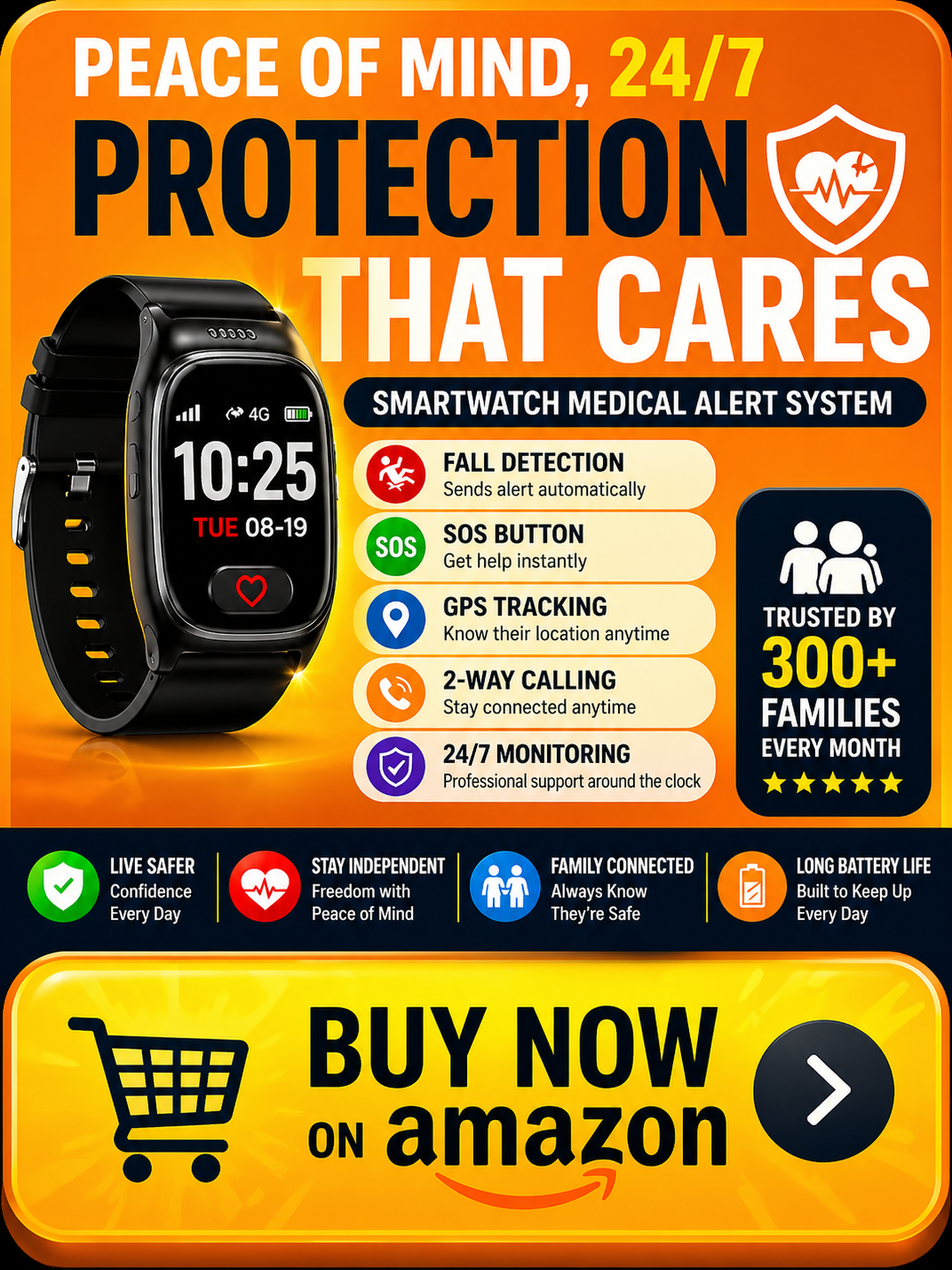
And for the safety net that covers what happens if a fall does occur — regardless of cause — the SecuLife Smartwatch provides automatic fall detection and GPS tracking from the wrist. Our full SecuLife review covers everything you need to know.
→ Get the Windtrace Automatic Pill Dispenser on Amazon
Frequently Asked Questions
How many medications can the Windtrace hold per dose?
Each compartment holds multiple pills — the specific capacity depends on pill size. Standard-sized tablets and capsules fit several per compartment. For medications with large pill sizes check the compartment dimensions against your specific medications before purchasing. Most common prescriptions fit without issue.
What happens if a dose alarm is missed?
The alarm continues at intervals until the compartment is opened or a set period has passed. If the dose remains untaken, the dispenser records the missed dose. Depending on notification settings, a caregiver alert may be triggered for missed doses — one of the most valuable features for remote family oversight of medication compliance.
Can the dispenser be used for vitamins and supplements as well as prescriptions?
Yes — the dispenser manages any pill or capsule regardless of whether it’s a prescription medication or a supplement. Loading vitamins and supplements alongside prescriptions in the appropriate daily compartments integrates the complete daily pill schedule into one automated system.
How is the dispenser powered?
Check the current product listing for specific power requirements — most dispensers in this category use standard batteries or an AC adapter. Battery operation provides reliability during power outages. If AC power is used, a battery backup for power outage continuity is worth considering.
Is the Windtrace appropriate for someone with dementia?
For early-stage dementia where some independence in medication taking is still appropriate, an automatic dispenser with a smart lock provides meaningful protection against double-dosing and provides a reliable reminder. For moderate to advanced dementia where medication administration requires direct caregiver involvement, a dispenser supports the caregiver’s workflow rather than enabling independent medication taking. Discuss the appropriate level of medication management assistance with the physician managing dementia care.
The Right Tool for a High-Stakes Daily Task
Medication management is one of the highest-stakes daily tasks in independent living — with consequences for missed or incorrect doses that are immediate and potentially serious. An automatic dispenser with a smart lock, reliable alarm, and caregiver notification is the right tool for that task.
The Windtrace delivers all of it in a 28-day format that aligns with real medication schedules, a lock that prevents the most common medication errors, and an alert system that ensures doses are noticed and taken on time.


About the Author
Margaret Holloway, RN spent 22 years in geriatric nursing, where medication management errors were among the most common preventable contributors to hospitalizations she witnessed. She writes for Elder Safety Guide to help families address the practical safety issues that most directly affect health outcomes and independent living sustainability.