Stair lift costs vary wildly and most companies won’t tell you upfront. Here’s the honest complete price breakdown — what affects cost, what to avoid, and how to save money.
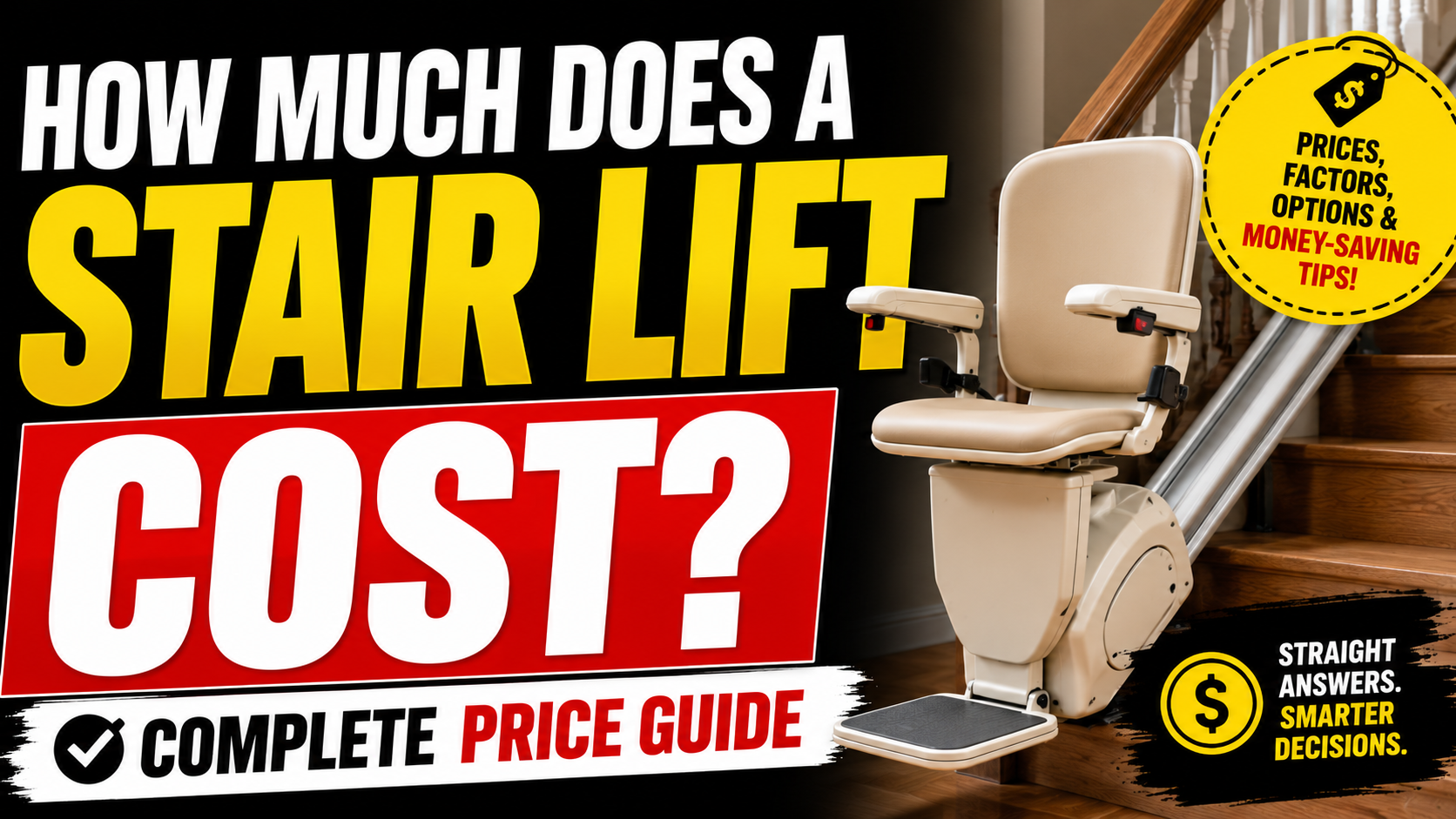
Stair lift pricing is one of the most opaque purchasing experiences in home mobility — companies routinely refuse to give quotes without an in-home consultation, prices vary by thousands of dollars for seemingly similar products, and the add-ons and installation fees that get tacked on can make the final cost significantly higher than any initial figure discussed.
This guide cuts through all of that. Here’s the honest, complete picture of what stair lifts actually cost — straight, curved, new, used — what drives the price differences, what to watch out for, and how to get the best value for what is for most families a significant purchase.
The short answer before the detail: A straight stair lift runs $2,000 to $5,000 installed. A curved stair lift runs $8,000 to $15,000 or more. A self-installable option available on Amazon costs significantly less. Here’s what goes into those numbers.
Why Stair Lift Pricing Is So Confusing
The stair lift industry has historically operated on a high-pressure sales model — in-home consultations designed to close a sale the same day, limited price transparency, and significant variation between what companies charge for essentially equivalent products. Understanding why helps you navigate the purchasing process with appropriate skepticism.
Most stair lift companies don’t publish prices online because their pricing is highly variable — based on staircase configuration, installation complexity, local labor costs, and frankly how much they think the customer will pay. The in-home consultation isn’t primarily about assessing your staircase. It’s a sales opportunity.
Getting multiple quotes — from at least three providers — before committing to any purchase is the single most important advice in this guide. Prices for the same type of stair lift from different companies in the same market can vary by $1,000 to $3,000 or more.
Stair Lift Cost by Type
Straight Stair Lift — $2,000 to $5,000 Installed
A straight stair lift — for a staircase with no curves, turns, or intermediate landings — is the most affordable and most common type. The rail is a standard straight section that’s cut to length for the specific staircase. Installation is relatively straightforward.
The range within straight stair lifts:
- $2,000 to $3,000 — basic models with standard features, self-installation or simple installation
- $3,000 to $4,000 — mid-range models with power swivel seat, power folding rail, remote control, and standard warranty
- $4,000 to $5,000+ — premium models with higher weight capacity, additional comfort features, extended warranty, white-glove installation
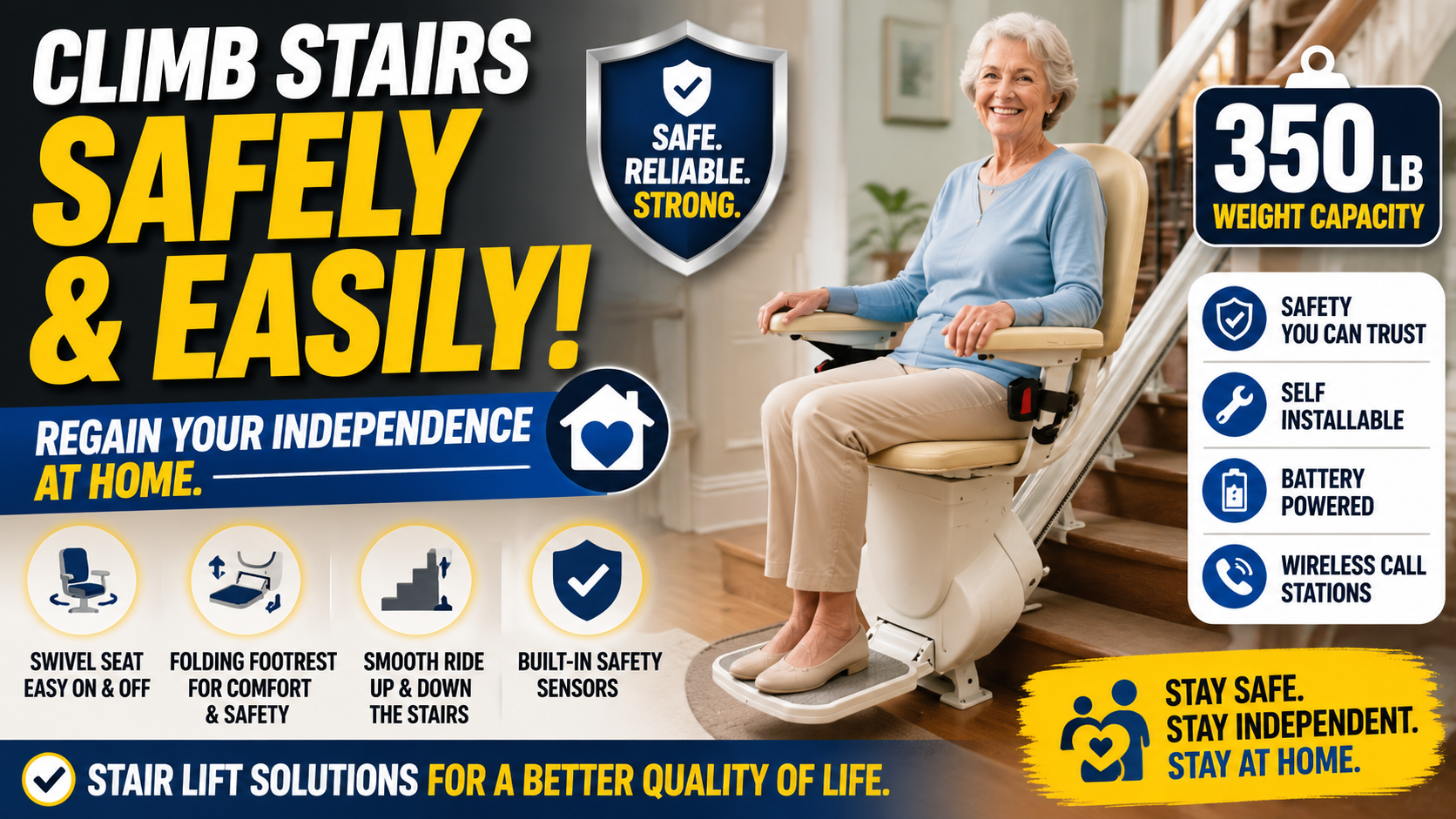
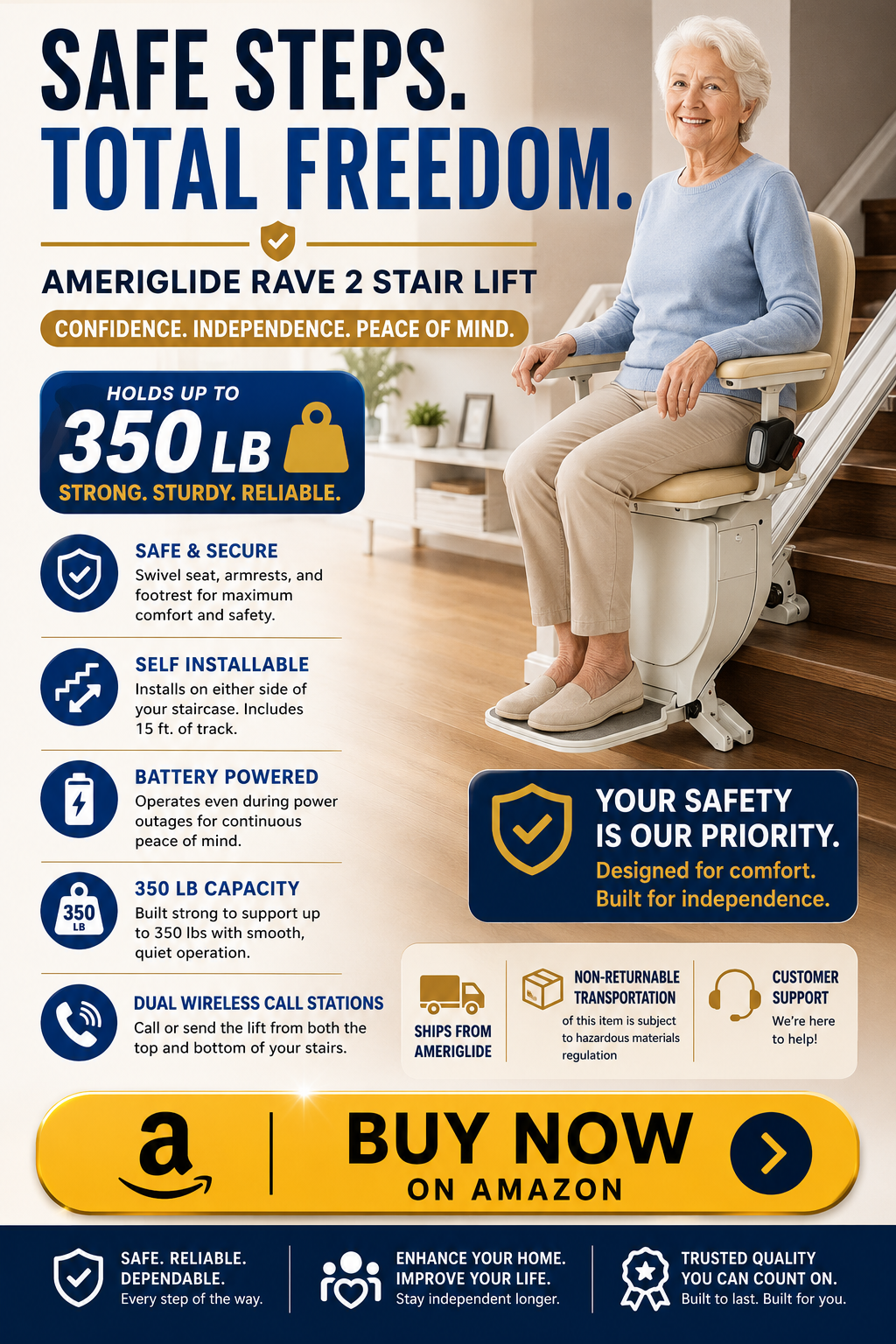
The self-installable option changes this math significantly. The AmeriGlide Rave 2 Stair Lift is designed for homeowner installation on straight staircases — bringing the total cost substantially below the installed price of traditional stair lift companies. Our complete review at AmeriGlide Rave 2 Stair Lift Review covers everything worth knowing before buying.
→ See the AmeriGlide Rave 2 on Amazon — self-installable straight stair lift
Curved Stair Lift — $8,000 to $15,000+ Installed
A curved stair lift — for staircases with any bend, turn, intermediate landing, or curved section — requires a custom-manufactured rail built specifically for the exact geometry of the staircase. This custom manufacturing is what drives the dramatically higher cost.
Curved stair lifts cannot be ordered off-the-shelf. Every curved installation requires a site survey, custom rail design, custom manufacturing, and professional installation. The minimum cost for a curved stair lift from reputable companies is typically $8,000 to $10,000 and can reach $15,000 to $20,000 for complex configurations.
If your staircase curves there is no meaningful budget alternative — this is the price of the solution. Getting multiple quotes is even more important for curved staircases because price variation between companies is substantial.
Split-Level or L-Shaped Stair Lift — $4,000 to $8,000
Staircases with a landing between two straight sections — an L-shape or U-shape — can sometimes be served by two straight rail sections rather than a single curved rail. This approach requires the person to transfer between two lifts at the landing but costs significantly less than a true curved rail. Not all configurations allow this approach — a stair lift company can advise whether your specific layout is suitable.
Outdoor Stair Lift — $3,000 to $6,000
Outdoor stair lifts are weatherproofed versions of straight lifts designed for exterior steps — front porch steps, deck access, basement exterior steps. The weatherproofing adds cost above indoor equivalents. Installation requirements and weather exposure considerations make professional installation more important for outdoor units.

What’s Included in the Price — and What Isn’t
Understanding what a quoted price includes prevents the sticker shock of add-ons that make the final cost significantly higher than the initial figure.
Typically Included
- The stair lift unit and rail
- Basic installation labor
- Standard remote controls
- Standard warranty — typically one to two years
- Basic training on use
Often Added Separately
- Extended warranty — additional years of coverage beyond the standard period. Worth evaluating based on the manufacturer’s reliability reputation.
- Power swivel seat — motorized seat that rotates at the top of the staircase for easier transfer. Adds $200 to $500. Highly recommended for anyone with limited mobility.
- Power folding rail — allows the bottom of the rail to fold automatically rather than manually, keeping the bottom step clear. Adds $200 to $400. Important if others need to use the bottom step regularly.
- Additional remote controls — extra remotes for family members or caregivers.
- Service agreement — annual maintenance and priority service. $200 to $500 per year.
- Removal of existing rail or equipment — if replacing an existing stair lift.
Ask About Before Signing Anything
Get the total installed cost in writing — including all features, installation labor, and any other charges — before agreeing to anything. The practice of quoting the unit cost and adding installation and features separately is common in the industry and leads to final costs significantly above initial figures discussed.
New vs Reconditioned vs Rental
New Stair Lift
A new stair lift comes with a full manufacturer warranty, current safety certifications, and no unknown use history. For a device that will be relied on for daily use it’s the most reliable option. Most families buying a stair lift for a parent or spouse choose new.
Reconditioned Stair Lift
Reconditioned stair lifts — factory-refurbished units sold at reduced cost — can offer savings of 20 to 40 percent below new prices. Quality varies significantly by provider. Look for reconditioned units with a minimum six-month warranty, detailed information about what was replaced or serviced, and a clear return policy. Buying reconditioned from a reputable dealer with local service capability is meaningfully lower risk than buying from a private seller.
Stair Lift Rental
Rental stair lifts are available from some dealers — typically $150 to $300 per month — and make sense when the need is temporary. Post-surgical recovery with a defined end date, a visiting family member with temporary mobility limitation, or a transitional period while planning longer-term arrangements are all situations where rental may be more cost-effective than purchase.
For ongoing daily use that’s expected to continue indefinitely, purchase is almost always more cost-effective than rental over periods longer than 12 to 18 months.


What Drives Price Differences Between Companies
For seemingly equivalent stair lifts the price variation between companies can be $1,000 to $3,000. Here’s what actually drives it.
Brand and Manufacturing Quality
Major stair lift brands — Acorn, Bruno, Harmar, Stannah — have established reputations for reliability and parts availability. Lesser-known brands may offer lower prices with less certain long-term support. For a device expected to run daily for years, parts availability and manufacturer support matter.
Dealer Markup
Most stair lifts are sold through dealers rather than directly from manufacturers. Dealer margins vary substantially — some dealers operate on thin margins with high volume, others on high margins with lower volume. The same brand and model can cost very different amounts from different dealers in the same market. Getting multiple quotes tests the market.
Installation Complexity
The physical characteristics of the staircase affect installation labor cost — staircase width, carpet versus bare stairs, the location of walls and banisters, electrical outlet proximity, and any unusual features all affect how long installation takes and therefore how much it costs.
Local Labor Market
Installation labor costs reflect local labor markets — installation in a high cost-of-living urban area costs more than the same installation in a rural market. This is a real cost driver that explains some geographic price variation.
How to Save Money on a Stair Lift
Consider Self-Installation
The most significant cost reduction available for straight stair lifts is self-installation. The AmeriGlide Rave 2 is specifically designed for homeowner installation — the track mounts to the stairs rather than the wall, simplifying the process significantly. A capable DIY installer saves $500 to $1,500 in installation labor. Our review of the AmeriGlide Rave 2 covers the installation process honestly including what it actually requires.
→ See the AmeriGlide Rave 2 on Amazon
Get Three Quotes Minimum
This cannot be overstated. Price variation between dealers is substantial and getting multiple quotes is the most reliable way to identify the market rate for your specific staircase configuration. Don’t accept the first quote. Don’t sign anything during an in-home consultation. Take the quote away, get others, and compare.
Ask About Reconditioned Units
Ask every dealer whether reconditioned units are available for your staircase type. Not all dealers offer them but those that do can provide meaningful savings with appropriate warranty coverage.
Check for Assistance Programs
Several assistance programs may offset stair lift costs for eligible individuals. Veterans may access home modification funding through the VA’s Specially Adapted Housing program. Medicaid waiver programs in some states cover home modifications including stair lifts for eligible individuals. Some nonprofit organizations provide stair lift installation assistance for low-income seniors. Local Area Agencies on Aging can identify what’s available in your specific area.
Time Your Purchase
Stair lift companies — particularly dealers — periodically run promotions. End of quarter and end of year are common times for deals as dealers work toward sales targets. Mentioning that you’re comparing multiple quotes and ready to purchase this week often produces better pricing than a buyer who seems undecided.
Does Medicare or Insurance Cover Stair Lifts?
This is one of the most common questions families have and the answer requires clarity.
Original Medicare does not cover stair lifts. Stair lifts are not classified as durable medical equipment under standard Medicare coverage regardless of medical necessity.
Medicare Advantage plans vary. Some Medicare Advantage plans include home modification benefits that may cover or partially offset stair lift costs. Check your specific plan’s home modification coverage — the variation between plans is significant.
Medicaid waiver programs in some states cover home modifications including stair lifts for eligible Medicaid recipients. Eligibility and coverage vary by state — contact your state’s Medicaid office or local Area Agency on Aging for specifics.
Long-term care insurance policies vary in what they cover — some include home modification benefits. Review your specific policy or contact the insurer directly.
HSA and FSA funds may be usable for stair lift purchases with appropriate medical documentation — check with your account administrator.
When a Stair Lift Is the Right Investment
A stair lift is worth the investment when stairs have become a genuine daily safety challenge and when the alternative — moving to a different home, transitioning to a care facility, or managing on one floor only — costs more in money, disruption, or quality of life than the stair lift does.
The comparison that matters isn’t stair lift cost vs zero cost. It’s stair lift cost vs the cost of the alternatives.
One month of assisted living averages $4,500 to $6,000. Moving costs for downsizing to a single-story home average $10,000 to $20,000 plus the transaction costs of selling and buying. Against those alternatives a $3,000 to $5,000 stair lift that extends aging in place viability for years is genuinely cost-effective.
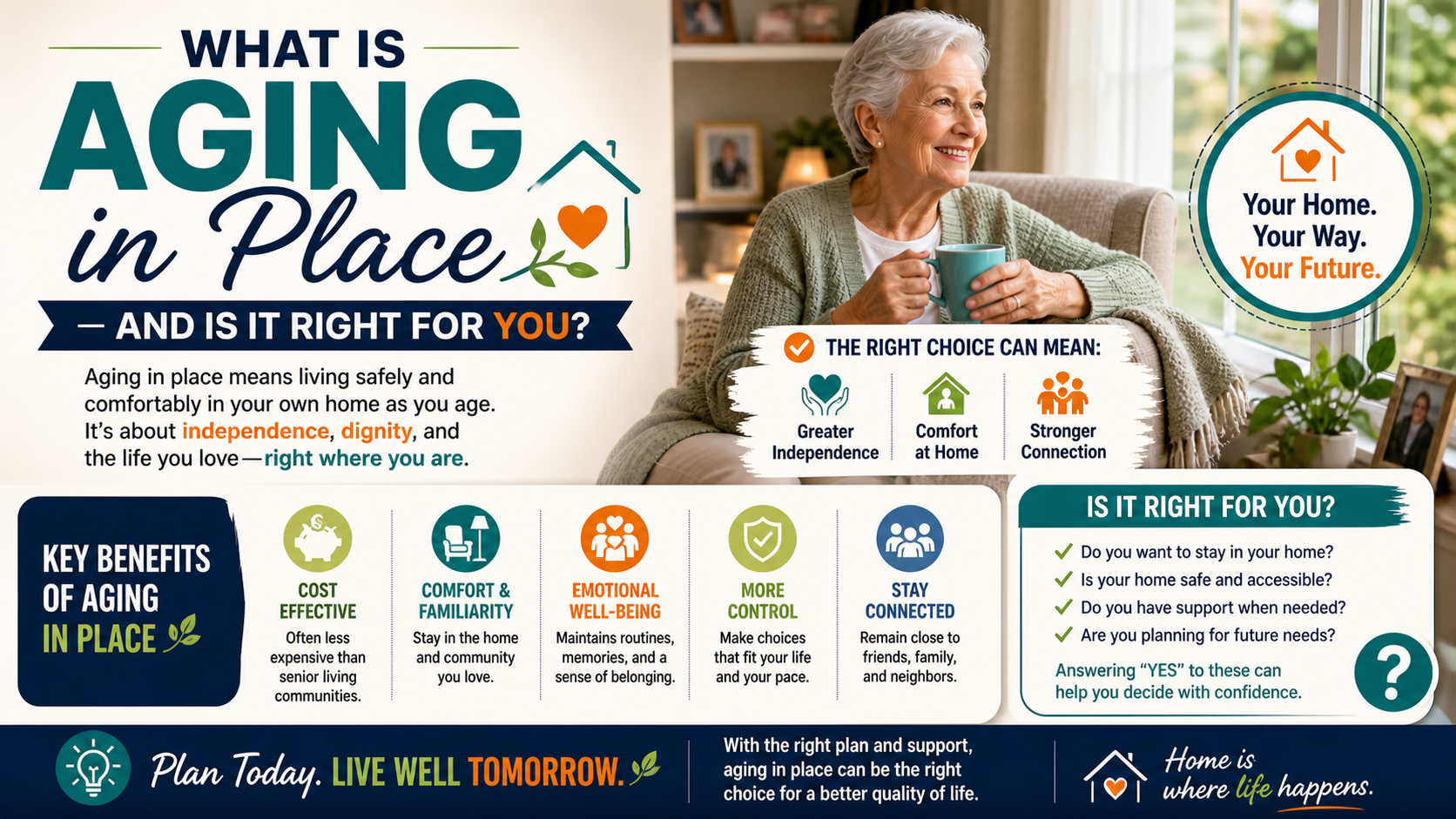
Our guide on what is aging in place covers the full cost comparison of aging in place versus alternatives. Our guide on aging in place checklist for families covers stair lifts as part of comprehensive aging in place planning. Our guide on home modifications ranked by impact puts the stair lift in context alongside every other home modification worth considering.

And alongside the stair lift — for fall detection coverage on the stairs and throughout the home — the SecuLife Smartwatch provides automatic fall detection from the wrist. Our full review: SecuLife Smartwatch Review — Is It Worth It for Seniors?

→ Get the SecuLife Smartwatch on Amazon


Stair Lift Cost Checklist — Before You Buy
- Staircase measured and type confirmed — straight, curved, or split-level
- Minimum three quotes obtained from different dealers
- Total installed cost confirmed in writing — including all features and labor
- Self-installation option evaluated for straight staircases
- Reconditioned options explored with each dealer
- Assistance program eligibility checked — VA, Medicaid, Medicare Advantage, long-term care insurance
- Warranty terms confirmed — length, what’s covered, service response time
- Power swivel seat evaluated — particularly for limited hip or knee mobility
- Power folding rail evaluated — if others need to use the bottom step
- Return policy understood — what happens if installation isn’t possible
Frequently Asked Questions
How long does a stair lift last?
A quality stair lift from a reputable manufacturer typically lasts 10 to 15 years with normal use and regular maintenance. The motor, drive system, and rail are the components most likely to require service over that period. Availability of parts from the manufacturer is a consideration in brand selection — brands that have been in business for decades with established dealer networks are more likely to have parts available throughout the life of the unit.
Can a stair lift be installed on any staircase?
Straight stair lifts can be installed on most straight staircases — minimum width requirements apply, typically 28 to 30 inches of clear staircase width. Curved staircases require custom curved rail systems. Outdoor staircases require weatherproofed units. Some very narrow or unusual staircase configurations may not be compatible with available stair lift systems — a site survey by an experienced installer identifies this before purchase.
How much does stair lift maintenance cost?
Annual professional maintenance — lubrication, safety check, adjustment — typically costs $100 to $200 when done through the dealer or manufacturer. Service agreements that include annual maintenance and priority service response typically run $200 to $500 per year. Many stair lift owners perform basic maintenance — cleaning the rail, checking battery charge indicators — themselves between professional service visits.
What happens to the stair lift when we no longer need it?
Stair lifts can be resold through dealers who sell reconditioned units — some dealers will purchase used units for reconditioning. The resale value depends heavily on brand, age, and condition. Some dealers will remove a stair lift as part of a new installation purchase. Straight stair lift rails can typically be removed without significant damage to the staircase.
Is a $3,000 stair lift as good as a $5,000 one?
Not necessarily — but price doesn’t always correspond to quality in a linear way. The most important factors are the reliability reputation of the manufacturer, the warranty terms, the availability of local service, and whether the specific features you need are included. A $3,500 unit from a manufacturer with a strong reliability record and good local service may be a better value than a $5,000 unit with premium features you don’t need from a brand with less established support. Compare on features, warranty, and manufacturer reputation — not price alone.

The Right Stair Lift at the Right Price
A stair lift is a significant purchase that deserves careful research — multiple quotes, clear understanding of total installed cost, and honest evaluation of whether self-installation is a viable option for your specific situation.
The AmeriGlide Rave 2 on Amazon is the best starting point for families with straight staircases who want to understand what a quality self-installable stair lift costs and what it involves. For complex staircases or families who want professional installation, getting three quotes from established local dealers before committing is the most important thing you can do.
Don’t sign during an in-home consultation. Don’t accept the first price. Get it in writing including everything. The families who do those three things consistently pay less and get better value than those who don’t.
→ See the AmeriGlide Rave 2 Stair Lift on Amazon — self-installable straight stair lift
Read our full review: AmeriGlide Rave 2 Stair Lift Review — Everything Worth Knowing
About the Author
Carol Simmons is a Certified Aging-in-Place Specialist (CAPS) who has guided many families through stair lift evaluation and purchasing decisions — including navigating the pricing opacity that makes this category particularly confusing for first-time buyers. She writes for Elder Safety Guide to give families the honest, complete information they need to make confident purchasing decisions without being taken advantage of by an industry that hasn’t always been transparent about pricing.