Planning for aging in place takes more than good intentions. Use this complete checklist to cover every category — home safety, technology, support, and finances.
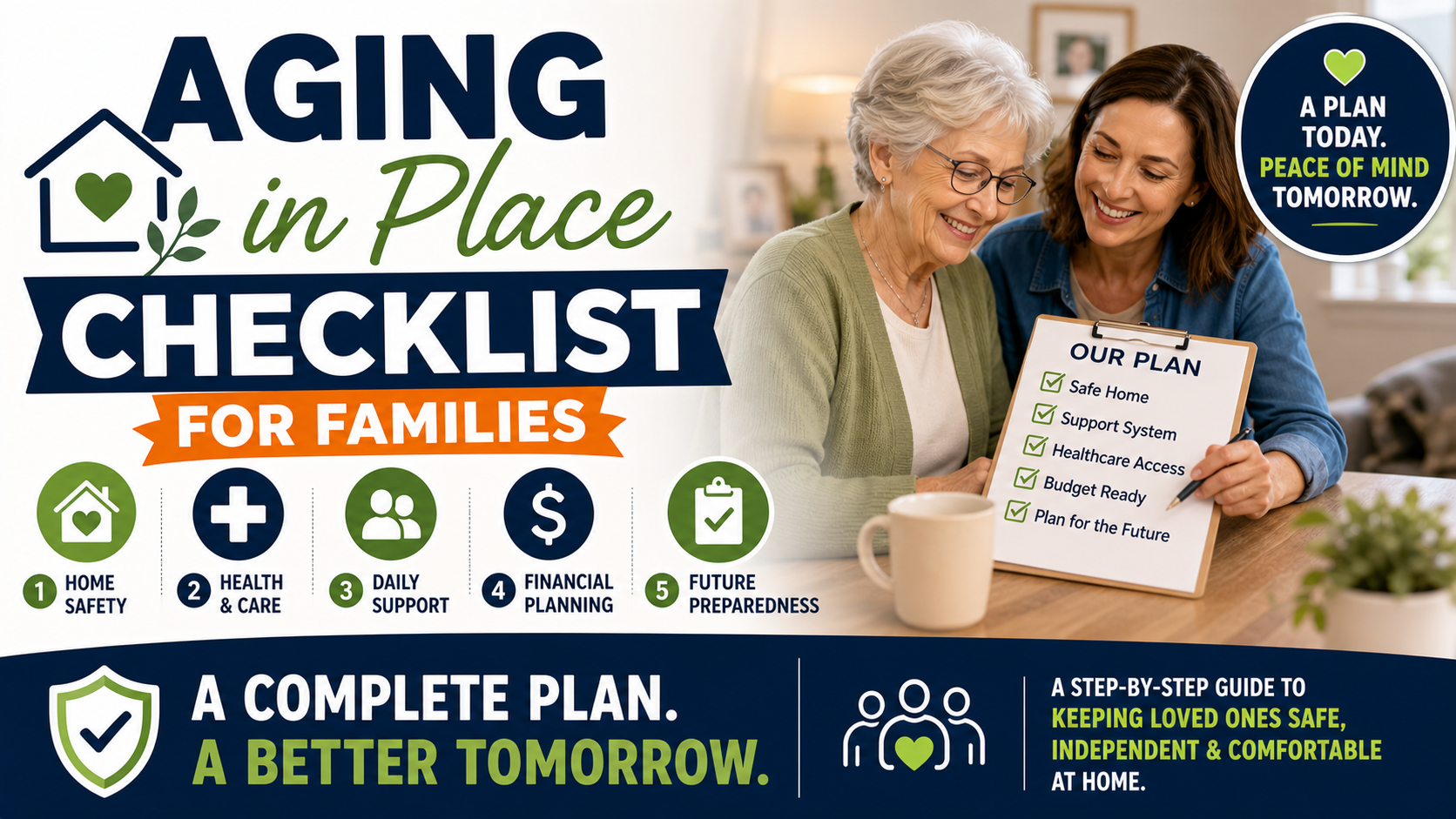
Planning for aging in place is one of the most important things a family can do together — and one of the things most families put off until a crisis makes planning impossible. The families who navigate aging in place successfully almost always did one thing differently: they had the conversations and made the plans before anything went wrong.
This checklist covers every category worth addressing — home safety, technology, health management, legal and financial planning, and support systems. Work through it section by section. Check off what’s already in place. Build an action list from what isn’t.
This is not a one-time exercise. Revisit it every six months and after any significant health change — aging in place needs evolve and a plan that works today may need updating in a year. For a broader review of the safety measures that may need updating over time, use The Complete Senior Safety Guide — Everything You Need to Stay Safe and Independent at Home alongside this recurring checklist.
How to Use This Checklist
Go through each section with the person who will be aging in place — or if you’re a family member doing this for a relative, ideally with them present. Two perspectives catch more than one.
For each item mark one of three things: Done, Needs Attention, or Not Applicable. Anything marked Needs Attention goes on your action list with a specific person responsible and a target date. Vague intentions don’t become completed tasks — specific assignments do.
Start with the home safety section — it has the highest immediate impact and the most actionable items. Work through the other sections in order. The whole walk-through takes about an hour the first time.
Home Safety Assessment
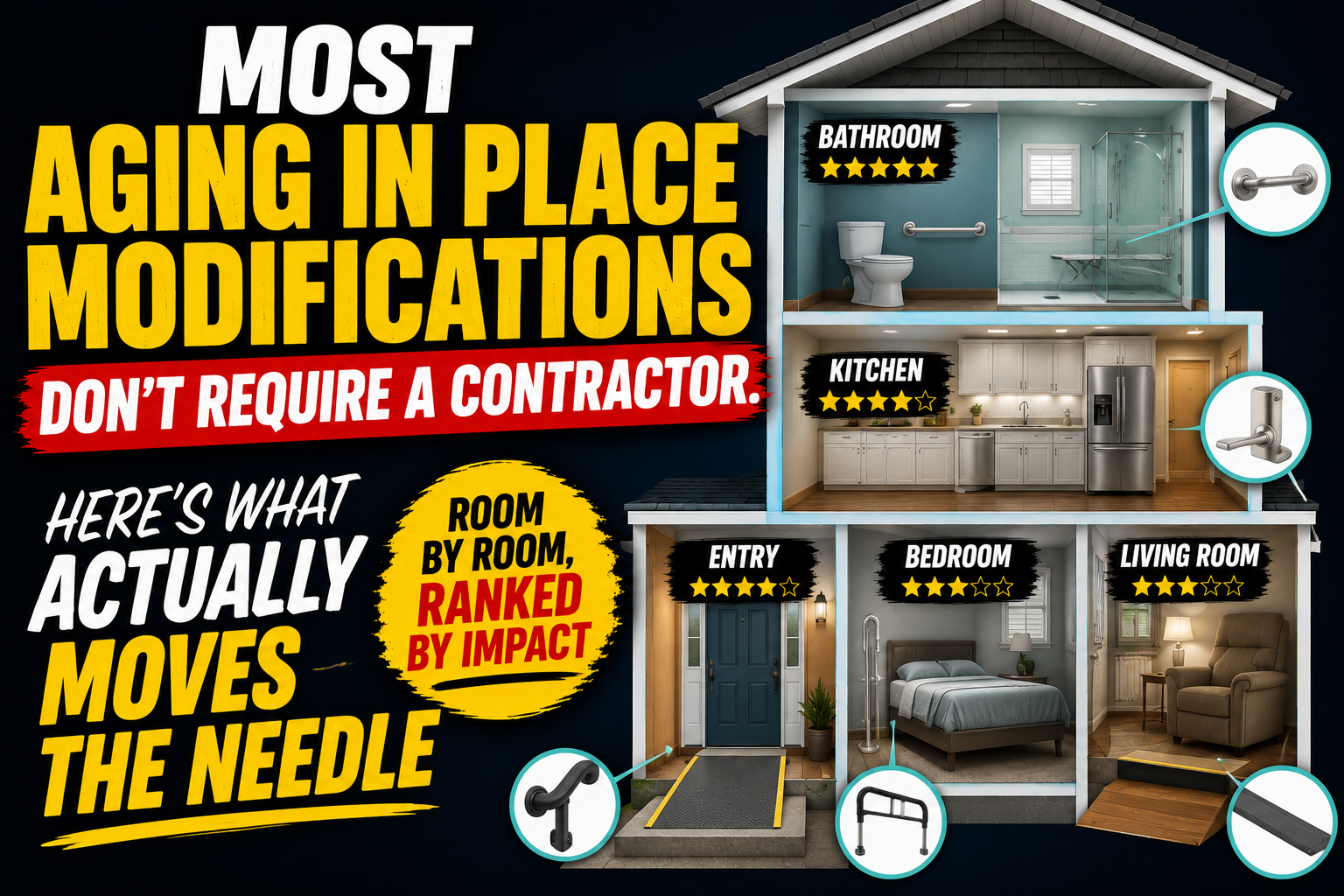
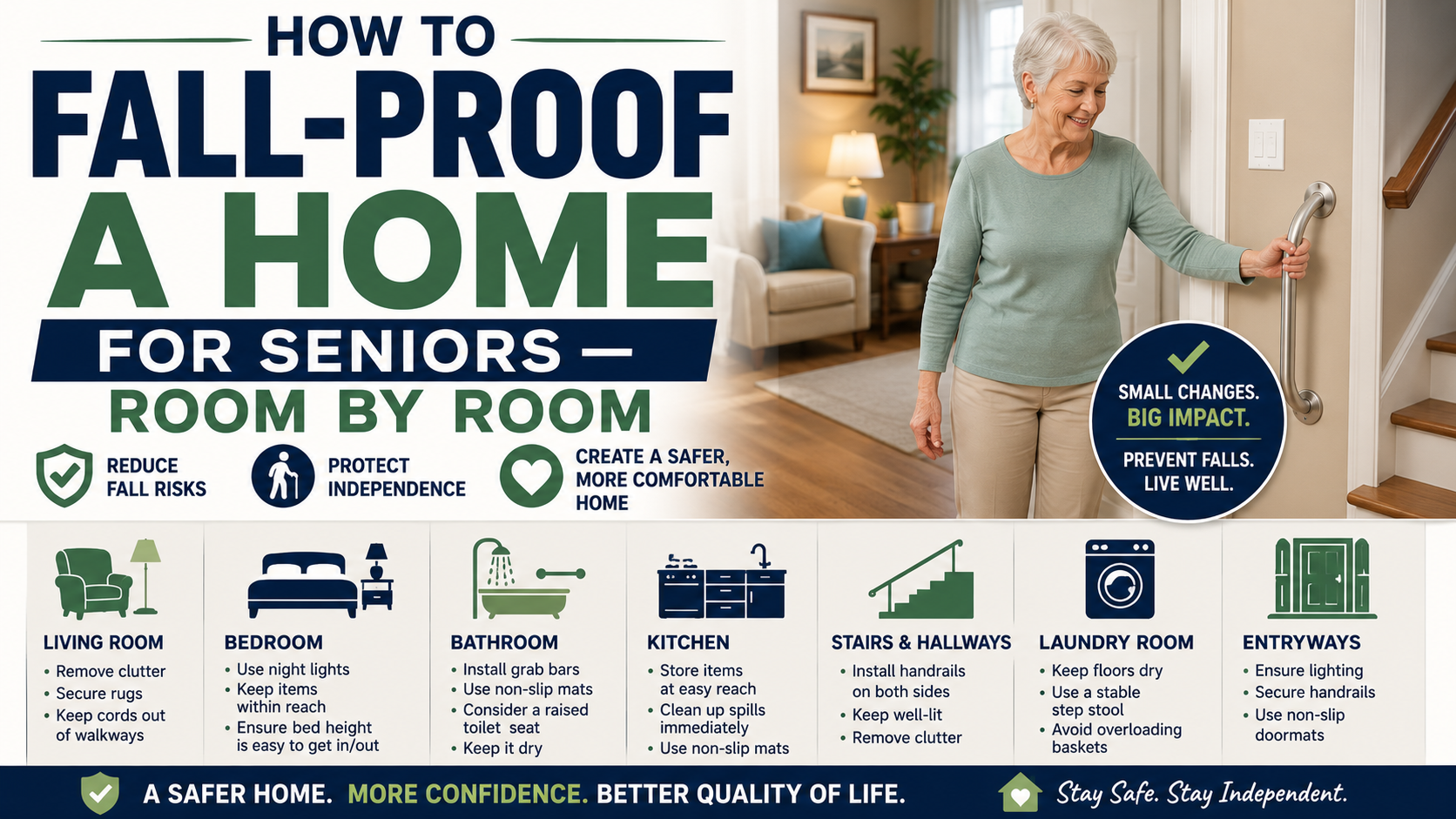
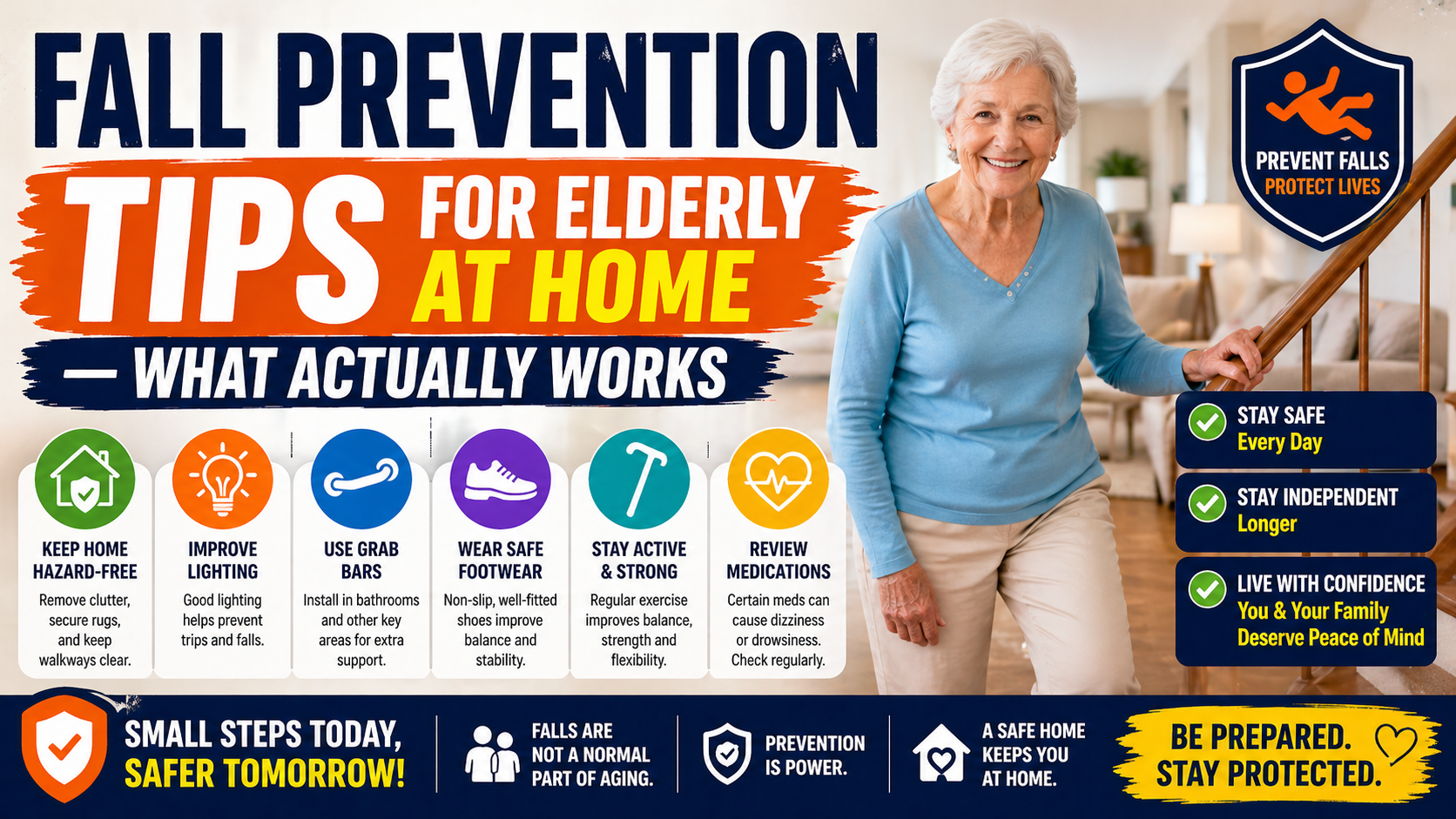
The home environment is the foundation of safe aging in place. These modifications reduce fall risk and make daily activities safer across every room. For help prioritizing those changes by likely benefit, consult the Simple Home Modifications for Aging in Place — Ranked by Impact.
Bathroom — Highest Priority
The bathroom is statistically the most dangerous room for older adults. Address every item here before moving to other rooms.
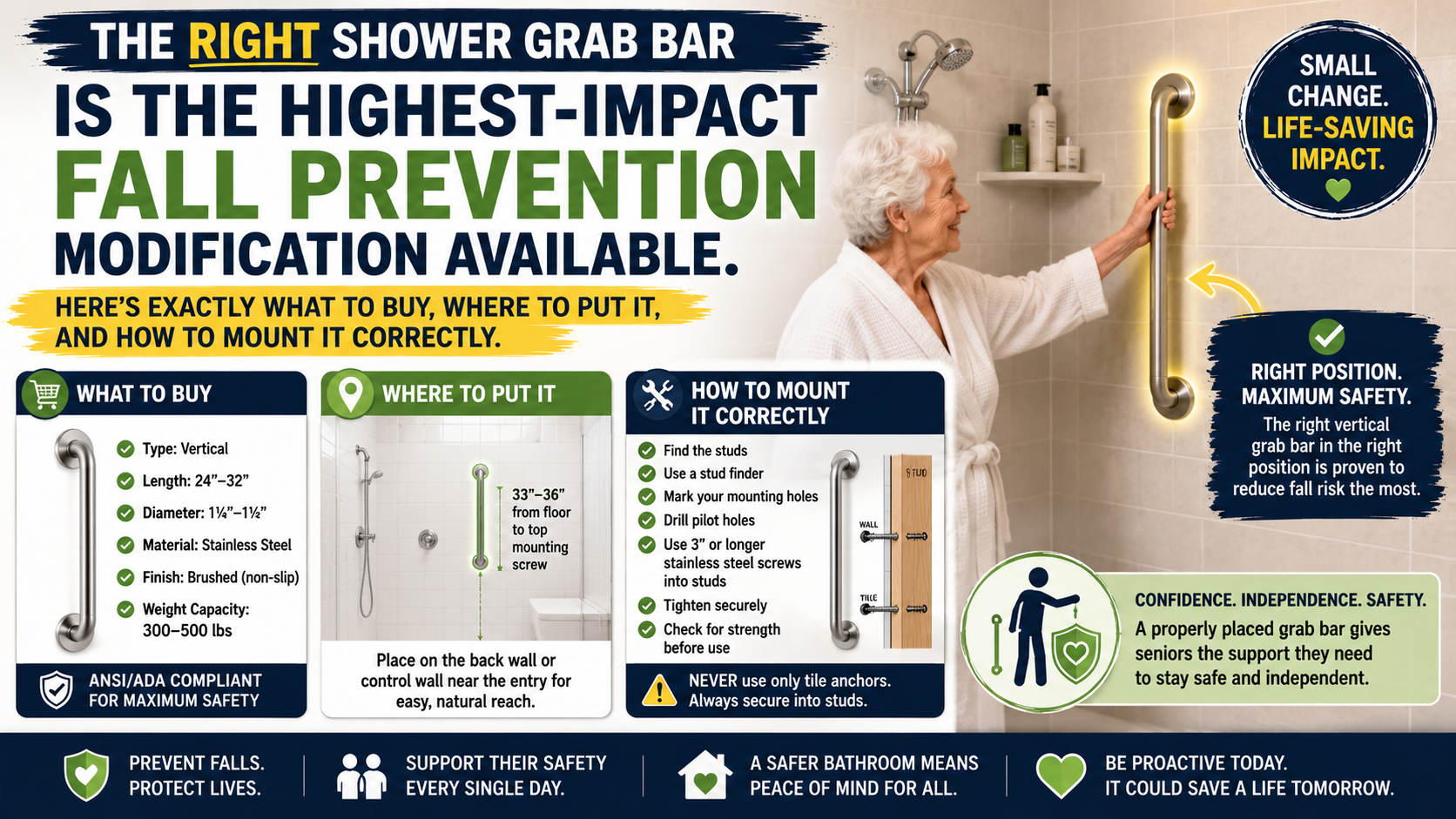
- Grab bar installed at shower or tub entry point — mounted into studs, not towel bar brackets
- Grab bar on back wall of shower at hip height
- Grab bar next to toilet on dominant hand side
- No towel bars being used as grab bars anywhere
- Non-slip mat or adhesive strips inside shower or tub
- Non-slip bath mat outside shower that stays completely in place when wet
- Shower chair or bath seat in place if balance is any concern
- Toilet safety rails with armrests installed
- Toilet height appropriate — feet flat on floor when seated
- Night light installed and working
- Main light switch accessible at door without entering dark room
- Hot water temperature set to 120°F or below
- Bathroom floor completely clear — nothing except bath mat
- Door opens outward or can be unlocked from outside in emergency

Our complete guide on how to make a bathroom safer for seniors covers every upgrade in detail. Key products: grab bars, toilet safety rails, non-slip bath mat, and shower chair.
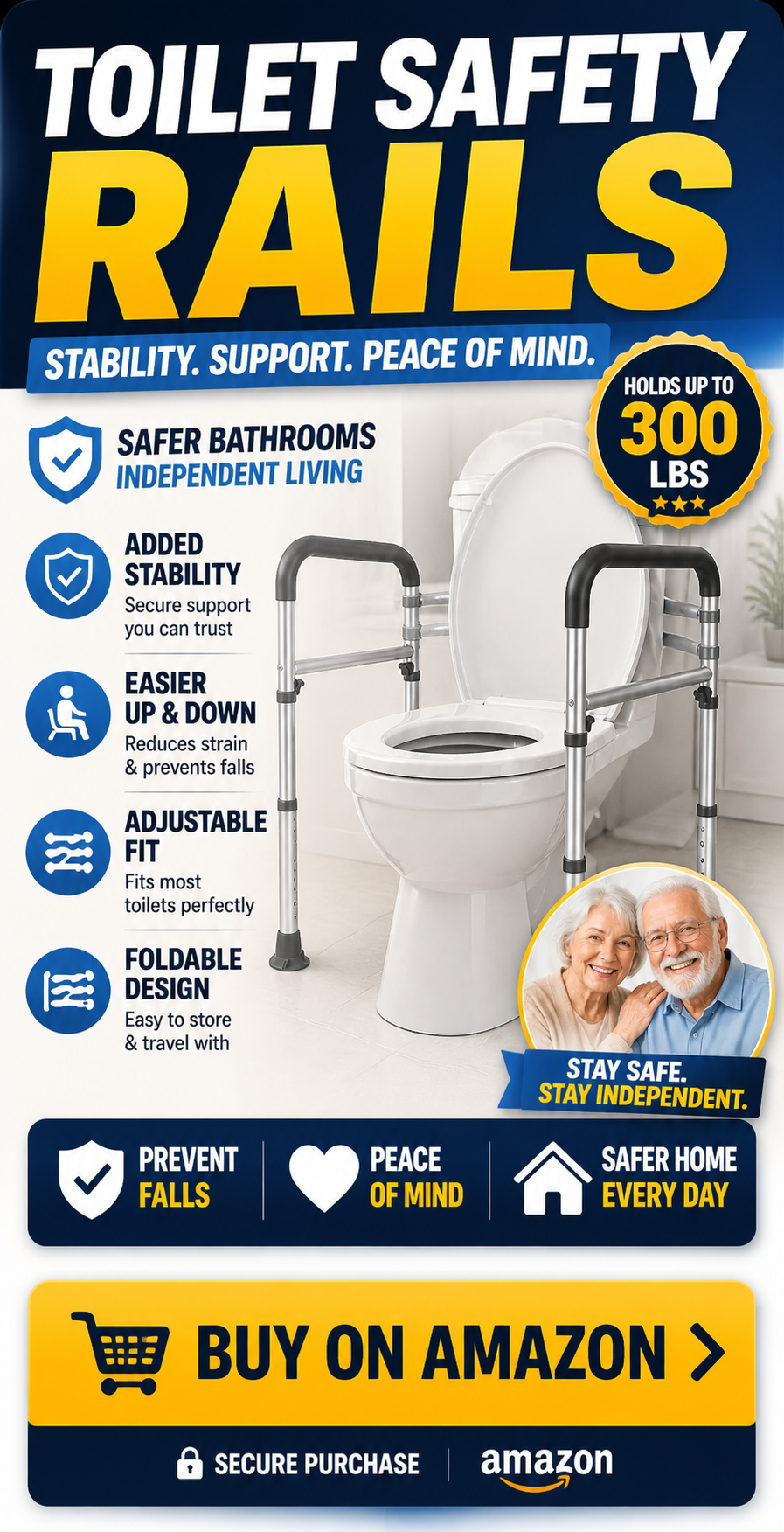
→ Get the Toilet Safety Rails on Amazon

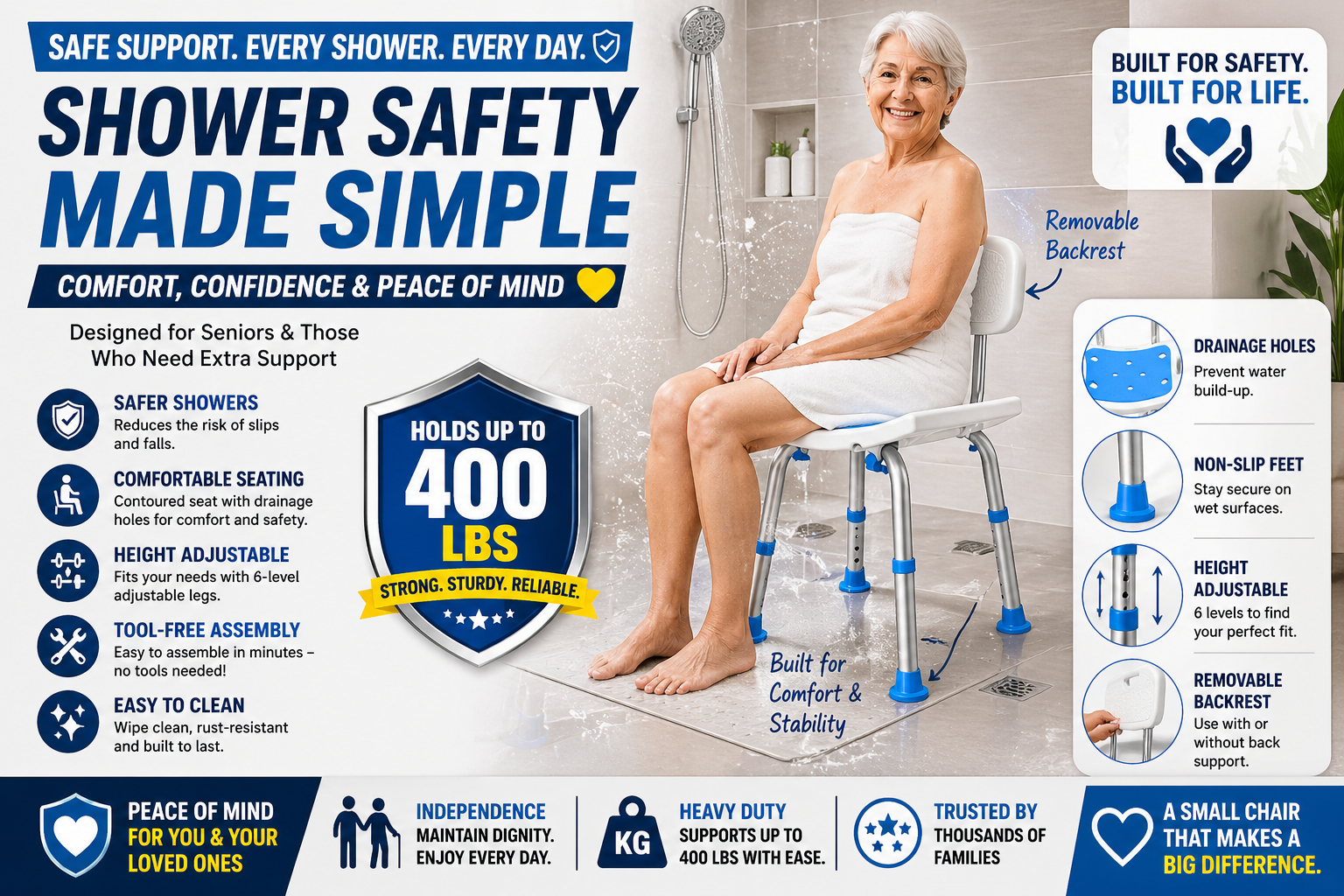
→ Get the Shower Chair on Amazon
Bedroom
- Bed height appropriate — feet flat on floor when sitting on edge
- Bed rail installed on exit side of bed
- Phone and essentials within reach from bed without getting up
- Non-slip footwear within reach of bed
- Night light in bedroom near bed — illuminates floor when feet swing over edge
- Night light in hallway between bedroom and bathroom
- Path from bed to bathroom completely clear at all times
- All rugs secured or removed from bedroom floor
- All cords off bedroom floor and walking paths
- Furniture arranged for clear direct path to bathroom door
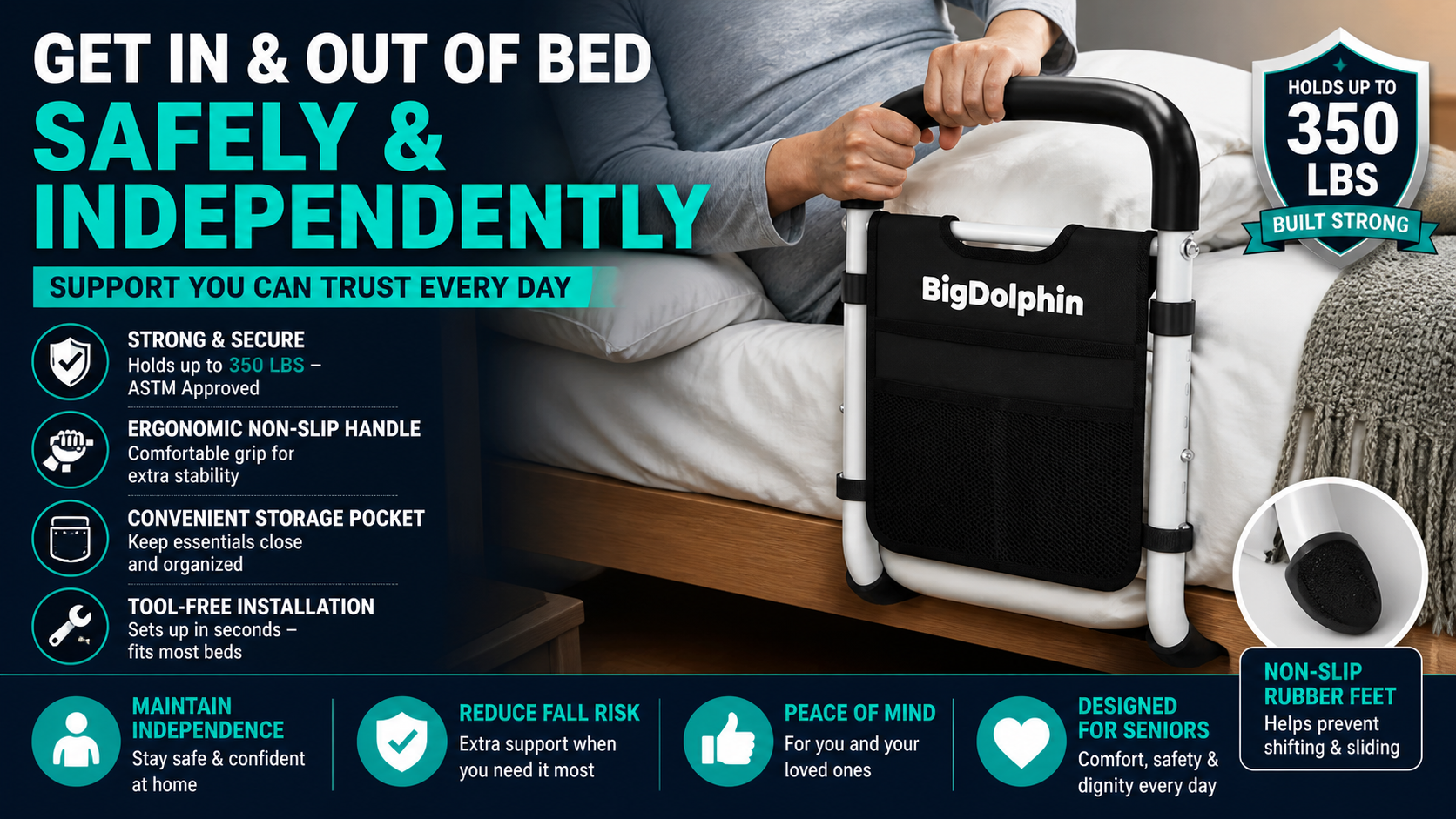
Our guide on senior bedroom safety tips for nighttime falls covers every bedroom modification. Our review of the best bed rail for seniors covers the specific product we recommend.

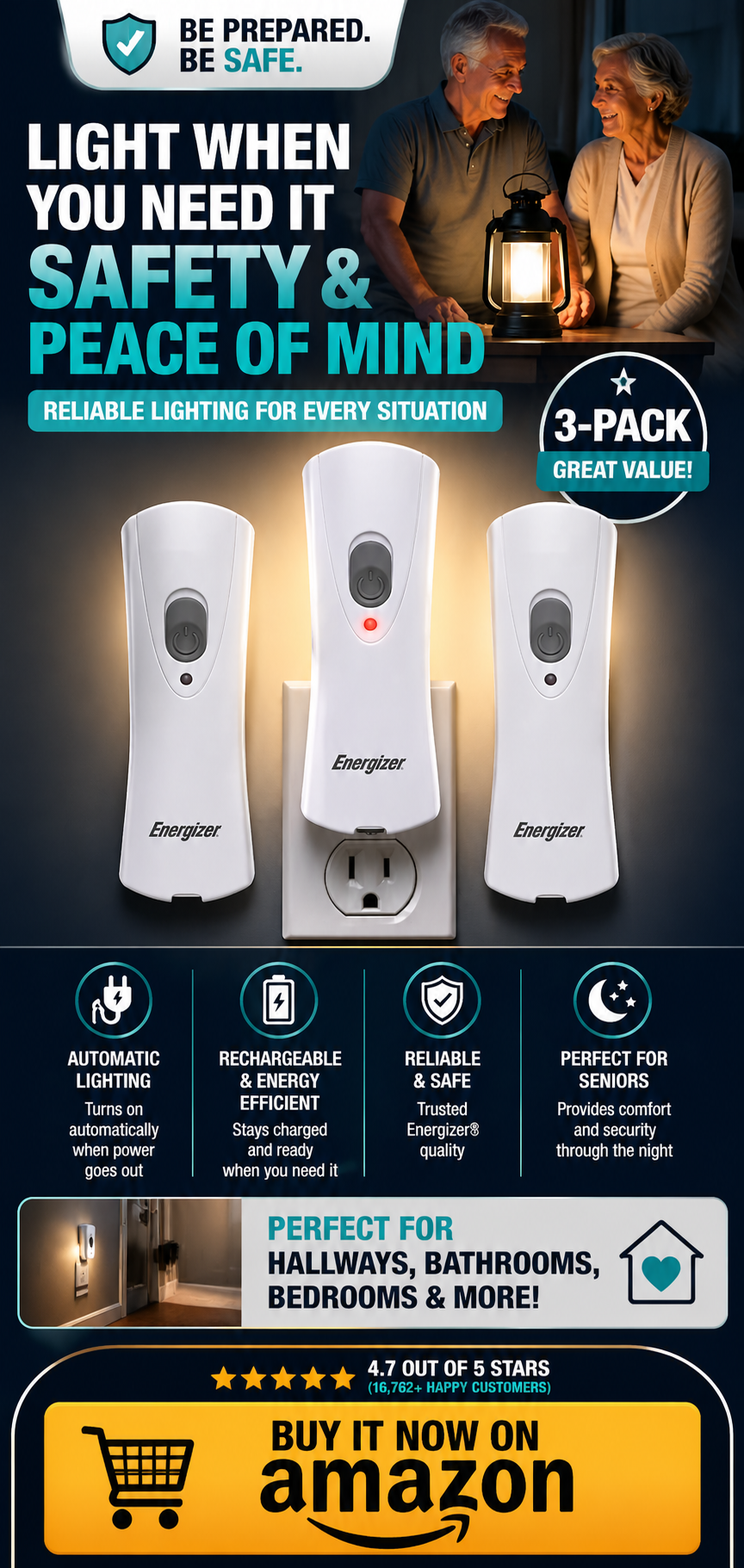
→ Get the Auto-On Night Lights on Amazon
Living Areas and Hallways
- All area rugs secured with non-slip backing and taped edges — or removed
- No rug edges curling or corners lifting anywhere in the home
- All cords and cables off walking paths and secured along walls
- No items stored on floors in any walking area
- Clear pathways of at least 3 feet throughout all walking areas
- No low coffee tables or ottomans in walking paths
- All rooms adequately lit — switches accessible before entering
- Thresholds between rooms assessed — height differences addressed
Stairs
- Handrails on both sides of every staircase
- Both handrails secure — no wobbling or loose mounting
- Non-slip treads on every step with contrasting color edges
- Light switches at both top and bottom of every staircase
- Stairs completely clear at all times — nothing stored on any step
- Consider stair lift if stairs have become a significant challenge
Kitchen
- Frequently used items between hip and shoulder height — no reaching overhead for daily items
- Step stool with handle available if overhead access needed
- Kitchen floor kept clear and dry — spills cleaned immediately
- No unsecured rugs in front of sink or stove
- All cleaning products and medications in locked or inaccessible storage
- Stove safety addressed if cognitive changes are present
- Smoke detector and carbon monoxide detector working
Entryway and Outdoor
- Secure handrail at every exterior step — including single steps
- Exterior lighting at all entry points — motion-activated preferred
- Entry mat secure and non-slip
- Walkways in good repair — no cracked or uneven surfaces
- Winter weather management plan in place
Mobility and Physical Function
- Mobility aid assessed — walking cane or walker if balance has changed
- Cane or walker height correctly adjusted
- Non-slip supportive footwear worn at home consistently
- Balance and strength exercise program in place
- Physical therapy referral requested if specific limitations exist
- Getting out of bed safely — technique assessed and bed rail in place
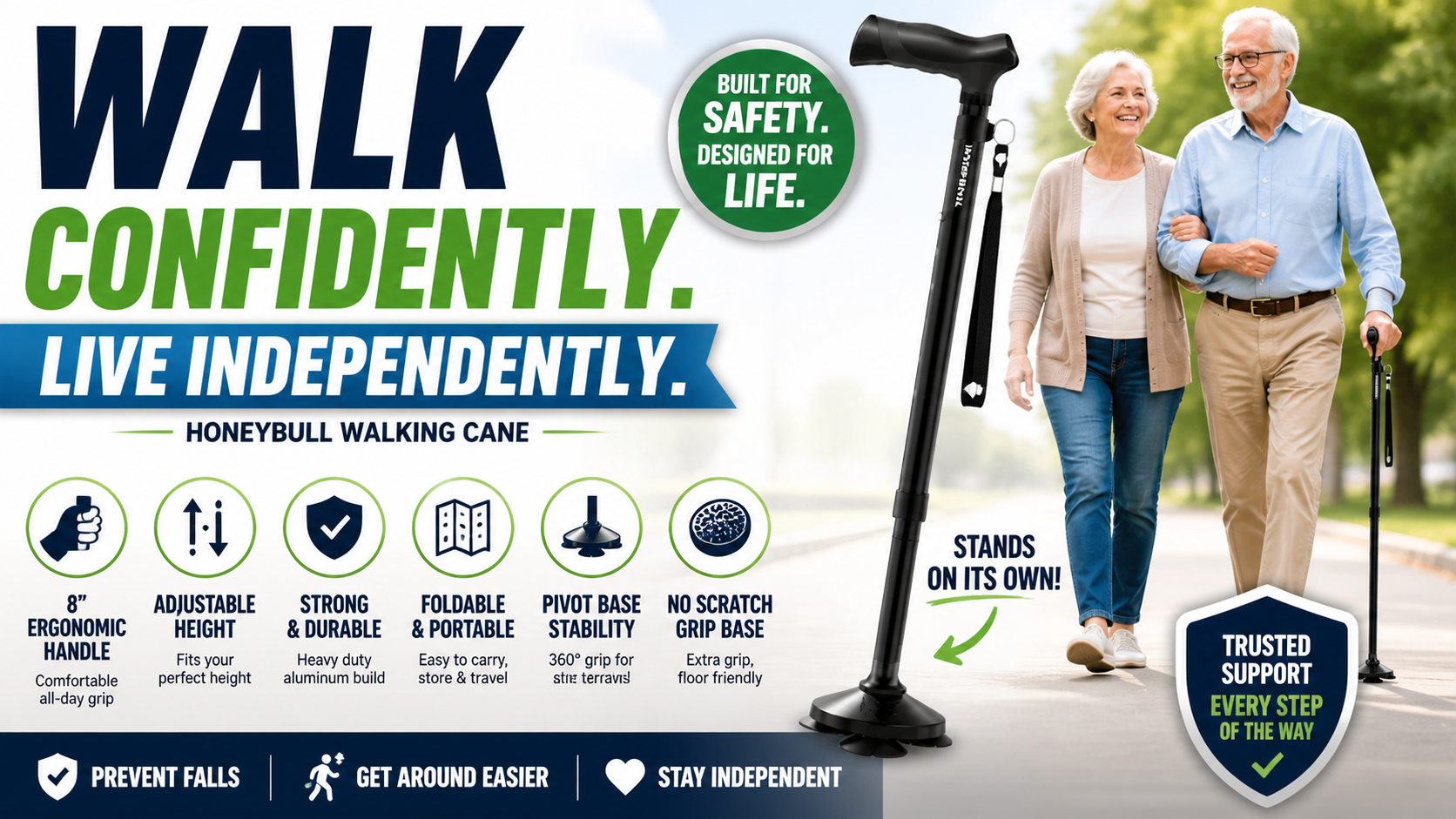
Our review of the best walking cane for seniors covers the foldable option we recommend. Our guide on safe ways to get out of bed covers correct technique. Our guide on tips for balance problems covers the full balance improvement approach.
→ Get the HONEYBULL Walking Cane on Amazon
Technology and Safety Devices
Technology is one of the most powerful aging in place tools available — providing safety coverage when no one is physically present and family connectivity without requiring constant check-in calls.
Medical Alert and Fall Detection
- Medical alert device with automatic fall detection in use
- Device worn consistently — every day including days at home
- Emergency contacts set up and tested
- Family members have companion app installed and configured
- GPS tracking confirmed working
- Daily charging routine established
- Service plan reviewed — cost appropriate for coverage needed

Our SecuLife Smartwatch review covers the device we recommend. Our guide on signs it’s time for a medical alert system helps assess when to start. Our guide on how much a medical alert system costs covers the financial picture. Our comparison of smartwatch vs medical alert system helps choose the right format.
→ Get the SecuLife Smartwatch on Amazon
Emergency Lighting
- Auto-on rechargeable lights in bedroom, hallway, and bathroom
- Lights function as night lights normally and activate during power outages
- All units currently charged and functioning
→ Get the Energizer Auto-On 3-Pack on Amazon
Smart Home Technology
- Video doorbell installed — see and speak with visitors without getting up
- Smart speaker with voice control for hands-free calling and information
- Smart locks for keypad entry — eliminates fumbling with keys
- Medication reminder system in place if medication management is a challenge
- Grocery and errand delivery services set up
Health Management
Proactive health management is one of the four foundations of successful aging in place. These items directly affect physical function, fall risk, and the sustainability of independent living.
- Primary care physician relationship established — regular appointments scheduled
- Medication review completed specifically focused on fall risk side effects
- All medications organized — correct doses at correct times
- Vision check completed within the past year — prescription current
- Hearing assessed — hearing aids in use if indicated
- Dental care current — poor dental health affects nutrition and systemic health
- Fall risk discussed explicitly with physician — documented in medical record
- Physical therapy accessed for any specific functional limitations
- Chronic conditions actively managed — not just monitored
- Vaccinations current — flu, pneumonia, shingles, COVID as recommended
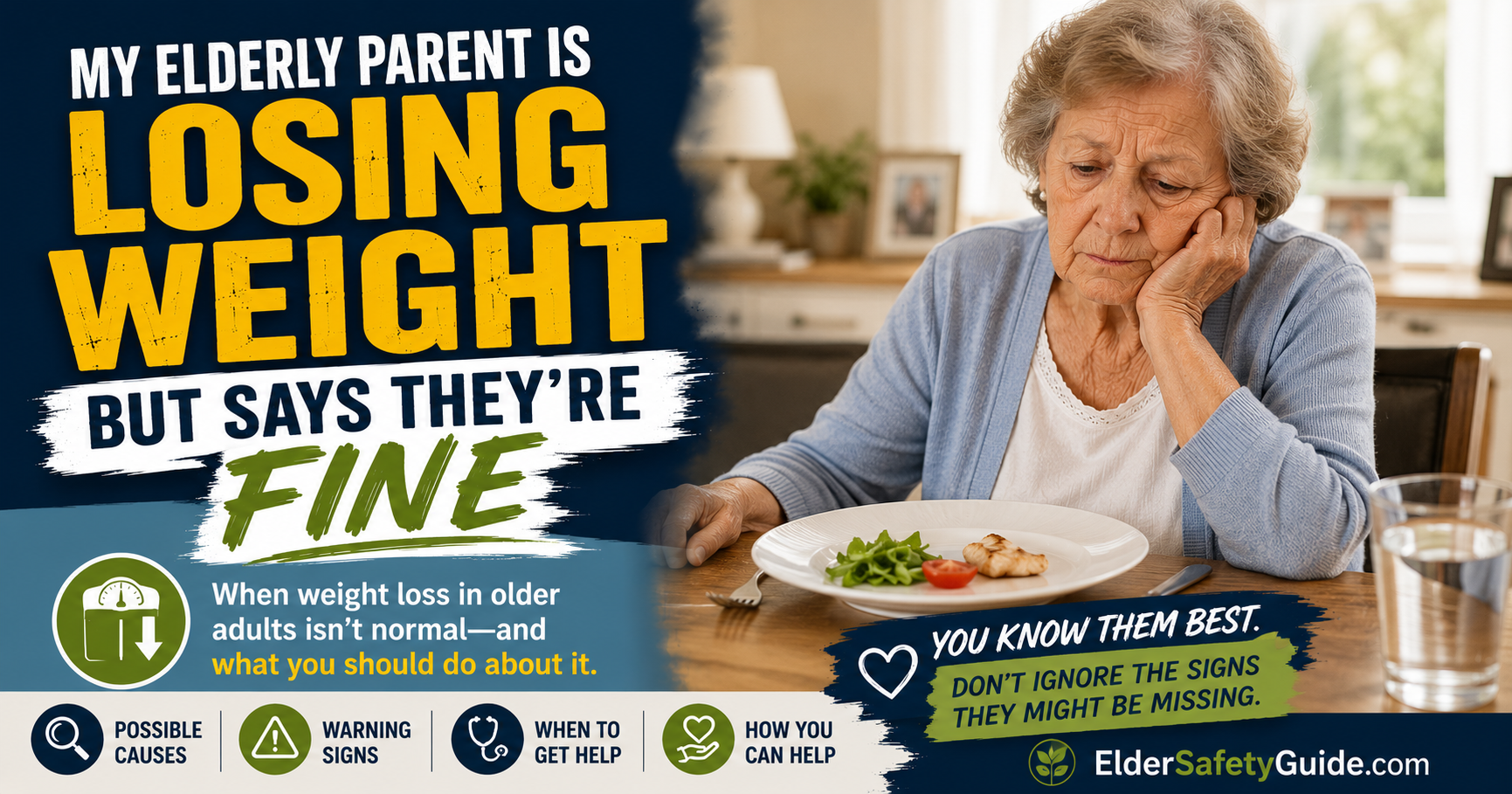
- Nutrition adequate — weight stable, eating regularly and varied diet
- Hydration adequate — consistent fluid intake throughout day
- Sleep quality addressed — poor sleep affects balance, cognition, and fall risk
- Mental health addressed — depression and anxiety both affect physical function and safety
Legal and Financial Planning
Legal and financial planning is the most commonly skipped section of aging in place planning — and the one that creates the most serious problems when it hasn’t been done. Complete these items while full cognitive capacity is present. Waiting until capacity has declined makes many of them impossible to do correctly.
Legal Documents
- Will — current, reflecting current wishes, stored in known location
- Durable Power of Attorney — designates someone to manage financial affairs if capacity is lost
- Healthcare Power of Attorney — designates someone to make medical decisions if capacity is lost
- Advance Directive / Living Will — documents wishes for medical treatment at end of life
- POLST or MOLST form — medical orders for life-sustaining treatment, if appropriate
- All documents accessible to designated people — not locked away where they can’t be found in an emergency
- Elder law attorney consulted — particularly for complex estate or Medicaid planning needs
Financial Planning
- Budget for aging in place costs — modifications, support services, technology, healthcare
- Long-term care insurance reviewed — what it covers and how to access it
- Benefits check — all eligible benefits being received (Medicare, Medicaid, veterans benefits, Social Security)
- Automatic bill payment set up — reduces administrative burden and prevents missed payments
- Financial accounts accessible to designated family member if needed
- Scam awareness — senior financial exploitation is a significant and growing risk
- Local Area Agency on Aging contacted — free resource for identifying available benefits and services


Support Network
A support network is not a nice-to-have — it’s one of the four essential foundations of aging in place. These items ensure that support is real, explicit, and structured rather than assumed.
Family and Friends
- Family conversation about aging in place has happened — roles discussed explicitly
- Primary contact person identified — who gets called first in an emergency
- Regular check-in schedule established — not dependent on the senior initiating contact
- Multiple family members have key or access to home
- At least one person knows location of important documents, medications, and medical information
- Family members aware of current health conditions and medications
Neighbors and Community
- At least two neighbors know the person and would notice if something seemed wrong
- Neighbors have a way to reach family members if concerned
- Community connections maintained — religious community, clubs, volunteer activities
- Transportation plan in place for when driving is limited or stopped
Professional Support Services
- Home health aide services identified — know who to call if needed
- Meal delivery options identified — Meals on Wheels or commercial delivery
- Housekeeping help in place or identified if needed
- Transportation services identified — medical transport, senior transport programs
- Adult day programs identified — social engagement and supervised activity during day
- Respite care identified — for caregiver relief if a family member is primary caregiver
Dementia-Specific Planning
Complete this section if dementia is present or if there’s meaningful family history of dementia worth planning for. These items are most effectively addressed before cognitive capacity declines significantly.
- Diagnosis discussed openly — shared with relevant family members and care team
- Legal documents completed while cognitive capacity is intact
- GPS tracking device in use — before wandering emerges
- Kitchen safety addressed — stove knob management, hazardous substance storage
- Door alarms on exterior doors
- Wandering prevention plan in place — see our guide on wandering prevention for dementia
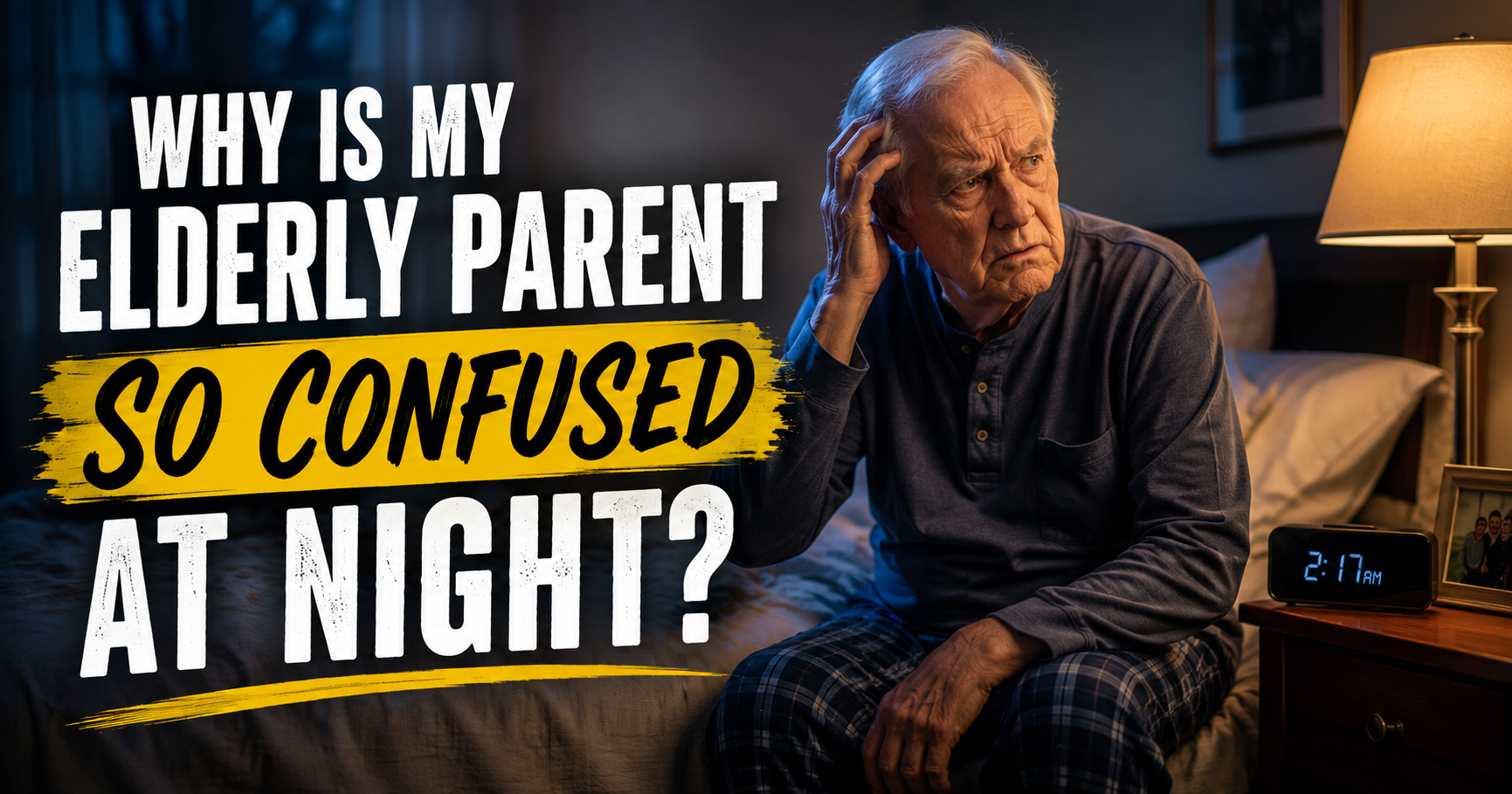
- Nighttime safety plan in place — see our guide on keeping a parent with dementia safe at night
- Care progression discussed — what the triggers for care setting change will be
- Caregiver support accessed — Alzheimer’s Association resources, support groups, respite care

Our guide on home safety tips for seniors with dementia and our dementia kitchen safety guide cover the specific modifications needed.
Emergency Preparedness
- Medical alert device with fall detection in use — tested and working
- Phone charged and within reach at all times
- Emergency contacts list accessible — on phone and written copy in known location
- Power outage lighting in place — bedroom, hallway, bathroom
- 72-hour emergency supply — water, non-perishable food, medications, flashlight
- Evacuation plan — how to leave the home quickly if needed, who helps
- Medical information summary — diagnoses, medications, allergies — accessible to emergency responders
- Spare medications — enough supply to manage a disruption
- Neighbors informed of any special needs for emergency situations
The Six-Month Review
Aging in place planning isn’t done once. Needs change. Health changes. The home changes. A six-month review cycle keeps the plan current rather than letting it become outdated.
At each six-month review:
- Walk through the home safety checklist again — look for new hazards that have accumulated
- Review mobility aids — still appropriate? Needs upgrade?
- Review medical alert device — plan current, device working, wearing consistently?
- Review health management — medications reviewed recently, vision current?
- Review support network — still intact? Gaps to fill?
- Review legal documents — still current? Any changes needed?
- Reassess overall — is aging in place still working well? What’s changed?
Also review after any significant health event — a fall, a hospitalization, a new diagnosis, a medication change — rather than waiting for the scheduled six-month cycle.


Turning the Checklist Into a Plan
A completed checklist is only useful if it turns into action. Here’s how to convert what you’ve found into a workable plan.
Prioritize by impact and urgency: Bathroom safety items are highest priority — address them first regardless of what else is on the list. Any item that represents an immediate fall risk comes next. Legal documents that haven’t been completed are urgent — they can’t be done correctly once cognitive capacity is compromised.
Assign ownership: Every item marked Needs Attention needs a specific person responsible for it and a target date. “We’ll get to the grab bars” becomes a task when it has a name and a date attached to it.
Start this week: Pick the three highest-priority items from your list and take one concrete action on each of them this week — order the grab bars, schedule the attorney appointment, have the family conversation. Momentum matters more than perfection.
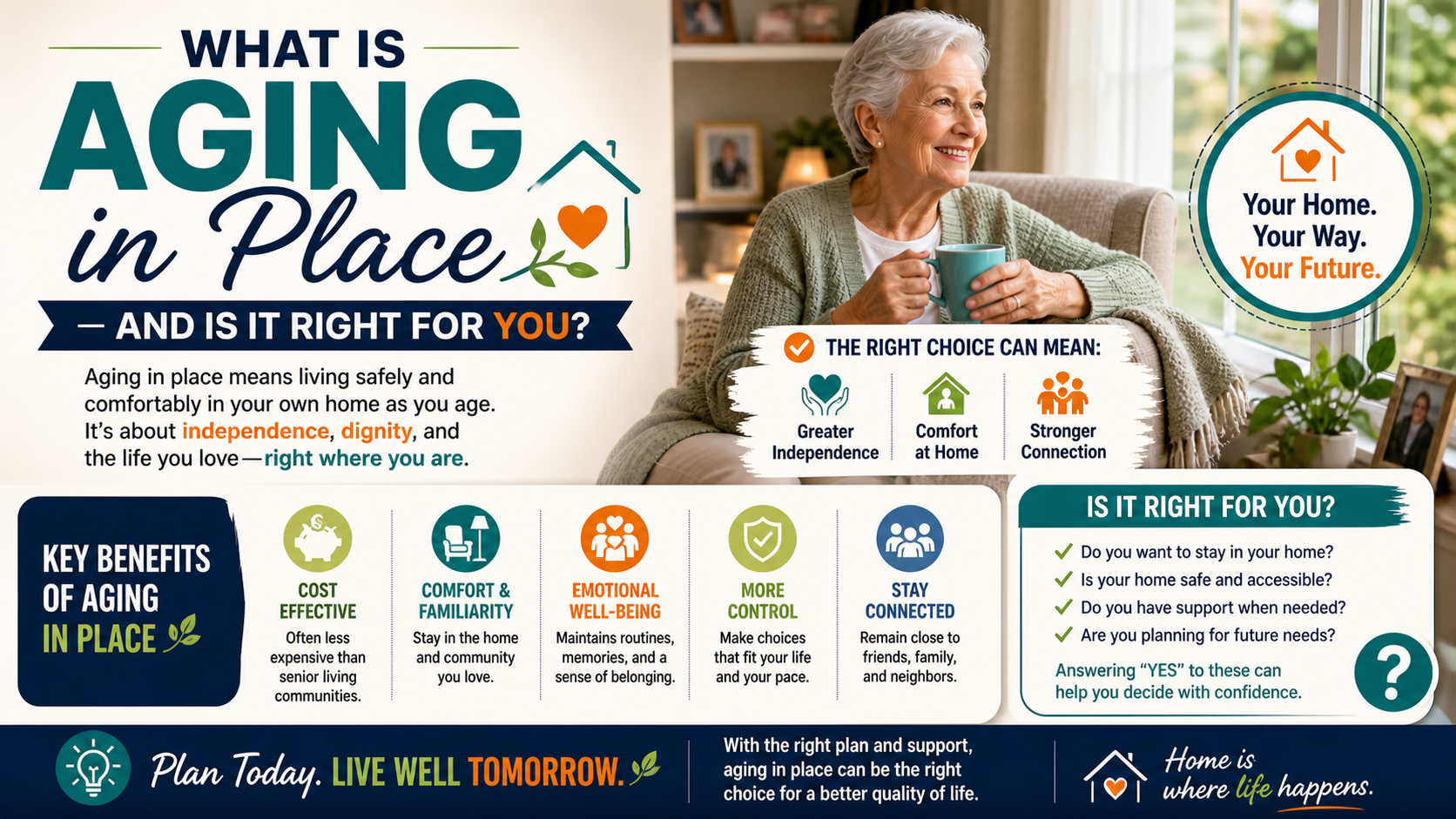
For a complete guide to the aging in place decision itself our article on what is aging in place covers everything worth knowing before committing to the plan. And our guide on warning signs you may not be safe living alone covers what to monitor over time as needs evolve.
Frequently Asked Questions
Where do I start if this checklist feels overwhelming?
Bathroom first. Always bathroom first. Install grab bars at the shower and next to the toilet — those two items address the highest-risk transitions in the home and have more impact than anything else on this list. Once those are in place add the bed rail and night lights. Then work through the rest of the list at a pace that’s sustainable. You don’t need to do everything at once — you need to do the highest-impact things first.
How do I get a family member to participate in this planning?

Frame it as planning together rather than planning for them. Approach it as a family activity rather than an assessment of their capabilities. Focus on what the plan protects — their ability to stay in their own home — rather than what it acknowledges — that things need to change. Our guide on how to talk to a parent about safety measures covers the conversation principles that apply across all of these discussions.
Do I need a professional to assess the home or can I do it myself?
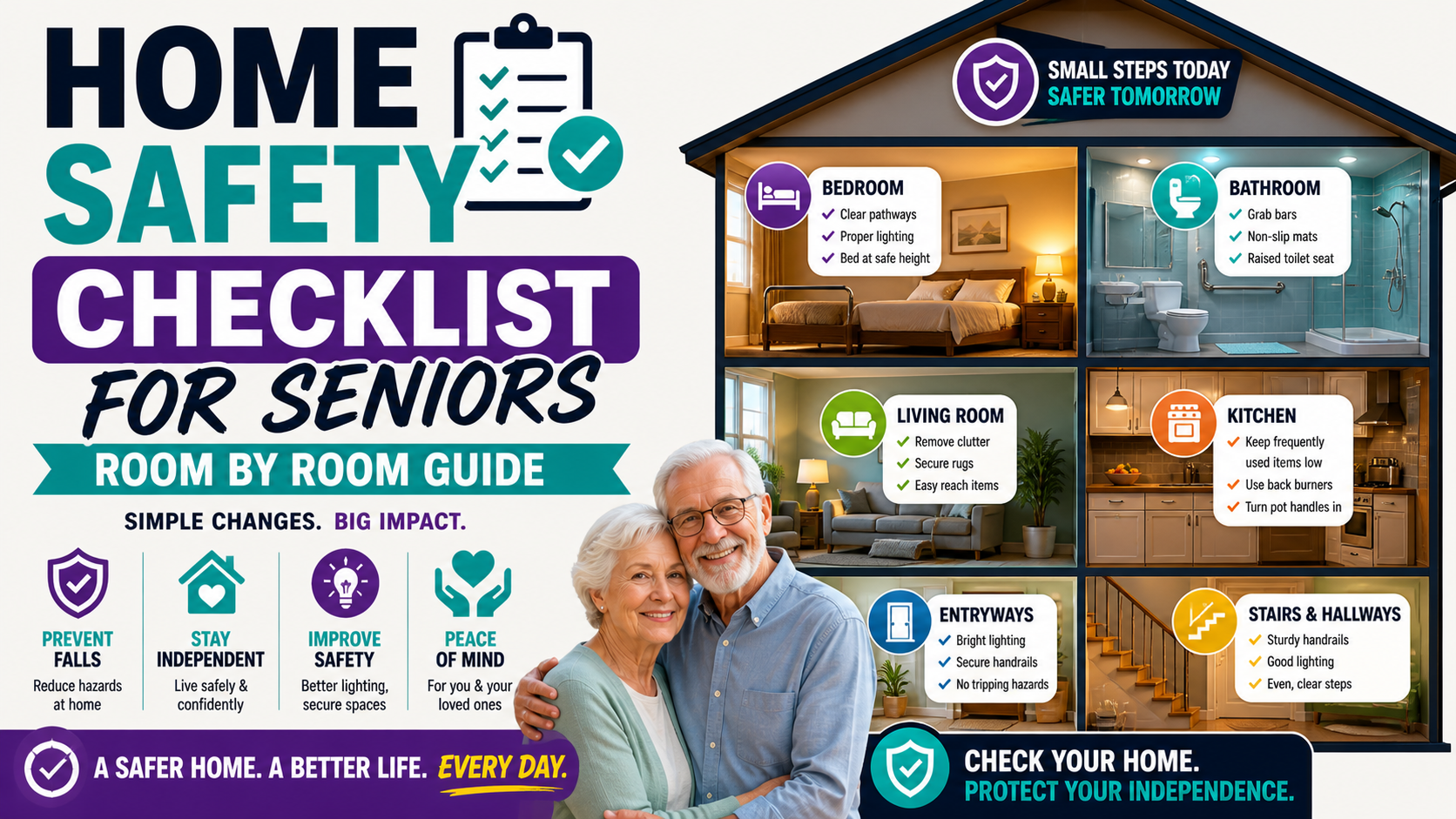
This checklist and our home safety checklist cover the most important items for most homes without requiring professional help. A Certified Aging-in-Place Specialist (CAPS) adds value when significant structural modifications are being considered, when mobility limitations are complex, or when a professional assessment is needed for insurance or benefit purposes. For most families self-assessment using these checklists covers the highest-impact items effectively.
How much does completing this checklist typically cost?
The home safety items — grab bars, bed rail, toilet rails, bath mat, night lights, walking cane — typically total $400 to $800 in product costs plus $100 to $200 for grab bar installation if hiring a handyman. Legal documents through an attorney typically cost $500 to $1,500 depending on complexity. Medical alert device service runs $20 to $50 per month. Most families find the total investment is a fraction of one month of assisted living — and extends independent living significantly.
What’s the most important thing to do before cognitive capacity declines?
Legal documents — Power of Attorney, Healthcare Power of Attorney, and Advance Directive. These cannot be completed correctly once cognitive capacity is compromised. A Power of Attorney signed when someone lacks capacity may not be legally valid. Getting these documents in place while full capacity is present is the most time-sensitive item on this entire checklist and the one most families regret not doing sooner.
A Plan Worth Having
Aging in place works best when it’s planned — not assumed. The families who complete this checklist and act on what they find are the ones who look back years later grateful they did it before something forced the issue.
Print this checklist. Work through it this weekend. Assign the action items. Revisit it in six months.
The goal — staying home, on your own terms, for as long as possible — is worth the hour this checklist takes.
→ Get the SecuLife Smartwatch on Amazon
→ Get the Toilet Safety Rails on Amazon
→ Get the Night Lights on Amazon
About the Author
Carol Simmons is a Certified Aging-in-Place Specialist (CAPS) who spent 15 years helping families plan and implement aging in place across Florida and the Southeast. She has guided hundreds of families through exactly this planning process — and seen firsthand how much difference a completed plan makes compared to assumptions that never get tested until a crisis forces the issue. She writes for Elder Safety Guide to give families the practical tools they need to make aging in place work.