The bathroom is the most dangerous room in your parent’s home. Here’s exactly what to change — grab bars, non-slip mats, shower chairs, and more — to make it genuinely safe.
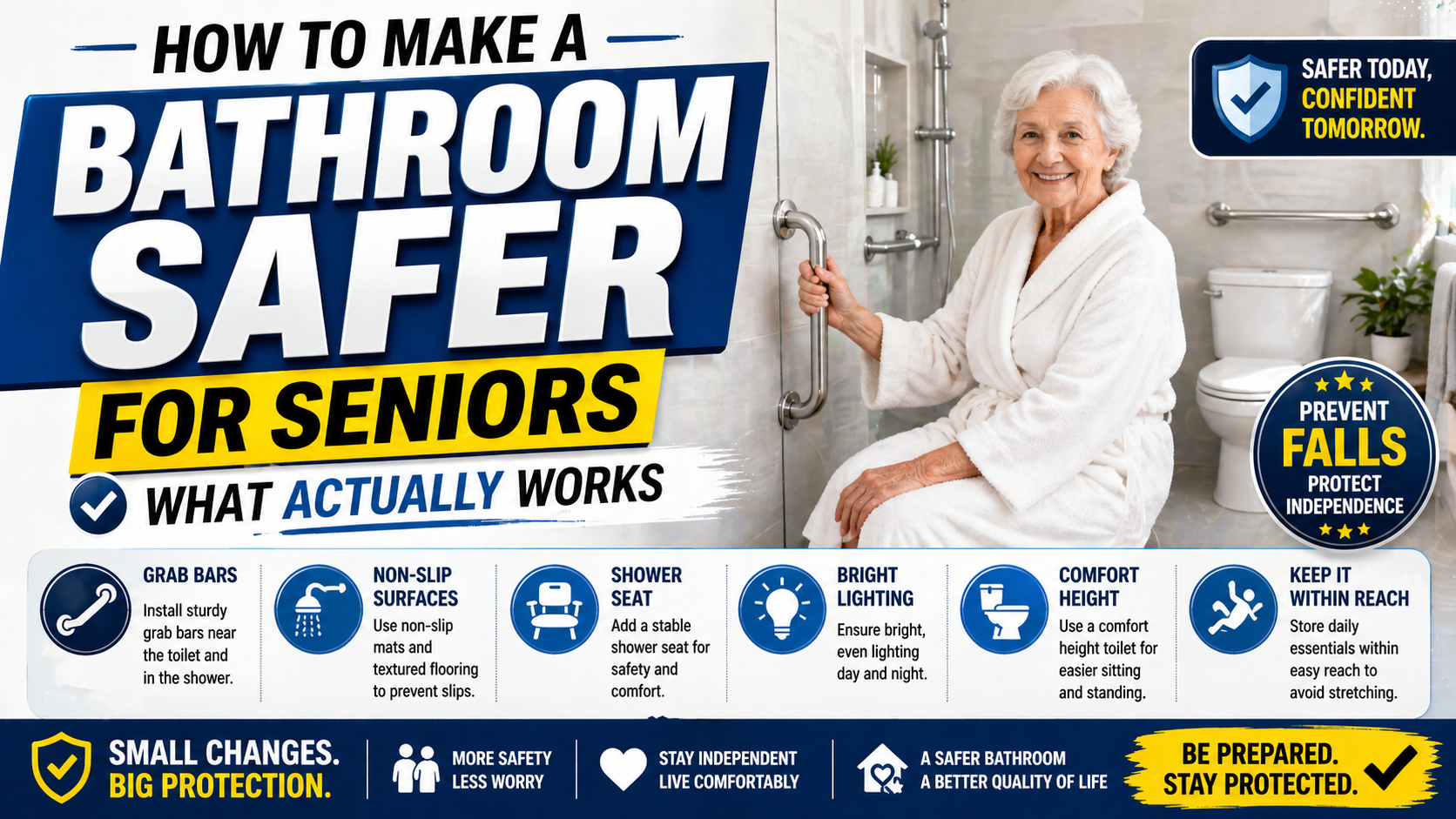
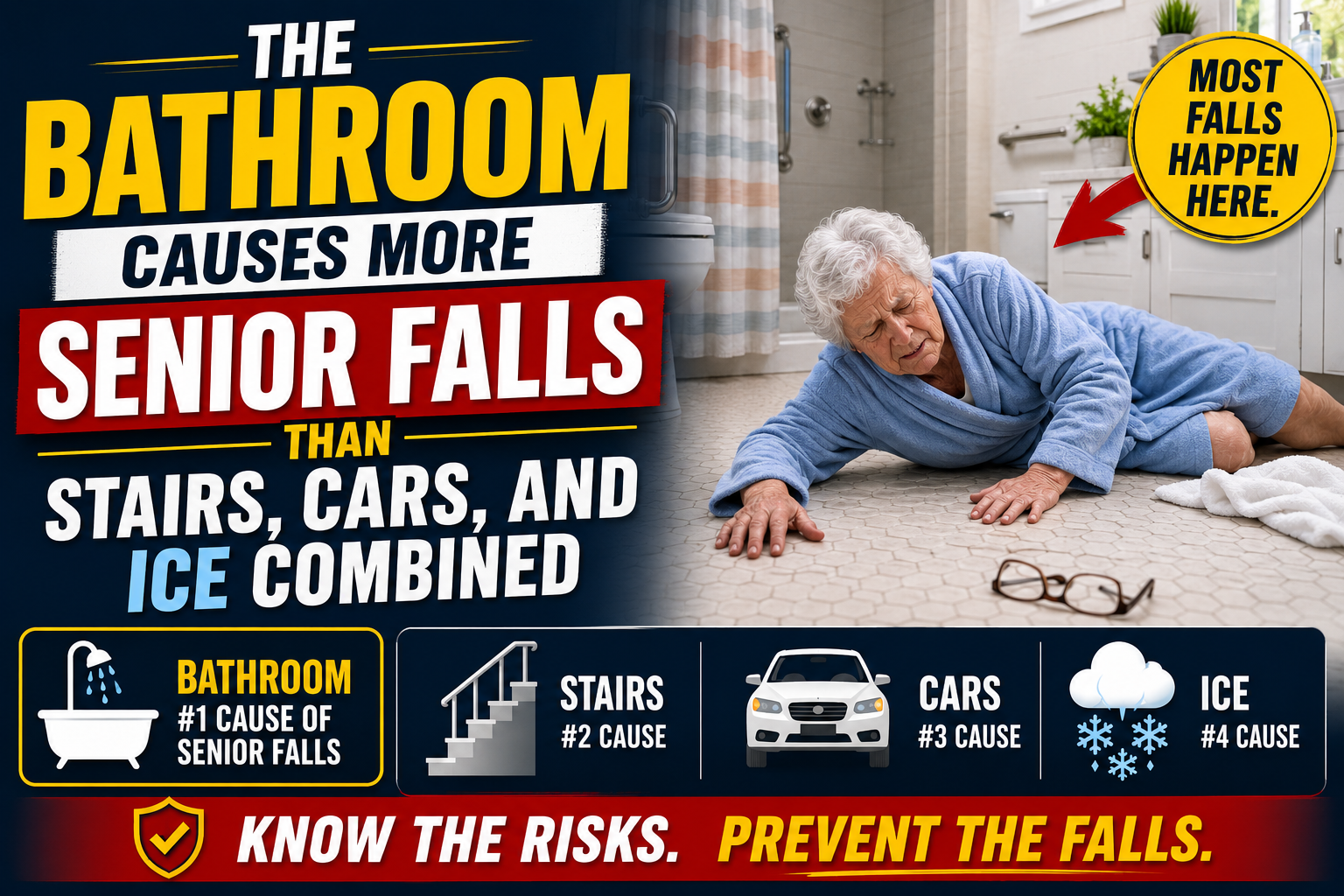
The bathroom is the most dangerous room in the house for older adults. That’s not an opinion — it’s what the data shows consistently, and it’s what anyone who has worked in senior care will tell you from experience.
Wet surfaces. Slippery transitions. Awkward movements getting in and out of the tub. Urgency in the middle of the night. The bathroom combines every factor that makes falls more likely into one small, unforgiving room.
The good news is that bathrooms are also one of the most fixable environments in a senior’s home. The changes that make the biggest difference aren’t expensive or complicated. Most of them can be done over a single weekend. And the impact on your parent’s daily safety — and your own peace of mind — is immediate. Once the bathroom is addressed, whole-home safety improvements can help identify other high-impact changes throughout the house.
This guide walks through every meaningful bathroom safety upgrade, what it does, and what to look for when choosing products. We’ll cover what actually moves the needle versus what looks reassuring but doesn’t help much. For the shower-specific details behind these upgrades, see Safe Shower Setup for Elderly Adults — Everything You Need in One Place.
Start With a Honest Assessment of the Bathroom
Before buying anything, spend five minutes in the bathroom with fresh eyes. You’re looking for specific hazards — not a general sense of whether it feels safe.
Ask yourself these questions:
- Is there anything solid to hold onto when getting in and out of the shower or tub?
- Is the floor inside the shower or tub non-slip when wet?
- Is there a secure, non-shifting mat on the floor outside the tub?
- Is getting on and off the toilet a stability challenge?
- Is the bathroom well lit — including at night?
- Are there any items on the floor that could be tripped over?
Every “no” on that list is a fixable fall hazard. Work through them systematically and you’ll have a dramatically safer bathroom by the end of the weekend.
Install Grab Bars — This Is the Most Important Step
If you do only one thing to improve bathroom safety for an elderly parent, install grab bars. Nothing else comes close in terms of impact. The Best Grab Bars for Seniors — What to Buy and Where to Put Them review explains which features matter when choosing a load-bearing bar for the bathroom.
Grab bars give seniors a solid, reliable anchor point for the moments that carry the highest fall risk — stepping into and out of the shower, lowering onto and rising from the toilet, and moving on wet floors. They are not optional for a senior living independently, and they are not a sign of weakness or decline. They are the single most effective fall prevention tool in the bathroom.

The critical distinction most families miss: towel bars are not grab bars. A towel bar is mounted decoratively and designed to hold a towel — not to support body weight. If your parent grabs a towel bar during a stumble, it will pull out of the wall and make the fall worse. Proper grab bars are engineered to support 250 pounds or more and must be mounted correctly into wall studs or with appropriate anchors.
Where to Install Grab Bars
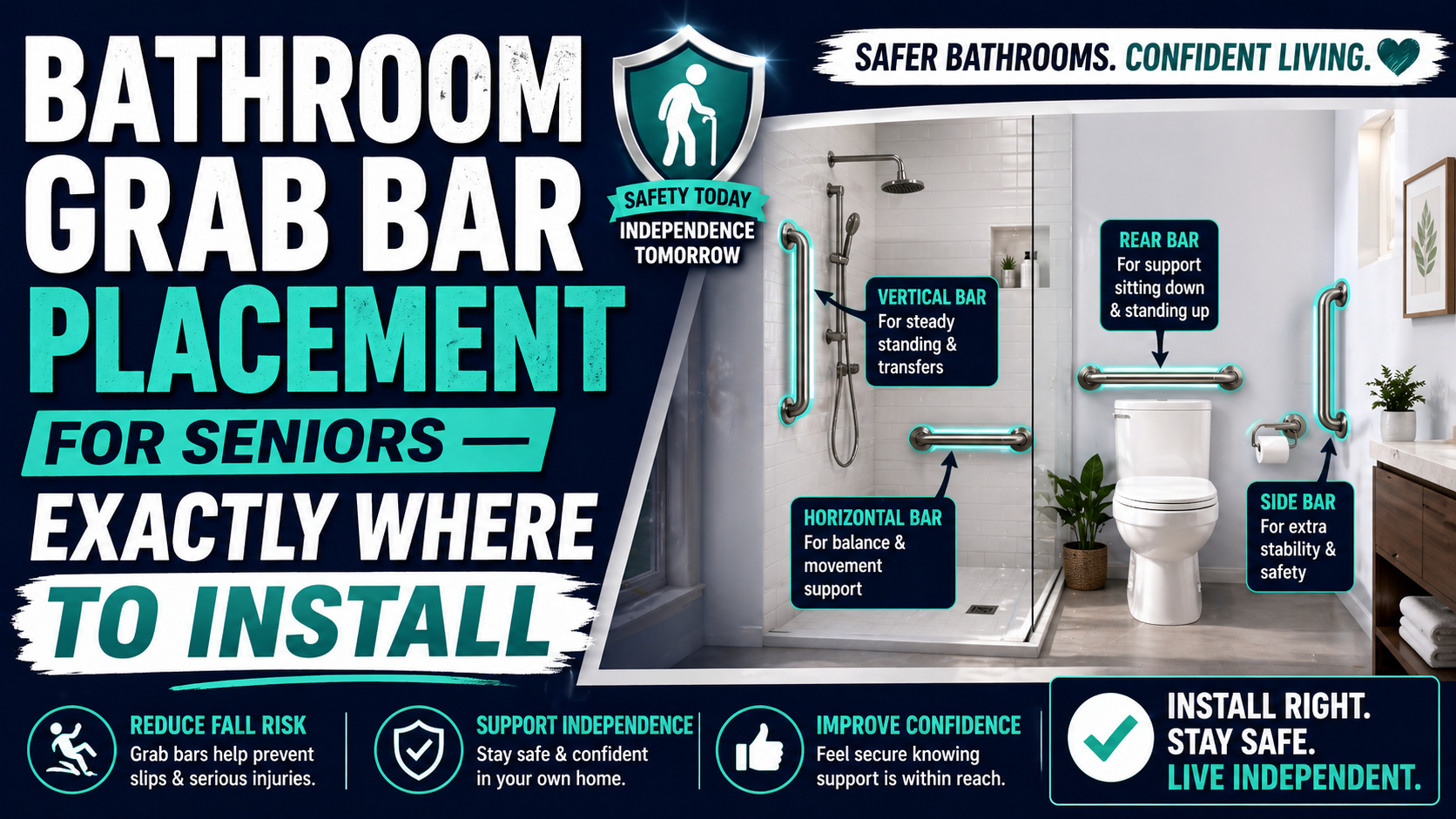
Placement is as important as installation. At minimum: The detailed guide to Bathroom Grab Bar Placement for Seniors — Where to Install explains where each bar should go and how orientation affects support.
- Inside the shower or tub — on the wall at the entry point, at a height your parent can reach comfortably while stepping in and out
- On the shower or tub back wall — horizontal bar for support while standing and bathing
- Next to the toilet — on the side wall or as a floor-mounted unit, at a height that helps with lowering and rising
For seniors with significant balance challenges or reduced grip strength, additional bars along the path from the door to the shower can make the entire room safer to navigate.
Grab Bars for Shower — 2 Pack 16-Inch Anti-Slip Stainless Steel Safety Grab Bars (Polished Nickel)
This two-pack covers the most critical installation points — one at the shower entry and one on the back wall — without needing to purchase separately. The stainless steel construction is rated for real load-bearing use, not decorative mounting, and the anti-slip texture on the bar surface gives your parent grip even with wet hands.
At 16 inches, these bars are long enough to be useful across a range of movement — not so short that they only help at one specific point in the motion. The polished nickel finish looks like a standard bathroom fixture rather than a medical device, which matters more than you might think for getting a senior to actually use them without feeling self-conscious.
Proper installation is essential — mount into studs or use appropriate wall anchors rated for the load. If you’re not confident in the installation, a local handyman can typically do it in under an hour for a very reasonable cost. The bars themselves are an easy win.
→ Check current price and availability on Amazon
Add Non-Slip Surfaces Inside and Outside the Shower
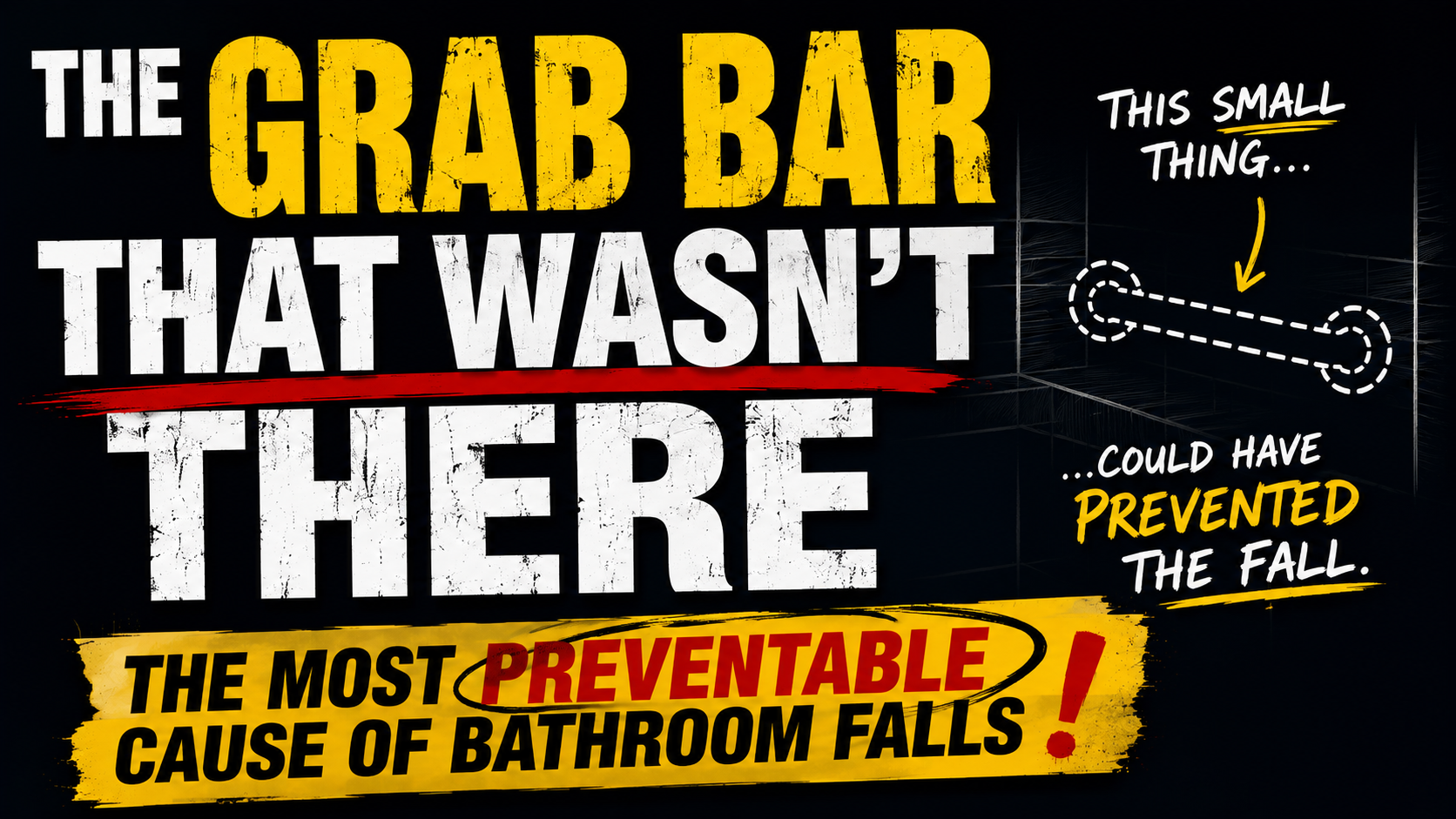
Wet tile and porcelain tub surfaces are genuinely dangerous for older adults. The combination of wet feet, reduced balance, and a slippery surface is exactly how bathroom falls happen. A non-slip mat inside the shower or tub and a secure mat outside are both essential — not one or the other. Our review of safer shower and bath surfaces compares the two products that address these wet-surface risks most directly.
Inside the shower: look for mats with strong suction cups that grip the floor surface reliably, or non-slip adhesive strips applied directly to the floor of the tub or shower. Test suction cup performance on your specific surface before relying on it — suction strength varies significantly by product and tile type.
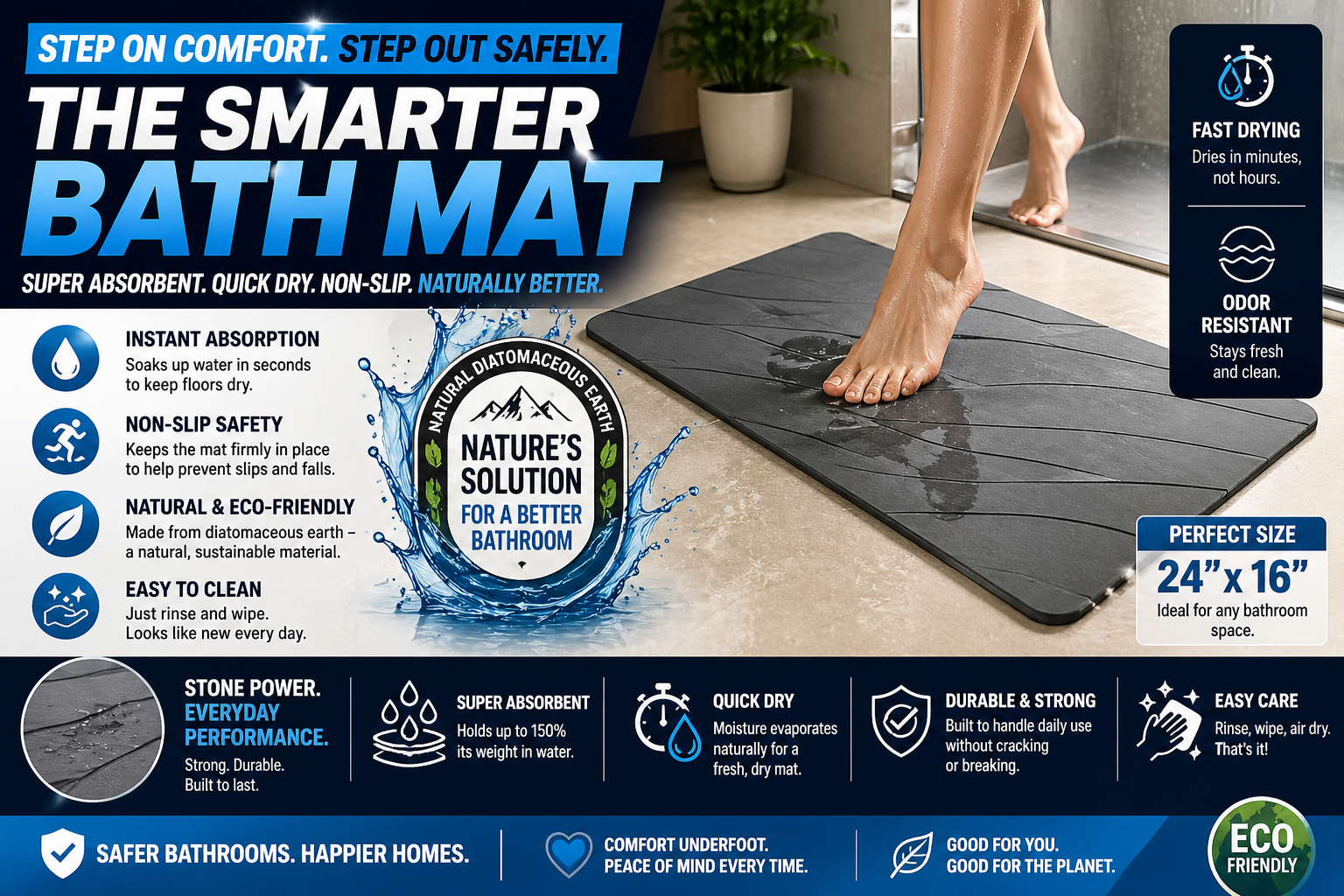
Outside the shower: the mat your parent steps onto when exiting needs to stay completely in place under wet feet and the movement of stepping out. A mat that shifts even slightly at this moment is a hazard.
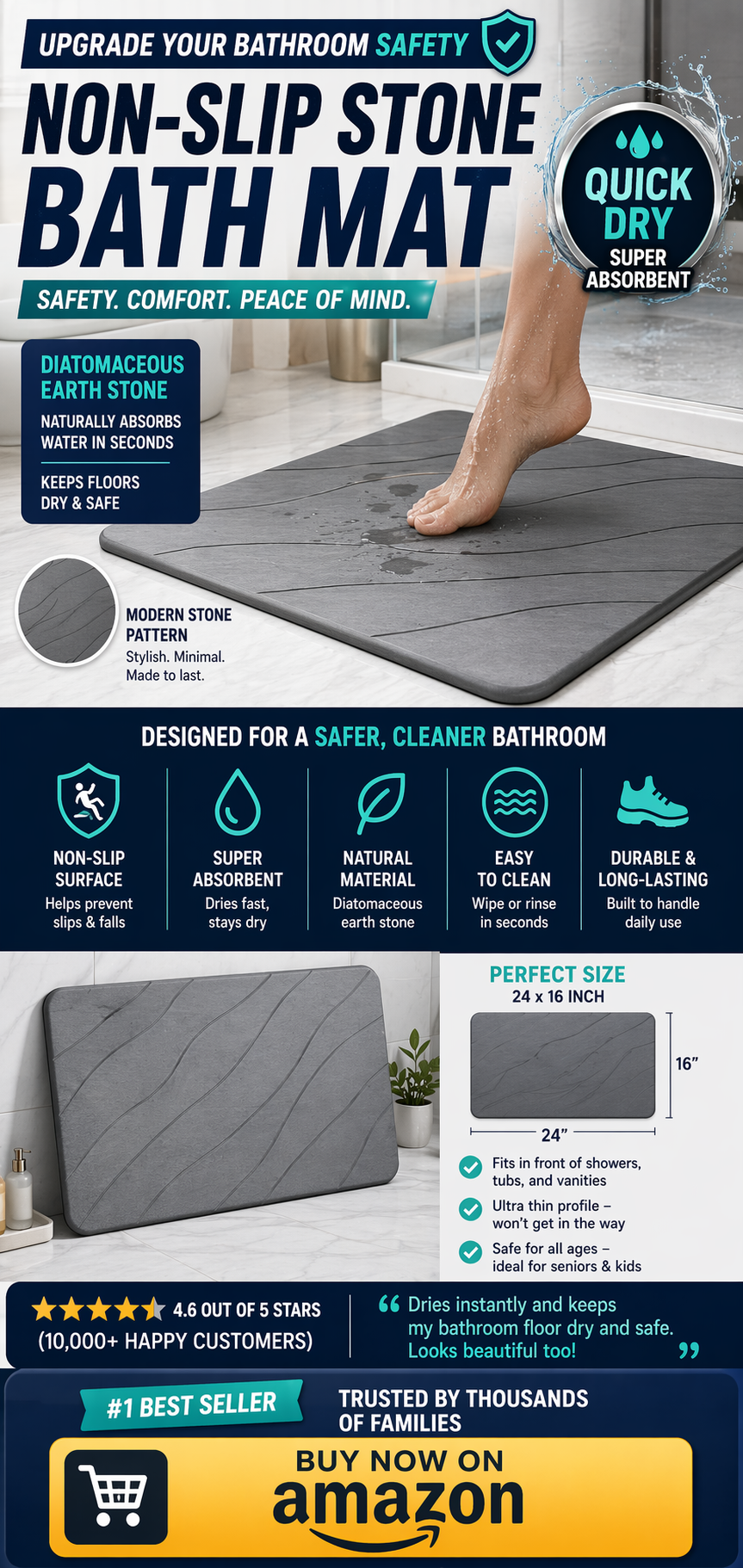
Diatomaceous Earth Stone Bath Mat — Non-Slip, Quick Dry, Super Absorbent, 24 x 16 Inch
This is a genuinely different approach to the bath mat problem, and it solves several issues simultaneously. The diatomaceous earth stone construction means the mat absorbs water almost instantly and dries extremely quickly — which matters because a soggy mat that stays wet creates ongoing slip risk throughout the day.
Unlike fabric bath mats, this mat doesn’t shift. The stone construction and non-slip base keep it firmly in place on the bathroom floor under wet feet and movement — exactly what you need at the point where your parent is stepping out of the shower. There’s no bunching, no sliding, no curling edges.
It’s also easier to maintain than fabric mats. No laundering, no drying time, no mildew risk from a mat that stays damp. A quick wipe or rinse keeps it clean and effective. For families managing a parent’s bathroom safety remotely, a mat that stays clean and functional without ongoing attention is a real practical advantage.
At 24 x 16 inches it provides a solid landing zone outside the tub or shower — large enough to step onto confidently without precision.
→ Check current price and availability on Amazon
Consider a Shower Chair or Bath Seat
Standing in a wet shower is one of the riskiest things an older adult does on a daily basis. The combination of wet feet, one-legged balance during washing movements, and a slippery surface creates consistent fall risk every single day.
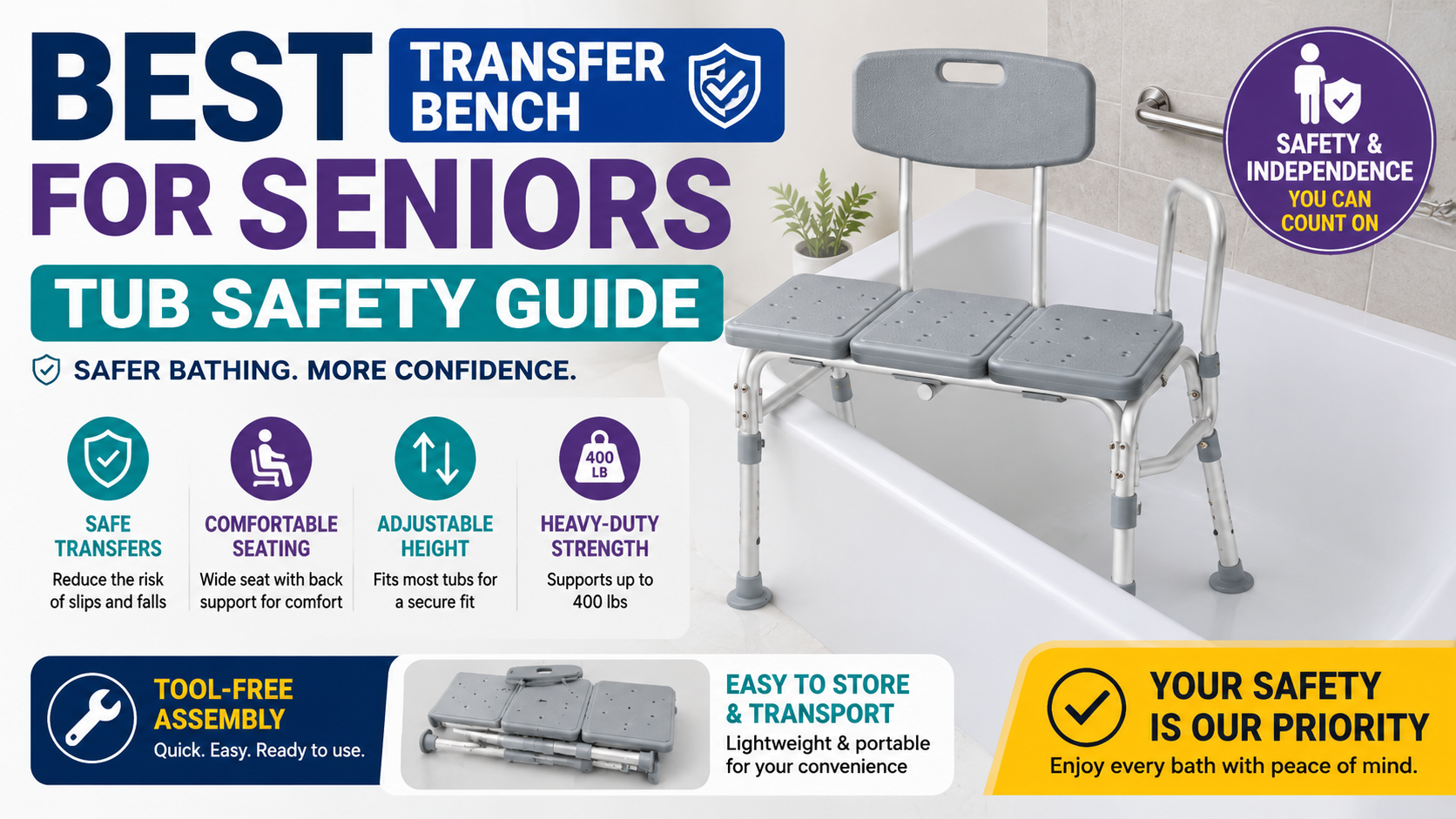
A shower chair or bath seat eliminates that standing risk by allowing your parent to bathe seated. This is one of the most effective bathroom safety upgrades available — and one of the most resisted, because many seniors associate it with significant physical decline. If stepping over the tub wall is the main concern, a transfer bench for tub safety may be more appropriate than a standard shower chair.
The reality is that occupational therapists recommend shower chairs proactively for seniors with any balance challenges — not as a last resort, but as a sensible risk reduction. Framing it to your parent as a comfort upgrade rather than a safety device often helps with acceptance. Showering seated is genuinely more relaxing and less physically demanding. Many people who try it prefer it regardless of fall risk.
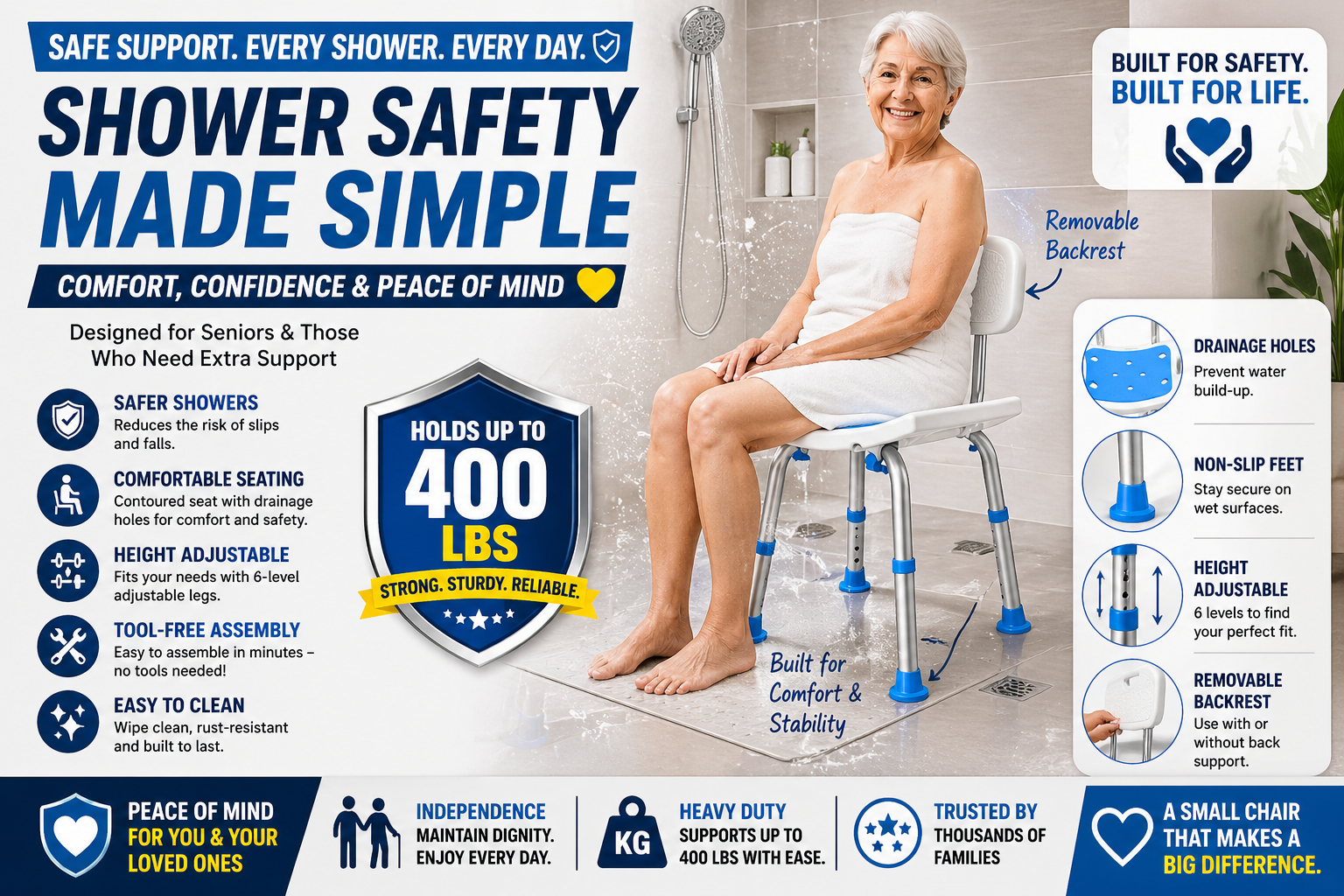
HOMLAND Shower Chair with Removable Back — 400 lb Capacity Heavy Duty Bath Seat for Seniors
The 400-pound weight capacity is the first thing worth noting — this is a genuinely sturdy chair, not a flimsy plastic seat that flexes under use. For seniors who need to push up from the seat or who shift their weight significantly during bathing, that structural integrity matters.
The removable back is a practical feature that many families underestimate. Some seniors prefer a backrest for support and comfort. Others find it easier to bathe without it, or need to remove it to fit the chair properly in their specific shower space. Having the option without buying two different products is genuinely useful.
The non-slip rubber feet keep the chair stable on wet shower floors — critical, because a shower chair that slides defeats the entire purpose. The legs are height-adjustable to fit your parent’s specific height and shower configuration, which affects both comfort and the biomechanics of sitting and standing from the chair.
Assembly is straightforward and the chair is designed to be moved in and out of the shower easily if your parent doesn’t want it there permanently.
→ Check current price and availability on Amazon
Address the Toilet — a Frequently Overlooked Hazard
Getting on and off a standard-height toilet is a significant and repeated daily fall risk for seniors with hip problems, knee pain, reduced leg strength, or balance challenges. The lowering motion requires significant eccentric muscle control — the kind of strength that declines with age — and the rising motion requires pushing up from a deep position.
Two options address this effectively:
Raised toilet seats add 3 to 6 inches of height to the toilet, reducing the depth of the sit-to-stand transition significantly. They typically clamp onto the existing toilet and require no installation.
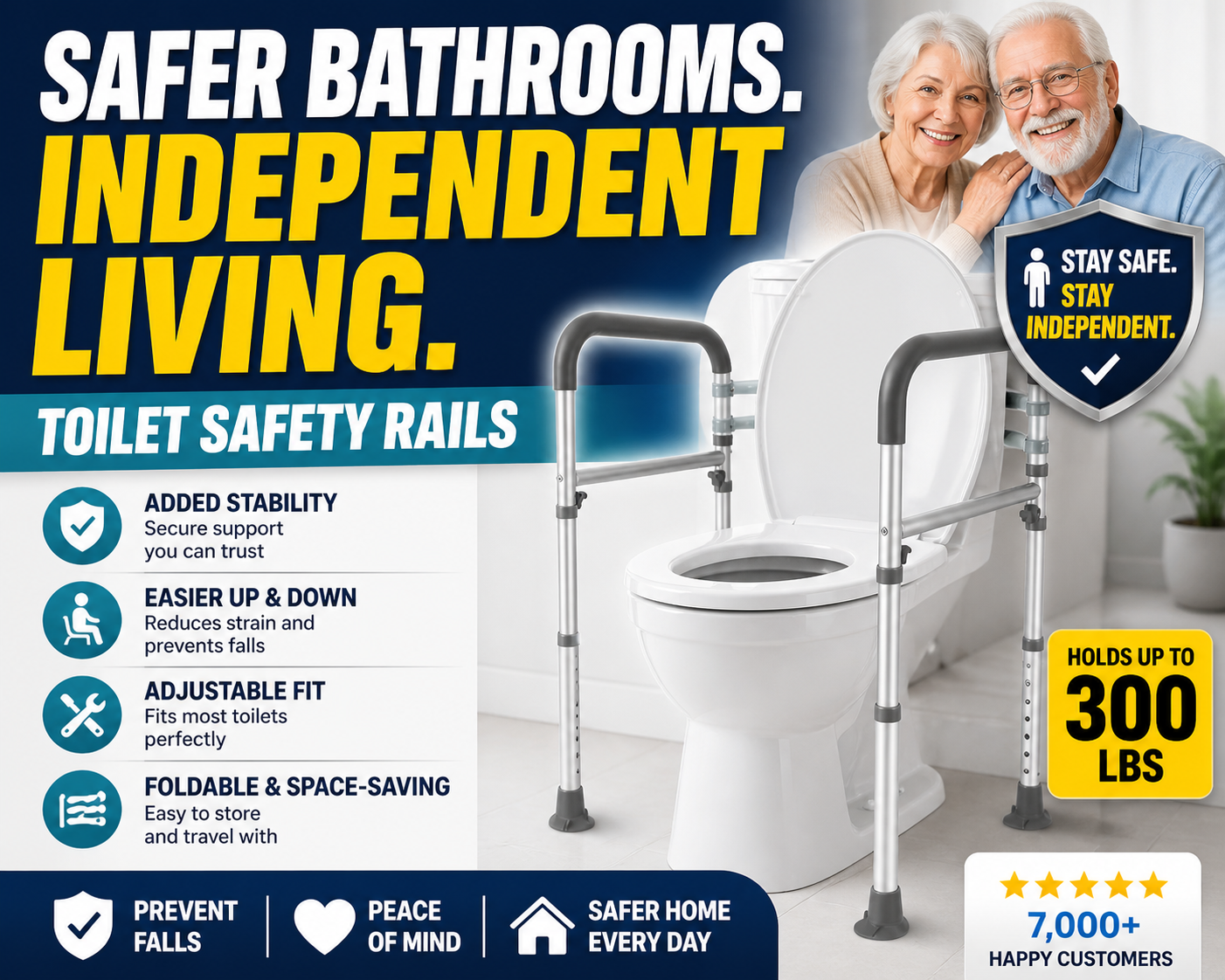
Toilet safety frames add armrests on both sides of the toilet that your parent can push down on when rising — dramatically reducing the leg strength required and providing stability throughout the motion. Some combine raised seat height with armrests in a single unit.
For seniors who have had a hip replacement, have significant knee problems, or have already had a bathroom fall, a toilet safety frame with armrests is one of the highest-value investments you can make. It’s used multiple times every single day.
Improve Bathroom Lighting — Especially at Night
Nighttime bathroom trips are one of the highest-risk fall scenarios for older adults. They happen in the dark, in a hurry, from a state of partial sleep, with reduced reaction time and awareness. The path from the bed to the bathroom needs to be lit automatically — not requiring your parent to find a switch before they can see where they’re going.
Motion-activated night lights are the solution. Place one in the bedroom, one in the hallway, and one in the bathroom itself so the entire path is illuminated the moment your parent’s feet hit the floor. Look for night lights bright enough to actually show the floor surface — not just provide a dim ambient glow.
Inside the bathroom, ensure the main light switch is immediately accessible at the door without requiring your parent to navigate into a dark room to find it. If the switch is in an awkward location, a plug-in lamp near the door or a motion-activated overhead light can solve this.
Clear the Bathroom Floor Completely
Bathroom floors accumulate items gradually — a scale here, a small trash can there, a basket of products that migrated from the counter. Each one is a potential trip hazard, particularly at night or when your parent is moving quickly.
The bathroom floor should have nothing on it except the bath mat. Everything else — scale, trash can, hamper, any storage — should be positioned so it is completely outside any walking path. If counter space is limited and items end up on the floor, add wall-mounted storage or over-toilet shelving to get things off the ground.
Don’t forget toilet safety rails! We wrote a review on the best ones, click here!
Check the Door — It Matters More Than People Think
Standard bathroom doors open inward. In a fall scenario where your parent is on the floor against the door, an inward-opening door can prevent rescuers from getting in quickly — or at all.
If possible, convert the bathroom door to open outward or replace it with a sliding or folding door. This is a relatively simple modification that has genuine emergency response implications. If a full door conversion isn’t feasible, at minimum ensure the door can be unlocked from outside in an emergency — replace any privacy locks that require a key with models that can be opened with a coin or simple tool from outside.

Add a Medical Alert Device as the Final Safety Layer
Even a thoroughly upgraded bathroom can’t guarantee a fall never happens. The bathroom will always carry some inherent risk. The question for every family is: if my parent falls in the bathroom and can’t get up, what happens next?
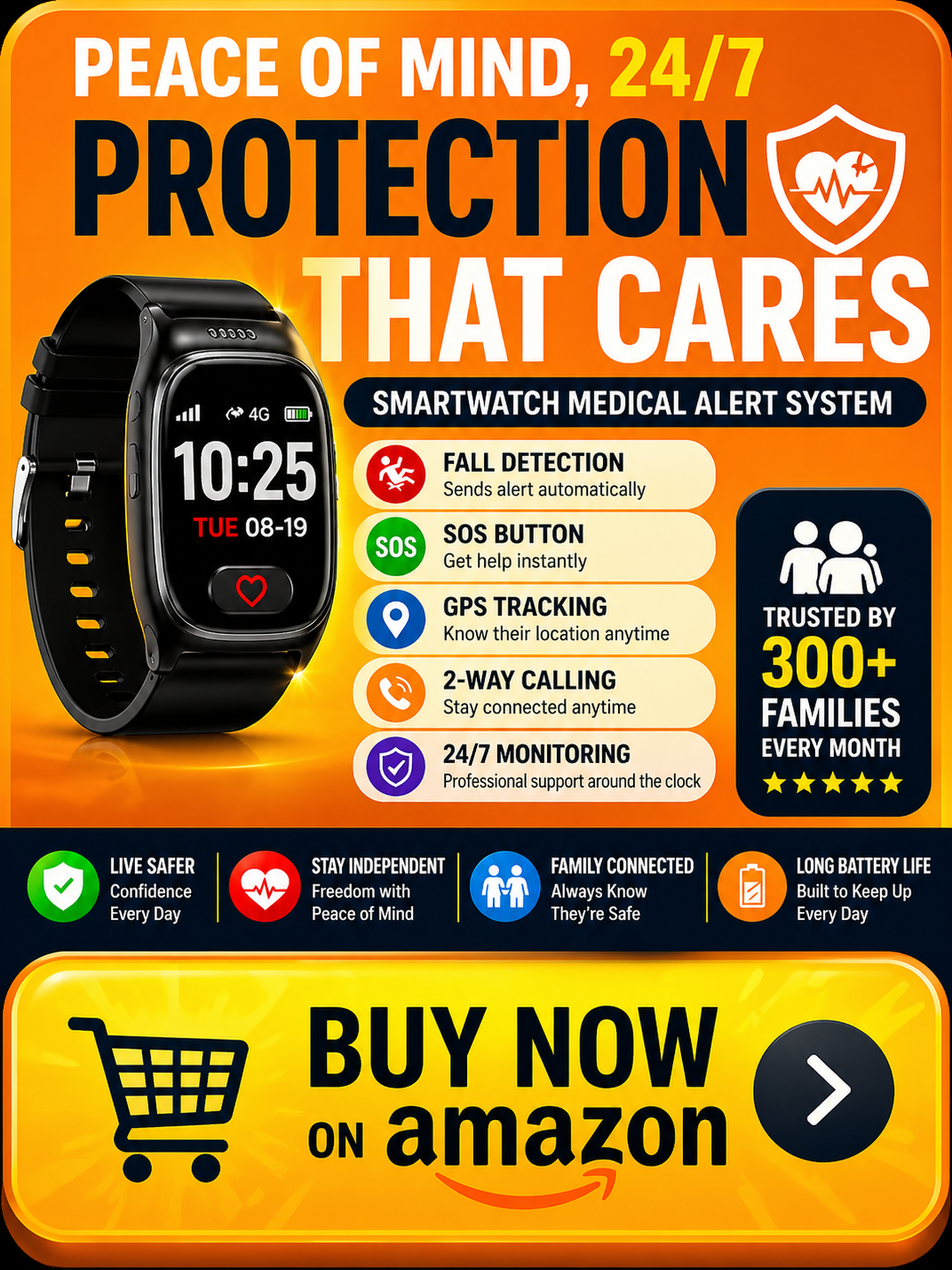
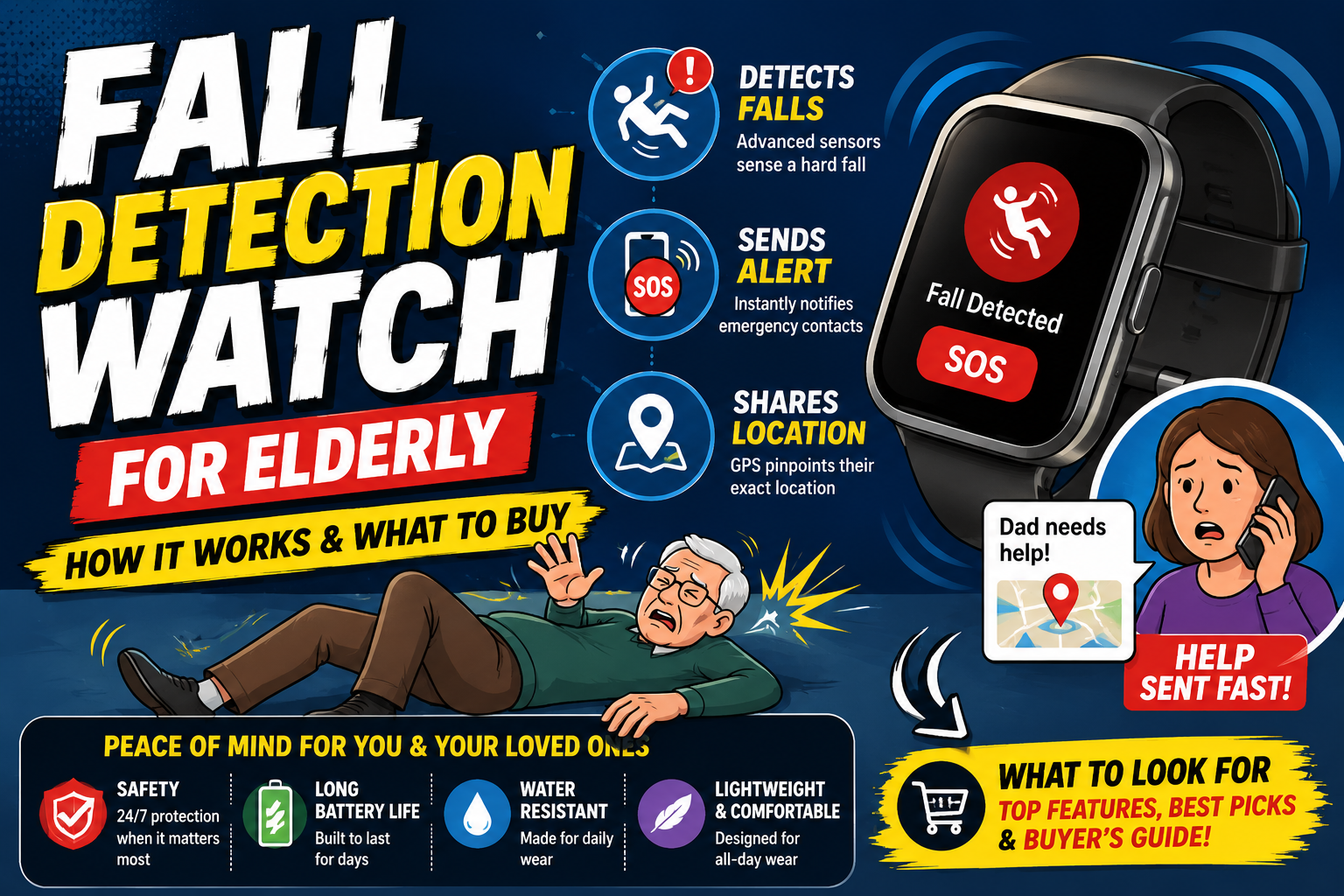
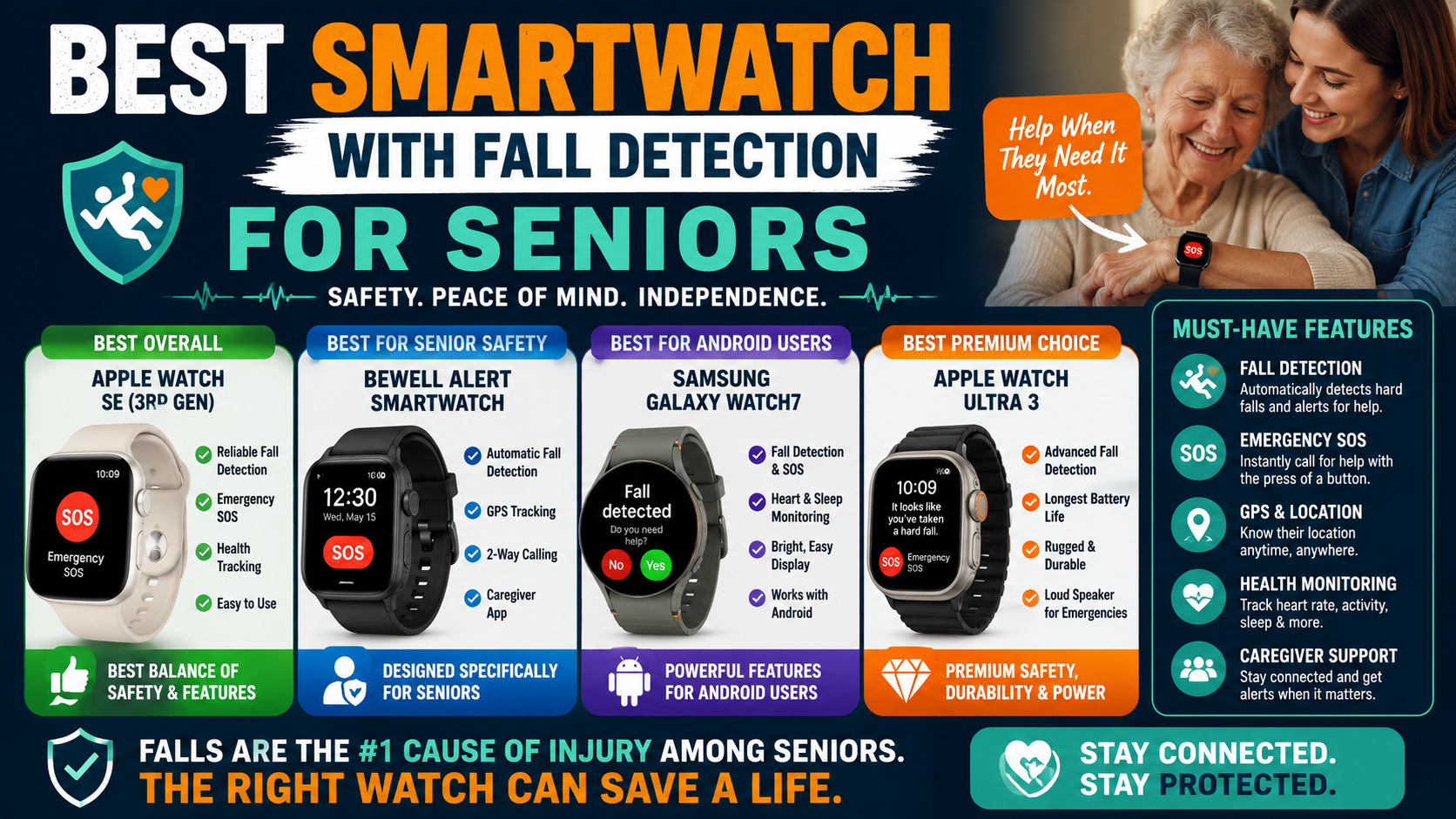
A medical alert device with automatic fall detection answers that question. The SecuLife Smartwatch detects falls automatically and alerts designated family members without your parent needing to press a button or find their phone. It’s worn on the wrist — which means it goes into the bathroom, unlike a base unit sitting in the living room.
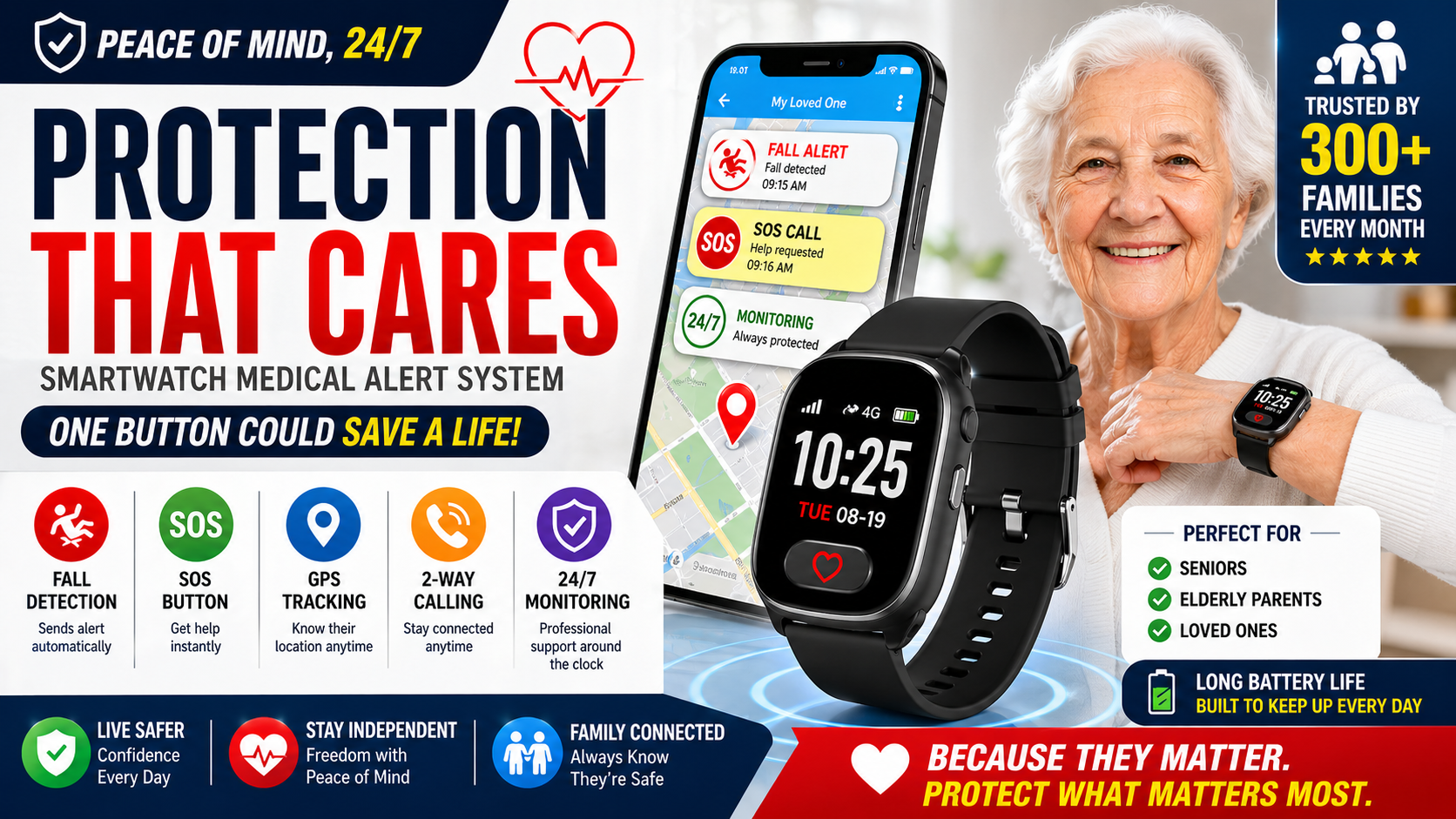
For a complete look at fall detection options and what to look for before buying, our guide on the best medical alert smartwatch for seniors covers everything in detail. And for broader fall prevention strategies beyond the bathroom, our full guide on fall prevention tips for elderly at home walks through every room systematically.
Bathroom Safety Upgrade Checklist
Use this as your action list. Work through it in order — the items at the top have the highest impact.
- Grab bars installed at shower or tub entry point
- Grab bar installed on shower or tub back wall
- Grab bar or safety frame installed next to toilet
- Non-slip mat or strips inside shower or tub
- Secure non-slip bath mat outside tub or shower
- Shower chair in place if balance is a concern
- Raised toilet seat or safety frame installed if needed
- Motion-activated night light installed in bathroom
- Night lights installed in bedroom and hallway
- Bathroom floor completely clear of all items
- Door opens outward or can be opened from outside in emergency
- Medical alert device with fall detection in use
Frequently Asked Questions About Bathroom Safety for Seniors
How much does it cost to make a bathroom safer for an elderly parent?
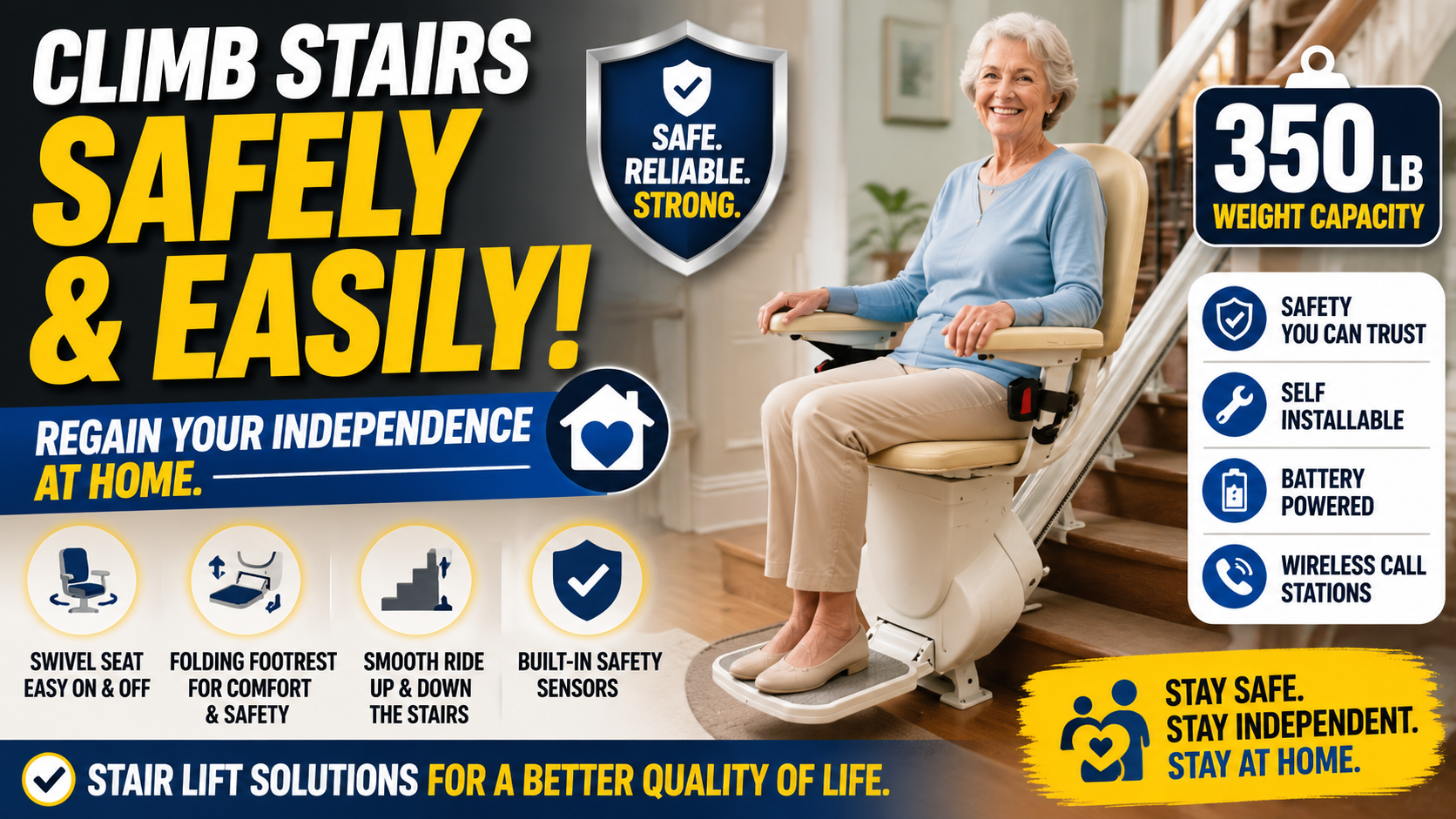
Basic bathroom safety upgrades — grab bars, a non-slip mat, and a shower chair — typically cost between $100 and $300 in total product costs, plus any installation fees for the grab bars. Professional aging-in-place assessments and full bathroom renovations cost significantly more, but for most families the core safety improvements are very affordable. Start with the highest-impact items first and build from there. When stairs are the larger barrier elsewhere in the home, a stair access modification can be evaluated as a separate aging-in-place investment.
Can I install grab bars myself or do I need a professional?
If you’re comfortable locating wall studs and using a drill, grab bar installation is a manageable DIY project. The critical requirement is that bars must be mounted into studs or with anchors rated for load-bearing use — decorative mounting into drywall alone is not safe. If you’re not confident in the installation, a handyman can typically do it quickly and inexpensively. For seniors in apartments, check whether the building has an accommodation process for grab bar installation.
My parent refuses to use a shower chair. What should I do?
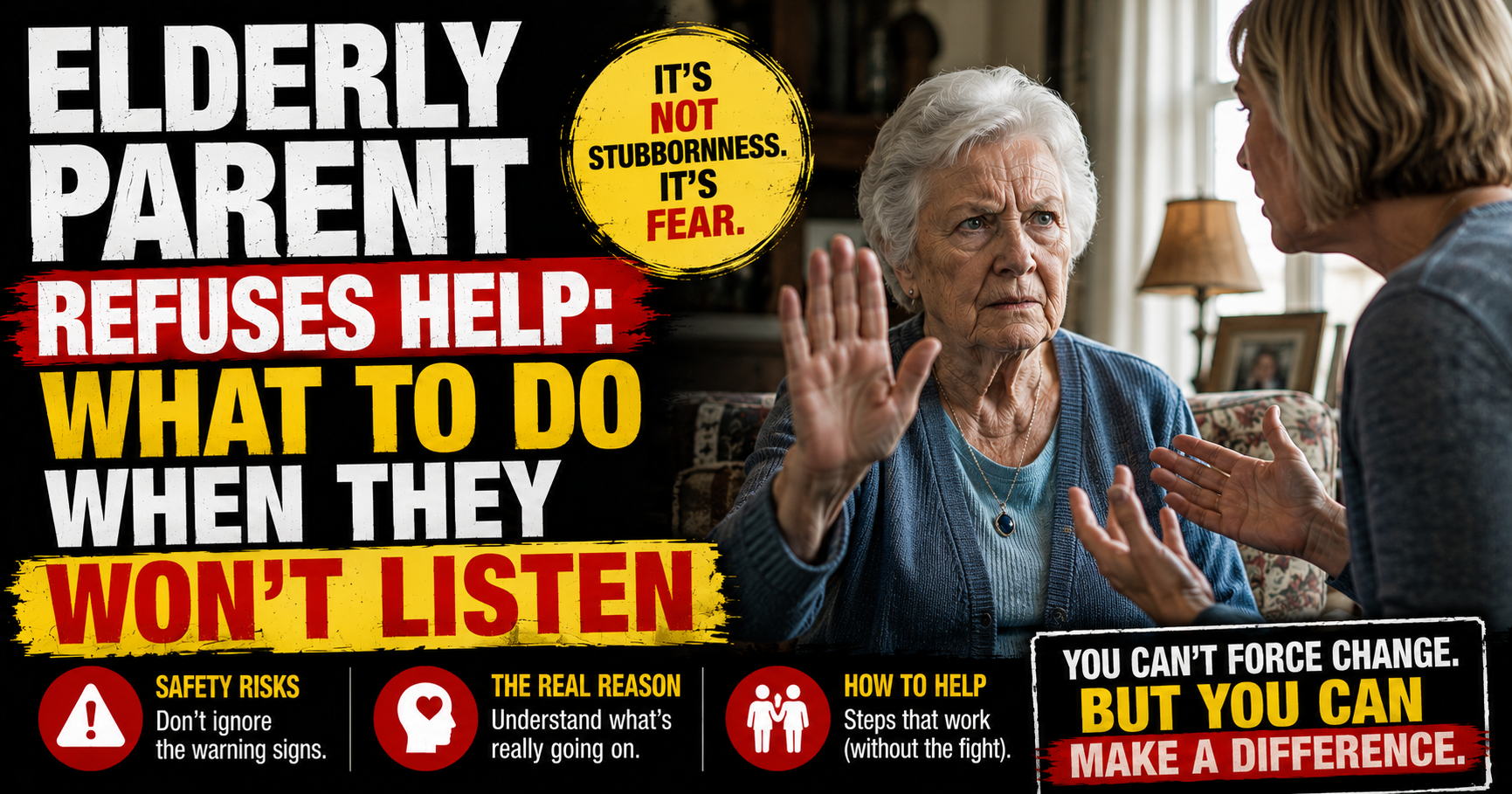
Lead with comfort rather than safety. Many seniors respond much better to “this makes showering more relaxing and less tiring” than “this is so you don’t fall.” Let them try it without pressure during a time when they’re not in a hurry. Once the physical ease of seated showering becomes clear, resistance often softens significantly. A chair with a removable back gives them more control over how they use it.
Are non-slip mats enough for bathroom safety, or do I need grab bars too?
Both are necessary — they address different risks. Non-slip mats reduce the chance of slipping on wet surfaces. Grab bars provide support during the transitions — stepping in and out, lowering and rising — where slipping is only one of several fall mechanisms. A senior can fall getting into the shower even on a non-slip surface if there’s nothing to hold onto during that off-balance moment. You need both.
What’s the most dangerous time for bathroom falls in seniors?
Nighttime and early morning — specifically nighttime bathroom trips made in a hurry from partial sleep, and the morning transition after waking when blood pressure hasn’t fully normalized and alertness is low. These are the highest-risk windows, which is why overnight lighting and grab bars at every transfer point matter so much.
Make the Changes This Weekend
Bathroom safety upgrades are one of those things that are easy to put off because nothing has gone wrong yet. That’s exactly the wrong way to think about it.
The changes covered in this guide are affordable, practical, and can realistically be done in a single weekend. Grab bars take an hour to install. A new bath mat takes five minutes to put in place. A shower chair ships to the door and assembles in minutes.
The cost of not acting is a bathroom fall — and bathroom falls in seniors have serious, sometimes devastating consequences. The cost of acting is a weekend and a few hundred dollars.
Start with the grab bars. Everything else follows from there.
About the Author
Margaret Holloway, RN spent 22 years working as a registered nurse in geriatric care, including more than a decade in a hospital-based falls prevention program in Cincinnati, Ohio. After retiring from clinical nursing, she began writing about senior safety to help families navigate decisions she watched hundreds of them struggle with under pressure. Margaret’s own mother wore a medical alert device for the last four years of her life — an experience that reinforced for her how much the right device, chosen at the right time, actually matters. She writes for Elder Safety Guide to give families the kind of honest, practical guidance she wished more of her patients’ families had access to before something went wrong.