Telling a parent they need to consider moving is one of the hardest conversations in family caregiving. Here’s how to have it — what to say, what not to say, and how to keep the relationship intact.
Most adult children dread this conversation for months before having it. They rehearse it in the car. They bring it up tentatively and then back off when it doesn’t go well. They wait for a crisis to make the decision for everyone — which is exactly what they were trying to avoid.
Talking to an aging parent about moving — whether to a smaller home, a senior living community, an assisted living facility, or into a family member’s house — is genuinely one of the hardest conversations in family caregiving. It touches on independence, mortality, identity, family obligation, and decades of relationship history all at once.
There’s no version of this conversation that’s easy. But there’s a version that goes better than most — and a version that damages the relationship and produces resentment on both sides. This guide covers the difference.
Before the Conversation — Get Clear on These Things First
The most common reason this conversation goes badly is that the adult child comes in with a conclusion already reached and a plan already formed — and the conversation becomes an attempt to get the parent to agree rather than a genuine discussion. Parents recognize this immediately and respond accordingly.
Are You Certain Moving Is Actually Necessary?
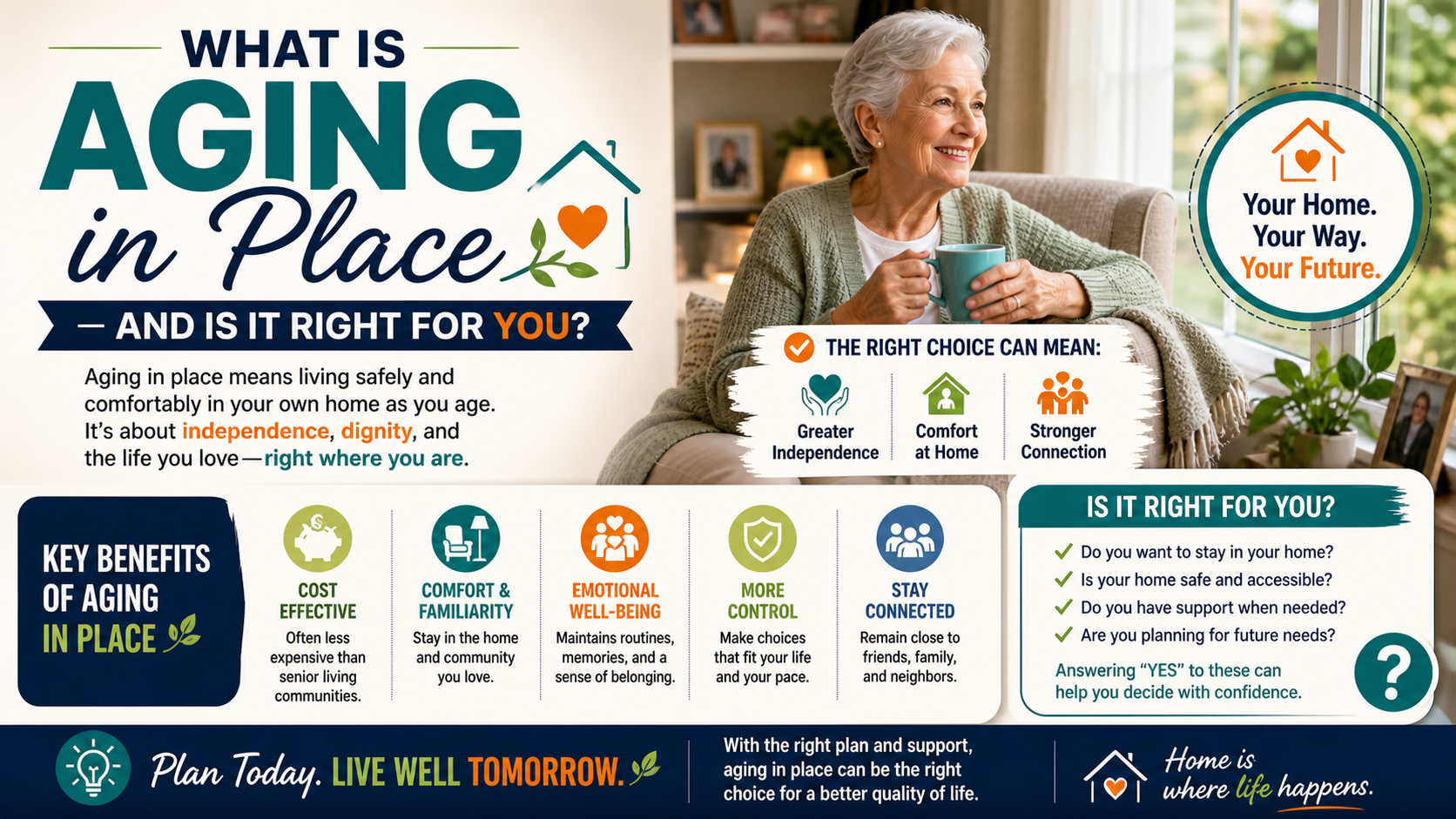
This question deserves honest examination before any conversation happens. Many families reach the conclusion that a parent needs to move before exhausting the home modification and support options that could make staying home safe and sustainable. Assessing What Is Aging in Place — and Is It Right for You? helps families compare staying home with the level of modifications and support their parent may need.

Grab bars, a medical alert device, better medication management, in-home support services, and a stronger check-in routine address most of what makes families feel their parent isn’t safe at home. Moving is appropriate when those measures genuinely can’t address the safety picture — not as a first response to normal aging changes. For one practical bathroom modification to consider before discussing a move, see these shower safety grab bars.
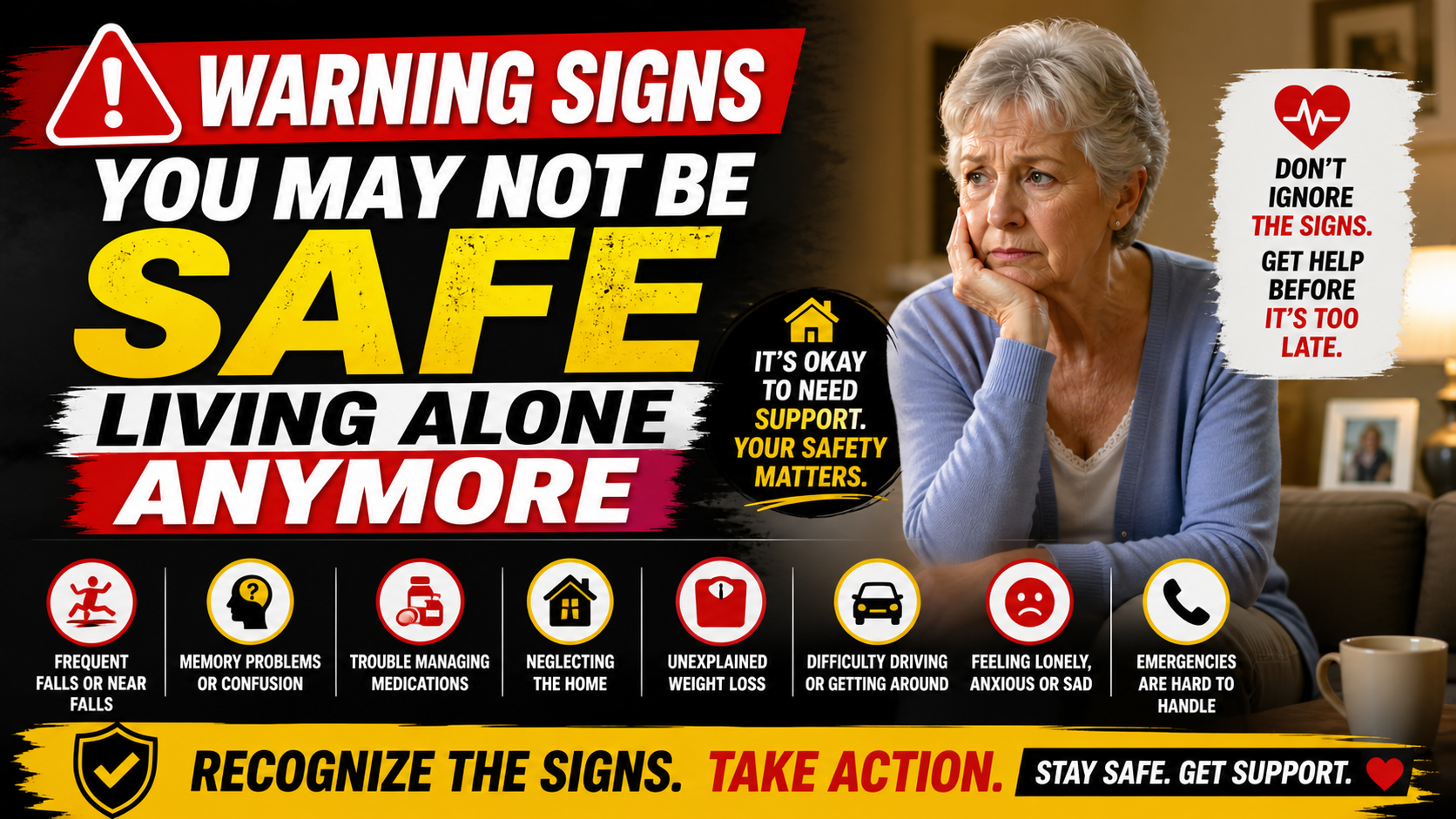
Our guide on warning signs you may not be safe living alone covers the specific signals that indicate home living has become genuinely unsafe versus those that indicate home modifications are needed. Our comprehensive guide on how to help an elderly parent live safely alone covers every step worth taking before the moving conversation becomes necessary.
If significant safety modifications and support services haven’t been tried, try those first. The moving conversation becomes necessary much later — and sometimes not at all — for families who address home safety proactively.
What Does Your Parent Actually Want?
Research consistently shows that the vast majority of older adults strongly prefer to remain in their own home. That preference is worth taking seriously rather than treating as denial or stubbornness to be overcome.
Before any conversation about moving it’s worth genuinely understanding what your parent wants — not to simply agree with it regardless of safety, but to approach the conversation with honest respect for their preferences rather than treating those preferences as an obstacle.
What Are You Actually Asking?
Moving covers a wide range of options with very different implications. Being clear in your own mind about what you’re proposing before the conversation — and being open to alternatives — makes the conversation more productive.
- Downsizing to a smaller, more manageable single-story home
- Moving to an independent living senior community
- Moving to an assisted living facility with personal care support
- Moving into a family member’s home
- Memory care for someone with significant dementia
Each of these is a different conversation with different implications. Know which one — or which range — you’re actually proposing before starting.


How to Start the Conversation
Choose the Right Moment
Not during a family gathering where your parent will feel ambushed by an audience. Not immediately after a frightening incident when emotions are raw and everyone is reactive. Not over the phone where tone and connection are limited. Not as the last item at the end of a visit when time pressure creates urgency that doesn’t serve the conversation.
A calm, private, unhurried one-on-one conversation — ideally during a positive visit rather than a tense one — is the right context. If you have siblings who should be part of the conversation eventually, start one-on-one and then include others after the initial discussion, rather than starting with everyone present and overwhelming the situation.
Lead With Connection, Not Content
The first moments of this conversation set the entire tone. Starting with the topic — “I’ve been thinking we need to talk about whether you should still be living here” — creates immediate defensiveness. Starting with connection — sitting together, acknowledging the relationship, expressing care before any content — creates a different atmosphere.
“I’ve been thinking a lot about you lately and I want to make sure we’re talking openly about what you need and what you want. Can we do that?”
That’s not the conversation yet. It’s an invitation to the conversation. The difference matters.
Ask More Than You Tell
The conversation works better when you spend more time asking questions than making statements — at least at first. Your parent’s answers will tell you what they’re aware of, what they’re worried about, what they want, and what they’re not saying.
Questions worth asking:
- “How are you finding things here lately — what’s been going well and what’s been harder?”
- “Do you ever worry about what would happen if something went wrong when you were alone?”
- “What would make you feel more secure here?”
- “Have you thought about what you’d want if things changed and you needed more support?”
- “Is there anything you wish were different about your current situation?”
Listen to the answers. Really listen — not to gather ammunition for your position but to understand theirs. You may learn things that change your assessment of the situation.


The Specific Conversations for Specific Situations
When Safety Is the Concern
If the conversation is driven by genuine safety concerns — falls, medication errors, cognitive changes creating dangerous situations — be specific about what you’ve observed rather than making general statements about declining capacity.
“I noticed three bruises last visit that you couldn’t explain, and you mentioned you fell in the bathroom last month. I’m worried about what would happen if you had a more serious fall when I’m not there.”
Specific observations are less threatening than general assessments of decline. They invite specific responses — “that bruise was from the car door” — rather than wholesale rejection of the premise.

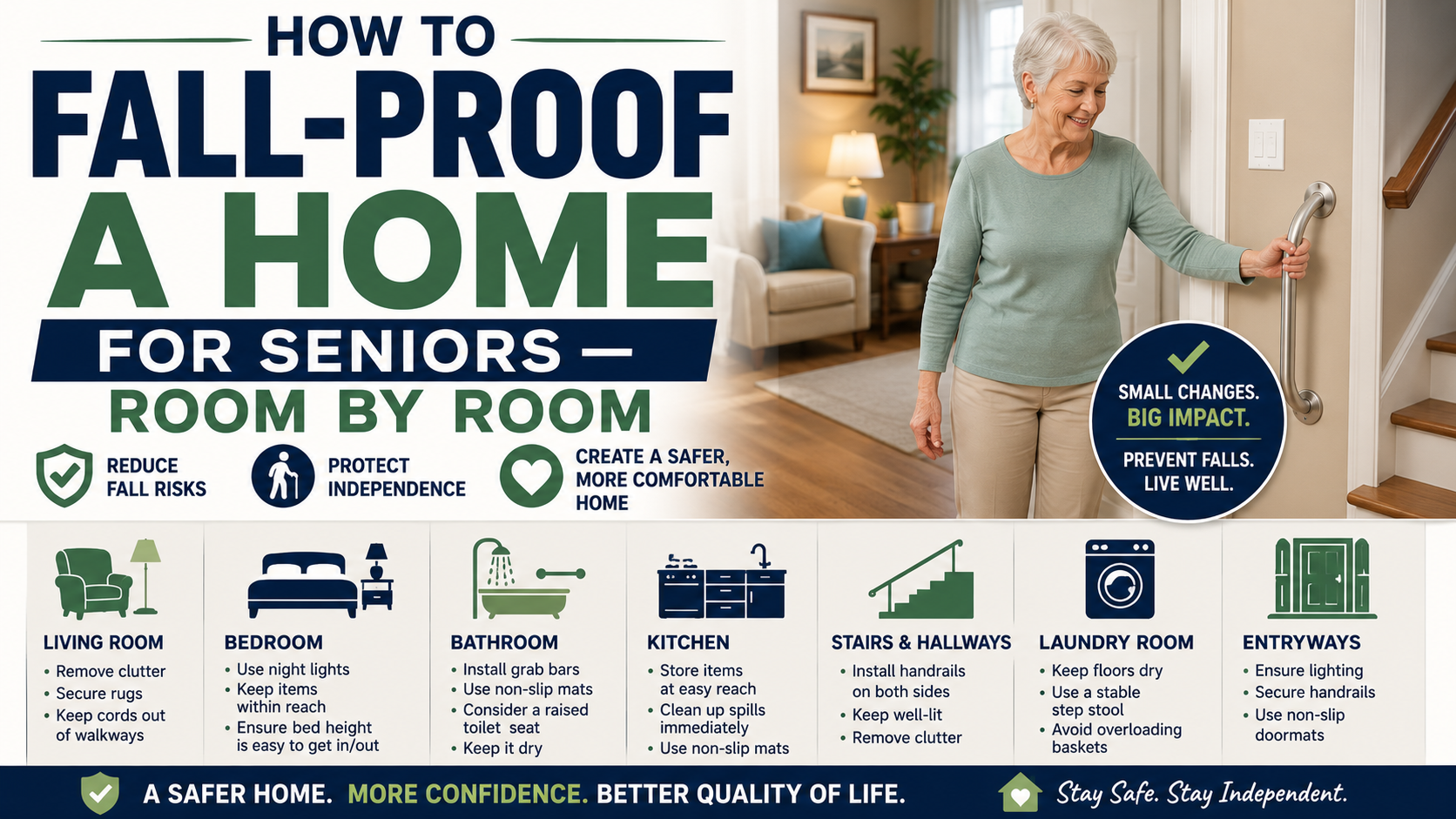
Before the conversation about moving, make sure home safety modifications have been addressed. Our guide on home modifications ranked by impact covers what to address first. Grab bars, toilet safety rails, and a medical alert device address most fall-related safety concerns without requiring a move.


The SecuLife Smartwatch — automatic fall detection and GPS — is often the piece that makes staying home genuinely safe rather than hopefully safe. Presenting it as an alternative to moving, rather than a stepping stone toward it, can open space for your parent to accept it. Our full review: SecuLife Smartwatch Review
→ Get the SecuLife Smartwatch on Amazon
When Cognitive Decline Is the Concern
Conversations about moving driven by cognitive concerns are particularly delicate because the person may have limited awareness of their own cognitive changes — which is itself a feature of the condition — and because the conversation touches on one of the most feared aspects of aging.
In early-stage dementia when the person retains significant capacity, having the conversation while they can genuinely participate in the decision is important. A decision made collaboratively while capacity exists is far better than one made for the person after it has declined.
“I want to talk with you while we can really think through this together, before we ever have to make decisions in a rush. What do you want your life to look like if things get harder? What matters most to you?”
This framing — future planning while capacity exists, not current crisis management — makes the conversation feel collaborative rather than threatening.

Our guides on home safety for seniors with dementia and keeping a parent with dementia safe at night cover what makes staying home safe at earlier dementia stages, which may make the moving conversation less immediately necessary.
When Isolation Is the Concern
When the driving concern is social isolation — a parent who has become significantly withdrawn, has lost driving ability, and is spending most of their time alone — the moving conversation can be framed around what they’d gain rather than what they’re losing.
“I’ve been thinking about how much time you spend alone since you stopped driving, and I wonder if a place where there are more people around and things happening would feel better to you. Have you ever thought about what that might be like?”
A senior living community where activities, meals, and social connection are built into the daily environment addresses isolation in a way that staying in a quiet house doesn’t. For parents whose primary problem is isolation rather than physical safety, this framing is often more persuasive than any safety argument.
When the Caregiver Is Burning Out
Sometimes the conversation about moving is driven not by the parent’s safety but by the caregiver’s capacity — a family caregiver who has reached the limits of what they can sustain. This is a legitimate driver of the conversation and deserves to be named honestly rather than disguised as purely safety-focused concern.
“I have to be honest with you about something. I’m struggling to keep up with everything and I’m worried I’m not doing either of us any good. I want to think together about what would help — both for you and for me.”
This kind of honesty — vulnerable rather than authoritative — often produces a very different response than a parent who feels they’re being managed. It invites them to care about you, which most parents very much want to do.

Our guide on caregiver burnout covers when caregiving has reached unsustainable levels and what actually helps.
When Your Parent Refuses to Consider Moving
Refusal is the most common response — at least initially. Here’s how to handle it without the conversation becoming a battle.
Don’t Push to Conclusion in One Conversation
The first conversation about moving rarely produces agreement. Its job is to open the topic, express care and concern, and plant seeds that can grow between visits. Pushing for resolution in a single conversation typically produces hardened resistance rather than considered agreement.
End the first conversation gracefully: “I don’t need you to decide anything today. I just wanted us to start talking about this. Can we keep thinking about it and talk more next time?”
Separate the Issue From the Relationship
Make sure your parent knows that your care for them doesn’t depend on their agreeing with your assessment. “I love you and I’m going to be here regardless of what you decide. I just want us to be thinking about this together.”
When the relationship feels secure regardless of the outcome of the conversation, resistance often softens. When it feels like the relationship is conditional on agreement, resistance hardens.
Involve Their Physician
A recommendation from a trusted physician carries weight that an adult child’s concern often doesn’t — because the physician is perceived as objective rather than having an agenda. Ask the physician to raise mobility, safety, and living situation in the context of an honest assessment.
This works best when you’ve communicated your specific observations to the physician before the appointment — so the physician can address concrete concerns rather than giving general reassurances that everything is fine.
Propose a Visiting Day
For parents who are categorically opposed to any senior living option they imagine rather than know, a visiting day — touring a specific community together, having lunch, meeting residents — often changes the conversation dramatically. What’s feared in the abstract is often much more appealing in reality.
“I’m not asking you to decide anything. I just want us to go see what it’s actually like — you might hate it, and that’s fine. But let’s see what we’re actually talking about before deciding.”
Respect Autonomy — Even When It’s Hard
Adults have the right to make decisions about their own lives — including decisions that involve risk that worries their children. Unless cognitive incapacity has removed legal decision-making capacity, your parent gets to choose where they live.
Your job is to make sure they have honest information, appropriate safety measures in place, and the ongoing opportunity to reconsider as circumstances change. It’s not to override their preferences because you’re worried.
Respecting autonomy doesn’t mean abandoning concern. It means expressing concern through support — better safety equipment, more frequent check-ins, stronger support networks — rather than through overriding decisions.
What Not to Say
Certain phrases reliably make this conversation worse. Avoid them regardless of how accurately they describe your feelings.
“You can’t keep living alone like this.” — Authoritative and dismissive of their capacity. Even if true, this framing generates resistance rather than cooperation.
“I’m not going to be able to sleep at night worrying about you.” — Making your anxiety their responsibility puts them in the position of needing to manage your feelings rather than their situation.
“What if something happens to you?” — Vague catastrophizing that doesn’t lead anywhere constructive and creates fear without direction.
“We’ve all talked about this and we think…” — Starting with “we” creates the feeling of ambush and ganging-up that shuts down rather than opens conversation.
“You need to be realistic.” — Dismisses their perspective as unrealistic and positions you as the rational adult and them as the irrational child. No older adult responds well to this.
After the Conversation
Follow Up — Don’t Let It Drop
The worst outcome of the first conversation is that it never gets raised again because it was uncomfortable. The topic needs to stay alive — gently, consistently, over time — rather than being abandoned after the first difficult exchange.
Follow-up doesn’t mean reopening the argument every visit. It means checking in on what was discussed, asking how they’ve been thinking about it, sharing new information that’s relevant, and keeping the door open for the conversation to evolve.
Take Action on What You Can
While the bigger conversation continues, take action on the home safety measures that are within reach. Every modification that makes staying home safer reduces the urgency of the moving conversation and demonstrates that you’re committed to making their current situation work — not just trying to remove them from it.

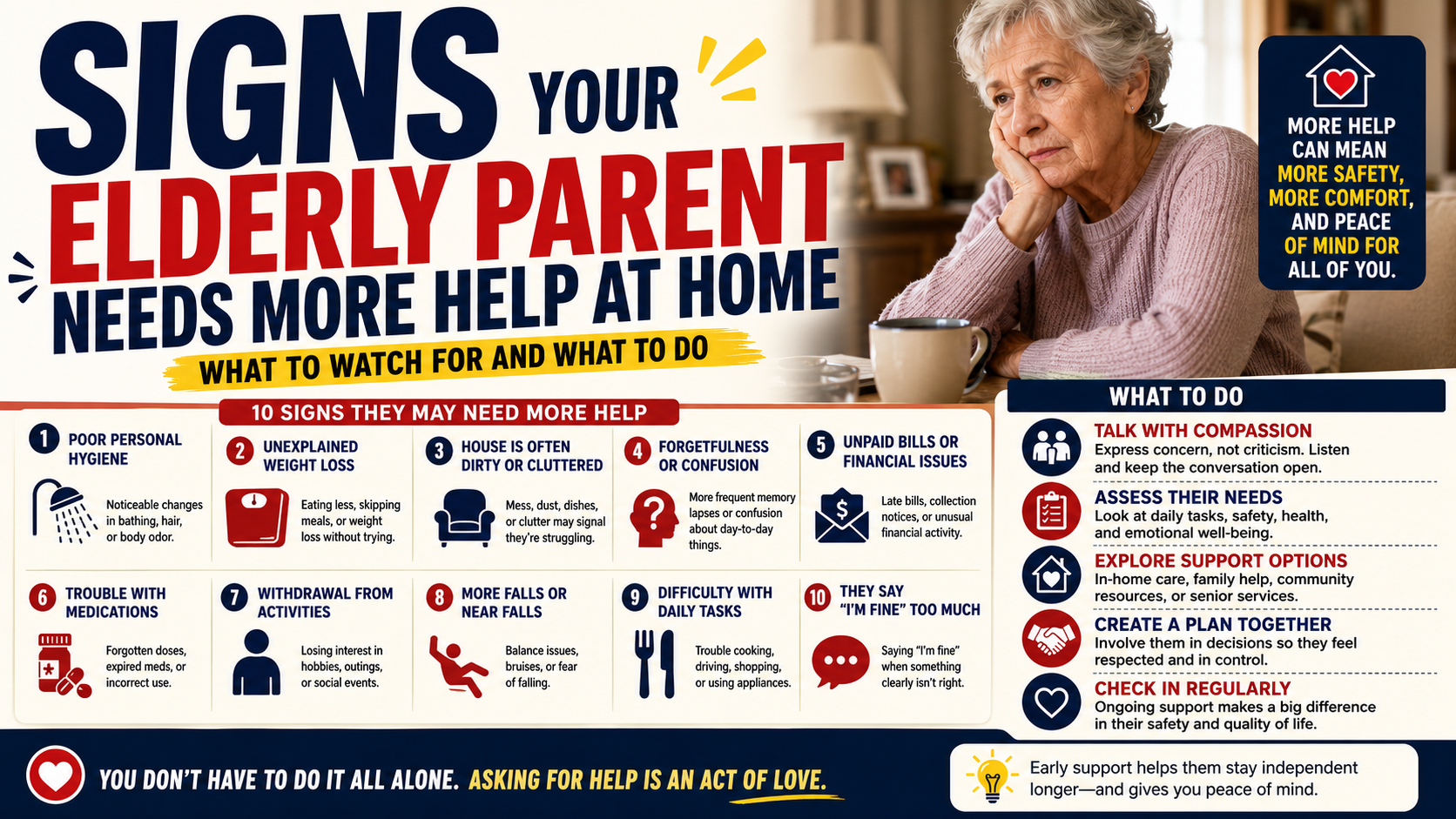
Our home safety checklist covers every modification worth making. Our guide on signs your elderly parent needs more help at home covers what to watch for as the situation evolves.
Document What You Observe
Keep notes — dated, specific — about what you observe during visits and in regular contact. This serves two purposes. It provides an objective record if the situation deteriorates and the conversation needs to become more urgent. And it keeps your own perception calibrated rather than drifting toward either catastrophizing or minimizing based on how recent visits happened to go.


When the Conversation Becomes Urgent
Most of this guide assumes the moving conversation is proactive — happening before a crisis forces it. When a crisis does occur — a serious fall, a hospitalization, a wandering episode that was frightening — the conversation changes character.
Crisis conversations require more directness and more urgency. But they don’t require abandoning the principles above — respect, honesty, genuine listening, and keeping the relationship intact. Even in crisis the conversation that treats a parent as a person rather than a problem to be solved produces better outcomes than one that doesn’t.
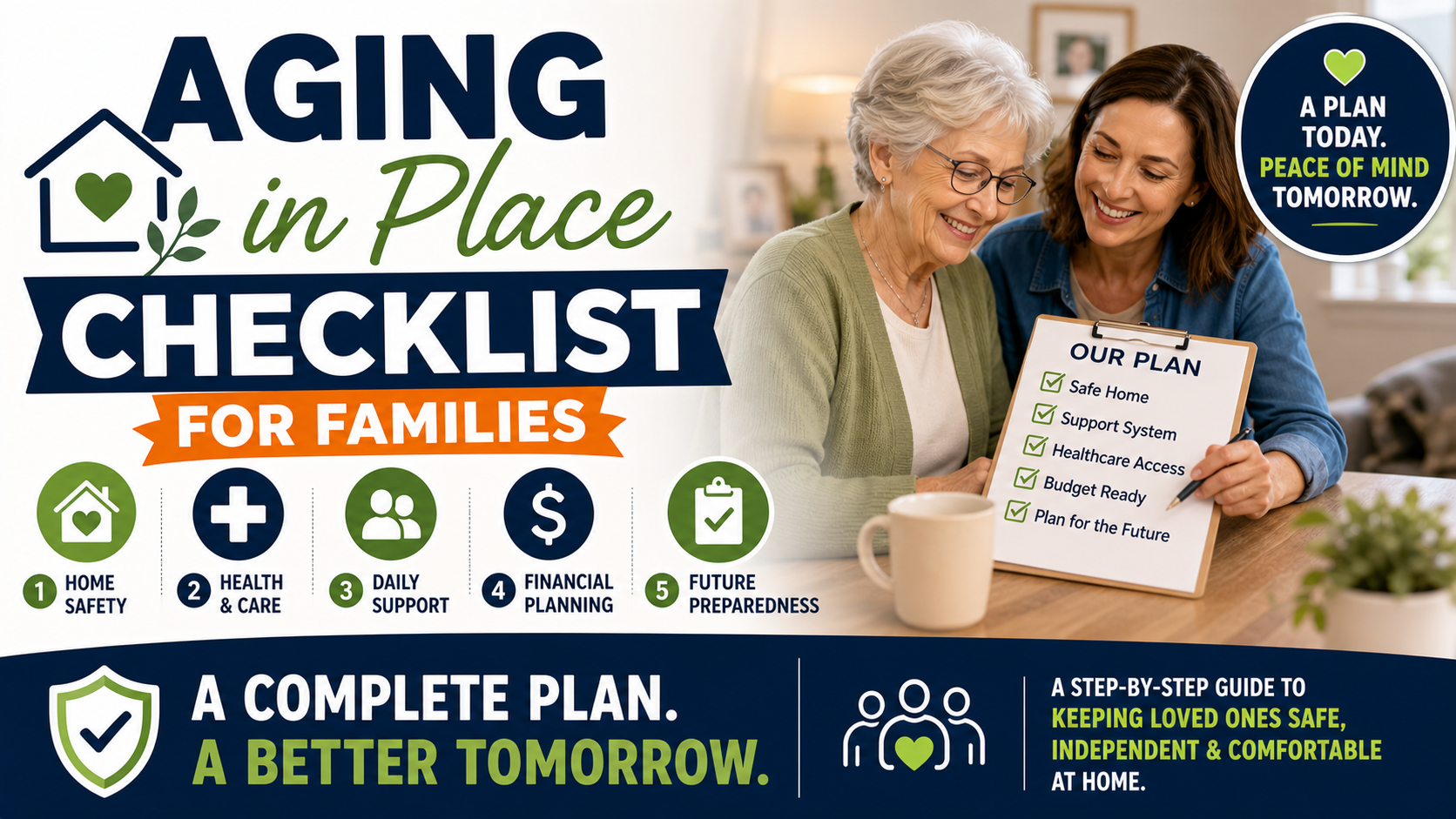
If cognitive decline has progressed to the point where your parent can no longer make safe decisions independently, legal mechanisms — Power of Attorney, guardianship — may become relevant. These require their own process and ideally an elder law attorney’s guidance. Our aging in place checklist covers legal planning as a critical component of proactive family planning.
Frequently Asked Questions
What if my parent has dementia and refuses to move even though it’s unsafe?
When cognitive decline has significantly impaired judgment and the person is no longer able to make safe decisions, the conversation shifts from persuasion to the legal and medical frameworks that govern decision-making for people who lack capacity. If a Durable Power of Attorney for healthcare was established while capacity was intact, the designated person can make care decisions. If not, guardianship may be required — a court process that authorizes someone to make decisions on behalf of a person who lacks capacity. An elder law attorney can advise on the specific options available in your state and situation.
How do I handle siblings who disagree about whether moving is necessary?
Family disagreement about aging parents is extremely common and often reflects genuinely different information — siblings who live nearby and visit frequently see a different picture than those who visit rarely. Getting everyone to the same information base is the first step — sharing your specific observations, ideally including a physician’s assessment. A geriatric care manager — a professional who assesses elder care needs and options — can provide an objective third-party assessment that grounds the family conversation in professional evaluation rather than competing impressions.
My parent agrees they might eventually need to move but refuses to do anything to plan for it. What do I do?
Agreement in principle without action is actually meaningful progress — more than outright refusal. Use it as a foundation for incremental planning: “Since we agree that we might need to think about this eventually, could we just look at what options exist? Not to decide anything — just to know what’s out there.” Information gathering feels much lower stakes than decision-making and often leads organically to decision-making as familiarity with the options reduces the fear of the unknown.
Is it wrong to involve the doctor without my parent knowing?
Sharing information with a physician — your specific observations about changes you’ve noticed — is appropriate and useful. The physician can use that information in their clinical assessment. What’s more complex is asking a physician to recommend something to your parent without your parent’s knowledge that you’re the source of the concern. Transparency — “I talked to your doctor about some things I’ve noticed because I was worried, and I hope that’s okay” — typically serves the relationship better than behind-the-scenes coordination that could feel like betrayal if discovered.
What if I’m the one who needs to move a parent into my home — how do I have that conversation?
Moving a parent into your home is its own distinct conversation — different from moving them to a care setting. It requires honest discussion of what the arrangement would actually look like: separate living spaces or shared, what caregiving responsibilities you’re able to take on and which would require professional support, what boundaries matter to each of you, and how decisions would be made when you disagree. A trial period — a month or a season — before a permanent arrangement gives both parties real information rather than assumptions about how it would actually work.
The Conversation Worth Having
This conversation is hard because it matters. It touches on everything that matters — independence, dignity, family, mortality, love, and the future. Approached with honesty, care, and genuine respect for your parent’s perspective it can strengthen the relationship rather than damage it — even when the conclusion isn’t the one either of you hoped for.
Have it before you have to. Have it more than once. Keep the relationship at the center of it. And make sure you’ve done everything possible to make staying home safe — so when you do have it, you’re bringing it from a place of genuine care and genuine necessity rather than anxiety driving premature conclusions.
For everything related to making staying home as safe as possible our guide on how to help an elderly parent live safely alone covers every step. Our aging in place checklist gives you the complete planning framework to work through together.
About the Author
Margaret Holloway, RN spent 22 years in geriatric nursing supporting families through some of the most difficult conversations in caregiving — including countless conversations about when staying home was no longer safe. She has seen these conversations go well and go badly, and the difference almost always comes down to the same things: honesty, respect, genuine listening, and keeping the relationship at the center of the conversation rather than the outcome. She writes for Elder Safety Guide to give families the guidance that makes these conversations better.