Most people don’t know what actually happens medically when an older adult falls and stays on the floor. The reality is serious enough to change how every family thinks about fall detection.
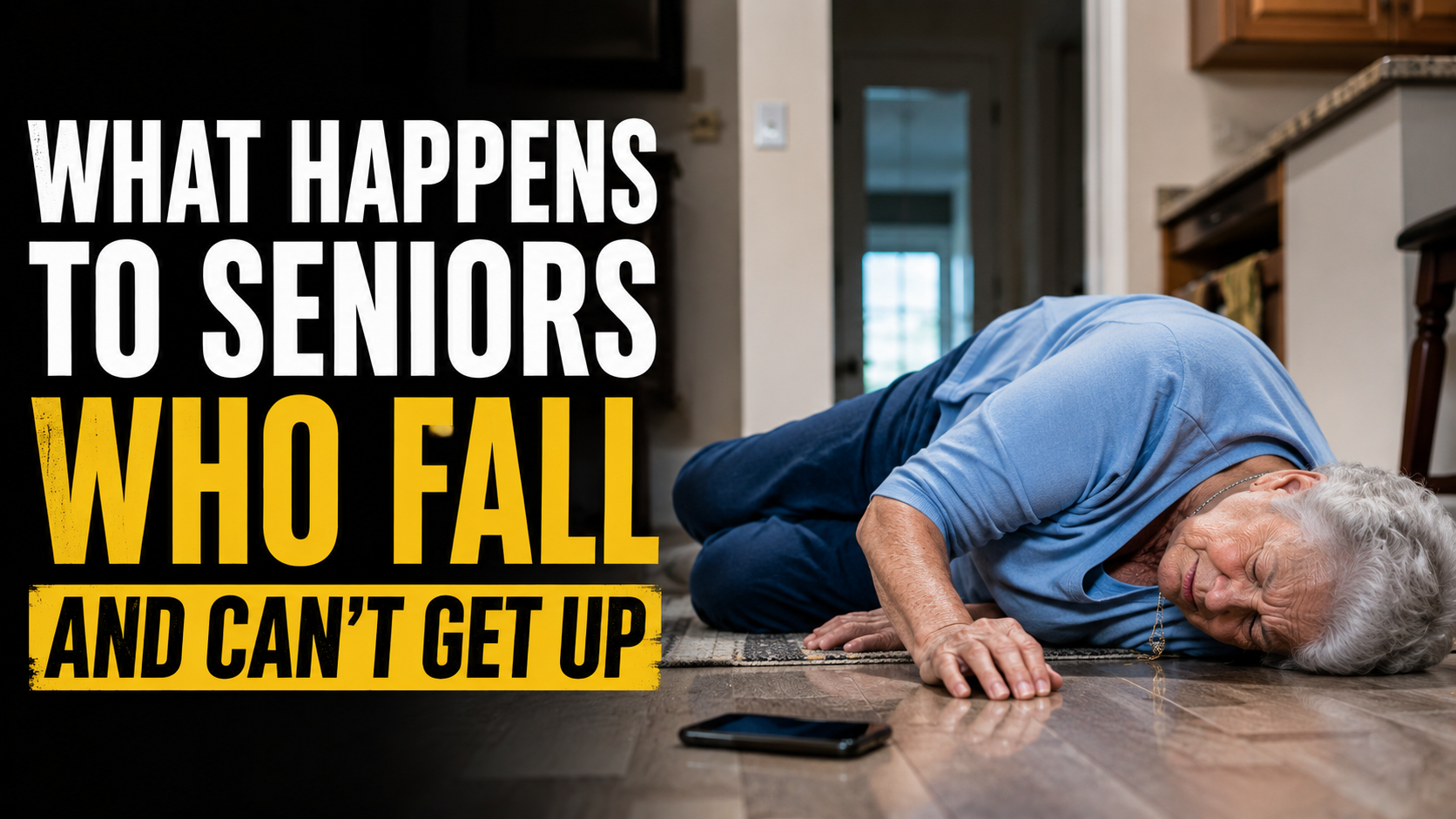
Most people have heard the phrase “I’ve fallen and I can’t get up.” It became a punchline. A cultural shorthand for over-cautious senior safety marketing.
That’s unfortunate. Because what actually happens to an older adult who falls and can’t get up — and stays on the floor for an extended period — is not a punchline. It’s one of the most serious medical scenarios in geriatric care, with consequences that are permanent and sometimes fatal.
This isn’t written to frighten. It’s written because most families don’t know what a long lie actually involves medically — and that knowledge changes how seriously they take the gap between a fall happening and help arriving. That gap is easier to evaluate after reading How Medical Alert Systems Work (Simple Explanation for Families), which explains what happens once someone calls for assistance.
What “Long Lie” Actually Means
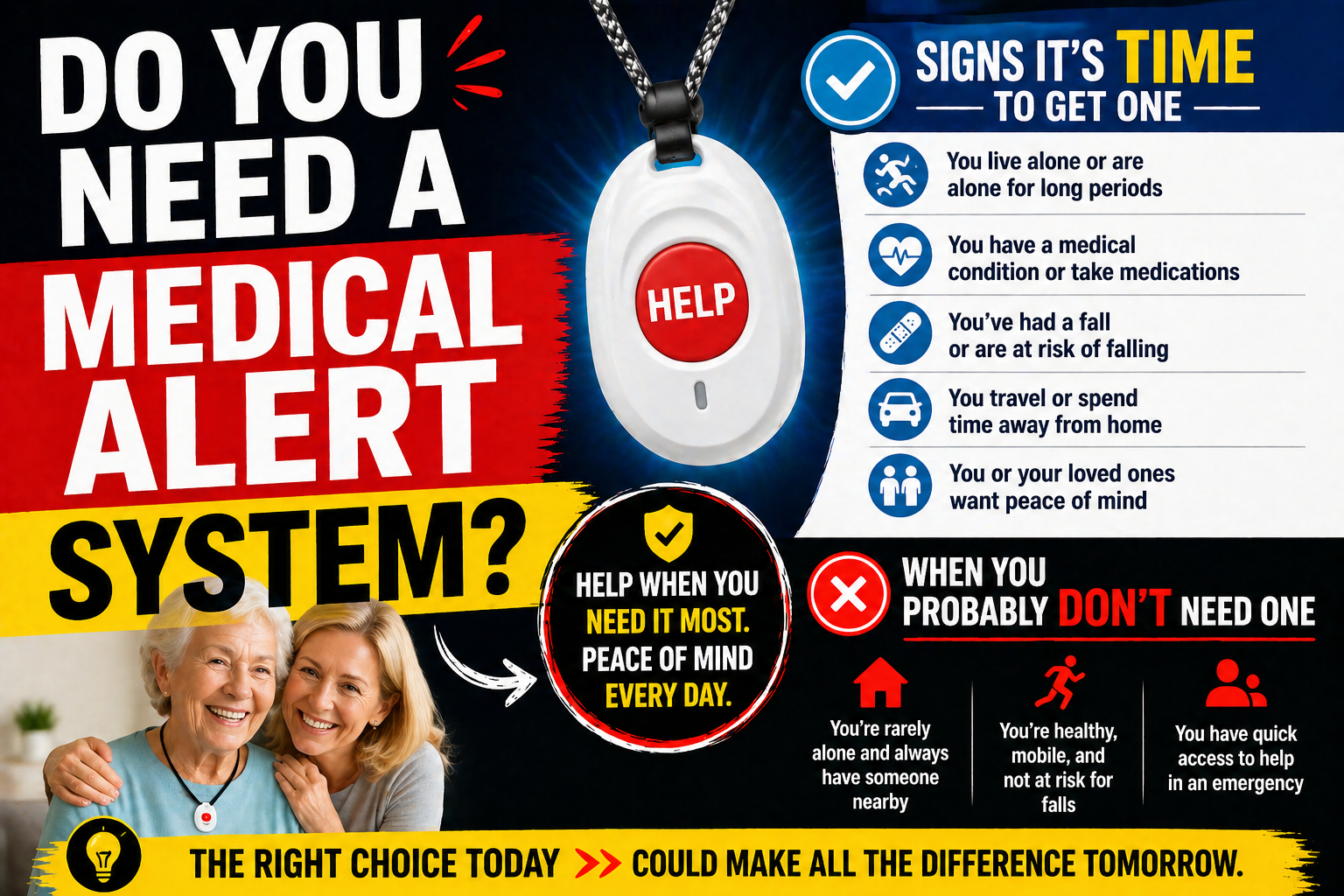
The medical term for remaining on the floor after a fall for an extended period is a long lie. The threshold most researchers use is one hour — though consequences begin accumulating well before that and compound significantly beyond it. The risks of a long lie provide important context when deciding Do You Need a Medical Alert System? Signs It’s Time (And When You Don’t).
Research consistently shows that seniors who experience a long lie following a fall have dramatically worse outcomes than those who receive help quickly — even when the fall itself caused the same initial injury. The duration on the floor is an independent predictor of outcome, separate from the injury that caused the fall.
A 2017 study in Age and Ageing found that approximately 50 percent of older adults who fall and cannot get up independently experience a long lie of more than one hour. Among those living alone the proportion is higher — because there is no one present to notice and respond.
This is not a rare edge case. It’s what happens in roughly half of falls that result in the person being unable to rise — which is a substantial portion of serious falls in older adults.
What Happens to the Body During a Long Lie
Understanding the physiology of a long lie makes clear why the duration on the floor matters so much independent of the initial injury.
Hypothermia
Lying on a cold floor — tile, hardwood, linoleum — causes the body to lose heat to the surface continuously. The body’s thermoregulatory response becomes less efficient with age, and the immobility of a fall victim prevents the movement that would otherwise generate heat. Core body temperature can drop to dangerous levels within hours, particularly in cool rooms or at night.
Hypothermia — even mild hypothermia — impairs cardiac function, cognitive function, and the body’s ability to respond to other injuries. It compounds the effects of every other consequence of the long lie and is itself a life-threatening condition at sufficient severity.
Dehydration
Hours on the floor without access to fluids — combined with the stress response that increases fluid loss — produces significant dehydration. In older adults who are often already mildly dehydrated from reduced thirst sensation, additional fluid loss moves quickly into clinically significant territory.
Dehydration in the context of a long lie affects kidney function, blood pressure, cognitive clarity, and the body’s ability to manage the metabolic demands of the injury. It also significantly worsens the rhabdomyolysis that prolonged muscle compression produces — the next consequence on this list.
Rhabdomyolysis — Muscle Breakdown
This is the consequence most people have never heard of — and the one that produces some of the most serious complications of long lies in older adults.
When muscles are compressed against a hard floor for extended periods, they begin to break down. The proteins released from this muscle breakdown — primarily myoglobin — enter the bloodstream and travel to the kidneys, where they can cause acute kidney injury. The kidneys attempt to filter the myoglobin but can be overwhelmed, particularly in an older adult whose baseline kidney function may already be reduced.
Rhabdomyolysis-induced acute kidney injury is a direct consequence of the duration of the long lie — not of the fall itself. An older adult who fell and was found within 20 minutes may have no kidney involvement at all. The same person found after six hours may present with significant kidney injury requiring hospital treatment and potentially causing permanent kidney function reduction.
This consequence — kidney damage from lying on the floor — is perhaps the most important reason that the duration between fall and discovery matters so much beyond the fall injury itself.
Pressure Injuries
Sustained pressure on bony prominences — hips, heels, tailbone, shoulders — begins producing tissue damage within two hours on a hard surface in an immobile person. Pressure injuries — commonly called pressure sores or bedsores — range from superficial skin redness to deep tissue damage reaching bone.
In an older adult whose skin integrity may already be reduced, pressure injuries develop more quickly and heal more slowly than in younger adults. A long lie on a hard floor produces pressure injury risk that compounds with every hour on the floor.
Pneumonia — The Long-Term Consequence
One of the most consistent findings in research on long lie outcomes is the association with pneumonia in the days and weeks following the fall. The immobility, stress, dehydration, and physical trauma of a long lie compromise immune function and respiratory mechanics in ways that significantly increase pneumonia risk.
Pneumonia following a fall and long lie is one of the primary contributors to the elevated mortality rates associated with serious falls in older adults. The fall is the precipitating event. The long lie compounds the consequences. The pneumonia is often what claims the life weeks later — statistically associated with the fall but temporally separated from it in a way that makes the connection easy to miss.
Psychological Consequences — Fear of Falling
Beyond the physical consequences, a long lie produces significant psychological trauma. The experience of lying on the floor unable to rise — for hours, frightened, in pain, uncertain whether help will come — produces a lasting fear of falling that changes behavior long after the physical recovery is complete.
Fear of falling reduces activity in ways that decrease the strength and balance needed to prevent future falls — creating the paradox where the fear of falling increases the risk of falling. It also produces anxiety, depression, and loss of confidence in independent living that affects quality of life independently of the physical consequences of the fall.

Who Is Most Vulnerable to a Long Lie
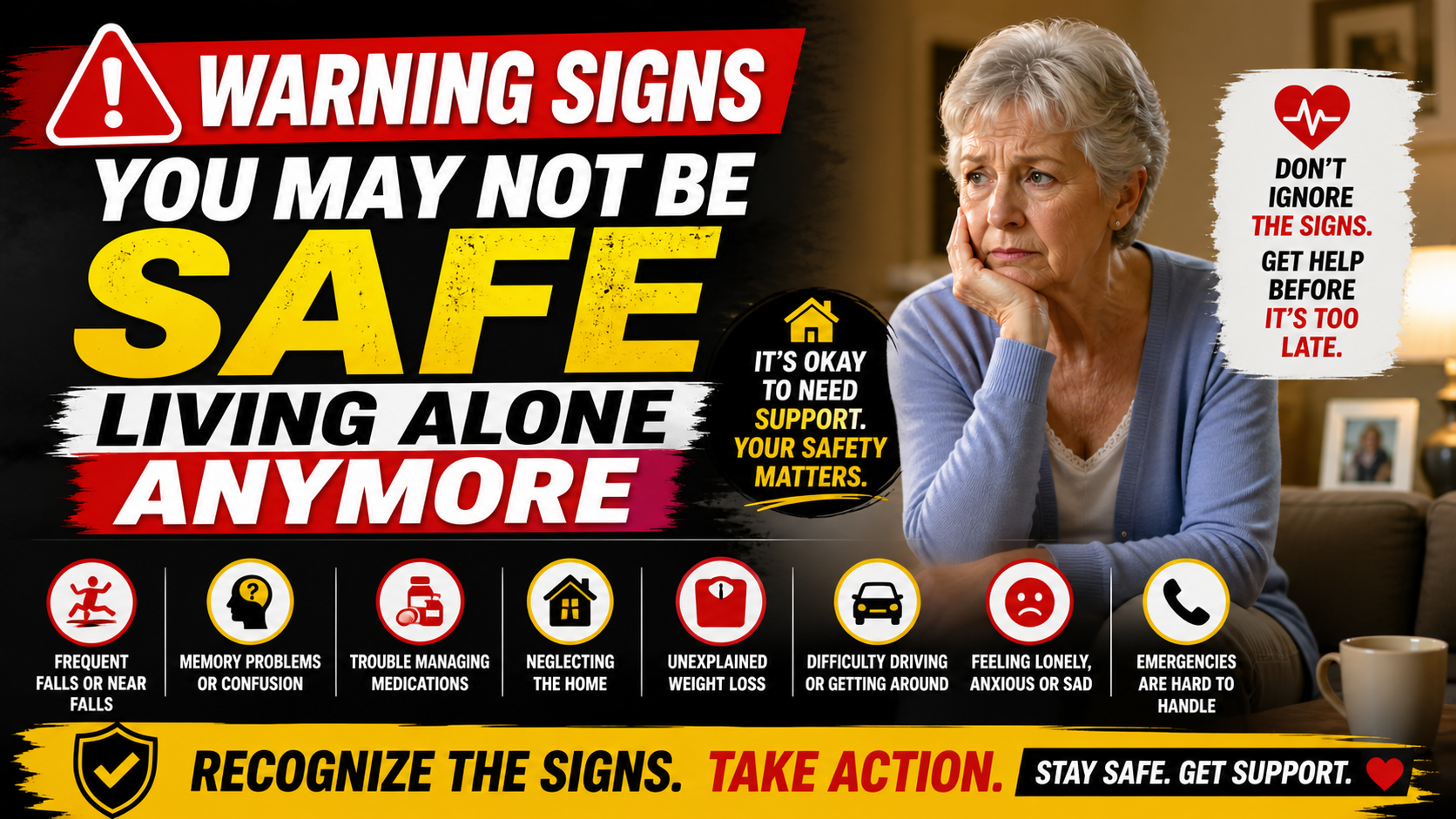
The risk of a long lie following a fall is not equally distributed. Several factors make some seniors significantly more vulnerable than others.
Living Alone
The most significant risk factor for a long lie is simply not having anyone else present. When someone else is home, a fall is discovered quickly — minutes rather than hours. When no one else is home, discovery depends entirely on when the next check-in happens — which in many families is measured in days rather than hours.
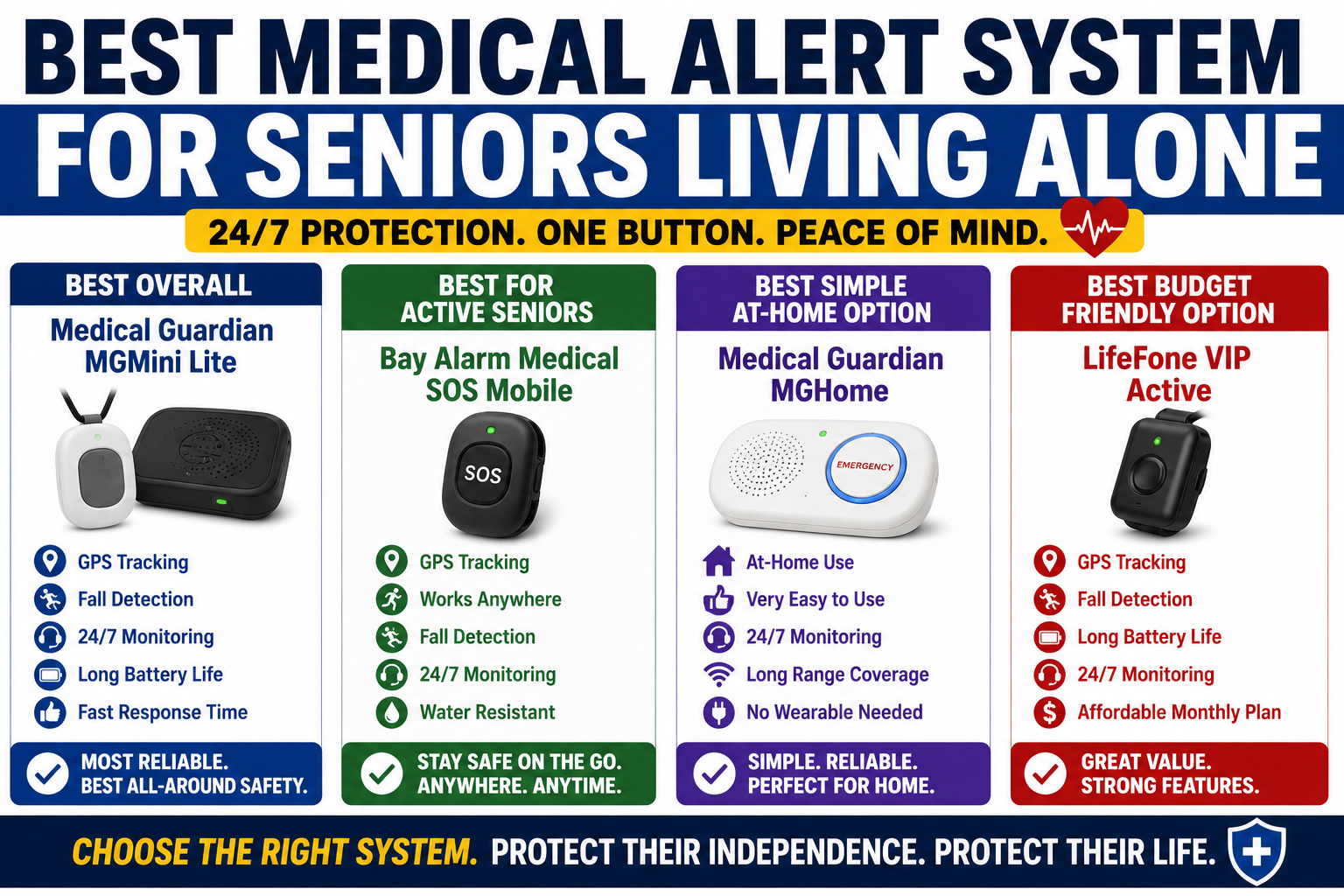
For the approximately 28 percent of adults over 65 who live alone in the United States, a fall that leaves them unable to rise is a scenario where the duration on the floor is determined entirely by what safety measures are in place. Our guide on best medical alert system for seniors living alone covers this specifically — because for solo-living seniors a medical alert device with automatic fall detection is the measure that determines the outcome of this scenario.
Falls at Night
A fall that occurs at night — during a bathroom trip, getting out of bed — has the longest discovery window of any time of day. If family does a morning check-in call, the window from a 3am fall to a 9am call is six hours on the floor. In a cold bathroom. On a tile floor.
This is the scenario that makes nighttime fall prevention specifically — and nighttime fall detection — so important. Our guide on senior bedroom safety tips for nighttime falls covers the modifications that reduce nighttime fall risk. A wearable fall detection device worn through the night addresses what happens if prevention isn’t enough.
Falls in the Bathroom
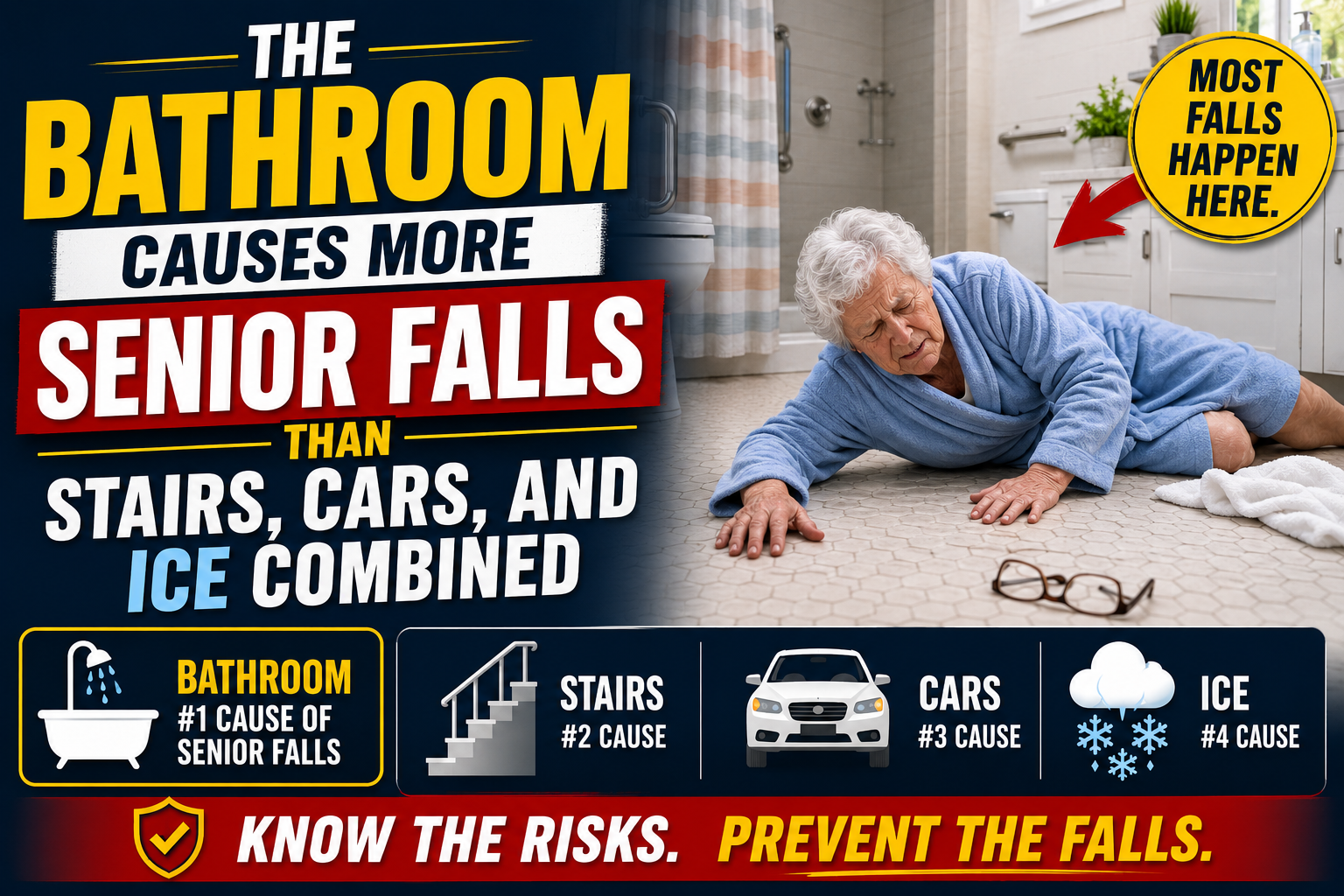
A fall in the bathroom — with a closed door — is invisible and inaudible to anyone else in the home or a neighbor outside. A base unit medical alert system in the living room doesn’t reach through a closed bathroom door. A phone left on the counter doesn’t help from the floor. The bathroom is simultaneously the highest-risk room for falls and the room that most effectively conceals a fall from anyone who might respond.
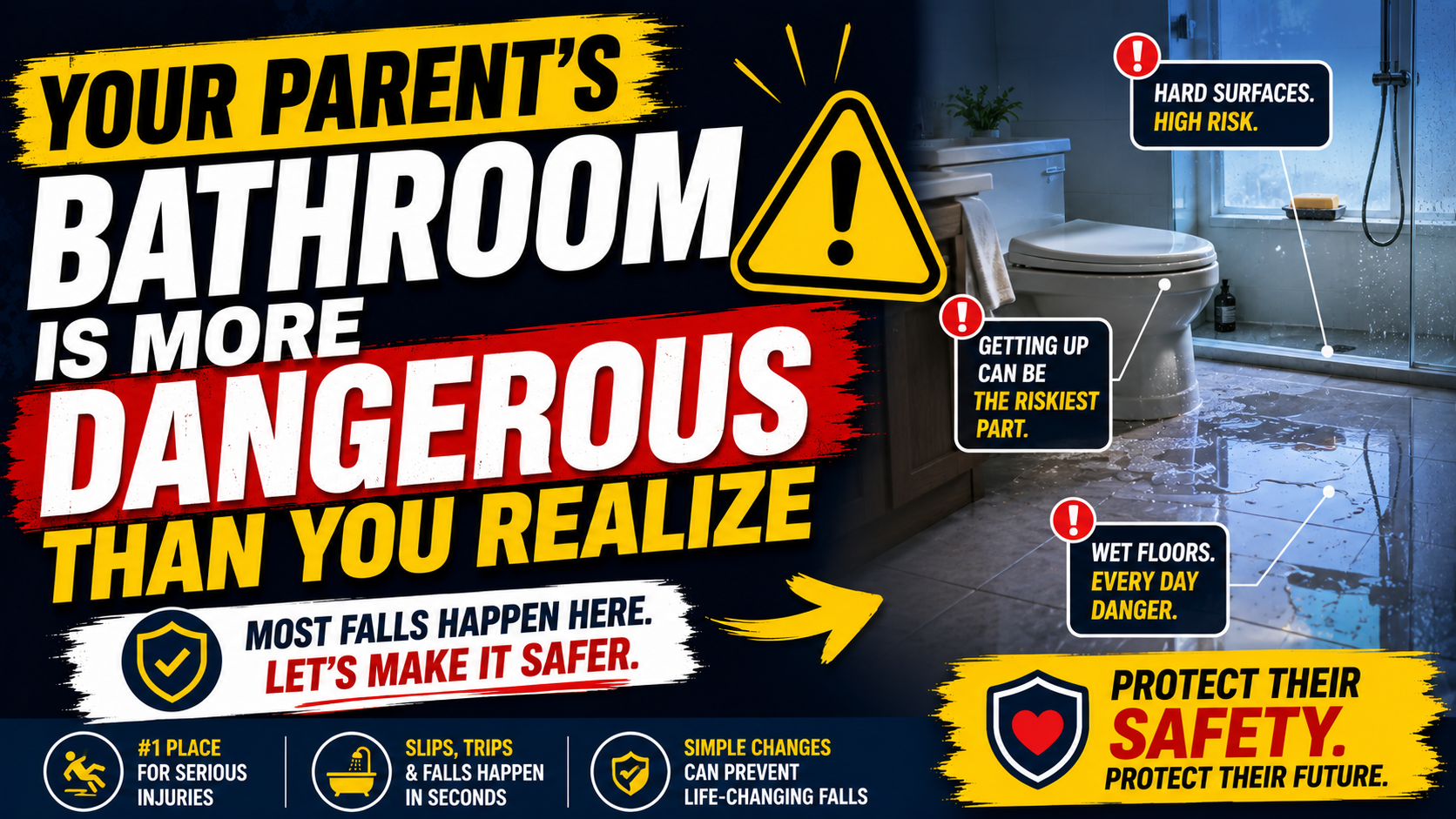
This is why a wearable device that goes into the bathroom — that’s on the wrist during every shower and every nighttime bathroom trip — provides protection that no room-based system can match. Our guide on your parent’s bathroom is more dangerous than you realize covers the full picture of bathroom fall risk.
Cognitive Impairment
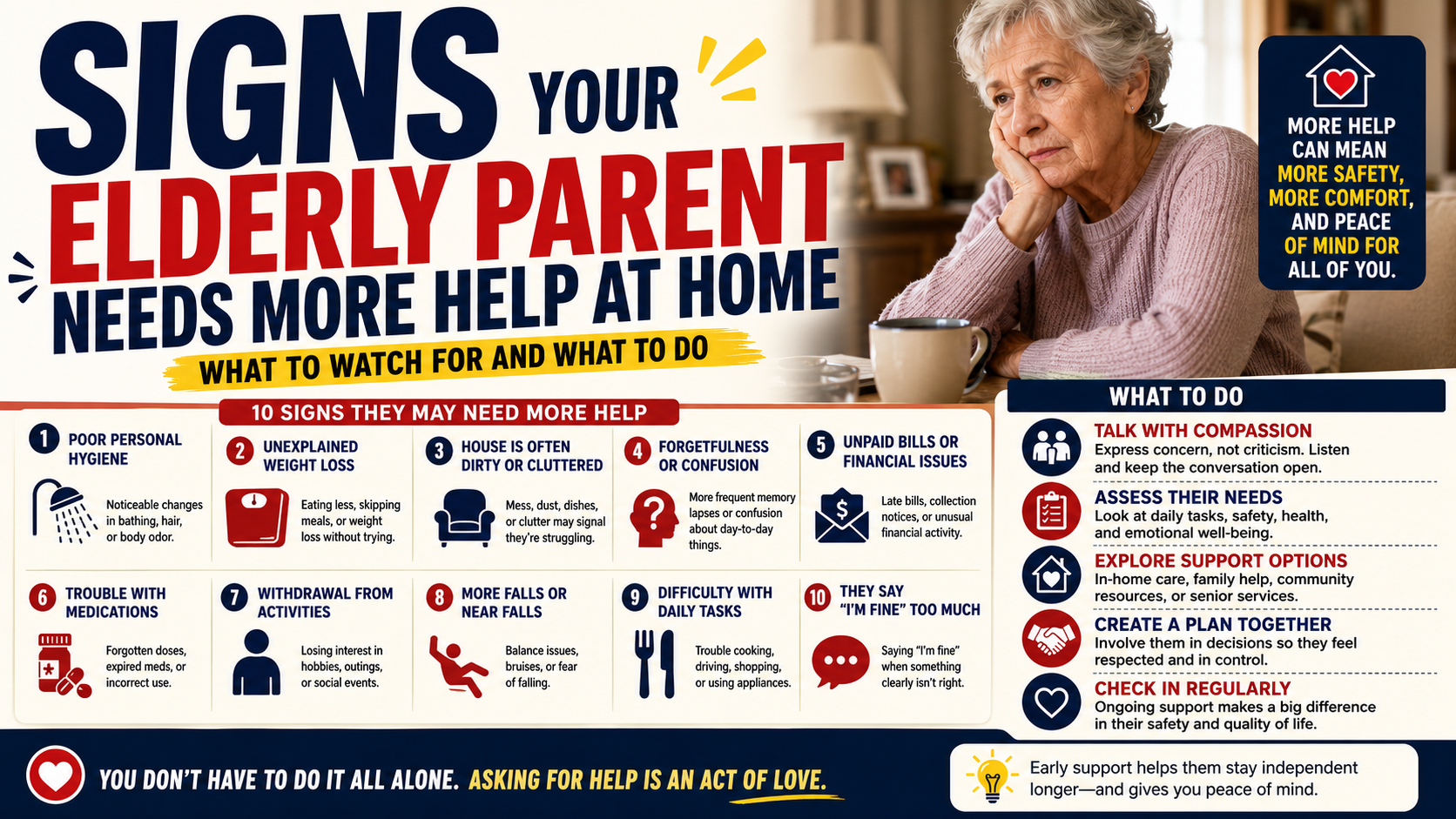
A person with dementia or other cognitive impairment who falls may not recognize that they need help, may not be able to use a phone or other device even if one is within reach, and may not be able to communicate their situation to anyone who calls to check in. Cognitive impairment significantly increases both the probability of a long lie and the severity of its consequences.
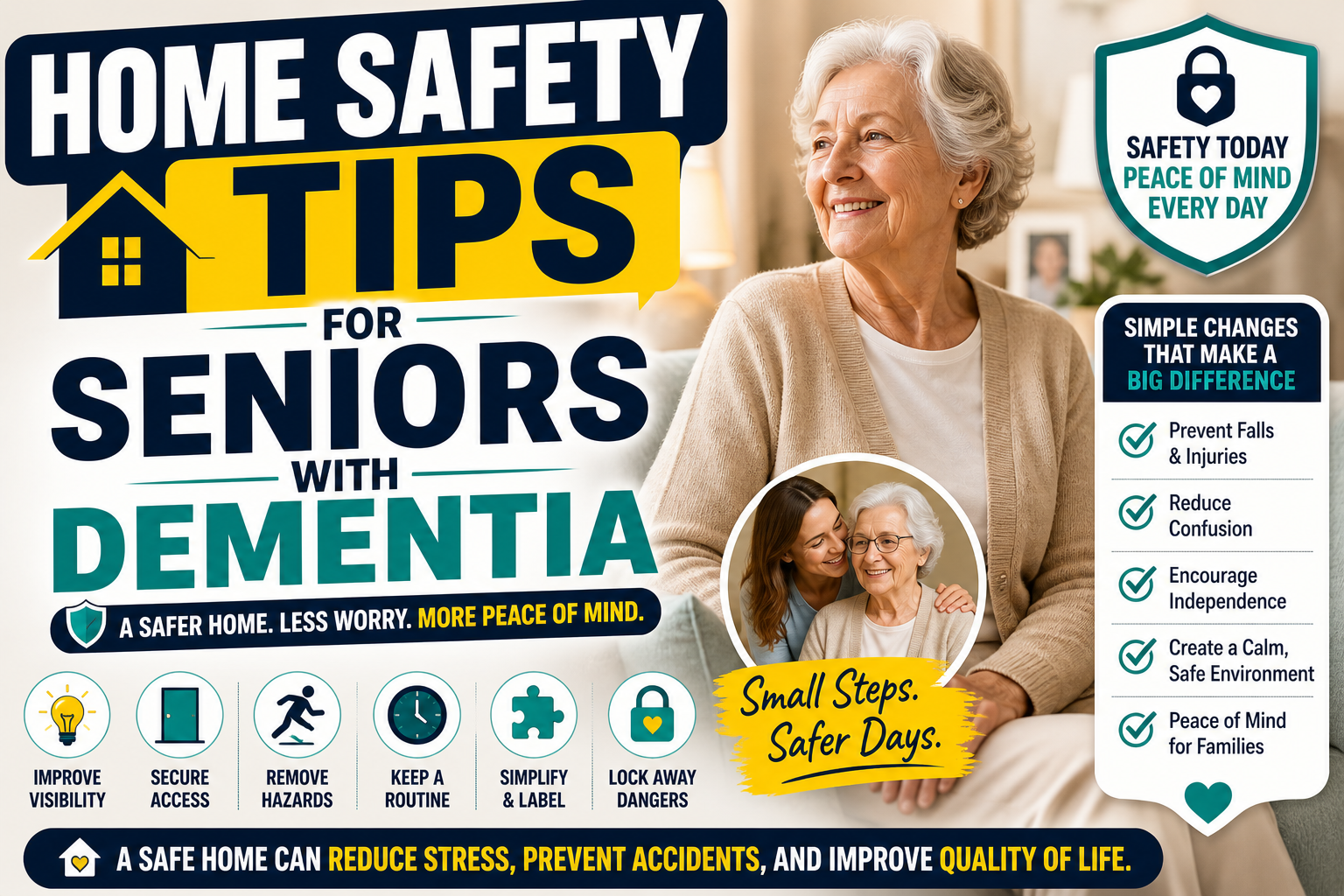
For anyone with cognitive changes, automatic fall detection — detection that doesn’t depend on any action from the person who has fallen — is the only reliable protective measure. Our guide on home safety tips for seniors with dementia covers the complete safety picture for this population.
The Gap Between Fall and Discovery — What Determines It
The duration of a long lie is not random. It’s determined by a set of specific factors that can be identified in advance and changed before a fall occurs.
Is a wearable fall detection device in use? If yes, the gap between fall and alert is measured in seconds. If no, the gap is measured in however long until the next human check-in.
Is there a structured check-in routine? A daily morning text or call means the maximum discovery window is approximately 24 hours. No structured routine means the window is indefinite — bounded only by when someone happens to call or visit.
Are neighbors aware and watching? A neighbor who notices the lights haven’t come on, the newspaper hasn’t been picked up, or that something seems off provides a local monitoring layer that family at a distance can’t replicate.
Does the person live alone? The presence of another person in the home reduces the discovery window to minutes in most scenarios.
Every one of these factors can be addressed proactively — before a fall rather than after.
Closing the Gap — What Actually Works
Automatic Fall Detection — The Most Important Measure
A medical alert device with automatic fall detection is the measure that closes the gap between fall and discovery to seconds rather than hours. Automatic detection — not button-press detection — means the alert goes out without any action from the person who has fallen. It works when the person is unconscious. It works when they can’t reach the device. It works in the bathroom. It works at 3am.

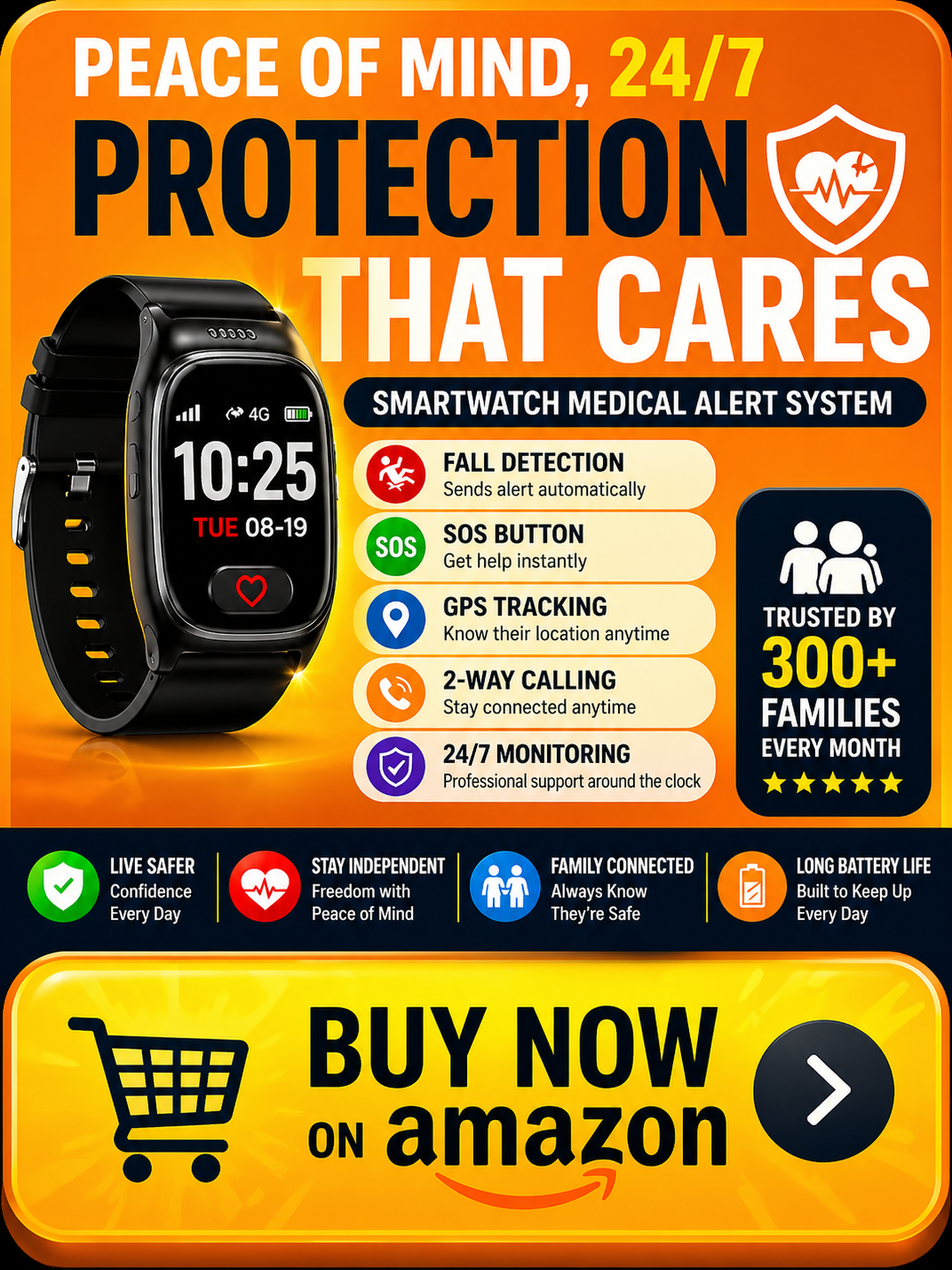
The SecuLife Smartwatch delivers automatic fall detection from the wrist — present during every high-risk moment of every day. When a fall is detected and there’s no response from the wearer the alert goes to designated family contacts with GPS location immediately. Our complete review at SecuLife Smartwatch Review covers every feature worth knowing before deciding.
→ Get the SecuLife Smartwatch on Amazon
Structured Daily Check-In
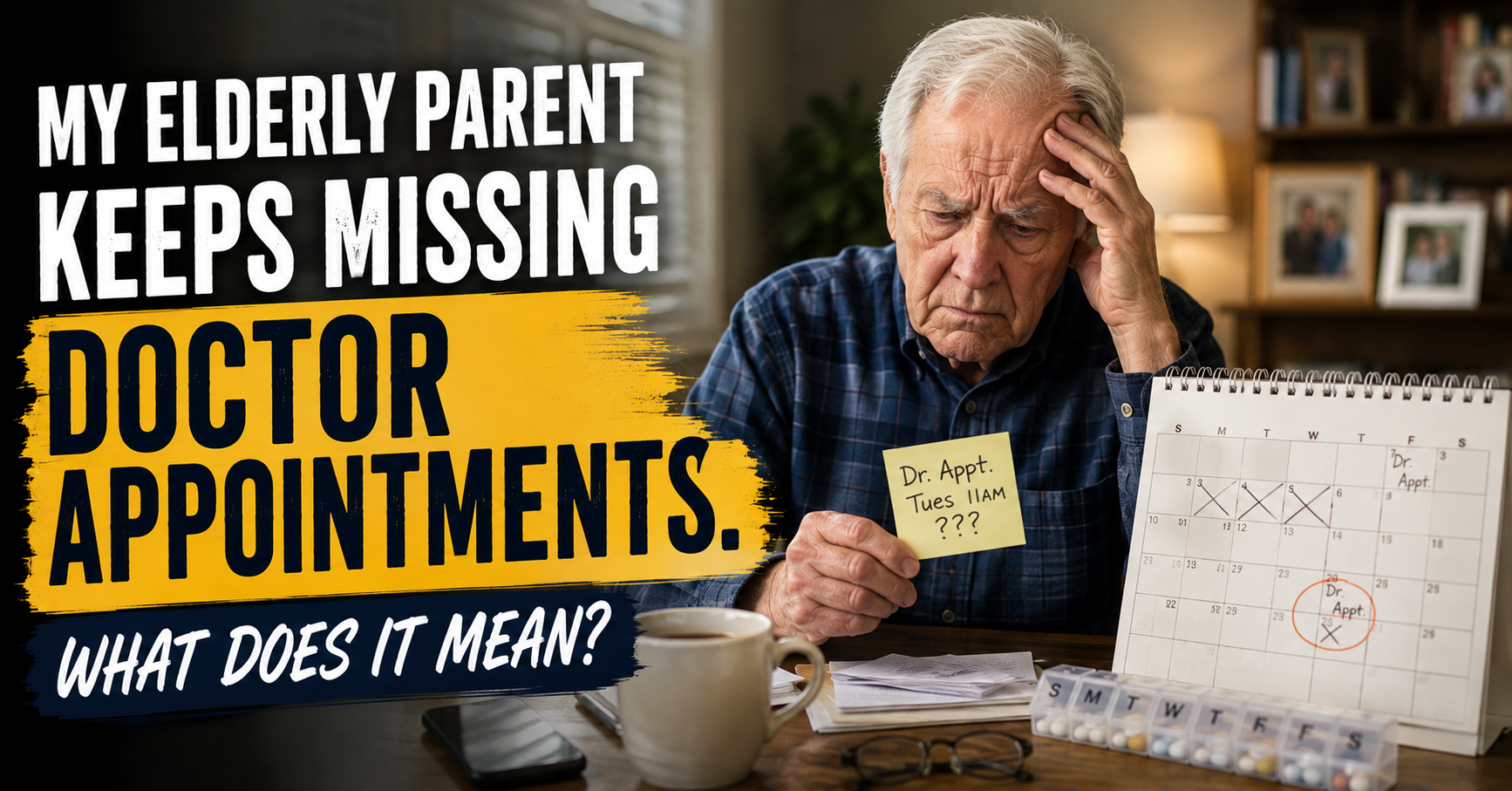
A specific, reliable daily check-in — a morning text, a scheduled call, a neighbor who notices — caps the discovery window at 24 hours in the absence of a detection device. This is not a substitute for fall detection technology but it’s a meaningful backup layer and a critical support for anyone who hasn’t yet adopted a wearable device.
The check-in needs to be explicit and structured — not a vague intention to call when there’s time. A specific time. A specific format. A specific escalation plan if the check-in is missed.
Fall Prevention — Reducing the Frequency
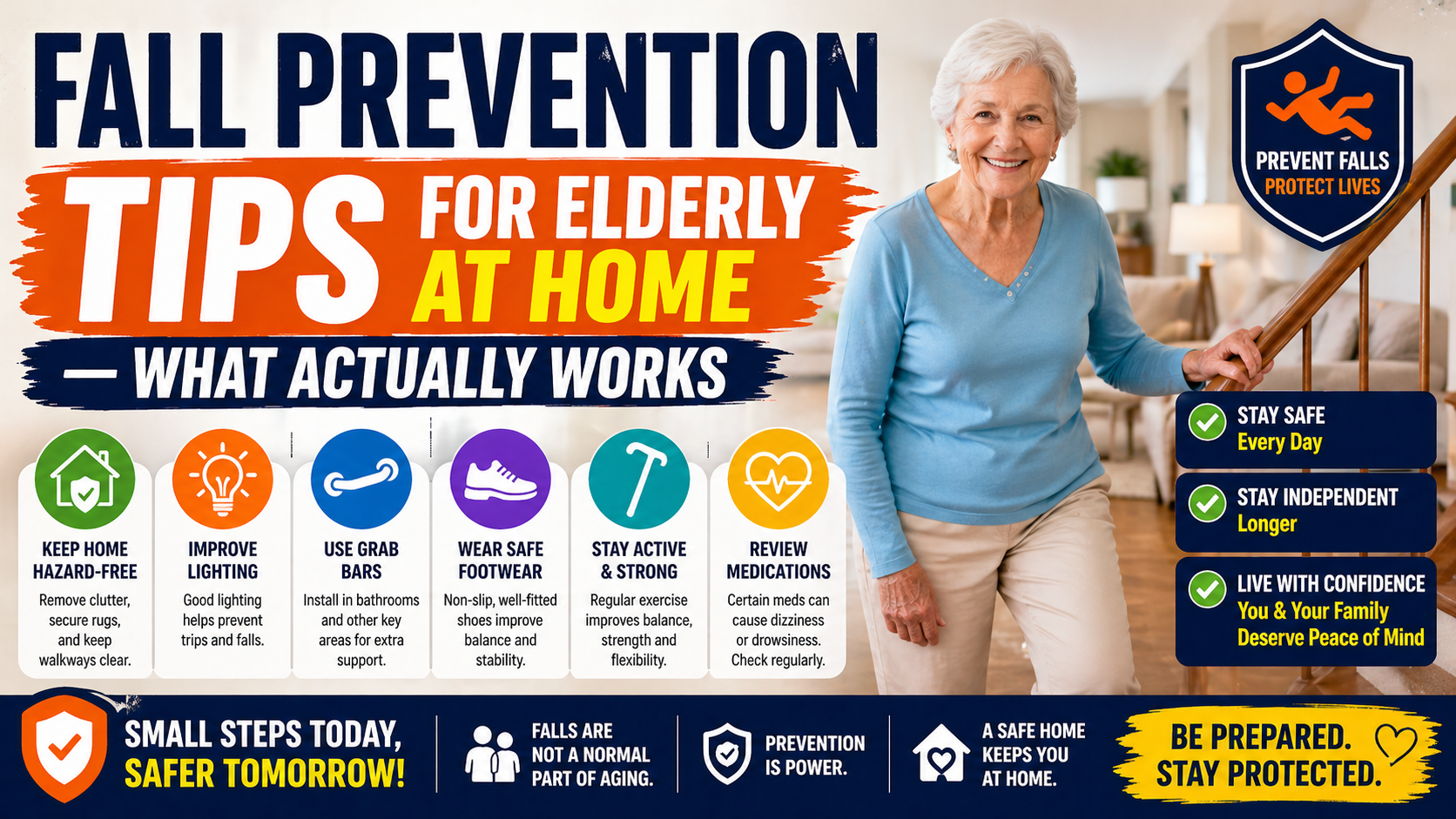
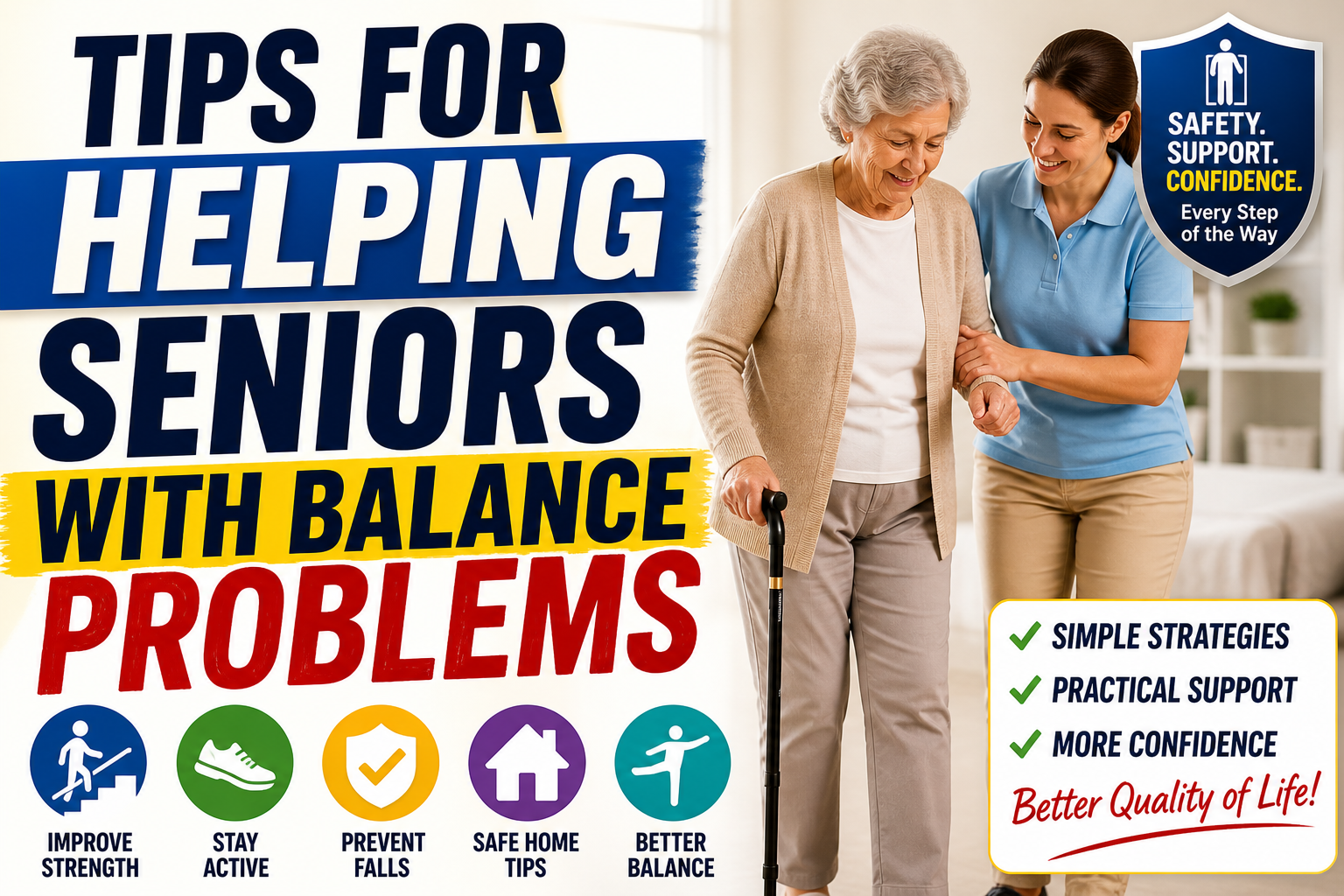
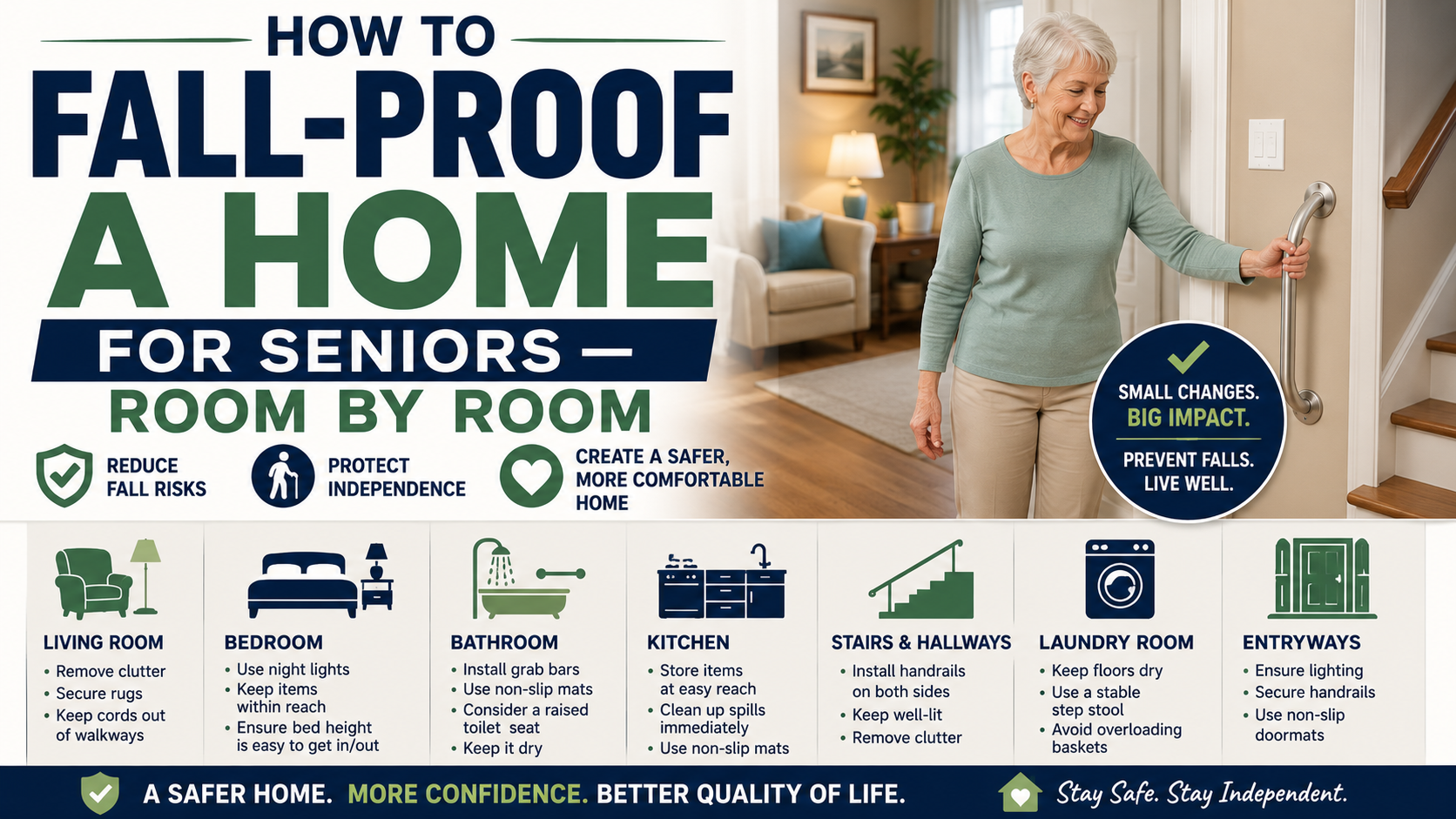
Reducing how often falls occur is the first line of defense — bathroom modifications, home safety improvements, medication review, balance exercise. Our guide on fall prevention tips at home covers the complete approach. Our guide on senior fall prevention products that actually work covers the specific products ranked by real-world impact.
But fall prevention and fall detection aren’t alternatives — they’re layers. The goal is to fall less often AND to have the gap closed to seconds when a fall does occur.
Bathroom Modifications — Reducing Falls in the Highest-Risk Room
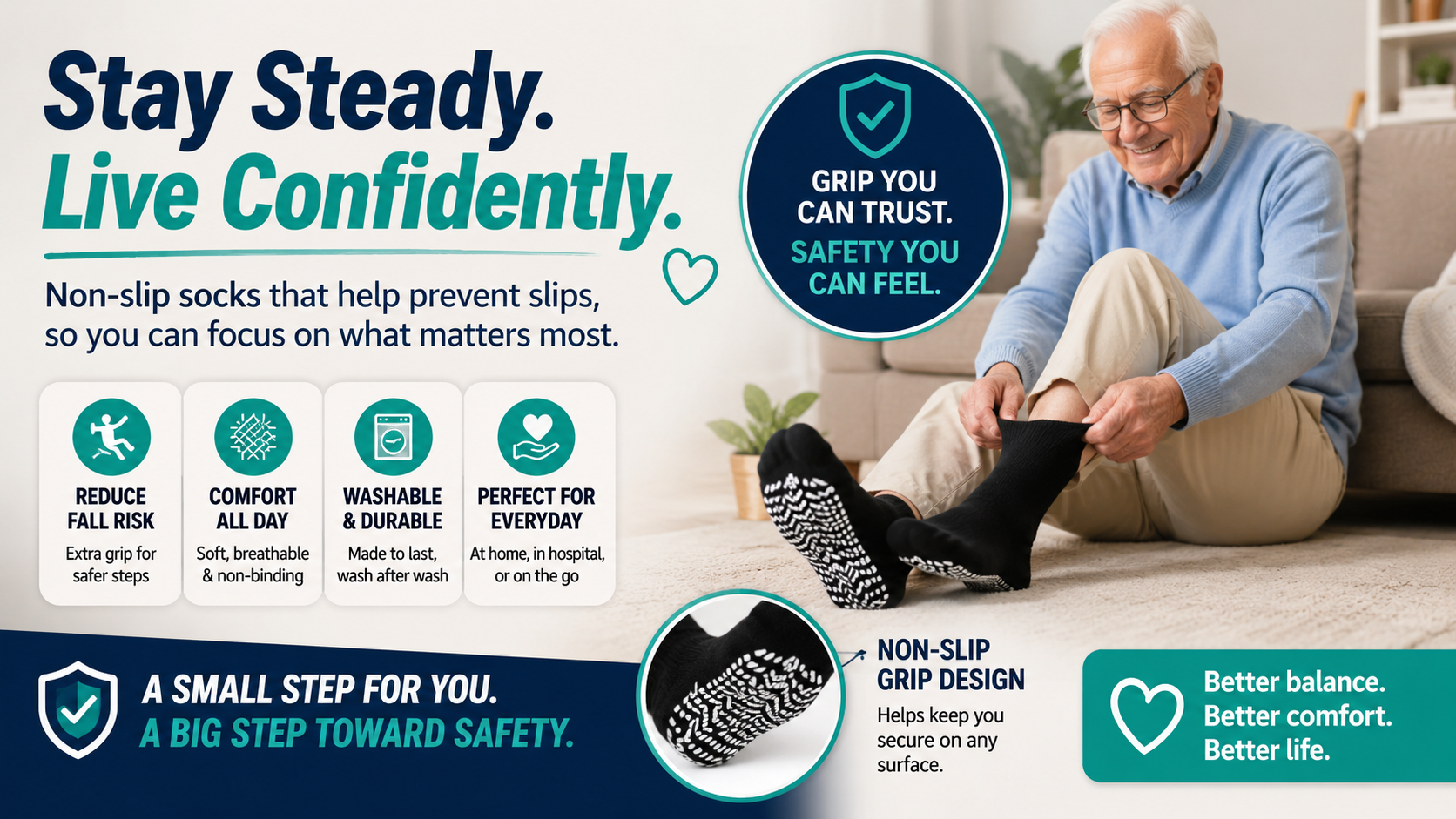
Because bathroom falls are both most common and most likely to result in a long lie, bathroom modifications deserve specific emphasis. Grab bars at the shower entry and next to the toilet. Non-slip bath mat outside the shower. Shower chair. Toilet safety rails. Night lights on the path from bedroom to bathroom.
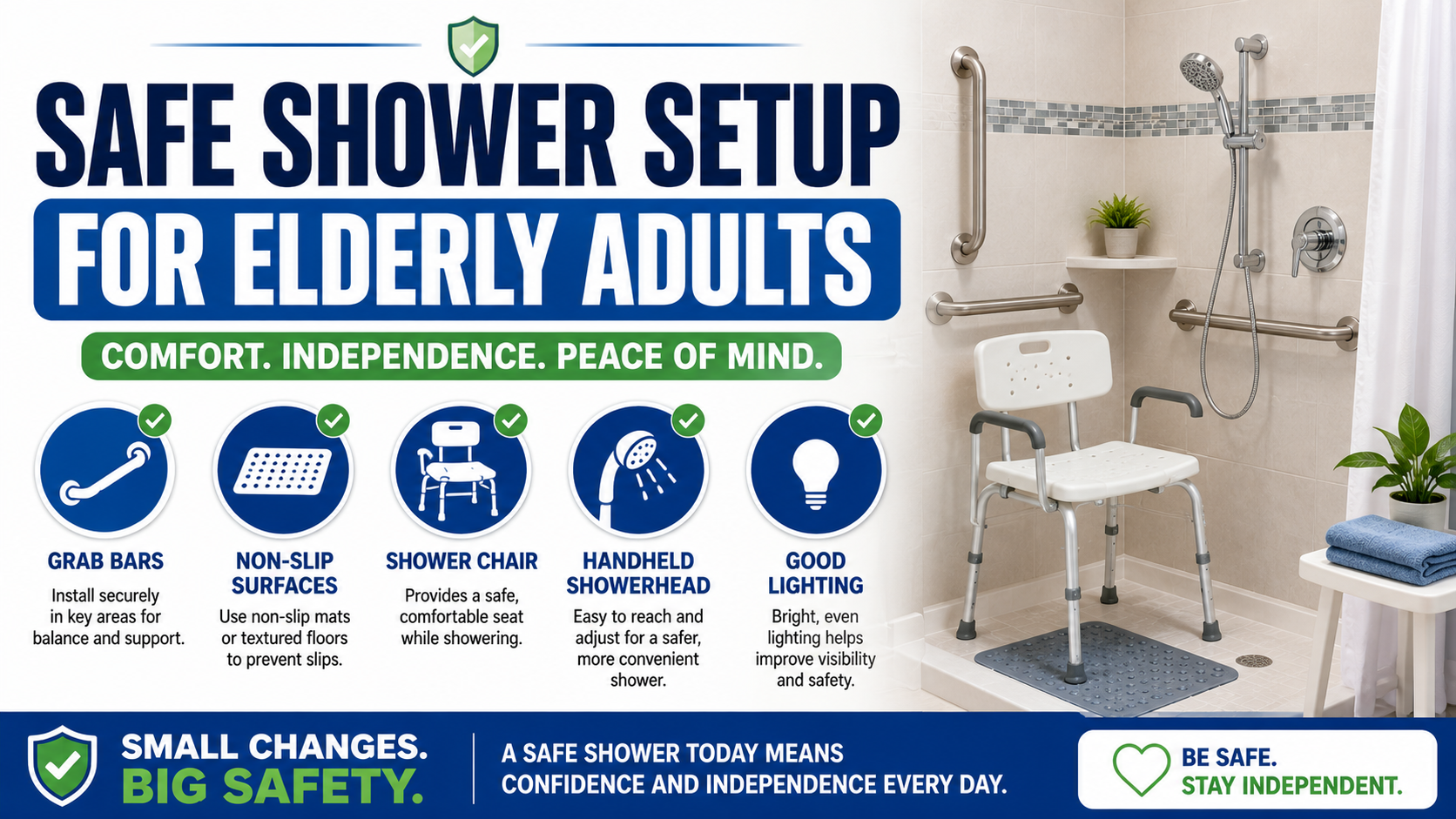
Our complete guide on safe shower setup for elderly adults covers every modification in priority order. Our guide on how to make a bathroom safer for seniors covers the complete bathroom picture.


→ Get the Toilet Safety Rails on Amazon
The Question Worth Answering Right Now
For every family reading this there’s one question that cuts through everything else: if your parent fell right now and couldn’t get up, how long would it be before someone knew?
Answer it honestly. Not optimistically. Honestly.
If the answer is more than an hour — if there’s any realistic scenario where they could be on the floor for hours before help arrived — that gap needs to be closed before the fall that reveals it.
The measures that close it are known. They’re available. They’re not expensive relative to the consequences of not having them. The only variable is whether they get put in place before or after the fall that makes their absence impossible to ignore.
Put them in place before.

About the Author
Margaret Holloway, RN spent 22 years in geriatric nursing treating the consequences of long lies — the rhabdomyolysis, the pressure injuries, the pneumonia that arrived weeks later. She watched families learn about these consequences for the first time in hospital waiting rooms, when it was too late to matter for the current crisis and information only useful for preventing the next one. She writes for Elder Safety Guide specifically to deliver that information before the crisis — because the window in which it changes outcomes is before the fall, not after.