The bathroom is the most dangerous room in your parent’s home — and in most homes it hasn’t been modified at all. Here’s what that actually means and what to do about it.
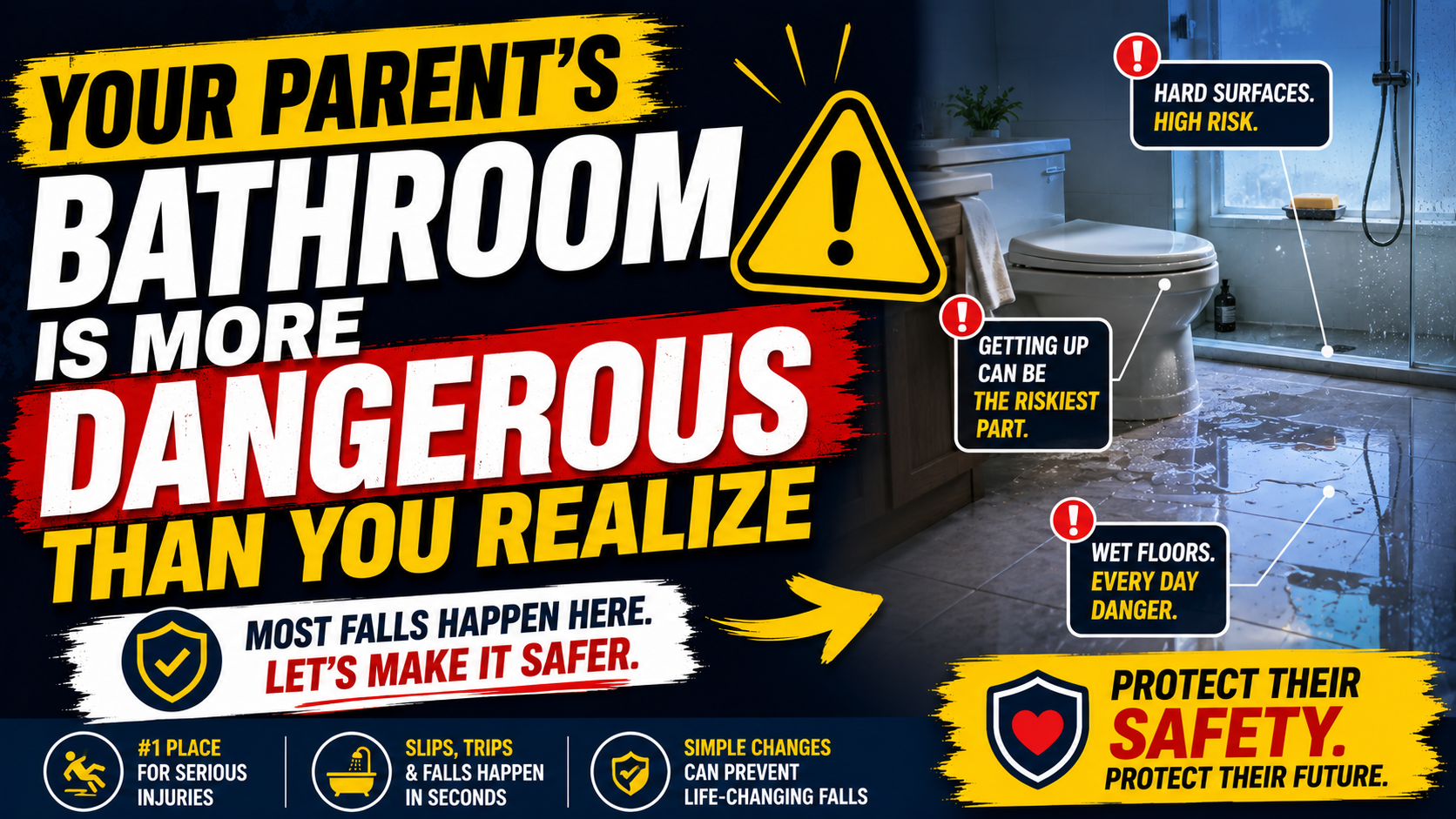
Most adult children who worry about a parent living alone think about the big scary scenarios — a fall down the stairs, a medical event in the middle of the night, a stranger at the door. These fears are understandable. They’re also not where most serious injuries actually happen.
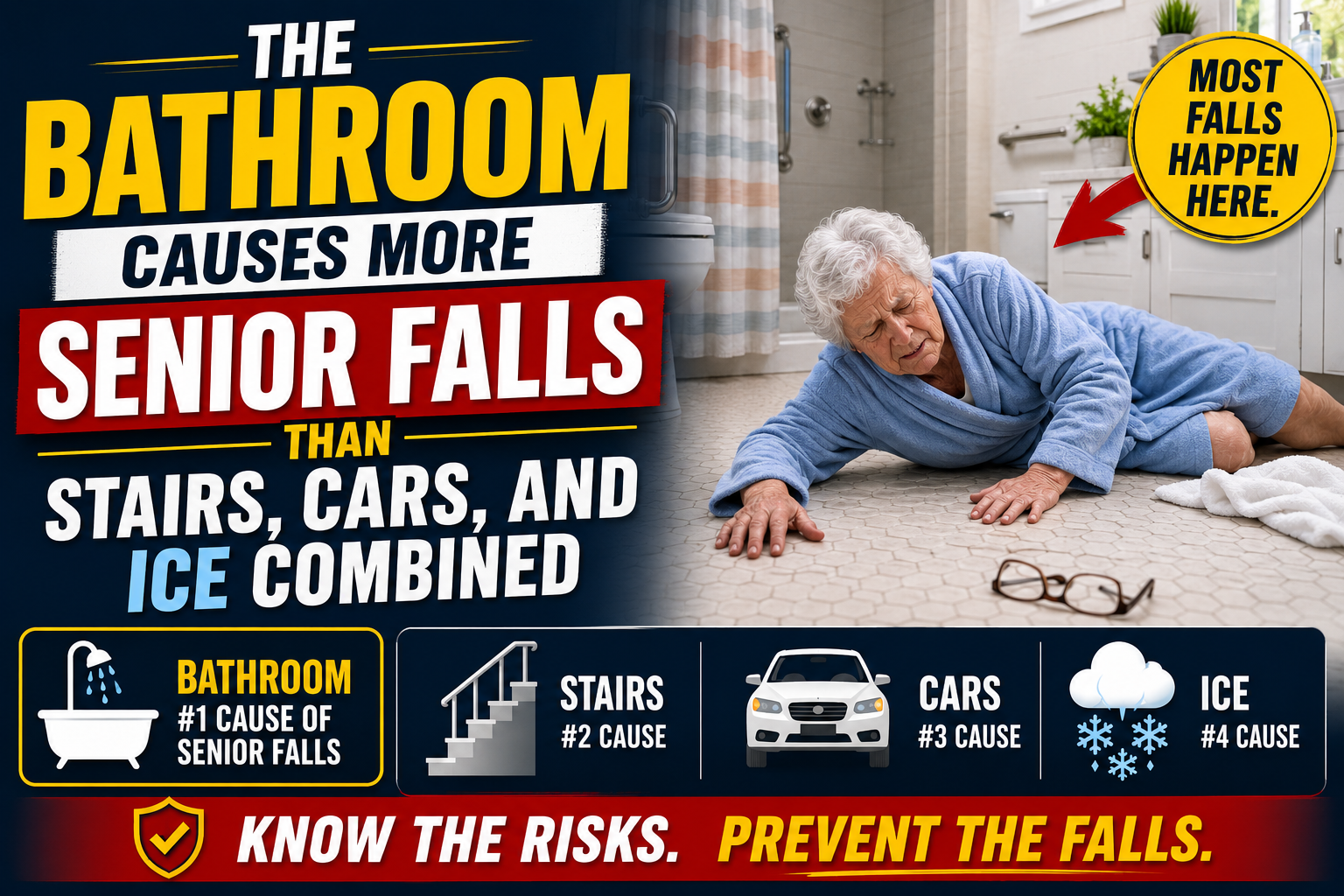
The most dangerous place in your parent’s home is the bathroom. Not the stairs. Not the kitchen. The bathroom — where your parent goes multiple times every day, alone, in conditions specifically designed to create falls.
And in most homes it hasn’t been modified at all.
The Numbers That Should Change How You Think About This
The statistics on bathroom falls in older adults are stark enough that they deserve to be stated plainly rather than buried in qualifications.
According to the Centers for Disease Control, approximately 235,000 people over age 15 visit emergency rooms annually due to injuries that occur in the bathroom. Older adults account for a disproportionate share of the most serious injuries. Falls in the bathroom are the leading cause of traumatic brain injury in adults over 65. Hip fractures — the injury with the most serious long-term consequences for older adults — occur frequently from bathroom falls.
And the vast majority of these bathrooms had no safety modifications in place when the fall occurred.
This isn’t a rare risk. It’s one of the most common causes of serious injury in older adults — happening in the most ordinary, most frequently visited room in the home, during activities that seem entirely routine.
Why the Bathroom Is So Dangerous — Specifically
The bathroom combines more fall risk factors simultaneously than any other room in the home. Understanding exactly why helps explain why modifications matter so much.
Wet Surfaces
Water on tile — whether the shower floor, the bathroom floor near the shower exit, or the area around the sink — dramatically reduces the friction between shoe sole or bare foot and floor surface. A surface that provides adequate grip when dry can become dangerously slippery when wet. And in a bathroom wet surfaces aren’t an occasional hazard — they’re a daily certainty.
One-Legged Balance Moments
The bathroom requires multiple transitions that demand one-legged balance — stepping into and out of the shower, stepping over a tub threshold, stepping over the bathroom threshold. These movements require the full body weight to be supported on one leg while the other lifts, in a small space, often on or near wet surfaces.
For a younger person with full strength and balance these are unremarkable. For an older adult with any reduction in either, each of these transitions is a genuine fall risk moment that happens every single day.
Hard Surfaces Everywhere
Tile floors. Porcelain fixtures. Glass shower enclosures. Cast iron tubs. The bathroom has more hard, unforgiving surfaces per square foot than any other room in the home. A fall anywhere in the bathroom means landing on or near a surface that produces serious injury — not the carpet or couch of a living room fall.
Small Enclosed Spaces
The shower and the area around the toilet are physically constrained spaces — limited room to catch a stumble, limited space to reposition during a transition gone wrong, walls and fixtures that become obstacles rather than supports without proper grab bars.
Daily Frequency
Your parent visits the bathroom multiple times every day without exception — bathroom trips, morning routine, nighttime trips. The cumulative exposure to bathroom fall risk over a week, a month, a year is enormous. Even a small probability of a fall on any given bathroom visit becomes a near-certainty over enough repetitions.
Nighttime Conditions
Nighttime bathroom trips add additional layers of risk onto the baseline bathroom hazards — darkness or low light, partial sleep reducing alertness and coordination, urgency that leads to rushing, blood pressure that hasn’t normalized from a horizontal position. The nighttime bathroom trip is when the cumulative risk profile of the bathroom reaches its highest point.
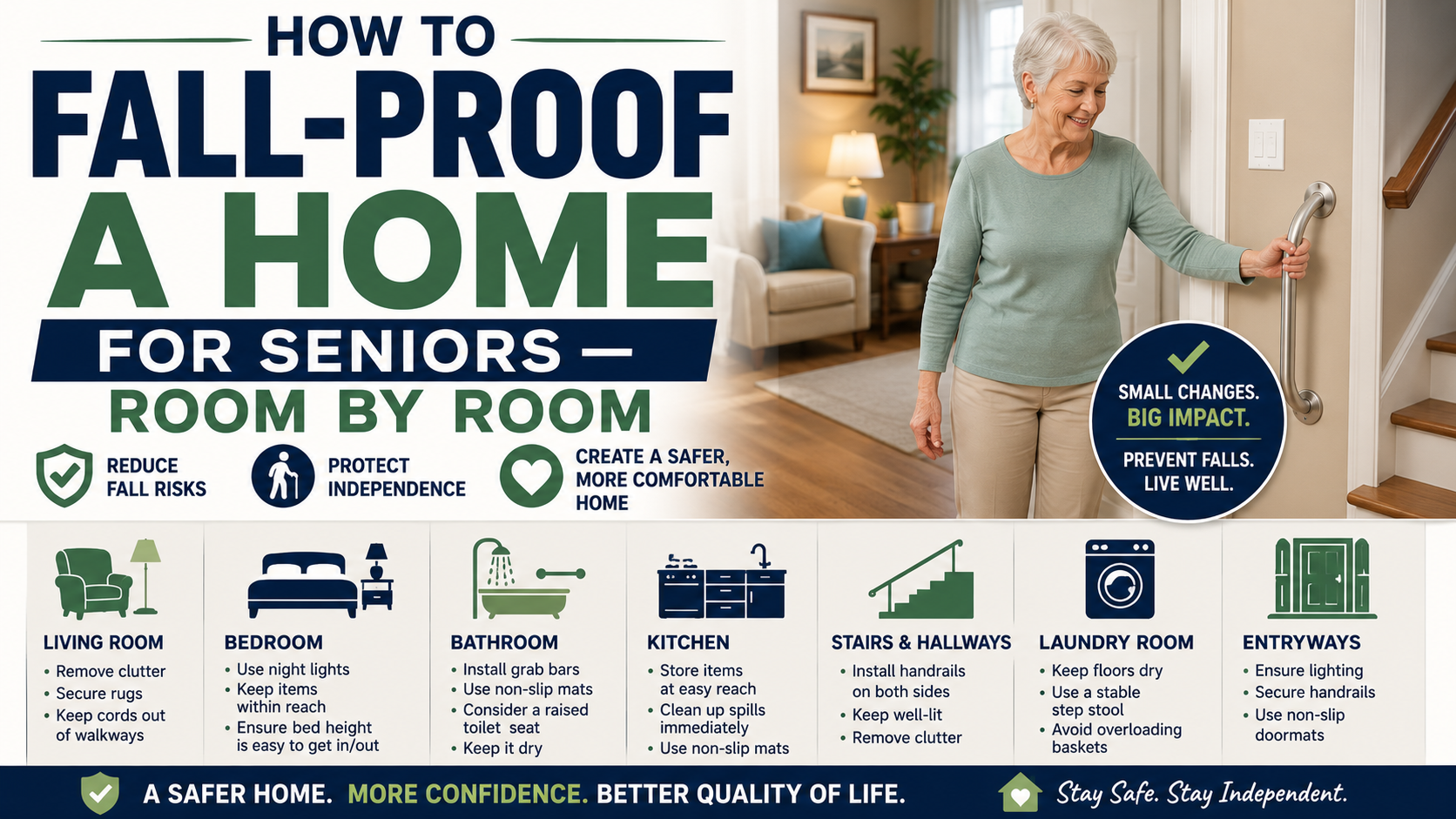
What an Unmodified Bathroom Looks Like to a Geriatric Nurse
Walk into a standard unmodified bathroom and look at it through the lens of what actually causes falls in older adults.
There’s no support at the shower entry — the point where one-legged weight transfer happens. There’s a smooth tub or shower floor that’s slippery when wet. There’s a bath mat outside the shower that shifts under wet feet. The toilet has nothing to push off from during the rising movement. The path from bed to bathroom is dark until a light switch is found and flipped.
Every single one of these is a known, documented, addressable fall risk. And in most homes none of them have been addressed — not because the family doesn’t care, but because nobody has walked through the bathroom with fresh eyes and thought specifically about what happens there every day.
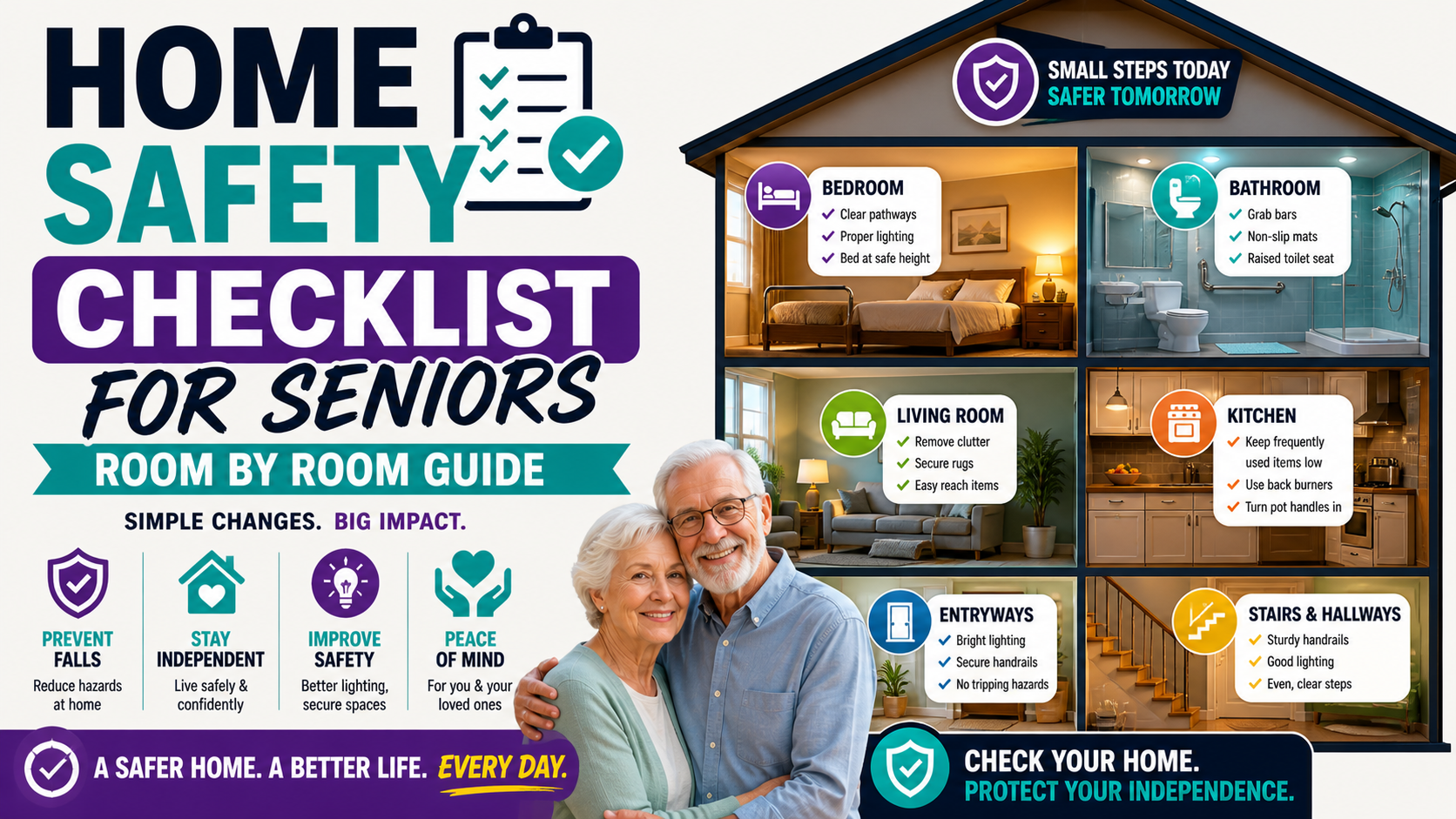
This is exactly what a home safety assessment does. Our home safety checklist for seniors gives you a systematic room-by-room tool — including a comprehensive bathroom section — to do this assessment yourself.
The Modifications That Change Everything
Here’s the most important thing to understand about bathroom safety modifications: they’re not expensive, not complicated, and not time-consuming to implement. The gap between an unmodified bathroom and a genuinely safe one can be closed in a single weekend for under $300 in most cases.
Grab Bars — The Single Highest-Impact Modification
A properly installed grab bar at the shower entry is the most important single modification available in any home for older adult safety. It directly addresses the highest-risk transition — the step-in and step-out, the one-legged moment — with a firm, load-rated support that’s there every single time it’s needed.
The second bar — on the back wall of the shower at hip height — provides stability during the showering itself. The third — next to the toilet — addresses the multiple daily toilet transfers.
Three bars. Three transitions. The three highest-risk movements in the highest-risk room in the home addressed permanently for the life of the home.
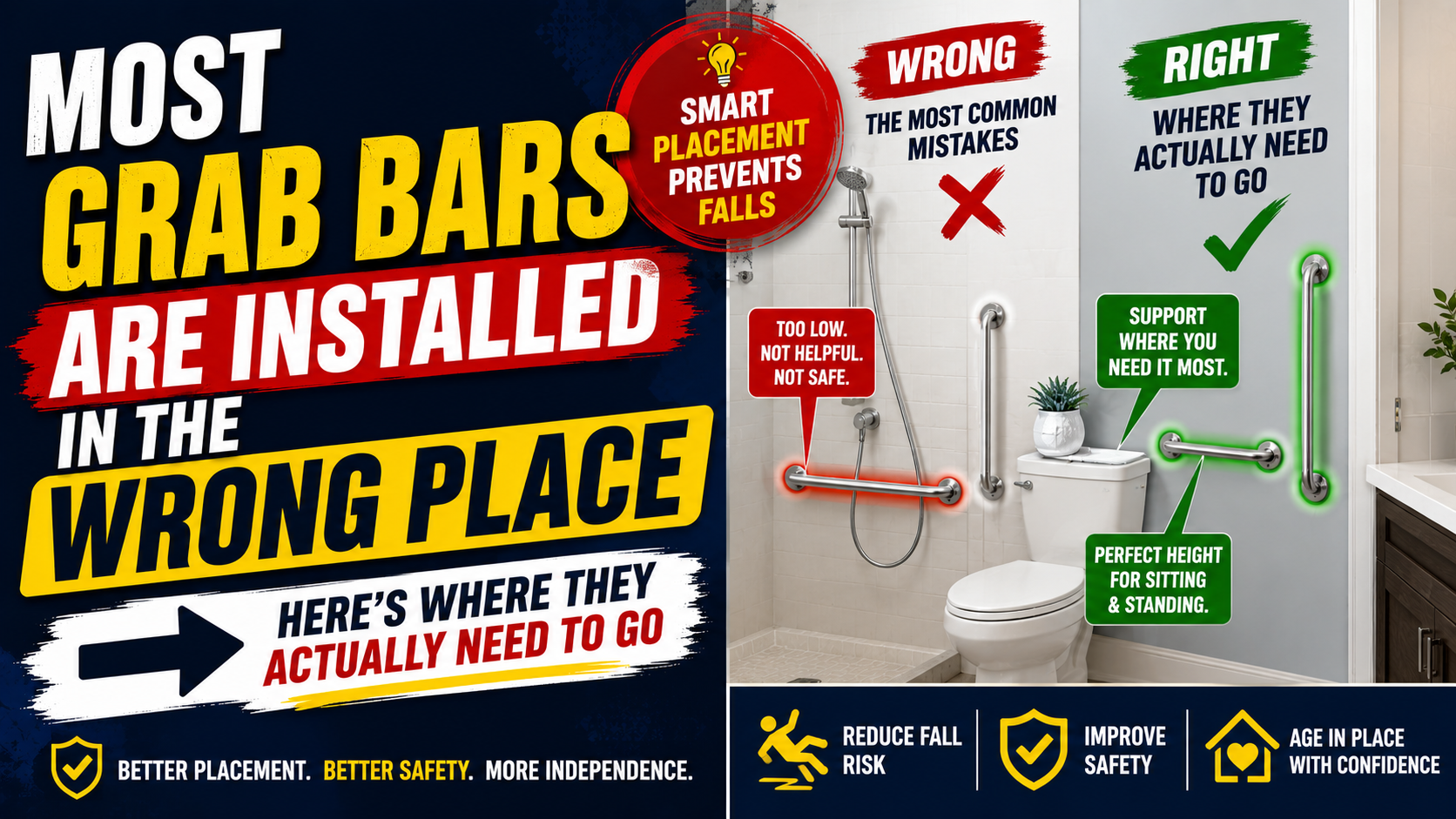
Most homes don’t have them. Most homes that have them have them in the wrong positions. Our guide on most grab bars are installed in the wrong place covers exactly where they need to go. Our review of the best grab bars for seniors covers exactly what to buy.

Non-Slip Bath Mat That Actually Stays in Place
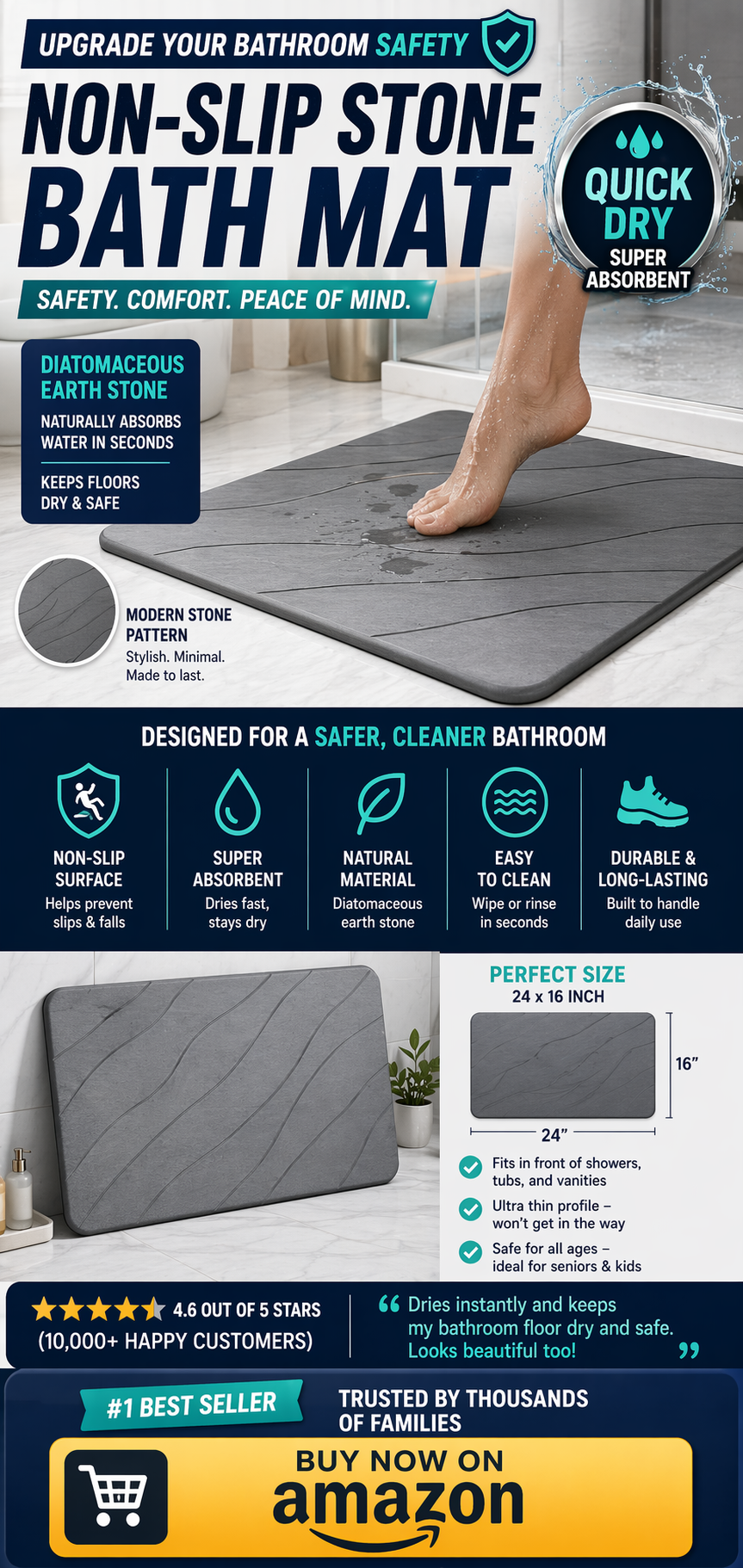
The moment of stepping out of the shower onto the bathroom floor with wet feet is one of the most consistent fall mechanisms in bathroom injuries. A standard fabric bath mat that shifts under that first wet step is a hazard rather than a protection. Most bath mats in most bathrooms are the wrong kind.
A diatomaceous earth stone bath mat absorbs water almost instantly, never shifts under load, and maintains its performance indefinitely. It also looks like a modern bathroom accessory rather than a medical device — which matters for acceptance and consistent use.
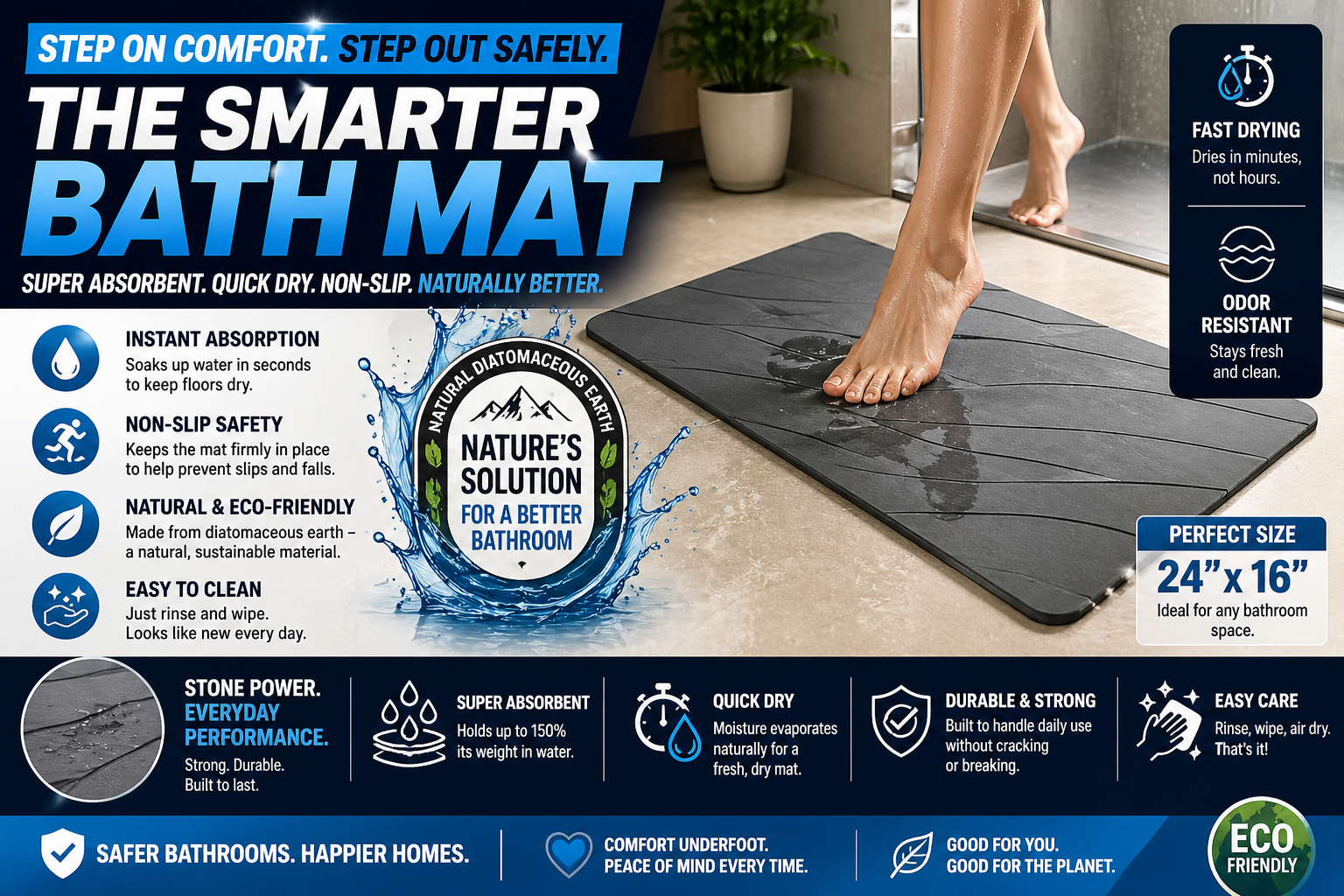
Our review of the best non-slip bath mat for seniors covers why most mats fail and what to use instead.
→ Get the Diatomaceous Earth Bath Mat on Amazon
Toilet Safety Rails
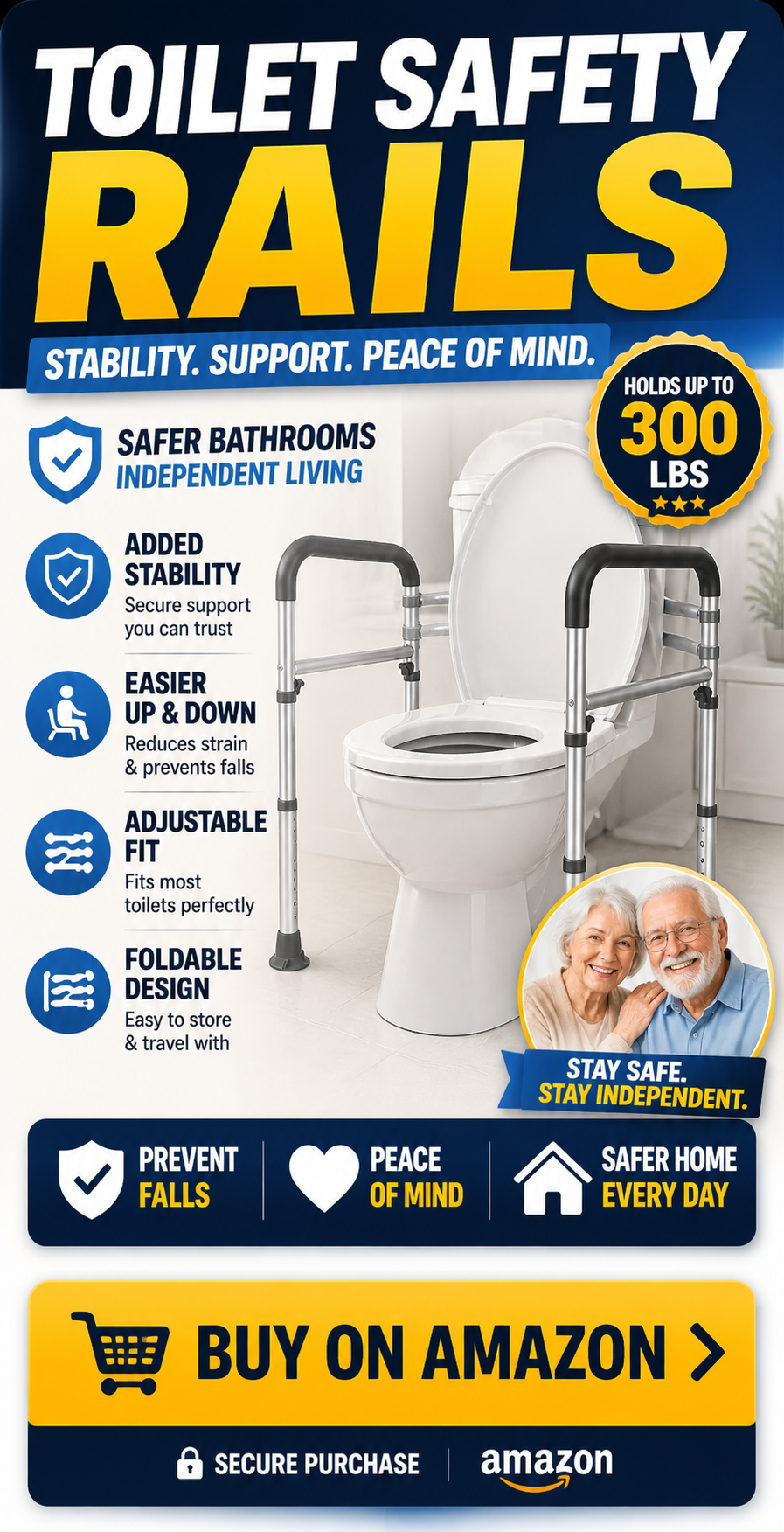
The toilet transfer — sitting down and standing up — happens multiple times every day and becomes increasingly physically demanding as leg strength declines. Toilet safety rails with armrests transform this from a fall risk into a supported movement. Tool-free installation. Fits any toilet. Immediate impact from the first use.
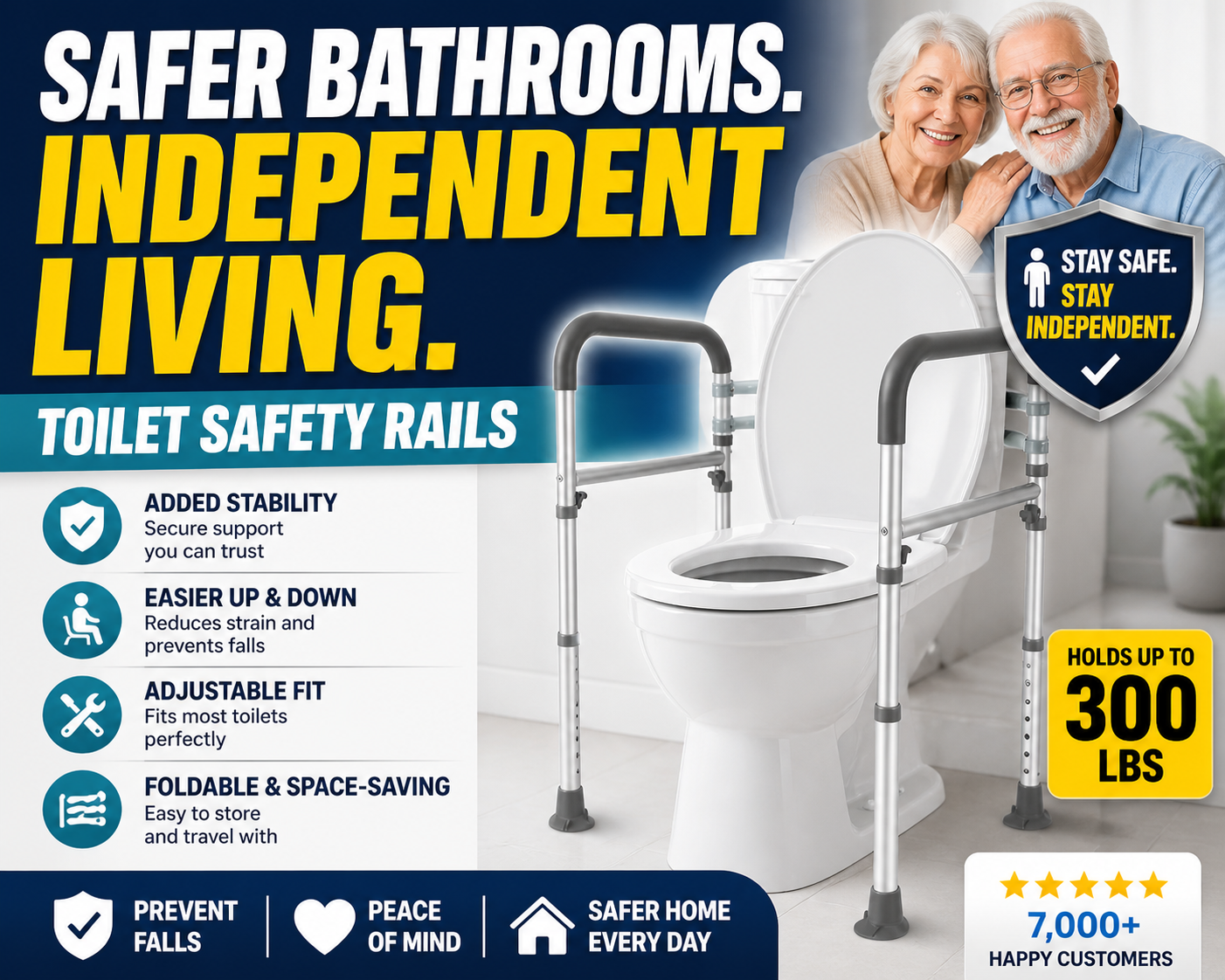
Our review of the best toilet safety rails for seniors covers the specific option we recommend.
→ Get the Toilet Safety Rails on Amazon
Shower Chair
Standing in a wet shower is a daily fall risk. A shower chair eliminates it entirely — showering seated requires a fraction of the balance demanded by standing on a wet surface. Most people who try a shower chair find they prefer it on comfort grounds alone.
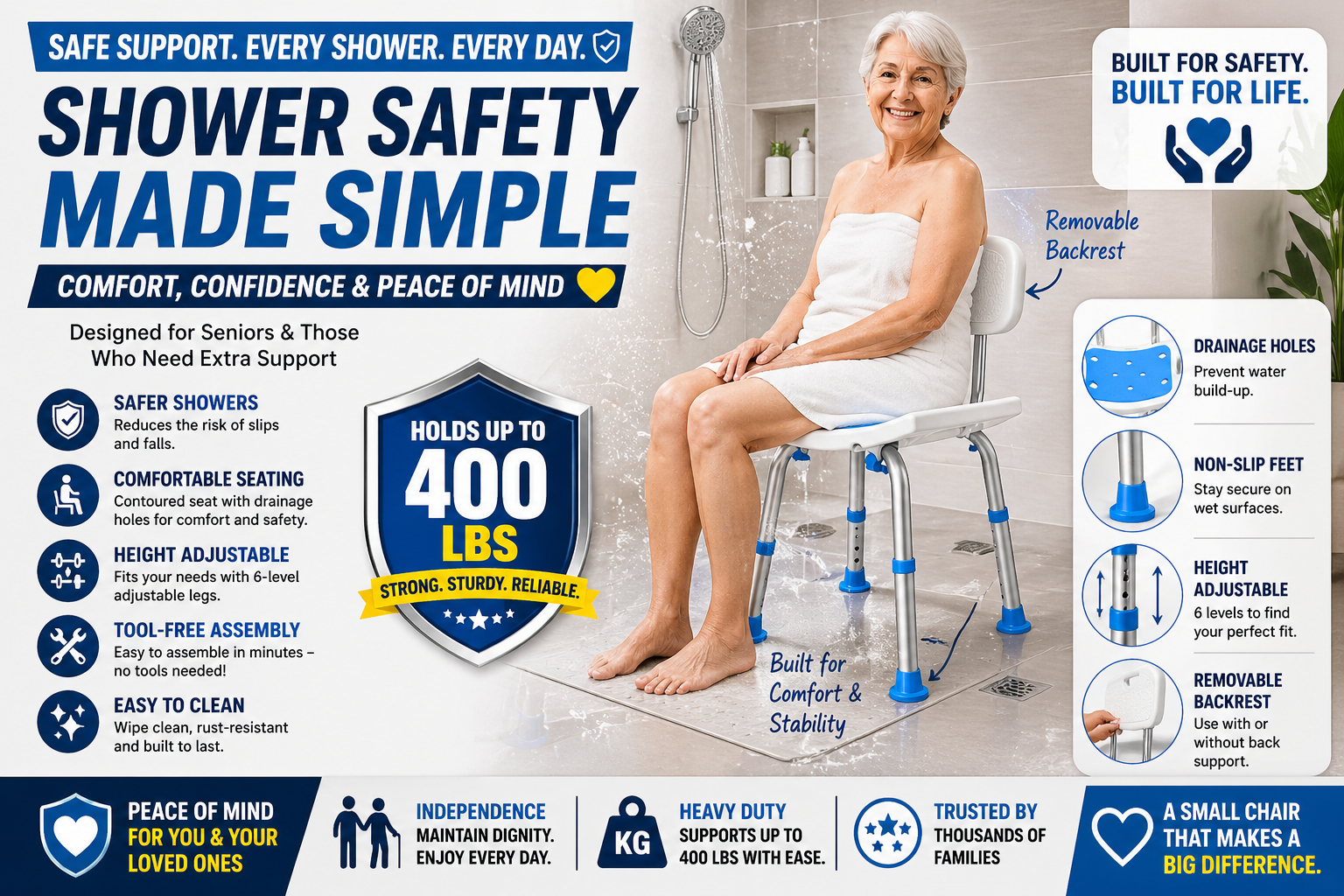
Our review of the best shower chair for seniors covers the specific product we recommend.
→ Get the Shower Chair on Amazon
Night Lights on the Path to the Bathroom
The nighttime bathroom trip is the highest-risk bathroom visit of any given day — and it happens in the dark until a light is found. Auto-on night lights that activate immediately in the bedroom, hallway, and bathroom ensure the entire path is lit before the person is moving through it. Three units. Under $50. Permanent daily protection for every nighttime trip for as long as the home is lived in.
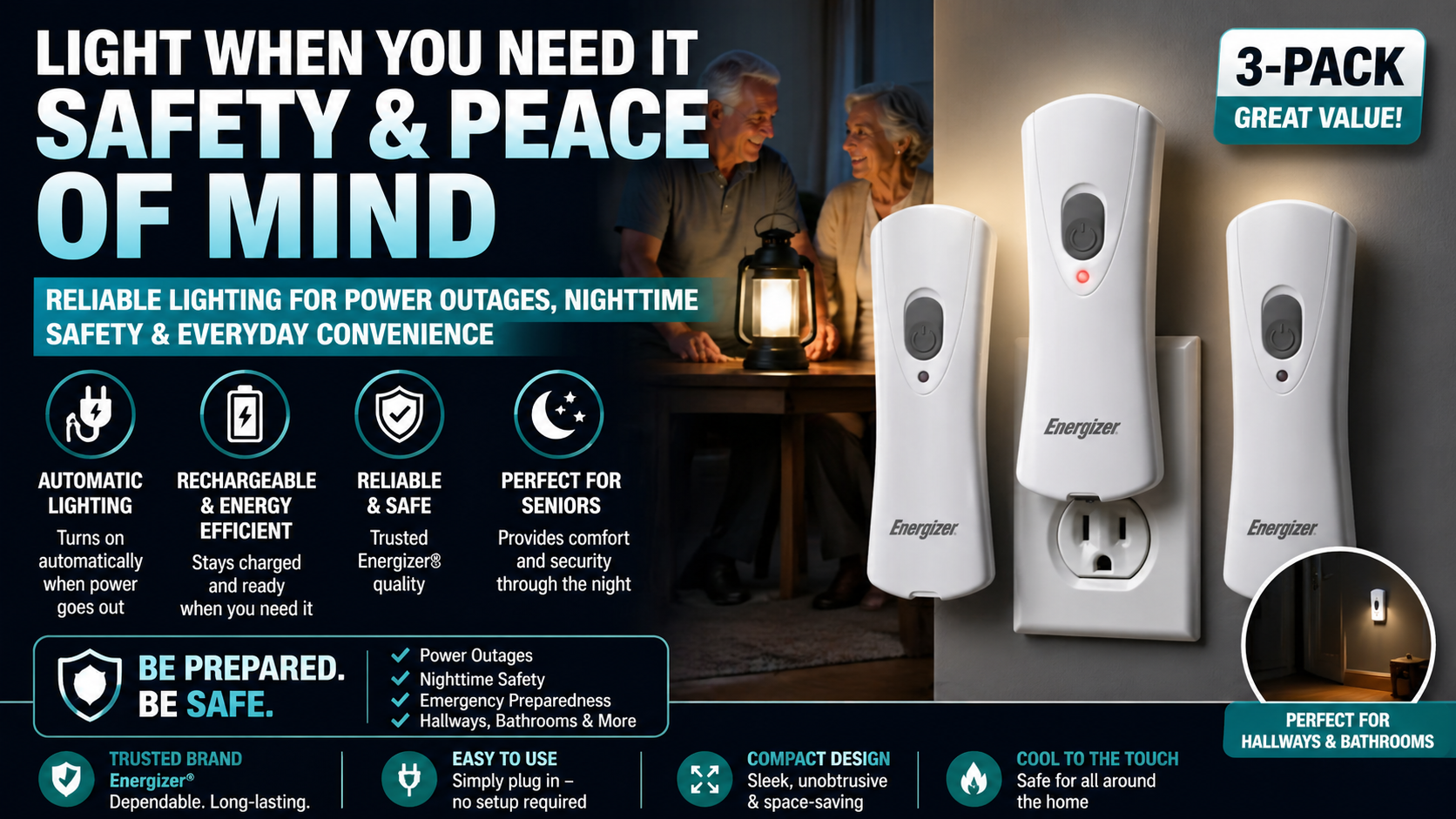
Our review of the best auto-on rechargeable lights covers the option that doubles as power outage protection simultaneously.
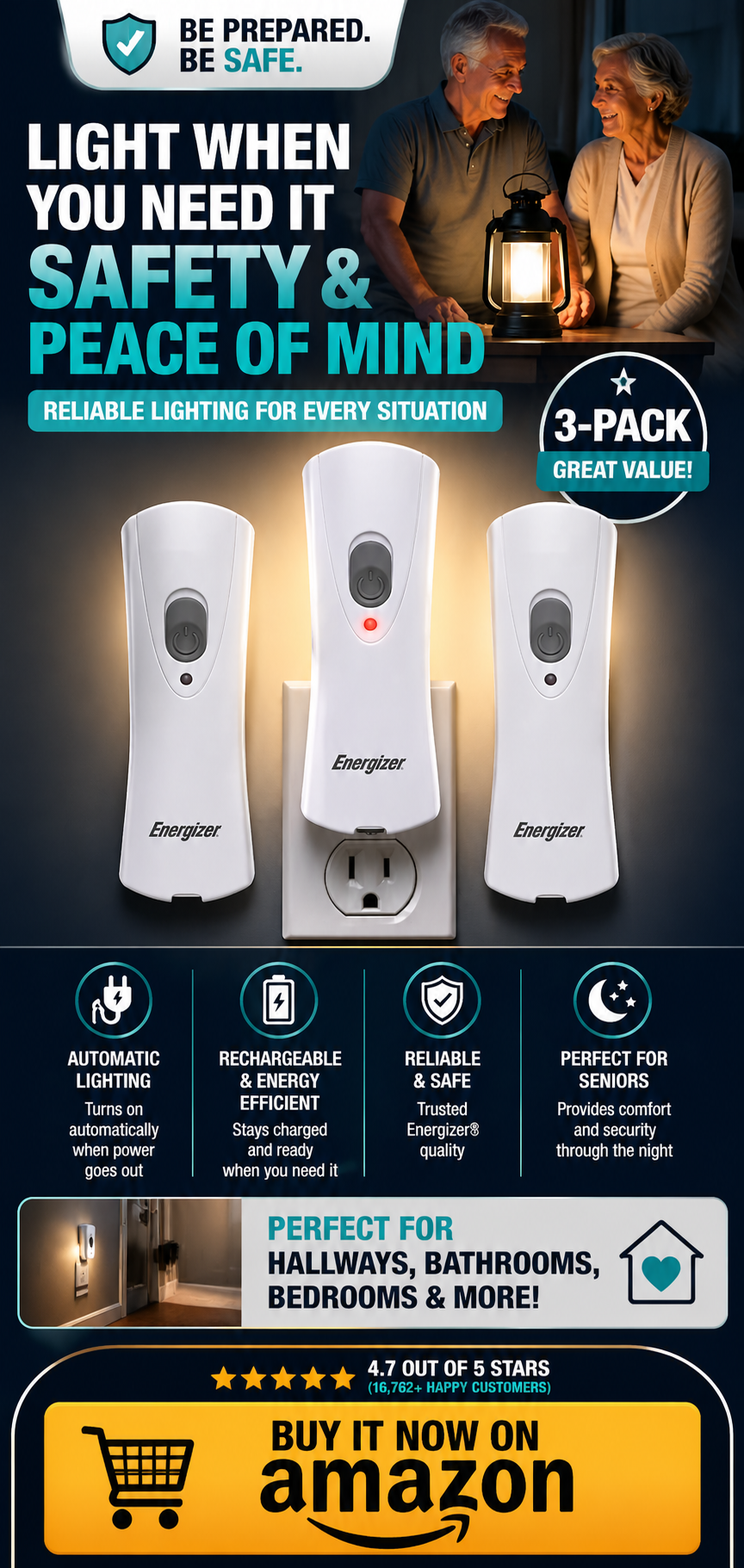
→ Get the Auto-On Night Lights on Amazon
What a Modified Bathroom Looks Like
The same bathroom with the modifications above looks completely different from a fall-risk perspective.
There’s a grab bar at the shower entry — firm, load-rated, exactly where the hand reaches during the step-through motion. The shower floor has non-slip treatment. A shower chair means no standing on a wet surface. A non-slip stone mat outside the shower catches the shower exit transition without shifting. Toilet safety rails make every toilet transfer supported and stable. A night light means the path is lit before anyone is moving through it in the dark.
Every major daily fall risk in the bathroom has been addressed. Not eliminated — nothing eliminates all risk — but reduced from dangerous to manageable.
And the total cost of that transformation is typically $200 to $400 in products plus the cost of grab bar installation. Compare that to a single emergency room visit, which averages $1,500 to $3,000 before any treatment costs.
The Safety Net for When the Bathroom Still Wins
Even a thoroughly modified bathroom carries some residual risk. The question worth answering for any older adult who spends time alone is: if a fall occurs in the bathroom and they can’t get up, what happens?
A base unit medical alert system in the living room doesn’t help in a bathroom with a closed door. A phone left on the counter doesn’t help if it’s out of reach from the floor. The answer to this question needs to be a wearable device that goes into the bathroom — that’s there during every shower, every nighttime trip, every bathroom visit.

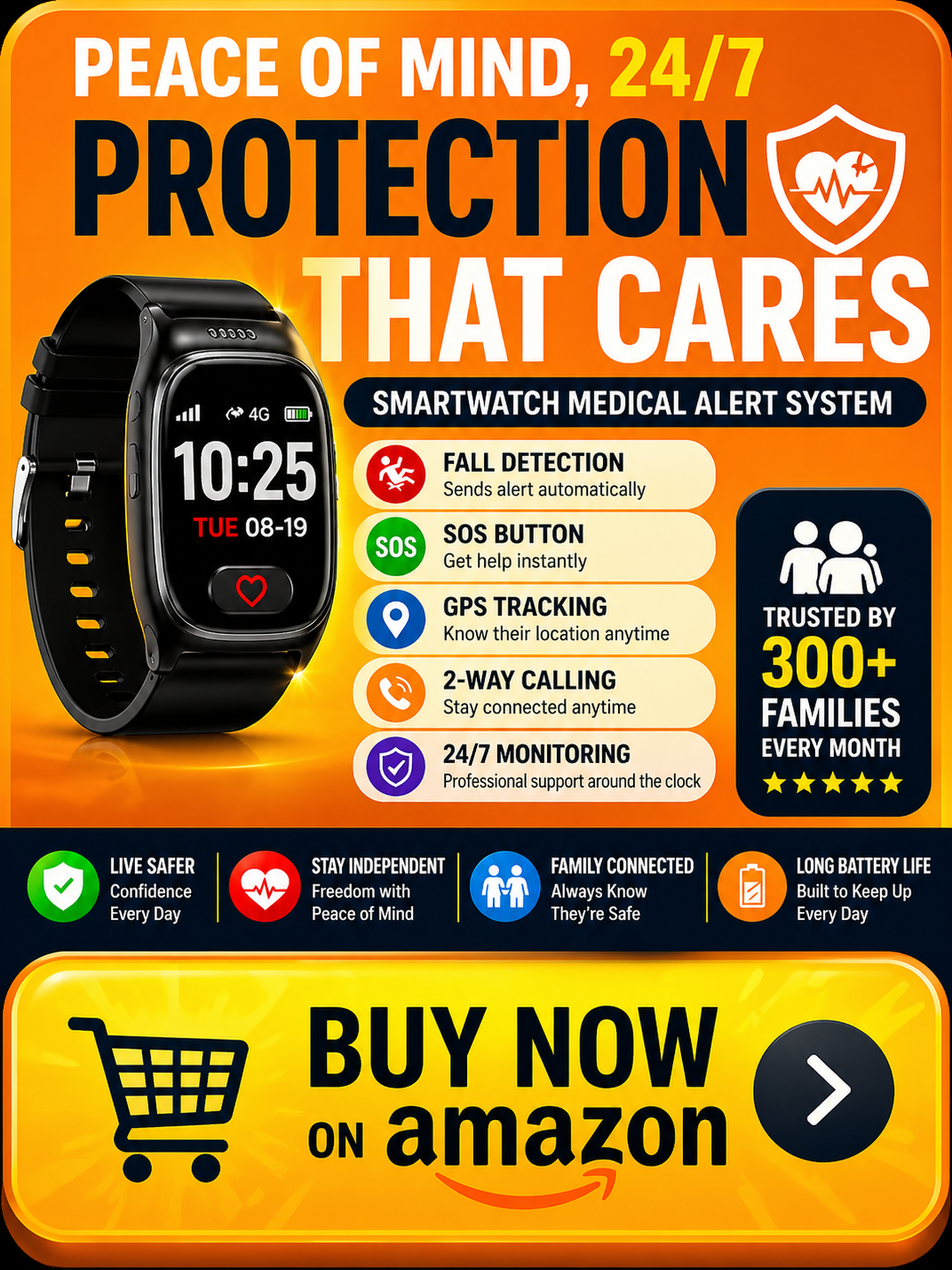
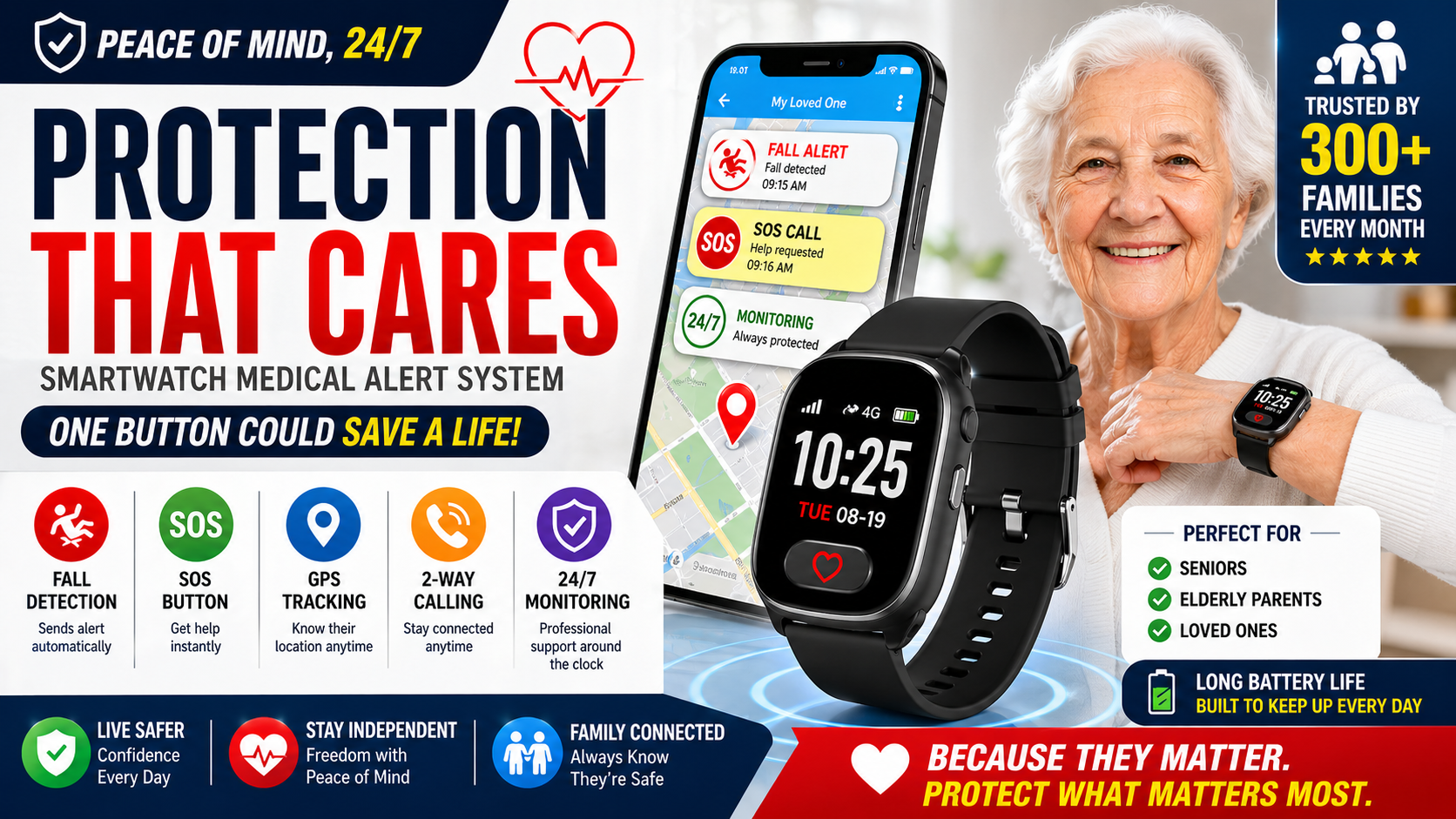
The SecuLife Smartwatch is worn on the wrist and provides automatic fall detection that works in the bathroom — detecting a fall and alerting family with GPS location without requiring any action from the person who has fallen. Our complete review at SecuLife Smartwatch Review covers every feature worth knowing.
→ Get the SecuLife Smartwatch on Amazon
Have You Actually Looked at Your Parent’s Bathroom Recently?
Not walked through it. Looked at it — with fresh eyes, specifically thinking about what happens there every day.
Is there a grab bar at the shower entry? Is it in the right position? Is the bath mat one that stays completely in place when wet? Is there support next to the toilet? Is the path from the bedroom lit at night?
For most families reading this the honest answer to most of those questions is no — not because they don’t care, but because the bathroom has been familiar for so long that its hazards have become invisible.
The modifications are inexpensive. The installation is simple. The protection is immediate and permanent. There’s no reasonable reason to leave the most dangerous room in the home unmodified once you know what it actually costs not to.
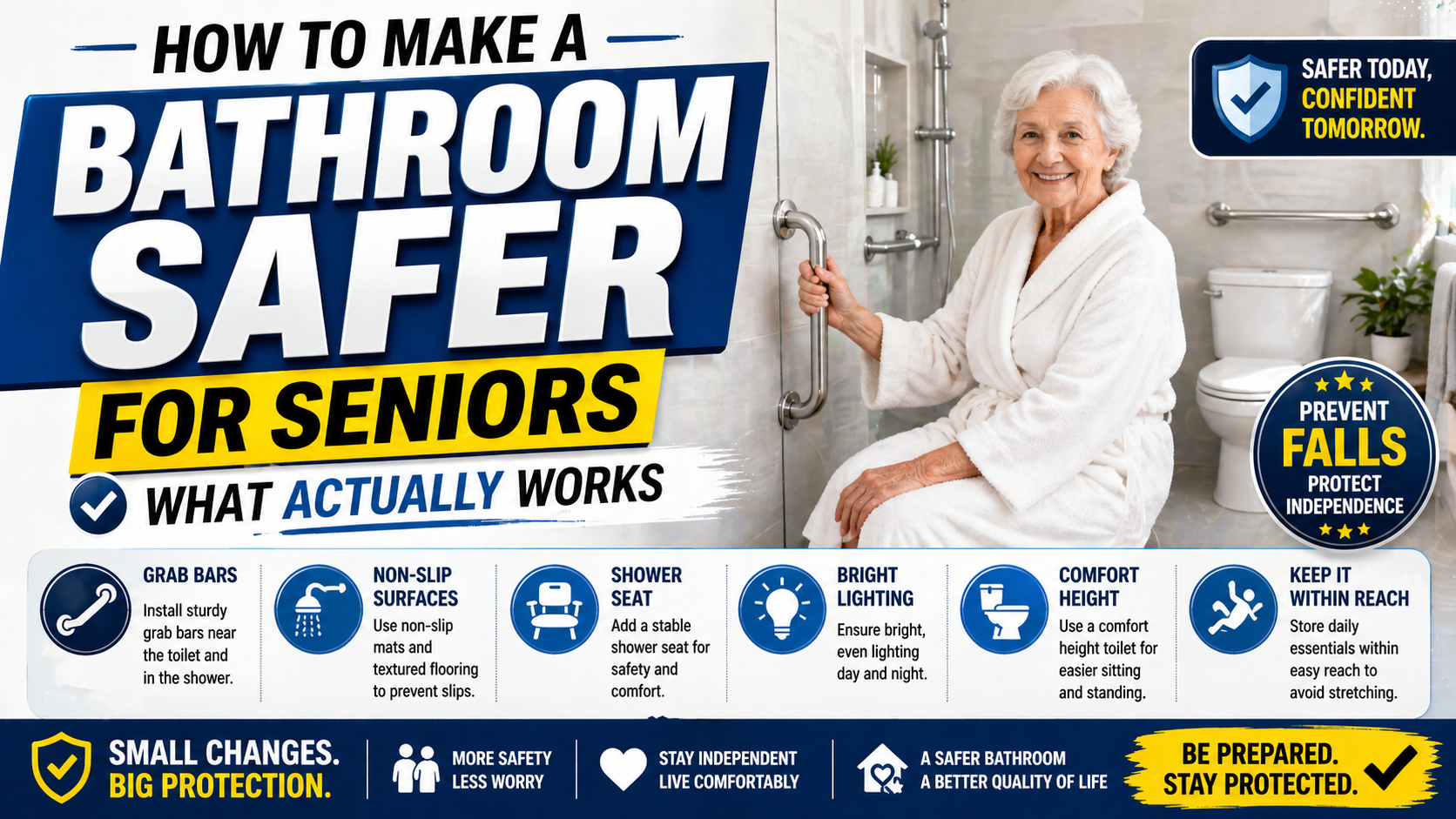
Our complete guide on how to make a bathroom safer for seniors covers every upgrade worth making. Our complete guide on safe shower setup for elderly adults covers the shower specifically in full detail.
Address the bathroom this weekend. It’s the highest-impact safety action available for most families — and it’s been waiting long enough.
→ Get the Grab Bars on Amazon — the single highest-impact bathroom modification
About the Author
Margaret Holloway, RN spent 22 years in geriatric nursing and saw firsthand how consistently bathroom falls preceded the hospitalizations, surgeries, and permanent functional declines that ended independent living for older adults in her care. She saw just as consistently that the bathrooms where these falls occurred were unmodified — not because the families didn’t love their parents but because nobody had told them clearly enough that the bathroom was where the real risk lived. She writes for Elder Safety Guide to close that information gap before the fall rather than after it.