Getting in and out of bed safely is one of the most underestimated daily fall risks for older adults. Here’s the bed rail that actually solves it — and what to look for before you buy.
Getting in and out of bed is something most people do without thinking. For an older adult with reduced leg strength, hip problems, or balance challenges, it’s one of the most physically demanding transitions of the entire day — and one of the most common causes of falls that families never see coming. A bed rail addresses this specific transition, while other key home safety upgrades helps organize other practical upgrades by area and impact.
It happens first thing in the morning when blood pressure hasn’t normalized and alertness is low. It happens in the middle of the night during urgent bathroom trips in the dark. It happens dozens of times a week, every week, with no one watching and no safety net in place.
A bed rail changes that. A solid, properly positioned bed rail gives your parent something to push against when rising, something to hold when lowering, and a stable anchor point during the most vulnerable part of the transition. It turns a repeated daily fall risk into a managed, supported movement.
This is the honest review of the best bed rail option for seniors — what it does, why it works, and everything you need to know before buying.
→ See the ASTM Approved Bed Rail for Seniors on Amazon
Why Getting In and Out of Bed Is a Bigger Fall Risk Than Most Families Realize
The bed-to-standing transition involves a specific sequence of movements that becomes genuinely difficult as strength and balance decline with age. Understanding why helps explain why a bed rail makes such a meaningful difference.
The Morning Transition
First thing in the morning the body hasn’t fully switched from sleep physiology to waking physiology. Blood pressure is lower. Muscles are stiff. The vestibular system — the balance system — takes time to recalibrate after lying horizontal for hours. Rising too quickly causes orthostatic hypotension — a sudden drop in blood pressure that causes dizziness and dramatically increases fall risk in the moments immediately after standing.
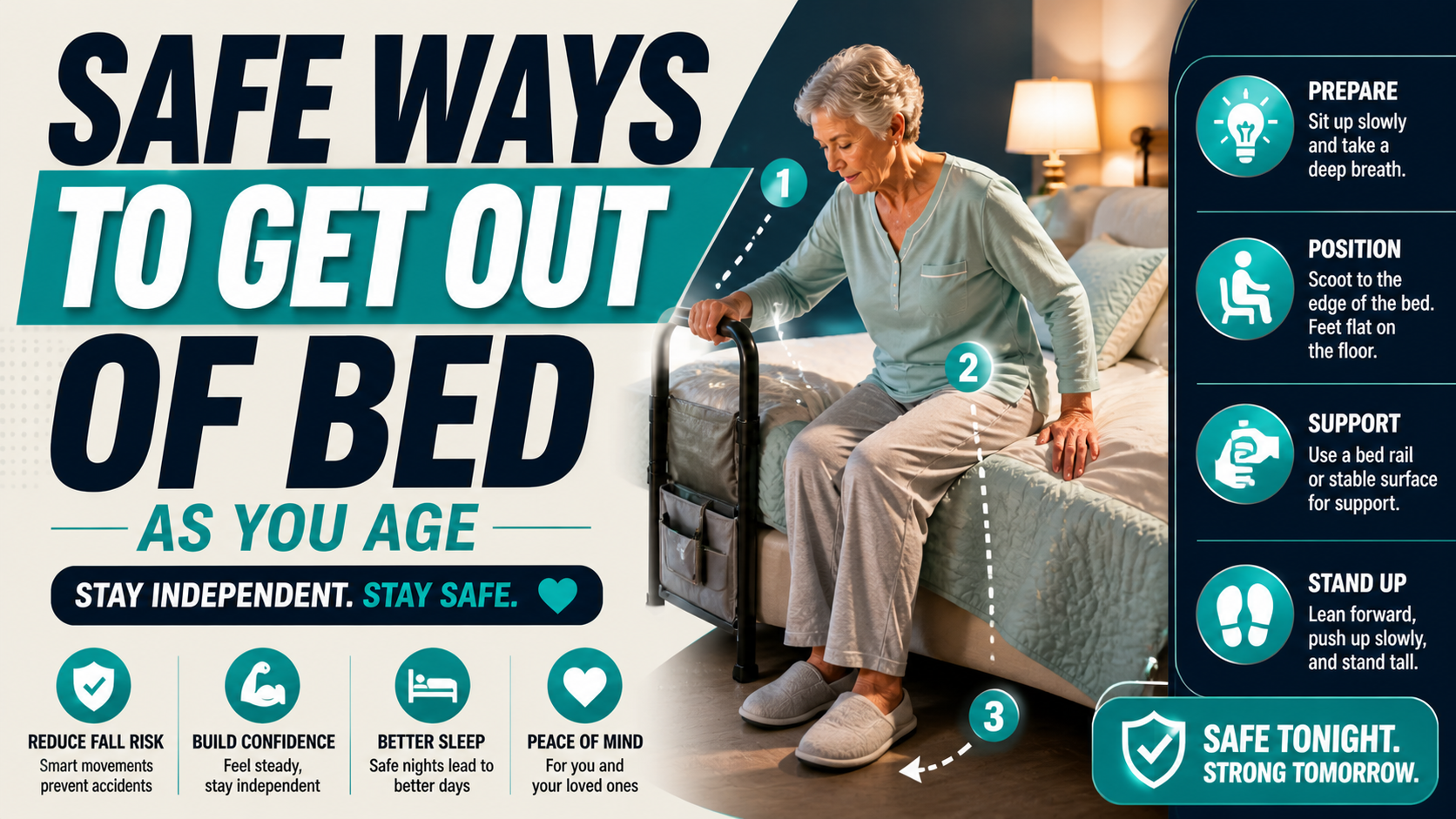
Most morning falls happen in those first few seconds after standing. A bed rail gives your parent something to hold during that vulnerable window — allowing them to rise slowly, pause at the edge of the bed, and stabilize before committing their full weight to standing. Pairing the rail with the step-by-step technique in Safe Ways to Get Out of Bed as You Age can make the entire transition more deliberate and stable.
Nighttime Bathroom Trips

Nighttime falls are disproportionately serious in older adults. They happen in the dark, from partial sleep, with reduced reaction time and awareness. The urgency of a nighttime bathroom trip adds time pressure that encourages rushing — exactly the wrong approach for someone whose balance isn’t fully engaged. The bed rail addresses the first transition, while How to Keep Seniors Safe Living Alone at Night covers the lighting, pacing, and bathroom precautions that follow.
The transition from lying to sitting to standing to walking in the middle of the night is a high-risk sequence every time it happens. A bed rail provides the anchor point that makes the first part of that sequence — getting out of bed — controlled and supported rather than a grab-and-hope movement.
The Mechanics of Rising From a Low Surface
Rising from a seated position on a mattress is mechanically harder than rising from a chair because mattresses compress and shift under body weight. There’s no firm, stable surface to push up from. For seniors with reduced quadriceps strength, hip problems, or any instability, this compression and instability makes the movement significantly more demanding than it appears.
A bed rail positioned correctly provides a firm, non-compressing surface to push against — converting a wobbly, uncertain movement into a controlled, supported one.
What to Look for in a Bed Rail for Seniors
Not all bed rails are designed for genuine senior safety use. Here’s what matters before purchasing.
Safety Certification
ASTM certification is the key standard to look for. ASTM International publishes specific safety standards for bed rails used by adults — covering entrapment risk, structural integrity, and load capacity. A bed rail that meets ASTM standards has been tested against real safety benchmarks, not just manufactured to a price point. This is non-negotiable for a device your parent will depend on daily.
Weight Capacity
The rail needs to support your parent’s full body weight during the pushing and pulling forces of the transition — which can significantly exceed static body weight. A minimum rating of 300 pounds is appropriate. Higher is better.
Handle Design
The handle your parent grips needs to be ergonomic — shaped to fit a hand naturally rather than requiring a precise grip. For seniors with arthritis, reduced grip strength, or any hand stiffness, an ergonomic handle makes the difference between a rail that gets used confidently and one that’s awkward and avoided.
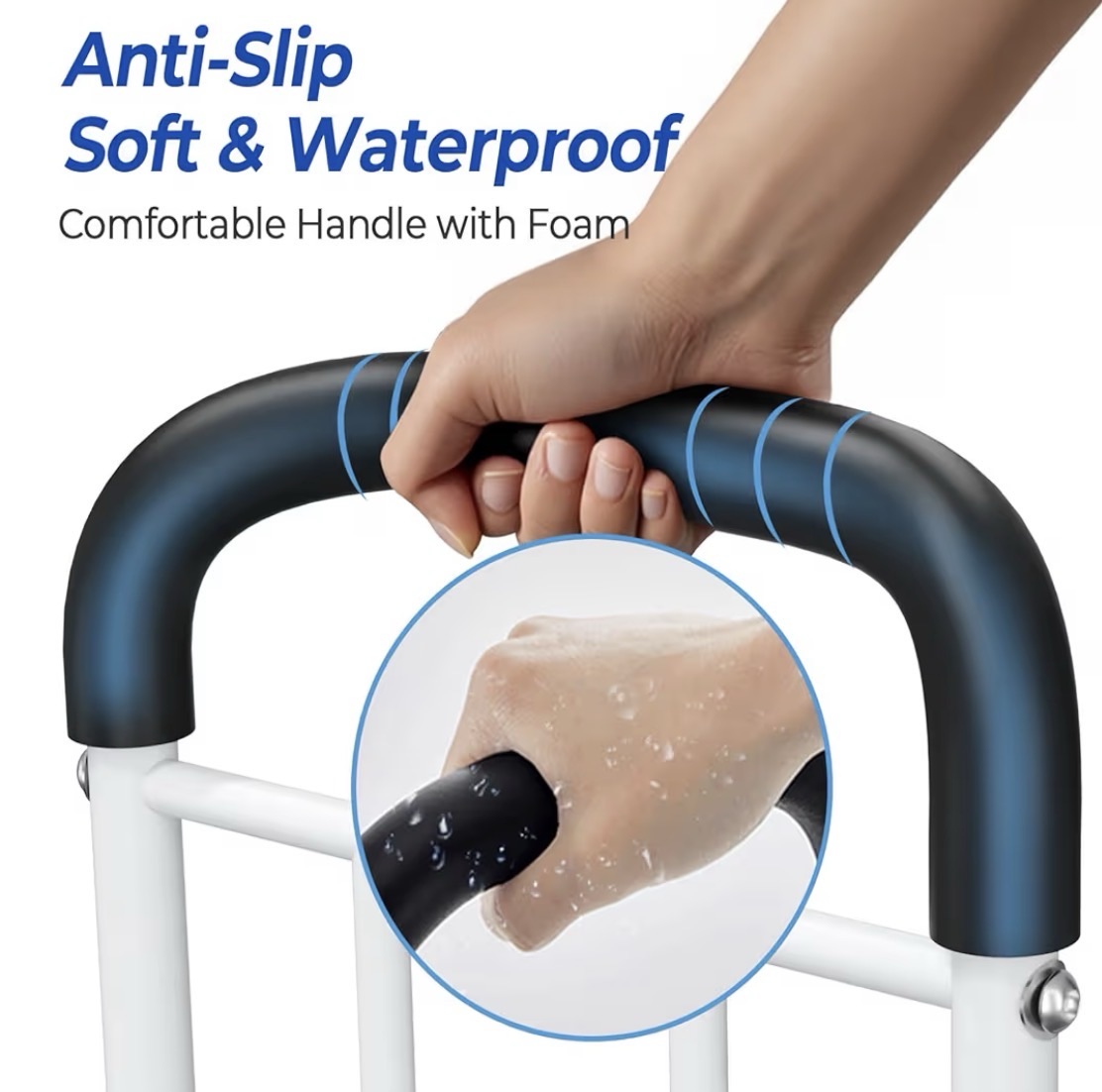
Non-slip surface on the handle is essential. A smooth handle is difficult to grip when hands are dry and nearly impossible when they’re slightly damp — which is often the case first thing in the morning or after a nighttime bathroom trip.
Height Adjustability
Bed height varies significantly across different mattress and frame configurations. A bed rail that can’t be adjusted to the right height for your parent’s specific setup won’t position the handle where it needs to be for effective use. Adjustability is important both for fitting different beds and for accommodating different users if the rail needs to be shared or moved.
Tool-Free Installation
A bed rail that requires tools and significant effort to install is a barrier to actually getting it in place. Tool-free installation — particularly on a product that may need to be moved or repositioned — is a meaningful practical advantage.
Stability Under Load
The rail must not shift, tip, or flex under the force of your parent pushing and pulling against it. Test stability before your parent relies on it independently — any movement under load needs to be addressed before the rail is used as a primary support.


Our Recommended Bed Rail for Seniors
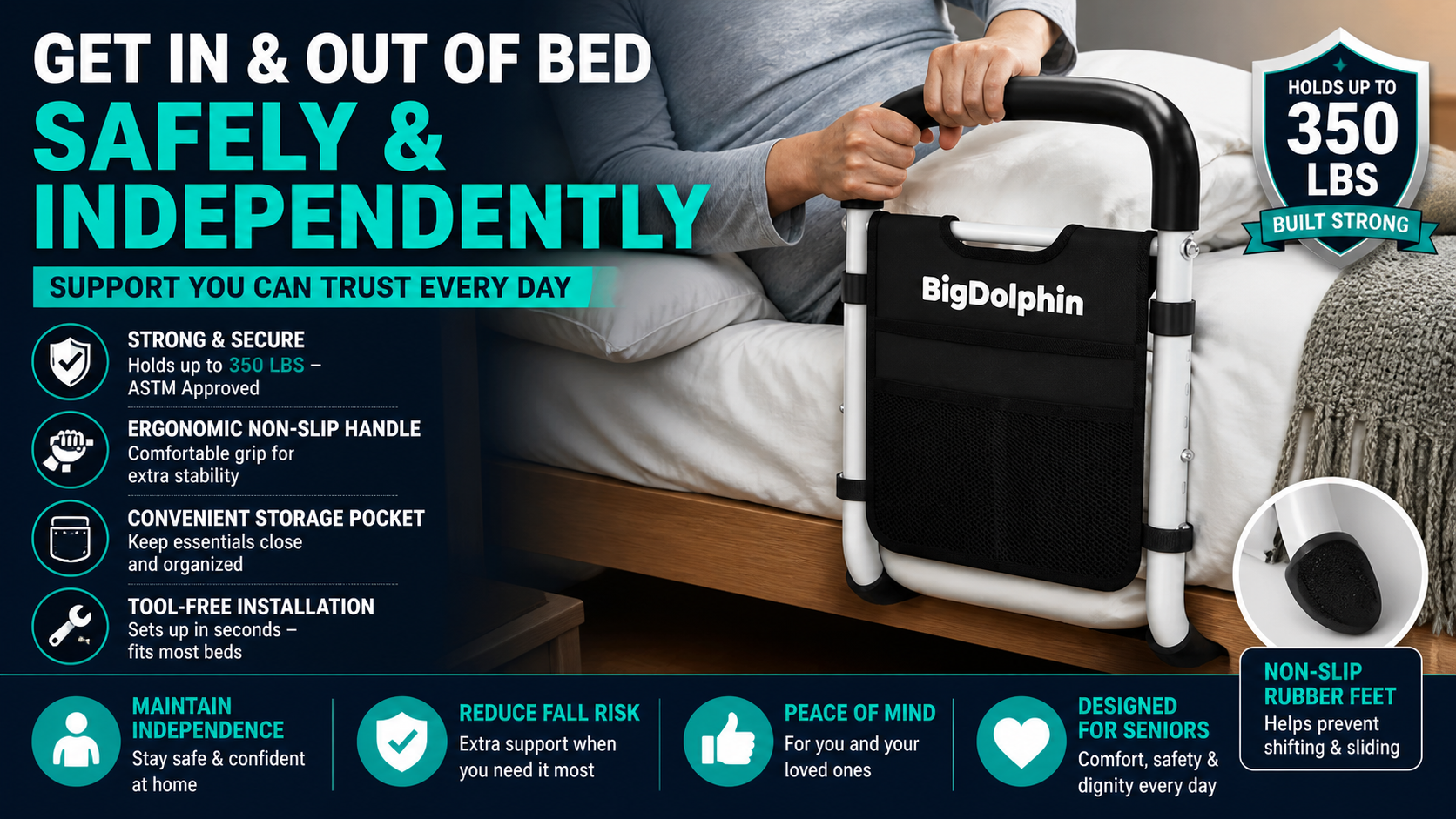
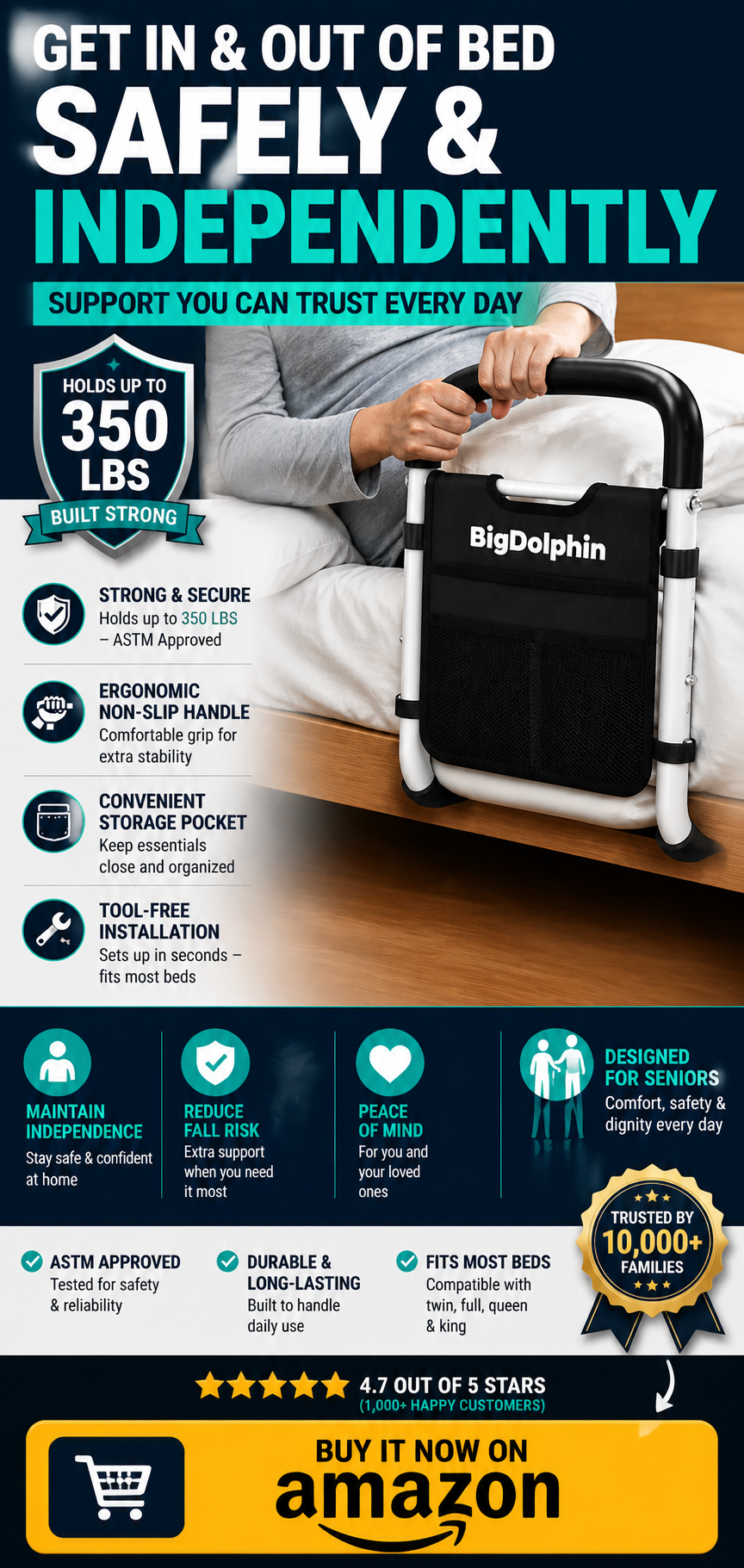
Bed Rails for Elderly Adults — ASTM Approved Adjustable Bed Cane with Non-Slip Ergonomic Handle and Storage Pocket, 350 lb Capacity
This bed rail hits every specification that matters for genuine senior safety use — and the ASTM certification puts it in a category above the majority of bed rails marketed to seniors that carry no independent safety validation.
→ Check current price and availability on Amazon
The ASTM approval is the first thing to note. ASTM International’s standards for adult bed rails specifically address the safety risks that matter most — entrapment between the rail and mattress, structural failure under load, and stability during use. Meeting those standards means this rail has been validated against real safety benchmarks, not just assembled to look like a safety product.
The 350-pound weight capacity is well above the minimum threshold and reflects genuine structural integrity. When your parent pushes against this rail with their full body weight and effort — particularly during a difficult morning rise or an urgent nighttime bathroom trip — it holds without flexing, shifting, or creating any sense of instability.
The ergonomic non-slip handle is one of the most practically important features. It’s shaped to fit a hand naturally in the gripping position used during the sit-to-stand transition — not a straight bar that requires a precise grip. The non-slip surface maintains grip under the dry-hand and slightly-damp-hand conditions that are the norm for morning and nighttime use. For seniors with arthritis or reduced grip strength, this design distinction is immediately noticeable in use.
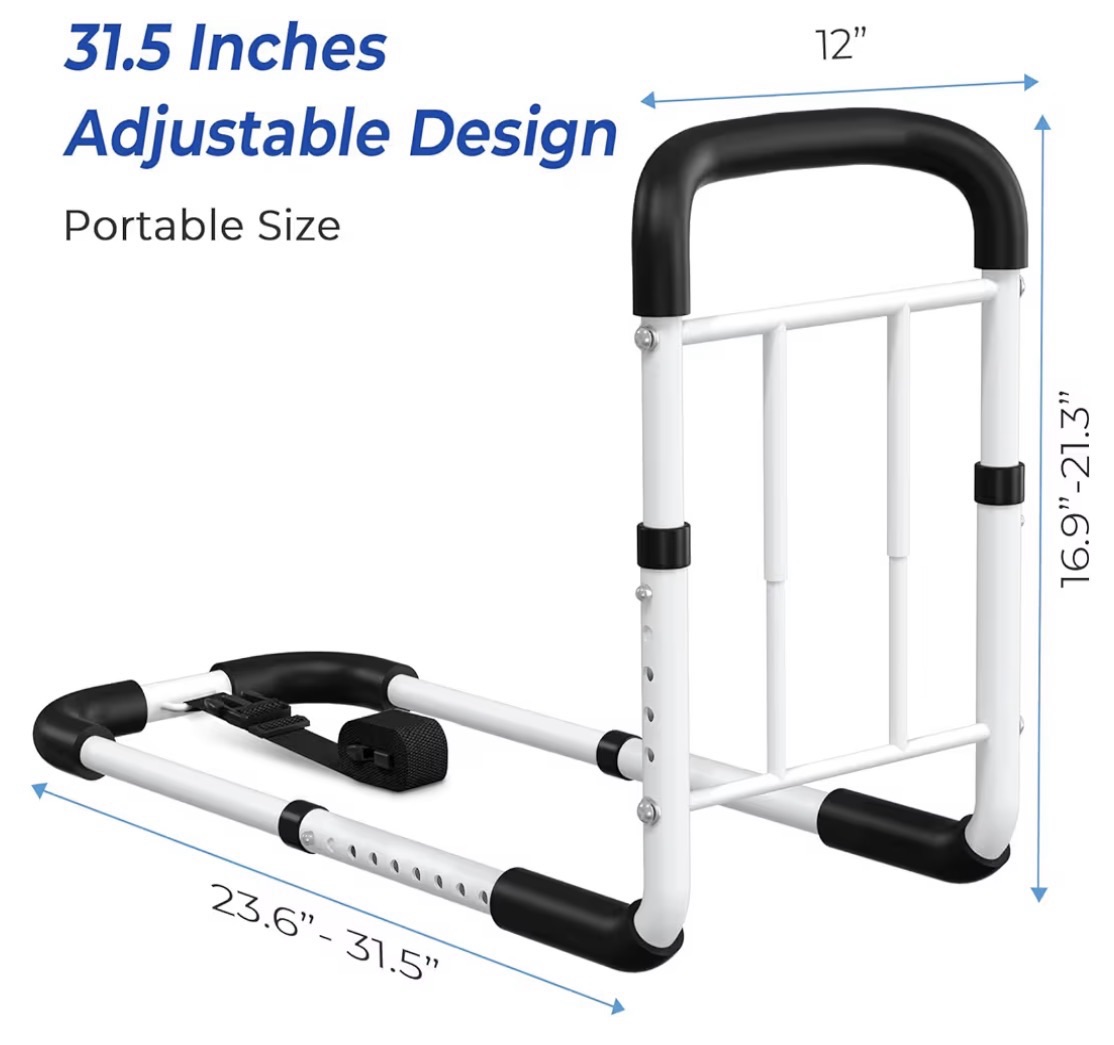
Height adjustability means the rail can be configured for your parent’s specific mattress height — positioning the handle exactly where it needs to be for the most mechanically effective push-up position. Too high and the angle is wrong. Too low and your parent has to reach down awkwardly. Adjustable height gets it right for the specific person using it.
Tool-free installation is exactly what a product like this should have. Slide it under the mattress, position it correctly, and it’s ready to use. No tools, no assembly complexity, no barrier to getting it in place the day it arrives. For families setting this up remotely for a parent or during a visit, tool-free installation means it’s done in minutes rather than requiring a return trip with the right hardware.
The storage pocket is a smaller feature that turns out to be genuinely useful in daily practice. Seniors who keep their phone, glasses, TV remote, or other nighttime essentials in the pocket have everything they need within reach from the bed — reducing the reaching and getting up movements that create additional fall risk throughout the night. It’s a thoughtful addition that reflects real understanding of how seniors actually use the space around their bed.
Stability under load is solid. The under-mattress anchor system holds the rail firmly in position during use without requiring any attachment to the bed frame — which means it works across different bed types without modification.
→ Get the ASTM Approved Bed Rail on Amazon
How to Position the Bed Rail Correctly
Even the best bed rail provides limited value if it’s not positioned correctly. Here’s how to set it up for maximum effectiveness.
Position at the Head-Third of the Bed
The rail should be positioned roughly in the upper third of the bed — near where your parent’s hips will be when lying down. This places the handle within easy reach when sitting on the edge of the bed preparing to stand, and within reach when lying down preparing to sit up.
A rail positioned too far toward the foot of the bed requires reaching and leaning to access — defeating the purpose of having it there. Too far toward the head and it doesn’t support the critical moment of transitioning from sitting on the edge to standing.
Adjust Height Before First Use
Adjust the handle height before your parent uses the rail independently. Have them sit on the edge of the bed and reach for the handle in the position they’d use when rising. The handle should be at a height that allows a natural, comfortable grip without reaching up or bending down. Make any height adjustments with your parent present so you can verify the position works for their specific body.
Test Stability First
Before your parent relies on the rail independently, test it yourself. Push and pull against it with significant force from the positions your parent will use it. Confirm there’s no movement, flexing, or instability. If anything feels uncertain, reposition and retest before handing it over for independent use.
Which Side of the Bed
Install on whichever side your parent exits the bed from — typically the side closest to the bathroom. If they exit from both sides, consider a rail on each side. The rail needs to be on the exit side to support the getting-up transition, which is the highest-risk movement.
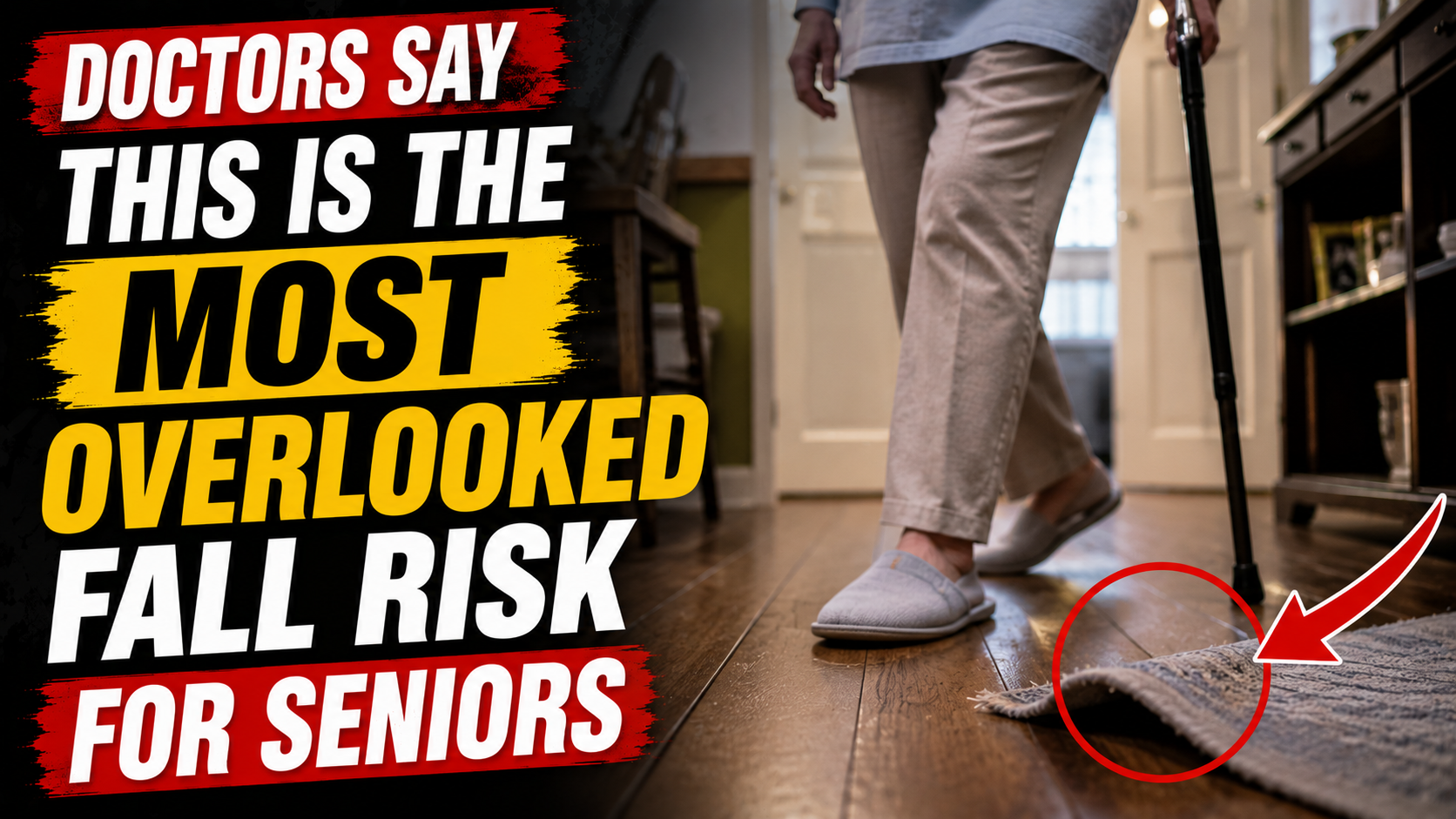

The Bed Rail and the Full Bedroom Safety Picture
The bed rail addresses the getting-in and getting-out risk — but bedroom safety for seniors involves the full path from the bed to the bathroom and back, particularly at night.
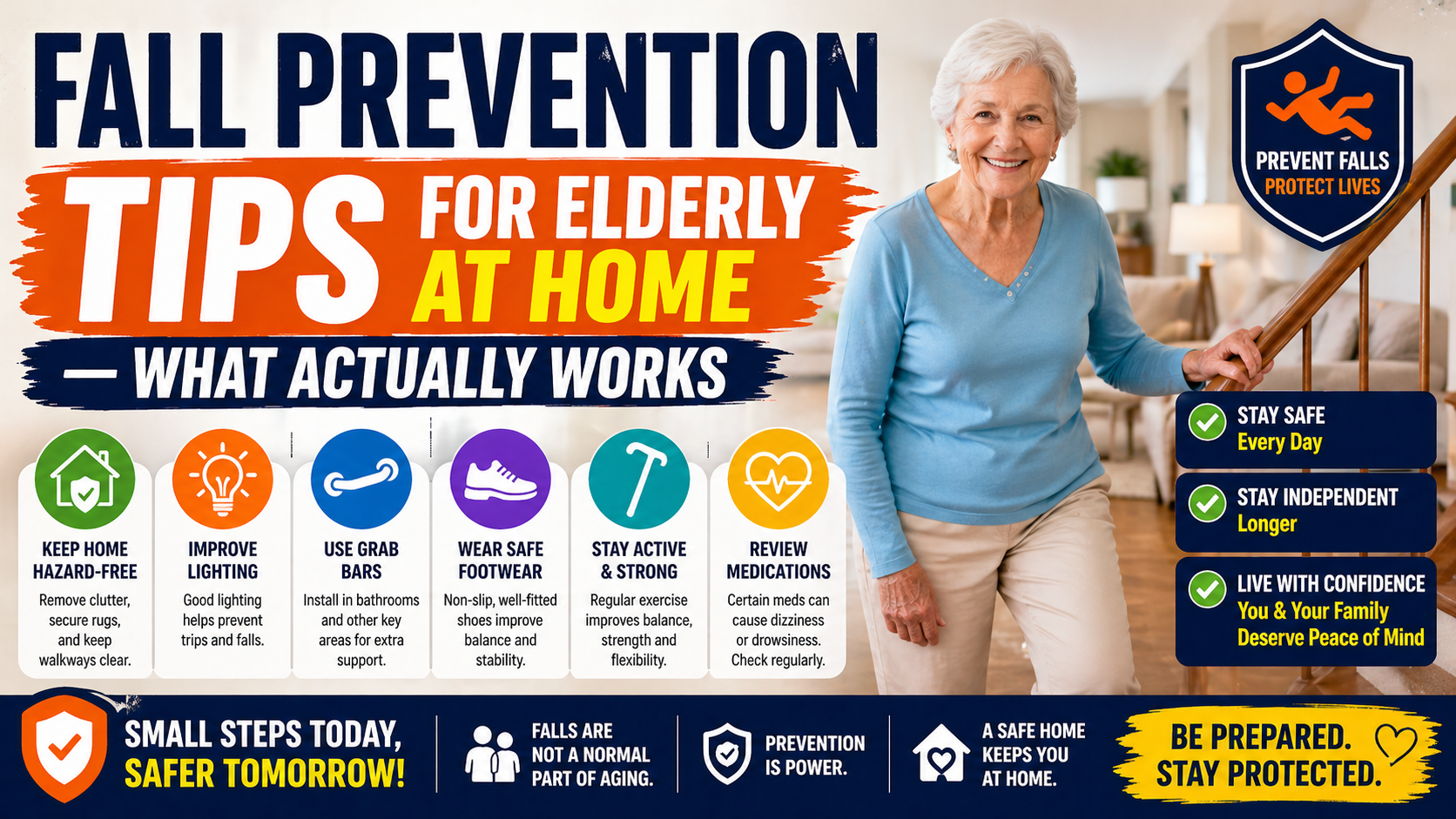
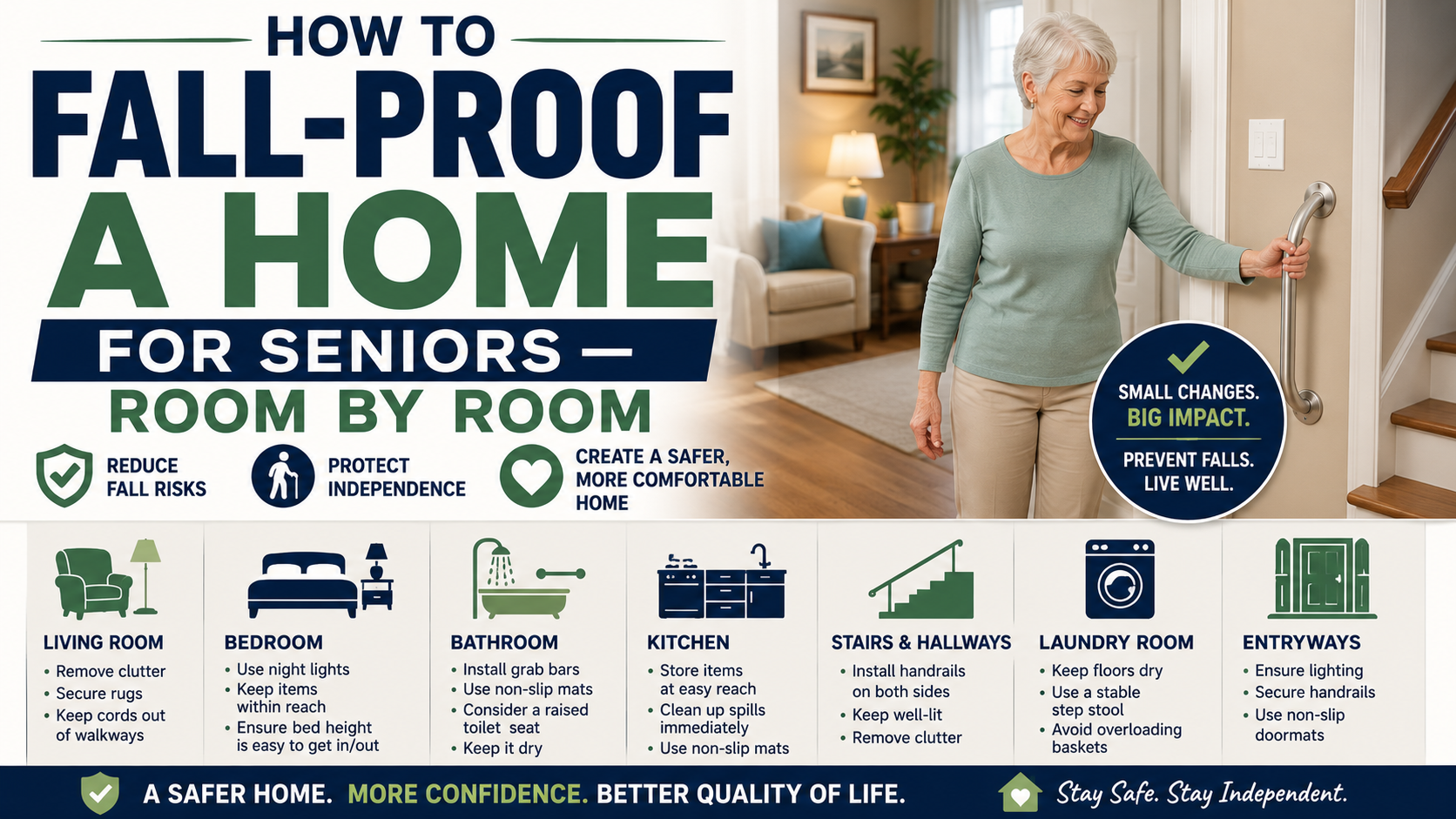
For the complete bedroom and nighttime safety picture — lighting, floor hazards, the path to the bathroom, and everything else that creates fall risk in the bedroom — our comprehensive guide on fall prevention tips for elderly at home covers every room with a practical checklist including the bedroom in detail.

The bathroom end of that nighttime path needs its own attention. Grab bars at the toilet and shower, a non-slip bath mat, and proper lighting address the bathroom risks that follow immediately after the bedroom transition. Our guide on how to make a bathroom safer for seniors covers every upgrade worth making, and our review of the best grab bars for seniors and the best non-slip bath mat for seniors cover the specific products that make the biggest difference.


And even with every physical safety measure in place, the honest reality is that falls can still happen. The SecuLife Smartwatch provides automatic fall detection that alerts family members immediately when a fall is detected — without your parent needing to press anything or find their phone. It’s worn on the wrist so it’s there during the nighttime bathroom trip, the morning rise, and every other high-risk moment throughout the day. Our full SecuLife Smartwatch review covers everything you need to know before deciding if it’s right for your family’s situation.
For families still working through whether a medical alert device is necessary, our guide on signs it’s time for a medical alert system walks through exactly what to look for. And for a clear understanding of what these devices actually cost, our breakdown of how much a medical alert system costs cuts through the pricing confusion clearly.
Getting Your Parent to Use the Bed Rail
Most seniors accept a bed rail more readily than other safety devices because it doesn’t look or feel like a medical device. It’s a handle next to the bed — practical, unobtrusive, immediately useful.
Frame it as a convenience rather than a safety intervention. “This makes it easier to get up in the morning without straining” is accurate and lands better than safety-focused framing. The storage pocket reinforces this — it’s a useful feature that makes the rail feel like a practical addition rather than a concession to physical decline.
Have your parent try it once with you present. The difference in ease during the sit-to-stand transition is immediately apparent to most seniors — it simply makes getting up easier. That firsthand experience is more persuasive than any amount of safety explanation.
Build it into the routine from the first day. The rail should be used every time — not just when your parent feels unsteady. Consistent use builds the muscle memory and habit that makes the rail reliably helpful rather than something that gets grabbed inconsistently during the specific moments when a fall is most likely.
Frequently Asked Questions About Bed Rails for Seniors
What does ASTM approved mean for a bed rail?
ASTM International is an independent standards organization that publishes safety standards for a wide range of products including adult bed rails. ASTM certification for a bed rail means the product has been tested against specific benchmarks for structural integrity, entrapment risk between the rail and mattress, and stability under load. It’s the most meaningful safety certification to look for in this product category — more reliable than manufacturer claims alone.
Will this bed rail work with an adjustable base or memory foam mattress?
The under-mattress anchor system works with most standard mattress configurations. For adjustable bases the compatibility depends on the specific base design — check the product specifications and manufacturer guidance before purchasing if your parent has an adjustable base. Memory foam mattresses are generally compatible as the anchor system works regardless of mattress material.
Can the bed rail be moved between beds?
Yes — tool-free installation means the rail can be repositioned or moved to a different bed without tools. This is useful for families who want to set it up at a parent’s home during a visit or move it between a primary bedroom and a guest room.
Is a bed rail safe for seniors who move around a lot during sleep?
The rail is designed as a support for transitions — getting in and out — rather than as a barrier across the full length of the bed. For seniors who roll during sleep the positioning in the upper third of the bed means it doesn’t span the sleeping area. However if there’s any concern about a senior rolling into or against the rail during sleep, discuss with their physician or an occupational therapist who can assess the specific situation.
Does Medicare cover bed rails for seniors?
Medicare coverage for bed rails depends on classification as durable medical equipment and typically requires a physician’s order documenting medical necessity. Coverage varies by plan and situation — contact Medicare directly or check with your parent’s physician about whether a bed rail qualifies under their specific coverage. Some Medicare Advantage plans have broader home safety equipment benefits worth exploring.
Get It in Place Before the Next Fall Risk
The getting-in and getting-out transition happens multiple times every single day. It’s happening right now without support in place. It will happen tonight during a nighttime bathroom trip in the dark.
The bed rail is one of the most straightforward senior safety upgrades available — tool-free installation, immediate impact, immediate daily use. It arrives, it goes under the mattress, and it starts making every transition safer from that moment forward.
Don’t wait for a fall to make the case for it. The case is already there every morning and every night.
→ Order the ASTM Approved Bed Rail for Seniors on Amazon — check current price and availability


About the Author
Tom Garrett spent eight years working as an EMT before leaving the field to become a full-time caregiver for his father, who fell twice in one year at age 79. That experience — navigating the senior safety product market under pressure, making mistakes, and eventually finding what actually worked — is what drives his writing. Tom covers senior safety topics for Elder Safety Guide with a focus on giving families the plain-English information he wishes he’d had when he needed it most.