In fall injury reports a specific pattern appears consistently — the falling person’s hand reached for support and found nothing. Here’s why that keeps happening and how to stop it.
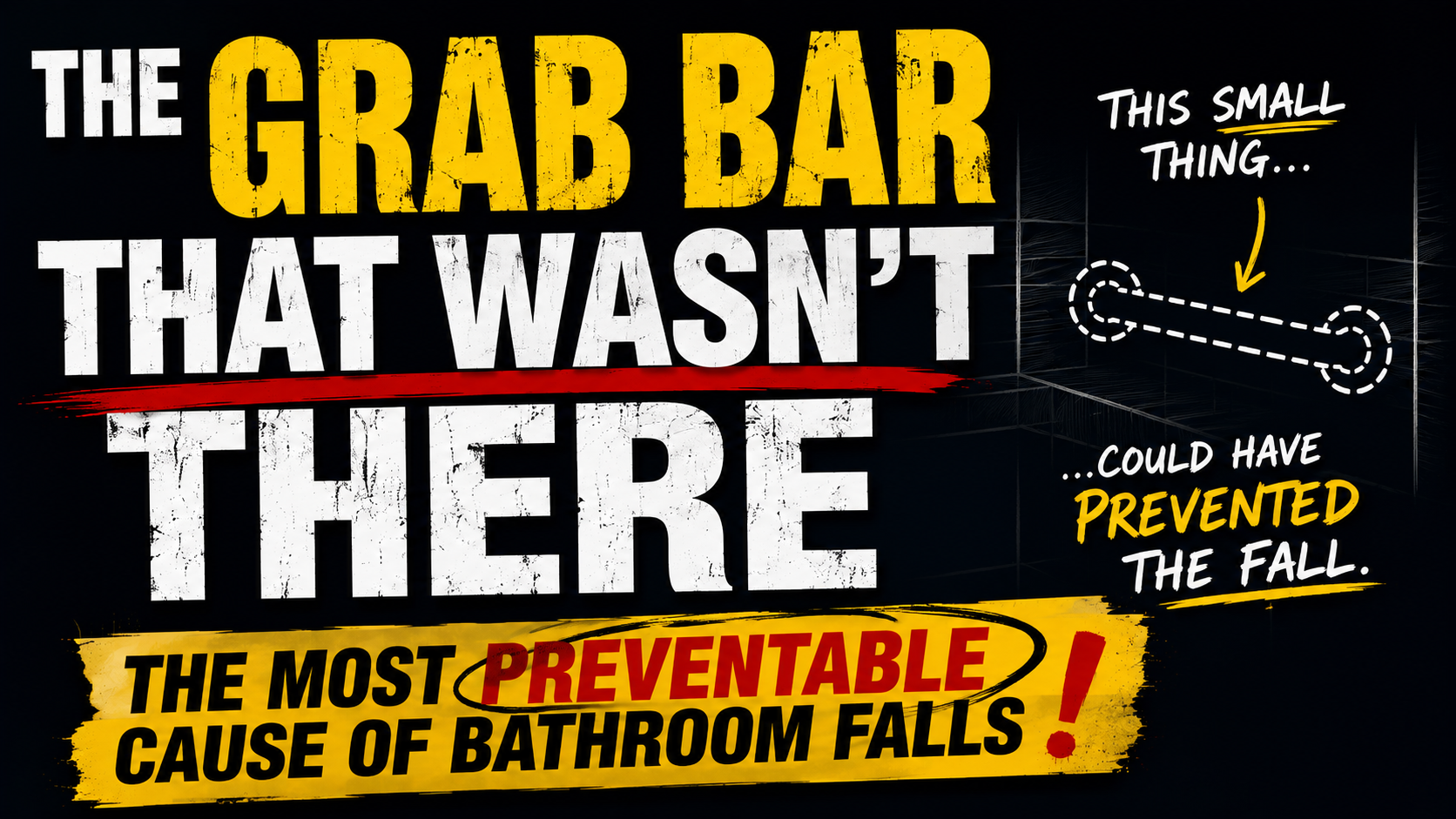
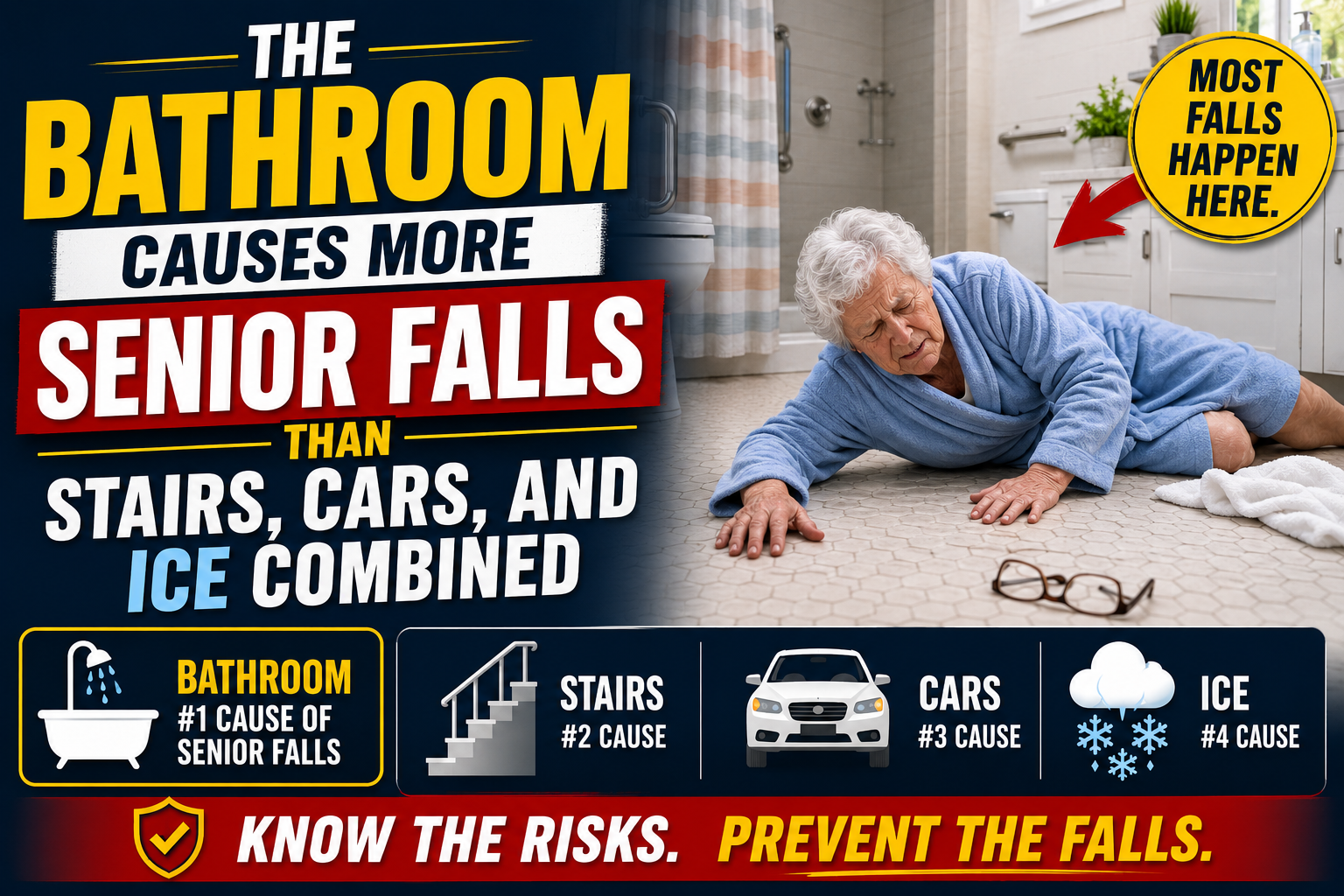
There is a specific object that appears — or more precisely, fails to appear — in the injury reports of a significant proportion of serious bathroom falls in older adults.
It’s a grab bar. Specifically its absence.
Not the wrong grab bar. Not a poorly installed one. Just no grab bar at all — in the one location where a grab bar would have been exactly what a falling person’s hand reached for, found nothing, and kept falling.
This is not a hypothetical. It’s the pattern in fall injury data so consistent that geriatric nurses and emergency physicians recognize it immediately. The patient is asked to describe the fall. They describe reaching for support as they lost balance. They describe what they reached for. They describe finding nothing where something should have been.
The grab bar that wasn’t there is one of the most preventable objects in emergency medicine. And it costs $25.
The Specific Moment It Matters
Grab bars don’t prevent falls by existing somewhere in the bathroom. They prevent falls by being in the specific location a hand reaches at the specific moment balance is lost.
That moment is more predictable than most people realize. Falls in the bathroom cluster around specific transitions — not random moments throughout the showering or bathing routine, but specific biomechanical events that happen at predictable points.
The Shower Entry — The Highest-Risk Moment
Stepping into a shower requires lifting one foot over the threshold while supporting full body weight on the other leg. At the peak of this motion — one foot lifted, the other bearing all weight, the body moving forward into the shower space — the balance demand is at its maximum. This is the moment a hand reaches for support most naturally and most urgently.
Where does the hand reach? To the side and slightly forward — into the shower space, at approximately shoulder height or slightly lower. It reaches there because that’s where the body’s balance instinct sends it during a forward-and-upward entry motion.
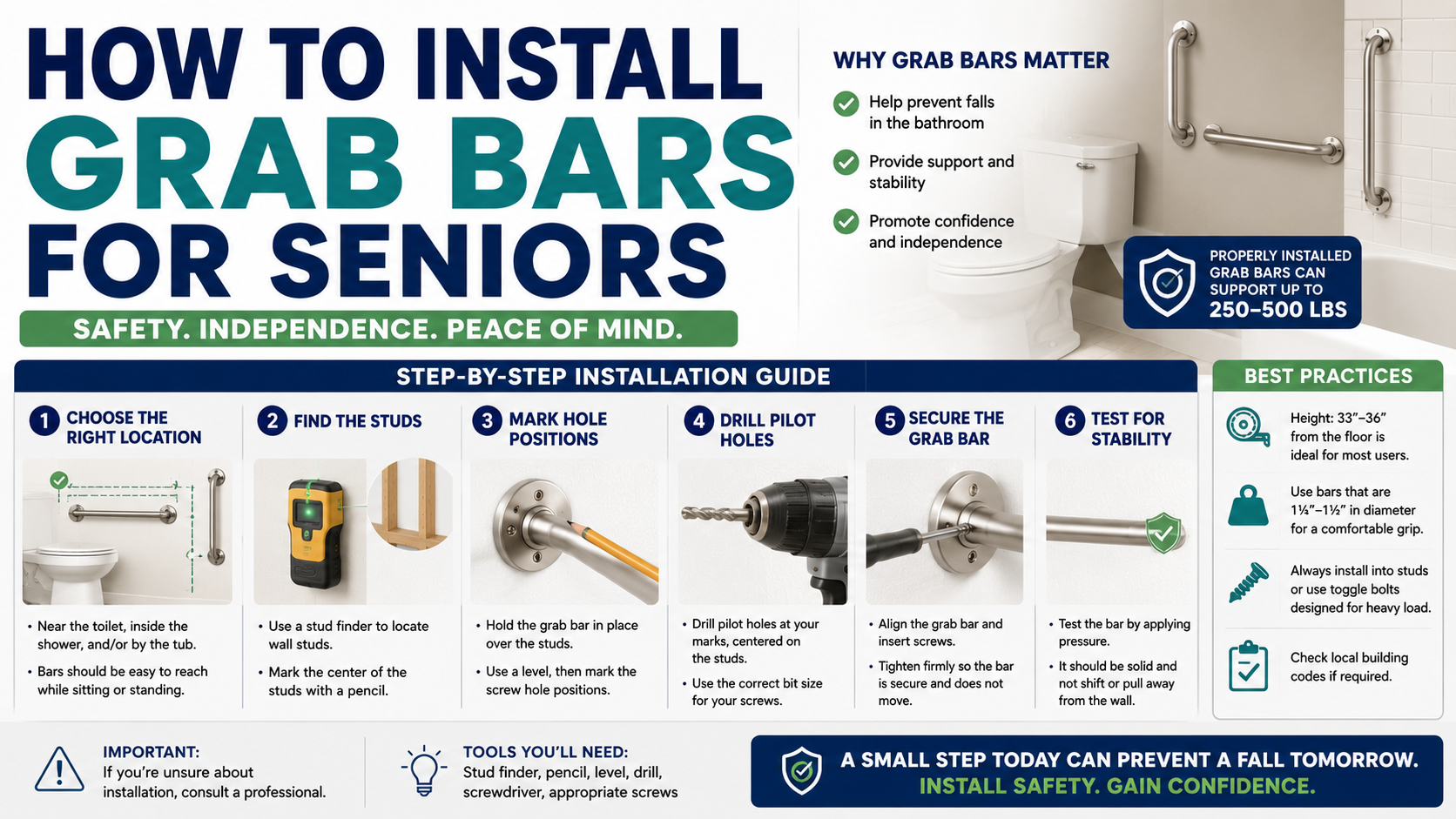
A grab bar in that location — inside the shower, on the adjacent wall, at the height where the hand naturally arrives — is there when the hand reaches for it. A towel bar on the outside wall, or a bar on the far shower wall, or no bar at all — and the hand finds nothing. The fall that the reaching was trying to prevent continues. The How to Install Grab Bars for Seniors explains how to turn that correctly chosen location into a secure, load-bearing support.
The Shower Exit — The Second-Highest Risk Moment
Stepping out of the shower reproduces the one-legged balance challenge in the opposite direction — with the additional complication of wet feet contacting a floor surface whose traction properties may not match what the foot expects.
The hand reaches back toward the shower wall during exit — back and to the side, toward where it last had something to hold. A bar on the shower wall at the exit point, or on the adjacent wall near the exit, is there when that backward reach happens. Nothing, and the foot-surface mismatch that was already creating instability loses the stabilizing support that would have resolved it.
The Toilet Transfer
Rising from a standard toilet requires generating upward force from a low seated position without any lateral support. The motion is inherently unstable — the center of gravity shifts forward before it shifts upward, creating a moment of maximum instability during which the hands reach naturally to the sides for something to push against or hold.
A bar on the adjacent wall, within reach from the seated position, is there for that push. Nothing, and the instability of the motion becomes a fall.

Why Most Homes Don’t Have the Right Bars in the Right Places
Grab bar absence in bathrooms isn’t ignorance. Most families know grab bars exist. Most have considered them at some point. The gap between considering and installing is what most bathroom falls happen in.
It Feels Like Admitting Something
Installing grab bars carries symbolic weight that exceeds its practical weight. It feels like an acknowledgment — of aging, of reduced capacity, of the beginning of a trajectory nobody wants to be on. The towel bar has been there for thirty years and it works fine. Installing something specifically designed for safety means accepting that the bathroom has become a place that requires safety equipment.
This feeling is real and understandable. It’s also, in the context of what actually happens in unmodified bathrooms, catastrophically expensive in the currency of falls, injuries, and hospitalizations.
The response to this feeling isn’t to dismiss it. It’s to note that modern grab bars — polished stainless, brushed nickel, integrated into a bathroom aesthetic — look like intentional design choices rather than medical accommodations. The person who sees them in a bathroom doesn’t think “someone here has fallen.” They think “someone here has a nice bathroom.” The symbolic weight that the old white metal bars carried doesn’t attach to modern fixtures designed to look like they belong.
It Feels Like a Project
Installing grab bars into tile requires finding studs, drilling through tile without cracking it, using the right anchors, confirming the installation is load-rated. It’s not complicated — but it’s more than screwing a hook into drywall. It requires a drill and some care, or a handyman visit.
The combination of symbolic weight and modest installation barrier is enough to push “install grab bars” into the perpetual future — the project that gets done eventually, after the next visit, when there’s more time, when it feels more necessary.
The fall that reveals it was always necessary doesn’t wait for the project.
The Towel Bar That’s Already There
Many bathrooms have towel bars in the locations where grab bars should be. The towel bar has been used for support without incident — so far. It feels like it’s working.
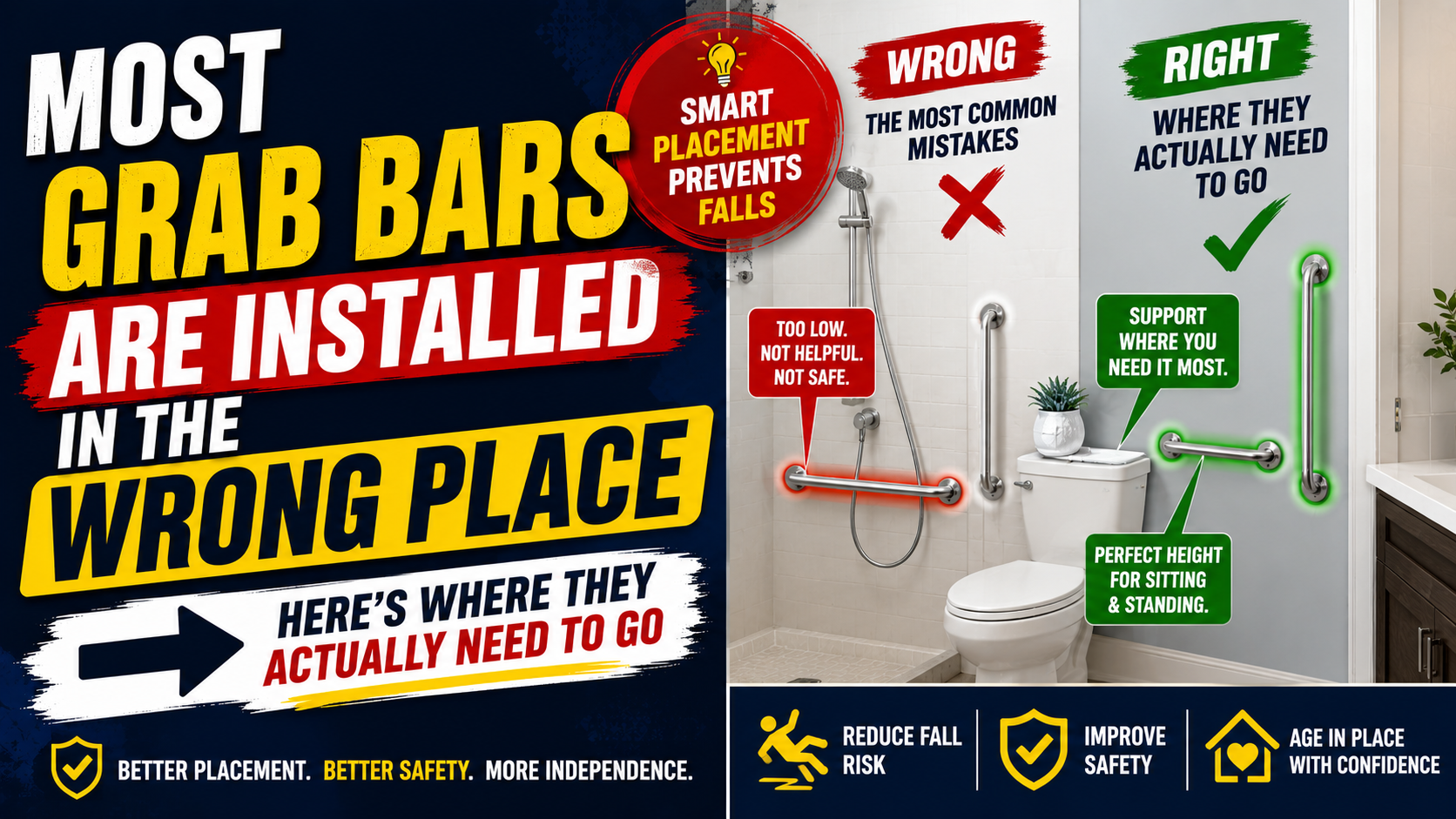
As we covered in our guide on most grab bars are installed in the wrong place, a towel bar mounted into standard wall backing — not studs, not load-rated anchors — fails under body weight load. Not always. Not immediately. But when the load it’s subjected to exceeds what its mounting was designed for — which is the load of towels, not the load of a falling adult — it pulls from the wall.
The fall that results from a towel bar failure is worse than a fall without one — because the person grabbed it, felt it holding, and committed weight to it before it released. The support they were counting on disappeared at the moment they needed it most.

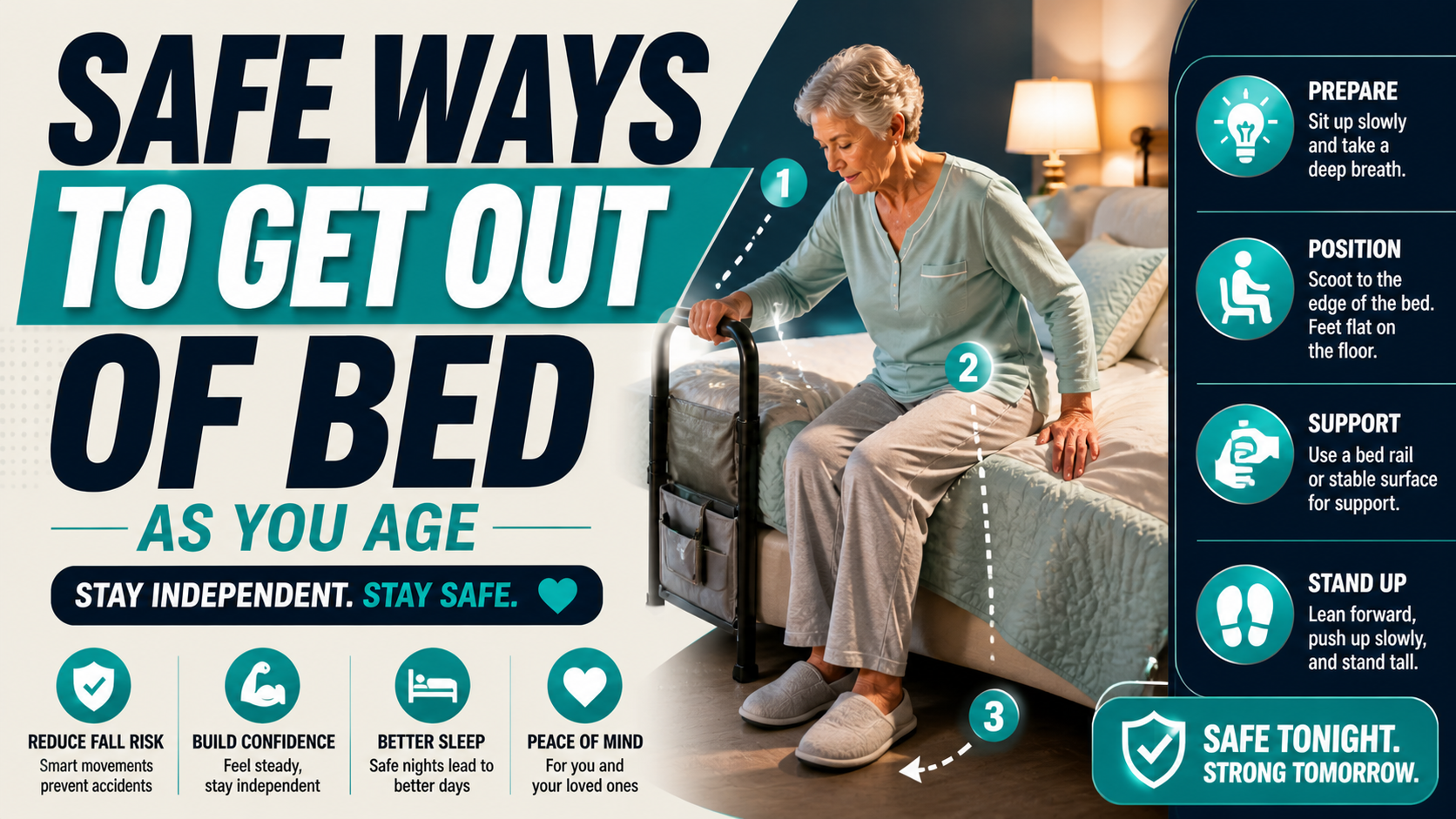
What Correct Grab Bar Installation Actually Involves
The gap between the bathroom as it is and the bathroom with the right bars in the right places is smaller than most families realize.
The Bars Themselves
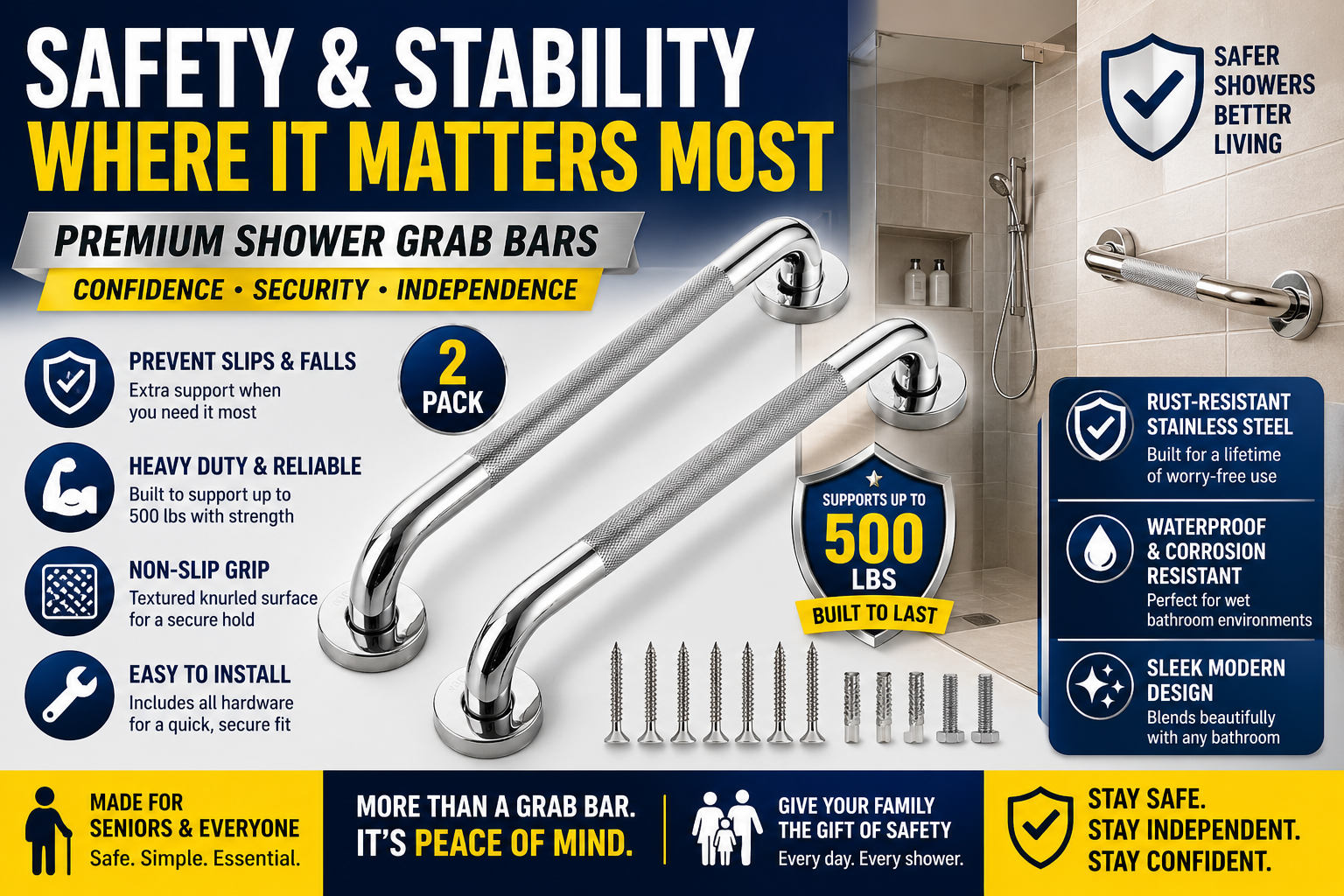
A quality grab bar is load-rated — typically 250 to 500 pounds — in stainless steel or another corrosion-resistant material, with a gripping surface that maintains traction with wet hands. The two-pack that covers both the shower entry position and the shower back wall is the most efficient purchase for most bathrooms. Our review of the best grab bars for seniors covers exactly what to buy.
→ Get the 2-Pack Stainless Steel Grab Bars on Amazon
The Positions
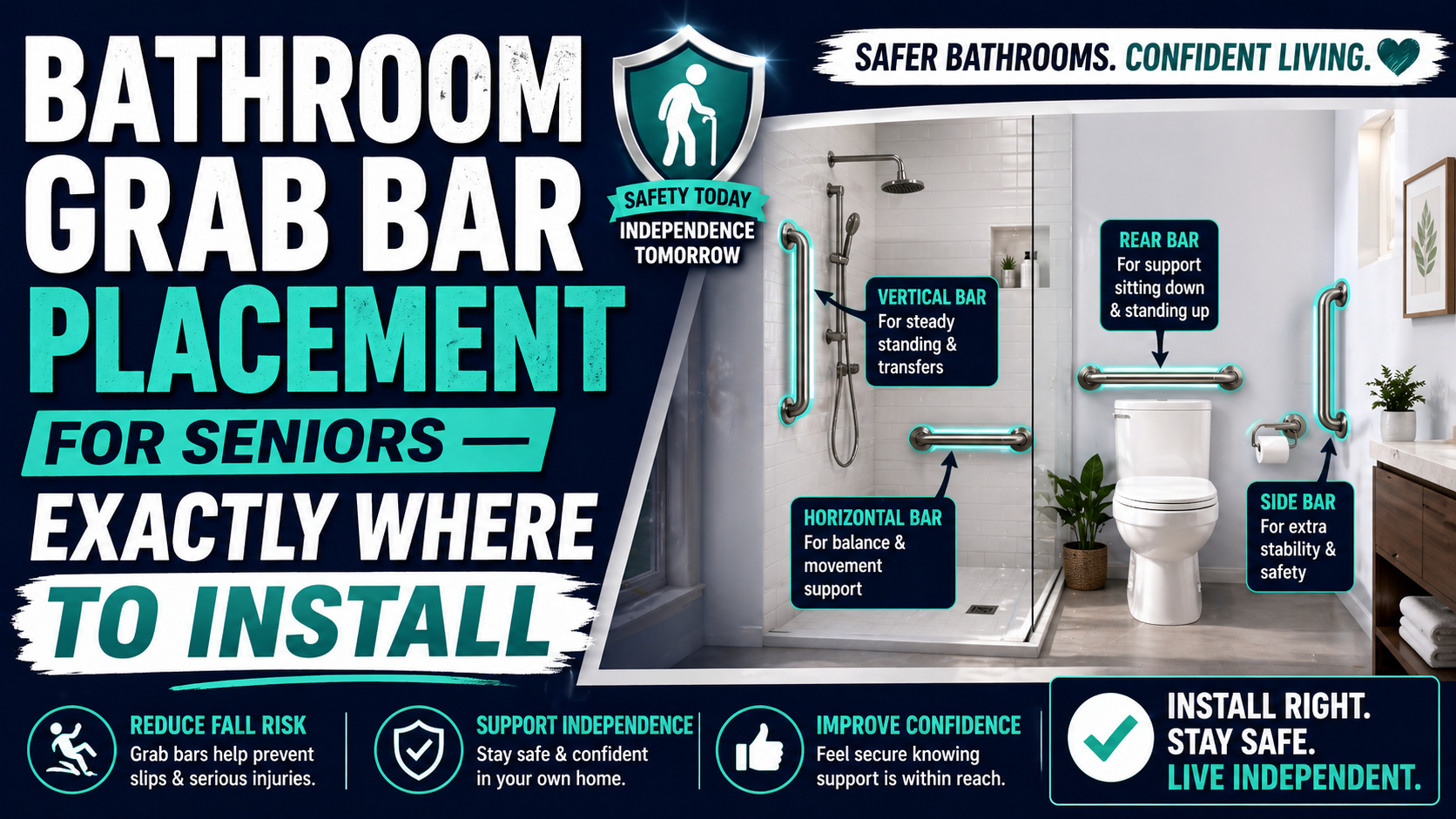
As covered in detail in our complete guide on grab bar placement for seniors:
Shower entry bar: Inside the shower, on the wall adjacent to the entry point, vertical or at 45 degrees, 33 to 48 inches from the shower floor. This is the most important bar in the bathroom. It’s also the most commonly absent.
Shower back wall bar: Horizontal, on the back wall of the shower, 33 to 36 inches from the floor. For stability during showering and for the shower chair sit-to-stand transition.
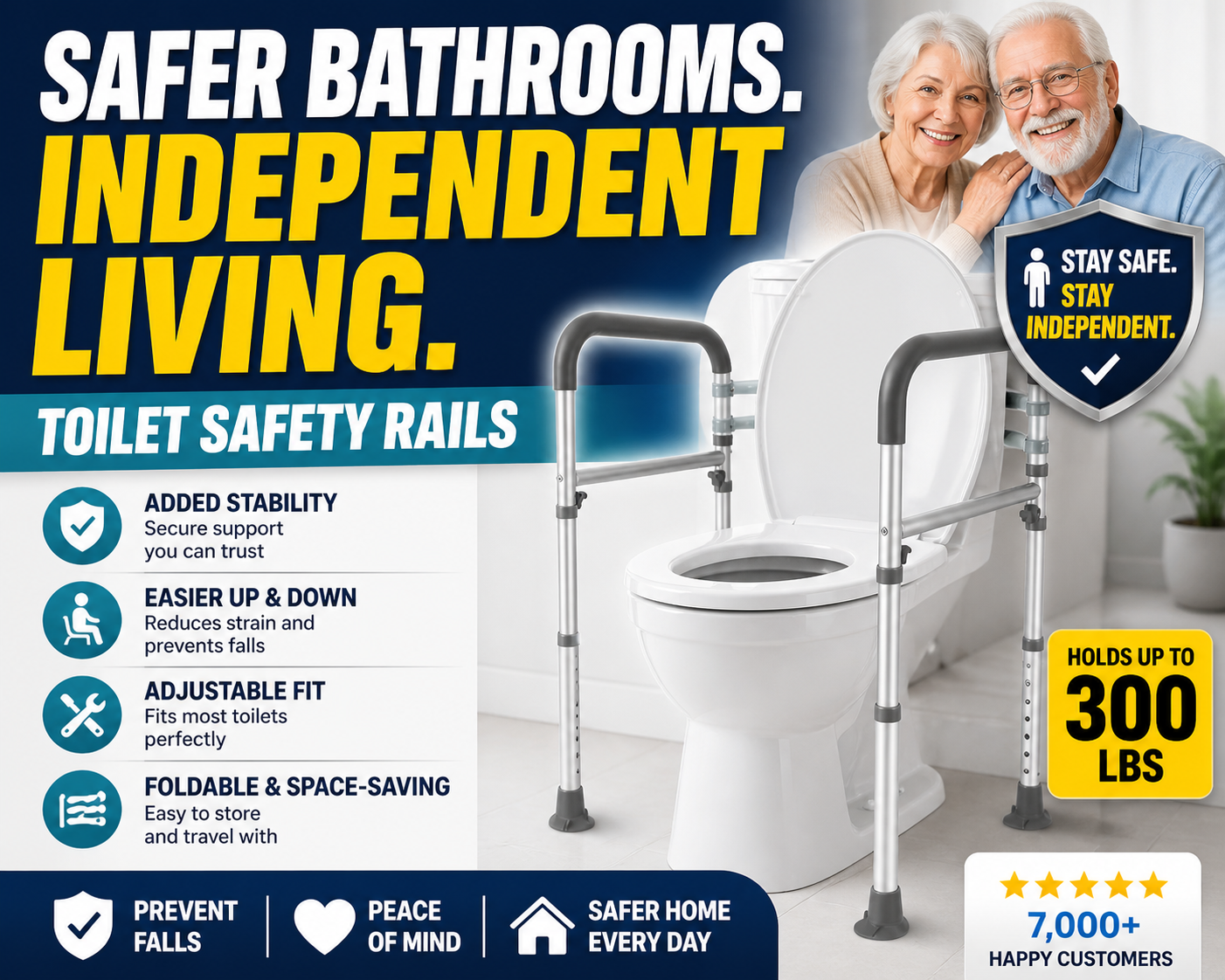
Toilet bar: On the side wall adjacent to the toilet, 33 to 36 inches from the floor, 6 to 8 inches forward of the toilet front edge, at least 24 inches in length. For the pushing support during toilet rising. Or toilet safety rails that clamp to the toilet itself if wall mounting isn’t feasible — our review of the best toilet safety rails covers the tool-free option.
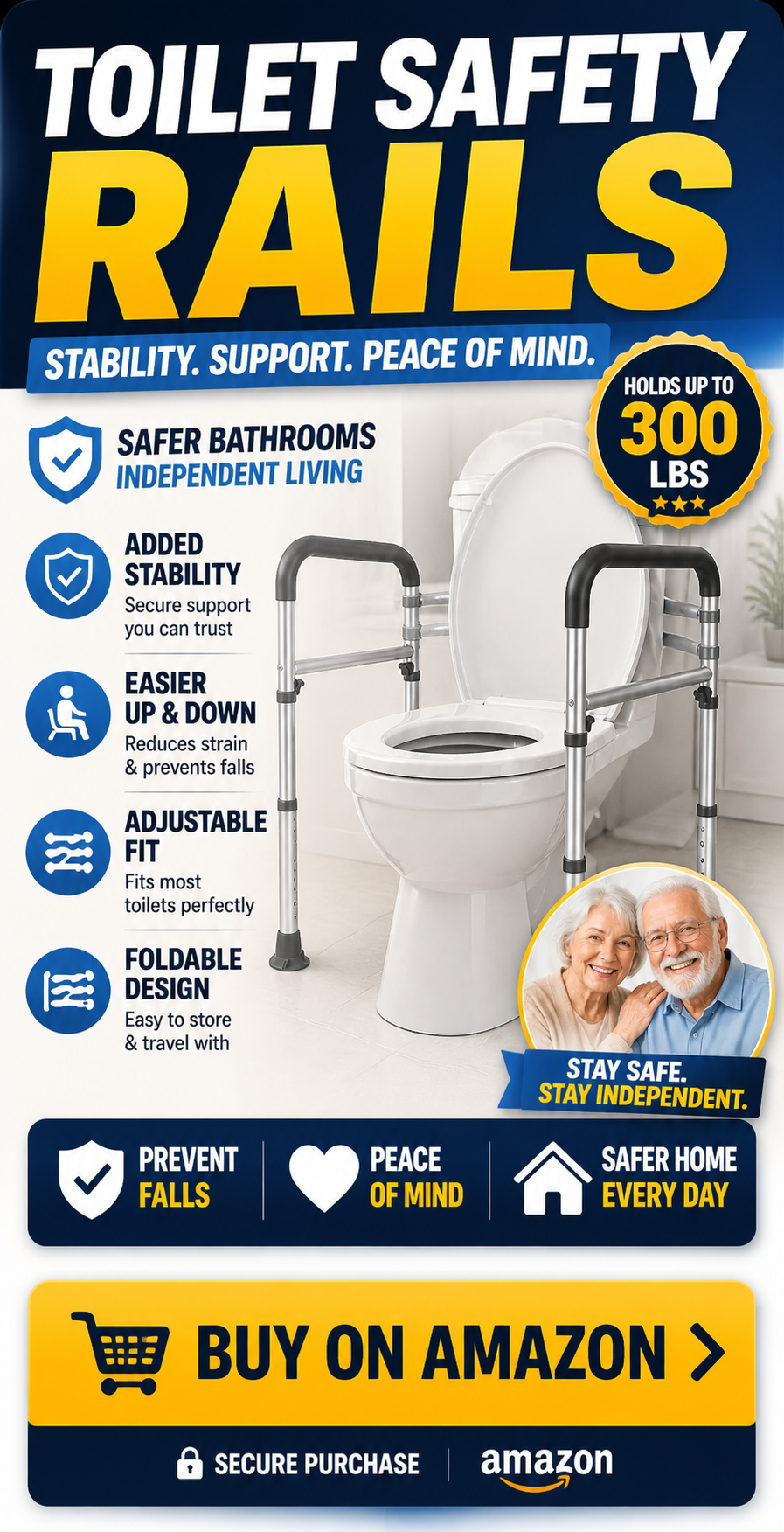
→ Get the Toilet Safety Rails on Amazon
The Installation
Installation into wall studs is the most reliable approach — locate studs using a stud finder, mark the drill points at the correct position on the tile, drill through tile with a diamond-tipped bit at slow speed using masking tape over the drill point to prevent the bit from walking, secure the bar’s mounting flanges into the studs with appropriate screws.
If studs aren’t located at the correct position for the bar, toggle bolt anchors rated for the appropriate load provide an alternative mounting method. The specific anchor type must be rated for the load — not standard drywall anchors, which are not appropriate for grab bar installation.
For any uncertainty about installation a handyman typically completes grab bar installation in one to two hours. The cost — $100 to $200 in labor — against the cost of a serious bathroom fall is not a calculation that favors skipping the professional installation.
The Bathroom After the Bars Are In
After correct grab bar installation — entry bar, back wall bar, toilet bar in the right positions — the bathroom’s risk profile changes fundamentally.
The shower entry now has bilateral support at the moment of maximum instability. The hand that reaches during the entry motion finds something load-rated and correctly positioned rather than wall tile that provides no grip. The shower exit has the back wall bar to hold during the step-out motion. The toilet transfer has lateral support to push against during the rising motion.
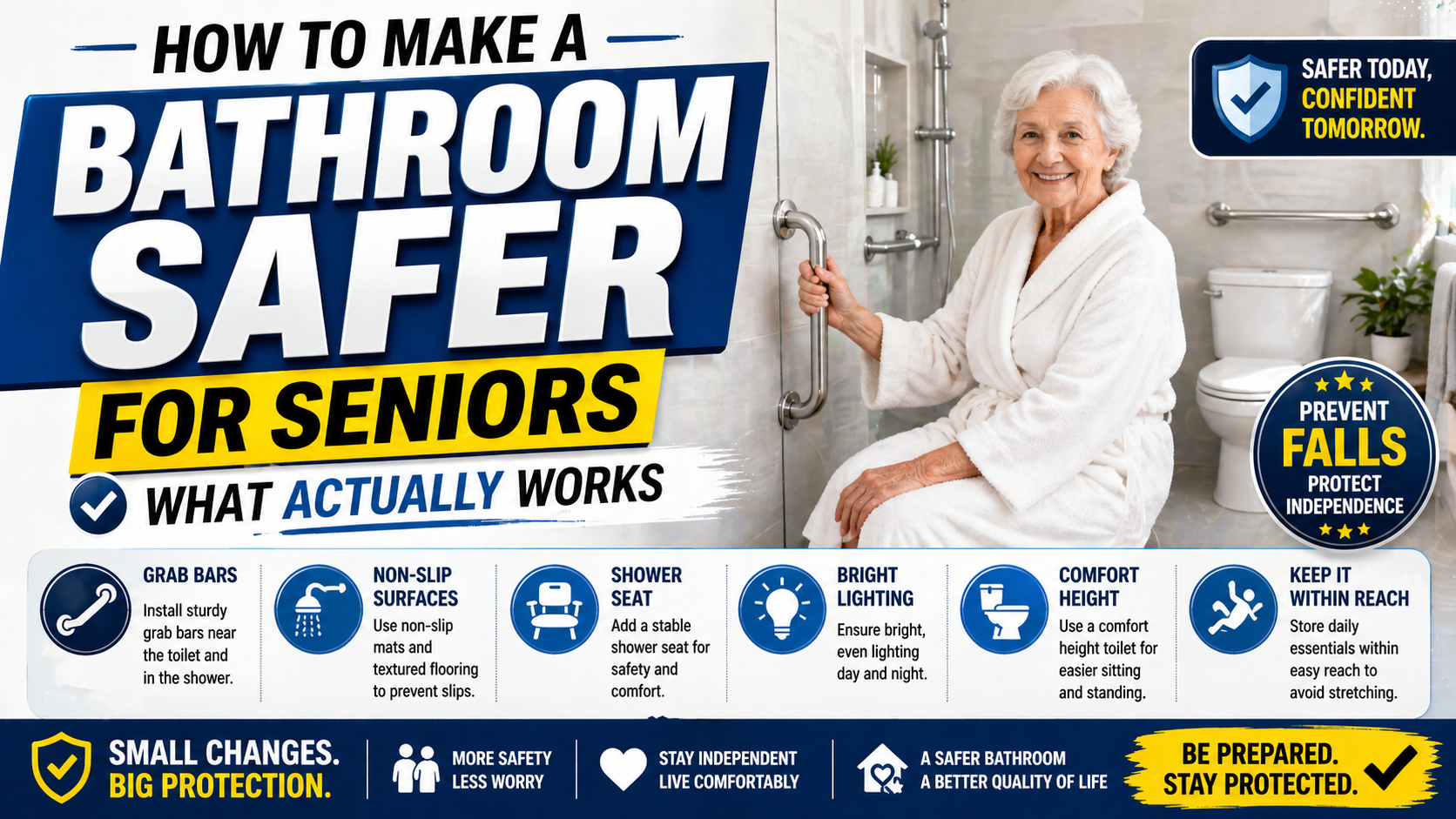
None of the other bathroom risks are addressed by grab bars alone — the wet floor that produces the bath mat fall, the standing shower risk that a shower chair eliminates, the darkness that night lights address. Our complete guide on how to make a bathroom safer for seniors covers every modification worth making. Our guide on safe shower setup for elderly adults covers the shower specifically. Our guide on your parent’s bathroom is more dangerous than you realize covers the full risk picture.
But the grab bars address the specific falling-hand-finds-nothing mechanism that appears so consistently in serious bathroom fall reports. They address the most common specific moment of bathroom falls with the most direct possible intervention.
The Other Modifications That Work Alongside the Bars
Grab bars address falling during transitions. The complete bathroom safety picture addresses all the mechanisms.
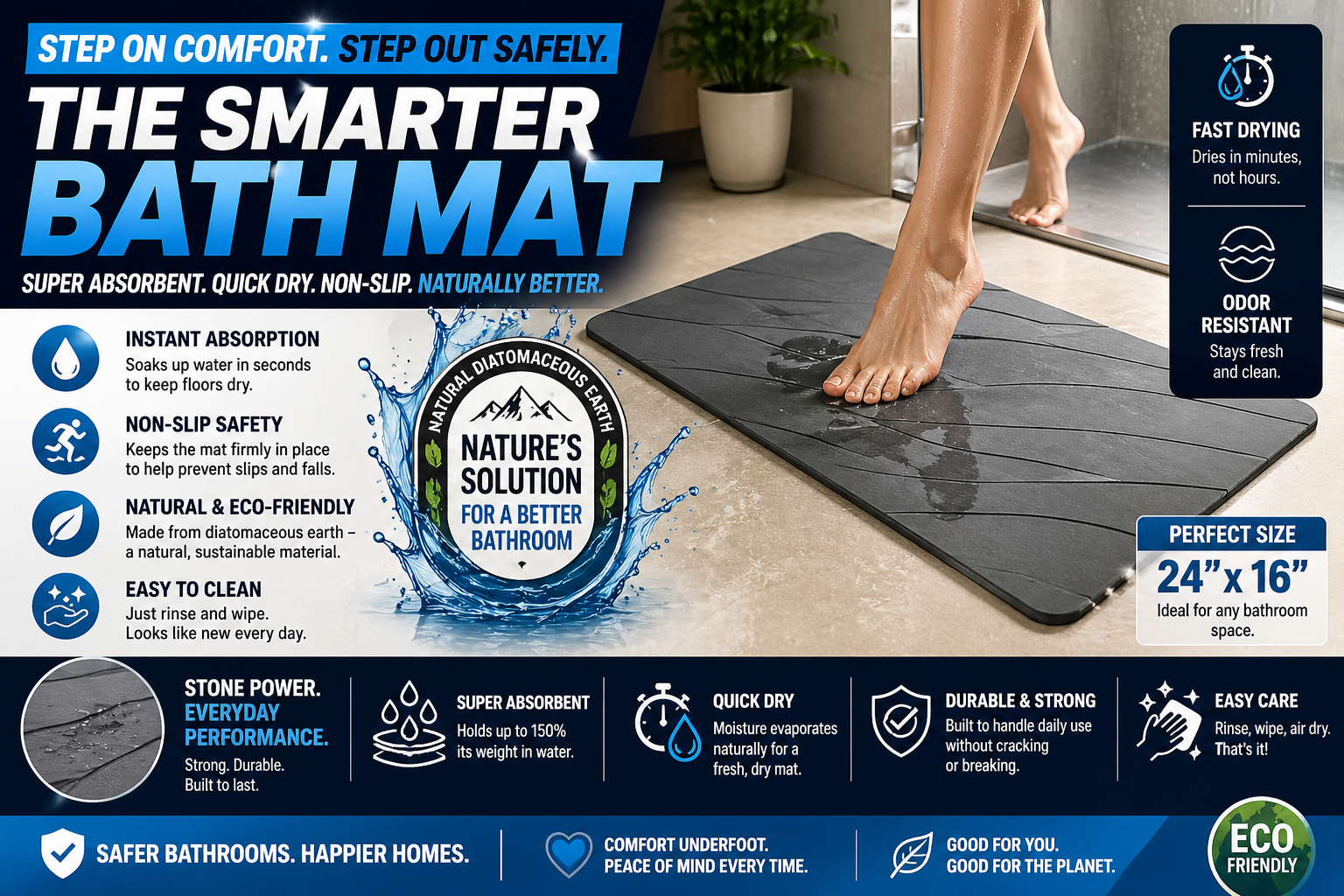
Non-slip bath mat — addresses the shower exit floor contact that fabric mats fail. Our review of the best non-slip bath mat for seniors covers why most mats fail and what works instead.
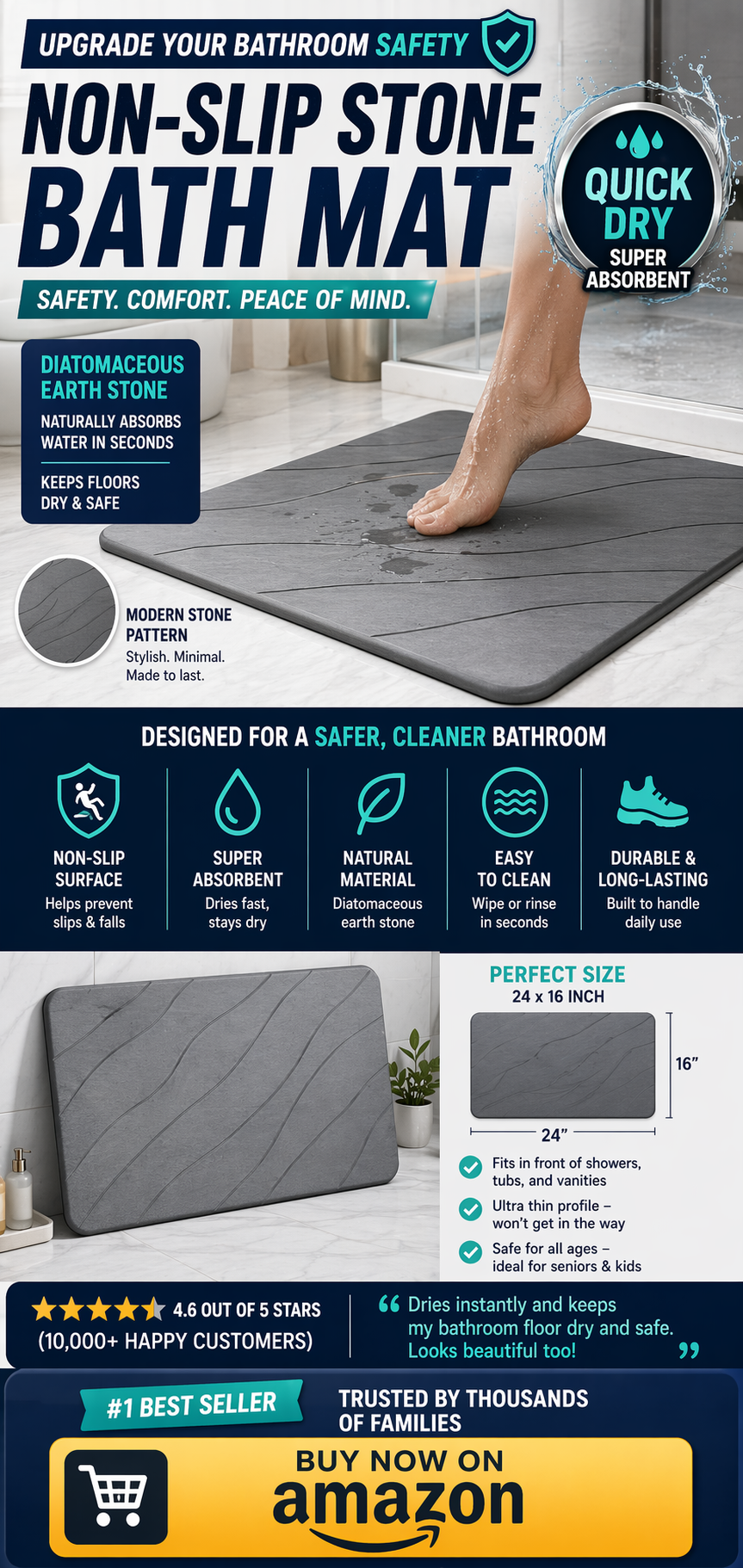
→ Get the Diatomaceous Earth Bath Mat on Amazon
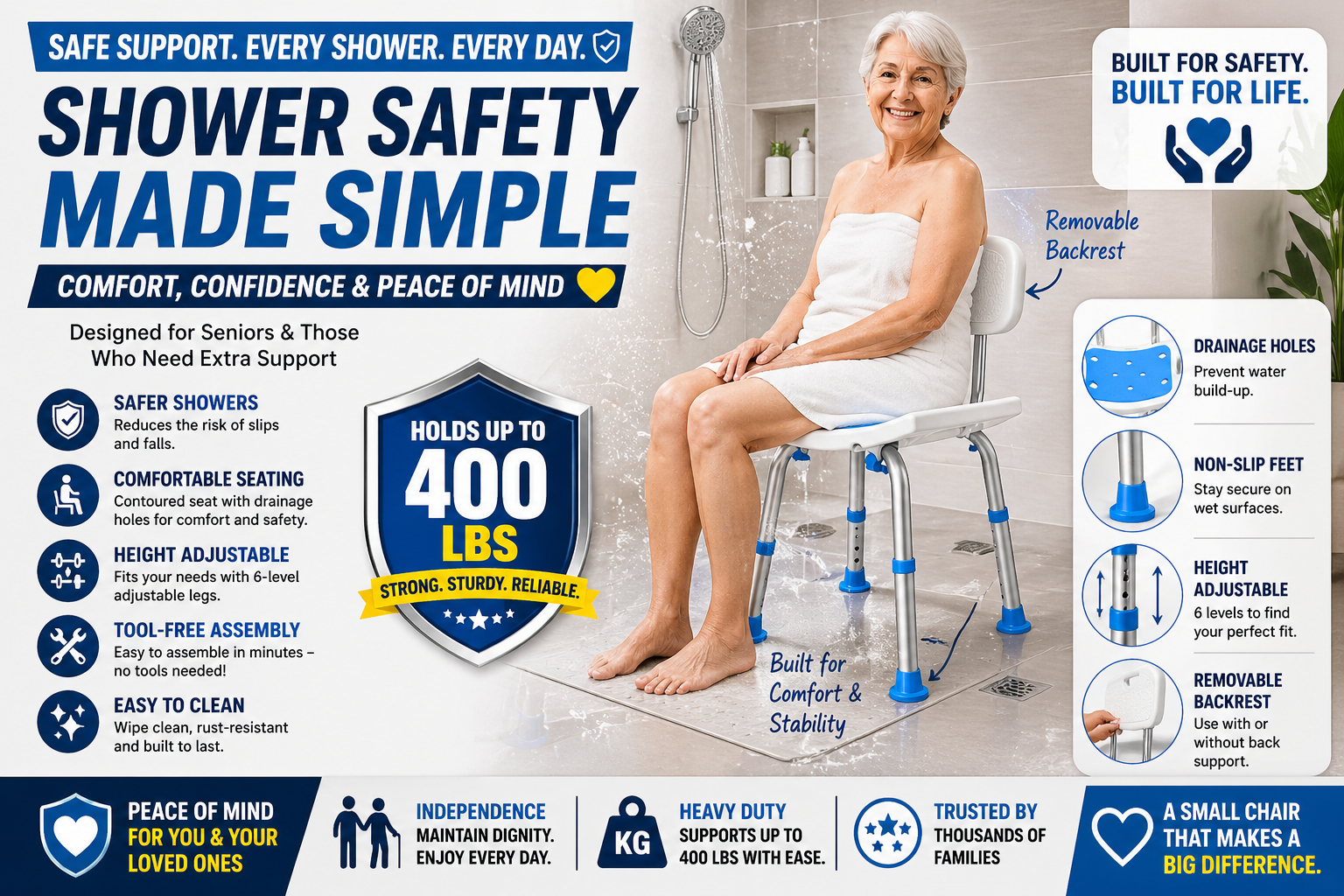
Shower chair — eliminates standing shower risk entirely. Our review of the best shower chair for seniors covers the specific product we recommend.
→ Get the Shower Chair on Amazon
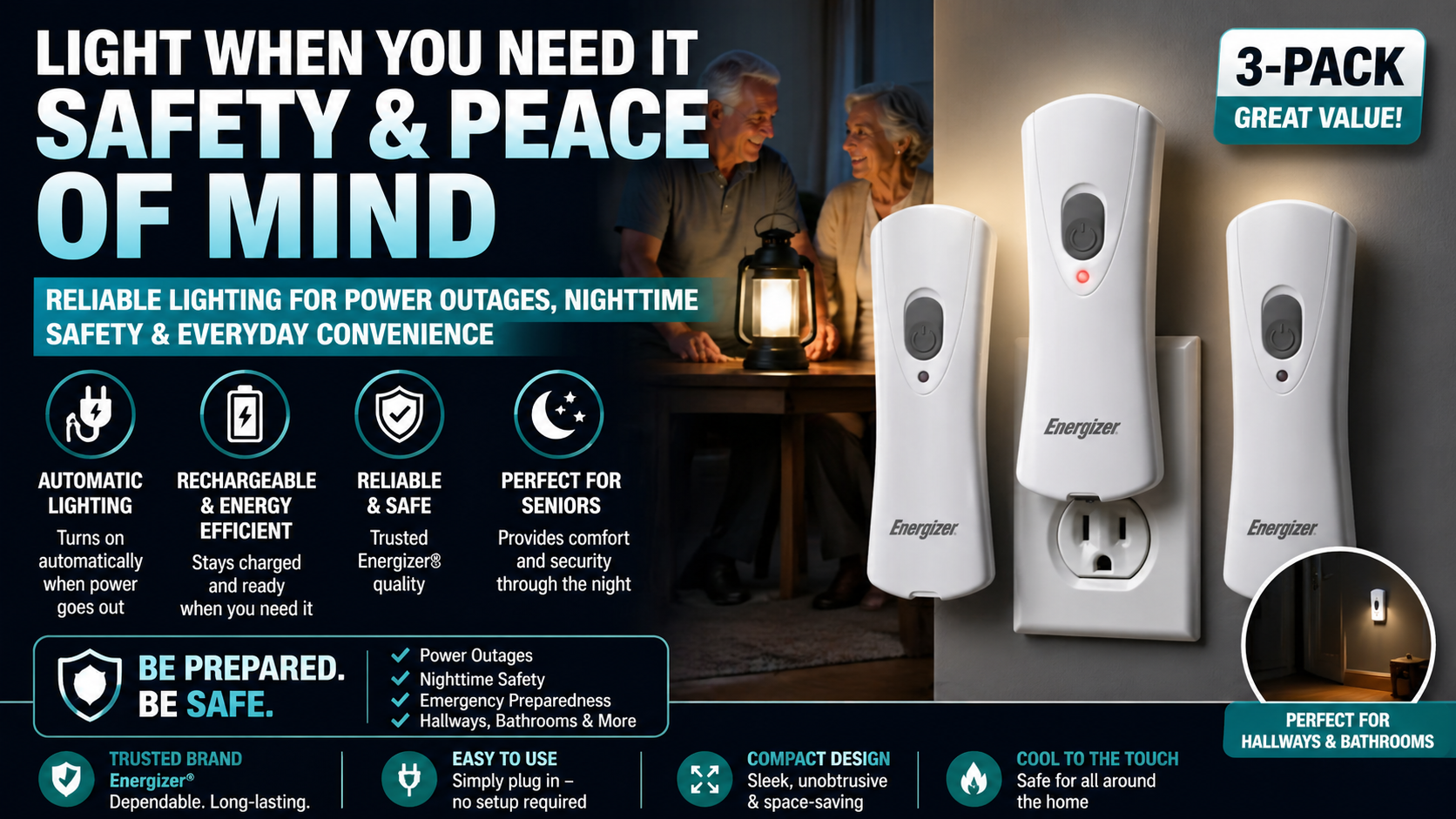
Night lights — address the nighttime bathroom trip in the dark. Auto-on in bedroom, hallway, and bathroom. Our review of the best auto-on rechargeable lights covers the option that also serves as power outage protection.
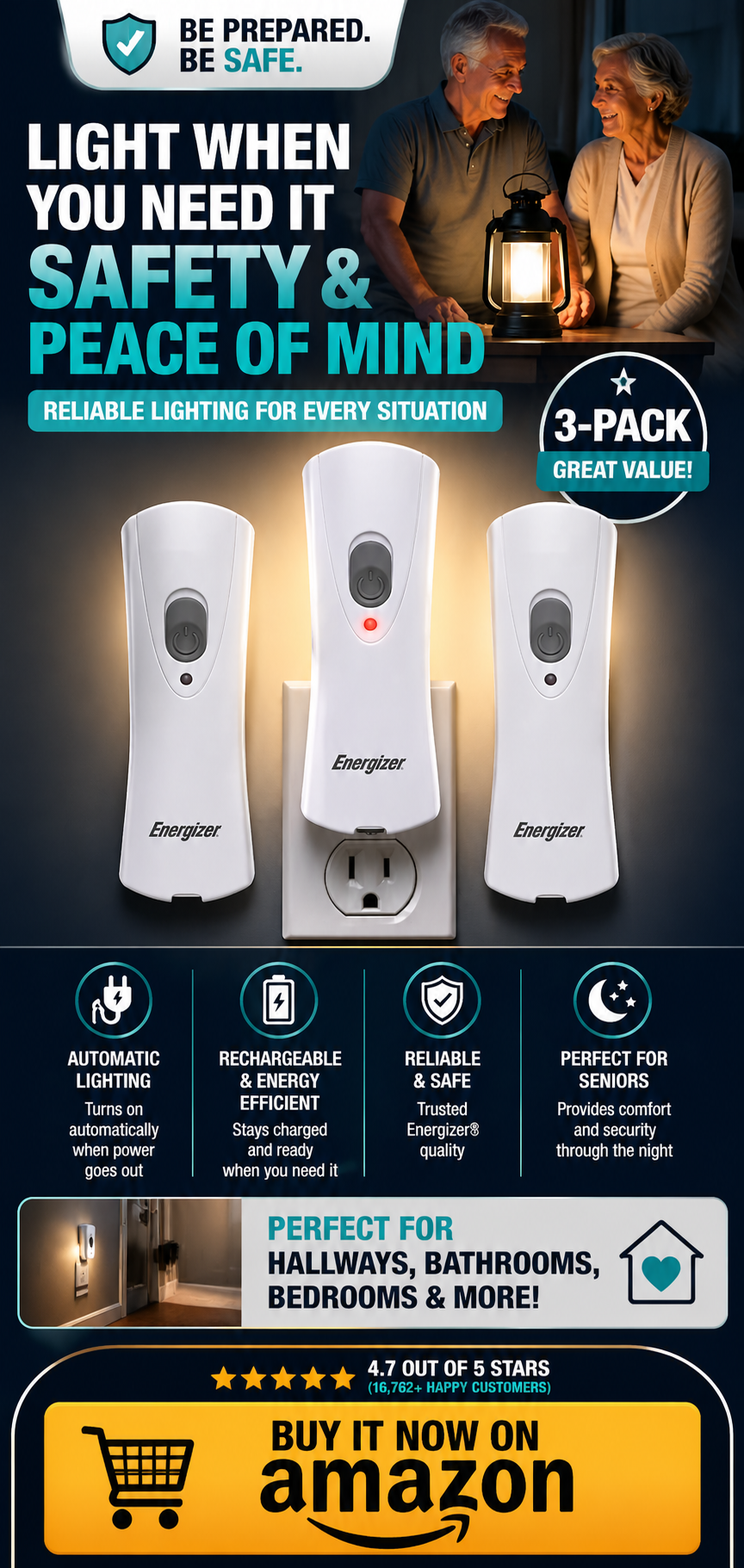
→ Get the Auto-On Night Lights on Amazon
Medical alert device — addresses what happens when a bathroom fall occurs despite every modification. The SecuLife Smartwatch worn on the wrist goes into the bathroom — present during every shower, every nighttime trip — and detects falls automatically. Our guide on best SOS watch for seniors covers the features that matter most.

→ Get the SecuLife Smartwatch on Amazon
The Object That Should Be There
A grab bar is a $25 to $50 piece of stainless steel. It weighs approximately two pounds. It installs in an hour. It will outlast the home it’s mounted in.
What it does — in the specific moment a hand reaches for support and finds it rather than finding nothing — is not measurable in any statistic. The fall that didn’t happen leaves no record. The hand that found the bar, gripped it, stabilized, and continued the shower entry without incident is not in any database.
But it’s real. And it’s happening, or not happening, in bathrooms right now — in the bathroom your parent used this morning, in the bathroom they’ll use tonight at 2am, in the bathroom where the entry bar either is or isn’t at the height their hand will reach at the moment they most need it.
The grab bar that wasn’t there is one of the most preventable objects in emergency medicine.
The grab bar that is there is $25 and a trip to Amazon.
→ Get the Grab Bars on Amazon — the most important bathroom safety modification available

About the Author
Carol Simmons is a Certified Aging-in-Place Specialist (CAPS) who has completed hundreds of home safety assessments. In virtually every assessment of a home where a bathroom fall has occurred, the same finding appears: no grab bar, or a grab bar in the wrong position, at the location where the falling person’s hand reached. She has never assessed a home where correctly positioned grab bars were installed and a fall occurred at the installation point. The object that should be there either is or isn’t. She writes for Elder Safety Guide because the gap between those two states is smaller and cheaper to close than most families realize — and because the consequences of leaving it unclosed are larger than most families imagine until they’re sitting in an emergency room learning them.