OTC hearing aids have changed everything for seniors with hearing loss. Here’s our EarCentric EasyCharge review — rechargeable, behind-the-ear, and actually affordable.
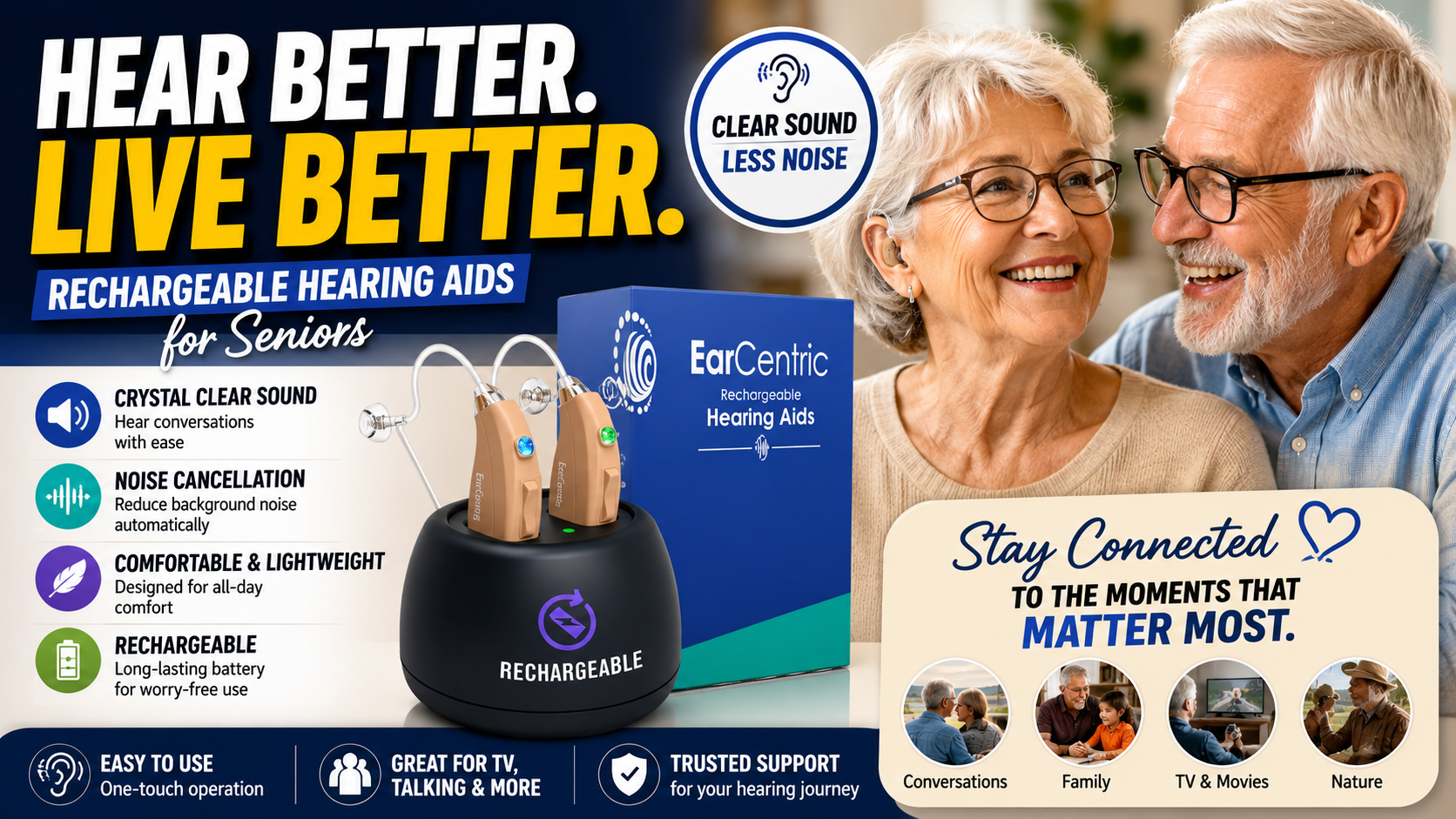
Hearing loss affects more than 48 million Americans — and older adults bear a disproportionate share of that burden. By age 65, approximately one in three people has some degree of hearing loss. By 75, that proportion rises to one in two. Yet fewer than 20 percent of people who could benefit from hearing aids actually use them.
The barriers are real: cost, access, the hassle of audiologist appointments, stigma, and the frustration of hearing aids that require fiddly battery replacement every few days. Over-the-counter hearing aids — now available without a prescription following FDA rule changes — address several of those barriers directly, bringing effective hearing care within reach for millions of people who’ve been going without.
The EarCentric EasyCharge is one of the strongest OTC options available — rechargeable, behind-the-ear design, noise cancellation, and a price point that makes the decision significantly easier than traditional prescription hearing aids. This review covers everything worth knowing.
→ See the EarCentric EasyCharge Hearing Aids on Amazon
The OTC Hearing Aid Revolution — What It Means for Seniors
In 2022 the FDA finalized rules allowing over-the-counter hearing aids for adults with mild to moderate hearing loss — eliminating the requirement for a prescription and an audiologist fitting for this segment of hearing care. This change opened access to hearing aids for millions of people for whom the traditional process — audiologist appointments, custom fitting, $3,000 to $7,000 price tags — was a barrier that kept them going without.
OTC hearing aids are not the right solution for severe hearing loss or for people who need the precision programming and individual customization that prescription hearing aids provide. But for mild to moderate hearing loss — the majority of cases in the older adult population — OTC options provide meaningful hearing improvement at a fraction of the cost of traditional hearing aids.
Behind-the-Ear vs. In-the-Ear Hearing Aids
Behind-the-ear (BTE) hearing aids sit behind the ear with a thin tube directing amplified sound into the ear canal. In-the-ear (ITE) hearing aids sit entirely within the ear canal. Each has practical advantages.
Behind-the-ear advantages: Easier to handle and insert/remove — particularly for older adults with arthritis or reduced dexterity. More volume and processing power available in the larger housing. Easier to clean. More compatible with phone use. Generally more durable.
In-the-ear advantages: Less visible. Less affected by wind noise in outdoor settings. Some people find them more comfortable for extended wear.
For most older adults — particularly those with any dexterity challenges — behind-the-ear designs are the more practical choice. The EarCentric EasyCharge uses a BTE design specifically because of the practical handling advantages for the intended user population.


The EarCentric EasyCharge Rechargeable Hearing Aids — Full Review
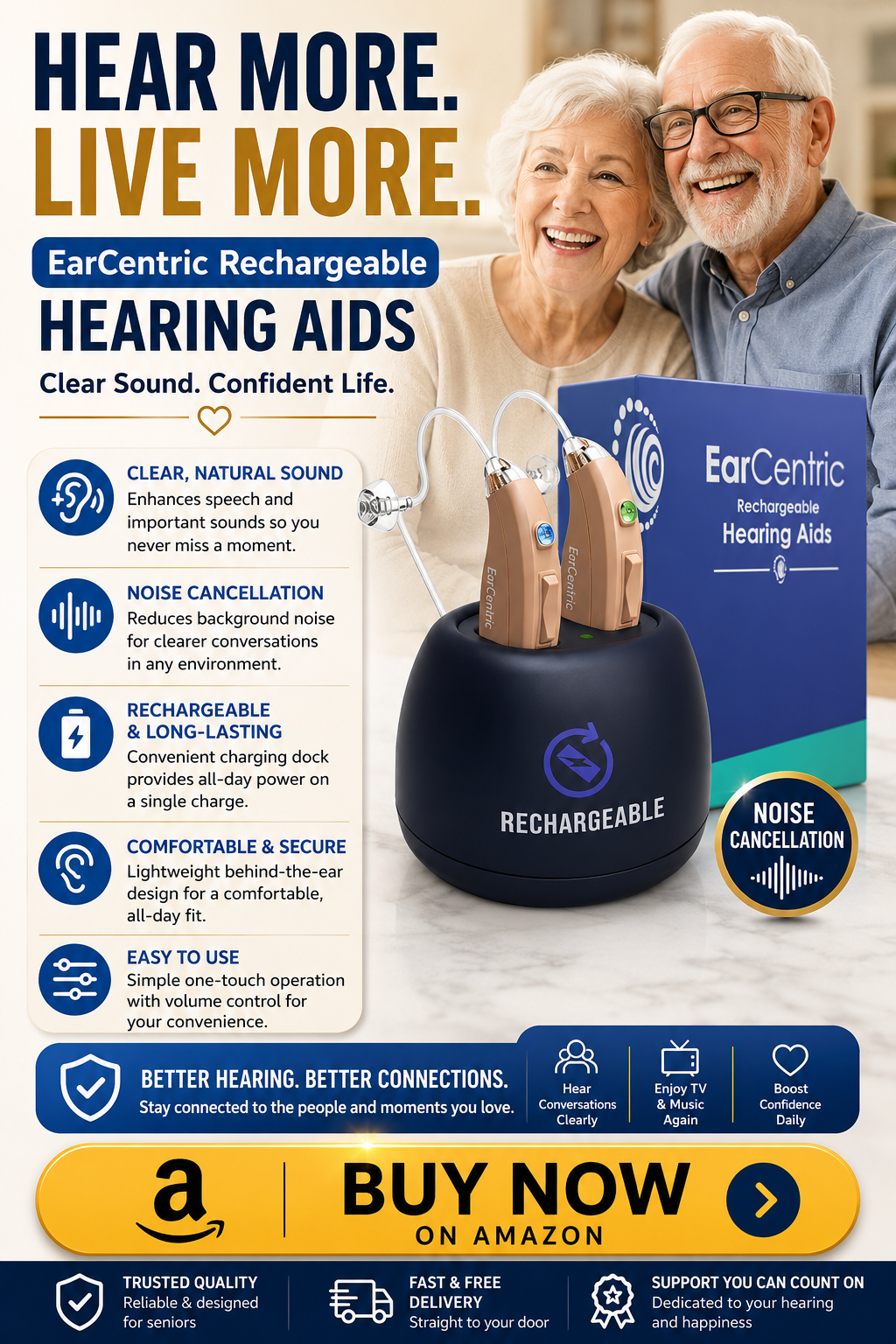
EarCentric EasyCharge Rechargeable Hearing Aids (Pair) — Behind-the-Ear, Noise Cancellation, Digital PSAP
The EarCentric EasyCharge addresses the most common practical barriers to hearing aid adoption — cost, battery hassle, and complexity — in a behind-the-ear design that’s genuinely manageable for older adults navigating hearing care independently.
→ Check current price and availability on Amazon
Rechargeable design is the feature that matters most for consistent daily use. Traditional hearing aids use size 10, 312, or 13 batteries — among the smallest batteries in common consumer use, requiring fine motor dexterity to handle and replace every few days to a week. For older adults with arthritis, reduced grip strength, or any dexterity challenges, this battery replacement is genuinely difficult and frequently results in hearing aids being left uncharged and unused.
The EasyCharge charging case charges both hearing aids simultaneously overnight — the same simple routine as charging a phone. Place them in the case before bed, pick them up in the morning fully charged. No small batteries to handle, no running out mid-day, no ongoing battery purchase cost. This simple change in charging routine dramatically improves the consistency of daily hearing aid use — and consistent use is what produces consistent hearing benefit.
Noise cancellation improves speech clarity in the environments where hearing loss is most debilitating. Background noise in restaurants, group settings, and public spaces is exactly where hearing loss has the most impact on social participation — the effort of following conversations in noise is what causes many people to withdraw from social activity. Noise cancellation processing that reduces background noise relative to speech makes these environments meaningfully more manageable.
The digital processing provides more sophisticated sound amplification than basic analog hearing amplifiers — the difference between simply making everything louder and processing sound in ways that preferentially improve speech clarity is meaningful for real-world hearing benefit.
Sold as a pair — both ears covered in one purchase. Bilateral hearing aids — wearing one in each ear — provide significantly better spatial hearing, speech understanding in noise, and overall hearing benefit than a single hearing aid in one ear. Both ears contributing to hearing is how the auditory system is designed to work.
The behind-the-ear fit is secure and stays in place during normal activity. The design is unobtrusive — the beige color blends with most skin tones and the device sits behind the ear where it’s less visible than it might be expected.
→ Get the EarCentric EasyCharge Hearing Aids on Amazon
Who Benefits Most From OTC Hearing Aids
Adults With Mild to Moderate Hearing Loss
OTC hearing aids are specifically designed for adults with perceived mild to moderate hearing loss. If you’ve noticed you regularly ask people to repeat themselves, struggle to follow conversations in noisy environments, need television volume higher than others prefer, or miss doorbells and phone rings — these are the signals of mild to moderate loss that OTC hearing aids address effectively.
Anyone Who Has Avoided Hearing Aids Due to Cost
The cost of traditional prescription hearing aids — $3,000 to $7,000 per pair — is a genuine barrier for many people. OTC hearing aids at a fraction of that cost make effective hearing care accessible to people who would otherwise go without. The hearing benefit of a well-chosen OTC hearing aid is real and meaningful even without the precision customization of prescription devices.
Seniors Who Struggle With Battery Management
If you’ve tried hearing aids before and stopped using them because of battery hassle — or if you’re concerned about managing small batteries — rechargeable OTC hearing aids eliminate that specific barrier entirely.
Hearing Aids and the Complete Senior Safety Picture
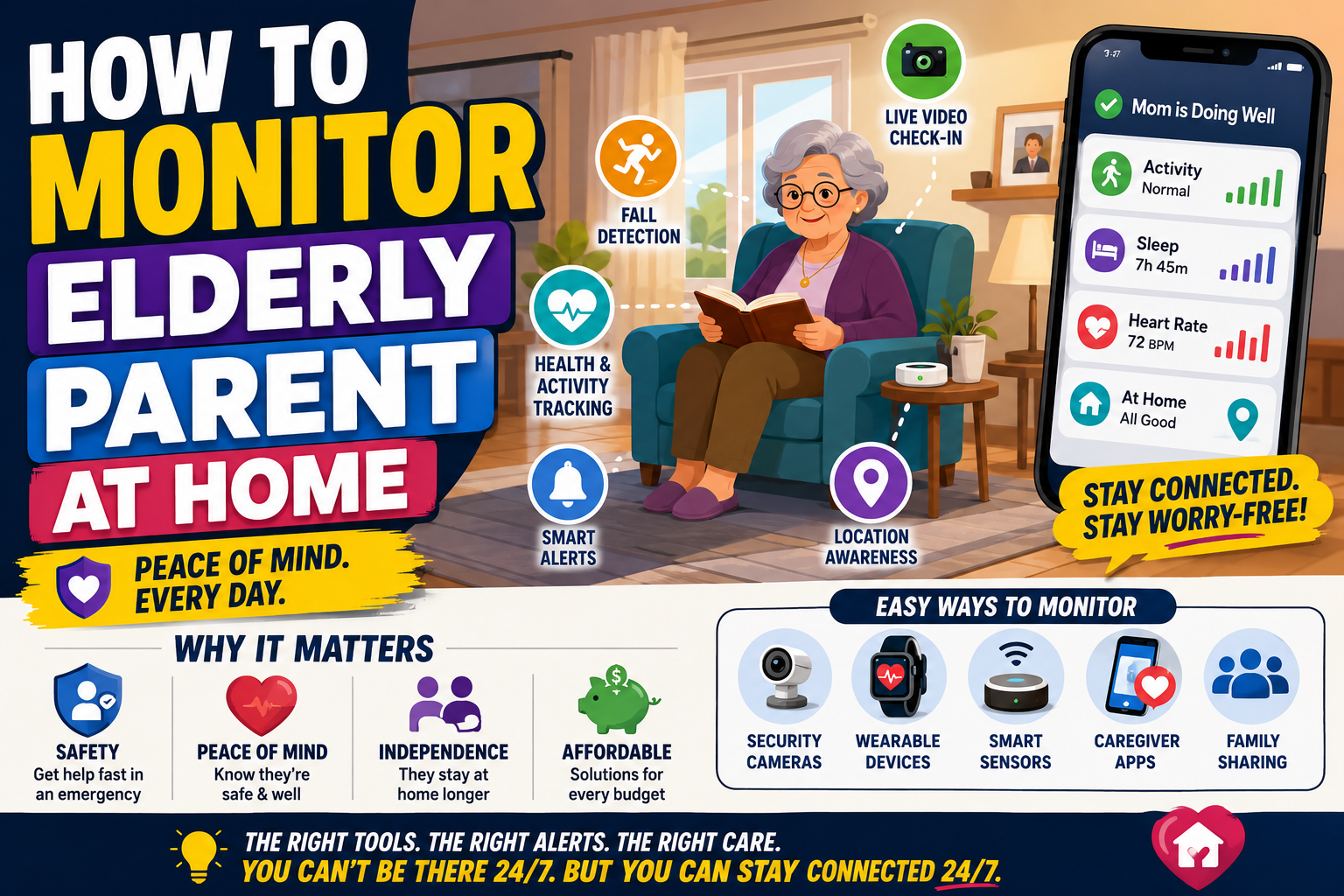
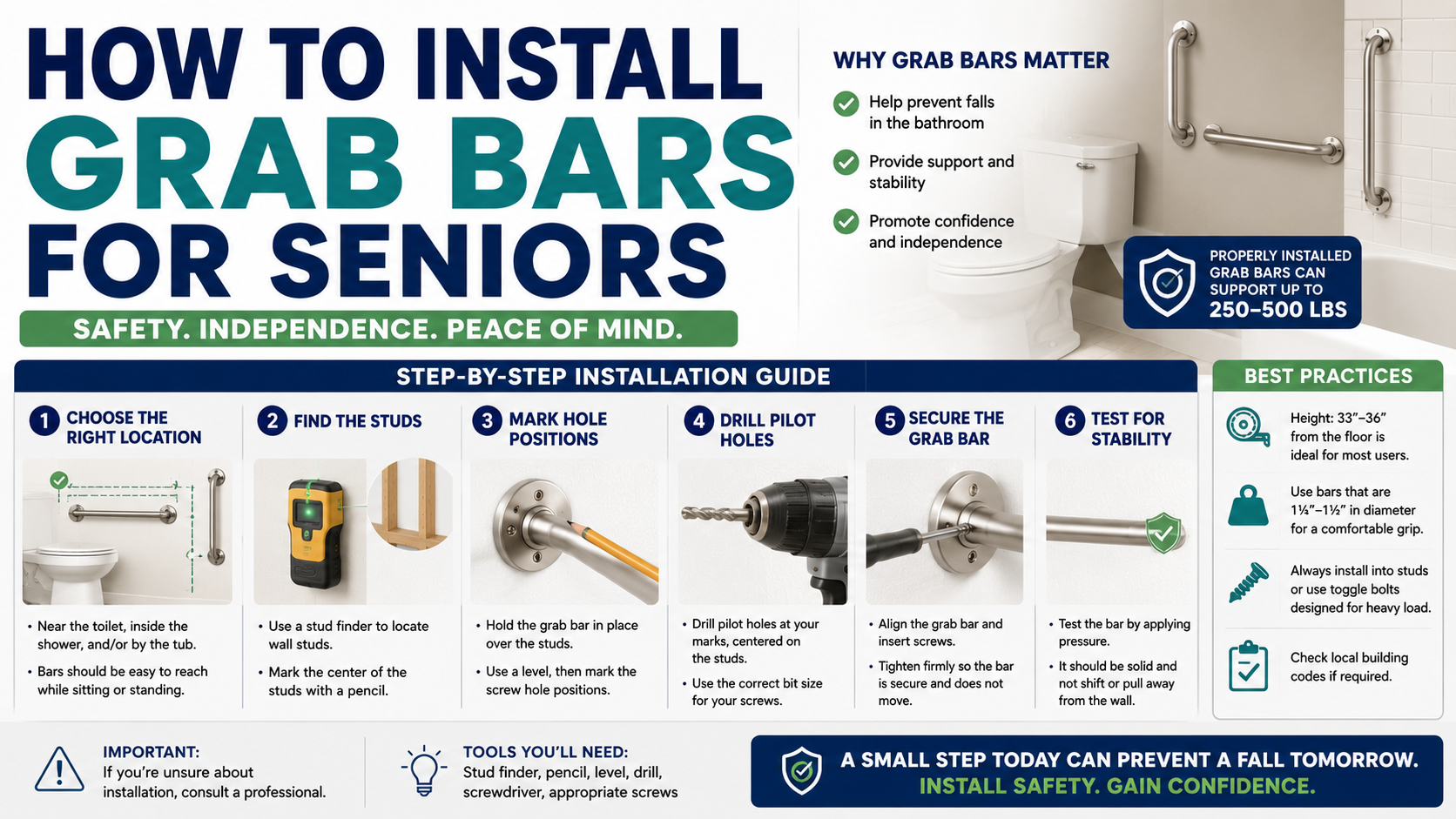
Hearing health is connected to fall risk, cognitive health, and social connection in ways that make it a genuine senior safety issue rather than only a quality of life concern. Research consistently shows that untreated hearing loss is associated with increased fall risk, accelerated cognitive decline, and social isolation — all of which affect independent living sustainability.

For the complete safety picture our guide on elderly safety tips for independent living covers health management as a component of safe aging at home. Our guide on warning signs you may not be safe living alone covers the cognitive and sensory changes worth monitoring over time.
→ Get the EarCentric EasyCharge Hearing Aids on Amazon
Frequently Asked Questions
Are OTC hearing aids as good as prescription hearing aids?
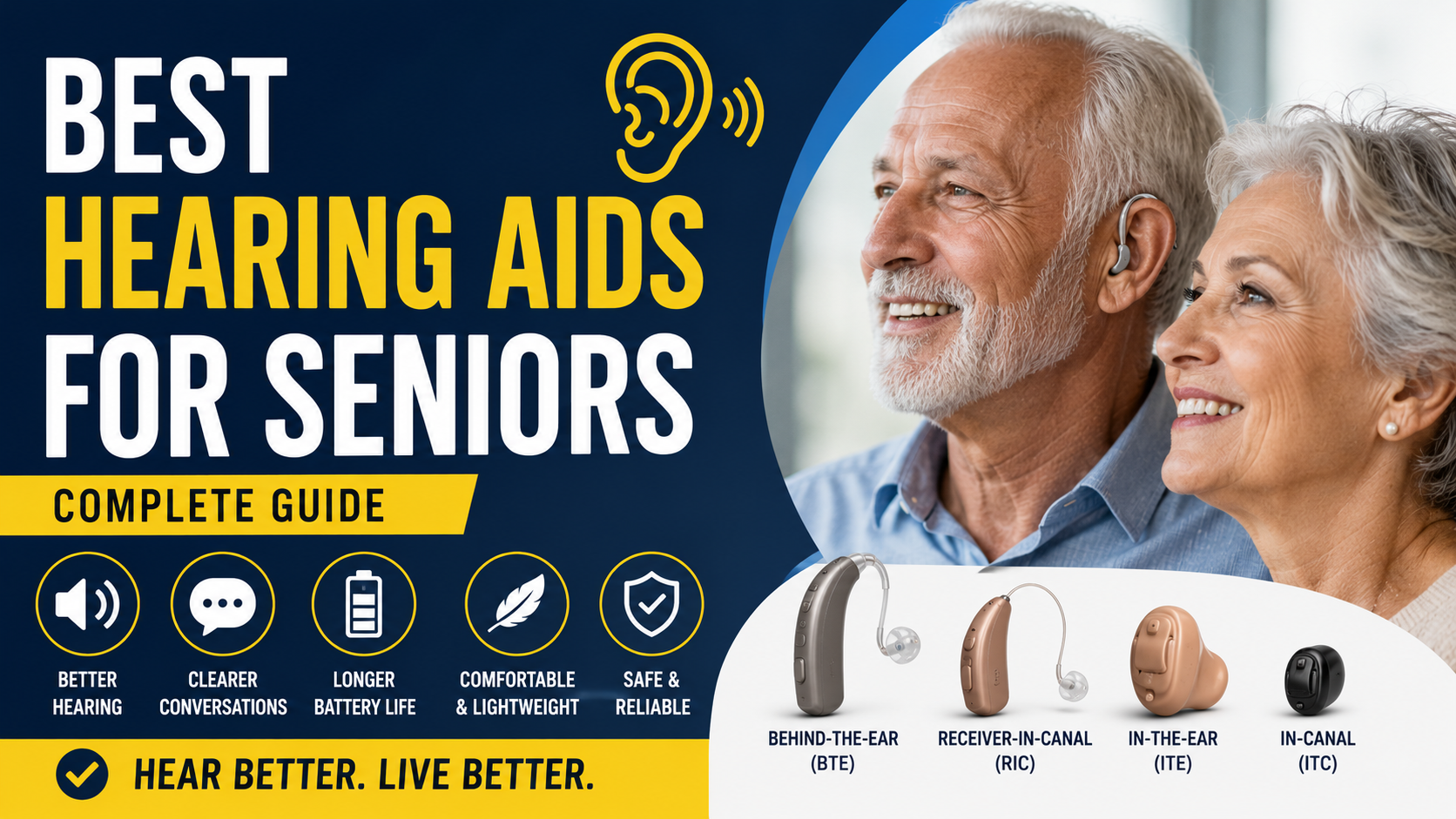
For mild to moderate hearing loss, OTC hearing aids provide meaningful hearing improvement — though typically without the precision customization of prescription devices. For significant or severe hearing loss, prescription hearing aids programmed to the individual’s specific audiogram provide substantially better outcomes. If you haven’t had a hearing test, getting one helps determine which level of intervention is appropriate for your specific loss. The complete guide to hearing aids for seniors, Best Hearing Aids for Seniors — Complete Guide, explains how prescription and OTC options compare across different levels of hearing loss.
Do I need a hearing test before buying OTC hearing aids?
No — OTC hearing aids are available without a prescription or hearing test. A hearing test is valuable for understanding the nature and degree of your loss and for confirming that OTC aids are appropriate rather than prescription devices. Many audiologists offer free initial consultations.
How long do the rechargeable batteries last?
Most rechargeable hearing aids in this category provide 16 to 20 hours of use on a full charge — covering a full waking day for most users. Overnight charging in the provided case restores full battery. Check the current product specifications for the exact battery life for this model.
Can I adjust the volume myself?
Yes — OTC hearing aids include volume adjustment controls. Some also include program settings for different listening environments. The ability to adjust amplification based on the listening situation is an important practical feature for real-world use.
What’s the return policy if they don’t work for me?
Check the specific return policy on the Amazon listing before purchasing. Amazon’s standard return policy typically applies but check the specific seller’s terms. Allowing a trial period before committing is important when purchasing hearing aids — individual fit and effectiveness vary and the right device for one person may not work as well for another.
Hear What You’ve Been Missing
Untreated hearing loss costs more than the price of hearing aids — in missed conversations, withdrawn social participation, and the cognitive and safety consequences of going without adequate hearing support. The EarCentric EasyCharge offers an accessible entry point to effective hearing care with the rechargeable convenience that makes consistent daily use genuinely practical.
About the Author
Margaret Holloway, RN spent 22 years in geriatric nursing watching the downstream effects of untreated hearing loss on social participation, cognitive health, and safety. She writes for Elder Safety Guide to help people address the full range of health and environmental factors that affect independent living.