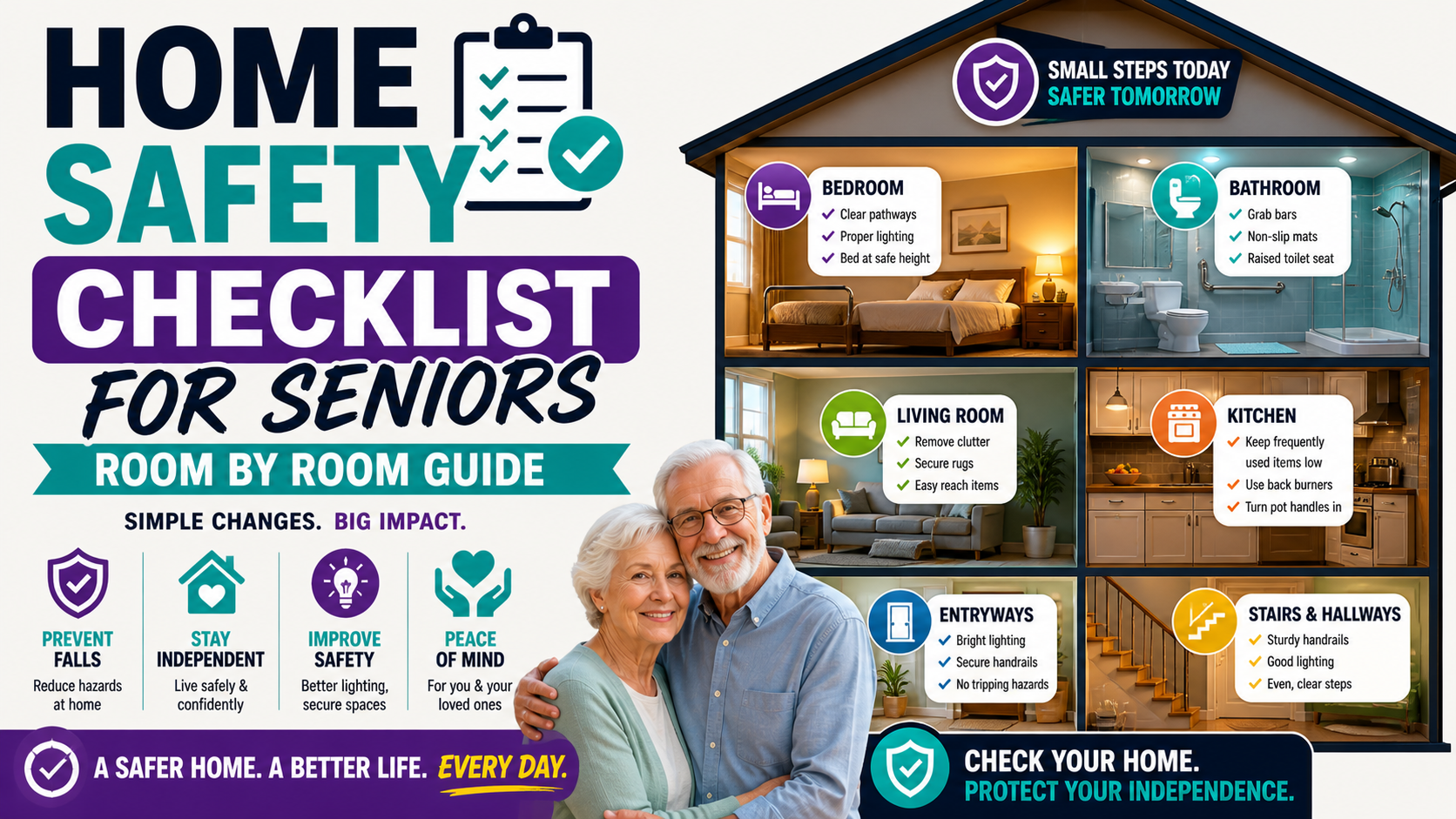
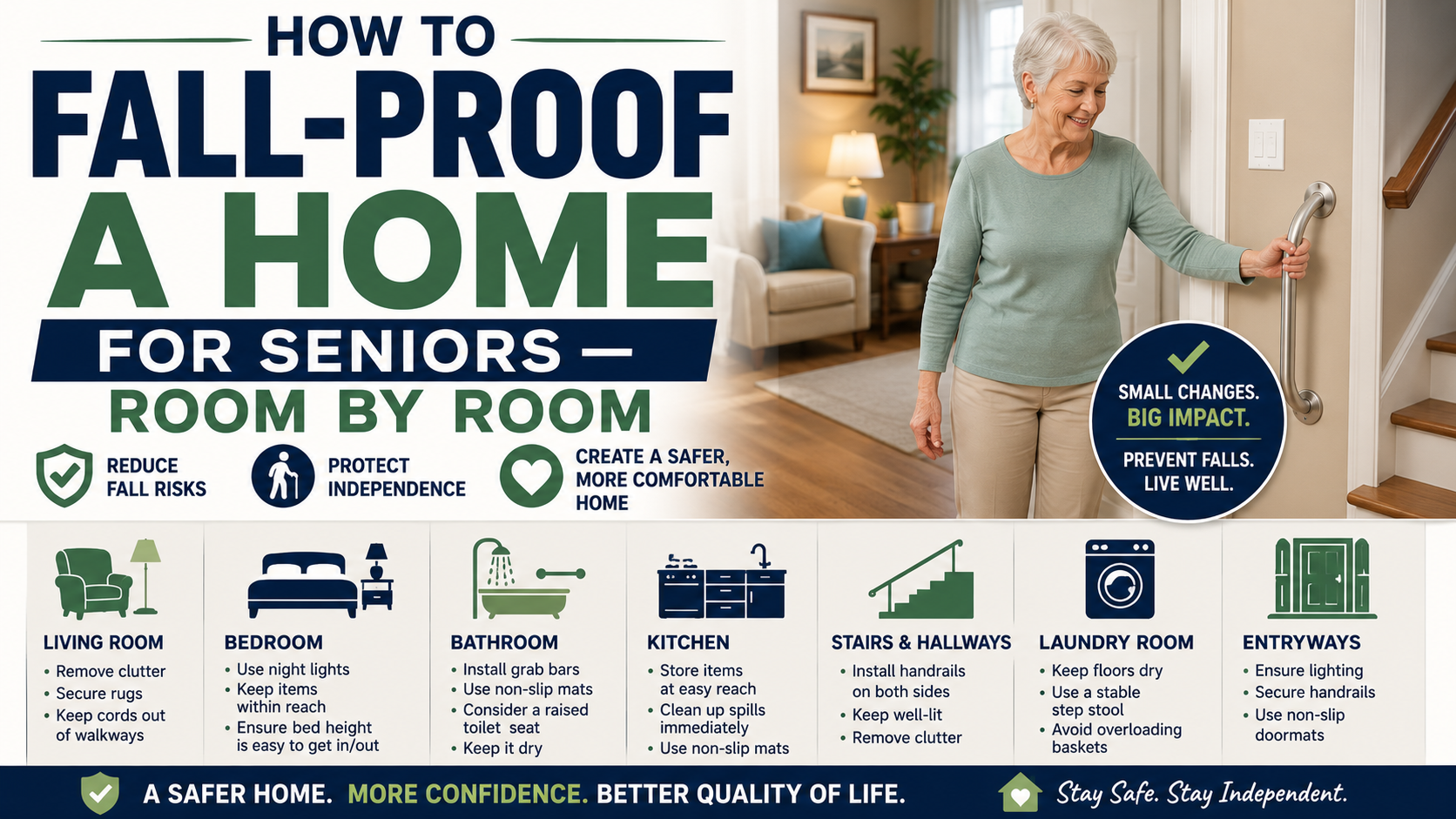
Most aging in place home modifications don’t require a contractor. Here’s what actually moves the needle — room by room, ranked by impact.
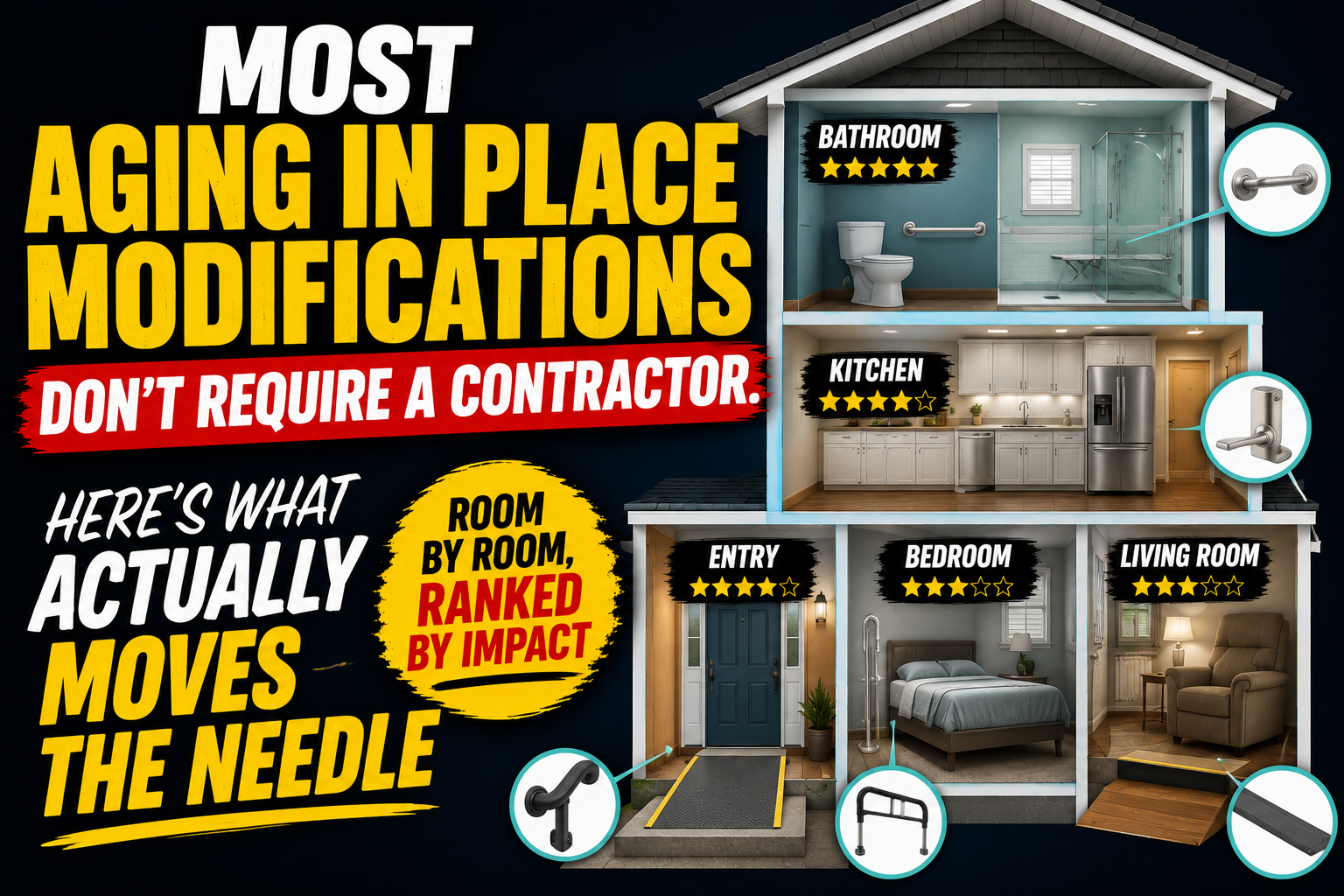
Most guides to aging in place home modifications give you a list. Install grab bars. Add night lights. Remove rugs. The list is correct — but it treats every item as equally important, which means families don’t know where to start, spend money on lower-impact items first, and sometimes run out of energy before addressing the changes that would have made the biggest difference.
This guide does something different. Every modification is ranked by real-world impact — how much actual fall risk reduction or independence extension it produces per dollar and per hour invested. The highest-impact changes are first. The nice-to-haves are last. Work down the list in order and you’ll address what matters most before anything else.
No contractors needed for the majority of these. No major construction. Most can be done over a weekend with basic tools or no tools at all.
How This Ranking Works
Each modification is evaluated on three factors: how frequently the risk it addresses occurs, how serious the consequence of that risk is, and how directly and reliably the modification reduces it. A modification that prevents a serious fall that happens daily scores higher than one that prevents a less serious incident that happens occasionally.
Cost is secondary to impact in this ranking — a $30 modification that prevents a serious fall is ranked above a $300 modification that provides marginal improvement. That said, cost context is provided for each item so you can make informed decisions.

Tier 1 — Highest Impact, Do These First
These modifications address the most frequent, most serious risks in the home. If you only do one tier from this guide, do Tier 1. Everything here has an outsized impact relative to cost and effort.
#1 — Grab Bars at the Shower Entry and Toilet
Impact: Maximum. Cost: Low. Effort: Low to Medium.
Nothing in home modification for aging in place comes close to this in terms of impact per dollar. The bathroom is the most dangerous room in the home for older adults — and grab bars at the two highest-risk transitions address that danger more directly than anything else available.
The shower entry requires a one-legged weight transfer — stepping in while lifting the other foot over a threshold. The toilet requires a controlled descent and rise from a low position. Both happen daily. Both are mechanically demanding. Both become significantly safer with a firm, load-rated grab bar to hold.
The critical distinction: towel bars are not grab bars. They will pull out of the wall under body weight. Proper grab bars are rated for 250+ pounds and mounted into studs or appropriate anchors. Our review of the best grab bars for seniors covers exactly what to buy and our grab bar placement guide covers exactly where to put them.
Cost: $20–$50 per bar. Installation: $50–$150 if hiring a handyman.
→ Get the 2-Pack Stainless Steel Grab Bars on Amazon
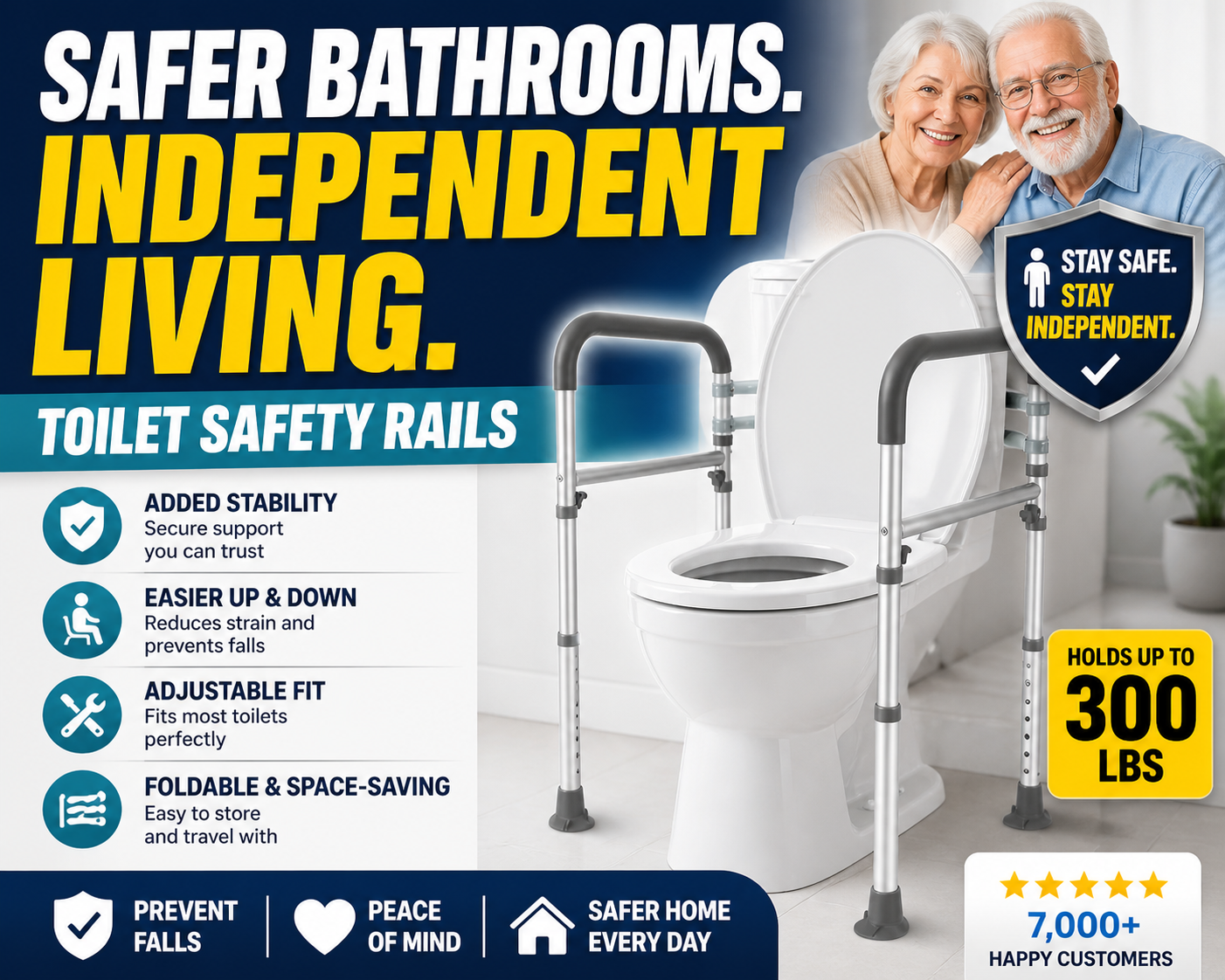
#2 — Toilet Safety Rails
Impact: Very High. Cost: Low. Effort: Minimal.
Getting on and off a standard toilet happens multiple times every day — and it’s one of the most physically demanding transitions older adults make regularly. The sit-to-stand movement from a low seat requires significant eccentric muscle control and leg strength that decline with age.
Toilet safety rails with armrests transform this transition from a fall risk into a managed, supported movement. They install without tools, fit any toilet, and are used immediately upon installation. The impact is immediate and permanent — every toilet use for the rest of the time in the home becomes safer.
What makes this ranking particularly high is the frequency. This isn’t a once-a-week risk — it’s multiple times every single day. High-frequency risk with high-consequence outcome and a simple, inexpensive fix makes this Tier 1.
Our review of the best toilet safety rails covers exactly what to look for.
Cost: $40–$80. Installation: No tools required.
→ Get the Toilet Safety Rails on Amazon
#3 — Non-Slip Bath Mat That Actually Stays in Place
Impact: Very High. Cost: Very Low. Effort: Zero.
The moment of stepping out of the shower onto the bathroom floor with wet feet is one of the highest-risk transitions in the daily routine. A mat that shifts even slightly under that first wet step is a fall hazard rather than a safety measure.
Most standard fabric bath mats fail this test. They shift. They stay wet. Their non-slip backing degrades. A diatomaceous earth stone mat solves all three problems simultaneously — it stays completely in place, absorbs water almost instantly, and maintains its grip performance indefinitely.
The ranking is high because the cost is essentially zero, the effort is placing it on the floor, and the risk it addresses is a daily, high-consequence event. There is no reason not to do this immediately.
Our review of the best non-slip bath mat for seniors covers why most mats fail and what to use instead.
Cost: $30–$60. Installation: None.
→ Get the Diatomaceous Earth Stone Bath Mat on Amazon
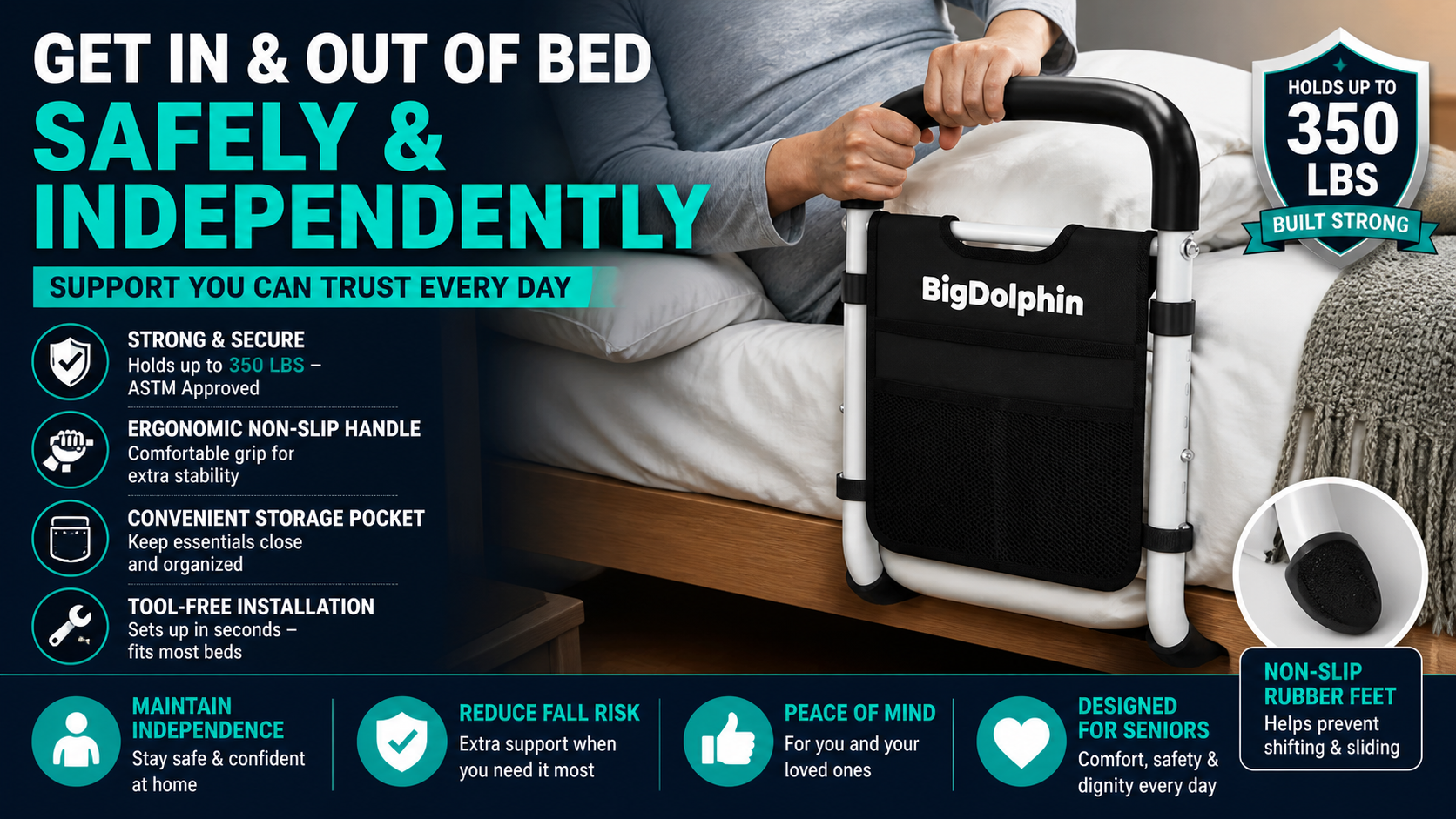
#4 — Bed Rail on the Exit Side
Impact: Very High. Cost: Low. Effort: Minimal.
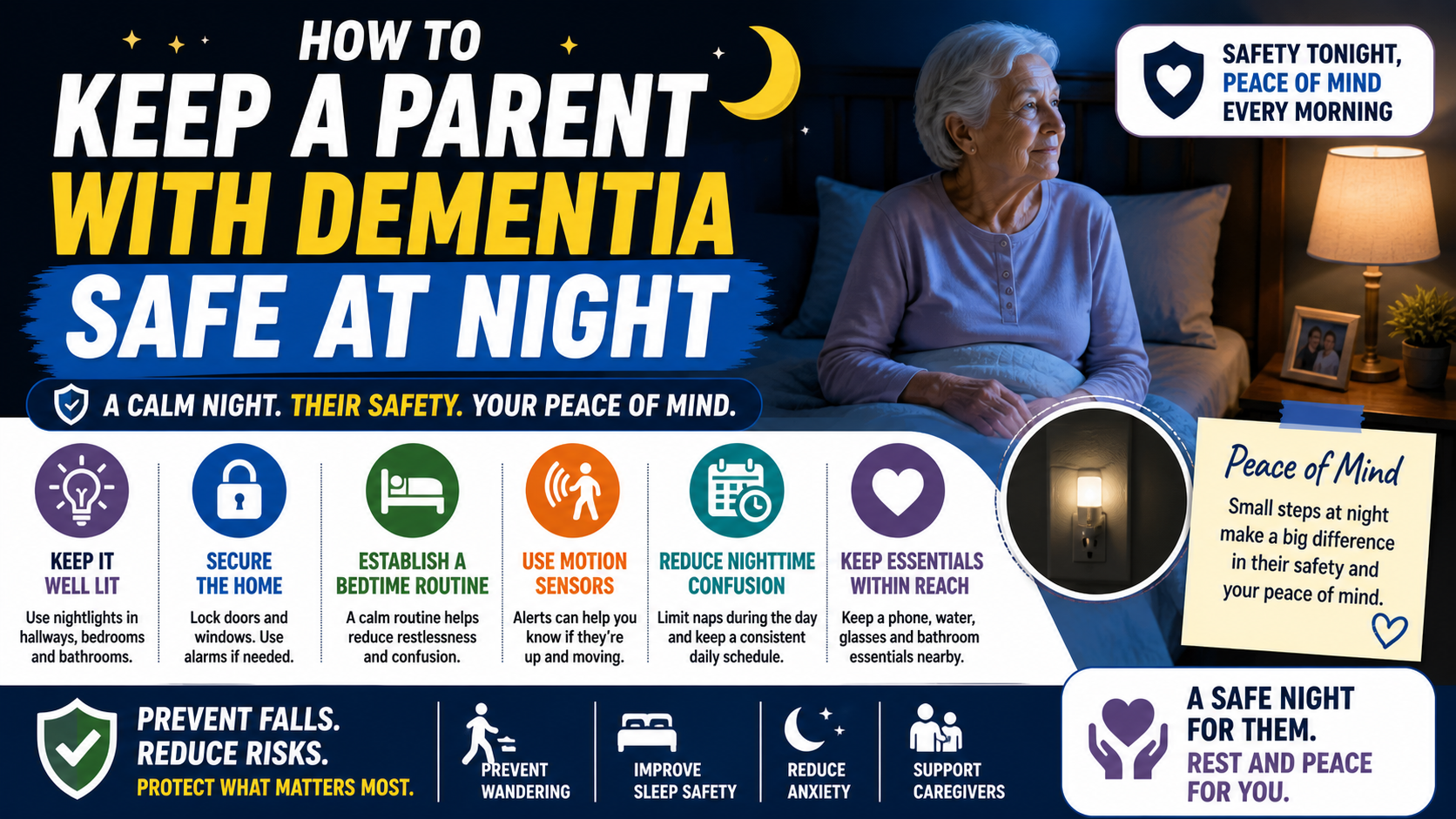
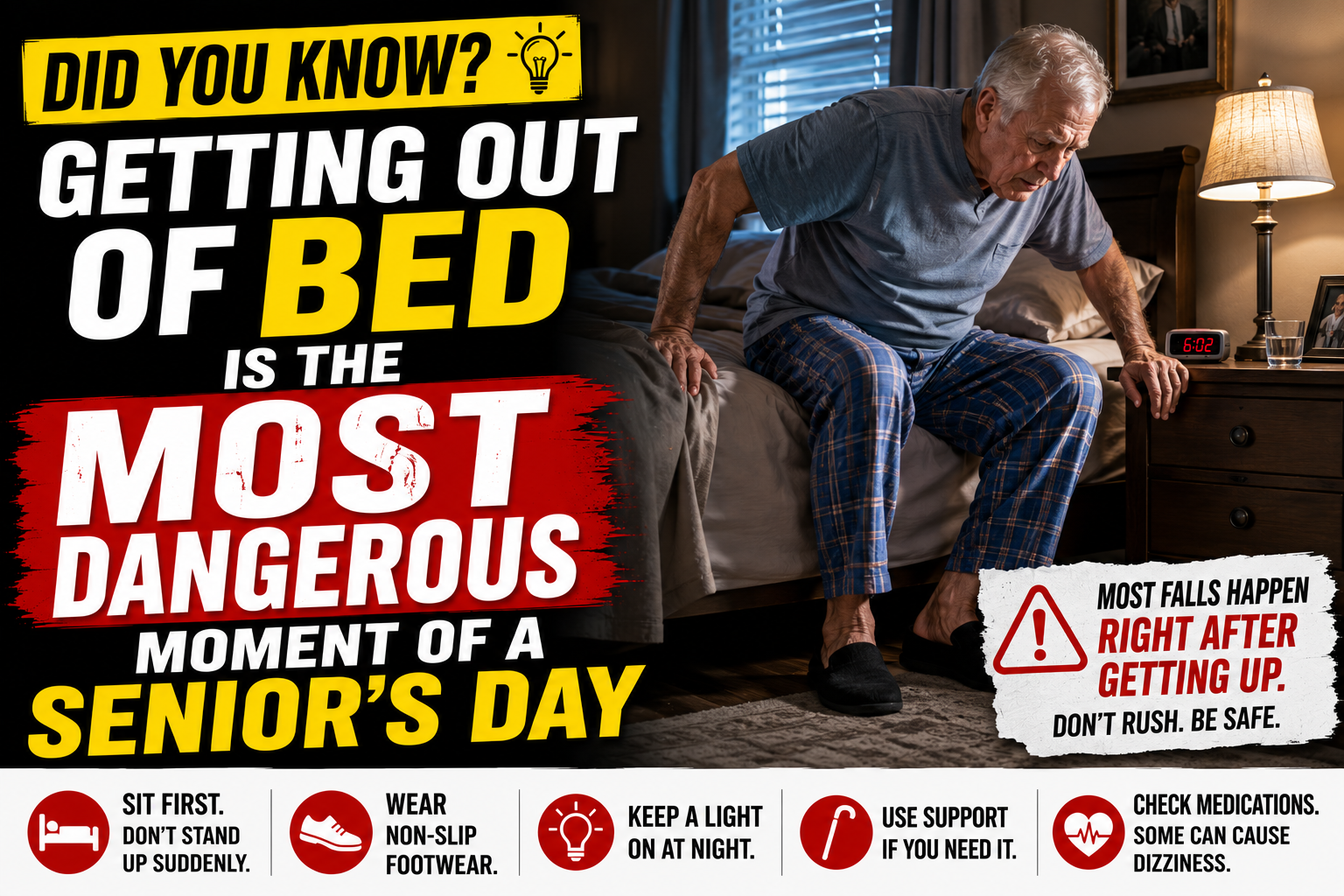
Getting out of bed is one of the most fall-prone transitions of the day — and it happens at the two highest-risk times: first thing in the morning when blood pressure hasn’t normalized and alertness is low, and during nighttime bathroom trips when the person is half-asleep in the dark.
A bed rail gives a firm, non-compressing surface to push against during the sit-to-stand transition. Mattresses compress under body weight — there’s nothing solid to push from without a rail. The difference in ease and stability during this transition is immediately apparent from first use.
The storage pocket on the recommended model keeps phone and essentials within reach — reducing unnecessary getting-up movements throughout the night that create additional fall risk.
Our review of the best bed rail for seniors covers the ASTM certified option we recommend. Our guide on safe ways to get out of bed covers the correct technique that works alongside it.
Cost: $40–$80. Installation: No tools required — slides under mattress.
→ Get the ASTM Approved Bed Rail on Amazon
#5 — Automatic Night Lights on the Bedroom-to-Bathroom Path
Impact: High. Cost: Very Low. Effort: Zero.
Nighttime bathroom trips are disproportionately dangerous — darkness, partial sleep, reduced alertness, and urgency combine into a high-risk scenario that repeats multiple times per week. The path from the bed to the bathroom needs to be lit automatically the moment feet leave the bed — not after finding a switch in the dark.
Plug-in auto-on units that function as night lights normally and activate at full brightness during power outages cover both the regular nighttime trip and the power outage scenario simultaneously. Three units — bedroom, hallway, bathroom — cover the entire path for under $40.
The impact-to-cost ratio here is exceptional. There are very few safety interventions where $40 provides this level of protection against this frequency of risk.
Our review of the best rechargeable flashlight for seniors covers the auto-on option we recommend for all three locations.
Cost: $30–$50 for a 3-pack. Installation: Plug into wall outlet.
→ Get the Energizer Auto-On 3-Pack on Amazon
Tier 2 — High Impact, Do These Next
These modifications address significant risks that are slightly less frequent or slightly less immediately dangerous than Tier 1. All of them are worth doing — after Tier 1 is complete.
#6 — Shower Chair
Impact: High. Cost: Low-Medium. Effort: Minimal.
Standing in a wet shower is a daily fall risk for anyone with any balance or strength reduction. A shower chair eliminates that standing risk entirely by allowing showering from a seated, stable position.
The resistance most people feel toward shower chairs is psychological rather than practical — once tried, most people find seated showering easier and more comfortable than standing. The ranking here is high because the risk is daily and the consequence of a fall inside a shower — hard surfaces, enclosed space — is severe. The cost is modest and the installation nonexistent.
Our review of the best shower chair for seniors covers what to look for and the specific product we recommend.
Cost: $40–$100. Installation: None — place in shower.
→ Get the HOMLAND Shower Chair on Amazon
#7 — Remove or Fully Secure Every Unsecured Rug
Impact: High. Cost: Zero (removal) or Low (securing). Effort: Low.
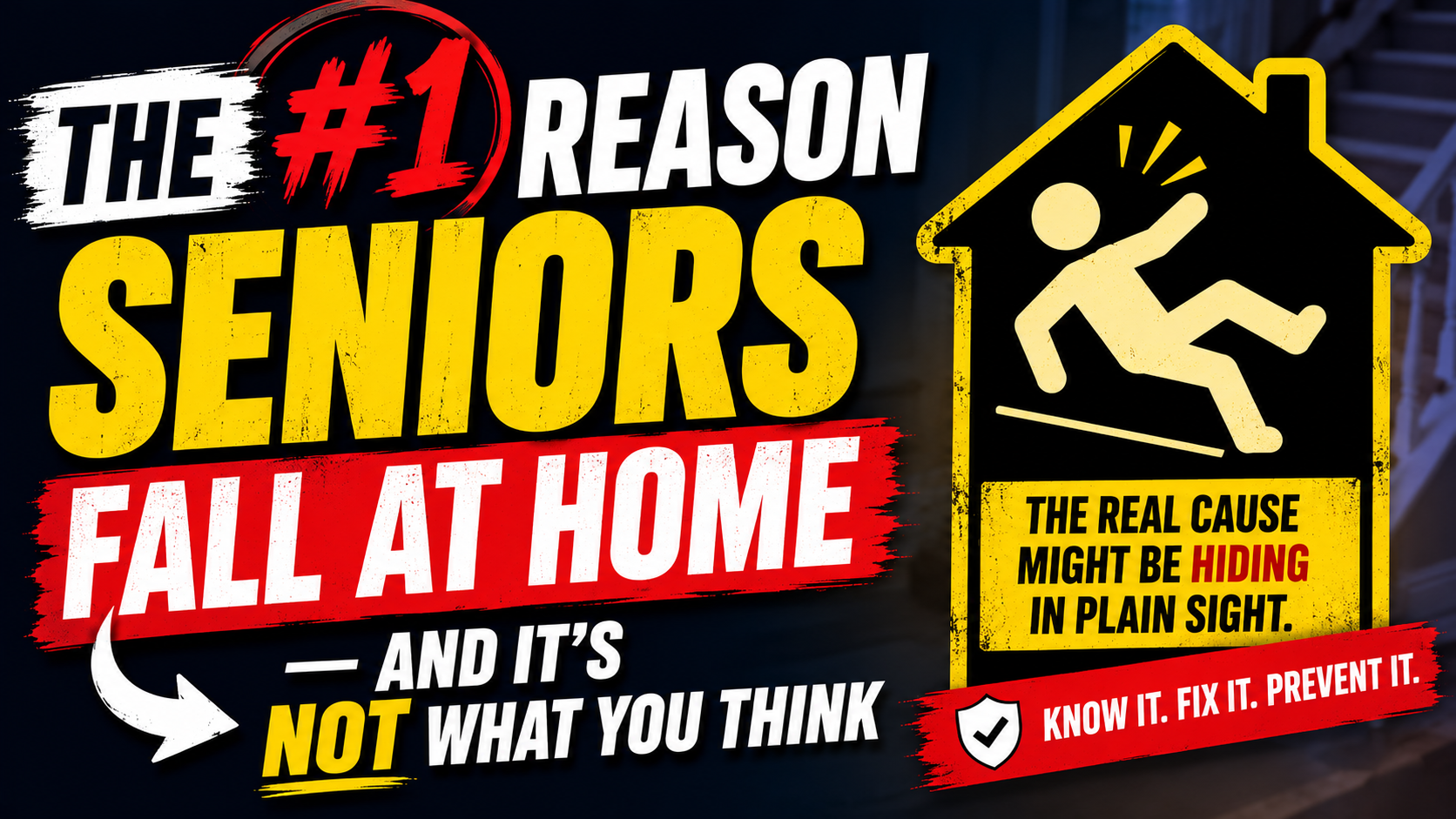
Unsecured area rugs are one of the most common fall hazards in the home — and one of the most invisible because familiarity makes them disappear from conscious awareness. A curling edge, a lifting corner, a rug that shifts a few inches under a foot moving with momentum — any of these can cause a serious fall.
The modification here is free if the answer is removal — which is often the right answer. Securing requires non-slip backing and double-sided tape on all edges, which costs very little. The rule is simple: if there’s any doubt about whether a rug is fully secured, remove it. No decorative item is worth a fall.
#8 — Clear Every Cord From Every Walking Path
Impact: High. Cost: Zero to Very Low. Effort: Low.
Television cables, lamp cords, phone chargers, extension cords — anything crossing a walking path is a trip hazard. The modification is free if the solution is rerouting cords along walls. Cord clips and covers cost a few dollars. This is a same-day fix that requires only the willingness to look at the home with fresh eyes and address what’s found.
The impact ranking is high because cord trips cause falls that are often serious — the sudden, unexpected nature of a cord catch doesn’t allow for any corrective response before the fall occurs.
#9 — Walking Cane for Anyone With Noticeable Balance Changes
Impact: High for the right person. Cost: Low. Effort: Adjustment period.
A walking cane used proactively — before a fall happens — is one of the highest-impact mobility modifications available. A third point of contact with the ground meaningfully improves stability during walking, particularly on uneven surfaces, wet pavement, and any terrain that challenges balance.
The ranking caveat is “for the right person” — this is most impactful for people who have noticed balance changes but haven’t yet had a fall. For people with no balance concerns it’s not needed. For people who already use a walker it’s been superseded. But for the middle group — balance has changed, nothing has gone wrong yet — a cane used consistently is a high-impact intervention.
The foldable format is important — a cane that goes everywhere is a cane that’s there when needed. Our review of the best walking cane for seniors covers the free-standing foldable option we recommend.
Cost: $25–$60. No installation required.
→ Get the HONEYBULL Walking Cane on Amazon
#10 — Handrail on Both Sides of Every Staircase
Impact: High. Cost: Low-Medium. Effort: Medium — requires installation.
Most home staircases have a handrail on only one side. For anyone with balance challenges this means going up or down while holding on one side only — which may be the weaker side depending on direction. A second handrail on the opposite wall provides bilateral support throughout the full stair run.
A fall on stairs has more serious consequences than a fall on a flat surface — the potential for tumbling down multiple steps is a meaningful severity multiplier. A handyman can typically install a second stair handrail in two to three hours.
Cost: $50–$150 in materials plus $100–$200 installation labor.
#11 — Non-Slip Stair Treads
Impact: Medium-High. Cost: Very Low. Effort: Low.
Non-slip adhesive treads on stair edges serve two purposes — they provide grip underfoot on each step, and the contrasting color makes each step edge clearly visible. Falls at stair transitions — particularly the top and bottom steps — are frequently caused by misjudging the edge of a step. Visible, grippy treads address both the slip risk and the visibility risk simultaneously.
Cost: $20–$40 for a full staircase set. Installation: Adhesive — no tools.
Tier 3 — Meaningful Improvements Worth Making
These modifications provide real value but address lower-frequency risks or risks where the consequence, while real, is less immediately severe than Tiers 1 and 2.
#12 — Adjust Bed Height
Impact: Medium-High. Cost: Zero to Low. Effort: Low.
The correct bed height — sitting on the edge with feet flat on the floor and knees at approximately 90 degrees — makes the getting-up transition significantly easier and safer. A bed that’s too low requires rising from a deep position that demands more leg strength. A bed that’s too high creates an unstable perch with feet not reaching the floor.
Bed risers add height for a bed that’s too low — typically $20 to $30. Removing a box spring reduces height. Getting this right is a one-time change with permanent daily impact on the safety and ease of every bed transfer.
#13 — Reorganize Kitchen Storage
Impact: Medium. Cost: Zero. Effort: Low.
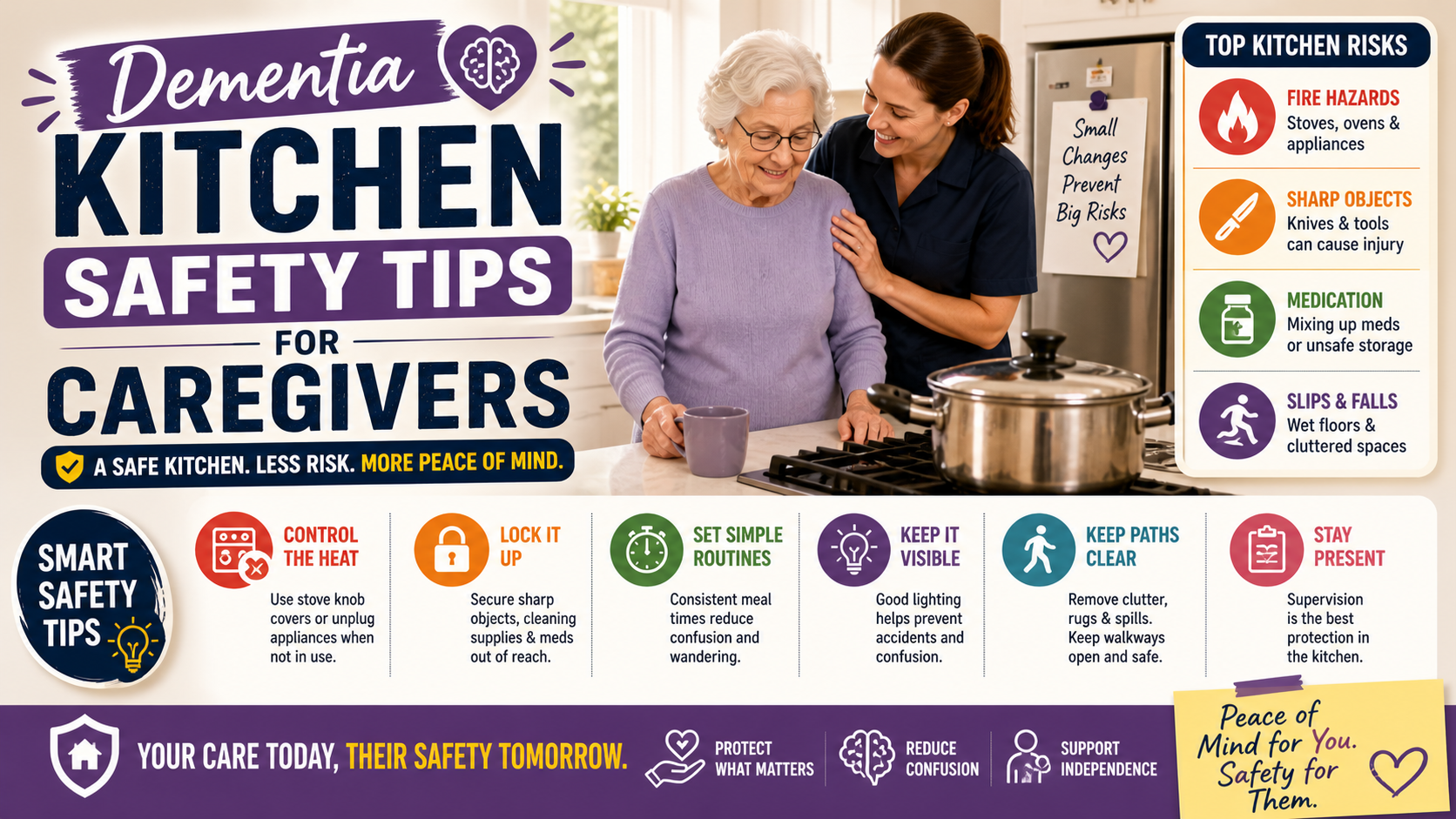
Moving daily-use kitchen items from overhead shelves or low floor-level cabinets to between hip and shoulder height eliminates the reaching and bending that create instability and fall risk during the most routine kitchen activities. This costs nothing and takes an afternoon to implement.
#14 — Improve Kitchen and Living Area Lighting
Impact: Medium. Cost: Very Low. Effort: Low.
What feels adequately lit to a younger person may be genuinely insufficient for an older adult with reduced visual acuity. Increasing wattage in overhead fixtures, adding floor or table lamps to dark corners, and ensuring light switches are accessible before entering each room all reduce the visual contribution to fall risk throughout the home.
#15 — Exterior Handrail at Every Step
Impact: Medium. Cost: Low-Medium. Effort: Medium.
Single exterior steps — at the front or back door — are approached with less caution than full staircases and cause a disproportionate number of exterior falls. A secure handrail at every exterior step, including single steps, addresses this risk directly. A post-mounted handrail on a concrete step typically requires a professional installation but is not expensive.
Tier 4 — Bigger Projects Worth Planning
These modifications have meaningful impact but require more significant investment — financially or in terms of construction. They’re worth planning for over a longer timeline rather than expecting to complete quickly.
Walk-In Shower or Curbless Shower
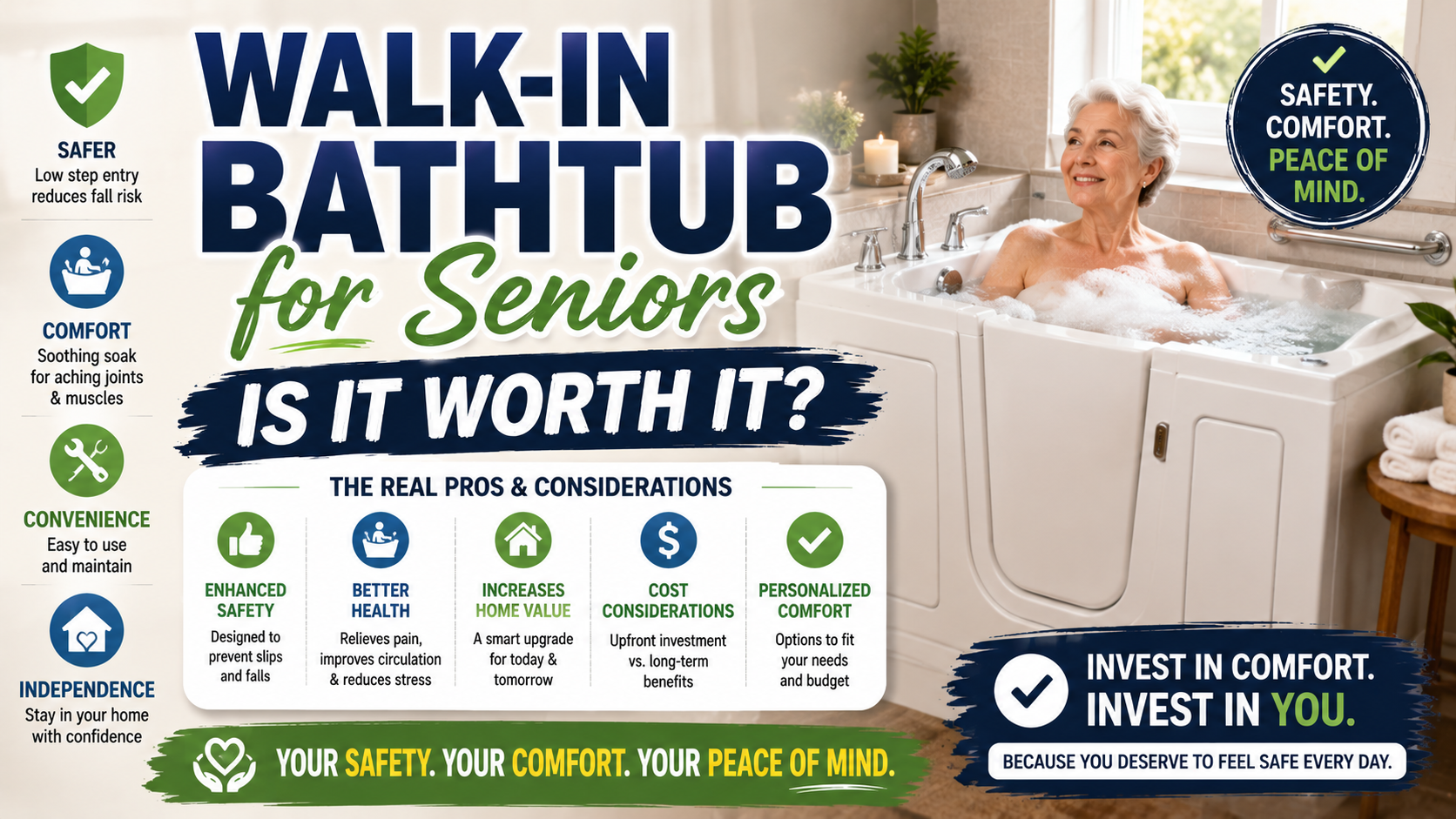
Eliminating the tub-to-shower step entirely removes one of the most dangerous transitions in the bathroom. A curbless shower — flat entry, no threshold — is the gold standard for aging in place bathroom design. It requires bathroom renovation but is one of the highest long-term impact modifications available.
Cost: $3,000–$10,000+ depending on scope.
Stair Lift
For multi-story homes where the bedroom is on a different floor from the primary living areas, a stair lift provides continued access without the fall risk of stair climbing. It’s a significant investment but one that can extend aging in place viability for years when stairs have become genuinely challenging.
Cost: $3,000–$8,000 installed.
Widened Doorways
Standard doorways (32 inches) can accommodate walkers but not power wheelchairs comfortably. For anyone anticipating wheelchair use, widening doorways to 36 inches is a meaningful modification worth planning. It requires construction but is less disruptive than it sounds in most homes.
Cost: $500–$1,500 per doorway.
Ramp at Primary Entry
For homes where exterior steps create a significant barrier, a ramp at the primary entry extends independent access. Portable ramps are available for modest step heights. Permanent ramps are constructed for larger height differences.
Cost: $100–$500 for portable options, $1,000–$5,000 for permanent construction.

The Safety Net Every Modified Home Needs
Every modification in this guide reduces fall risk. None eliminates it. Even a thoroughly modified home has moments where something can go wrong — a wet floor, a moment of dizziness, a nighttime trip that doesn’t go perfectly.
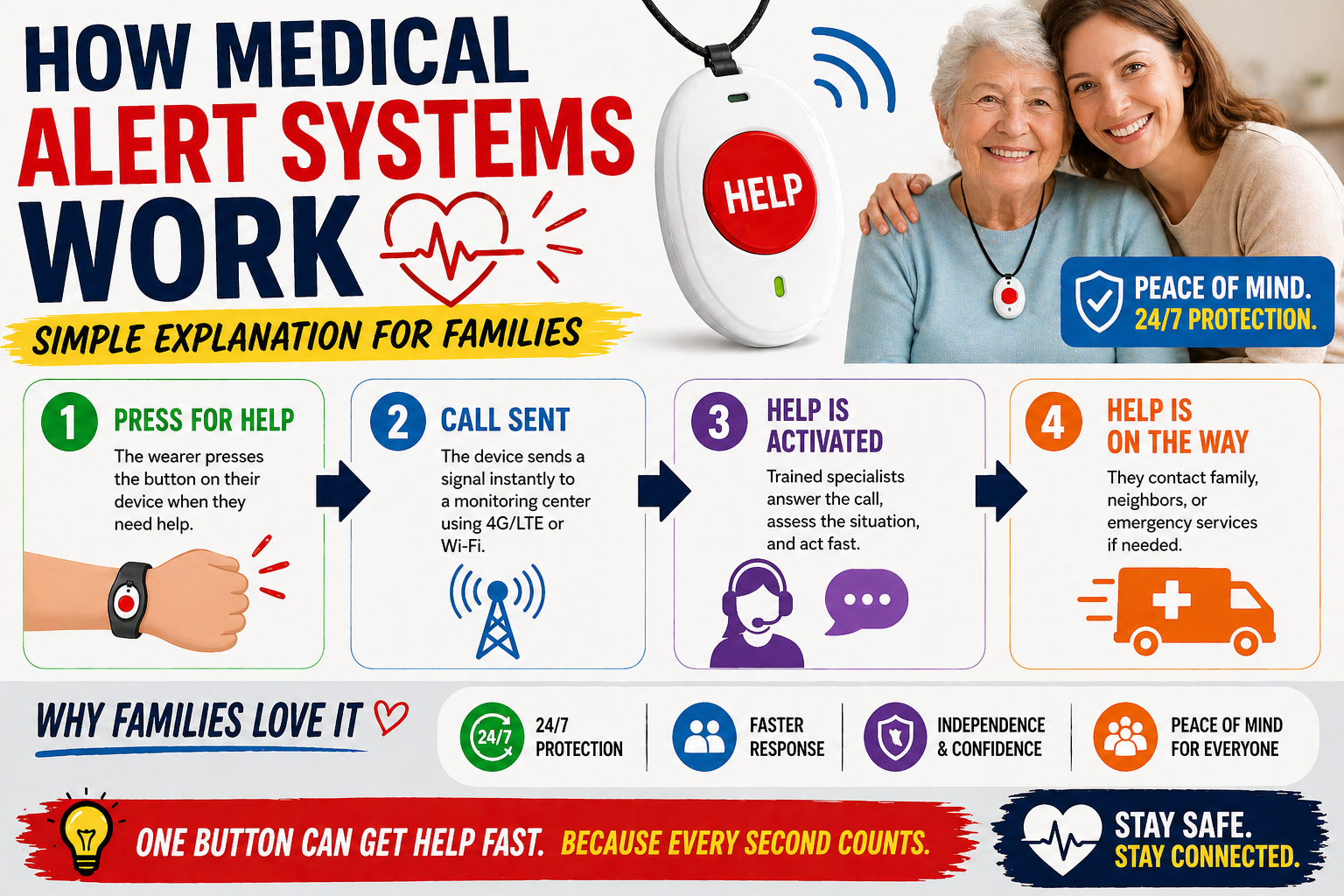
The final modification that completes every aging in place home is a medical alert device with automatic fall detection. It doesn’t prevent falls — it ensures that when one happens, help is on the way immediately without requiring any action from the person who fell.
The SecuLife Smartwatch delivers fall detection, GPS tracking, SOS calling, and two-way communication from the wrist — in a device that looks like a regular watch and operates independently of any smartphone. It goes everywhere the person goes, which means it’s there in the bathroom, during the nighttime trip, on the outdoor walk, and everywhere else a fall could happen.
For the full picture on whether a medical alert device is right for your situation our guide on signs it’s time for a medical alert system walks through what to consider. Our complete SecuLife review covers the specific device in full detail.
→ See the SecuLife Smartwatch on Amazon
The Total Cost of a Tier 1 and 2 Modified Home
For families wondering what a complete Tier 1 and 2 modification costs, here’s the honest total:
- Grab bars (2-pack) — $30–$50 plus $100–$150 installation
- Toilet safety rails — $50–$80
- Non-slip bath mat — $30–$60
- Bed rail — $40–$80
- Auto-on night lights (3-pack) — $30–$50
- Shower chair — $40–$100
- Walking cane (if needed) — $25–$60
- Second stair handrail (if needed) — $150–$350
Total Tier 1 and 2: approximately $500 to $1,000 depending on whether installation help is needed and which items apply to the specific situation.
Compare that to one month of assisted living at $4,500 to $6,000. The math is not subtle.
For the complete aging in place planning picture our guide on what is aging in place covers everything worth knowing and our aging in place checklist covers every planning category beyond home modifications. For the complete fall prevention picture beyond modifications our guide on fall prevention tips at home covers every contributing factor worth addressing.
Frequently Asked Questions
What’s the single highest-impact aging in place modification?
Grab bars in the bathroom — specifically at the shower entry and next to the toilet. These two locations address the highest-frequency, highest-consequence fall risks in the home for a cost of $30 to $50 per bar plus installation. Nothing else on this list comes close to the impact-per-dollar of these two bars installed correctly.
Can I do these modifications in a rental property?
Many of these modifications require no permanent changes — bath mats, bed rails, toilet safety rails, shower chairs, night lights, walking canes, and cord management are all fully portable. Grab bars and stair handrails require drilling and are the main items that need landlord permission. Many landlords will approve grab bar installation for aging or disabled tenants — it’s worth asking directly, framing it as a reasonable accommodation request.
Which modifications add the most value to the home?
Curbless shower conversions, stair lifts, and widened doorways add real estate value in markets where aging-in-place buyers are common. Grab bars, toilet rails, and similar items are easily removed if the home is sold — they add no negative value and can be removed in minutes. Don’t let resale concerns delay Tier 1 and 2 modifications that have immediate safety impact.
How do I prioritize if I have a very limited budget?
In strict budget-constrained order: remove all unsecured rugs and clear all cords first — free, immediate, high impact. Then add the bath mat — $30 to $60, immediate. Then the night lights — $30 to $50. Then save for grab bars and professional installation — the highest-impact paid modification. Toilet rails and bed rail follow. This sequence maximizes safety improvement per dollar spent.
Do I need a professional assessment before making these modifications?
For Tier 1 and 2 modifications — no. The items on this list and the guides linked throughout cover what’s needed without professional assessment for most homes. A Certified Aging-in-Place Specialist (CAPS) adds value when significant structural modifications (Tier 4) are being planned, when mobility limitations are complex and specific, or when a professional assessment is required for insurance or benefit purposes.
Start at the Top and Work Down
The ranking in this guide exists for one reason: to help you spend your first hour and your first dollars on the changes that will make the most difference — not the ones that happen to be easiest or most visible.
Grab bars. Toilet rails. Bath mat. Bed rail. Night lights. Do those five things and you’ve addressed the highest-impact fall risks in the home for under $300 in most cases. Everything after that builds on that foundation.
Start at the top. Work down. Revisit in six months.
→ Get the Toilet Safety Rails on Amazon
→ Get the Night Lights on Amazon
→ Get the SecuLife Smartwatch on Amazon
About the Author
Carol Simmons is a Certified Aging-in-Place Specialist (CAPS) who spent 15 years completing home safety assessments across Florida and the Southeast. She developed the impact-ranked approach in this guide after watching families repeatedly spend time and money on lower-impact modifications while leaving the highest-risk areas unaddressed. She writes for Elder Safety Guide to help families make smarter decisions about where their effort and money go — so the changes that matter most happen first.