When an older adult falls and can’t get up a physiological clock starts. Here’s exactly what happens in the first 60 minutes — and the two actions that control how long it runs.
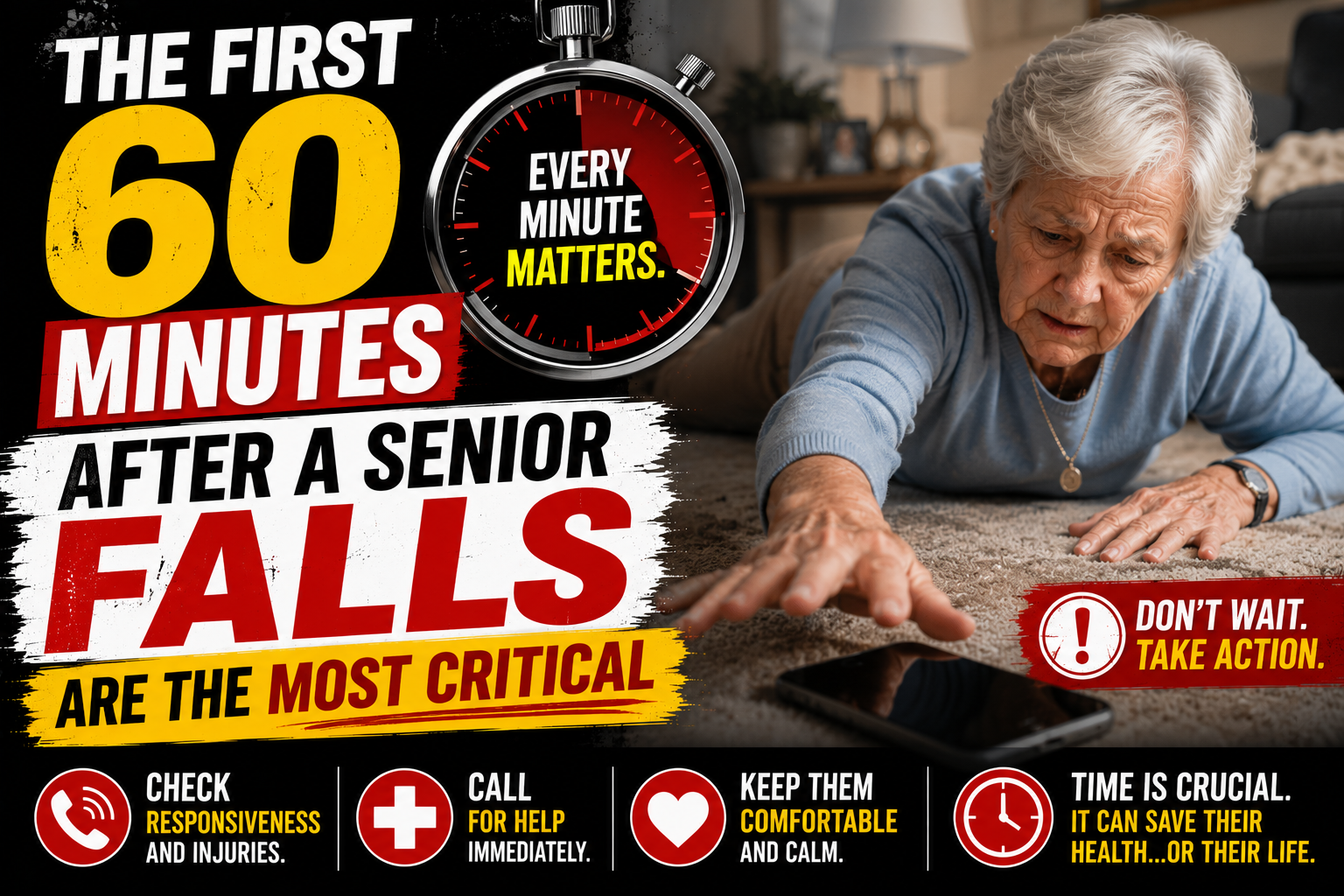
When an older adult falls and can’t get up, a clock starts.
Not a metaphorical clock. A literal physiological timeline — specific things happening to the body at specific intervals that determine whether the fall becomes an incident or a catastrophe. The difference between those two outcomes is determined almost entirely by one variable: how long it takes for help to arrive.
The first 60 minutes are the most critical. Here’s what happens inside them — and what determines whether your parent is in them alone.
The 60-Minute Timeline
Minutes 0 to 15 — The Immediate Window
In the first 15 minutes after a fall the primary concerns are the injury itself — assessing what happened, whether bones are broken, whether there’s a head injury — and the immediate environment. Is the person in a position that’s cutting off circulation? Is there something sharp or hard they’re pressed against? Is the floor cold enough to begin affecting body temperature?
For a conscious person who can reach a phone or press a button on a medical alert device this window is when help gets called. Emergency services dispatched within this window arrive before any of the secondary physiological consequences have time to develop meaningfully.
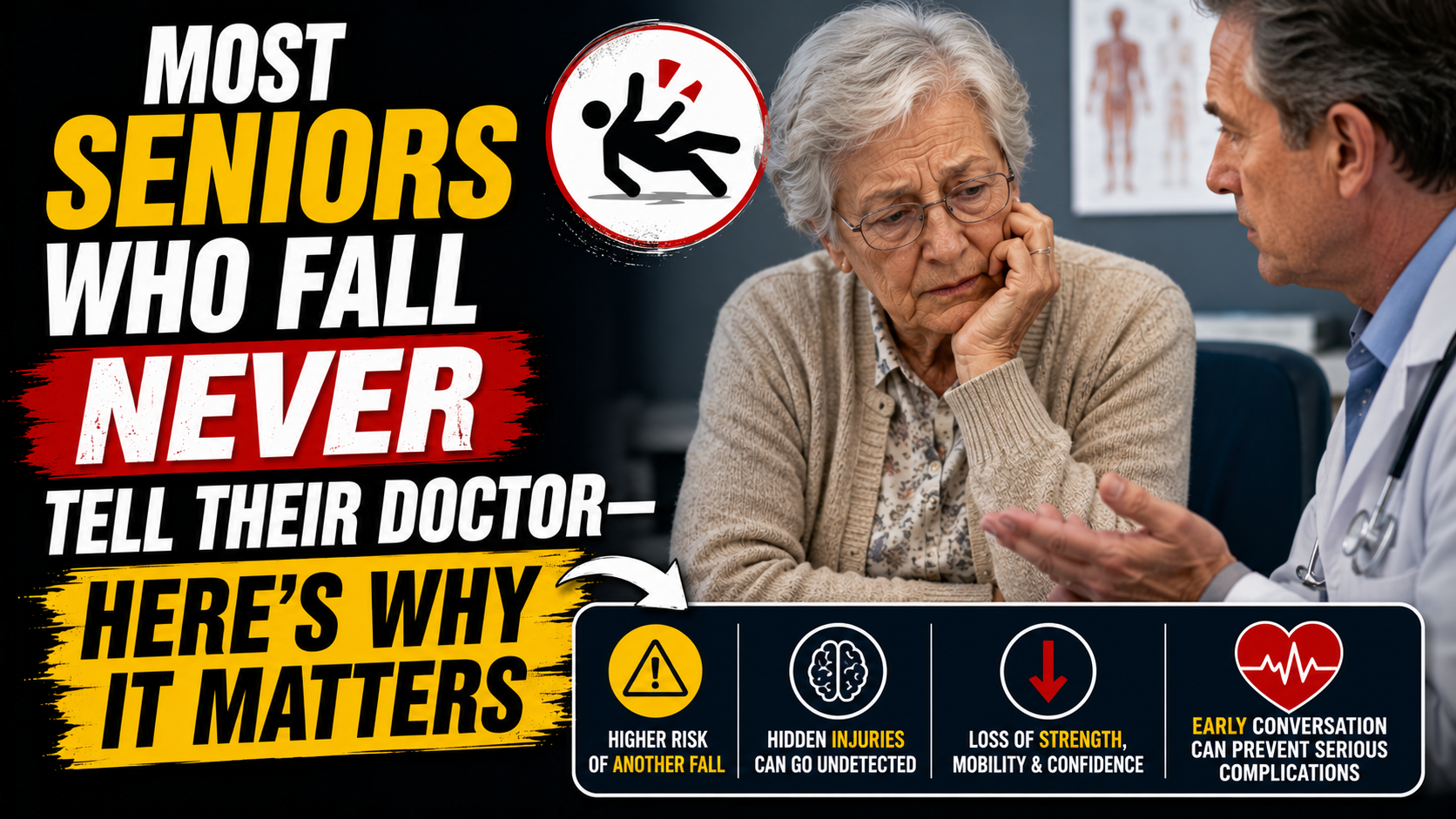
For an unconscious person, a person who can’t reach anything, or a person who — as we covered in our guide on most seniors who fall never tell their doctor — doesn’t report their situation to anyone, this window passes without help being called. The clock continues.
Minutes 15 to 30 — Core Temperature Begins to Drop
Lying on a tile, hardwood, or linoleum floor begins transferring body heat to the floor surface continuously. The body’s thermoregulatory response — shivering, vasoconstriction — works to compensate but is less efficient in older adults and requires energy that may be limited by injury and stress.
In a cool bathroom — common because bathrooms are often cooler than other rooms — or in any room where ambient temperature is below comfortable levels, core temperature begins dropping measurably within 20 to 30 minutes on a hard floor. This is the beginning of hypothermia risk that compounds with every additional minute on the floor.
Minutes 30 to 60 — Rhabdomyolysis Begins
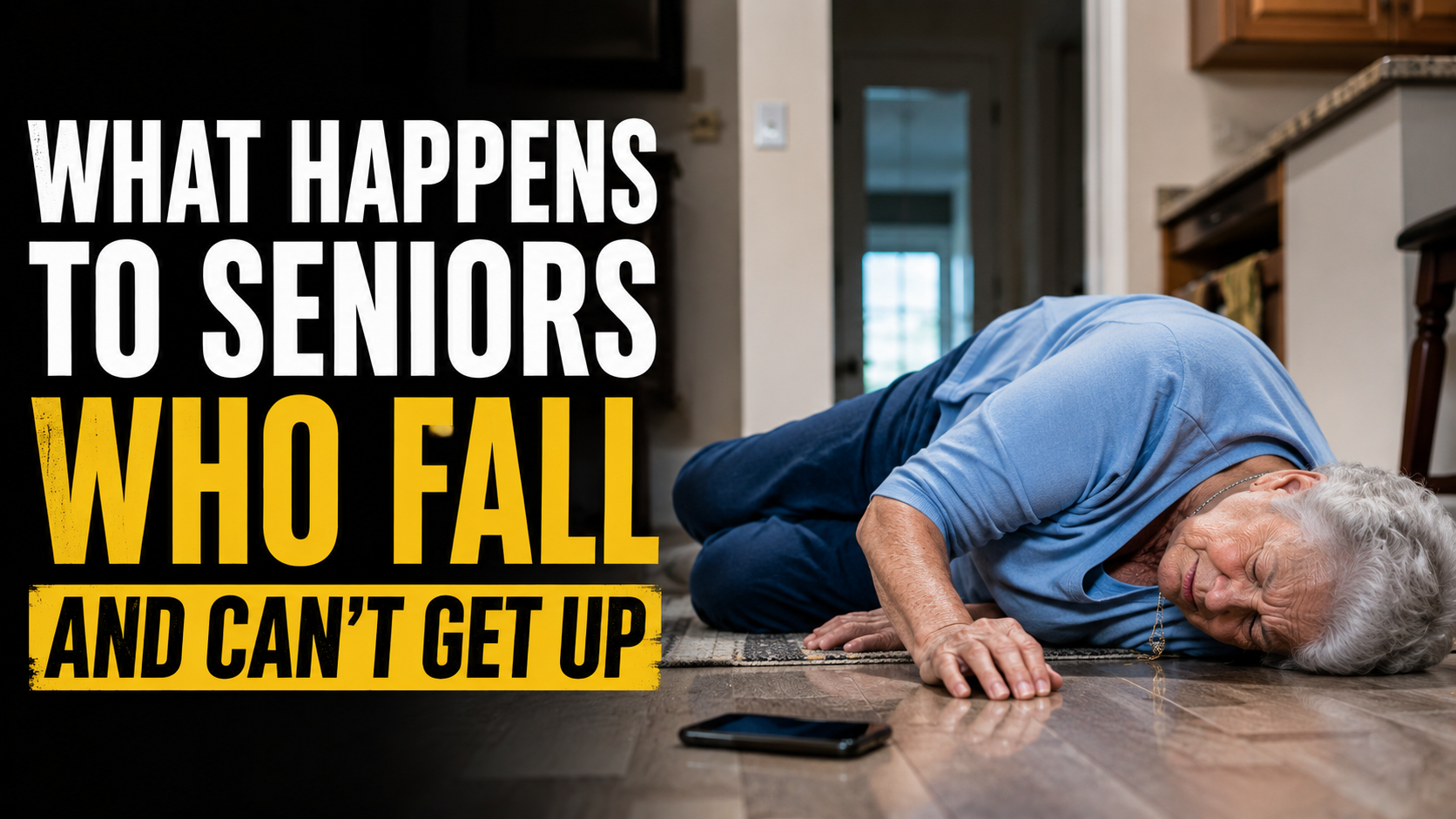
As we covered in detail in our guide on what happens to seniors who fall and can’t get up, prolonged muscle compression against a hard surface begins producing muscle breakdown — rhabdomyolysis — within approximately 30 minutes in the most compressed areas.
The myoglobin released from breaking down muscle tissue enters the bloodstream and travels to the kidneys. The kidneys attempt to filter it — but at sufficient concentrations myoglobin causes acute kidney injury. In an older adult whose baseline kidney function may already be reduced, this threshold is reached more quickly than in younger adults.
At the one-hour mark rhabdomyolysis is underway in compressed muscle groups. Kidney function is being affected. Core temperature has dropped further. The pain and distress of the situation are producing stress hormone responses that affect cardiac function, blood pressure, and immune response.
The person has been on the floor for 60 minutes. If no one knows, none of this has been stopped.
Hours 1 to 6 — The Consequences Compound
Beyond the first hour each additional hour on the floor adds to the rhabdomyolysis burden, the hypothermia progression, and the dehydration from fluid loss during a physiologically stressful situation. Pressure injuries begin developing on bony prominences — hips, heels, tailbone — as sustained pressure on these areas damages the overlying tissue.
The cognitive and psychological effects of extended time on the floor — the fear, the pain, the uncertainty about whether help will come — produce a sustained stress response that affects every organ system. Cortisol elevated for hours impairs immune function, disrupts blood sugar regulation, and affects cardiac rhythm in ways that compound the direct physiological consequences of the fall and the time on the floor.
An older adult on the floor for six hours has experienced the equivalent of a significant medical event — not just from the fall itself but from six hours of physiological consequences that wouldn’t exist if help had arrived in the first 15 minutes.
Beyond 6 Hours — Permanent Consequences Become Likely
Long lies beyond six hours are associated with dramatically worse outcomes across every measure — mortality, kidney function, functional recovery, cognitive outcomes, and pneumonia rates in the weeks following the fall.
Research on long lie outcomes consistently shows that the duration on the floor is an independent predictor of outcome — separate from the severity of the fall injury itself. A relatively minor fall that results in a six-hour long lie has worse average outcomes than a more significant fall that resulted in help arriving within 15 minutes.
The floor time is the variable. The floor time is what’s controllable.

What Determines How Long the Clock Runs
The duration of a long lie isn’t random. It’s determined by a set of specific, identifiable, changeable factors that exist before the fall — not after it.
Is Automatic Fall Detection in Place?
This is the variable with the most direct control over the clock. A wearable medical alert device with automatic fall detection detects the fall within seconds — without requiring any action from the person who has fallen — and alerts designated family contacts with GPS location immediately.
With automatic fall detection the clock runs for seconds rather than minutes or hours. The alert arrives before any of the 60-minute timeline consequences have time to develop. The response is dispatched while the floor is still warm from the initial fall.
Without automatic fall detection the clock runs until someone happens to check — which in a home without a structured check-in routine could be hours or days.

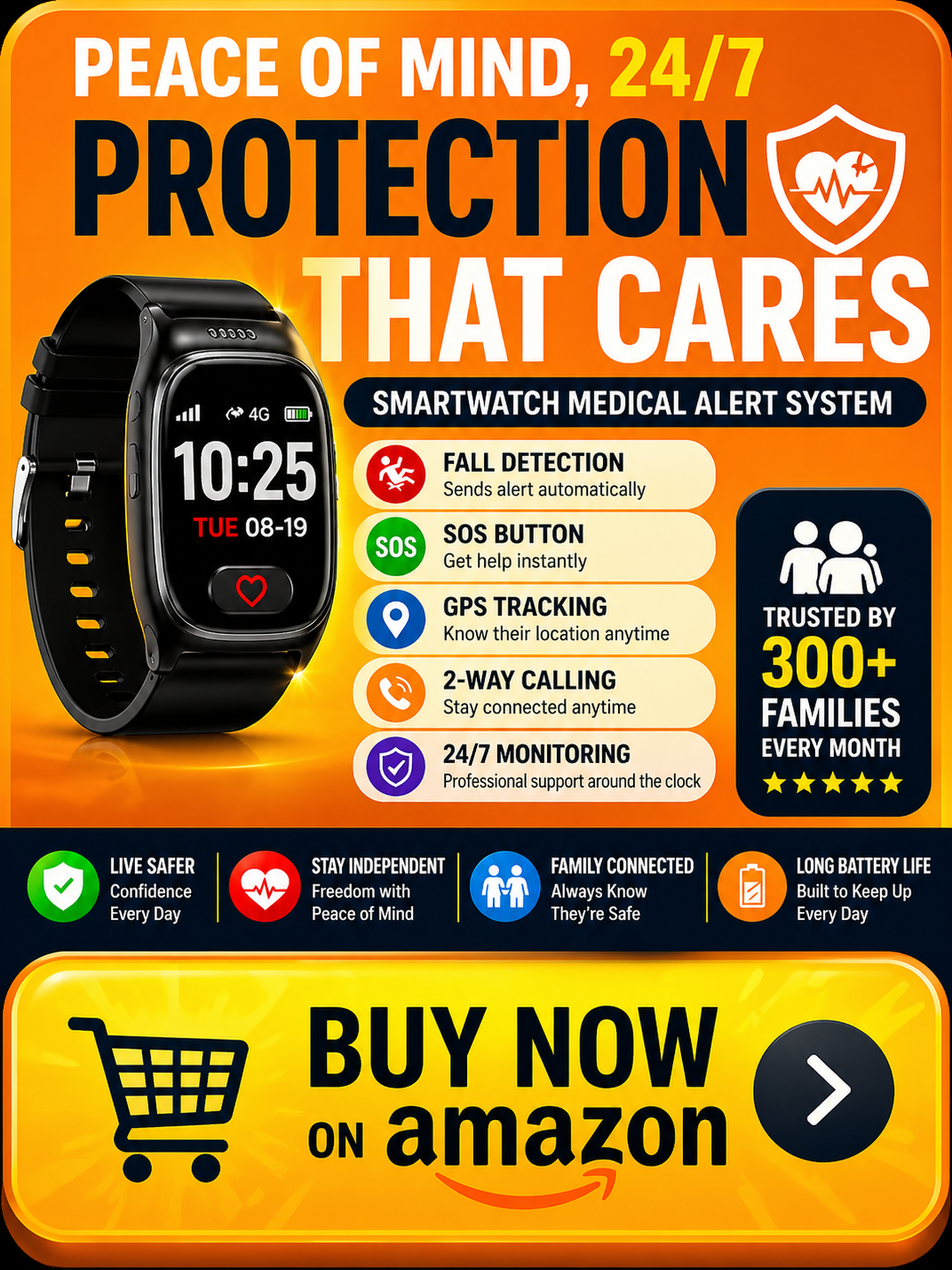
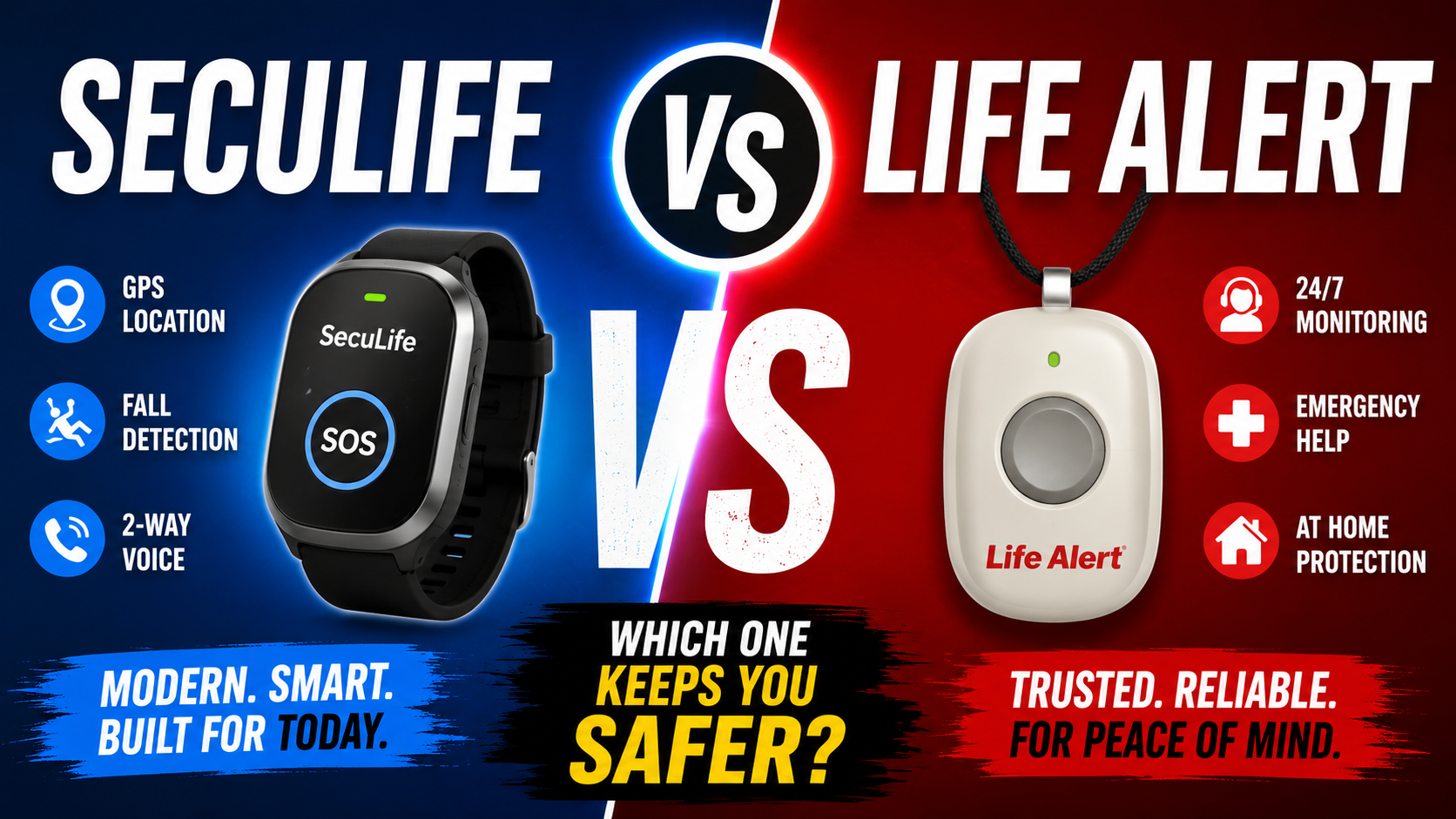
The SecuLife Smartwatch is the option we recommend — automatic fall detection calibrated for senior fall patterns, GPS location shared immediately with designated contacts, worn on the wrist so it’s present during every high-risk moment including bathroom visits and nighttime trips. Our complete review at SecuLife Smartwatch Review covers every feature worth knowing.
→ Get the SecuLife Smartwatch on Amazon
Is There a Structured Check-In Routine?
In the absence of automatic fall detection the clock runs until the next human check-in. A daily morning check-in — a scheduled text, a regular call — caps the maximum clock duration at approximately 24 hours in the worst case. No structured routine means the clock runs until someone happens to call or visit — which in many families is measured in days.
The check-in routine needs to be explicit. A specific time. A specific format. A specific escalation plan if the check-in is missed or not answered. “I’ll call when I get a chance” is not a check-in routine. “I call every morning at 9am and if there’s no answer by 9:30 I call the neighbor” is a check-in routine.
Does Someone Live With Them?
The presence of another person in the home reduces the likely clock duration to minutes — the time before the fall is noticed or the person can call out. For the approximately 28 percent of adults over 65 who live alone the clock is entirely determined by the safety measures in place — because there is no one else to notice.
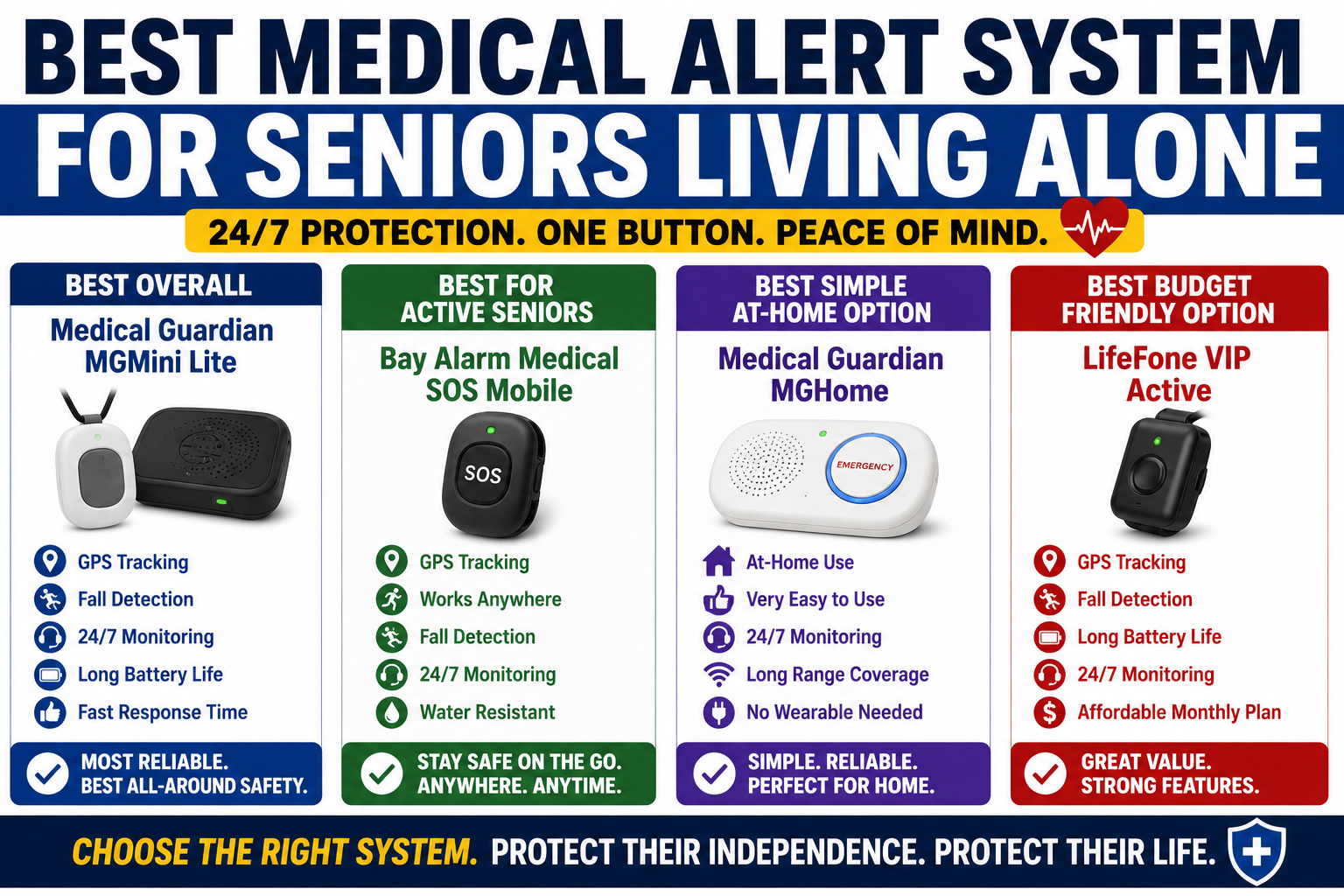
Our guide on best medical alert system for seniors living alone covers the complete safety picture for solo-living seniors specifically — because for this group closing the clock gap is the most important single safety measure available.
Are Neighbors Aware and Watching?
A neighbor who is specifically aware of an older adult living alone — who has been explicitly asked to call family if something seems off — provides a local monitoring layer that meaningfully reduces the clock duration even when technology isn’t in place. The neighbor who notices the newspaper hasn’t been picked up and calls the family has potentially reduced a long lie from days to hours.
This requires an explicit conversation — not a vague assumption that neighbors would notice. “I want you to have my number and to call me if you ever notice anything that seems off” is a specific, actionable ask that most neighbors are happy to agree to.
The Rooms Where the Clock Is Most Dangerous
The clock is dangerous everywhere — but certain locations significantly extend its likely duration.
The Bathroom
The bathroom is simultaneously the highest-risk room for falls and the room where a fall is most effectively concealed from anyone who might respond. A closed bathroom door is soundproof to normal movement on a tile floor. A base unit medical alert system in the living room doesn’t penetrate that door. A phone left on the bathroom counter is typically out of reach from the floor.
A fall in the bathroom during a nighttime trip at 3am — in a home where the next check-in is a morning phone call — means potentially six or more hours on a cold tile floor before anyone knows.
A wrist-worn fall detection device goes into the bathroom because it’s on the wrist. That’s the specific feature that makes the difference here — location independence from a base unit that stays in another room.
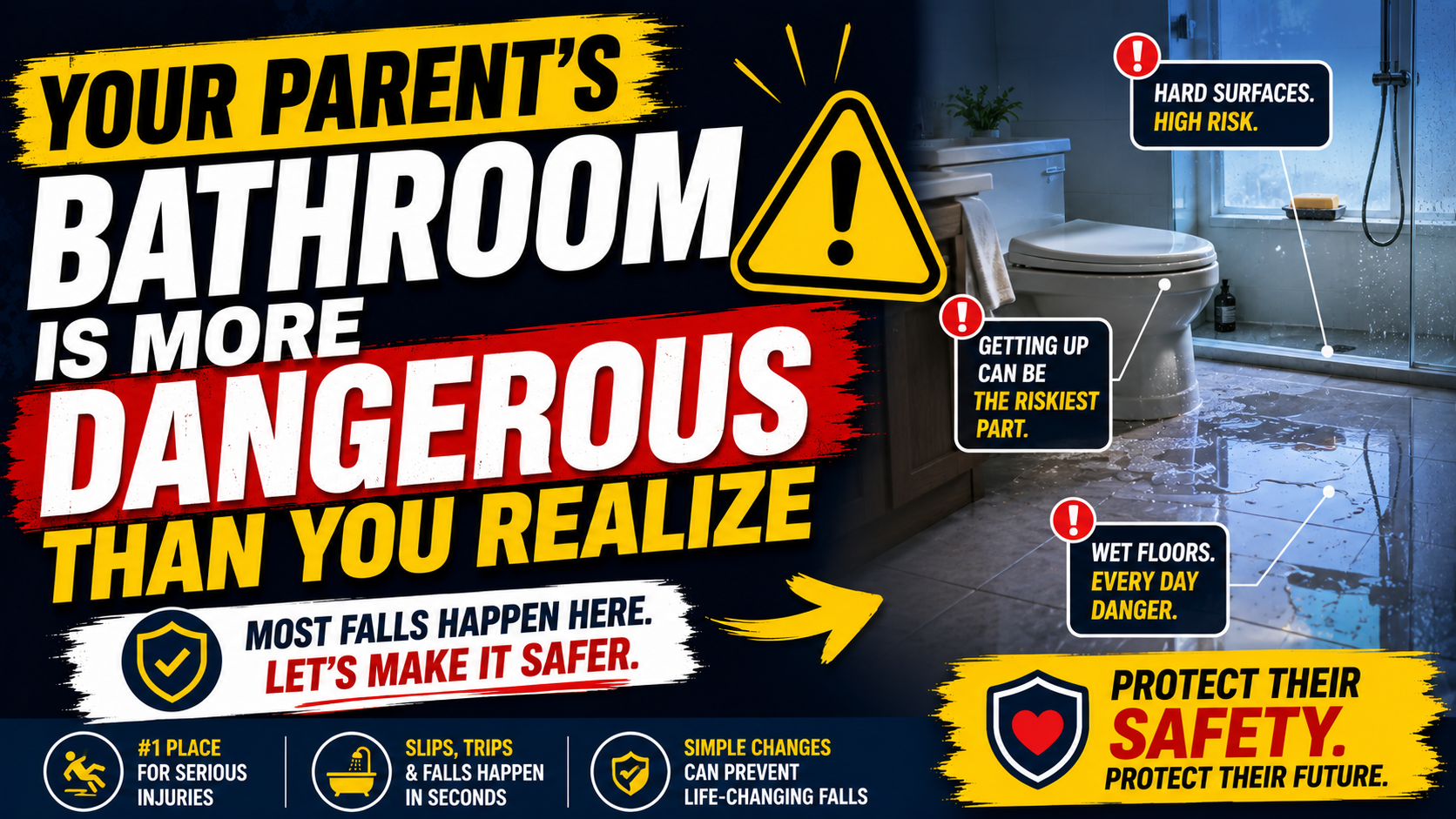
Our guide on your parent’s bathroom is more dangerous than you realize covers the complete bathroom fall risk picture. Our guide on safe shower setup for elderly adults covers every modification that reduces bathroom fall probability.
During Nighttime Hours
A fall that occurs at 2 or 3am — during a nighttime bathroom trip, getting out of bed — has the longest clock of any time of day. If family does a morning check-in call at 9am, the clock runs for six to seven hours before any human monitoring occurs.
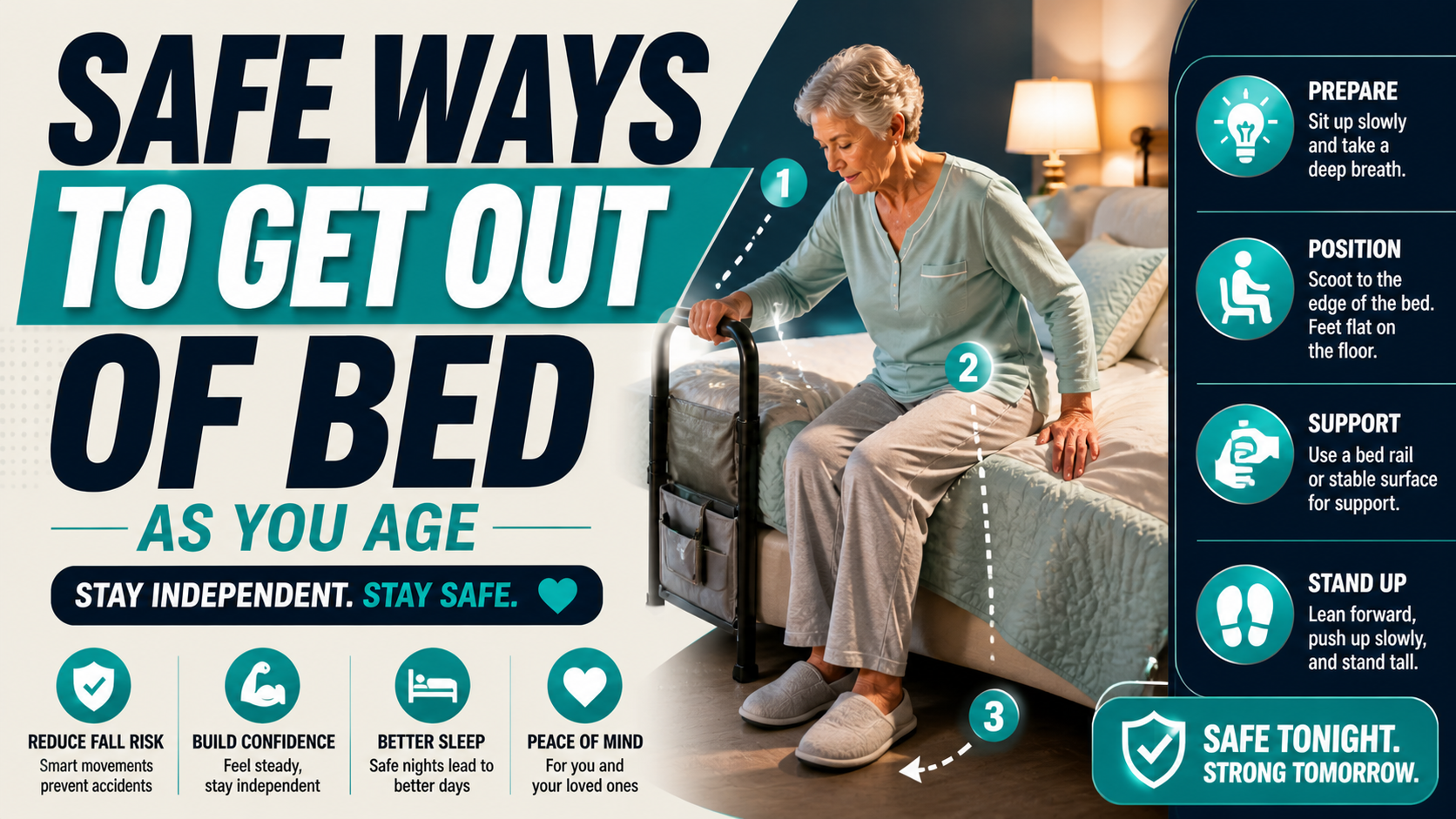
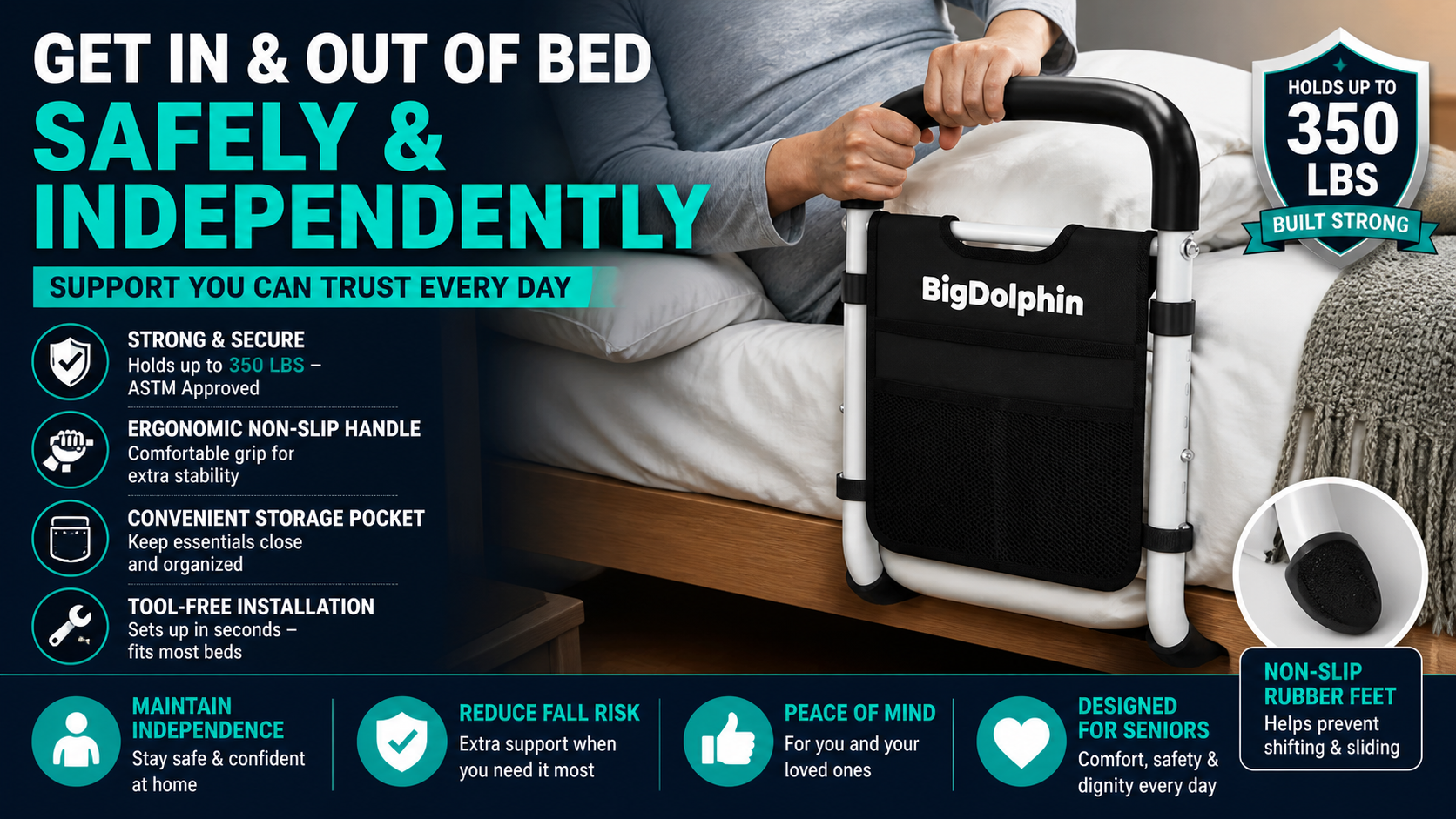
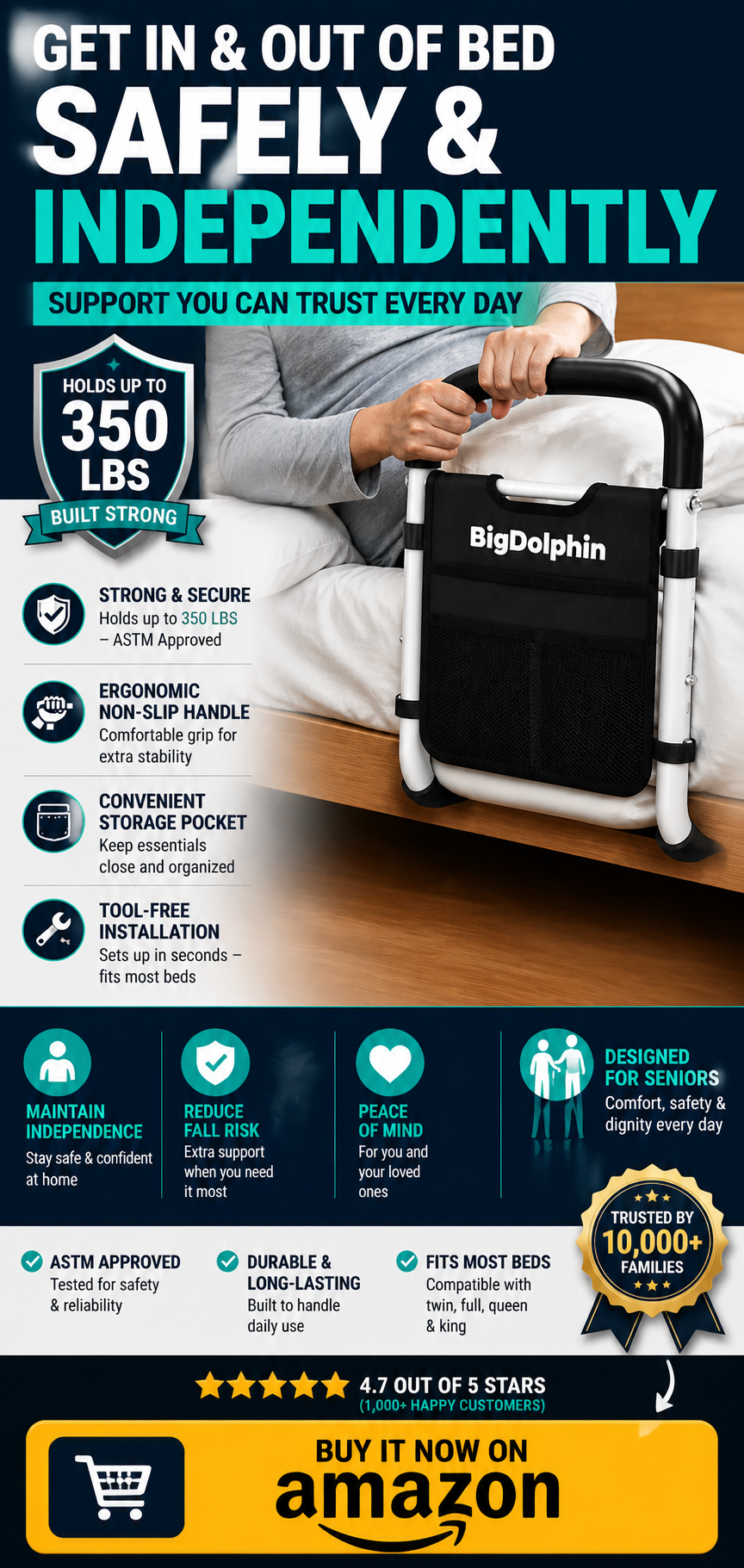
Nighttime fall prevention — bed rail, night lights on the complete path from bed to bathroom, correct getting-up technique — directly reduces the probability of this specific high-consequence scenario. Our guide on senior bedroom safety tips for nighttime falls covers every modification. Our guide on safe ways to get out of bed as you age covers the technique that reduces the most common nighttime fall moment.
→ Get the Auto-On Night Lights on Amazon
When Outdoors and Away From Home
A fall that occurs during a morning walk — a block from home, on a quiet street — can go unnoticed for as long as it takes for someone to walk past. In a quiet neighborhood on a weekday morning that could be minutes or hours depending on pedestrian traffic.
GPS location sharing is the specific feature that addresses outdoor falls — not just alerting that something happened, but showing exactly where. Emergency responders who know the GPS location don’t need to search. They arrive at the specific location within minutes of the alert.
The Two Actions That Control the Clock
Everything in this guide comes down to two actions that control how long the clock runs when a fall occurs.
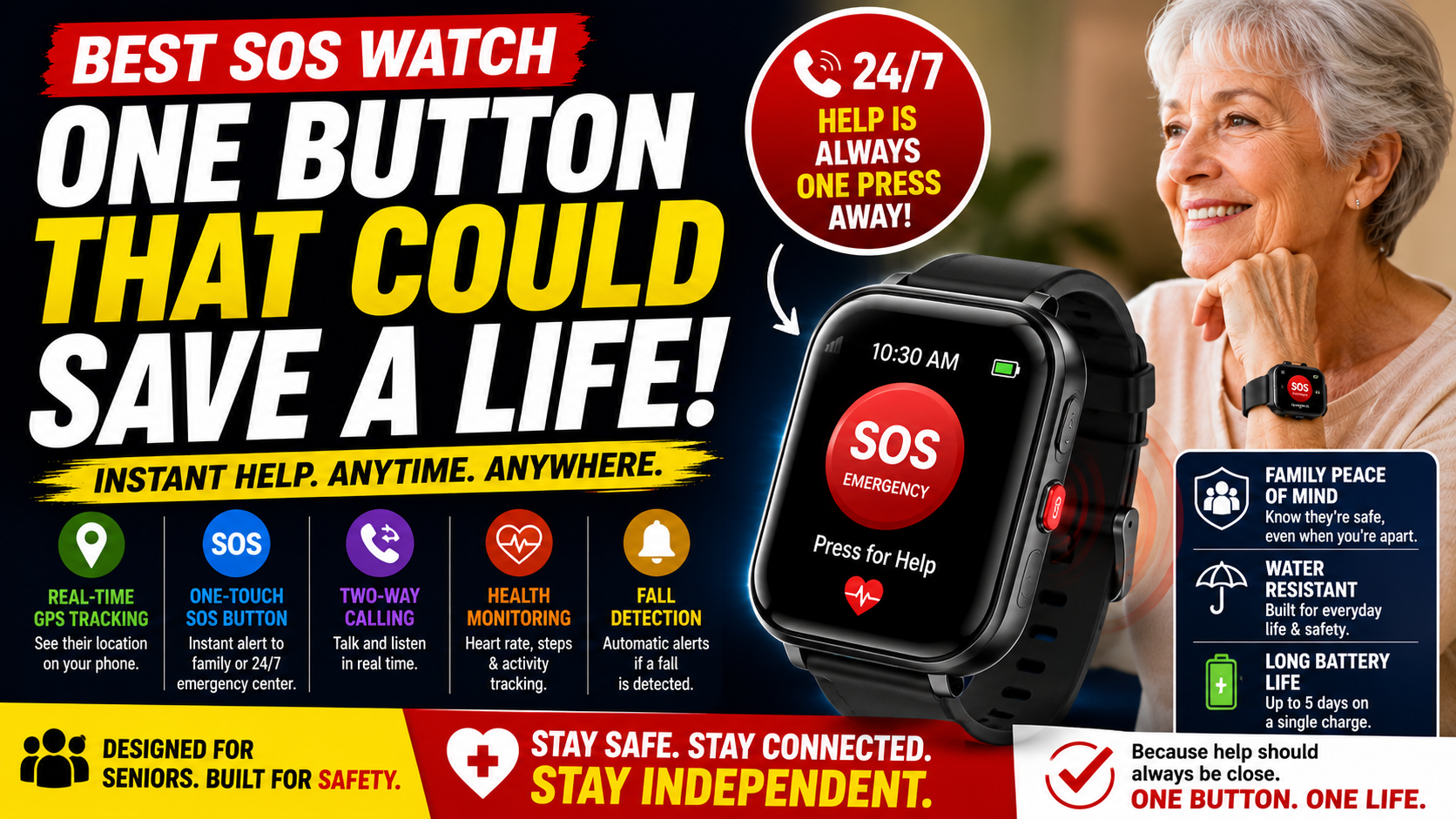
Action 1 — Automatic fall detection in place. A wearable device that detects falls automatically and alerts family immediately with GPS location. This is the action that reduces the clock from hours to seconds regardless of when the fall happens, where it happens, or whether the person who fell can do anything to help themselves. Our guide on best SOS watch for seniors and our guide on best medical alert watch for seniors cover the complete options.
Action 2 — Structured daily check-in. A specific, reliable daily contact that caps the maximum clock duration at 24 hours in the absence of automatic detection. Not a vague intention to call. A specific time, specific format, specific escalation plan.
These two actions together — automatic detection as the primary system, structured check-in as the backup — create a safety system where the clock never runs long enough for the 60-minute timeline to become a cascade.
Everything else in fall prevention — the grab bars, the bath mat, the night lights, the medication review — reduces the probability that the clock starts at all. These two actions control what happens when it does.
Both matter. Neither replaces the other. And the time to put both in place is before the fall — not after it.
→ Get the SecuLife Smartwatch on Amazon — automatic fall detection that stops the clock
About the Author
Tom Garrett spent eight years as an EMT and the most consistent variable in fall call outcomes was time — how long the person had been on the floor before the call came in. He could usually tell within the first minutes of arriving on scene approximately how long the person had been there — and the difference in condition between someone on the floor for 20 minutes and someone on the floor for six hours was as significant as the difference between a minor fall and a major one. He writes for Elder Safety Guide because controlling the clock is controllable — and most families don’t know that until it’s too late to matter for the current crisis.