Nighttime falls are among the most serious and most preventable falls seniors experience. Here’s what to change in the bedroom to make every night safer starting tonight.
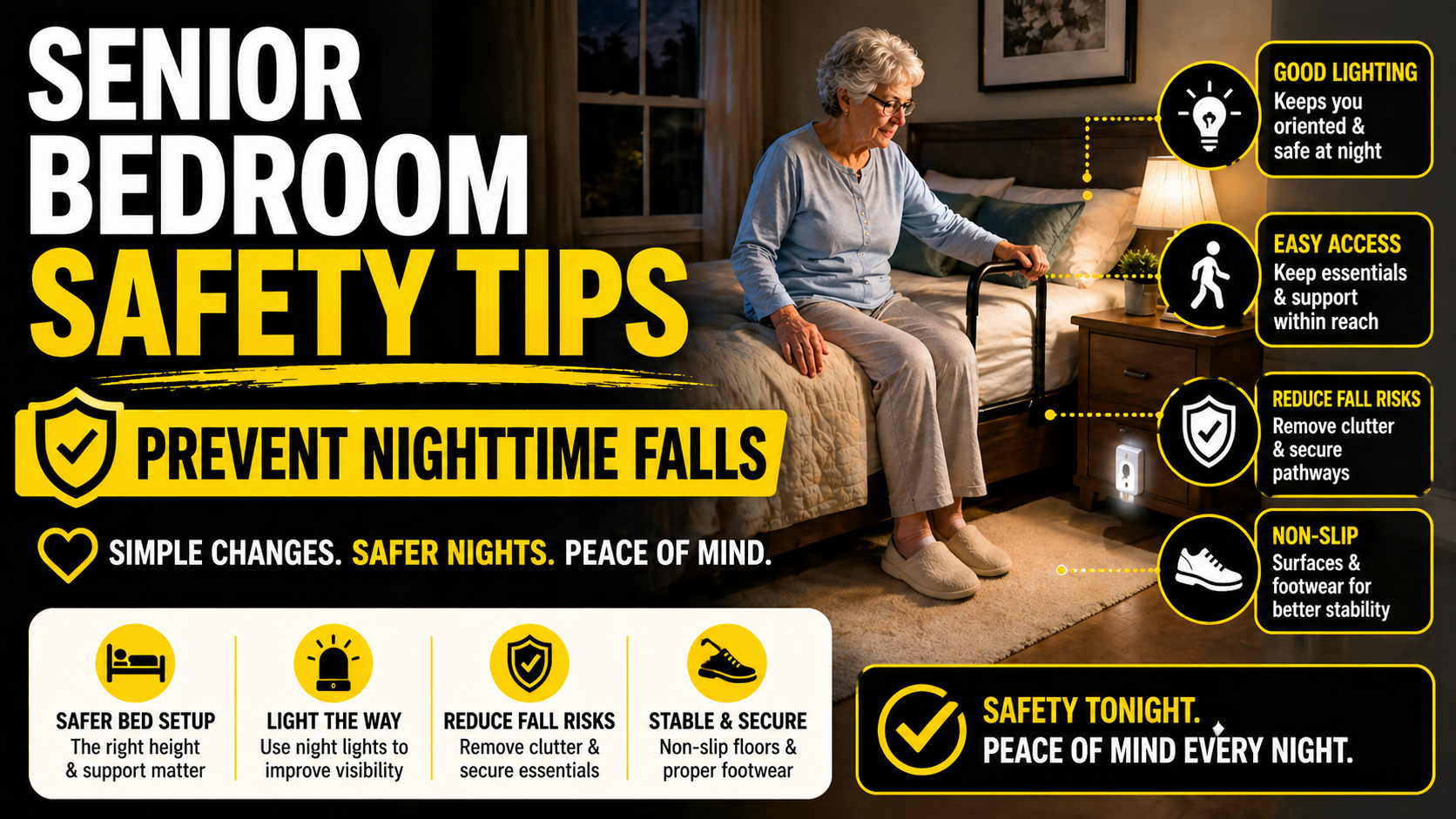
The bedroom should be the safest room in the house. It’s familiar. It’s where you rest. It’s where you start and end every day. But for older adults, the bedroom and the nighttime bathroom trip that follows are statistically among the most dangerous parts of the day.
Nighttime falls are different from daytime falls in one critical way: the conditions that cause them are almost entirely predictable. Darkness. A body that hasn’t fully switched from sleep to waking. Lower blood pressure. Reduced reaction time. Urgency to reach the bathroom. These factors combine the same way every single night — and that means they can be systematically addressed before anything goes wrong.
This guide walks through every meaningful bedroom safety change worth making — what the risk is, why it matters, and exactly what to do about it. Most of these changes take minutes to implement and cost very little. All of them make a real difference.
Why Nighttime Falls Are So Common — and So Serious
Understanding what actually causes nighttime falls makes the solutions more obvious and more motivating to put in place.
The Body Isn’t Fully Awake
When you wake during the night your body hasn’t fully transitioned from sleep physiology to waking physiology. Muscle tone is reduced. The vestibular system — the balance system in the inner ear — takes time to recalibrate after lying horizontal. Reaction time is slower. The automatic postural adjustments that keep you upright during a stumble during the day are slower and less reliable at 2am.
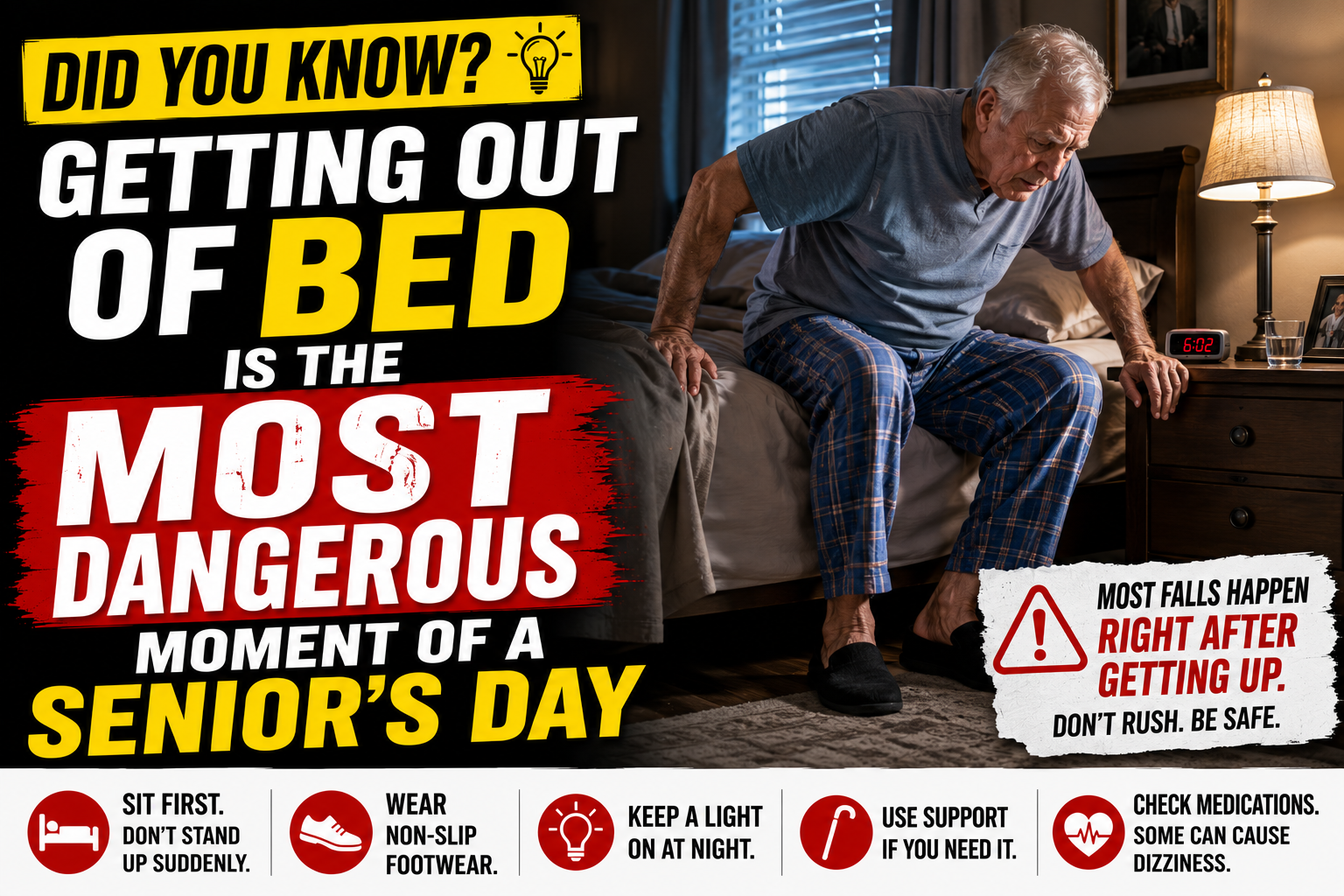
The first 30 to 60 seconds after waking are the highest-risk window. Moving too quickly through that window — especially when urgency pushes toward rushing — is when most nighttime falls happen.
Orthostatic Hypotension

Orthostatic hypotension is a sudden drop in blood pressure that occurs when moving from lying down to standing. It causes dizziness, lightheadedness, and in some cases a brief loss of orientation — exactly the conditions that lead to a fall in the moments immediately after standing up from bed. Because medications can contribute to this problem, The #1 Reason Seniors Fall at Home — And It’s Not What You Think explains the broader medication-related causes of senior falls.
It’s more common and more pronounced with age, and many medications commonly taken by older adults — blood pressure medications, diuretics, antidepressants — make it worse. The fix is simple: sit on the edge of the bed for 30 to 60 seconds before standing. But having something solid to hold during that pause makes the pause much easier to actually take.
Darkness Removes Visual Reference Points

Balance relies on three systems working together: the vestibular system, proprioception, and vision. At night with the lights out, vision — one of the three — is essentially removed from the equation. For anyone whose other two systems are already working harder to compensate for age-related changes, losing the visual input makes balance significantly more challenging. Tips for Helping Seniors With Balance Problems explains how these three systems interact and why age-related changes matter.
Even a small amount of ambient light dramatically improves the balance equation during nighttime movement. This is why nighttime lighting is one of the highest-impact bedroom safety changes available.
The Path to the Bathroom Is Full of Hazards

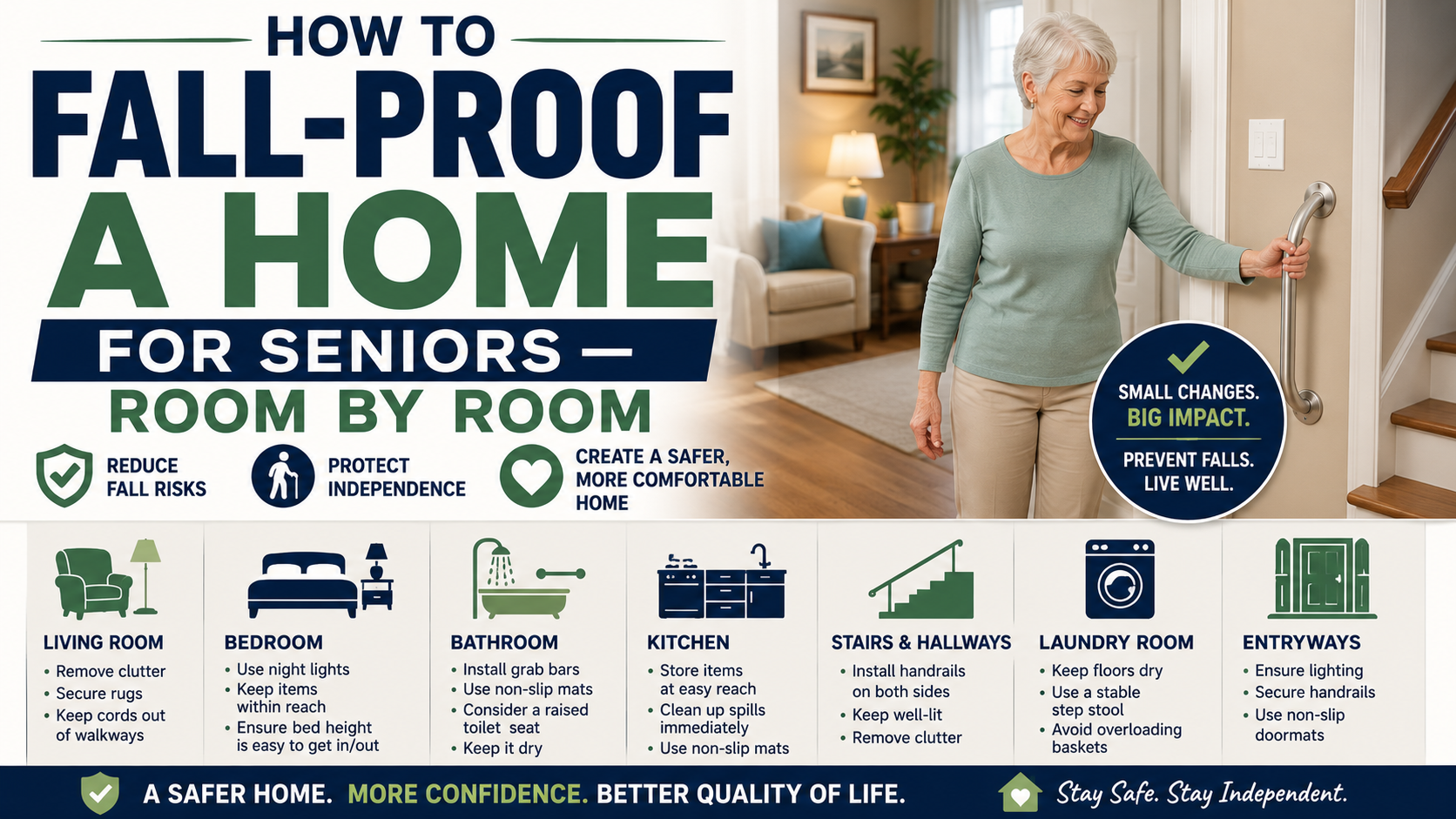
The route from your bed to the bathroom is a path you’ve walked thousands of times — but almost always in the light, fully awake, without urgency. At night the same path has furniture corners to navigate around, thresholds between rooms, floor items that may have been left out, and a bathroom floor that may be cold and smooth. The Home Safety Checklist for Seniors — Room by Room Guide can help you inspect this nighttime route along with the other high-risk areas of the home.
Every one of those hazards is manageable in the light. In the dark, half-asleep, they’re invisible obstacles on a route that feels familiar but isn’t quite navigated the same way under these conditions.
The Most Important Change — Getting Out of Bed Safely
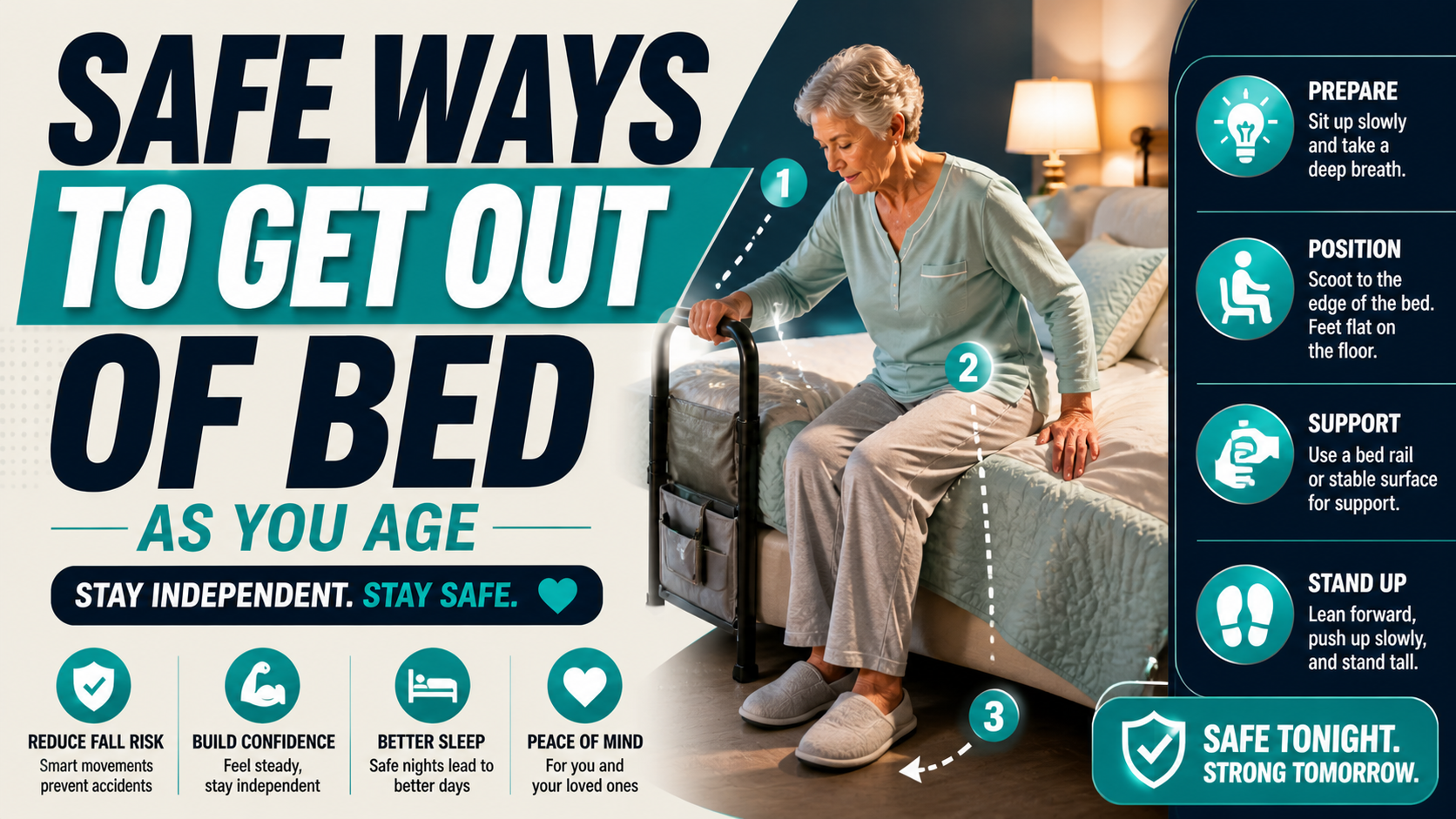
The getting-out-of-bed transition is where most bedroom falls start. It’s a specific sequence of movements that can be made dramatically safer with two changes: a bed rail and a deliberate pause before standing. The step-by-step technique in Safe Ways to Get Out of Bed as You Age shows how to make that pause and transition more controlled.
Use a Bed Rail
A bed rail positioned at the side of the bed where you get up gives you a firm, non-compressing surface to push against during the sit-to-stand transition. Mattresses compress and shift under body weight — there’s nothing solid to push up from. A bed rail changes that entirely.
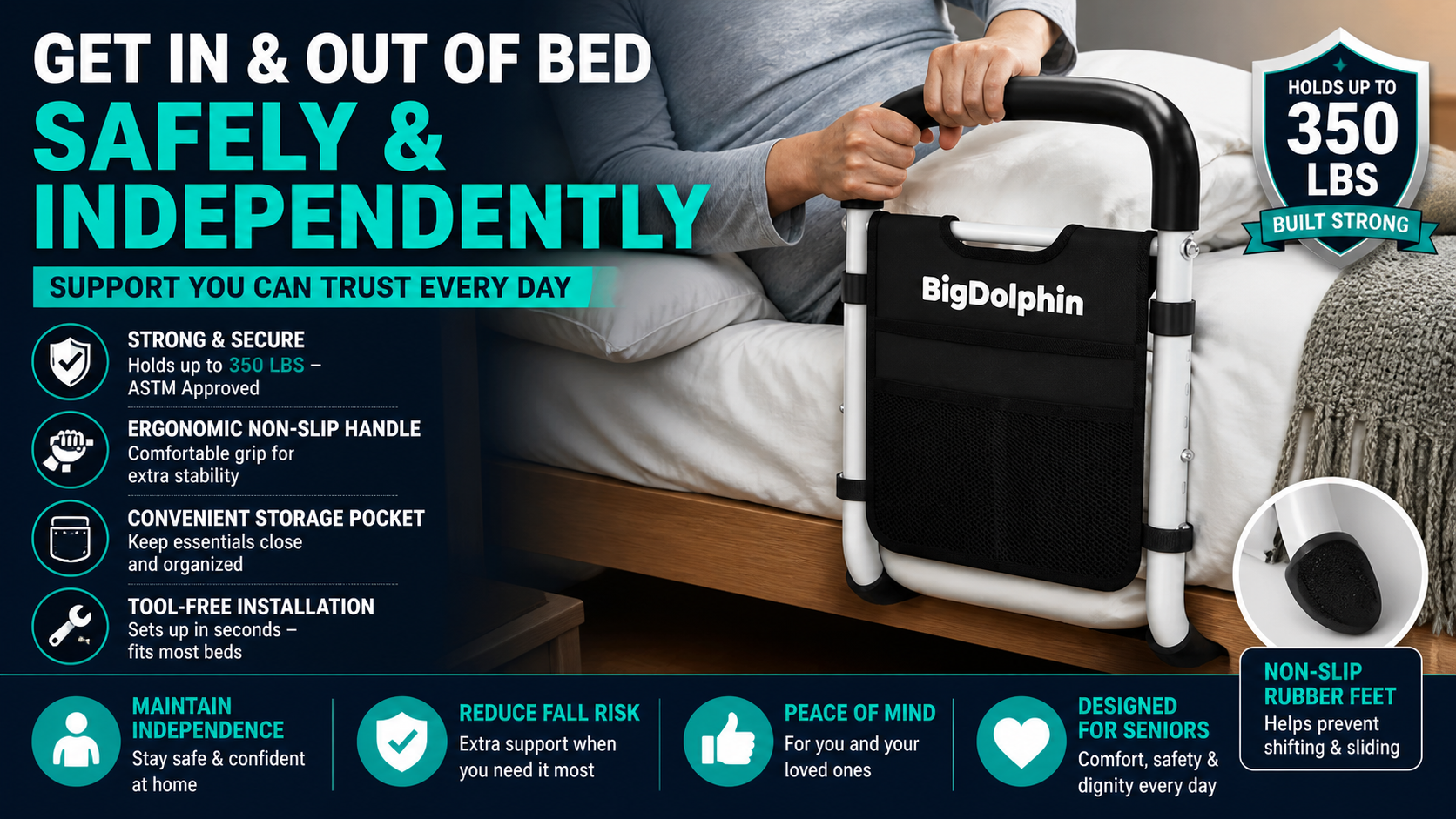
The ASTM approved bed rail we recommend has an ergonomic non-slip handle, adjusts to the right height for your specific bed, and installs without tools in minutes. The storage pocket keeps your phone and other nighttime essentials within reach — reducing the reaching and getting up movements that create additional risk throughout the night.

→ See the ASTM Approved Bed Rail on Amazon
Pause at the Edge Before Standing
This is the single most effective behavioral change for preventing nighttime falls — and it costs nothing. Before standing from the edge of the bed, sit for 30 to 60 seconds. Let blood pressure normalize. Let the vestibular system recalibrate. Let awareness come fully online before committing full body weight to a standing position.
A bed rail makes this pause easier because you have something to hold while sitting on the edge. Without support, sitting on the edge of a mattress is itself somewhat unstable — which discourages the pause. With a rail to hold, the pause becomes comfortable and natural.

Light the Path — Automatically
The single highest-impact environmental change for nighttime safety is lighting the path from the bed to the bathroom so it’s illuminated the moment your feet hit the floor — without requiring any action from you.
Having to find a light switch before you can see where you’re going adds dangerous steps to an already high-risk transition. The light needs to be on before you move, not after.
Plug-In Auto-On Emergency Lights
The most reliable solution is plug-in rechargeable units that function as gentle night lights during normal operation and activate automatically at full brightness during a power outage. Three units — one in the bedroom near the bed, one in the hallway, one in the bathroom — cover the entire path continuously.
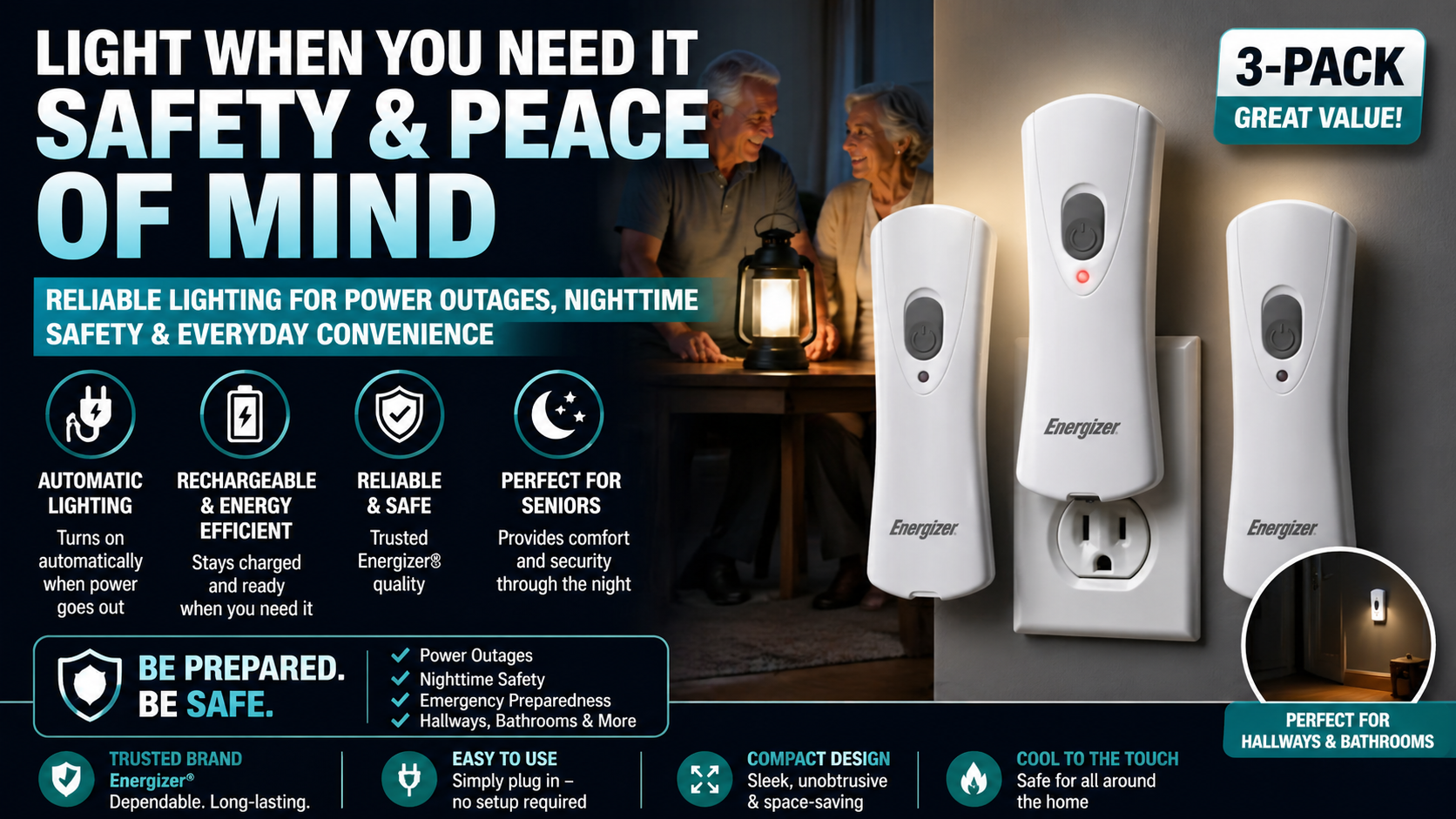
The Energizer Auto-On rechargeable flashlights do exactly this. They stay plugged in and charged at all times, provide ambient night light every night, and switch to full emergency illumination automatically during a power outage. Three units in one pack covers all three critical locations.
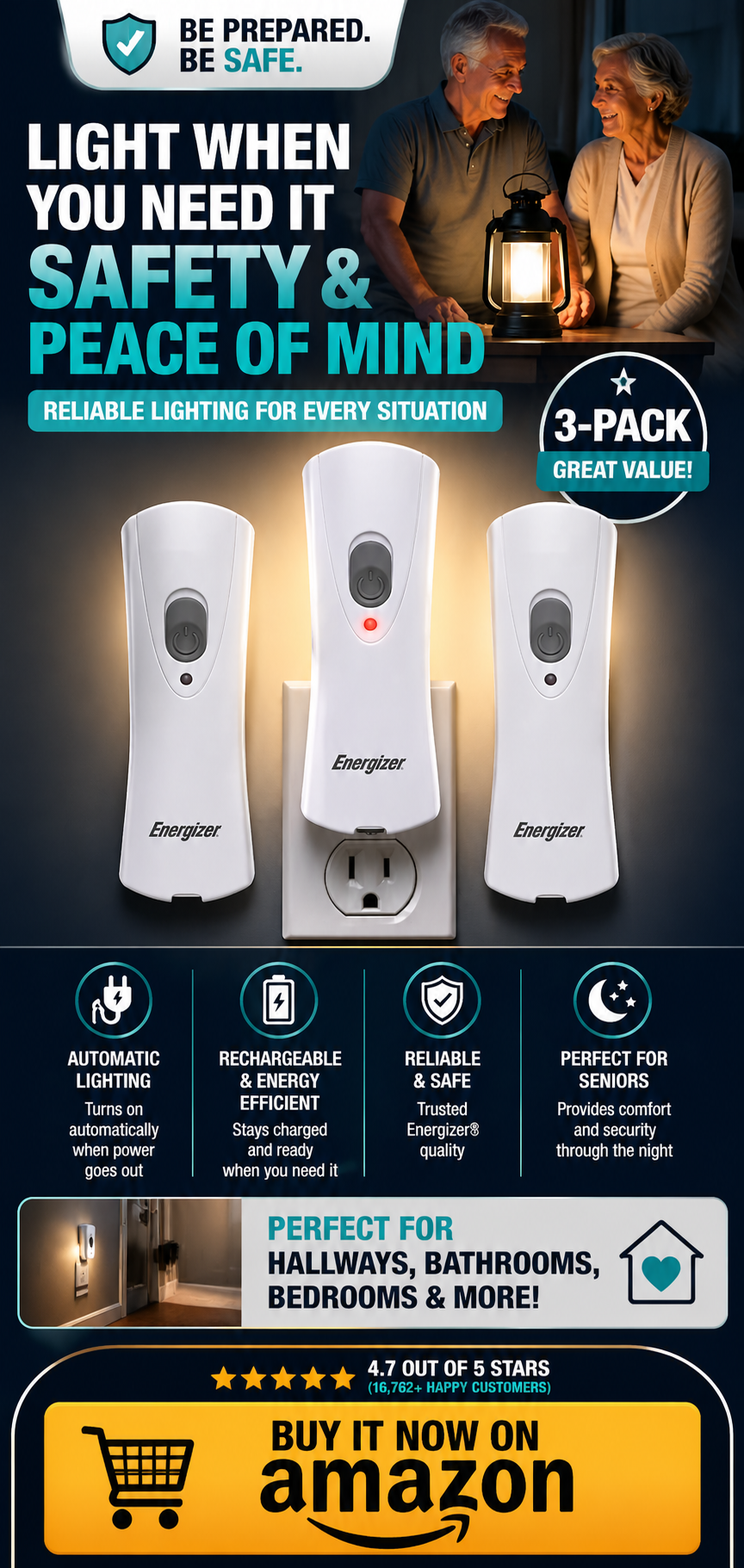
→ Get the Energizer Auto-On 3-Pack on Amazon
Motion-Activated Options
Motion-activated night lights are another solid option — they activate when movement is detected rather than staying on continuously. For seniors who prefer not to sleep with any ambient light, motion-activated units in the hallway and bathroom provide illumination precisely when and where it’s needed without light during sleep.
The tradeoff is that the bedroom unit needs to be positioned where it activates when you sit up or swing your legs over the edge — before you’re standing and moving, not after. Test the placement before relying on it.
Assess and Optimize Your Bed Height
Bed height affects the difficulty of getting in and out every single day — and it’s something most people never think to adjust even when it’s clearly wrong for their body.
The ideal bed height allows you to sit on the edge with feet flat on the floor and knees at approximately a 90-degree angle. From this position the sit-to-stand transition requires the least amount of leg strength and puts the body in the most mechanically advantageous position for rising.
A bed that’s too low forces a deep squat to rise from — demanding significantly more leg strength and putting more stress on knees and hips. A bed that’s too high creates a long drop when sitting down and difficulty getting feet to the floor when sitting on the edge.
Adjusting bed height is simpler than most people expect. Bed risers add height to a low bed in minutes with no tools. Switching to a lower-profile mattress or removing a box spring reduces height. Getting the height right is a one-time adjustment with permanent daily benefit.
Clear the Floor Between Bed and Bathroom
The path from your bed to the bathroom door should have nothing on it. Not a rug that shifts. Not a piece of furniture to navigate around. Not items left on the floor. Nothing.
This path gets walked in the dark, half-asleep, sometimes urgently, multiple times per week. Every item on that path is a hazard that’s invisible under those conditions.
Remove Unsecured Rugs
Unsecured rugs are one of the most common fall hazards in the bedroom and one of the easiest to eliminate. A rug edge that curls, a corner that lifts, or a mat that shifts when stepped on at the wrong angle can cause a fall as serious as any other household hazard. The options are simple: remove the rug, secure it completely with non-slip backing and double-sided tape on all edges, or replace it with one that has reliable non-slip construction.
When in doubt remove it. No decorative item is worth a fall.
Reroute Cords and Cables
Phone chargers, lamp cords, and any other cables that cross the bedroom floor between the bed and bathroom door are tripping hazards. Route them along walls and secure with cord clips. A cord that’s been on the floor for months without incident is still a cord that can catch a foot during a nighttime bathroom trip.
Relocate Furniture if Needed
If any furniture creates a navigation challenge between the bed and bathroom door — a corner to avoid, a narrowed pathway, an obstacle at shin height — rearrange it. The bedroom layout should make the path to the bathroom as simple and direct as possible. Furniture arrangement that made sense when navigating fully awake in the light may create real risk during a nighttime trip.
Keep Essentials Within Reach of the Bed
One of the most overlooked bedroom safety factors is what requires getting up unnecessarily. Every unnecessary trip out of bed during the night is an additional fall risk. Keeping essentials within reach from the bed reduces those trips significantly.
What belongs within arm’s reach of the bed:
- Phone — charged and accessible without getting up
- Glasses — if needed to see clearly for nighttime navigation
- Water — reduces middle-of-the-night kitchen trips
- Any medication taken during the night
- A light source — phone, small flashlight, or the bed rail storage pocket
The storage pocket on the ASTM approved bed rail is specifically designed for this — keeping phone, glasses, and other essentials within reach from lying down, eliminating the reaching and getting up that creates additional risk throughout the night.


Address Medication Timing With Your Doctor
If you take medications that cause dizziness, lightheadedness, or frequent nighttime bathroom trips — and many commonly prescribed medications do — it’s worth a specific conversation with your doctor about timing.
Diuretics taken in the evening create more nighttime bathroom trips. Blood pressure medications that cause orthostatic hypotension are more dangerous when taken at times that coincide with nighttime rising. Sleep medications that cause morning grogginess extend the window of reduced alertness after waking.
In many cases a simple timing adjustment — not a medication change — significantly reduces the nighttime fall risk associated with these medications. Ask specifically about fall risk during your next appointment. It’s a conversation most doctors welcome and one that often produces immediate practical changes.
The Safety Net — What Happens If You Fall Anyway
Every change in this guide reduces the likelihood of a nighttime fall. None of them eliminate the possibility entirely. The question worth answering before it becomes urgent is: if a fall happens in the middle of the night, what happens next?
For people living alone this question is particularly important. A fall at 2am with no one else in the house and a phone that’s across the room is a scenario where automatic fall detection makes a real difference.

The SecuLife Smartwatch detects falls automatically and alerts designated contacts without requiring any action from the wearer. It’s worn on the wrist — which means it’s there during the nighttime bathroom trip, during the getting-out-of-bed transition, and at every other moment throughout the night when a fall is possible. No base unit to be out of range of. No button to find and press. Automatic detection and automatic alert.

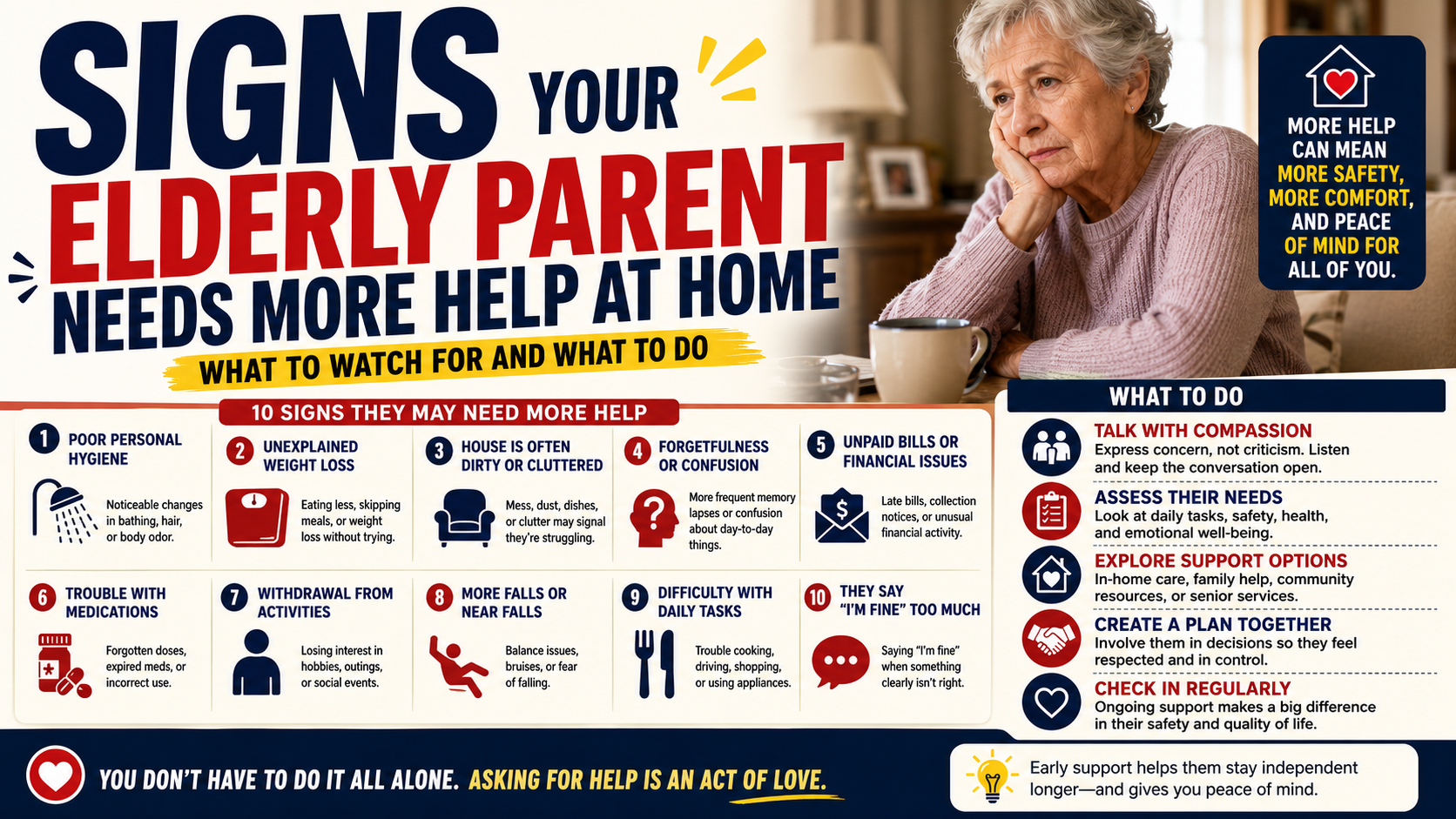
For a full picture of how the SecuLife works and whether it’s right for your situation, our complete SecuLife Smartwatch review covers features, pricing, and real user feedback in detail. And if you’re still working through whether a medical alert device makes sense, our guide on signs it’s time for a medical alert system walks through exactly what to consider.

The Bathroom End of the Nighttime Path
The bedroom safety changes in this guide address the starting point of the nighttime bathroom trip. The bathroom itself needs its own attention — because arriving safely at the bathroom door is only half the journey.

Grab bars at the toilet and shower, a non-slip bath mat that stays in place, and proper lighting inside the bathroom address the risks at the destination. Our complete guide on how to make a bathroom safer for seniors covers every upgrade worth making. For the specific products that make the biggest difference, our reviews of the best grab bars for seniors and the best non-slip bath mat for seniors cover exactly what to buy and why.
Bedroom Safety Checklist for Nighttime Falls
Use this as your action list. Work through it in order — the items at the top have the highest impact.
- Bed rail installed on the exit side of the bed
- Bed height assessed and adjusted if needed
- Night light in bedroom near the bed
- Night light in hallway between bedroom and bathroom
- Night light in bathroom
- Path from bed to bathroom completely clear
- All rugs secured or removed from the path
- All cords off the bedroom floor
- Furniture rearranged if needed for clear direct path
- Phone and essentials within reach from bed
- Medication timing reviewed with doctor
- Medical alert device with fall detection in use

Frequently Asked Questions
What time of night do most senior falls happen?
Research consistently shows two peak windows — the first nighttime bathroom trip (typically 1am to 3am) and early morning rising (5am to 7am). Both involve the combination of reduced alertness, lower blood pressure, and darkness that makes falls more likely. These are the windows where every safety measure in this guide has the most impact.
Is it safe to sleep with a night light on?
For most older adults a gentle night light does not meaningfully disrupt sleep quality and provides significant safety benefit. The ambient light level from a plug-in night light is low enough that it doesn’t suppress melatonin the way blue-spectrum overhead lighting does. If light sensitivity during sleep is a concern, a motion-activated unit that only illuminates when movement is detected is an effective alternative.
Should the bed be against the wall for safety?
Positioning the bed against the wall on one side means you only exit from one side — which can actually be safer because it limits the exits to the one side where the bed rail and lighting are set up. The tradeoff is that making the bed and accessing both sides is slightly harder. For seniors living alone who consistently exit from the same side, one-wall positioning combined with a rail on the exit side is a reasonable configuration.
How do I stop needing to get up so many times during the night?
Frequent nighttime bathroom trips — nocturia — are common in older adults and have several potential causes including fluid timing, medications, bladder changes, and underlying conditions. Reducing fluid intake in the two hours before bed helps for many people. If nocturia is significantly disrupting sleep and creating fall risk it’s worth discussing specifically with a doctor — there are both behavioral and medical approaches that can reduce trip frequency meaningfully.
What if I fall and can’t reach my phone?
This is exactly why a wrist-worn medical alert device with automatic fall detection is so valuable for anyone living alone. If a fall happens and the phone is out of reach, a device on the wrist that detects the fall and alerts contacts automatically removes the dependency on reaching anything. Keeping the phone charged and within reach of the bed reduces the risk of this scenario, but a fall detection device eliminates it entirely.
Start Tonight
Most of the changes in this guide can be started tonight. The path from the bed to the bathroom can be cleared right now. The phone can be moved to the nightstand. The plan to order a bed rail and plug-in lights can be made before going to sleep.
Nighttime falls are predictable because the conditions that cause them are predictable. That predictability is an advantage — it means the risk can be systematically reduced before anything goes wrong rather than responded to after the fact.
Start with the highest-impact changes — bed rail, lighting, clear path — and work through the rest of the checklist from there.
→ Get the ASTM Approved Bed Rail on Amazon
→ Get the Energizer Auto-On 3-Pack on Amazon
About the Author
Margaret Holloway, RN spent 22 years working as a registered nurse in geriatric care, including more than a decade in a hospital-based falls prevention program in Cincinnati, Ohio. After retiring from clinical nursing, she began writing about senior safety to give people the kind of honest, practical guidance she wished more of her patients had access to before something went wrong. She writes for Elder Safety Guide with a focus on changes that make an immediate real-world difference — not just sound good on paper.