A single step shouldn’t keep you trapped at home. Our Gardhom 5-foot folding ramp review covers capacity, anti-slip safety, and how to pick the right ramp length for your steps.
A step at the front door shouldn’t determine whether someone can leave their own home. For wheelchair users, scooter riders, and anyone using a rollator walker, even a single step at the primary entry can become an insurmountable barrier — turning what should be a simple exit into a dependent, assisted, or impossible movement. For readers using a rollator beyond the entryway, the Best Rollator Walker for Seniors reviews features that support safer mobility across varied terrain.
A portable wheelchair ramp solves this problem immediately and affordably. No construction. No permits. No contractors. The ramp arrives, you position it at the steps, and the barrier is gone. For families managing a sudden change in mobility — a fall, a surgery, a new diagnosis — a portable ramp can be operational within hours of ordering.
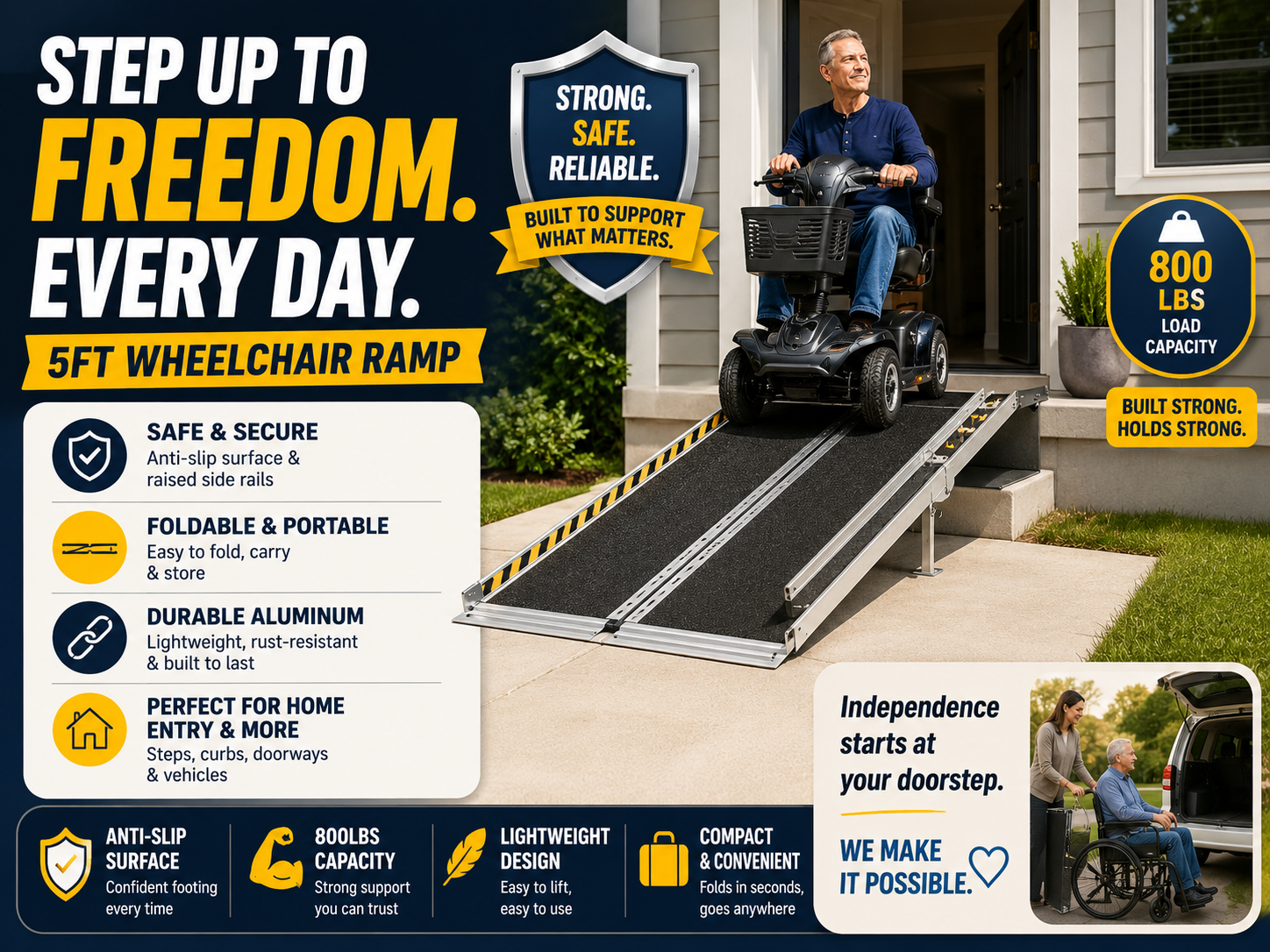
This review covers the Gardhom 5-Foot Portable Wheelchair Ramp — 800 lb capacity, anti-slip aluminum, folding design for home steps, thresholds, doorways, curbs, and scooters — and everything you need to know before buying.
→ See the Gardhom 5-Foot Wheelchair Ramp on Amazon
Who Needs a Portable Wheelchair Ramp
The most obvious use case is wheelchair and power scooter access — but portable ramps serve a broader range of mobility situations than most people initially consider.
- Wheelchair users — primary access solution for entry steps and thresholds
- Power scooter users — mobility scooters can’t navigate steps without a ramp
- Rollator walker users — rolling walkers don’t lift safely over steps
- Anyone during post-surgical recovery — temporary mobility limitations after hip or knee surgery often make steps unmanageable
- Knee scooter users — can’t navigate steps while using a knee scooter
- Anyone with significant balance challenges — a ramp may be safer than a step even with a handrail present
The portable format is particularly valuable for temporary situations — recovery from surgery, a visiting family member with mobility needs, or a transitional period while a permanent ramp is being planned and installed. It ships fast, sets up in minutes, and starts working immediately.
Understanding Ramp Length and Rise
Ramp length and the height of the step being ramped are directly related. The longer the ramp relative to the rise height, the more gradual the slope — and the more manageable it is to navigate safely.
The Americans with Disabilities Act specifies a 1:12 slope ratio as the standard for accessible ramps — 1 inch of rise for every 12 inches of ramp length. A 5-foot (60-inch) ramp handles up to 5 inches of rise at the recommended 1:12 slope.
For single threshold steps and low entry steps in the 3 to 5 inch range, a 5-foot ramp provides an appropriate slope for most users. For taller steps — standard residential steps are typically 7 to 8 inches — a longer ramp is needed to maintain a manageable slope gradient. Measure your specific step or threshold rise before purchasing to confirm the ramp length is appropriate for your situation.
The 5-foot length is ideal for threshold ramps, doorway transitions, single low steps, and curb cuts where the rise is modest. It’s also the most portable length — shorter and lighter than 8-foot options, making it genuinely manageable for one person to carry and reposition.
The Gardhom 5-Foot Portable Wheelchair Ramp — Full Review
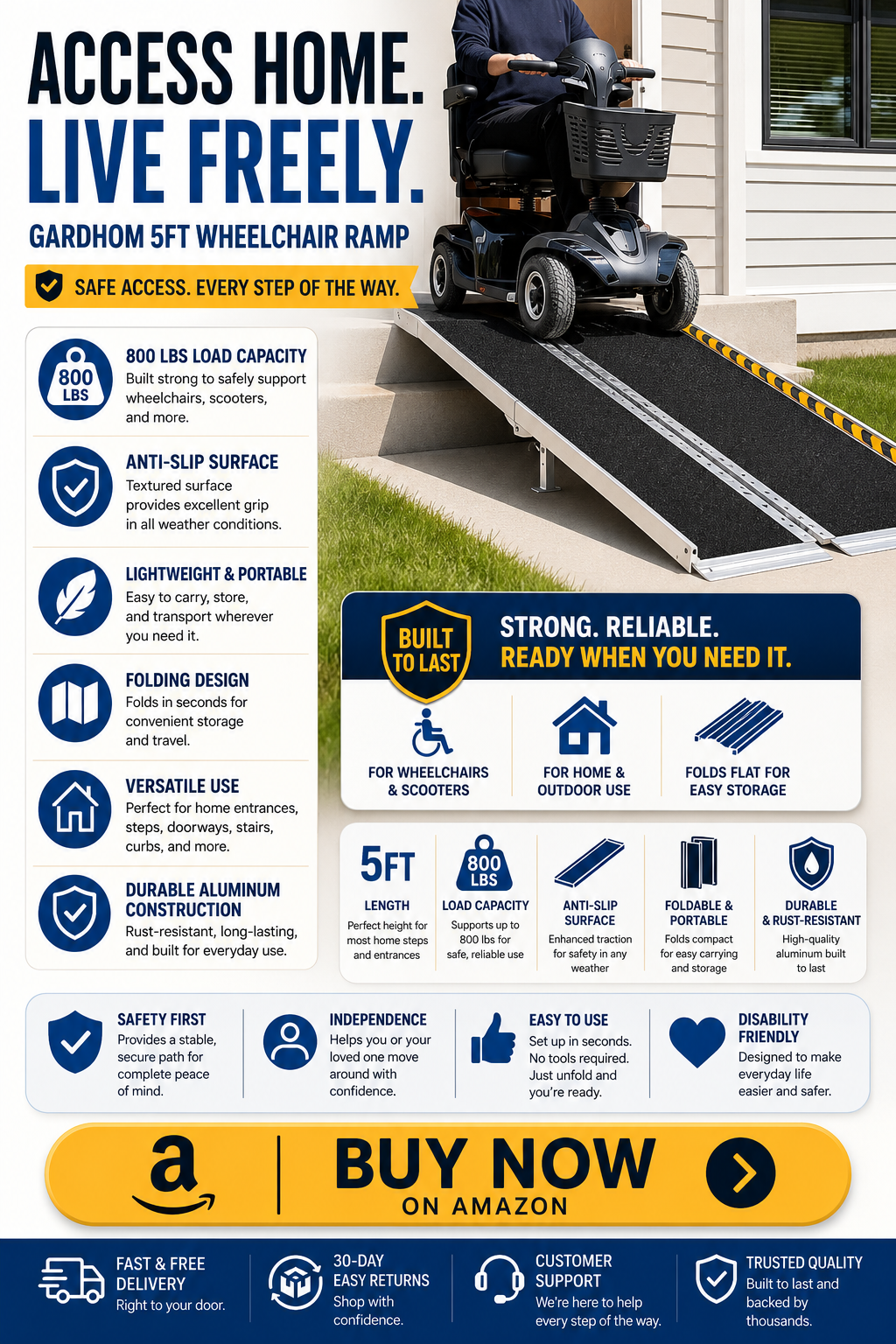
Gardhom 5FT Ramp for Wheelchair — 800 lb Capacity, Anti-Slip Aluminum, Portable Folding Handicap Ramp for Home Steps, Thresholds, Doorways, Stairs, Curbs, Scooter
The Gardhom addresses the core requirements for a practical portable ramp — solid weight capacity, anti-slip surface, and a folding design that makes it genuinely portable rather than just theoretically moveable. At 5 feet it fills the sweet spot for threshold and low-step applications where an 8-foot ramp would be more ramp than the situation requires.
→ Check current price and availability on Amazon
800 lb weight capacity is exceptional for a portable aluminum ramp — accommodating the combined weight of a power wheelchair and user, a mobility scooter, or any manual wheelchair user with substantial margin. This capacity reflects genuine structural engineering rather than optimistic marketing. For families choosing between ramps, weight capacity is a non-negotiable safety specification that should always exceed the actual load being applied.
The anti-slip aluminum surface is the safety feature that matters most in real-world conditions. A smooth aluminum ramp becomes genuinely slippery when wet — a serious hazard for wheelchair users, scooter riders, and anyone walking on the ramp surface in rain or damp conditions. The Gardhom’s anti-slip surface treatment maintains traction in wet weather, which is when ramp use is often unavoidable. For any ramp being used at a home entrance — where wet conditions from rain are a regular occurrence — anti-slip surface treatment is essential rather than optional.
The aluminum construction provides the right balance of strength and portability. Steel ramps are heavier — workable as permanent installations but impractical for regular repositioning or transport. Aluminum provides comparable structural strength at a fraction of the weight, making the Gardhom genuinely carriable by one person and practical for loading into a car trunk for transport to appointments or activities.
The folding design reduces the footprint significantly for storage — important for homes where the ramp needs to be stored inside when not in use, and for transport. A folded 5-foot aluminum ramp fits in most car trunks and closets without dominating the space. The fold reduces the length in half, making storage and carrying manageable.
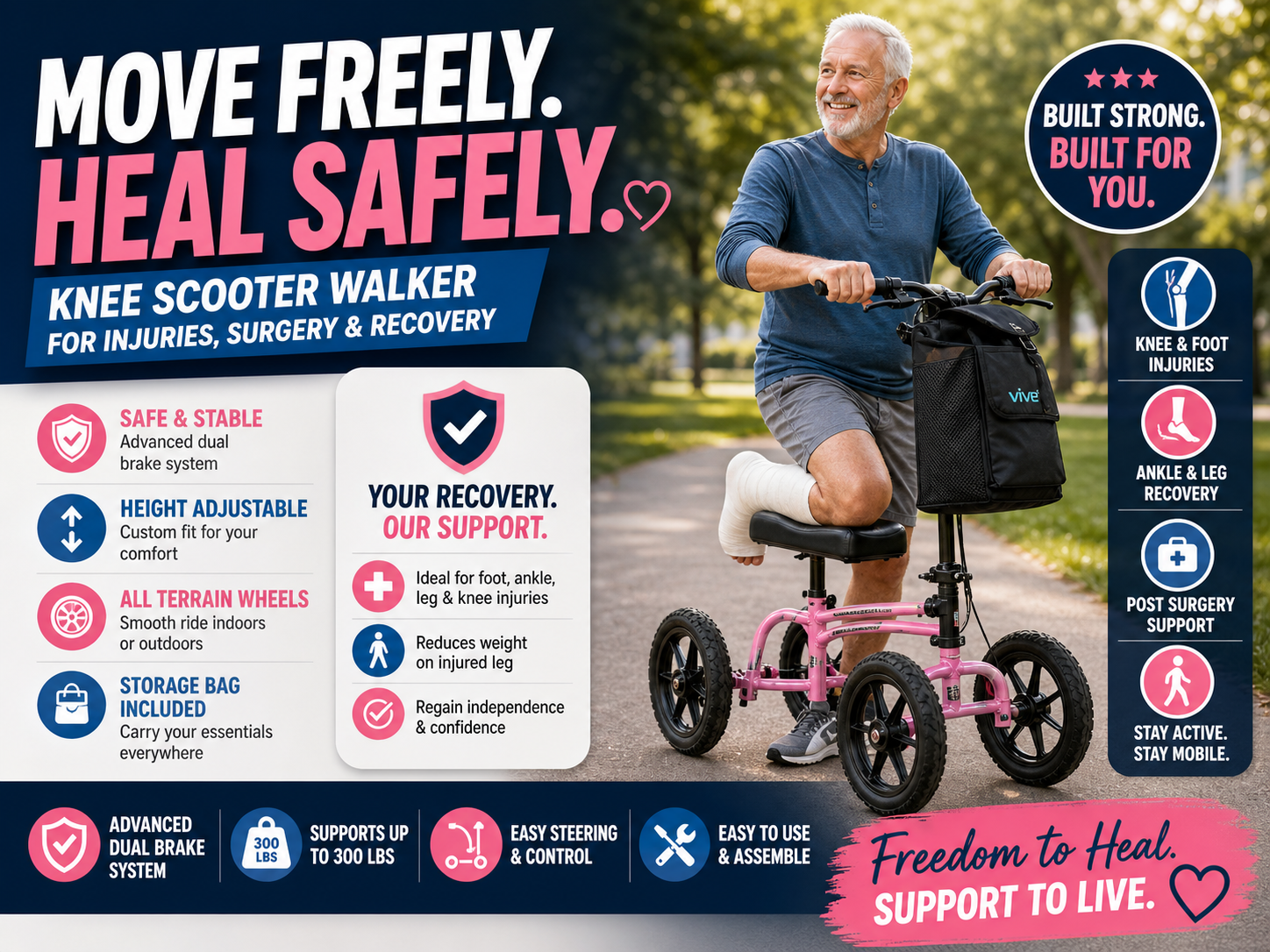
Versatile application is one of the practical strengths of this ramp. Home entrance steps, interior thresholds between rooms with different floor heights, doorway transitions, curb cuts at the sidewalk, and vehicle loading — the 5-foot length and portable format work across all of these scenarios. One ramp that works for multiple access points in and around the home is more practical than separate solutions for each location. Readers managing those access points during foot or ankle recovery may also want to compare all-terrain knee scooter options before choosing temporary mobility equipment.
→ Get the Gardhom Wheelchair Ramp on Amazon
Setting Up and Using the Ramp Safely
Positioning
Position the ramp so the bottom edge rests firmly on level ground and the top edge hooks or sits securely on the step or threshold. The ramp should not rock or shift when weight is applied. Before using with a wheelchair or scooter, press down firmly on the ramp surface at several points to confirm it’s stable and not shifting on either the ground surface or the step edge.
For doorway threshold applications — where the ramp bridges an interior height difference rather than an exterior step — confirm the ramp sits flush at both ends without any rocking before use.
Approach Straight-On
Always approach the ramp directly straight-on — not at an angle. Angled approaches create lateral forces that can cause a wheelchair or scooter to drift sideways rather than roll straight up the ramp. Orient the ramp so the path of travel is directly up or down its full length with no sideways component.
Control Speed on Descent
Descend ramps slowly and under control — particularly in power wheelchairs and scooters where momentum builds quickly on a slope. Maintain positive directional control throughout the descent. Manual wheelchair users should use braking on rear wheels during descent. Never allow a wheelchair to roll freely down a ramp without speed control.
Wet Conditions
The anti-slip surface provides meaningful traction improvement over untreated aluminum in wet conditions — but wet surfaces always warrant additional caution regardless of surface treatment. Take extra care with speed and directional control during rain and immediately after wet weather.
Ground Surface Matters
The bottom of the ramp needs a stable base. Firm pavement, concrete, and compacted surfaces provide reliable base support. Soft ground, gravel, and grass can allow the ramp base to shift under load. If the ground surface is soft, place a firm flat board under the ramp base to distribute the load and prevent sinking.


5-Foot vs. 8-Foot — Choosing the Right Length
Both lengths serve different situations. Here’s the honest guidance on which is right for your specific use case.
Choose 5-foot when:
- The rise being ramped is 5 inches or less
- The application is a threshold, doorway, or single low step
- Portability and storage are priorities — the shorter length is significantly easier to carry and store
- The ramp will be moved frequently between locations
- Budget matters — shorter ramps typically cost less
Choose 8-foot when:
- The rise is 6 to 8 inches — standard residential step height
- The user is a manual wheelchair user who will self-propel up the ramp — the more gradual slope of a longer ramp is significantly easier to self-propel
- The ramp will be used in a fixed location rather than moved frequently
When in doubt about length, measure the rise accurately before purchasing. Getting the right length for your specific rise is more important than any other specification.
Wheelchair Ramp and the Complete Aging in Place Picture

A portable wheelchair ramp addresses exterior access — getting in and out of the home — which is a prerequisite for everything that independent living involves. It’s one of the significant modifications in our guide on simple home modifications for aging in place ranked by impact — not the first priority for most people, but an essential one when steps have become a genuine access barrier.

For the complete aging in place planning picture our aging in place checklist for families covers exterior access alongside every other planning category. Our guide on what is aging in place covers the complete picture of what makes aging in place sustainable long-term.


For fall detection coverage throughout the home and outdoors — including during ramp use and on outdoor walking — the SecuLife Smartwatch provides automatic fall detection from the wrist with GPS that works anywhere with cell coverage. Our full SecuLife review covers everything worth knowing before deciding.
→ Get the Gardhom Wheelchair Ramp on Amazon
Frequently Asked Questions
What step height does a 5-foot ramp accommodate?
At the recommended 1:12 ADA slope ratio, a 5-foot (60-inch) ramp handles up to 5 inches of rise at a manageable gradient. For threshold and doorway applications with rises of 1 to 3 inches, the slope is very gentle. For rises above 5 inches — standard residential steps are typically 7 to 8 inches — an 8-foot ramp provides a safer gradient. Measure your specific rise before purchasing.
Does the ramp work on wet ground?
The anti-slip surface on the ramp itself provides traction in wet conditions. The base of the ramp needs stable ground support — firm pavement or concrete holds well in wet conditions. If the ground surface is soft or has poor drainage, placing a flat board under the ramp base improves stability. Exercise additional care with speed and control in wet conditions regardless of anti-slip surface treatment.
Can one person carry and position this ramp?
The 5-foot aluminum construction is significantly lighter than steel ramps of equivalent capacity — and the folding design reduces the carrying footprint. Most adults can carry and position this ramp independently. For users who need to set up the ramp themselves before each use, the 5-foot length and portable weight are meaningful practical advantages over longer, heavier alternatives.
Does Medicare cover portable wheelchair ramps?
Original Medicare does not cover portable wheelchair ramps as durable medical equipment. Some Medicaid waiver programs cover home accessibility modifications including ramps for eligible individuals. Veterans may access home modification assistance through VA programs. Local Area Agencies on Aging can advise on assistance programs available in your area. Some nonprofit organizations provide ramp installation assistance for low-income seniors — worth researching locally.
Can the ramp be used as a permanent installation?
Yes — while designed as a portable solution, the Gardhom can be positioned permanently at a primary entry and left in place. For permanent use, securing the top edge to prevent any movement during repeated use is worth considering. A permanent installation eliminates the daily setup and removal while retaining the option to move the ramp if circumstances change.
Remove the Barrier — Today
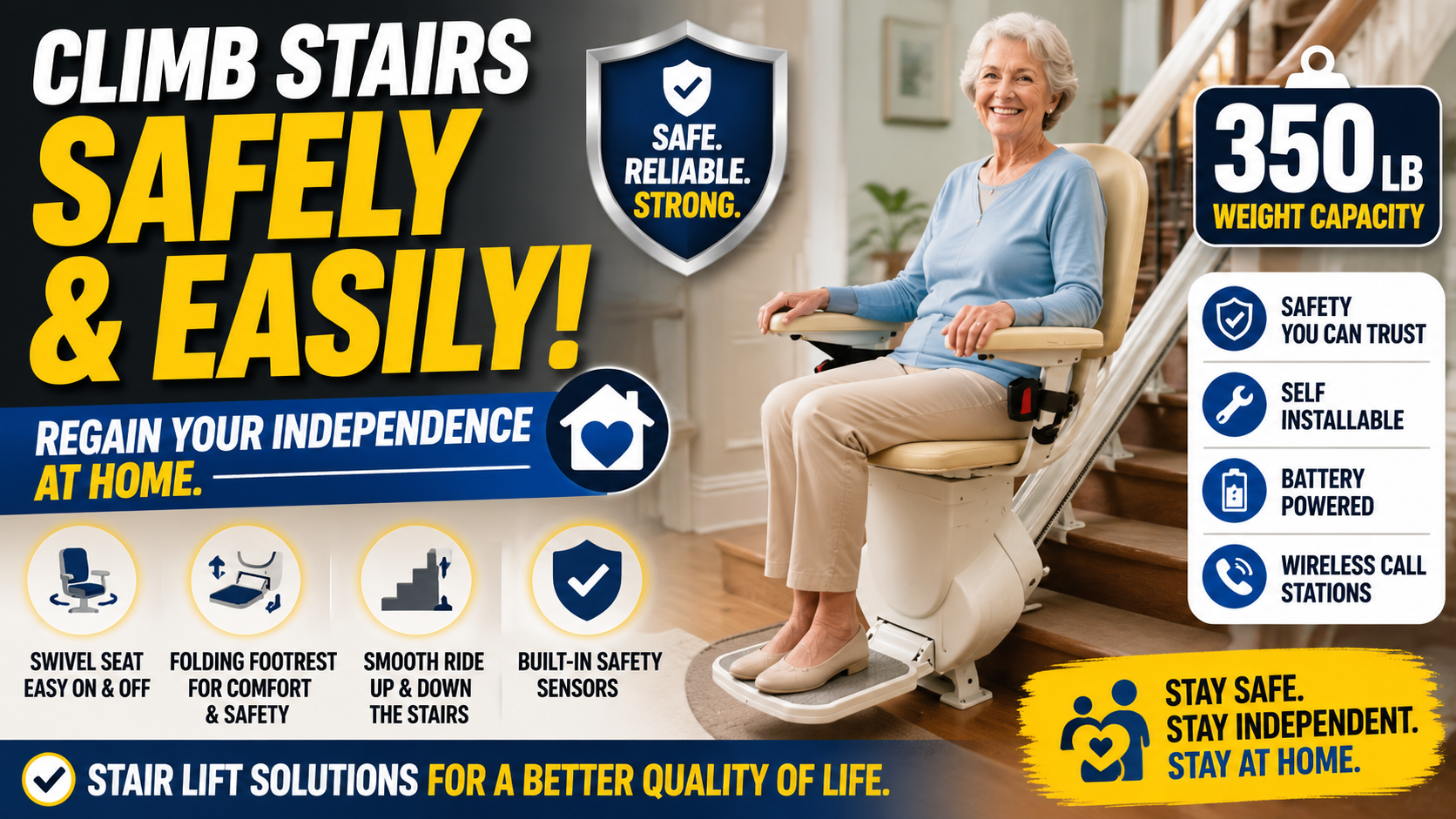
A step that prevents home access is a problem with an immediate, affordable solution. The Gardhom 5-foot ramp ships quickly, sets up without tools, and eliminates the threshold and low-step barriers that create daily access challenges for wheelchair users, scooter riders, and anyone with mobility limitations. For homes where the barrier is a full staircase rather than a threshold or low step, the self-installable stair lift option may restore access between floors.
For the right rise height and application — thresholds, doorways, low steps, curb cuts — the 5-foot format provides the right combination of capacity, anti-slip safety, and genuine portability that makes it a practical daily access solution rather than a piece of equipment that’s too heavy or awkward to actually use consistently.
→ Order the Gardhom 5-Foot Wheelchair Ramp on Amazon — check current price and read customer reviews


About the Author
Carol Simmons is a Certified Aging-in-Place Specialist (CAPS) who has evaluated exterior access solutions for hundreds of homes across Florida and the Southeast. She has guided many families through ramp selection — matching the right length, capacity, and format to the specific access barrier being addressed. She writes for Elder Safety Guide to give families practical guidance on the modifications that most directly affect safe home access and independent living.