Nighttime is the most dangerous time for seniors with dementia. Here’s exactly what to put in place to keep them safe while you sleep.
Nighttime is when dementia caregiving gets hardest. During the day there are routines, activity, people around, and enough structure to anchor someone who is losing their grip on time and place. At night all of that disappears. The house goes quiet. The lights go down. And for a person with dementia, the darkness and silence can be deeply disorienting in ways that trigger confusion, fear, and the impulse to get up and go somewhere — anywhere — to find something familiar.
For caregivers this means sleeping with one ear open, waking at every sound, and managing on fragmented rest that compounds over weeks and months into genuine exhaustion. It means worrying every night about what could happen between the moment you fall asleep and the moment you wake up.
The goal of this guide is to give you specific, practical measures that reduce what can happen in that window — so the nights become safer for your loved one and more manageable for you.
Why Nighttime Is the Highest-Risk Period for Dementia
Several factors converge at night to make it the most dangerous period for a person with dementia — understanding them makes the preventive measures more logical.
Sundowning
Sundowning — the increase in confusion, agitation, and disorientation that many people with dementia experience in the late afternoon and evening — doesn’t always resolve at bedtime. For some people it persists well into the night, creating a window of heightened confusion that overlaps with the period when caregivers are asleep and supervision is lowest.
The causes of sundowning aren’t fully understood but disruption of the circadian rhythm, fatigue accumulating through the day, and reduced sensory input in the evening all contribute. Managing sundowning starts during the day — not at bedtime — through consistent routines, adequate daytime light exposure, and structured calming activities in the evening hours.
Disorientation on Waking
Waking during the night is disorienting for anyone — it takes a moment to remember where you are and what time it is. For a person with dementia that reorientation may not happen at all, or may resolve into a confused version of reality rather than accurate awareness. They may wake convinced it’s morning and time to get up. They may wake believing they’re somewhere else entirely. They may wake distressed by a dream that feels completely real.
Acting on that disorientation — getting up, getting dressed, trying to leave — is the sequence that creates nighttime fall and wandering risk. The measures in this guide interrupt that sequence at multiple points.
Darkness Removes Compensatory Visual Input
During the day visual cues about the environment — familiar furniture, familiar views, familiar people — help anchor a person with dementia to the present even when internal orientation is unreliable. At night those visual anchors disappear. Waking into complete darkness with no visual information about where you are is profoundly disorienting for anyone and catastrophically so for someone with dementia.
Caregiver Sleep Means Reduced Supervision
The obvious but unavoidable reality: nighttime is when caregivers are asleep, supervision is lowest, and response time to a developing situation is longest. Everything in this guide is designed to either prevent dangerous situations from developing or alert the caregiver immediately when they begin — because the window between a nighttime confusion episode starting and a dangerous situation developing can be very short.

Managing Sundowning — Start During the Day
Reducing the severity of nighttime confusion starts with how the daytime hours are structured. These daytime interventions have the strongest evidence for reducing sundowning and improving nighttime safety.
Maximize Morning Light Exposure
Natural light in the morning is the most effective regulator of the circadian rhythm that sundowning disrupts. Time outside or near a bright window — ideally within an hour of waking — helps reset the body’s internal clock and reduces the evening confusion that follows from circadian disruption. Even on overcast days, outdoor light is significantly brighter than indoor lighting and meaningfully more effective at circadian regulation.
Structure the Day With Meaningful Activity
A day with regular activity — gentle exercise, simple tasks, social interaction, music — is followed by a better night than a day spent largely sedentary. Physical fatigue from appropriate daytime activity improves sleep consolidation. Mental engagement reduces the restless under-stimulation that contributes to sundowning agitation.
The key word is appropriate — activity that matches the person’s current capacity rather than being too demanding or frustrating. Simple repetitive tasks like folding towels, sorting items, or tending plants are often well-suited to middle-stage dementia and provide purposeful engagement without requiring intact memory or executive function.
Create a Consistent Evening Wind-Down
A predictable evening routine that signals the transition to nighttime helps regulate the circadian rhythm and reduces the confusion of an abrupt shift from activity to sleep. Dim the lights in the evening — bright light suppresses melatonin and makes sleep harder to initiate. Reduce stimulation — loud television, busy environments, and emotionally activating content all increase evening agitation. Incorporate familiar, calming activities — favorite music, a warm drink, simple conversation.
Consistency matters as much as the specific activities. The same sequence every evening becomes a predictable anchor that the person with dementia can follow even when internal time orientation is unreliable.
Limit Daytime Napping
Long or late daytime naps disrupt nighttime sleep consolidation and contribute to the nighttime wakefulness that creates safety risk. Short naps earlier in the day — before 2pm, under 30 minutes — are less disruptive than longer naps taken later. If daytime napping is frequent and long, gradually reducing it is worth attempting as a nighttime safety intervention.
The Bedroom — Setting Up for Safe Nights
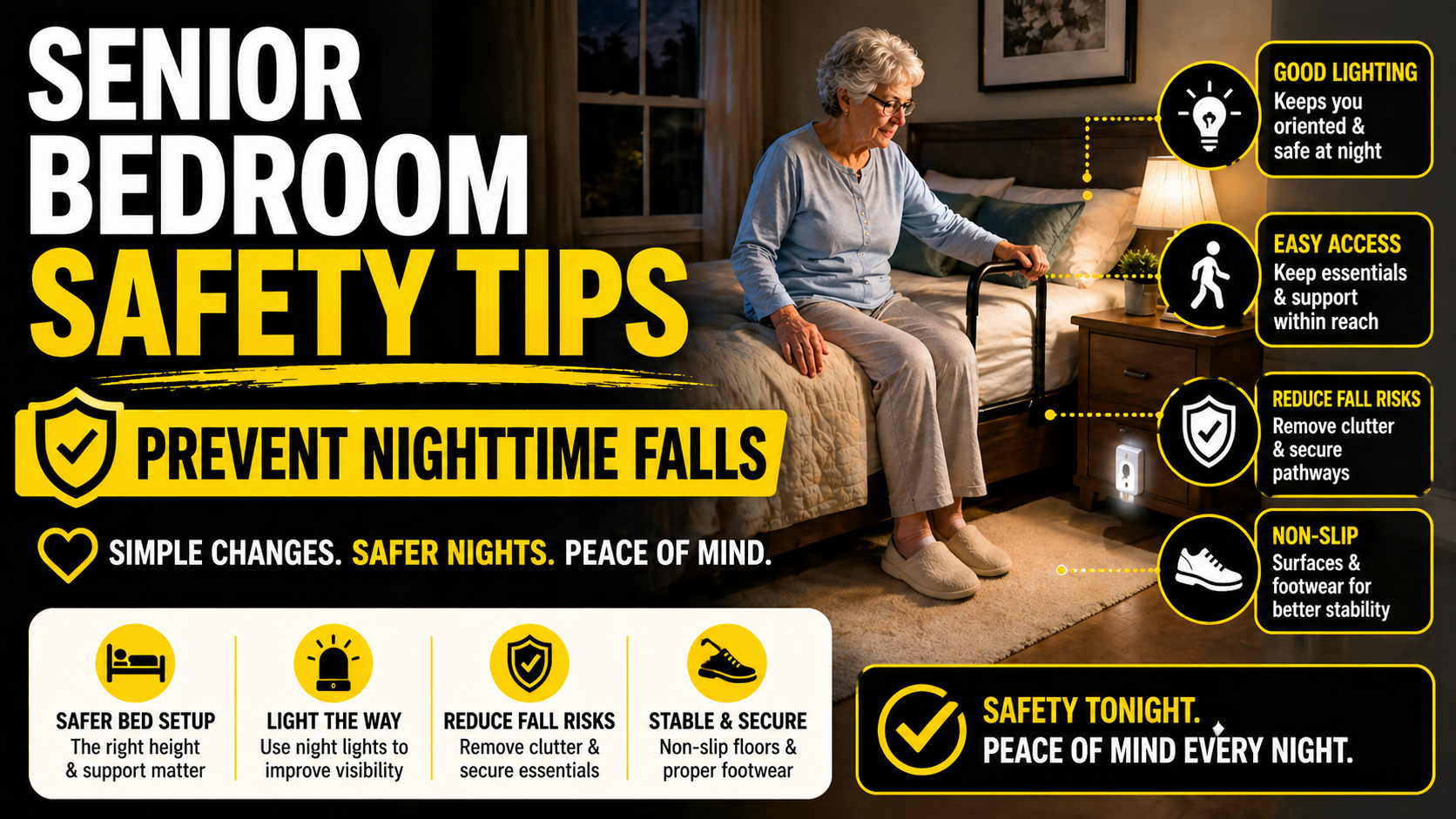
The bedroom environment at night significantly affects how safely a person with dementia navigates the hours between sleep and morning. Several specific modifications address the highest-risk elements of the nighttime bedroom environment. The broader bedroom checklist in Senior Bedroom Safety Tips to Prevent Nighttime Falls can help apply these changes beyond dementia-specific concerns.
Lighting — The Most Important Modification
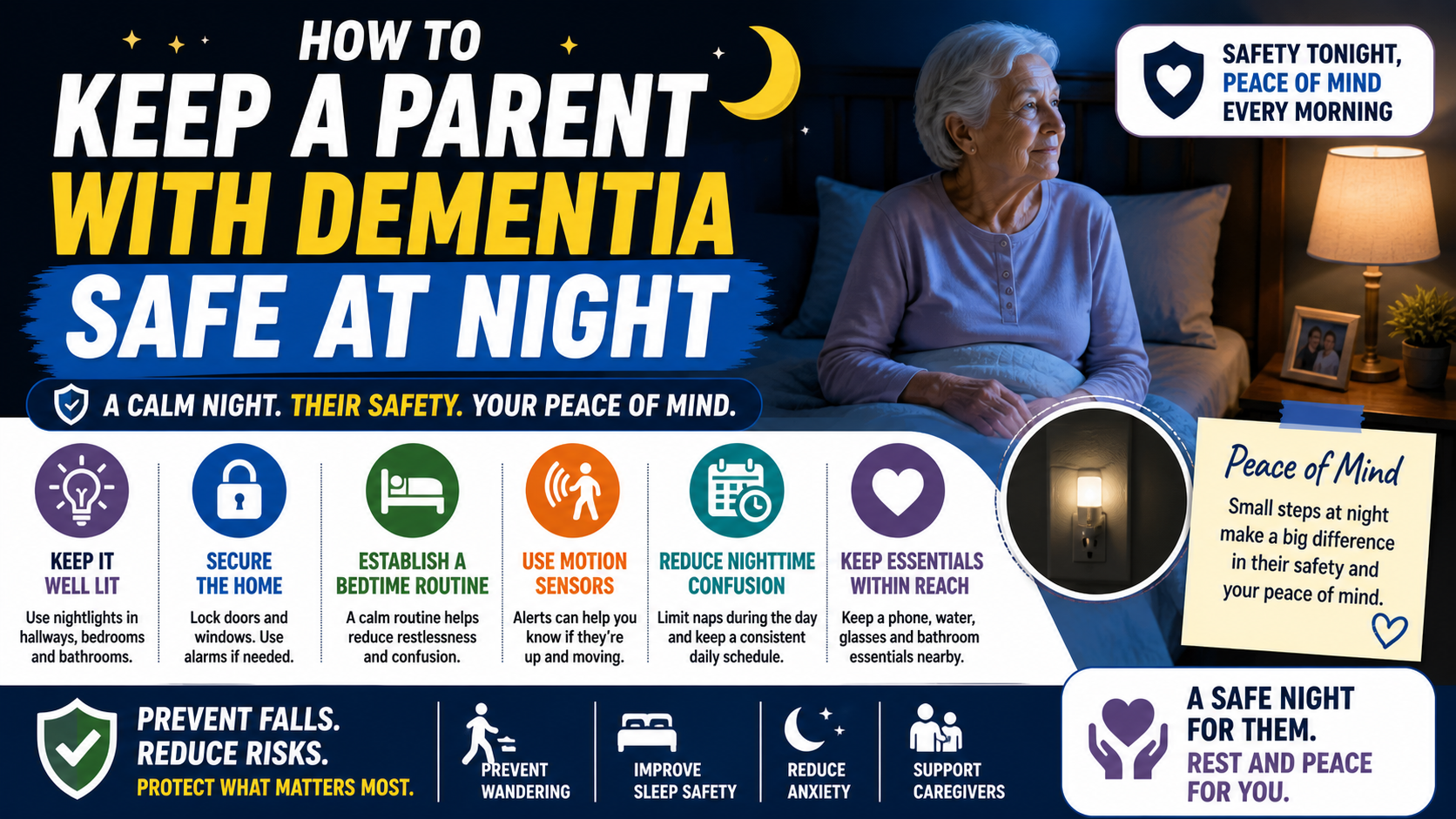
The bedroom should never be completely dark for a person with dementia. Waking into complete darkness — no visual information about environment, no spatial orientation cues — is a powerful trigger for confused, distressed behavior and exit attempts.
Plug-in night lights that provide gentle ambient illumination throughout the night give the person visual reference points when they wake — the familiar outline of furniture, the familiar shape of the room — that help anchor them to the present without requiring cognitive reorientation.
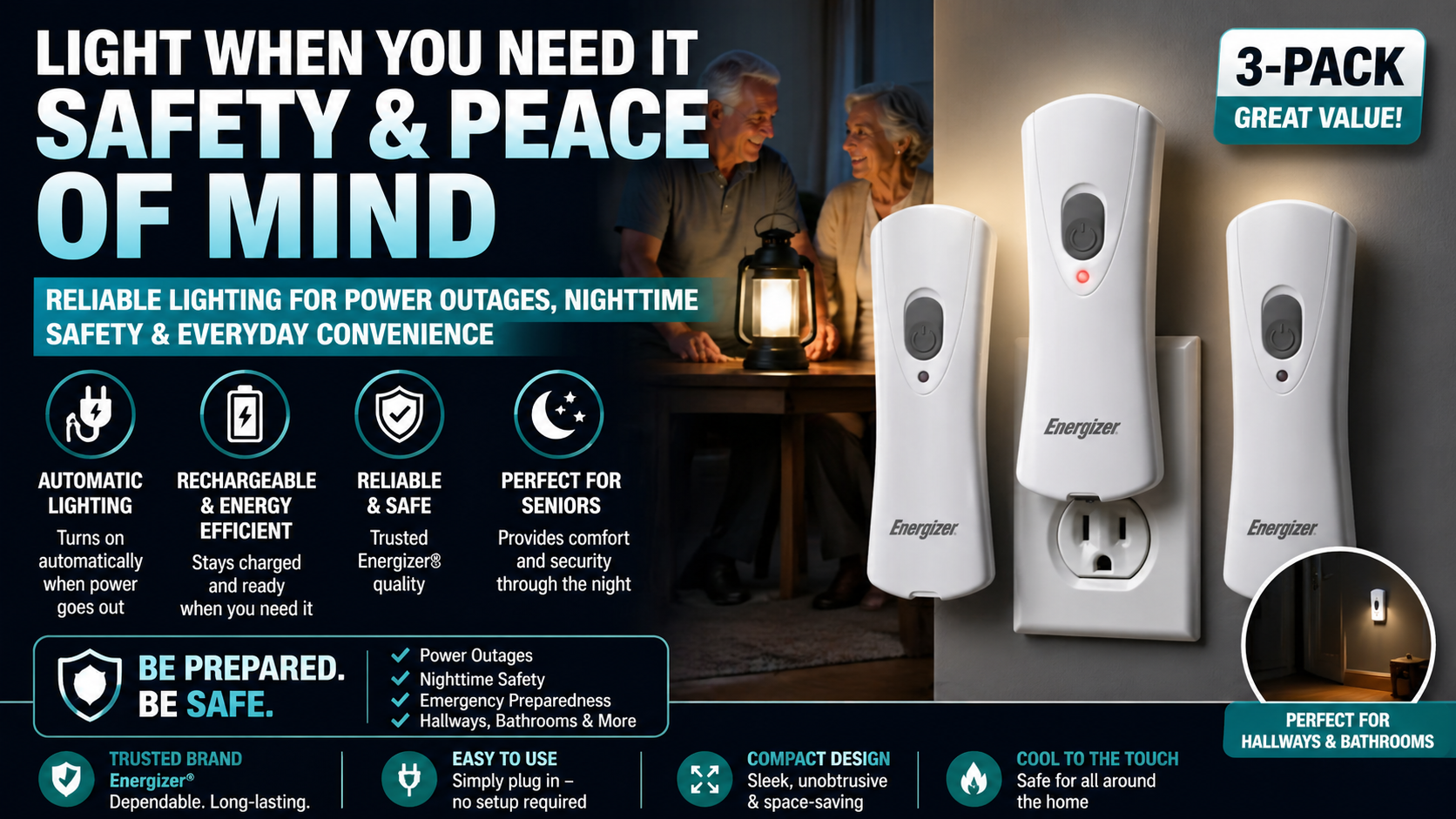
Auto-on lights that activate immediately during power outages provide an additional layer of protection. The Energizer Auto-On rechargeable flashlights function as night lights continuously and switch to full brightness automatically when power fails — covering the bedroom, hallway, and bathroom in one three-pack purchase.

→ Get the Energizer Auto-On 3-Pack on Amazon
Bed Safety
Getting out of bed during a nighttime confusion episode is high-risk — the person is disoriented, the room is dim, and their coordination may be affected by being partially asleep. A bed rail on the exit side of the bed provides a firm support point during the getting-up transition and may slow an impulsive exit attempt enough for a caregiver to respond.

Our review of the best bed rail for seniors covers the ASTM certified option we recommend — tool-free installation, 350 lb capacity, ergonomic handle, storage pocket for phone and essentials within reach.

Bed Alarm
A bed alarm — a pressure-sensitive pad placed under the mattress that triggers an alert when the person gets up — is one of the most important nighttime safety tools for dementia caregivers. It provides immediate notification the moment a nighttime exit attempt begins rather than after the person has already navigated out of the bedroom.
Wireless bed alarms that alert a caregiver’s phone or trigger a chime in an adjacent bedroom are widely available. Set it up before wandering becomes a problem — the earlier it’s in place the more episodes it prevents.
Bedroom Door Alarm
A door alarm on the bedroom door provides a second alert point — notification that the person has left the bedroom even if the bed alarm wasn’t triggered or wasn’t in place. Combined with a bed alarm, bedroom door alarm, and exterior door alarm, a caregiver has three sequential alert opportunities before a nighttime wandering episode reaches the street.
Clear the Floor
The path from the bed to the bathroom — and the bedroom floor generally — should be completely clear. Nothing on the floor. No rugs that shift. No furniture corners at shin height. A person navigating in dim light while disoriented needs the simplest possible path through the space.
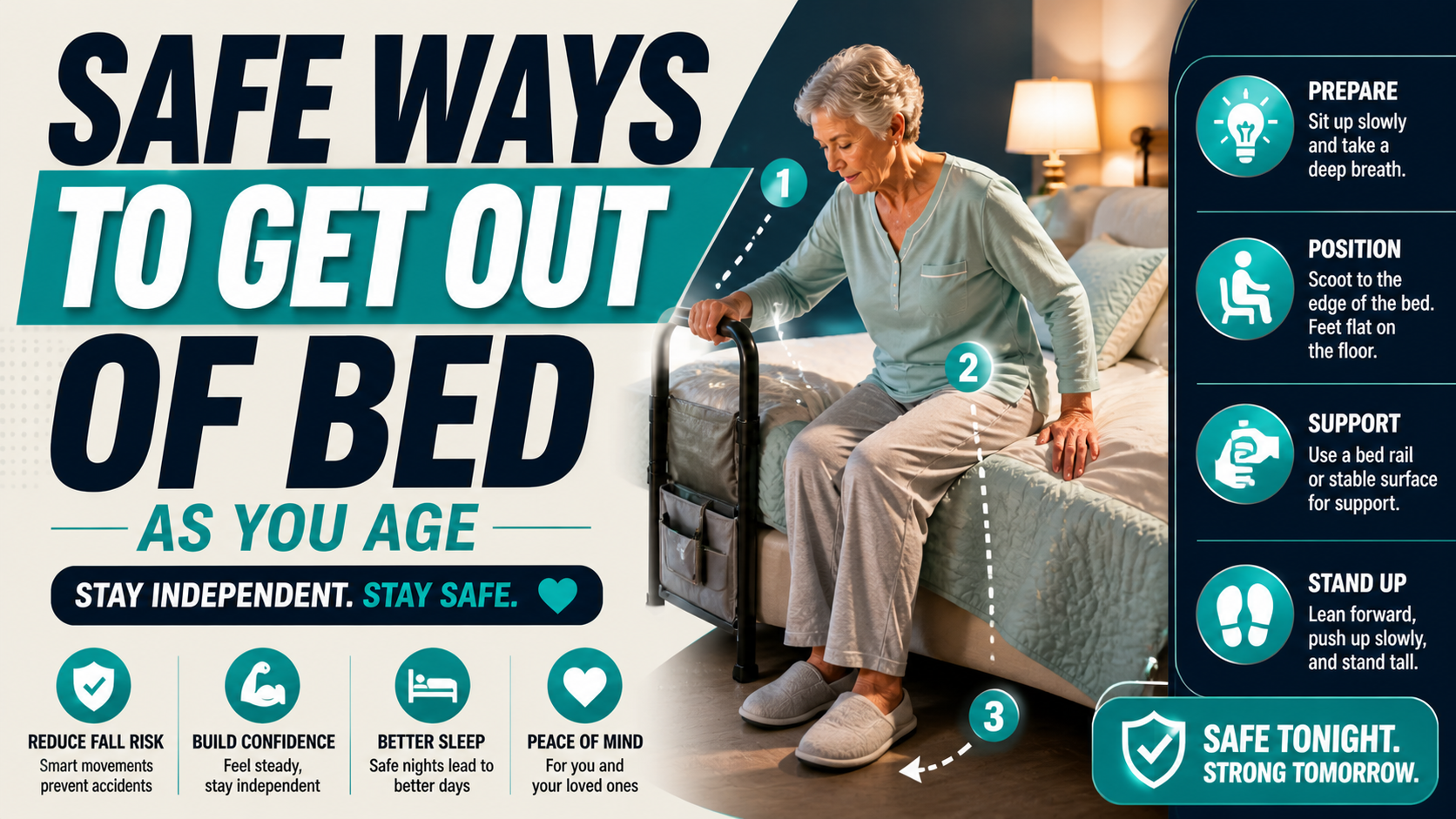
For the complete bedroom safety picture our guide on senior bedroom safety tips for nighttime falls covers every modification worth making and our guide on safe ways to get out of bed covers the correct technique for the getting-up transition.
The Nighttime Bathroom Trip — Managing the Highest-Risk Moment
The nighttime bathroom trip is where many dementia-related nighttime falls and wandering episodes begin. The person wakes, needs the bathroom, gets up while disoriented, and either falls navigating to the bathroom or becomes confused about where they’re going and heads for a door instead.
Light the Entire Path
Night lights in the bedroom, hallway, and bathroom — all three — ensure the path is illuminated from the moment the person’s feet leave the bed to the moment they arrive at the bathroom. A dark hallway between a lit bedroom and a lit bathroom still creates a disorientation risk at the transition point. All three locations need to be covered.
Bathroom Safety at Night
The bathroom presents specific fall risks during nighttime trips — wet floors, the toilet transfer, cold tile that affects footing. Grab bars at the toilet and shower, a non-slip bath mat, and toilet safety rails all address these risks and are particularly important for someone who may be navigating the bathroom while partially confused.

Our complete guide on how to make a bathroom safer for seniors covers every upgrade worth making. Key products: grab bars, toilet safety rails, and non-slip bath mat — all covered in dedicated reviews.


→ Get the Toilet Safety Rails on Amazon

Consider a Bedside Commode
For people with dementia whose nighttime bathroom trips are frequent or who become significantly confused navigating to the bathroom, a bedside commode eliminates the hallway journey entirely. This removes the highest-risk element of the nighttime bathroom trip — the navigation through a dark or dim hallway while disoriented — by bringing the bathroom to the bedside.
It requires more caregiver involvement in personal care but significantly reduces the fall and wandering risk associated with nighttime hallway navigation for those at highest risk.
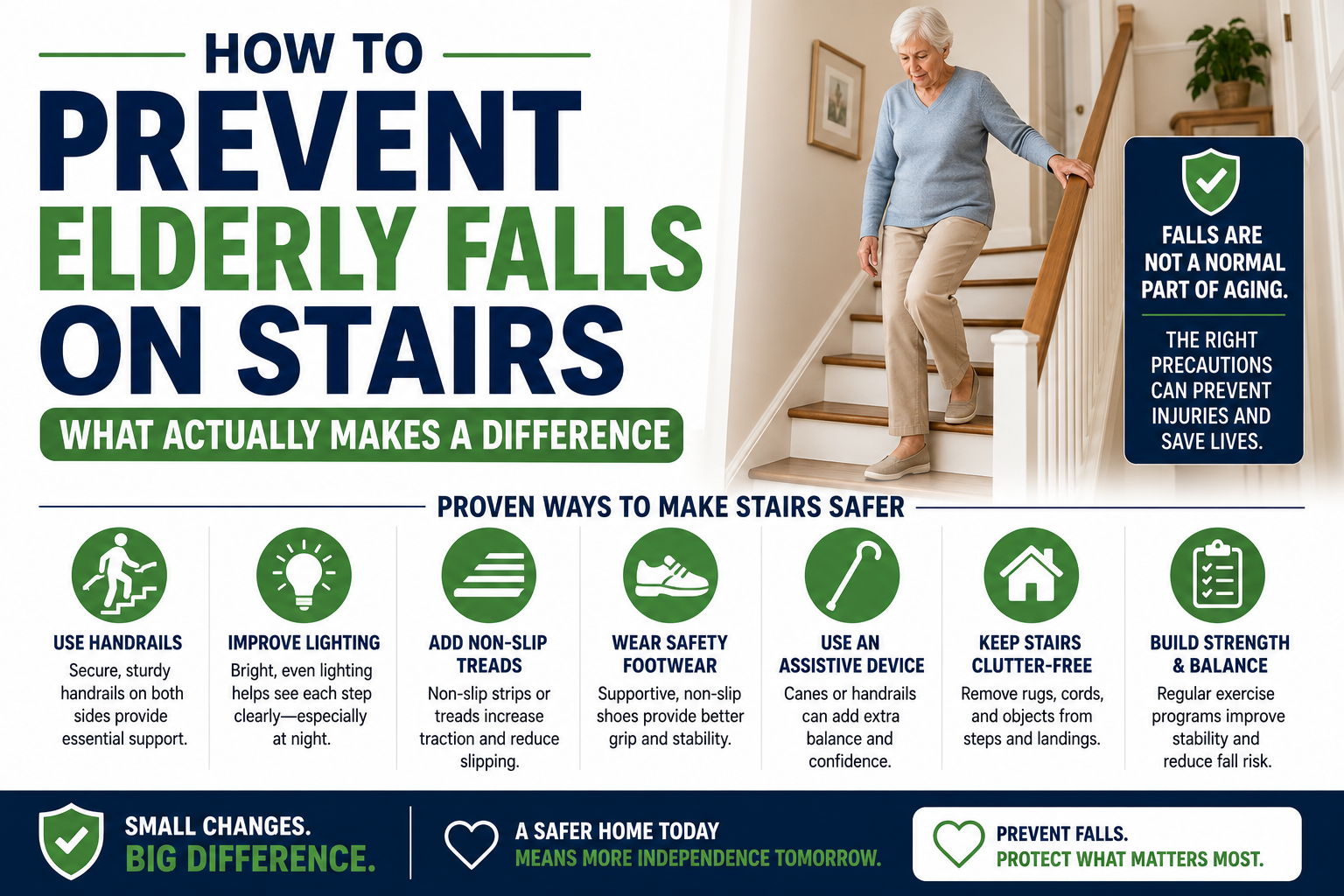
Exterior Door Security at Night
Every exterior door needs specific nighttime security measures for a household managing dementia wandering risk. These measures should be in place before nighttime wandering begins — not implemented reactively after a first episode.
High Locks
A deadbolt positioned high on the door frame — well above the standard lock height — may not be noticed or attempted by a person with dementia whose eye level focus is typically lower. The key should be removed and kept somewhere inaccessible to the person with dementia.
Door Alarms on All Exterior Doors
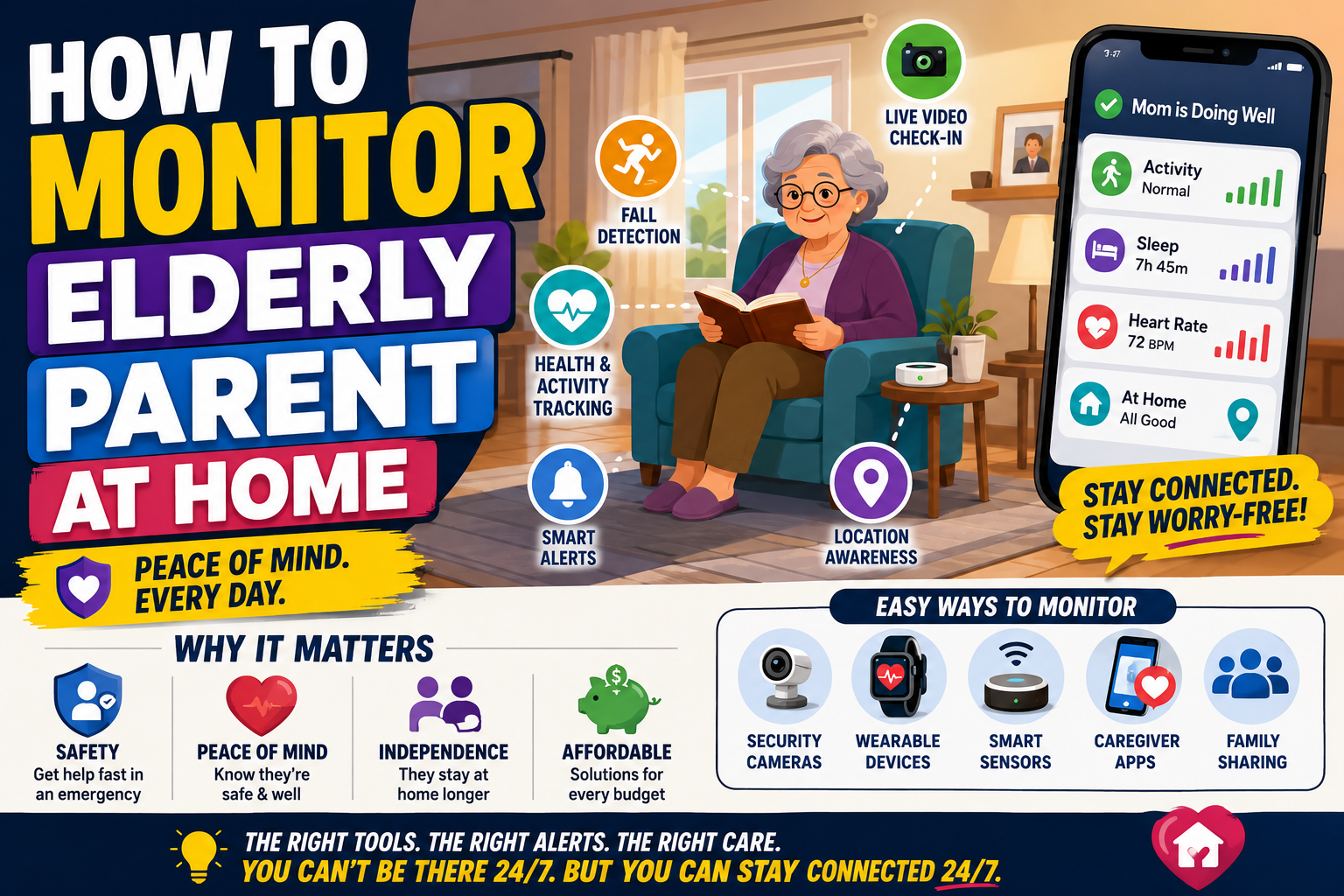
Every exterior door — including garage access doors and sliding doors — should have an alarm that alerts immediately when opened. Wireless systems that notify a caregiver’s phone are particularly useful because the caregiver receives the alert wherever they are in the house rather than only if they happen to be near the door.
Visual Deterrents
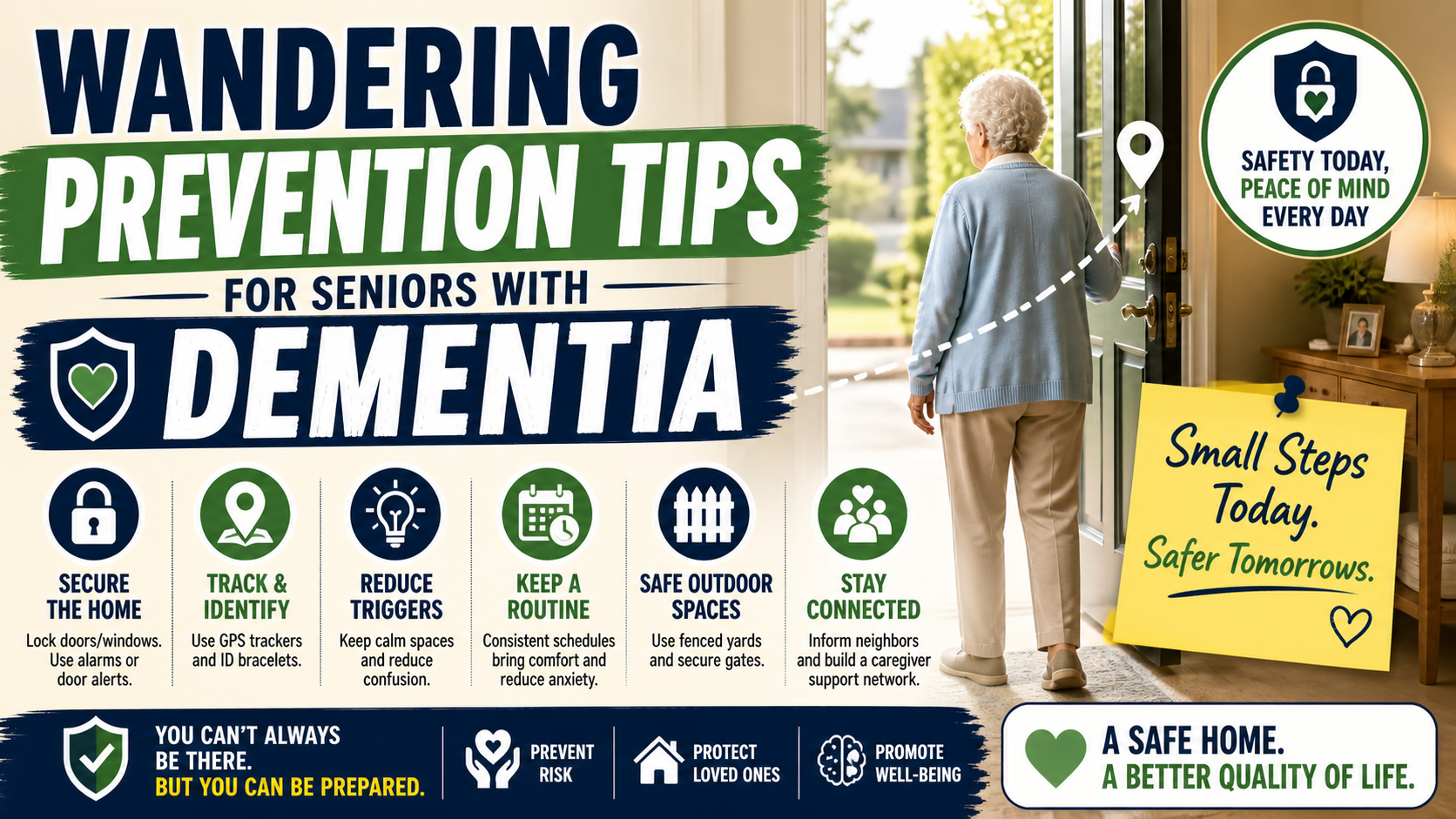
As covered in our guide on wandering prevention for seniors with dementia, visual modifications to exit doors — dark floor mats, mirrors, curtains, stop signs — can discourage exit attempts by making the door less recognizable as an exit. These are passive measures that work without requiring any action from the caregiver and can slow attempts long enough for an alarm to alert and a caregiver to respond.
GPS Tracking — The Essential Safety Net
Even with every preventive measure in place, nighttime exits can occur. A person who is determined to leave and who has a moment of caregiving gap — the caregiver deeply asleep, briefly distracted — may make it out before any alarm is responded to.
GPS tracking ensures that when this happens the person’s location is immediately known rather than requiring a search. The SecuLife Smartwatch provides real-time GPS location through the companion app — visible on a family member’s phone at any time, day or night. Geofencing alerts trigger immediately when a boundary is crossed, waking a caregiver with the person’s current location before they’ve traveled far.
Automatic fall detection adds another layer — if a fall occurs during a nighttime exit attempt, the alert goes out without requiring the person to press anything or be capable of calling for help.

Our full SecuLife Smartwatch review covers GPS, geofencing, and fall detection in detail. And our guide on home safety tips for seniors with dementia covers the complete home safety picture beyond nighttime specifically.
→ See the SecuLife Smartwatch on Amazon


Medications and Nighttime Safety
Medication management is worth discussing specifically with the physician managing dementia care in the context of nighttime safety. Several medication considerations directly affect nighttime behavior.
Sleep medications prescribed for dementia-related sleep disruption carry significant fall risk — they reduce reaction time and coordination in exactly the situation where nighttime navigation is already risky. The risks and benefits of sleep medications in dementia should be reviewed explicitly with the prescribing physician.
Diuretics taken in the evening increase nighttime bathroom frequency and therefore nighttime fall and wandering risk. Timing adjustment — taking diuretics earlier in the day — can meaningfully reduce nighttime trips without changing the medication itself. Worth discussing at the next appointment.
Medications affecting sundowning — both those that worsen it and those that may help manage it — are worth reviewing with the physician specifically in the context of evening and nighttime behavior. There are both medication and non-medication approaches to sundowning management that a physician familiar with dementia care can advise on.
The Caregiver’s Night — Sustainable Monitoring
Everything in this guide reduces what the caregiver needs to monitor at night — but doesn’t eliminate the monitoring entirely. That reality needs to be acknowledged honestly.
Caregiver sleep deprivation from sustained nighttime monitoring is one of the most significant health risks for dementia caregivers. It affects judgment, emotional regulation, physical health, and ultimately the quality of care provided. It’s not sustainable indefinitely without support.
Options worth exploring for nighttime caregiver support:
- Nighttime respite care — a paid caregiver covering nighttime hours periodically, allowing the primary caregiver uninterrupted sleep on a regular schedule
- Family rotation — sharing nighttime monitoring responsibility among multiple family members on a rotating basis
- Technology substitution — using bed alarms, door alarms, and GPS monitoring to extend the window of safe unsupervised sleep rather than requiring light sleep all night
- Caregiver support programs — the Alzheimer’s Association (1-800-272-3900) and local Area Agencies on Aging offer caregiver support resources including respite programs worth contacting
Sustainable nighttime caregiving requires that the caregiver’s sleep needs are treated as a legitimate safety concern — not a luxury to be sacrificed indefinitely for the sake of the person being cared for.


Nighttime Safety Checklist for Dementia
- Night lights in bedroom, hallway, and bathroom — auto-on capability
- Bed rail on exit side of bed
- Bed alarm under mattress — caregiver phone notification configured
- Bedroom door alarm installed
- Exterior door alarms on all doors
- High locks on exterior doors — key inaccessible to person with dementia
- Visual deterrents on primary exit door
- GPS tracking device in use — geofencing configured
- Bathroom safety in place — grab bars, toilet rails, non-slip mat
- Bedroom floor completely clear
- Consistent evening wind-down routine established
- Daytime light exposure maximized
- Medication timing reviewed with physician
- Caregiver nighttime support plan in place
Frequently Asked Questions
Why does my parent with dementia wake up every night?
Frequent nighttime waking in dementia is common and has several contributing causes — disrupted circadian rhythm, sundowning that extends into the night, sleep architecture changes that are part of the dementia process itself, pain or discomfort that’s communicated through behavioral restlessness rather than verbal complaint, and medication side effects. Discussing nighttime waking specifically with the physician managing dementia care — with a detailed description of the pattern and timing — is the most productive path to identifying and addressing the specific cause.
Is it safe for someone with dementia to sleep alone?
It depends on the stage of dementia and the specific behaviors present. Early-stage dementia with minimal nighttime disruption may be safe with the monitoring measures in this guide in place. Middle to late stage dementia with wandering behavior, significant nighttime confusion, or fall history typically requires either shared sleeping space, a baby monitor or camera for continuous audio-visual monitoring, or nighttime caregiving support. There’s no universal answer — it requires honest assessment of current function and risk.
What’s the best bed alarm for someone with dementia?
Look for a bed alarm with wireless notification to a caregiver’s phone or an audible chime in the caregiver’s room — local alarms that only sound near the bed may not reliably wake a sleeping caregiver in an adjacent room. Pressure sensitivity should be calibrated for the person’s weight so normal repositioning during sleep doesn’t trigger it. Several options are available through medical supply retailers and online — read reviews specifically from dementia caregivers for the most relevant feedback.
My parent keeps removing the night lights I put in place — what do I do?
Use night lights that plug flush to the wall rather than projecting outward — they’re less noticeable and less likely to be interacted with. Position them low and behind furniture where they’re out of direct line of sight but still illuminate the floor. If removal continues, consider hardwired night lights or motion-activated overhead lighting that can’t be unplugged. Some caregivers use LED tape lighting along the baseboard of the hallway — very low and unobtrusive but effectively illuminating the path.
How do I get enough sleep while keeping my parent safe at night?
This is the hardest question in dementia caregiving and deserves a direct answer: you cannot do both sustainably without support. Technology — bed alarms, door alarms, GPS — extends the window of safe unsupervised caregiver sleep but doesn’t eliminate the need for monitoring entirely. At some point in the dementia progression, nighttime caregiving requires either nighttime respite care, shared caregiving responsibilities, or a care setting change. Acknowledging that reality and planning for it before exhaustion makes the decision for you is the most important step a nighttime caregiver can take.


Safer Nights — for Both of You
The measures in this guide don’t make nighttime caregiving easy. But they make it significantly more manageable — by reducing the number of dangerous situations that can develop, alerting you immediately when they begin, and ensuring rapid location if your loved one does get out.
A safer night for the person with dementia is also a more restful night for the caregiver. Both matter. Both are worth investing in.
Start with lighting and the bed alarm — they have the highest immediate impact. Add door alarms and GPS tracking. Build the rest from there.
→ Get the Energizer Auto-On Night Lights on Amazon
→ Get the SecuLife Smartwatch on Amazon
About the Author
Carol Simmons is a Certified Aging-in-Place Specialist (CAPS) who has worked extensively with families managing dementia at home, helping them modify environments and implement monitoring systems that extend safe home living. She writes for Elder Safety Guide with a particular focus on practical solutions that work in real caregiving situations — not just in theory.