Crutches are exhausting and risky for older adults. Here’s why the Vive Mobility all-terrain knee scooter is the smarter way to stay mobile during foot and ankle recovery.
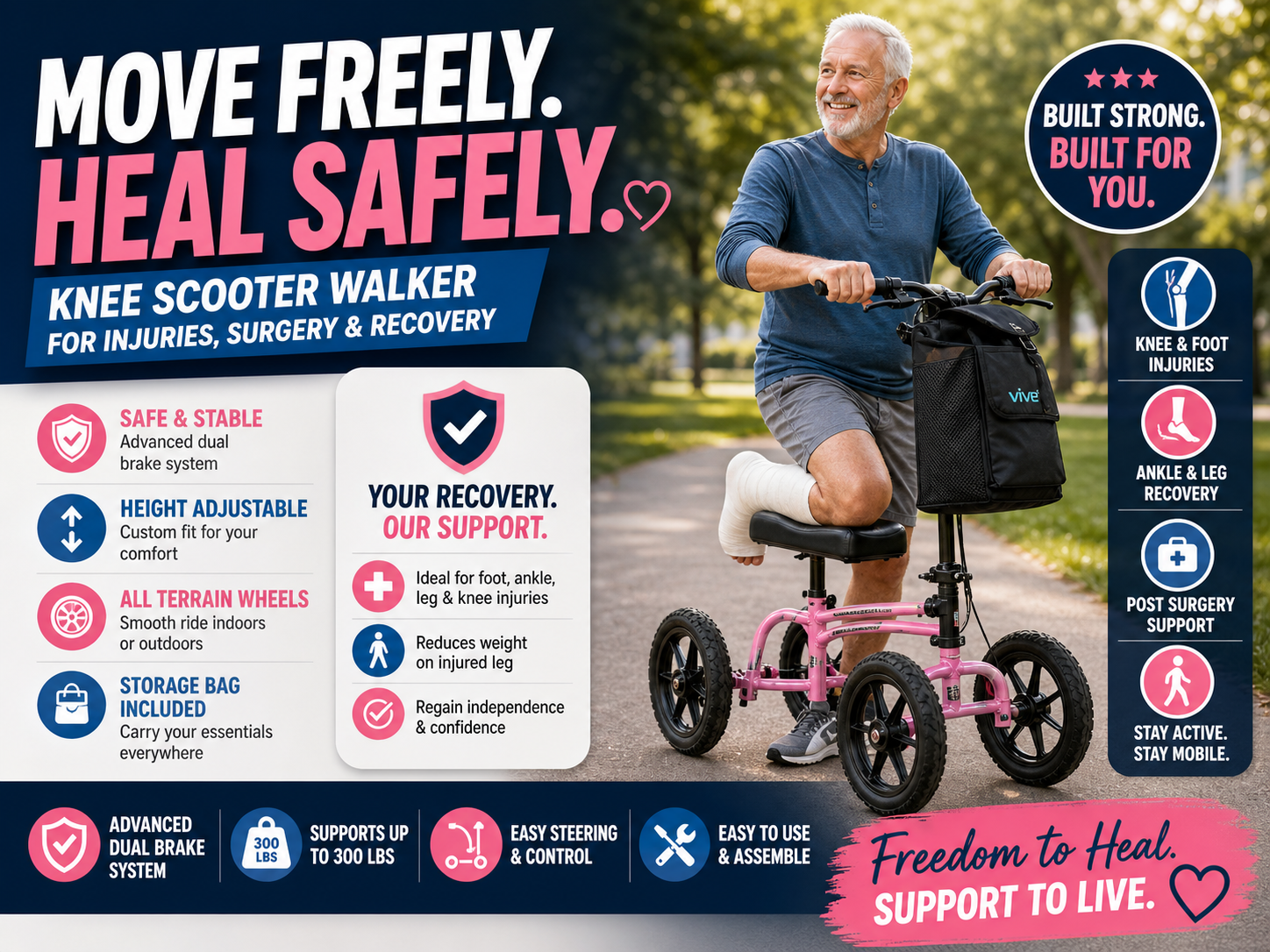
A foot or ankle injury that takes you off your feet doesn’t have to take you out of your life. The difference between spending weeks on crutches — exhausting, painful, and limiting — and spending those same weeks mobile and functional often comes down to one decision: getting a knee scooter.
A knee scooter supports the injured leg on a padded rest while the other leg propels forward — providing weight-free mobility that’s dramatically faster, more stable, and less physically exhausting than crutches for most foot and ankle injuries. For older adults particularly, crutches require upper body strength, balance, and coordination that may make them genuinely unsafe. A knee scooter provides stable, seated-leg mobility that most people can manage safely regardless of upper body strength.
This review covers the Vive Mobility All-Terrain Knee Scooter — and everything you need to know before buying one for a current injury or upcoming surgery.
→ See the Vive Mobility Knee Scooter on Amazon
Knee Scooter vs. Crutches — The Honest Comparison
For most foot and ankle injuries below the knee, knee scooters are the more practical mobility option for the majority of users. Here’s the honest comparison.
Crutches advantages: Navigate stairs. Work in very tight spaces. More portable — carry rather than roll. No charging or maintenance required.
Knee scooter advantages: Dramatically faster mobility. Much less upper body fatigue. More stable — four wheels rather than two small points. Carry things on the built-in basket. Don’t require the coordination and upper body strength that crutches demand. Significantly more comfortable for extended use periods.
For most older adults, the stability and ease of a knee scooter is a significant safety advantage over crutches. The fall risk on crutches — particularly on uneven surfaces, in narrow spaces, or when fatigued — is real and meaningful. A knee scooter on four wheels with brakes is substantially more stable.
The limitation worth being honest about: knee scooters don’t work on stairs. If your home has unavoidable stairs between key areas, a knee scooter needs to be combined with a plan for navigating those stairs — whether that’s crutches for the stairs specifically, a temporary ground-floor setup, or assistance.
What to Look for in a Knee Scooter
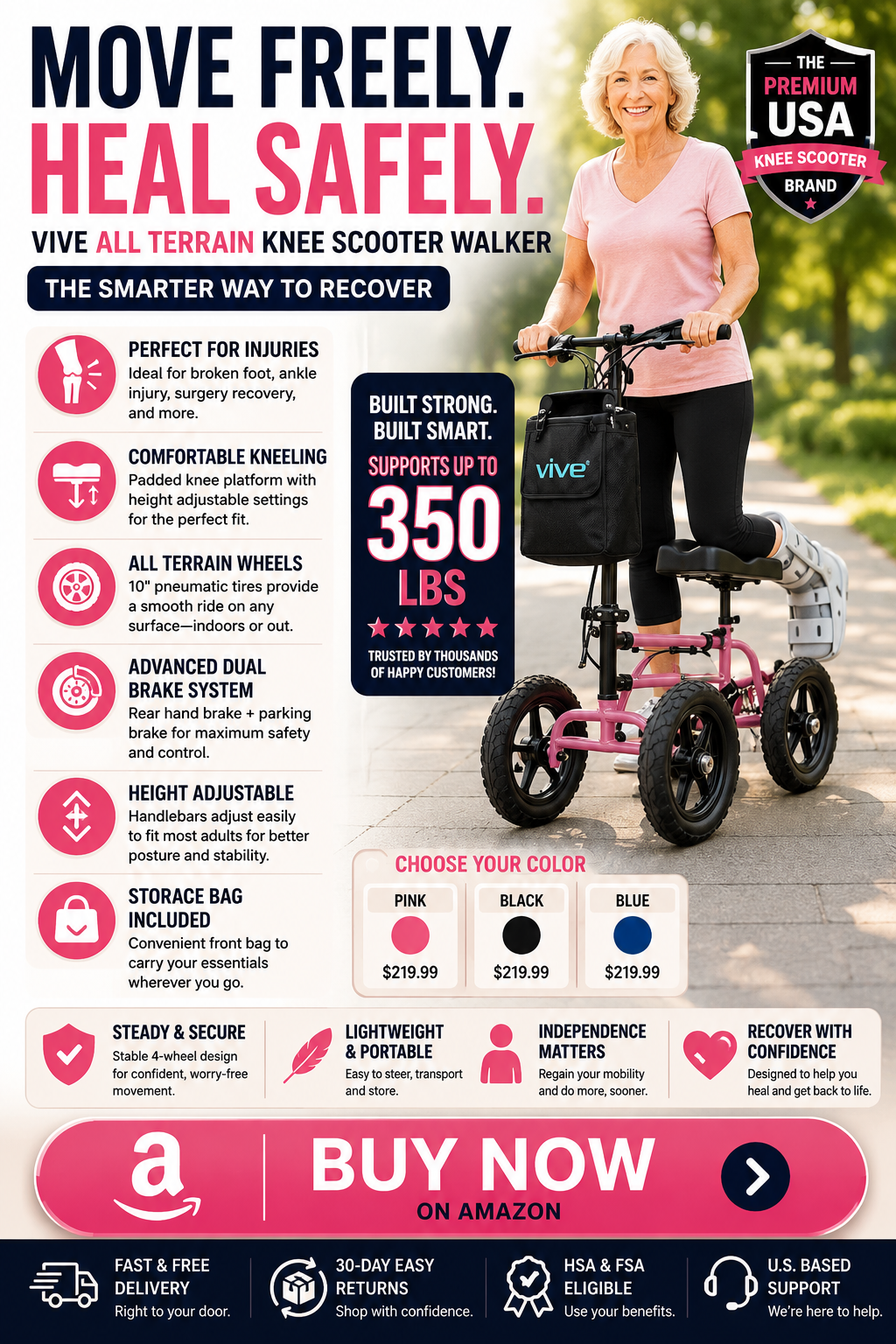
Knee Pad Height and Angle Adjustability
The knee pad needs to be at the right height for the injured leg to rest comfortably while the healthy leg propels. Too low and the user bends awkwardly. Too high and the weight distribution is off. Adjustable knee pad height and angle accommodates different user heights and leg proportions. Getting this right before beginning regular use makes a significant difference in comfort and stability.
Handle Height Adjustability
Handle height determines posture during use. Correct handle height allows an upright standing posture on the healthy leg rather than a stooped forward position. Adjustability accommodates users of different heights.
Wheel Size and Terrain Performance
Larger wheels handle varied terrain better — outdoor pavement, slight inclines, and uneven surfaces are all more manageable with larger wheels. For users who will be primarily indoors on smooth surfaces, wheel size matters less. For anyone who needs to navigate parking lots, sidewalks, or any outdoor terrain, larger wheels are a meaningful practical advantage.
Braking System
Reliable brakes are essential for safety — for stopping on demand and for stability on inclines. Hand brakes operated from the handles are the standard on quality knee scooters. Test brake responsiveness when the scooter arrives before using it independently.
Weight Capacity
The scooter must support the user’s full body weight on the knee pad and frame during use. Confirm the capacity exceeds the user’s weight before purchasing.
Foldability
A knee scooter that folds fits in a car trunk, stores in a small space, and travels to appointments. Non-folding models are difficult to transport and store. For most users, foldability is a practical necessity rather than a convenience feature.


The Vive Mobility All-Terrain Knee Scooter — Full Review
Vive Mobility All-Terrain Knee Scooter — Adult Broken Leg Crutch Cart for Surgery, Broken Foot, Ankle Injury
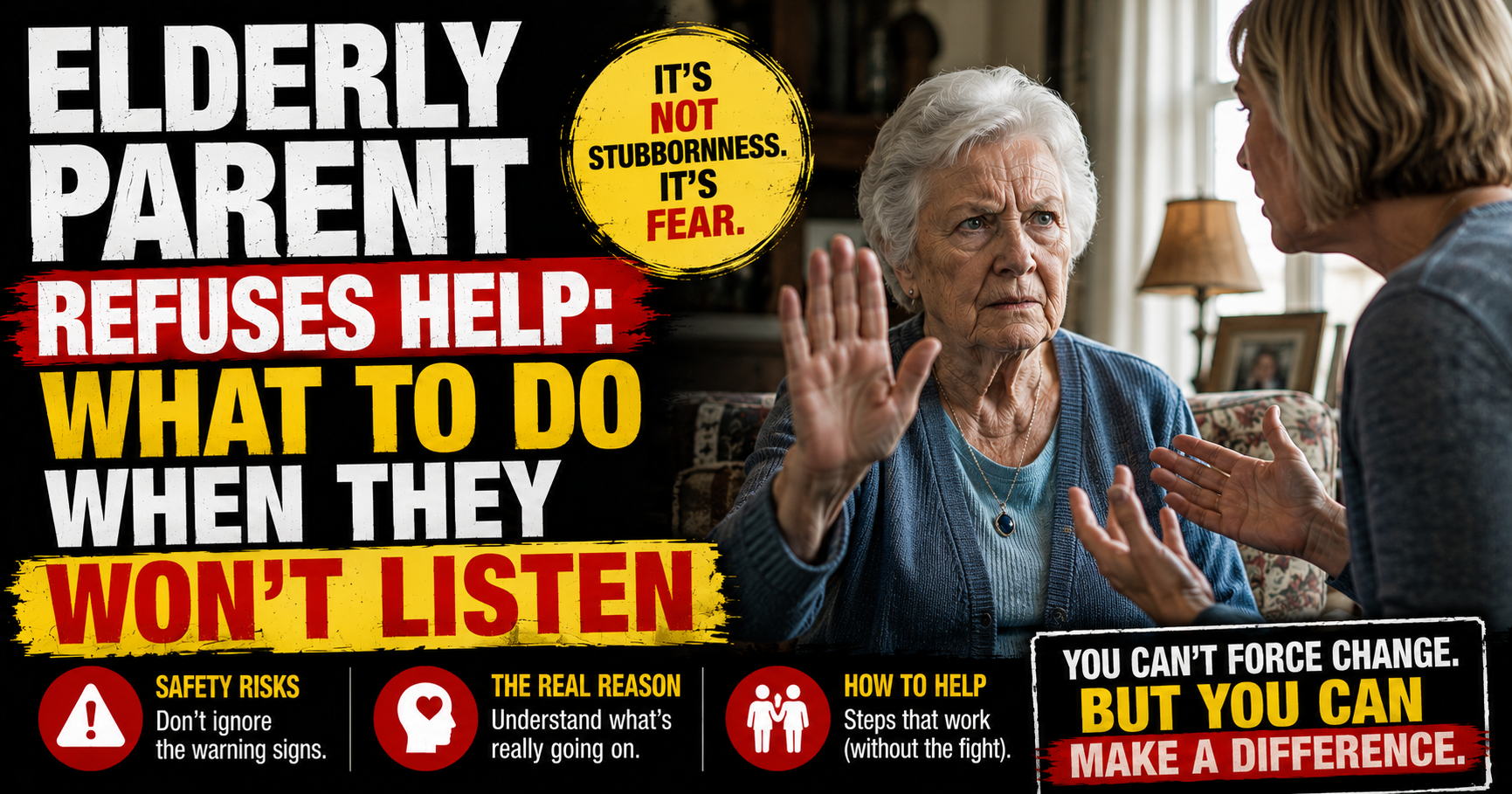
The Vive Mobility knee scooter is one of the most consistently well-reviewed options in this category — particularly for the combination of all-terrain capability and practical features that make it usable across the range of environments a recovering person actually navigates.
→ Check current price and availability on Amazon
All-terrain wheel design handles the outdoor surfaces that less capable knee scooters struggle with — parking lot transitions, slight inclines, outdoor pavement imperfections, and the varied surfaces between a car and a building entrance. For a recovering person who needs to get to medical appointments, therapy, and daily activities, all-terrain capability directly affects how practical the scooter is for real-world use.
The steerable design — turning the handlebars turns the front wheels — provides genuine directional control rather than the awkward direction changes required on non-steerable models. Navigating around furniture, through doorways, and in tight indoor spaces is significantly more manageable with proper steering.
Height adjustability on both the knee pad and handles accommodates a wide range of user heights and allows precise configuration for the individual user. Taking the time to adjust both heights correctly before beginning regular use — ideally with a physical therapist or healthcare provider’s guidance — makes a meaningful difference in posture, stability, and comfort throughout the recovery period.
The padded knee rest is cushioned for comfort during extended use. Recovery periods often involve significant time on the knee scooter — inadequate padding becomes a real comfort issue over days and weeks. The Vive’s knee pad padding provides adequate cushioning for extended use periods.
Dual hand brakes provide responsive stopping from both sides — important for safety during use and for stability when stationary on slight inclines. The brake mechanism is operable with standard adult grip strength.
The included basket allows carrying items — phone, water bottle, small bags — without requiring free hands. When both hands are occupied with the handlebars, having storage on the scooter itself provides the carrying capacity that’s completely absent with crutches.
→ Get the Vive Mobility Knee Scooter on Amazon
Using a Knee Scooter Safely
A knee scooter used correctly is significantly safer than crutches for most foot and ankle injuries. A few safety practices make it safer still.
Adjust Before First Use
Adjust knee pad height and handle height before using the scooter independently. The knee of the injured leg should rest at approximately 90 degrees on the pad. Handle height should allow standing upright with a slight elbow bend. Correct adjustment takes five minutes and significantly affects both comfort and stability.
Start in a Clear Space
Practice basic movements — forward, turning, stopping — in a clear space before navigating crowded environments. Getting comfortable with the steering and braking response in a low-stakes environment builds the familiarity that makes navigation in more complex environments safer.
Approach Inclines Carefully
Apply light brake pressure going downhill to control speed. Take inclines slowly and confirm braking is responsive before committing to a descent. Avoid steep inclines if possible during the early adjustment period.
Don’t Attempt Stairs on the Scooter
Knee scooters are not designed for stairs. If stairs are unavoidable, use crutches for that specific transition and the scooter for all other movement.



Knee Scooter and Recovery Planning
A knee scooter is part of a complete injury recovery plan — alongside medical care, physical therapy, and home modifications that accommodate the temporary mobility limitation.
For the complete home safety picture during recovery our guide on how to make your home safer covers modifications that also improve safety during injury recovery. Our guide on fall prevention tips at home covers specific hazards worth addressing while mobility is reduced.
→ Get the Vive Mobility Knee Scooter on Amazon
Frequently Asked Questions
Is a knee scooter appropriate for all foot and ankle injuries?
Knee scooters are appropriate for injuries below the knee where weight-bearing on the foot needs to be avoided — including foot fractures, ankle fractures, post-surgical recovery from foot and ankle procedures, and plantar fasciitis in some cases. They’re not appropriate for knee injuries or above-the-knee conditions. Always confirm with your physician or surgeon that a knee scooter is appropriate for your specific injury and recovery protocol.
Can I use a knee scooter on carpet?
Yes — knee scooters work on carpet, though thick carpet or high-pile rugs require more propulsion effort than smooth floors. Thin carpet and low-pile rugs are generally manageable without difficulty.
Does insurance cover knee scooters?
Knee scooters may qualify as durable medical equipment under insurance coverage with a physician’s prescription. Coverage varies by plan. Many people rent knee scooters through medical supply companies during recovery rather than purchasing — if the recovery period is short, renting may be more cost-effective than buying. Compare rental and purchase costs against your expected recovery timeline before deciding.
Can I use a knee scooter outdoors?
Yes — the Vive Mobility’s all-terrain design handles outdoor surfaces including parking lots, sidewalks, and slight inclines. Wet surfaces require extra care — wet pavement reduces wheel traction. Avoid gravel and very uneven terrain where wheel stability could be compromised.
How long does it take to get comfortable using a knee scooter?
Most users are comfortable with basic knee scooter operation within the first day of use. Steering, braking, and navigating in familiar environments becomes natural quickly. More complex navigation — busy spaces, tight turns, inclines — takes a few more days of practice to manage confidently.
Stay Mobile During Recovery
A knee scooter keeps you functional during foot and ankle recovery — maintaining mobility, independence, and quality of life during a period that could otherwise be significantly limiting. The Vive Mobility’s all-terrain capability, steerable design, and practical features make it one of the strongest options for real-world recovery use.
→ Order the Vive Mobility Knee Scooter on Amazon — check current price and read customer reviews

About the Author
Tom Garrett spent eight years as an EMT responding to mobility-related injuries and has firsthand experience with the practical mobility challenges of foot and ankle injury recovery. He writes for Elder Safety Guide with a focus on practical mobility solutions for real-world recovery situations.