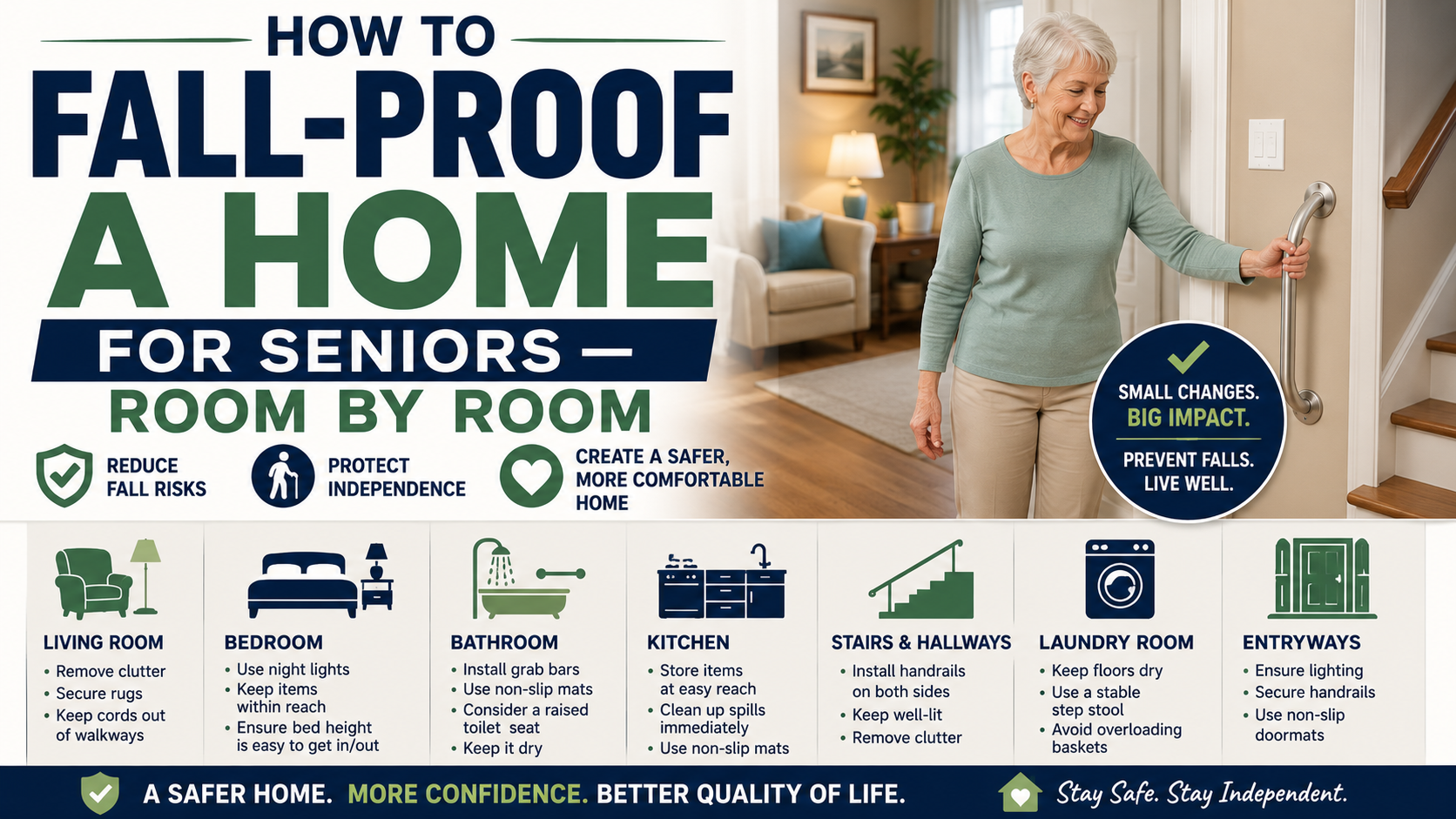
Caregiver burnout is real, it’s serious, and most caregivers don’t see it coming until they’re already in it. Here are the signs and exactly what to do about them.
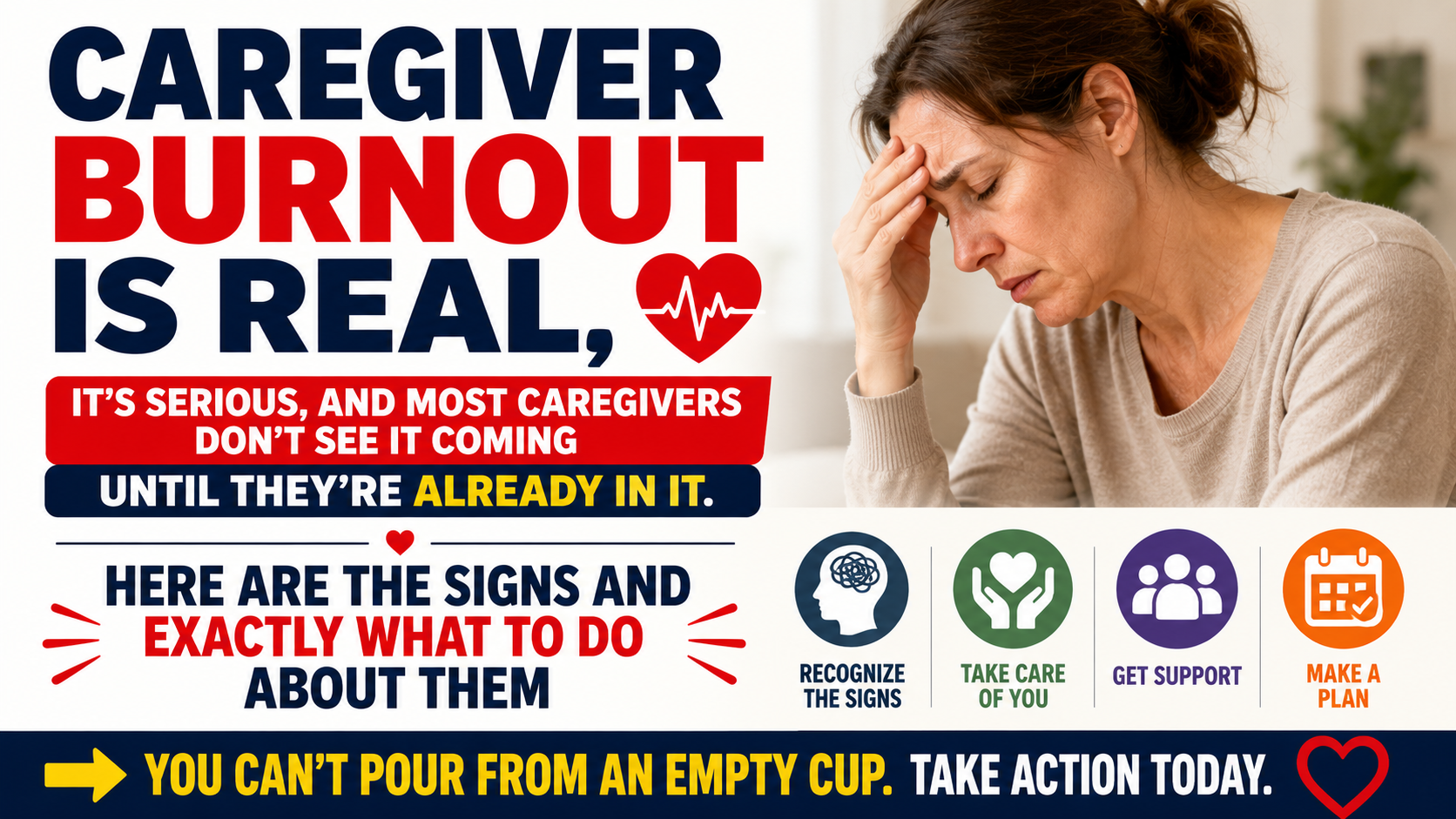
Caregiver burnout doesn’t look the way most people expect. It doesn’t arrive as a dramatic breakdown. It creeps in gradually — as exhaustion that sleep doesn’t fix, as resentment you feel guilty about feeling, as the slow erosion of the person you were before caregiving consumed everything.
Most caregivers don’t recognize it in themselves until they’re already deep in it. And most don’t ask for help until the situation has deteriorated to a point that’s much harder to recover from than if they’d acted earlier.
This guide covers what caregiver burnout actually looks like, why it happens, and — most importantly — what actually helps. Not platitudes. Not advice to “make time for yourself” without any practical guidance on how. Real, specific steps that address the actual causes of burnout rather than just its symptoms.
If you’re reading this because you’re worried you might be burning out — or because someone who loves you has said they’re worried — keep reading. This is for you.
What Caregiver Burnout Actually Is
Caregiver burnout is a state of physical, emotional, and mental exhaustion caused by the sustained demands of caregiving without adequate support, rest, or relief. It’s not weakness. It’s not selfishness. It’s what happens when the human capacity for sustained effort runs out — which it always does eventually, regardless of how much you love the person you’re caring for.
The World Health Organization recognizes burnout as an occupational phenomenon resulting from chronic workplace stress that hasn’t been successfully managed. Caregiving — whether paid or unpaid — is work. Often it’s the most demanding work a person ever does. And it comes with none of the structural supports that paid work typically includes — no shifts, no colleagues to cover for you, no HR department, no vacation policy.
Burnout is not a personal failing. It’s a predictable outcome of impossible conditions. Understanding that distinction is the first step toward doing something about it.


Why Caregivers Are Especially Vulnerable to Burnout
Certain features of caregiving make burnout not just possible but likely without deliberate prevention. Knowing what they are helps explain why you feel the way you do — and what needs to change.
No Clear Off Switch
Most demanding jobs have an end to the day. You leave the office. You clock out. The work is still there but you’re not. Caregiving doesn’t work that way. The worry follows you home because home is where the care is happening. The phone can ring at any hour. The need doesn’t stop because you need to sleep.
This absence of boundary between caregiving and everything else is one of the most exhausting features of the role — and one of the hardest to address because the need is genuinely continuous.
Grief That Nobody Names
Many caregivers are simultaneously grieving a parent who is still alive — the person they were before dementia, before the fall, before the diagnosis. They’re losing their parent gradually rather than all at once, without the social structures that exist for other kinds of loss. Nobody brings casseroles for anticipatory grief. Nobody gives you bereavement leave for watching a parent you love disappear incrementally.
This grief is real and it’s exhausting — and most caregivers carry it without naming it or having anyone acknowledge it.
The Guilt That Comes With the Role
Caregiver guilt is almost universal. Guilt for feeling resentment. Guilt for not doing enough. Guilt for having needs of your own. Guilt for the moments of frustration that are completely human but feel unforgivable. Guilt for wanting a break from someone you love.
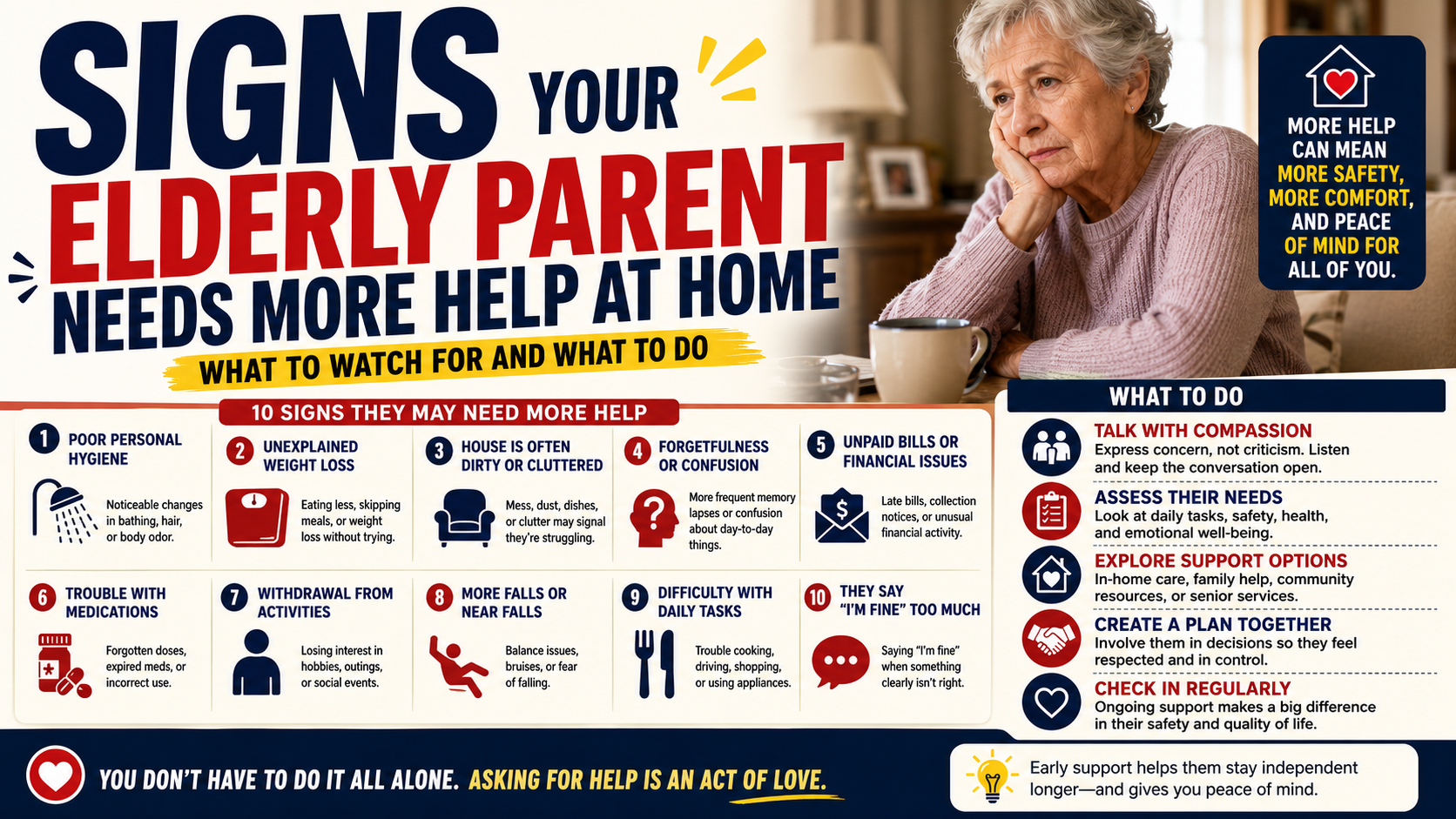
Guilt is exhausting to carry. And it often prevents caregivers from taking the very actions — asking for help, taking breaks, setting limits — that would make the caregiving sustainable. Recognizing the Signs Your Elderly Parent Needs More Help at Home — What to Watch For and What to Do can make it easier to share responsibility before caregiving becomes unsustainable.
The Invisibility of the Work

Caregiving is largely invisible to the people who aren’t doing it. What looks from the outside like a manageable situation — your parent seems fine at family gatherings, you seem to be handling everything — may feel from the inside like an around-the-clock emergency with no relief in sight. The gap between how caregiving looks and how it feels creates isolation. If people don’t see what you’re managing, they can’t help. And asking for help feels like admitting you’re failing at something you should be able to handle. When a parent insists they are fine, understanding what that response may be protecting can make safety conversations less confrontational: when your parent seems fine.


The Signs of Caregiver Burnout — Honest and Specific
These signs overlap with depression and anxiety — and burnout frequently coexists with both. If you recognize yourself in several of these, that’s information worth taking seriously.
Physical Signs

Exhaustion that sleep doesn’t fix. You sleep and wake up tired. Rest doesn’t restore you the way it used to. You feel physically depleted in a way that doesn’t improve with a good night’s sleep because the exhaustion isn’t primarily about sleep deprivation — it’s about sustained depletion without recovery. If unusual sleepiness is affecting your parent rather than the caregiver, excessive daytime sleep in older adults can help distinguish normal tiredness from a warning sign.
Getting sick more often. Chronic stress suppresses immune function. Caregivers who are burning out get more colds, more infections, and take longer to recover from them. If you’ve been sick more than usual in recent months, that’s a physical signal your system is under more stress than it can manage.
Neglecting your own health. Your own doctor appointments aren’t being scheduled or kept. Medications you need aren’t being taken. Exercise that used to be part of your routine has disappeared. Your own health has become the last item on an impossibly long list that never gets to the last item.
Physical symptoms with no clear cause. Headaches. Stomach problems. Muscle tension. Back pain. The body expresses stress in physical ways — and sustained caregiver stress often shows up as chronic physical symptoms that don’t have a clear medical explanation.
Emotional Signs
Resentment. Toward the person you’re caring for — for needing so much. Toward siblings who aren’t doing their share. Toward friends whose lives seem uncomplicated by comparison. Toward your parent’s condition for taking the relationship you had and replacing it with this one.
Feeling resentment doesn’t make you a bad caregiver or a bad person. It makes you a human being carrying more than any person should carry alone. But resentment is a signal that something needs to change — not something to suppress and carry in silence.
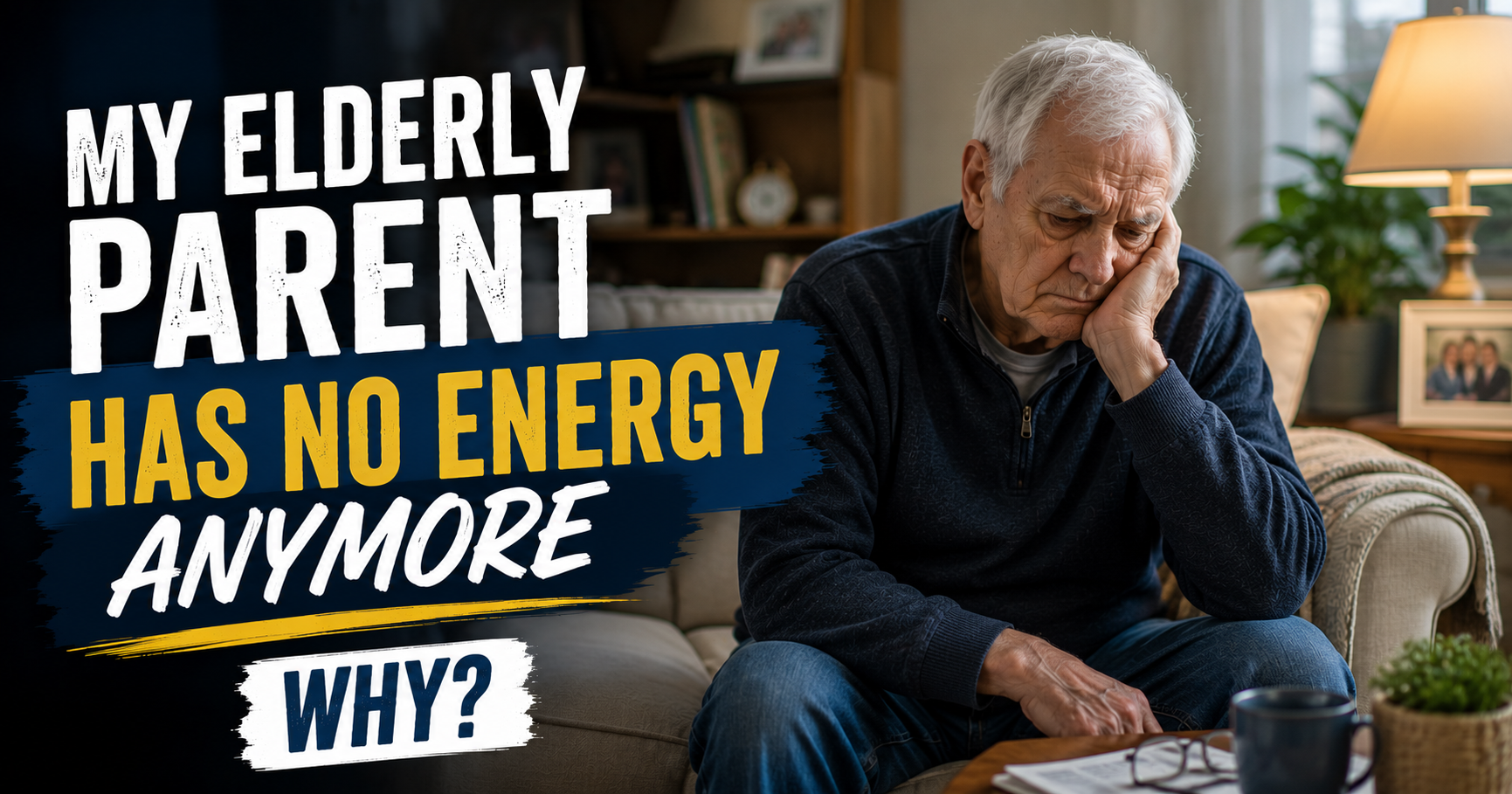
Loss of enjoyment. Things that used to bring pleasure don’t anymore. Hobbies feel impossible to prioritize. Social invitations feel like obligations you can’t meet. The parts of life that used to restore you have been crowded out by caregiving responsibilities until there’s nothing left that’s just yours. A parent’s loss of interest may also occur alongside persistent fatigue, and when an older adult loses interest explores that connection in more detail.
Feeling trapped. The sense that there’s no way out of this situation, no path to anything different, no end point that doesn’t involve loss. Hopelessness about the future. Difficulty imagining what life looked like before or will look like after.
Emotional numbness. The feelings have been so overwhelming for so long that the system has started shutting them down. You feel disconnected — from your parent, from other people, from yourself. Going through the motions of caregiving without being emotionally present for it.
Disproportionate reactions. Small things trigger large emotional responses — frustration, anger, tears — that feel out of proportion to what caused them. This is what happens when someone has been running on empty for long enough that they have no buffer left between stressor and reaction.
Behavioral Signs
Withdrawing from other relationships. Friends and family outside the caregiving situation have faded from regular contact. Social engagements feel impossible to prioritize. The relationship with the person you’re caring for has expanded to fill the space that other relationships used to occupy.
Losing patience in ways that frighten you. Moments of harsh tone, sharp responses, or expressed frustration toward the person you’re caring for that leave you ashamed afterward. Not abuse — just the fraying edges of human capacity being pushed past its limits.
Neglecting caregiving tasks. Paradoxically, burnout often results in worse caregiving — not from not caring but from capacity that’s been depleted past the point of reliable functioning. Medications missed. Appointments not scheduled. Tasks that used to be automatic becoming things that fall through the cracks.
Using alcohol or other substances more than usual. As a way to decompress, to sleep, to turn the volume down on a situation that’s become overwhelming. This is a coping mechanism that creates its own problems fairly quickly and is worth noticing honestly.
Cognitive Signs
Difficulty concentrating. The mental load of caregiving — tracking medications, appointments, symptoms, needs, logistics — leaves insufficient cognitive capacity for other tasks. Decision-making that used to be simple becomes difficult. Focus that used to come easily requires effort.
Intrusive thoughts about caregiving when you’re not caregiving. Lying awake running through logistics. Being physically present in other contexts but mentally in caregiving mode. Unable to be anywhere other than in the caregiving situation even when you’re not physically there.
Dreading contact with the person you’re caring for. The person you love has come to represent overwhelming obligation — and the anticipation of contact brings dread rather than warmth. Noticing this is painful. It’s also important information.
What Actually Helps — Specific and Honest
The advice caregivers most often receive — “make sure you take care of yourself,” “you need to put on your own oxygen mask first” — is true but useless without specificity. Here’s what actually moves the needle.
Name It — To Yourself and to Someone Else
The first and most important step is naming what’s happening. Not “I’m just tired” — burnout. Not “I’m managing” — I’m not managing as well as I need to. Not pushing through without acknowledgment.
Naming it to someone else — a friend, a family member, a therapist, a support group — does something important. It converts a private experience into a shared one. It makes the invisible visible. It opens the door to support that can’t come if no one knows the door exists.
Most caregivers are remarkably reluctant to do this. The reasons are understandable — not wanting to seem weak, not wanting to burden others, not wanting to hear advice that misses the point, not wanting to face how bad things have gotten. Do it anyway.
Get Specific About What You Actually Need
“Help” is too vague to act on. “I need someone to sit with Mom on Tuesday afternoons so I can have three hours that are completely mine” is specific and actionable. “I need someone to take over the grocery shopping for the next month” is specific and actionable. “I need someone to come with me to the next doctor’s appointment so I don’t have to process everything alone” is specific and actionable.
People who want to help often don’t know how. Specific requests give them a way in. And asking for specific things is much more likely to produce actual help than general expressions of difficulty.
Respite Care — Non-Negotiable, Not Optional
Respite care — scheduled time away from caregiving — is not a luxury. It’s a sustainability requirement. A caregiver who never gets time away from the role is a caregiver who burns out. It’s that simple.
Respite can take many forms:
- Family rotation — siblings or other family members covering regular scheduled periods
- Paid in-home care — a professional caregiver covering specific hours on a regular schedule
- Adult day programs — structured daytime activity for your parent that gives you time during the day
- Respite care programs — through the Alzheimer’s Association, Area Agencies on Aging, and local nonprofit organizations
- Short-term residential respite — temporary placement in a care facility for days to weeks, giving the primary caregiver a genuine break
The Alzheimer’s Association helpline (1-800-272-3900) can connect you with respite resources in your area regardless of whether dementia is involved. The Eldercare Locator (1-800-677-1116) connects families with local Area Agencies on Aging that coordinate respite and support services.
Address the Guilt Directly
Caregiver guilt is one of the primary barriers to taking the actions that would make caregiving sustainable. It needs to be examined rather than carried.
The guilt that prevents you from taking a break, from asking for help, from setting any limits — that guilt is not protecting the person you’re caring for. It’s depleting you until you have nothing left to give. A caregiver who burns out completely can give nothing to anyone.
Taking care of yourself is not taking something away from the person you’re caring for. It’s what makes sustained, quality caregiving possible. That’s not a rationalization. It’s accurate.
Have the Sibling Conversation
If caregiving responsibilities are falling primarily on one person while siblings are less involved — whether due to distance, different life circumstances, or simply different levels of engagement — that imbalance is a significant driver of burnout and needs to be addressed directly.
The conversation is uncomfortable. Have it anyway. Not as an accusation but as a problem-solving conversation: “The current arrangement isn’t sustainable and I need the load to be more distributed. Here’s what I think could be redistributed. What works for you?”
Siblings who live at a distance can contribute financially to paid care that gives you time. They can take over remotely manageable tasks — bill management, prescription coordination, scheduling. They can come for scheduled visits that give you a break. Remote contribution is genuinely possible with clear requests.
Use Technology to Reduce the Burden
Technology doesn’t replace human caregiving — but it can meaningfully reduce the monitoring burden that contributes to caregiver exhaustion.

A medical alert device with automatic fall detection reduces the constant low-level anxiety about what might be happening when you’re not there. The SecuLife Smartwatch provides automatic fall detection and real-time GPS tracking — so you can see at a glance that your parent is home and safe without a check-in call, and know that if a fall occurs the alert goes out automatically without depending on them to press a button.

Our full SecuLife review covers every feature. Our guide on signs it’s time for a medical alert system covers how to assess whether it’s the right time.
→ See the SecuLife Smartwatch on Amazon

An automatic pill dispenser removes the medication management burden that is one of the most anxiety-producing aspects of remote caregiving. Our review of the best automatic pill dispenser for seniors covers the option that alerts caregivers when a dose is missed.

A video doorbell like the Ring Battery Doorbell provides visibility into who comes and goes without requiring a call. Home safety modifications that reduce fall risk reduce the anxiety about what might happen — our complete home safety checklist covers everything worth addressing.
Seek Professional Support
Therapy — particularly with a therapist who has experience with caregiver issues — addresses the emotional dimensions of burnout in ways that practical coping strategies alone can’t. The grief, the guilt, the resentment, the loss of identity outside the caregiver role — these are psychological experiences that deserve professional attention.
Many therapists now offer telehealth appointments that don’t require a commute or schedule disruption. This matters for caregivers whose primary barrier to professional support is time and logistics.
Support groups — in person or online — connect you with people who understand the specific experience of caregiving in ways that friends and family who haven’t done it often can’t. The Alzheimer’s Association, AARP, and many local hospitals and senior centers offer caregiver support groups. Finding people who get it without having to explain everything is genuinely relieving.
Protect at Least One Thing That’s Yours
One activity. One relationship. One hour. Something that exists outside caregiving and belongs only to you.
This sounds small. For someone in caregiver burnout it often feels impossible — there’s no time, there’s too much to manage, how could you justify spending an hour on yourself when there’s so much to do.
Do it anyway. Not instead of caregiving responsibilities — in addition to them, even if that requires help from someone else to make it possible. The thing that’s yours is what reminds you that you exist outside this role. That reminder is not optional. It’s what keeps the role from consuming everything.

If You’re in Crisis Right Now
If you’re reading this and feeling like you genuinely cannot continue — if thoughts of harming yourself or the person you’re caring for have entered your mind, even briefly — please reach out for support immediately.
The 988 Suicide and Crisis Lifeline (call or text 988) provides immediate support for anyone in mental health crisis. The Caregiver Action Network helpline provides specific caregiver crisis support. Your primary care physician can connect you with mental health resources urgently.
Reaching this point doesn’t make you a bad person or a bad caregiver. It means you’ve been carrying too much for too long without adequate support. That’s the situation that needs to change — and it can change with the right help.
What to Do Right Now — A Specific Starting List
If you’ve recognized yourself in this guide, here’s where to start — today, not eventually.
- Tell one person. A friend, a sibling, a doctor. Name what’s happening. Don’t soften it.
- Identify one specific thing you need. Not general help — one specific thing. Ask for it.
- Call the Eldercare Locator (1-800-677-1116) and ask what respite resources are available in your area.
- Schedule one appointment — your own doctor, a therapist, or a caregiver support group. Put it on the calendar.
- Reduce the monitoring burden with technology. If a medical alert device, automatic pill dispenser, or home safety modification would reduce your anxiety, get it in place.
- Have the sibling conversation if it needs to happen. This week, not next month.
None of these are complete solutions. All of them move the situation in the right direction. Movement matters more than perfection.

The Long View
Caregiving for an aging parent is one of the most significant things most adult children ever do. It’s also one of the most difficult — in ways that are rarely fully understood by people who haven’t done it.
The goal isn’t to get through it without falling apart. The goal is to provide good care — to your parent and to yourself — over what may be a long period of time. That’s only possible if you treat your own sustainability as seriously as you treat your parent’s safety.
You are not a bottomless resource. You are a person. The caregiving role doesn’t change that — it just sometimes makes it easy to forget.
Don’t forget.
For everything related to keeping your parent safer — which directly reduces caregiver burden — our guide on how to help an elderly parent live safely alone covers every practical step. Our aging in place checklist for families gives you the complete planning framework. And our guide on warning signs you may not be safe living alone covers what to watch for as your parent’s situation evolves.
Frequently Asked Questions
How do I know if what I’m experiencing is burnout or just normal caregiver stress?
Normal caregiver stress is difficult but manageable — it comes and goes, responds to rest, and doesn’t fundamentally alter your personality, relationships, or ability to function. Burnout is sustained, doesn’t respond to normal rest, and affects multiple dimensions of your life simultaneously — physical health, emotional wellbeing, relationships, and work. If stress has been present at a high level for more than a few months and rest isn’t restoring you, that’s burnout rather than normal stress.
Is it okay to place a parent in a care facility rather than continuing to provide care at home?
Yes — absolutely. Choosing a care setting where your parent receives professional care is not abandonment. It’s a care decision like any other care decision — made based on what provides the best outcomes for your parent given the full picture of their needs and your family’s situation. Many adult children who make this decision find that their relationship with their parent actually improves — because they’re no longer so depleted that they have nothing left for the relationship. The goal is your parent’s wellbeing, not your own martyrdom. When that decision needs to be discussed with a parent, these strategies for talking about a care setting can help protect the relationship.
My siblings think I’m exaggerating how hard this is. What do I do?
This is one of the most common and most painful aspects of unequal caregiving situations. Siblings who aren’t present for the day-to-day reality often genuinely don’t understand it — not because they’re cruel but because they’re not seeing it. Invite them to be present for a period — a week, a weekend — to experience what the actual situation looks like. Document specifically what caregiving involves — the hours, the tasks, the emotional demands — so the conversation is grounded in specifics rather than general impressions. If the conversation continues to go nowhere, a family therapist or mediator can help facilitate it.
How do I ask for help without feeling like I’m burdening people?
The reframe that helps most people: when you don’t ask for help, the people who care about you are worried but helpless. When you ask specifically, you give them a way to act on that care. You’re not burdening them — you’re giving them something they can actually do. Most people who love you want to help. They don’t know how without being told. Asking is a gift to them as much as it is to yourself.
Will things get better or does burnout just keep getting worse?
Burnout is reversible with adequate intervention — it’s not a permanent state. But it doesn’t resolve on its own without changes to the conditions that caused it. More time doing the same things that burned you out produces more burnout. Changes to the caregiving arrangement, added support, protected personal time, and professional help can meaningfully improve the situation. The earlier those changes happen the easier the recovery. But recovery is genuinely possible even from significant burnout with the right support.

You Cannot Pour From an Empty Cup
It’s a cliché because it’s true. And like most true things it’s easier to say than to act on.
The person you’re caring for needs you — not a depleted, exhausted, resentful version of you running on fumes, but a version of you that has something left to give. Getting there requires treating your own needs as legitimate rather than as obstacles to getting back to the real work.
Your needs are the real work too. Start there.
About the Author
Margaret Holloway, RN spent 22 years in geriatric nursing working alongside family caregivers in some of the most demanding situations imaginable. She watched many of them reach burnout — and watched others navigate the same impossible circumstances without breaking, because they had support structures in place that made sustaining the role possible. The difference between those two groups is what drives her writing. She covers caregiver health and senior safety for Elder Safety Guide because she believes the people doing this work deserve the same level of care and attention they give to everyone else.