Worried about an aging parent living alone? Here’s the complete practical guide to making it safe — home modifications, technology, health management, and the conversations that matter.
If you’re reading this, you’re probably somewhere between mild concern and genuine worry about a parent living alone. Maybe they’ve had a fall. Maybe you’ve noticed things slipping — the house less tidy than it used to be, medications not quite right, a few close calls they mentioned casually that didn’t sound casual at all.
Or maybe nothing specific has happened yet and you just know, the way adult children know, that the situation is more fragile than anyone is saying out loud.
Either way, you’re in the right place. This guide covers everything — the home modifications that make the biggest difference, the technology that provides real protection, the health management that keeps problems small, the legal planning that protects everyone, and most importantly, how to have the conversations that make all of it actually happen.
This isn’t a guide about taking over your parent’s life. It’s about making independent living safer, more sustainable, and less frightening — for them and for you. Understanding What Is Aging in Place — and Is It Right for You? can help families frame safety changes as a way to preserve independence rather than take it away.
Start Here — The Mindset That Makes Everything Easier
Before getting into the practical steps, one mindset shift makes everything in this guide more effective.
Your parent’s independence is the goal — not the obstacle.
Every conversation, every modification, every piece of technology in this guide should be framed around extending and protecting your parent’s ability to live in their own home on their own terms. Not around your fear. Not around what you think they should do. Around what helps them keep doing what they want to do.
When grab bars are presented as “so you don’t fall,” they feel like an acknowledgment of decline. When they’re presented as “so you can stay in your own bathroom comfortably,” they feel like an investment in independence. Same object. Completely different reception.
Hold that frame through everything that follows and the practical steps get dramatically easier to implement.
Step 1 — Assess the Real Situation Honestly
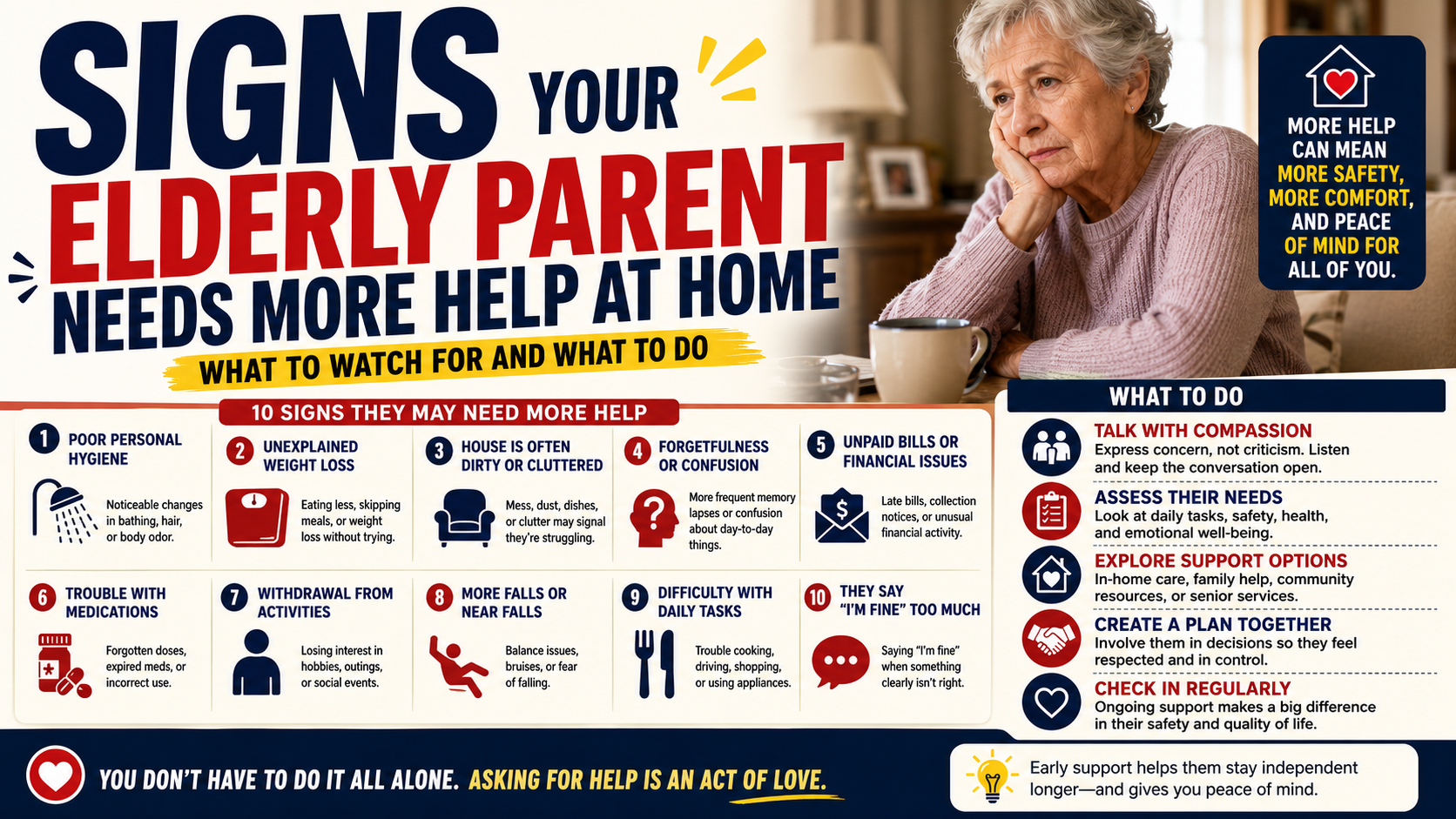
Most adult children either underestimate or overestimate how their parent is doing — because they’re seeing them through the filter of love and worry rather than with fresh eyes. An honest assessment is the foundation everything else builds on. A structured list of Signs Your Elderly Parent Needs More Help at Home — What to Watch For and What to Do can make that assessment more objective during visits.
What to Look For During a Visit
Next time you visit, walk through the house with deliberate fresh eyes. You’re not inspecting — you’re gathering information. Here’s what to notice:
The kitchen: Is there adequate food? Is anything spoiled in the refrigerator? Are dishes piling up in ways that suggest meal preparation has become difficult? Are medications stored accessibly but safely?
The bathroom: Any signs of falls — unexplained bruising, a towel bar pulled from the wall, grab bars used incorrectly? Is the bathroom clean and maintained? Are there any slip hazards?
The bedroom: Is the bed manageable to get in and out of? Is the path to the bathroom clear at night? Are there medications or essentials within reach?
The general home: Are bills being paid? Is the mail piling up? Are there any signs of deferred maintenance that might indicate declining capacity or energy? Are there cords or rugs creating trip hazards?
Your parent themselves: How are they moving? Have they lost weight? Are they dressed appropriately? Do they seem mentally sharp? Are they mentioning the same things repeatedly? Do they seem more isolated than before?
None of these observations alone means something is wrong. Patterns matter more than individual data points. And the right response to what you observe is almost always a conversation — not a unilateral decision.
The Warning Signs Worth Taking Seriously
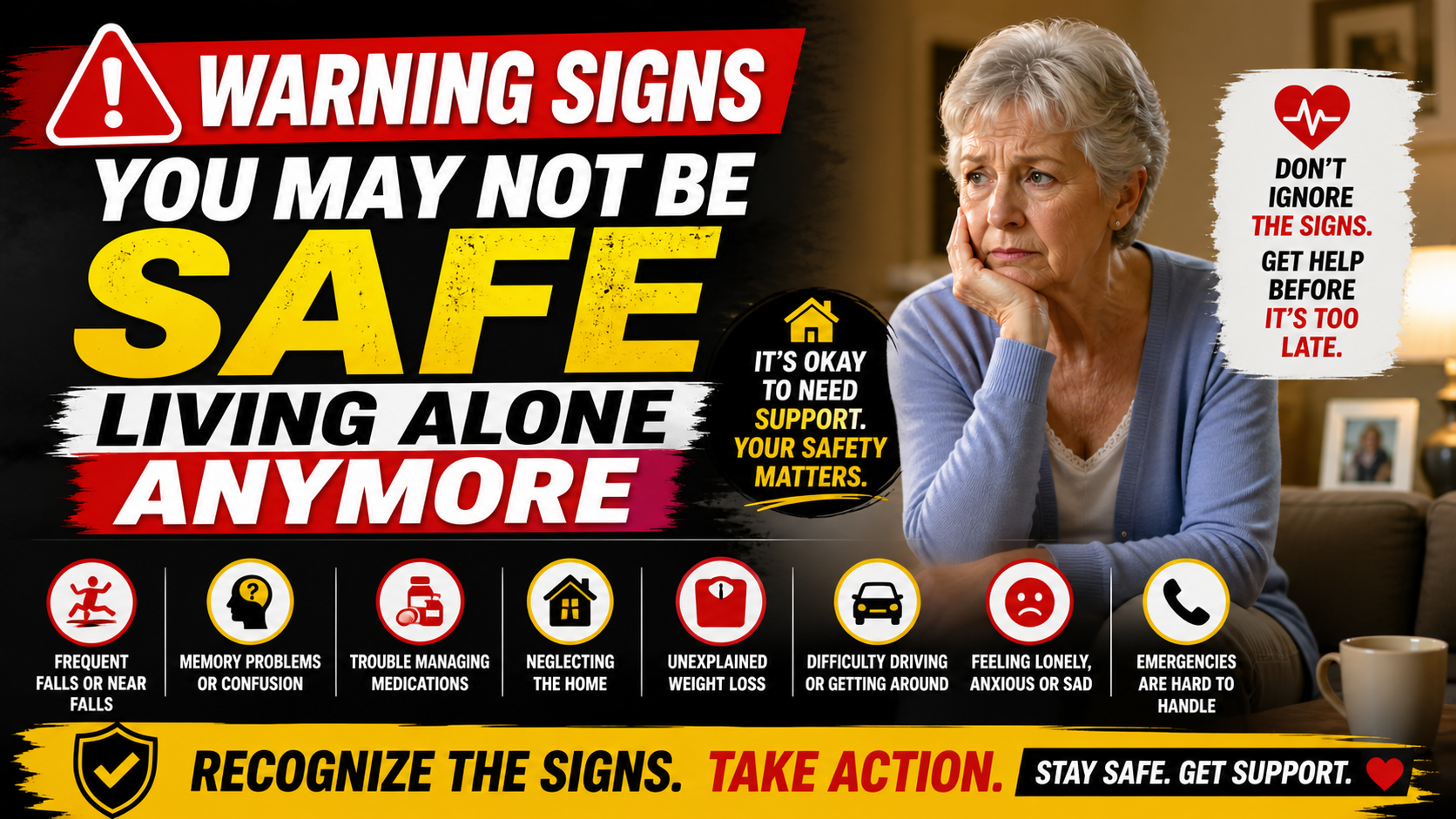
Our guide on warning signs you may not be safe living alone anymore covers the full picture in detail — but the signals worth acting on quickly include any fall history, significant unexplained weight loss, missed medications, getting lost in familiar places, unpaid bills, or a home that’s noticeably less maintained than it used to be.
Any one of these warrants a direct conversation. More than one warrants a coordinated family response and possibly a medical evaluation.
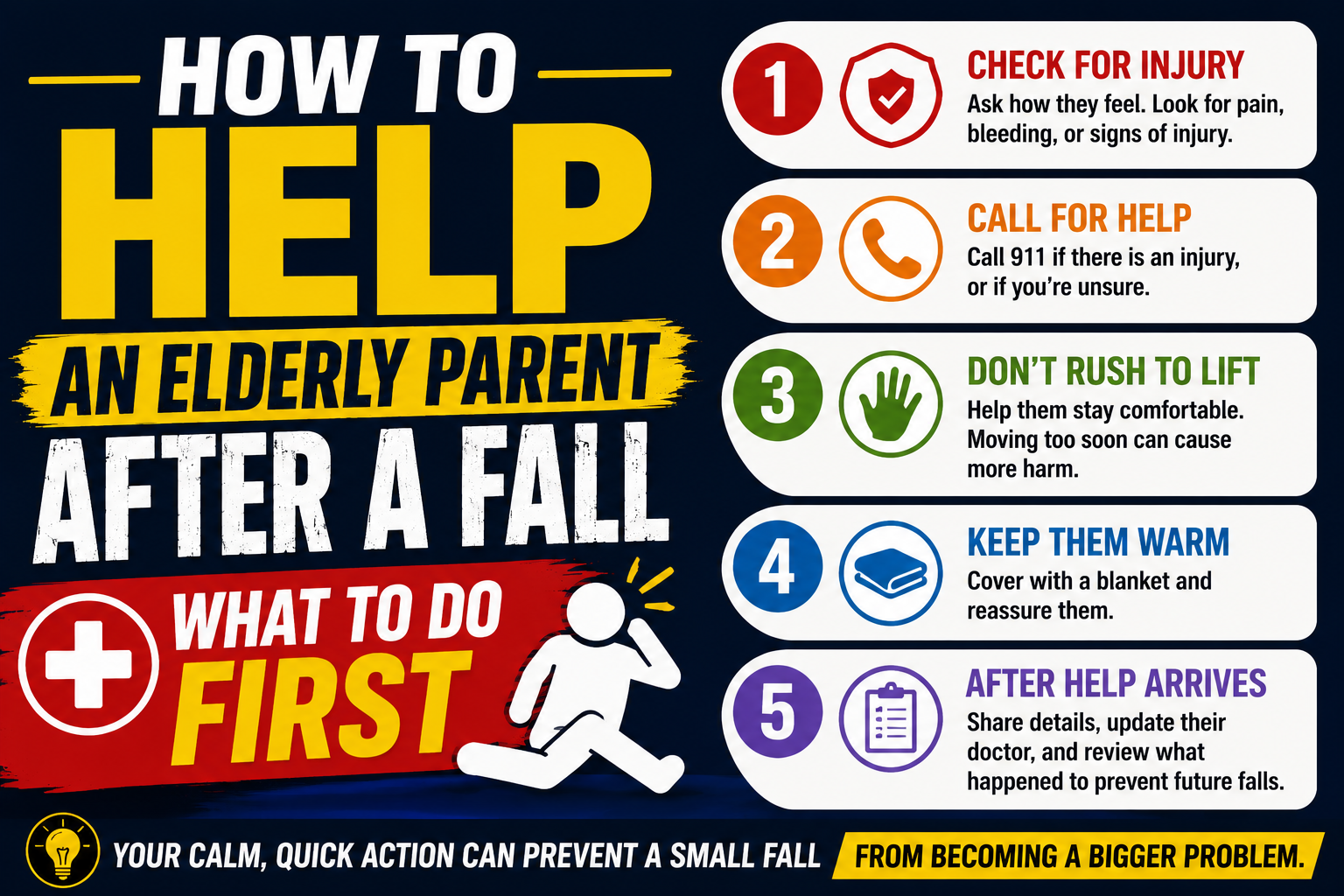

Step 2 — Have the Conversation Before You Need To
The conversation about safety is easier before something goes wrong than after. That seems obvious, but most families have it after — prompted by a fall, a hospitalization, or a crisis that makes the stakes painfully clear.
Having it now, when there’s no emergency driving the agenda, means more time, more calm, and more room for your parent to actually participate in the decisions rather than having them made for them under pressure.
How to Approach It
Choose the right moment. Not during a family gathering where your parent will feel ambushed. Not immediately after a scary incident when emotions are raw. A calm, connected one-on-one conversation works far better than an intervention.
Lead with what you want for them, not what you’re afraid of. “I want you to be able to stay in your home for as long as possible and I’ve been thinking about what we can do together to make that happen” is a completely different opening than “I’m really worried about you living alone.”
Ask more than you tell. What do they worry about? What would they want to happen if something went wrong? What would help them feel more secure? Their answers tell you what will actually work — not what you’ve decided should work.
Make it collaborative. You’re figuring this out together, not presenting a plan they need to accept. The difference in reception is enormous.
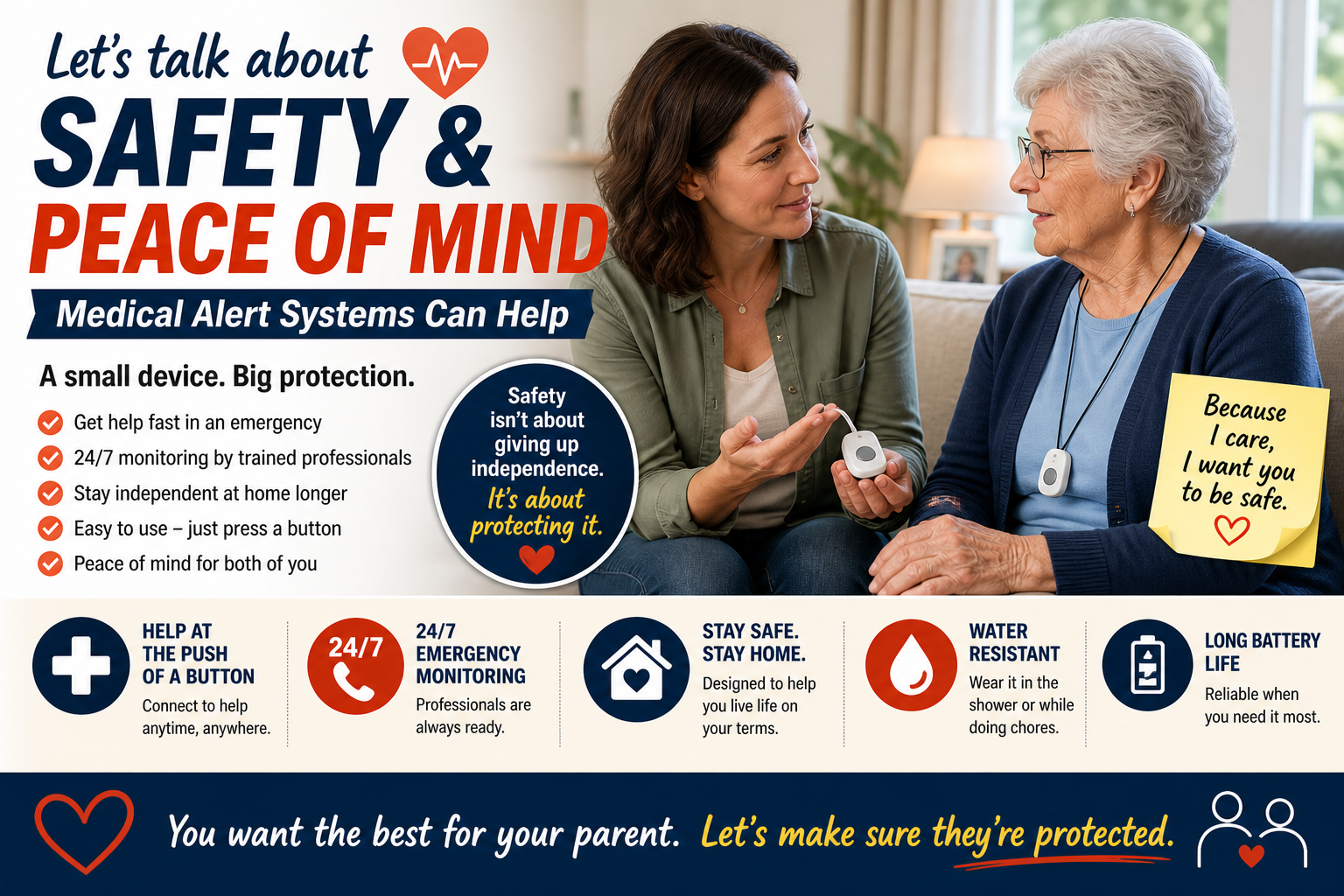
Our guide on how to talk to a parent about safety measures covers the specific conversation techniques that work — including how to handle resistance and the most common objections.
Step 3 — Make the Home Safe
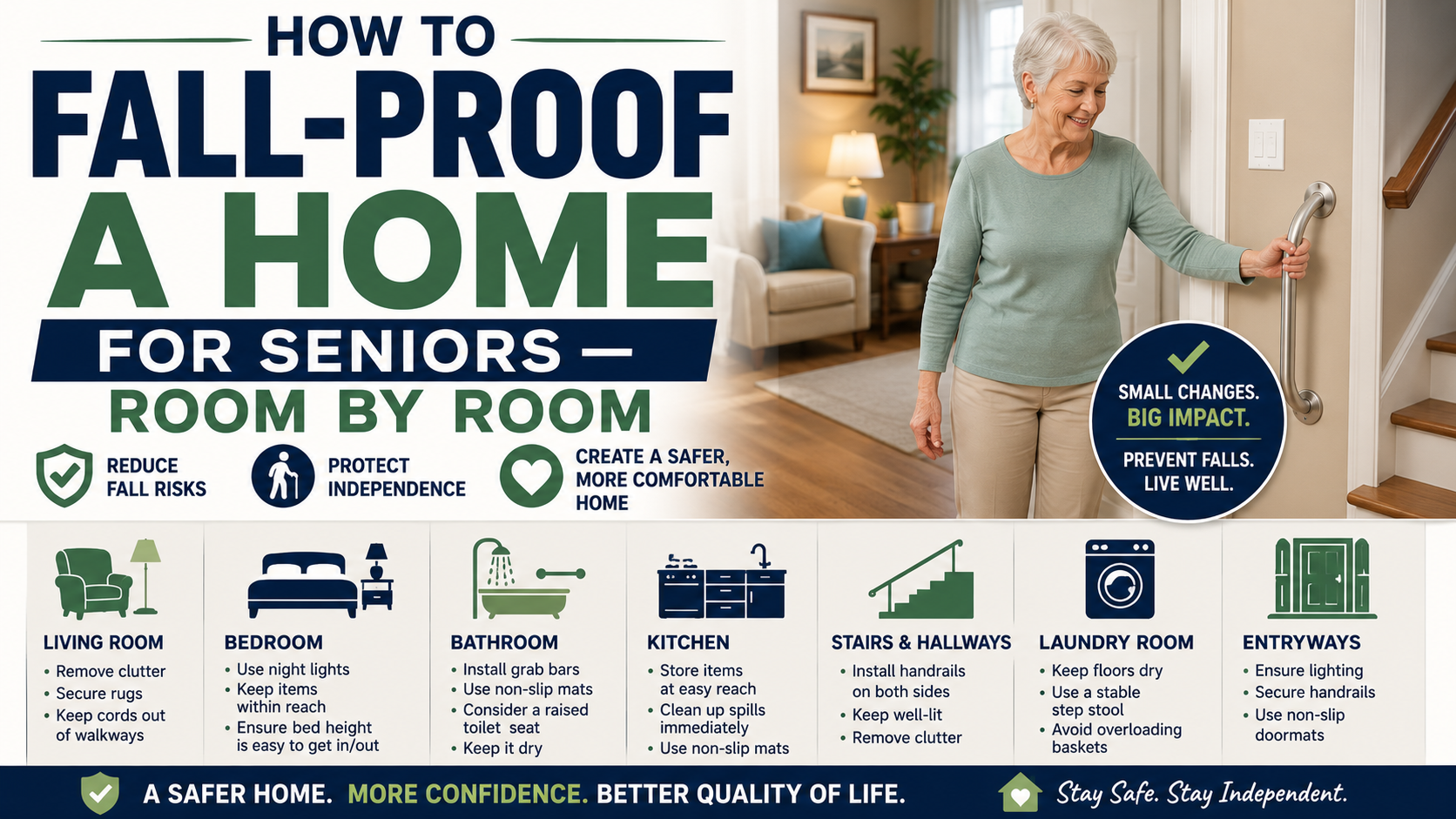
The home environment is where most falls happen and where the highest-impact changes are available. Work through this systematically — room by room — rather than trying to address everything at once.
The Bathroom — Start Here
The bathroom is statistically the most dangerous room in the home for older adults. It combines wet surfaces, awkward movements, hard floors, and multiple daily high-risk transitions into one small space. It’s also where the most impactful, most affordable modifications are available.
Grab bars — the single most important modification. At the shower entry, on the back wall of the shower, and next to the toilet. These three locations cover the highest-risk transitions in the bathroom. The critical distinction: towel bars are not grab bars. They will pull out of the wall under body weight. Proper grab bars are load-rated safety fixtures mounted into studs.

Our review of the best grab bars for seniors covers exactly what to buy. Our grab bar placement guide covers where to install them with exact measurements.
Toilet safety rails. Getting on and off the toilet happens multiple times every day and is one of the most physically demanding transitions older adults make regularly. Toilet safety rails with armrests transform this from a fall risk into a supported, managed movement. They install without tools and fit any toilet.

→ Get the Toilet Safety Rails on Amazon

Non-slip bath mat. The moment of stepping out of the shower onto the bathroom floor with wet feet is one of the highest-risk daily transitions. A mat that shifts even slightly at that moment is a fall hazard rather than a safety measure. Our review of the best non-slip bath mat for seniors covers why most mats fail and what to use instead.

→ Get the Diatomaceous Earth Bath Mat on Amazon

Shower chair. Standing in a wet shower is a daily fall risk. A shower chair eliminates that risk entirely by allowing showering from a seated position. Frame it as comfort rather than safety — showering seated is genuinely more relaxing and less physically demanding. Our review of the best shower chair for seniors covers what to look for.
→ Get the Shower Chair on Amazon
For the complete bathroom safety picture our guide on how to make a bathroom safer for seniors covers every upgrade worth making.
The Bedroom — Second Priority
The bedroom and the nighttime path to the bathroom are the second-highest risk area. Two transitions matter most — getting in and out of bed and navigating to the bathroom in the dark.

Bed rail. Getting out of bed is high-risk at the two most vulnerable times of day — first thing in the morning when blood pressure hasn’t normalized and alertness is low, and during nighttime bathroom trips in the dark. A bed rail gives a firm handle to push against during the sit-to-stand transition that mattresses simply can’t provide. Our review of the best bed rail for seniors covers the ASTM certified option we recommend.

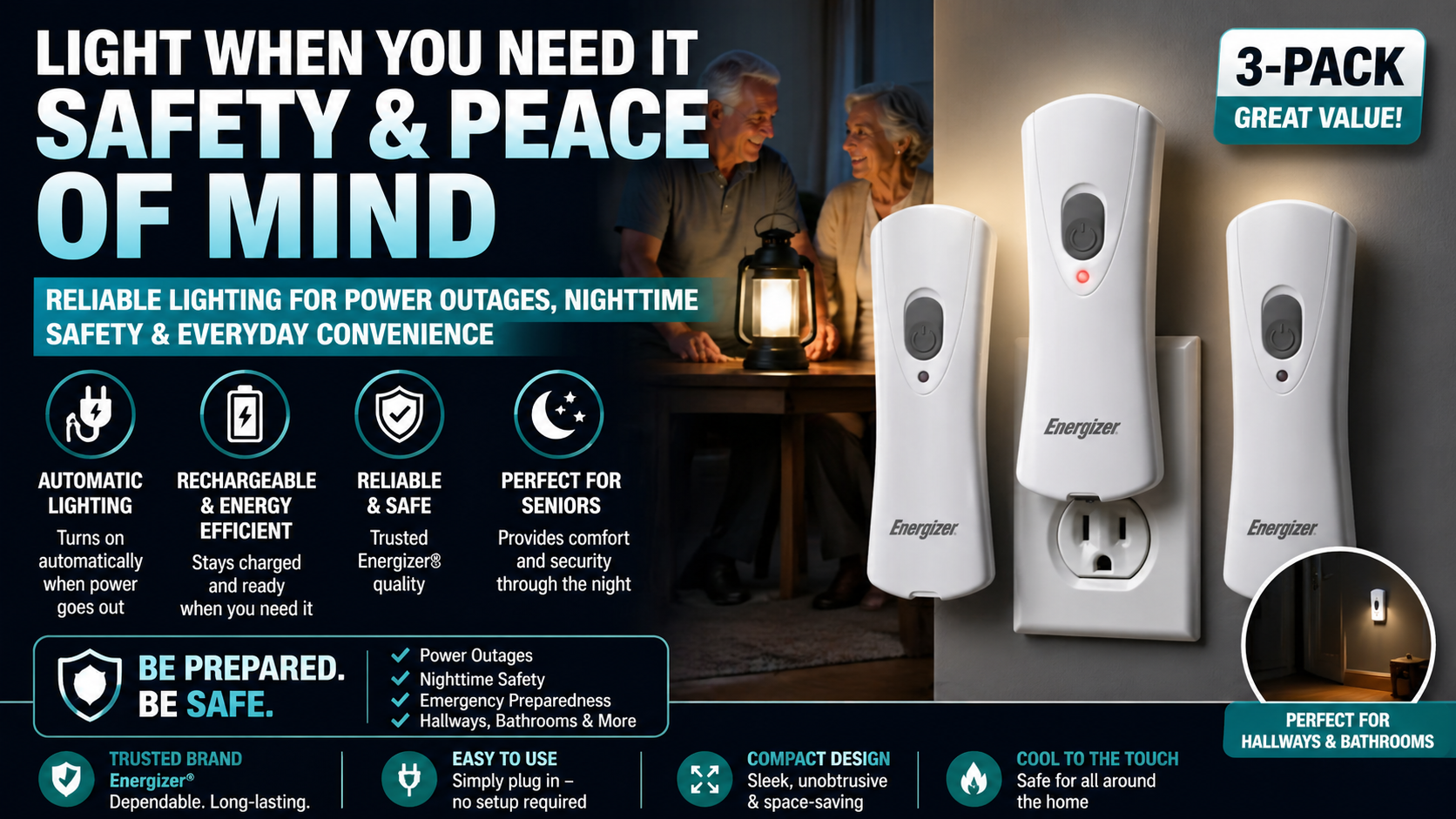
Night lights on the bathroom path. The path from the bed to the bathroom needs to be lit automatically — before your parent is moving, not after finding a switch in the dark. Plug-in auto-on units that activate immediately when the power goes out cover both nightly use and power outage scenarios. Three units — bedroom, hallway, bathroom — cover the entire path for under $50. Our review of the best auto-on rechargeable flashlights covers the option we recommend.
→ Get the Auto-On Night Lights 3-Pack on Amazon
Bed height. The correct height allows your parent to sit on the edge with feet flat on the floor and knees at approximately 90 degrees. Too low makes rising much harder. Too high creates a long drop and instability. Bed risers add height. Removing the box spring reduces it. Getting this right makes every single getting-up transition safer.
Clear the floor. The path from bed to bathroom should have nothing on it — no rugs that shift, no furniture corners to navigate, no items left on the floor. This path gets walked in the dark, half asleep, sometimes urgently. It needs to be as clear and direct as possible.
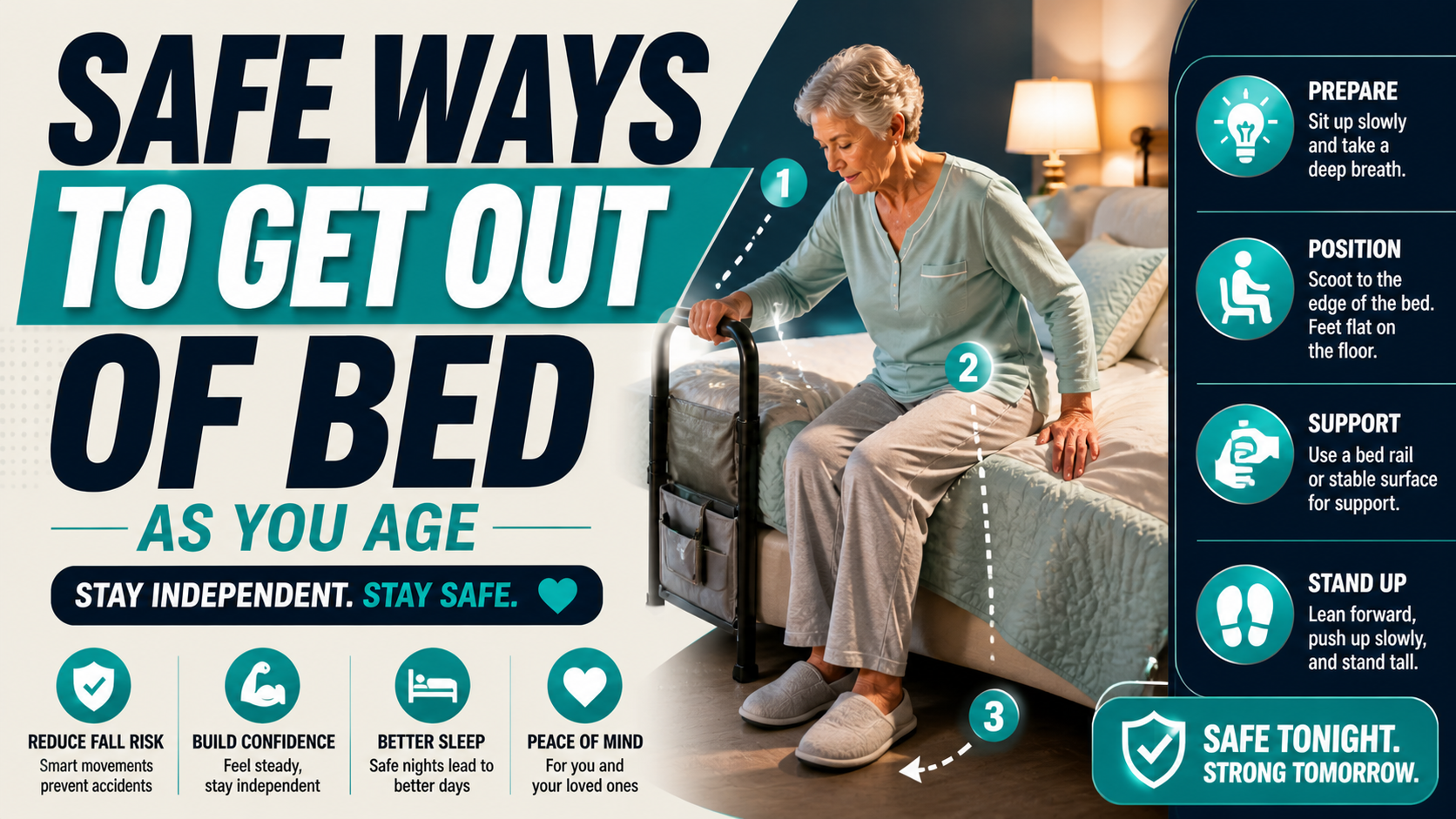
Our guide on senior bedroom safety tips for nighttime falls covers every modification worth making. Our guide on safe ways to get out of bed covers the correct technique that works alongside the equipment.
Living Areas, Kitchen, and Stairs
Rugs — secure or remove every single one. Unsecured area rugs are one of the most common fall hazards in the home and one of the most invisible because familiarity makes them disappear from conscious awareness. The rule is simple: if there’s any doubt about whether a rug is fully secured, remove it.
Cords off every walking path. Television cables, lamp cords, phone chargers — anything crossing a walking path is a trip hazard. Route all cords along walls and secure with cord clips. This is free to fix and takes an afternoon.
Kitchen storage reorganization. Daily-use items should live between hip and shoulder height. No reaching overhead or bending to floor level for anything used regularly. This eliminates a consistent source of balance-challenging movements that happen multiple times every day.
Stair handrails on both sides. Most home staircases have a handrail on only one side. For anyone with balance challenges this means going up or down holding only one side — which may be the weaker side depending on direction. A second handrail on the opposite wall gives bilateral support throughout the full stair run.
Lighting throughout. What feels adequately lit to a younger person may be genuinely insufficient for an older adult with reduced visual acuity. Increase wattage, add lamps to dark corners, ensure light switches are accessible before entering each room.
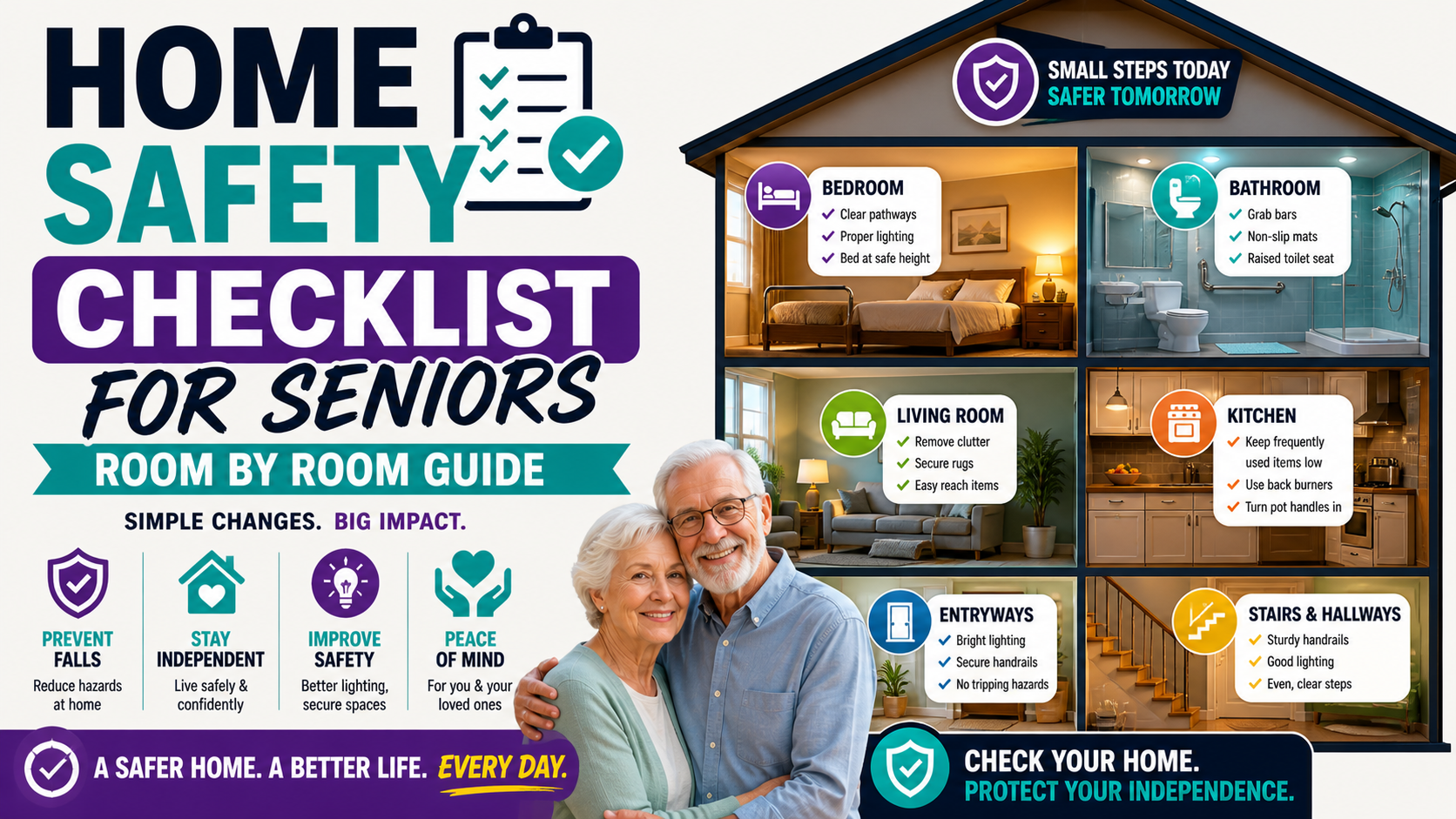
Our complete home safety checklist for seniors gives you a room-by-room assessment tool to work through systematically. Our guide on how to make your home safer as you age covers the complete modification picture. And our guide on home modifications ranked by impact tells you exactly what to do first.


Step 4 — Put the Safety Net in Place
Even a thoroughly modified home can’t guarantee a fall never happens. Every adult child needs to answer one honest question: if my parent falls at home and can’t get up, what happens? How long before someone knows?
For most families the honest answer to that question is “too long.” And closing that gap is one of the most important things you can do.
Medical Alert Device With Automatic Fall Detection
A medical alert device with automatic fall detection is the answer to the “what if they can’t press a button” problem that traditional medical alert pendants don’t solve. Automatic detection means the alert goes out even if your parent is unconscious, disoriented, or simply can’t reach anything — which is exactly the scenario that makes living alone most dangerous.
The SecuLife Smartwatch is the option we recommend for most families. It delivers automatic fall detection, real-time GPS tracking, SOS calling, and two-way communication from the wrist — in a device that looks like a regular smartwatch rather than a medical alert pendant. That matters enormously for adoption. A device your parent refuses to wear provides zero protection.
GPS tracking is particularly valuable for families managing from a distance. You can check where your parent is at any time through the companion app without calling. You’ll know they made it to their appointment, that they’re home from their walk, that everything is normal — without a check-in call that can feel like surveillance.

→ Get the SecuLife Smartwatch on Amazon

Our full SecuLife Smartwatch review covers every feature in detail. Our guide on signs it’s time for a medical alert system helps assess timing. Our guide on how much a medical alert system costs breaks down the financial picture. And our comparison of smartwatch vs dedicated medical alert system covers the format question directly.
Ring Video Doorbell
A video doorbell means your parent never needs to make an unnecessary trip to the door to see who’s there — removing a repeated low-level fall risk and providing protection against scammers and unwanted visitors. You can see who rings their doorbell remotely through the app — a simple but meaningful visibility into daily life from a distance.

Our Ring Battery Doorbell review covers everything worth knowing about setup and features.

→ Get the Ring Doorbell on Amazon
Establish a Check-In Routine
Technology provides coverage when no one is physically present — but human connection matters too. A structured check-in routine means someone knows within a predictable window if something is wrong.
The routine needs to be explicit — a daily text, a scheduled call, a neighbor who notices if the lights haven’t come on. Vague reassurances that “someone would notice” are not a check-in routine. Specific agreements with specific people are.
Build redundancy into the system. Multiple people checking in at different times means no single point of failure. A neighbor who knows your parent and has your phone number adds a local layer that family members at a distance can’t provide.
Step 5 — Address Mobility and Physical Function
Physical function — strength, balance, mobility — is the foundation that everything else builds on. Modifications help. Technology helps. But keeping your parent physically capable is what makes independent living sustainable over time.
Walking Aid Assessment
If your parent’s balance has changed noticeably — they reach for walls more than they used to, they’ve had near-misses, they slow down significantly on uneven ground — a walking aid used proactively is one of the highest-impact interventions available.
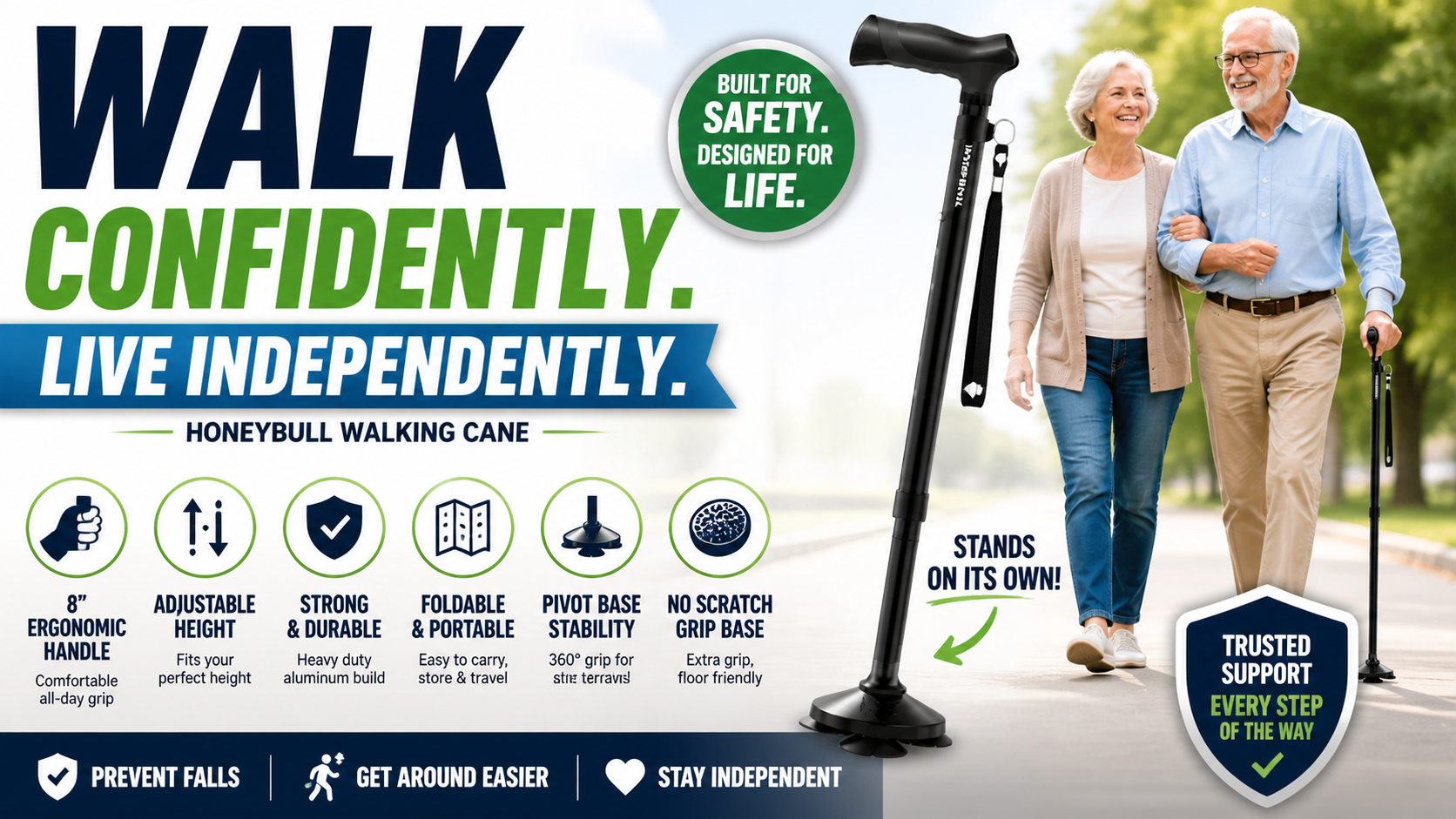
A cane adds a third point of ground contact and meaningfully improves stability during walking. The foldable format matters — a cane that goes everywhere is one that’s there when needed. Our review of the best walking cane for seniors covers the free-standing foldable option we recommend.
→ Get the HONEYBULL Walking Cane on Amazon

If balance challenges have progressed beyond what a cane addresses — if bilateral support is needed, if rest breaks during walks are necessary — a rollator walker is the next step. Our review of the best rollator walker for seniors covers the all-terrain option we recommend.
→ Get the SOUNDFUSE Rollator Walker on Amazon

Our guide on tips for helping seniors with balance problems covers the full picture — exercise interventions, medical evaluation, and the four-part approach that actually moves the needle on balance over time.
Encourage Exercise — Specifically for Balance
Exercise targeted at balance and strength is the single most powerful fall prevention intervention available — with research showing 20 to 30 percent reduction in fall rates for older adults who do consistent balance and strength training. Tai Chi has particularly strong evidence and is available through most senior community programs.
Your role here is encouragement and logistics — helping find programs, offering to attend initial classes together, making it easy to get there. Nagging doesn’t work. Removing barriers does.
Physical Therapy
A physical therapist can assess your parent’s specific balance and gait patterns, identify individual risk factors, and create a targeted exercise program. This is typically covered by Medicare with documented fall risk or functional limitation. Request it specifically from their physician rather than hoping it gets suggested — it often doesn’t unless asked for directly.
Step 6 — Manage Health Proactively
Chronic health conditions and their medications are among the most significant contributors to fall risk that families overlook entirely. Addressing health management proactively — not just reactively treating problems as they arise — directly affects independent living sustainability.
Medication Review for Fall Risk
This is the most overlooked and most actionable health intervention for fall prevention. Dozens of commonly prescribed medications — blood pressure medications, sleep aids, diuretics, antidepressants — have side effects that directly increase fall risk. A medication review specifically focused on fall risk, requested from your parent’s physician using those exact words, often produces timing adjustments or medication changes that meaningfully reduce risk.
Bring it up at the next appointment. “Can you review all of my parent’s medications specifically for fall risk?” is a specific enough question to prompt a real review rather than a general reassurance that everything is fine.
Blood Pressure Monitoring at Home
High blood pressure is a silent risk factor for strokes and cardiac events — and blood pressure medications can cause orthostatic hypotension that increases fall risk directly. Home monitoring provides the daily visibility that occasional clinic readings can’t. Our review of the best blood pressure monitor for seniors covers the Bluetooth-connected option we recommend — which logs readings automatically and allows family members to see the data remotely.
→ Get the iHealth Blood Pressure Monitor on Amazon
Medication Management
Medication errors — missed doses, double doses, wrong timing — are one of the most significant and least visible health risks for seniors living alone. An automatic pill dispenser with a smart lock and alarm removes human memory from the equation. Our review of the best automatic pill dispenser for seniors covers the 28-day option we recommend.
→ Get the Windtrace Pill Dispenser on Amazon
Vision and Hearing
Vision contributes directly to balance — reduced visual acuity and depth perception affect how effectively the visual system contributes to postural stability. An outdated prescription is a fall risk factor. Annual vision checks and current prescriptions are genuine safety interventions, not just quality of life improvements.
Hearing loss is associated with increased fall risk and accelerated cognitive decline. If hearing aids have been recommended and aren’t being used — cost, stigma, and battery hassle are the most common barriers — our reviews of the best hearing amplifier and best rechargeable hearing aids cover accessible options at different price points.
Step 7 — Build the Support Network
Independent living for an older adult is most sustainable when it’s not truly solo. A support network — family, neighbors, friends, professional services — provides coverage that no amount of technology or home modification can fully replace.
Family Coordination
If you have siblings, have the family conversation explicitly — who is responsible for what, how often each person is in contact, how decisions get made when something changes. Vague shared responsibility often means nobody is actually responsible. Specific assignments work.
Designate a primary contact — the person who gets called first in an emergency, who has the most complete picture of your parent’s health and situation. This can rotate but someone needs to be clearly in this role at all times.
Neighbors as Safety Partners
At least two neighbors should know your parent, know your contact information, and know to reach out if they notice something seems off. The neighbor who notices the newspaper hasn’t been picked up for two days and calls you is providing coverage no technology can replicate.
Make this explicit. Introduce yourself as a neighbor conversation: “I just want to make sure you have my number in case you ever notice anything that seems wrong.” Most neighbors are happy to have this conversation — they just don’t know to initiate it.
Professional Support Services
Knowing what services are available before they’re needed makes accessing them far easier when they are. Identify in advance:
- Home health aide services — for when additional help is needed with personal care
- Meal delivery services — Meals on Wheels or commercial options for when cooking becomes difficult
- Transportation services — for when driving is limited or stops
- Housekeeping help — for maintaining the home when energy and capacity are reduced
- Adult day programs — structured daytime activity and social engagement
The local Area Agency on Aging is the best starting point for identifying what’s available in your parent’s specific community. They provide free information and referrals to local services — worth contacting now rather than searching from scratch during a crisis.


Step 8 — Handle the Legal and Financial Planning
This is the step most families avoid longest and regret most. Legal and financial planning needs to be done while your parent has full cognitive capacity — which means now, not after capacity has declined.
Documents That Must Exist
Power of Attorney. Designates someone to manage financial and legal affairs if your parent loses capacity. Without this, accessing bank accounts, managing property, or handling financial matters on their behalf may require expensive and slow court proceedings.
Healthcare Power of Attorney. Designates someone to make medical decisions if your parent can’t make them independently. This is different from a financial POA and both are needed.
Advance Directive / Living Will. Documents your parent’s wishes for medical treatment — what interventions they want and don’t want — so those decisions are made according to their preferences rather than by others guessing under pressure.
Updated Will. Current, reflecting actual wishes, stored in a location that designated people can access.
None of these documents can be created correctly once cognitive capacity has declined. Getting them in place is one of the most time-sensitive items on this entire list. An elder law attorney can complete all of these in a single appointment for $500 to $1,500 depending on complexity — a modest cost for enormous peace of mind.
Financial Visibility
At minimum one trusted family member should have visibility into financial accounts — not control, but awareness. Are bills being paid? Is anything unusual happening? Are there signs of financial exploitation — which older adults living alone are disproportionately targeted for?
Setting up automatic bill payment removes the administrative burden of bill management and eliminates the risk of missed payments from forgetfulness.
Step 9 — Address Dementia-Specific Risks If Relevant
If cognitive changes are present or suspected, the safety picture includes additional specific risks that standard modifications don’t address.
Wandering Prevention
Up to 60 percent of people with dementia wander at some point. GPS tracking through a wearable device — in place before wandering begins — provides immediate location visibility when it does. Geofencing alerts that notify you when your parent leaves a defined area provide early warning before a wandering episode becomes dangerous.
Our guide on wandering prevention for seniors with dementia covers the complete three-layer approach.
Kitchen Safety
The stove is the most significant kitchen hazard for someone with dementia — stove knob removal when unsupervised is the most immediately effective intervention. Our guide on dementia kitchen safety tips for caregivers covers the staged approach matched to the current stage of dementia.
Nighttime Safety
Nighttime is the highest-risk period for someone with dementia — confusion, darkness, and reduced caregiver presence combine into a genuinely dangerous window. Our guide on keeping a parent with dementia safe at night covers bed alarms, door alarms, lighting, and every other modification worth making for this specific scenario.
For the complete dementia home safety picture our guide on home safety tips for seniors with dementia covers every room.

Step 10 — Plan for What Comes Next
Independent living needs change over time. A plan that works well now may need updating in a year and significant revision in three. Building in regular reassessment — and having conversations about future scenarios before they’re urgent — keeps the plan current and keeps everyone aligned.
Six-Month Reviews
Every six months walk through the home safety checklist again. Look for new hazards. Reassess mobility aids. Review whether the support network is still intact. Check in on health management. Identify what’s changed and what the plan needs to update accordingly.
Also reassess after any significant health event — a fall, a hospitalization, a new diagnosis, a medication change — rather than waiting for the scheduled cycle.
Have the Future Conversations Now
What would your parent want if independent living became genuinely unsafe? Where would they want to live? What level of care would they accept? What are their non-negotiables?
These conversations are vastly easier to have now — when there’s no urgency, when capacity is intact, when everyone can think clearly — than during a crisis when decisions get made under pressure by people who are scared and exhausted.
Having them now means that if and when the situation changes, you know what your parent actually wants rather than guessing.
Know the Signals That Mean More Is Needed
Independent living at home becomes genuinely untenable — rather than just more challenging — when care needs exceed what can safely be arranged at home, when cognitive decline creates consistent safety emergencies regardless of modifications, or when the support network has collapsed. Knowing these thresholds in advance means recognizing them when they arrive rather than being blindsided.
Our guide on warning signs you may not be safe living alone covers these signals in detail — worth reading together with your parent while it’s still a theoretical conversation rather than an urgent one.
The Complete Action List — What to Do First
Everything in this guide matters. Not everything can be done simultaneously. Here’s the priority order if you’re starting from scratch.
This week — zero cost, immediate action:
- Have the initial conversation using the framing above
- Walk through the home and identify every unsecured rug and cord — remove or secure
- Clear the path from bed to bathroom completely
- Move phone to nightstand within reach
- Identify two neighbors to introduce yourself to
Order this week — highest-impact purchases:
- Grab bars for bathroom — shower and toilet
- Toilet safety rails
- Non-slip bath mat
- Bed rail
- Auto-on night lights 3-pack
- Medical alert device with fall detection
Schedule within the month:
- Grab bar installation — professional if needed
- Medical alert device setup and testing
- Physician appointment — medication review for fall risk specifically
- Vision check if more than a year since last
- Attorney appointment for POA and advance directive
- Family conversation to assign roles and responsibilities
Ongoing:
- Six-month home safety reassessments
- Regular check-in routine maintained
- Exercise and activity encouraged consistently
- Health management appointments kept current
Our complete aging in place checklist for families covers every category in this guide in checklist format — printable and designed to work through together with your parent.
You Cannot Do This Perfectly — And That Is Okay
This guide covers a lot. Reading it in one sitting might feel overwhelming. That’s normal and it doesn’t mean the situation is hopeless.
The families who navigate their parent’s aging most successfully don’t do everything perfectly. They do the most important things first. They build on what works. They stay in conversation with their parent rather than making decisions for them. They accept that some things will be imperfect and keep improving anyway.
You’re already doing the right thing by taking this seriously before a crisis forces the issue. The families who read guides like this and act on what they find are the ones who look back grateful they started when they did.
Start with one thing this week. Build from there.
Frequently Asked Questions
How do I know when my parent is no longer safe living alone?
The warning signs worth taking seriously include any fall history, significant unexplained weight loss, missed medications, getting lost in familiar places, unpaid bills, a noticeably less-maintained home, and increasing social withdrawal. No single sign is definitive — patterns over time matter more than individual incidents. Our guide on warning signs you may not be safe living alone covers each signal in detail.
My parent refuses to accept help. What do I do?
Resistance to help is almost always about the framing rather than the help itself. Lead with independence rather than safety — “this helps you stay in your own home longer” rather than “this is in case something happens.” Focus on what help enables rather than what it acknowledges. Make changes to the environment that don’t require your parent’s agreement — removing rugs, adding lighting, installing a Ring doorbell — while continuing conversations about the things that do. Our guide on how to talk to a parent about safety measures covers this in detail.
How often should I visit if my parent lives alone?
There’s no universal answer — it depends on your parent’s health status, the strength of their local support network, and your own geographic and logistical reality. More important than visit frequency is visit quality and the existence of reliable check-in systems between visits. A daily text exchange and a weekly call from you, combined with two neighbors who know to call if something seems off, may provide better coverage than monthly visits with nothing in between.
What’s the most important single thing I can do for my parent’s safety?
Install grab bars in the bathroom — specifically at the shower entry and next to the toilet. These two modifications address the most frequent, most dangerous transitions in the highest-risk room in the home, at a cost of $30 to $50 in materials plus installation. Nothing else on this list provides comparable safety impact per dollar. After that, get a medical alert device with automatic fall detection in place. Those two things — grab bars and fall detection — cover more of the real daily risk than everything else combined.
Is it better for my parent to live with me or to stay in their own home?
This depends entirely on your parent’s preferences, your family’s situation, and the actual safety picture at their current home. Most older adults strongly prefer remaining in their own home — and with appropriate modifications and support, most can do so safely for longer than families often assume. Moving in with family solves some problems and creates others. The right answer is the one your parent wants and that can be made genuinely safe — not the one that seems most reassuring to you. Have the conversation explicitly rather than assuming you know what they want.
You’ve Got This
Helping an elderly parent live safely alone is one of the most meaningful things an adult child can do — and one of the most complicated. It requires navigating your own fear alongside your parent’s pride. It requires practical action alongside sensitive conversation. It requires accepting that you can reduce risk but not eliminate it.
The guide you’ve just read covers every practical step worth taking. The resources linked throughout cover every topic in more depth than a single article can. And the products linked throughout are the ones we actually recommend — the ones that make real daily differences for the people who use them.
Start this week. Do one thing. Build from there.
→ Get the SecuLife Smartwatch on Amazon — the safety net every parent living alone needs
→ Get the Grab Bars on Amazon — the single highest-impact bathroom modification
→ Get the Toilet Safety Rails on Amazon
→ Get the Night Lights on Amazon
About the Author
Margaret Holloway, RN spent 22 years working as a registered nurse in geriatric care, watching hundreds of families navigate exactly the situation this guide addresses — some proactively and successfully, many reactively and with regret. After retiring from clinical nursing she began writing about senior safety specifically because she believed families deserved honest, practical guidance rather than vague reassurances. She writes for Elder Safety Guide because the right information at the right time genuinely changes outcomes — and because the families who act before a crisis are the ones who get to keep making their own choices longest.