Most families worry about stairs and icy sidewalks. The bathroom is where most senior falls actually happen — and most bathrooms have never been modified at all.
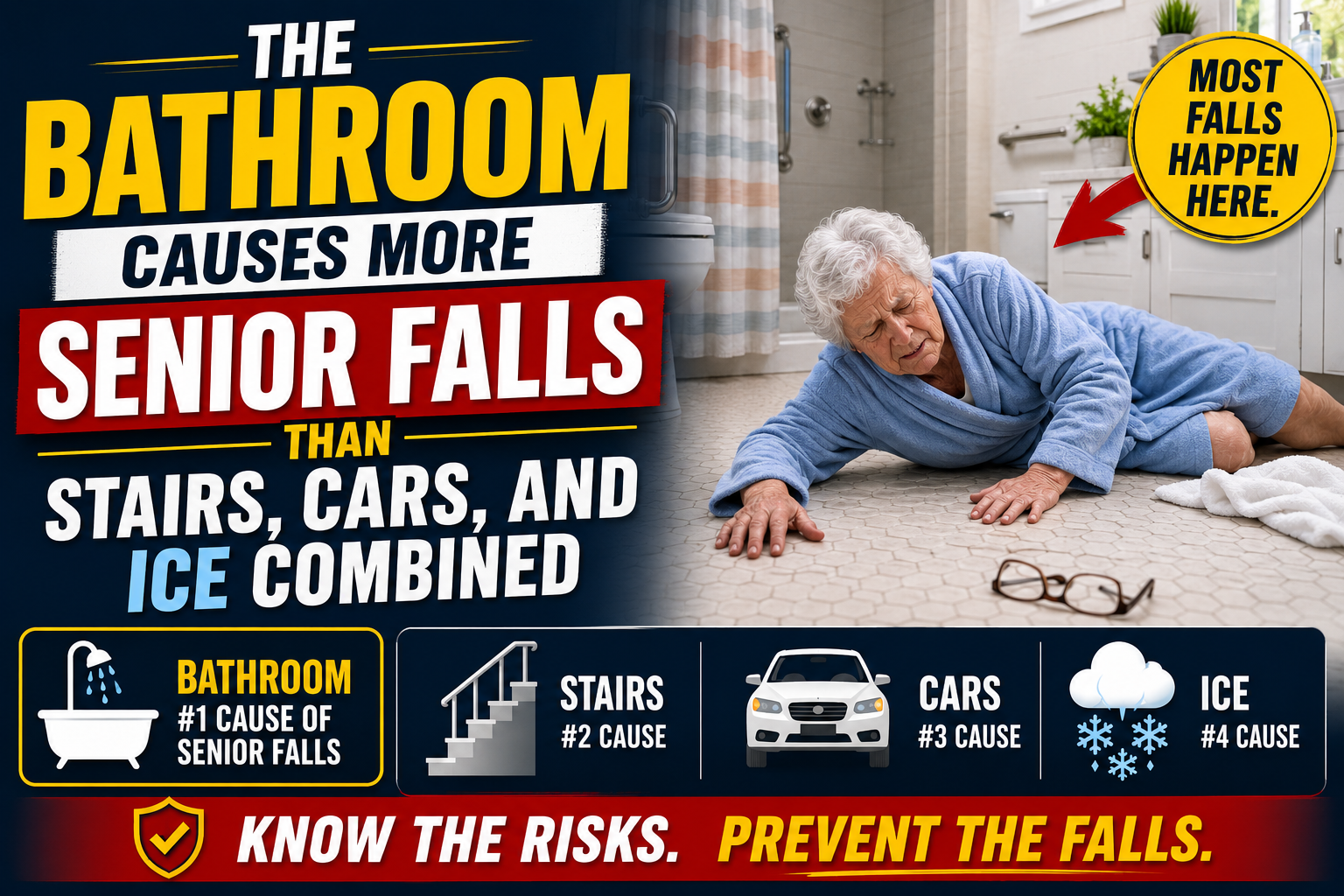
Ask most people where older adults are most likely to fall and they’ll say stairs. Or icy sidewalks. Or parking lots. These are the hazards that feel dangerous — the ones that announce themselves, that everyone navigates with deliberate caution.
The actual answer is the bathroom.
The bathroom causes more falls in older adults than stairs, outdoor surfaces, and vehicle-related accidents combined. It’s not close. The Centers for Disease Control estimates that approximately 80 percent of falls in older adults occur in the bathroom — a room visited multiple times every day, in conditions specifically designed to create falls, that most families have never modified at all.
The hazards that feel dangerous get attention. The hazard that actually causes most of the harm gets a towel bar where a grab bar should be.
Why the Bathroom — Specifically
The bathroom’s dominance in fall statistics isn’t coincidental. It results from a specific combination of risk factors that exist nowhere else in the home simultaneously.
Wet Surfaces Are Unavoidable
Every other high-risk environment for falls — stairs, parking lots, icy sidewalks — presents its hazard intermittently. Stairs are dry most of the time. Sidewalks are icy only in certain conditions. The bathroom floor is wet every single day — during the shower, after the shower, around the sink, near the toilet. Wet surfaces aren’t an occasional bathroom hazard. They’re a daily certainty.
Tile — the most common bathroom floor material — provides excellent traction when dry and becomes dangerously slippery when wet. The same floor that’s perfectly safe to walk on before a shower becomes a fall risk the moment water contacts it. This transition happens every day without exception.
One-Legged Balance Transitions Happen Nowhere Else
The shower entry requires stepping over a threshold — lifting one foot while supporting full body weight on the other, in a small enclosed space, typically on or near a wet surface. This is the most mechanically demanding balance challenge most older adults face in their daily home environment — more demanding than climbing stairs, more demanding than navigating curbs, more demanding than any other indoor transition.
It happens every single day. Often twice — once entering, once exiting. For a person whose balance has reduced with age, whose leg strength has declined, whose reflexes are slower than they were — this daily threshold crossing is where falls accumulate.
The Toilet Transfer Is Underestimated
The sit-to-stand movement from a toilet is one of the most physically demanding daily transitions older adults make — requiring significant eccentric and concentric muscle force from leg and core muscles through the full range of motion. It happens multiple times every day without exception.
The standard toilet has no support structure for this movement. No armrests. No handholds. Nothing to push against during the most demanding part of the motion. The person rises from a low seated position using leg strength alone — and if that strength isn’t adequate, they fall.
Hard Surfaces in a Confined Space
Tile floors. Porcelain fixtures. Cast iron or acrylic tubs. Glass shower enclosures. The bathroom concentrates hard, unforgiving surfaces in a small space where falls produce more serious injuries than falls in more forgiving environments. A fall in the living room might mean landing on carpet near upholstered furniture. A fall in the bathroom means landing on tile, against porcelain, in a space too small to fall safely in any direction.
Nighttime Visits Without Full Alertness
The bathroom isn’t only visited during fully alert daytime hours. The nighttime bathroom trip — often in low light, half-asleep, with urgency — adds the risk multipliers of reduced alertness, impaired coordination, and darkness to the baseline bathroom risks that already exist during the day. The nighttime bathroom trip is the highest-risk single event in most older adults’ daily routine.

The Specific Falls That Happen in the Bathroom
Understanding the specific fall mechanisms — exactly what happens and where — makes the prevention measures more intuitive.
The Shower Entry Fall
The moment of stepping into the shower — one foot lifting over the threshold, all weight on the other leg, body moving forward — is when most shower-related falls occur. The combination of one-legged balance, forward momentum, wet surface, and confined space produces a fall risk that exists nowhere else in the home at this intensity.
A grab bar at the shower entry — positioned inside the shower, on the wall adjacent to the entry point, at a height that allows gripping during the step-through motion — directly addresses this mechanism. The hand reaches it naturally during the entry motion. The bar is there at exactly the moment of maximum instability.
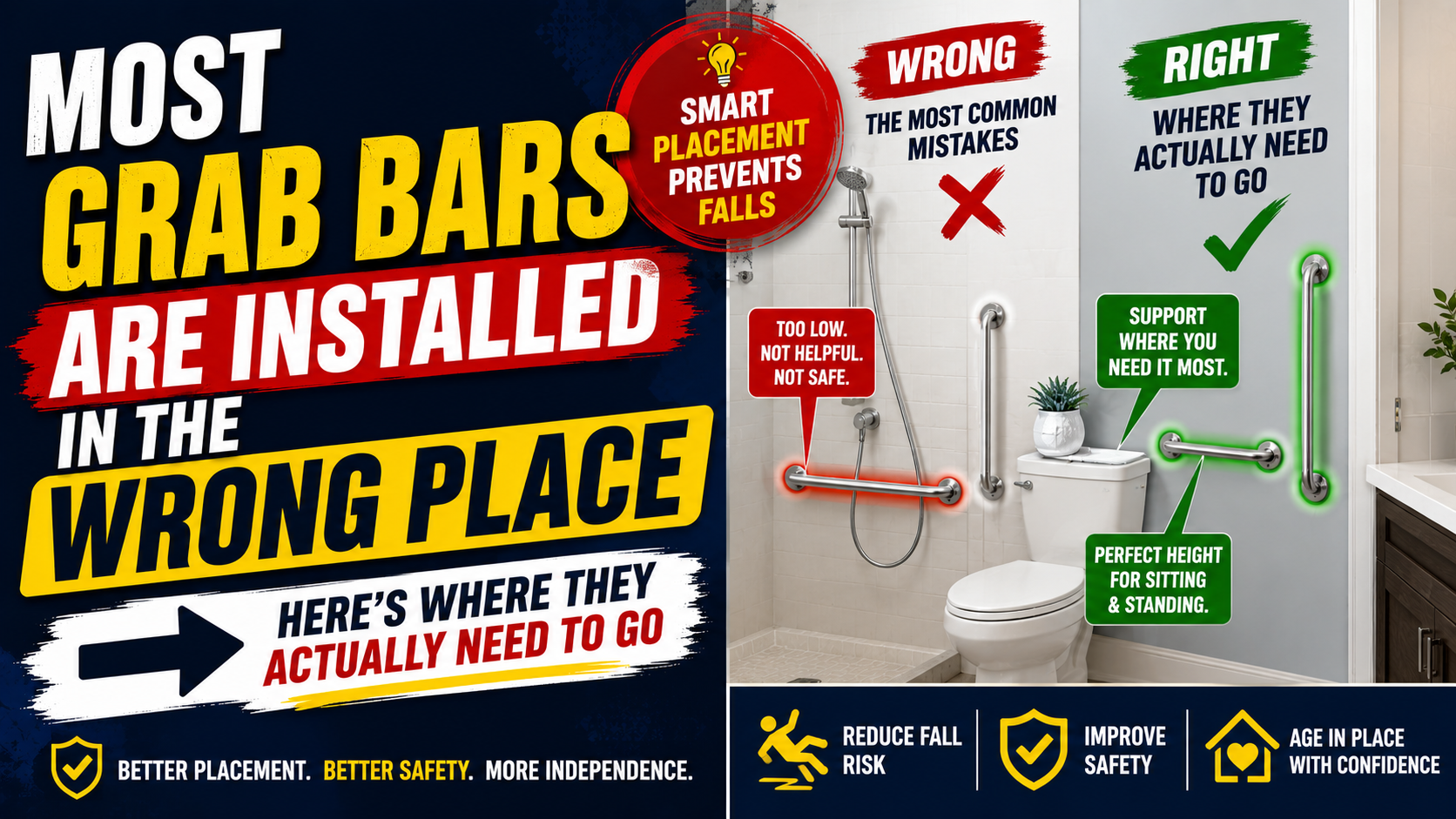
Most homes don’t have this bar. Of the homes that have a bar, most have it in the wrong position — as we covered in our guide on most grab bars are installed in the wrong place.
The Shower Exit Fall
Stepping out of the shower onto the bathroom floor with wet feet — the first contact between a wet sole and the bathroom floor outside the shower — is a distinct fall mechanism from the entry. The momentum of stepping out, the wet foot, and the bath mat that shifts under the first wet step combine into a fall risk that’s separate from anything that happens inside the shower.
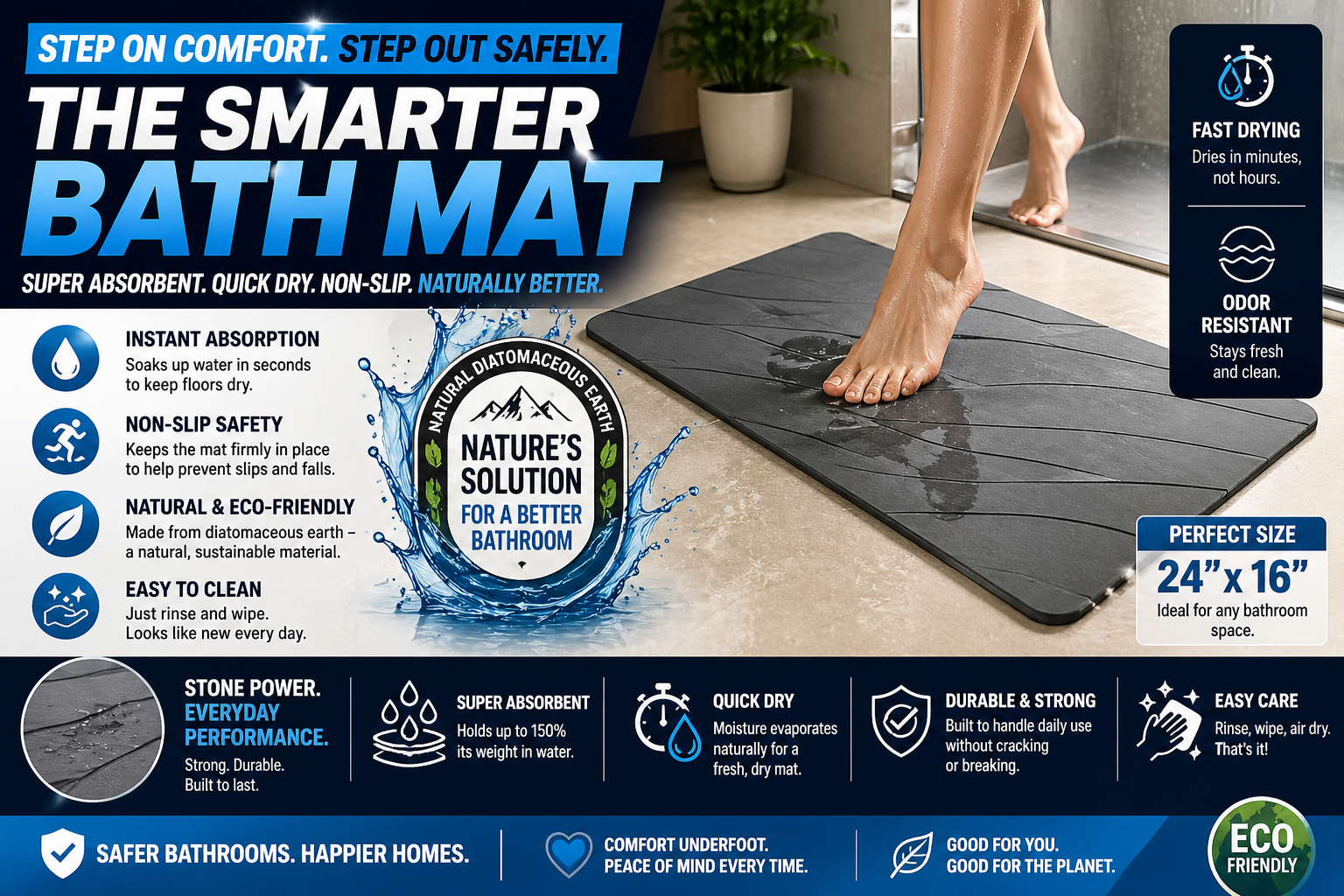
A bath mat that stays completely in place under wet feet — not a fabric mat that shifts, not suction cups that release — is the specific solution for this mechanism. Our review of the best non-slip bath mat for seniors covers why most mats fail this test and what actually works instead.
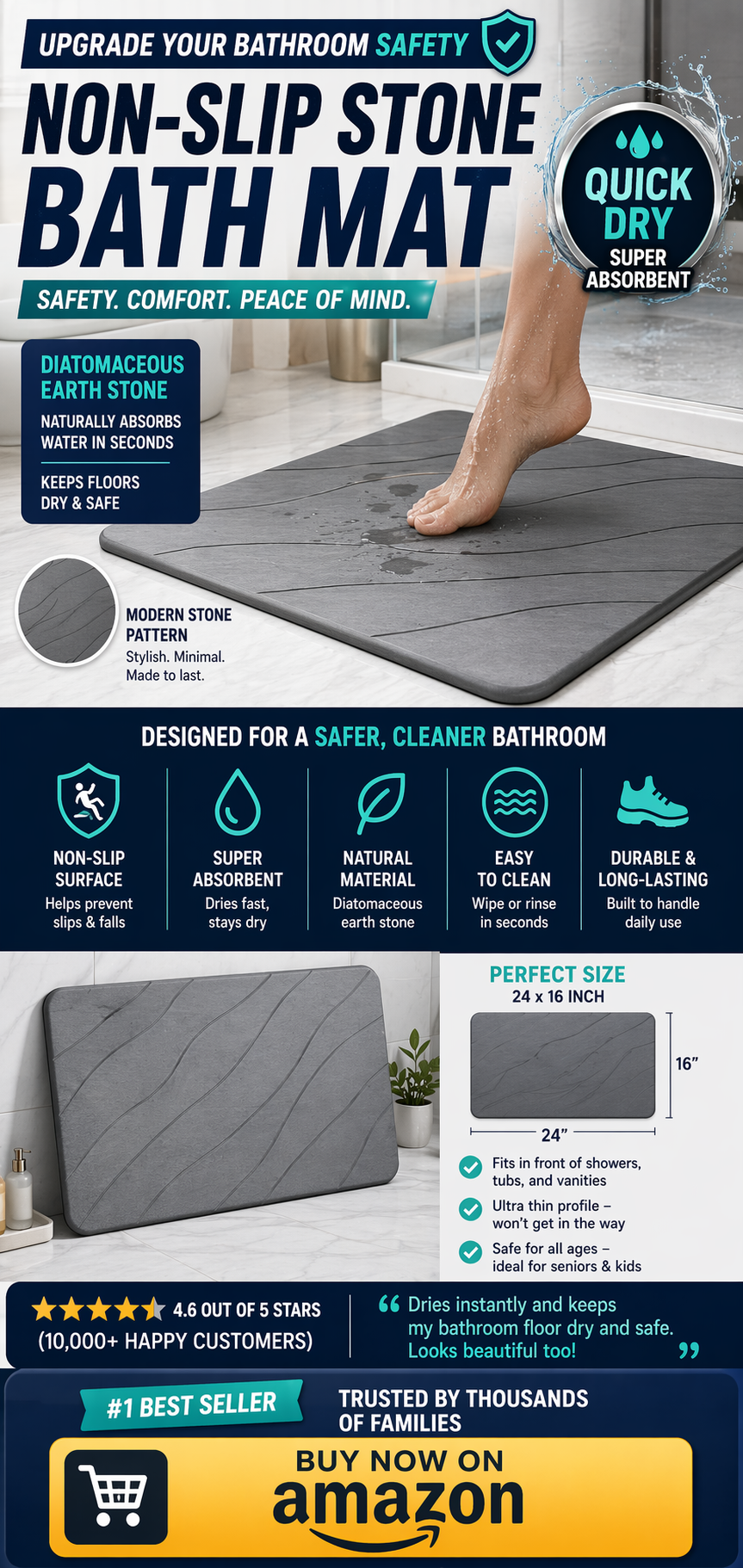
→ Get the Diatomaceous Earth Bath Mat on Amazon
The Toilet Transfer Fall
Rising from the toilet — particularly for someone whose leg strength has reduced with age — produces falls at the moment of maximum effort, when the center of gravity is shifting forward and upward and leg muscles are producing maximum force against a low surface with nothing to push against.
Toilet safety rails with armrests transform this transition by providing bilateral push-off support that makes the rising motion mechanically similar to rising from a chair with armrests — dramatically less demanding than rising from a standard toilet without support.
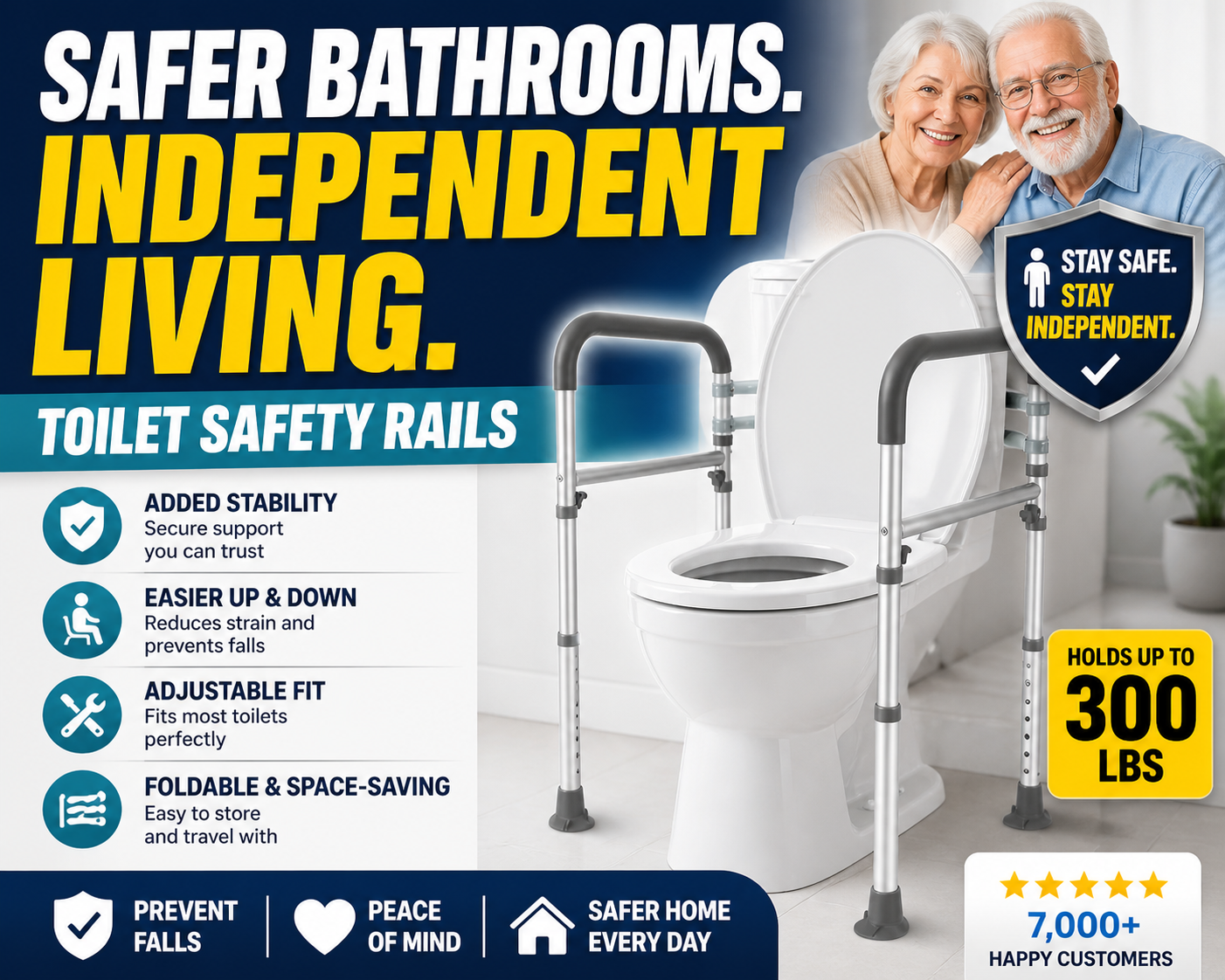
Our review of the best toilet safety rails for seniors covers the specific option we recommend — tool-free installation, fits any toilet, immediate impact from first use.
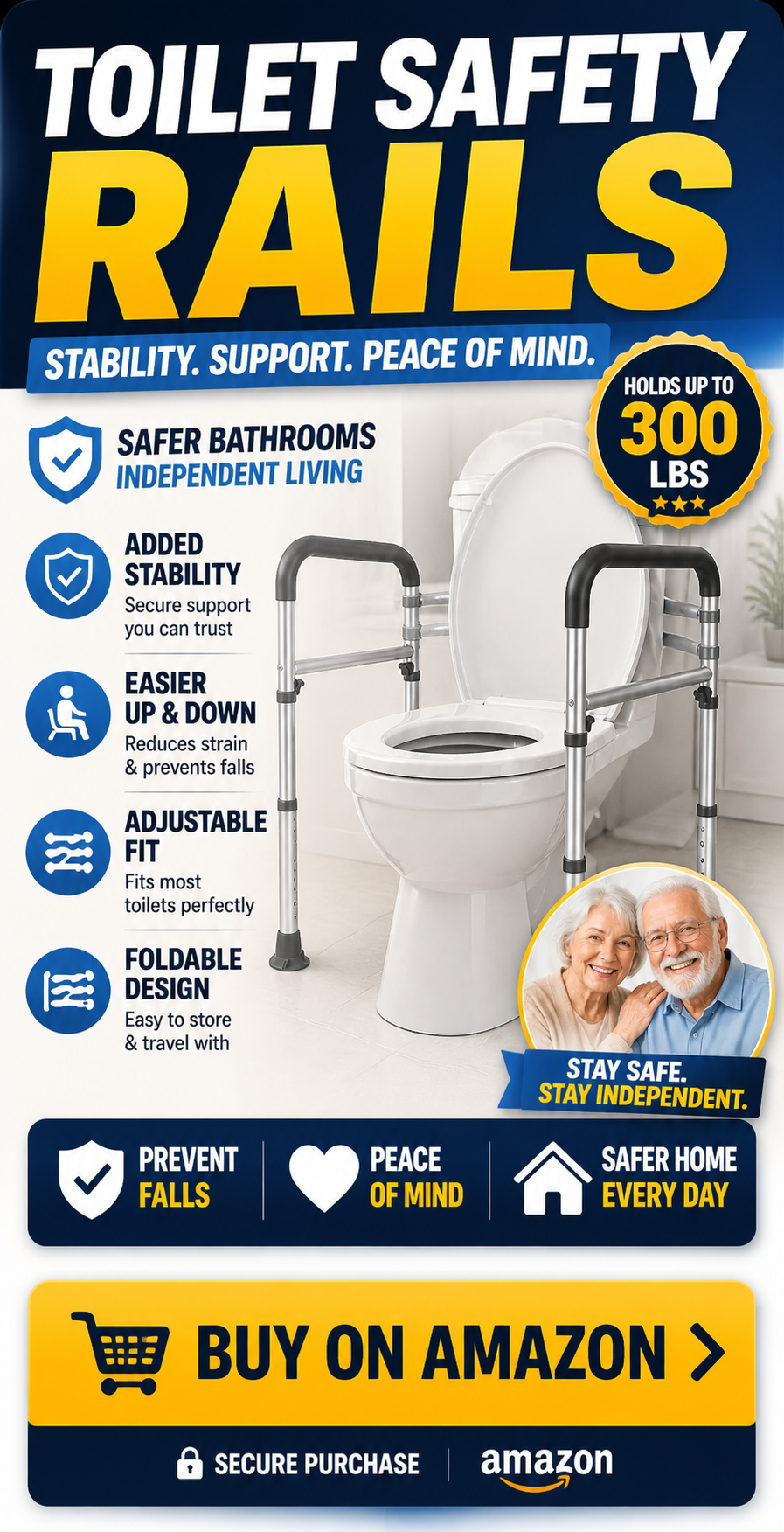
→ Get the Toilet Safety Rails on Amazon
The Standing Shower Fall
Standing in a wet shower during the washing routine — particularly during movements that shift the center of gravity, like reaching for items stored out of easy reach, bending to wash lower legs, or turning to rinse — produces falls from the sustained balance demands of maintaining a one-person standing position on a wet surface.
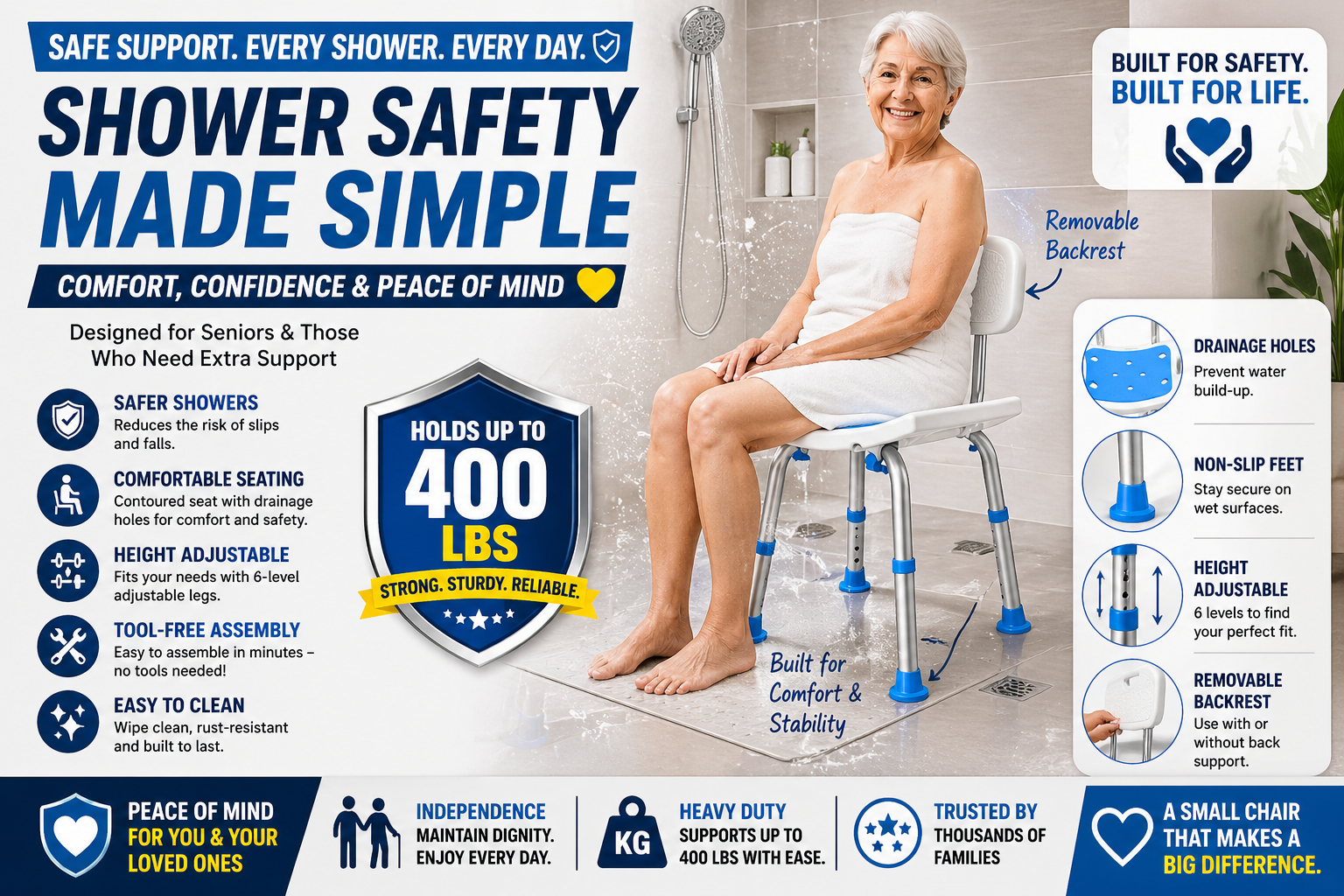
A shower chair eliminates this mechanism entirely. Seated showering requires a fraction of the balance demanded by standing on a wet surface and makes the standing-shower fall a non-event. Our review of the best shower chair for seniors covers the specific product we recommend.
→ Get the Shower Chair on Amazon

What an Unmodified Bathroom Looks Like — and What It Should Look Like
The gap between a standard bathroom and a safe bathroom isn’t large in terms of cost or construction. It’s enormous in terms of daily fall risk.
Standard Unmodified Bathroom
No grab bar at the shower entry — the highest-risk transition in the home. Smooth shower floor that’s slippery when wet. No shower chair — standing during showering on a wet surface. Fabric bath mat outside the shower that shifts under wet feet. Standard toilet with no support for the rising movement. No night lighting — the bathroom is navigated in the dark during nighttime trips until a switch is found and flipped. Total daily fall risk: very high across multiple specific mechanisms that repeat daily.
Modified Bathroom
Grab bar at shower entry — in the correct position, inside the shower, where the hand reaches naturally during the step-through motion. Grab bar on shower back wall for stability during showering. Non-slip surface inside the shower. Shower chair eliminating standing shower risk entirely. Diatomaceous earth bath mat outside the shower that never shifts under wet feet. Toilet safety rails providing bilateral support for every toilet transfer. Night light that illuminates the bathroom before anyone enters it in the dark. Total daily fall risk: fraction of the unmodified bathroom, across every mechanism that the modifications address.
The cost difference between these two versions of the same bathroom: typically $200 to $400 in products plus grab bar installation. The impact difference: every high-risk daily bathroom transition addressed, permanently, for as long as the home is lived in.
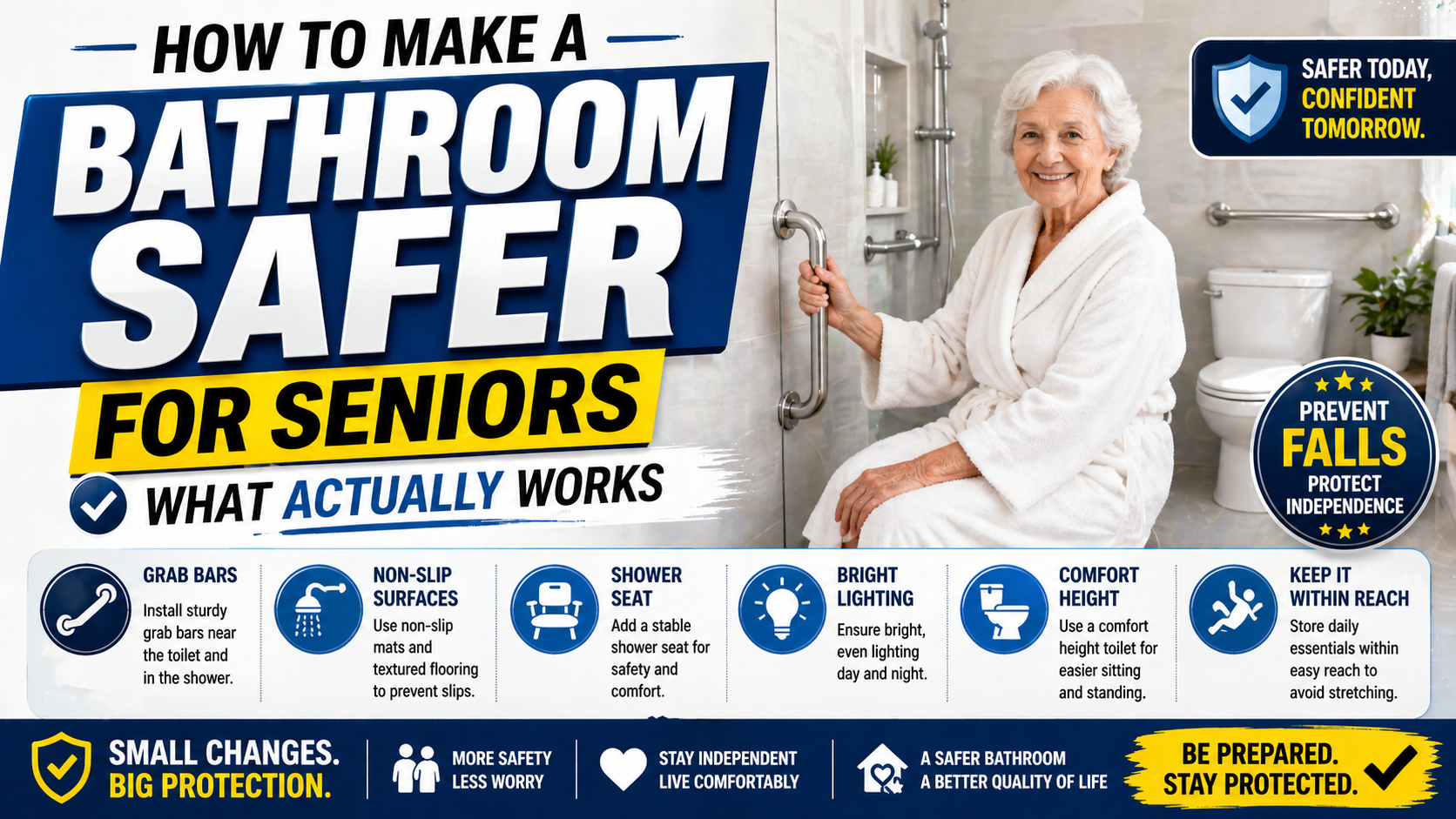
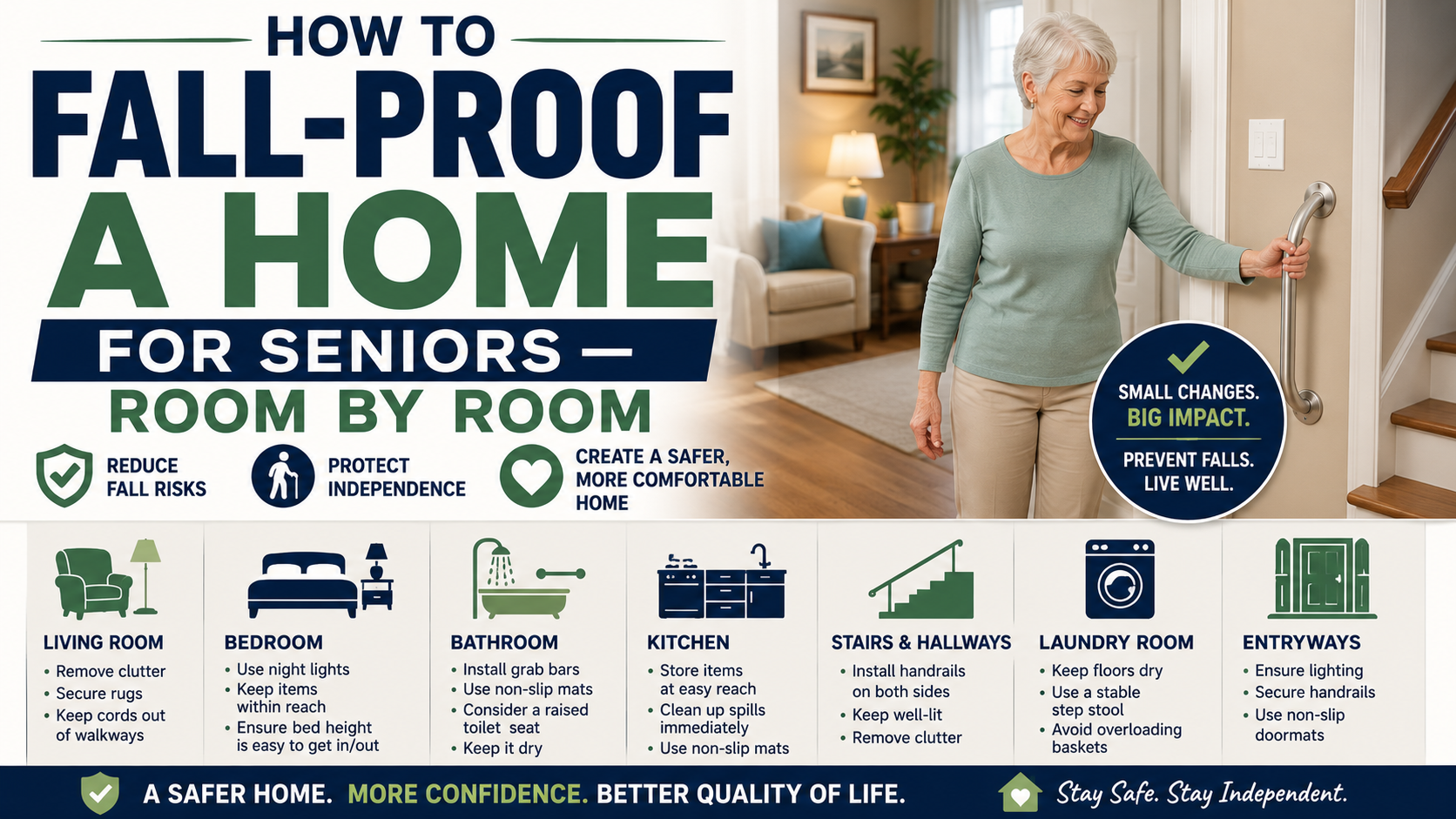
Our complete guide on how to make a bathroom safer for seniors covers every modification worth making. Our complete guide on safe shower setup for elderly adults covers the shower specifically in full detail.

→ Get the Auto-On Night Lights on Amazon
Why the Bathroom Gets Ignored While Stairs Get Attention
The psychological explanation for why stairs get safety attention while the bathroom doesn’t is worth understanding — because it explains a pattern of misplaced concern that exists in most families.
Stairs feel dangerous. The height, the obvious fall potential, the clear consequence of a misstep — stairs announce their hazard in a way that produces conscious caution during every use. People hold the rail on stairs. They watch their feet on stairs. They think about stairs as a fall risk because stairs look like a fall risk.
The bathroom doesn’t feel dangerous in the same way. It’s familiar. It’s visited many times every day without incident. The fall risk is invisible — concealed in the wet surface that looks the same as a dry surface, in the one-legged threshold crossing that has always been accomplished without thinking, in the toilet transfer that has been managed independently for decades.
Familiarity is the enemy of hazard recognition. The bathroom has been part of daily life for so long that its hazards have become invisible through repetition — even as the physical capacity to manage those hazards has quietly declined.
The fall that finally reveals the hazard — the first fall in the bathroom that produces injury or serious fear — didn’t appear from nowhere. It appeared from a risk that was always there, growing more dangerous as physical capacity declined, waiting for the day when the margin between capacity and demand finally closed.
The Falls That Don’t Happen in the Modified Bathroom
There are no statistics for falls that didn’t happen. No database of the shower entry falls prevented by correctly positioned grab bars. No count of the toilet transfer falls that weren’t because armrests were there to push from. No record of the bath mat shifts that didn’t occur because the stone mat was in place.
Prevention is invisible by definition. It’s the absence of the event that would have happened without it.
But the mechanism is clear, the evidence is consistent, and the math is straightforward: a bathroom that eliminates the specific conditions that produce each fall mechanism produces fewer falls. Not no falls — nothing eliminates all risk. But fewer falls, less serious falls, and falls that happen in an environment where recovery is possible rather than one where landing on hard porcelain in a small enclosed space without any support makes injury nearly certain.
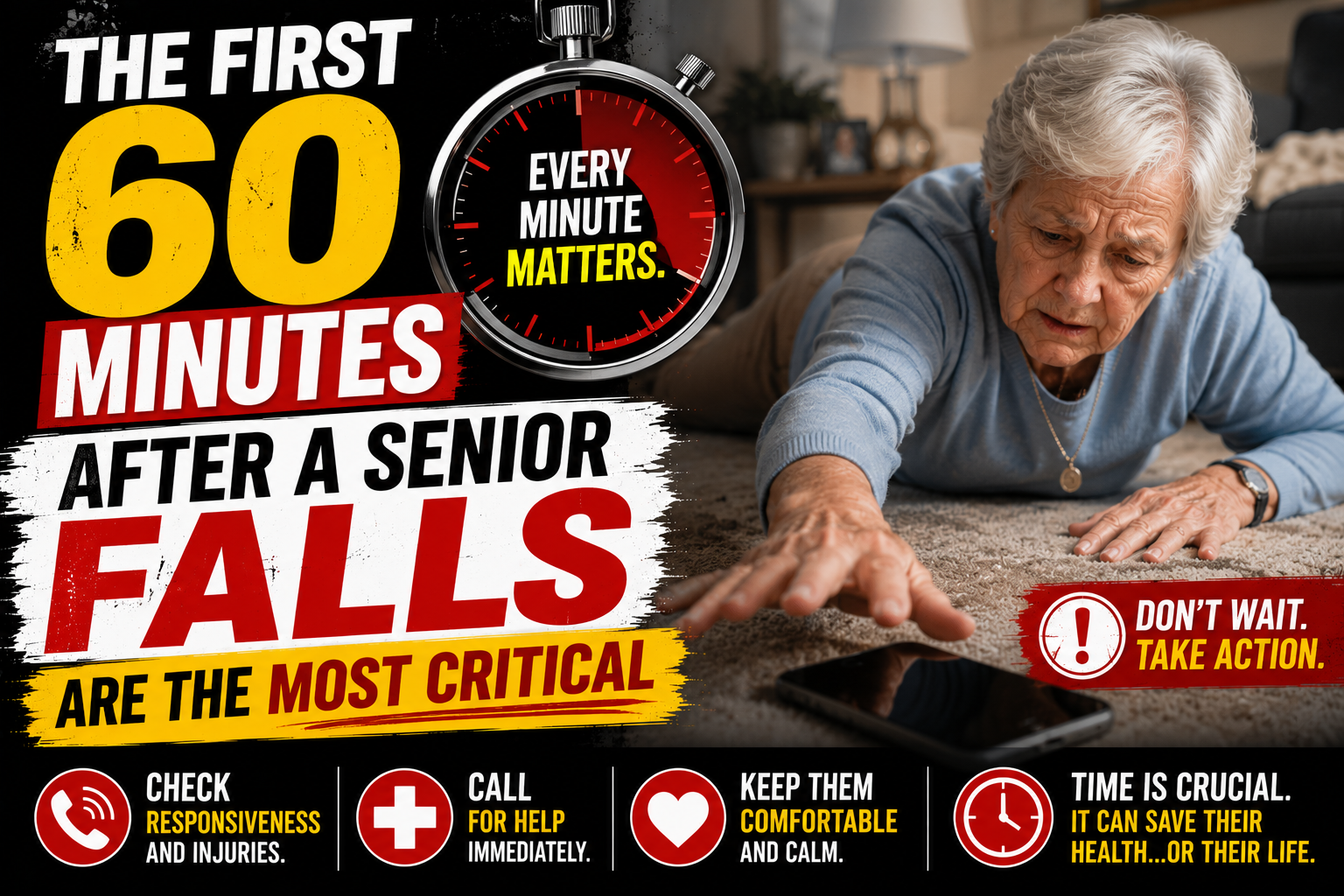

For the safety net that covers what happens when a bathroom fall occurs despite every modification our guide on the first 60 minutes after a senior falls covers the timeline of consequences and what stops the clock. The SecuLife Smartwatch — worn on the wrist into the bathroom during every shower and every nighttime trip — is the detection device that’s actually there when a bathroom fall occurs.
→ Get the SecuLife Smartwatch on Amazon
The Weekend Project That Changes Everything
Closing the gap between an unmodified bathroom and a safe one is a weekend project. Not a major renovation. Not a contractor conversation. A weekend.
Order the grab bars today. They’ll arrive in two days. Install them this weekend — our guide on most grab bars are installed in the wrong place covers exactly where they need to go, and installation takes two to three hours with basic tools or a handyman visit. Order the toilet safety rails — they arrive and install without tools in ten minutes. Order the bath mat — place it on the floor. Order the night lights — plug them in.
The bathroom that was the most dangerous room in the home is, by Sunday evening, a bathroom that addresses every major fall mechanism with specific modifications designed for exactly those mechanisms.
Every shower after that weekend is safer than every shower before it. Every toilet transfer. Every nighttime trip. Permanently.
The bathroom causes more senior falls than any other environment. It also has more specific, effective, affordable solutions than any other environment. The gap between those two facts is a weekend and a few hundred dollars.
→ Get the Toilet Safety Rails on Amazon
→ Get the Shower Chair on Amazon
→ Get the SecuLife Smartwatch on Amazon
About the Author
Carol Simmons is a Certified Aging-in-Place Specialist (CAPS) who has completed hundreds of home safety assessments. The bathroom is the first room she assesses in every home — and the room that most consistently has the most urgent modifications needed and the fewest already in place. She has never completed a home safety assessment where bathroom modifications weren’t among the top recommendations. She writes for Elder Safety Guide because the bathroom’s dominance in fall statistics is one of the most important and least-known facts in senior safety — and because the solutions are specific enough, affordable enough, and achievable enough that no bathroom where an older adult lives should remain unmodified.