The kitchen is where seniors spend significant daily time in fall-risk conditions. Here’s exactly what to address — most of it free, all of it this weekend.
The bathroom gets the most attention in senior fall prevention — rightfully so. The bedroom gets addressed next. The stairs. The entryway.
The kitchen almost never comes up. And yet the kitchen is the room where older adults spend significant daily time performing tasks that combine the specific conditions that produce falls — reaching, bending, standing on hard floors, managing wet surfaces, carrying items while moving — in ways that no other room does.
Falls in the kitchen account for a significant proportion of home falls in older adults. And most kitchens have never had a single fall-prevention modification made to them.
This guide covers exactly what makes the kitchen dangerous, what changes address each specific risk, and how to make the kitchen genuinely safer without a renovation.
Why the Kitchen Creates Specific Fall Risk
The kitchen’s fall risk profile is different from the bathroom’s — less concentrated in specific transition moments and more distributed across the full range of kitchen activities that happen throughout the day.
Reaching and Bending — The Balance Challenges
Kitchen tasks require reaching overhead for items stored in upper cabinets, bending to lower cabinets and the refrigerator, reaching across countertops, and leaning into the sink. Each of these movements shifts the center of gravity away from the stable base — creating the instability that a loss of balance converts into a fall.
Overhead reaching is particularly risky — it tilts the head back, which affects the vestibular system’s contribution to balance, shifts weight onto the heels, and reduces the visual information available for spatial orientation. For someone whose balance has changed with age, overhead reaching while standing is a genuine fall risk that happens multiple times every day in the kitchen.
Wet Floors — The Traction Problem
Kitchen floors get wet from multiple sources — spills during cooking and food preparation, drips from the sink, condensation from refrigerator drawers, wet shoes tracked in from outside. Wet tile or vinyl kitchen floors are among the most slippery surfaces in the home. Unlike the bathroom where the wetness is expected and planned for, kitchen floor wetness is intermittent, unpredictable, and easy to miss.
Stepping from a dry kitchen floor onto a wet patch — near the sink, near the stove where liquids have spilled — without anticipating the traction change is one of the most common kitchen fall mechanisms.
Carrying While Moving — The Divided Attention Problem
Carrying a pot of water from the sink to the stove. Carrying a full plate from the counter to the table. Moving a heavy casserole from the oven. Kitchen tasks frequently require carrying items while walking — a task that divides attention between the carrying and the walking in ways that reduce the cognitive resources available for balance management.
Divided attention during walking is a significant fall risk factor for older adults — research shows that walking while performing a secondary task (cognitive or physical) significantly increases fall risk compared to walking alone. The kitchen converts walking into a divided-attention task more consistently than any other room in the home.
Standing at the Stove and Counter — Fatigue
Meal preparation often involves extended periods of standing — at the stove during cooking, at the counter during food preparation. Standing fatigue affects posture, balance, and gait — and older adults experience standing fatigue faster than younger adults due to reduced cardiovascular and musculoskeletal reserve. The fall risk near the end of a long meal preparation period is higher than at the beginning, when fatigue hasn’t accumulated.
Kitchen Rugs — The Universal Hazard
Kitchen rugs in front of the sink and stove are present in the majority of older adults’ homes — and are one of the most consistent fall hazards found in kitchen safety assessments. They shift. Their edges curl. They move under a foot transitioning from a hard floor to the rug surface. And because they’re in the most-used kitchen areas they encounter the foot-floor contact most frequently.
The Kitchen Fall-Prevention Modifications — What to Do
Reorganize Storage — The Most Impactful Free Change
The single highest-impact kitchen fall prevention change costs nothing and takes an afternoon: move daily-use items to between hip and shoulder height storage.
Items used every day — dishes, glasses, frequently used pots, staple pantry items — should be stored between hip height and shoulder height where they can be reached without bending low or reaching overhead. Items used occasionally can occupy upper and lower storage. Items used rarely go in the least accessible locations.
This reorganization eliminates the overhead reaching and deep bending that creates fall risk for daily tasks — which is the only reaching and bending that occurs frequently enough to accumulate meaningful daily fall risk. Occasional reaching for stored items is a different risk profile from daily reaching for the dinner plates.
Remove the Kitchen Rug — Immediately
Remove every unsecured rug from every kitchen walking area — in front of the sink, in front of the stove, at the kitchen entrance. No kitchen rug that shifts under a foot is acceptable for anyone with fall risk. This is a free change that can happen today and addresses one of the most consistent kitchen fall hazards found in home safety assessments.
If the hard floor in front of the sink is uncomfortable for standing, anti-fatigue mats designed to stay completely in place — with non-slip backing confirmed to hold on the specific floor surface — are acceptable. But any mat that moves even slightly under foot load is not.
Clean Up Spills Immediately — Every Time
A kitchen floor spill that’s left for “a minute” is a wet-floor fall hazard during every step taken near it before it’s cleaned. Establish and follow the immediate cleanup rule — anything that hits the floor is cleaned before any other activity continues. Keep cleaning supplies within easy reach so the cleanup doesn’t require moving to another room or area.
Non-Slip Footwear in the Kitchen
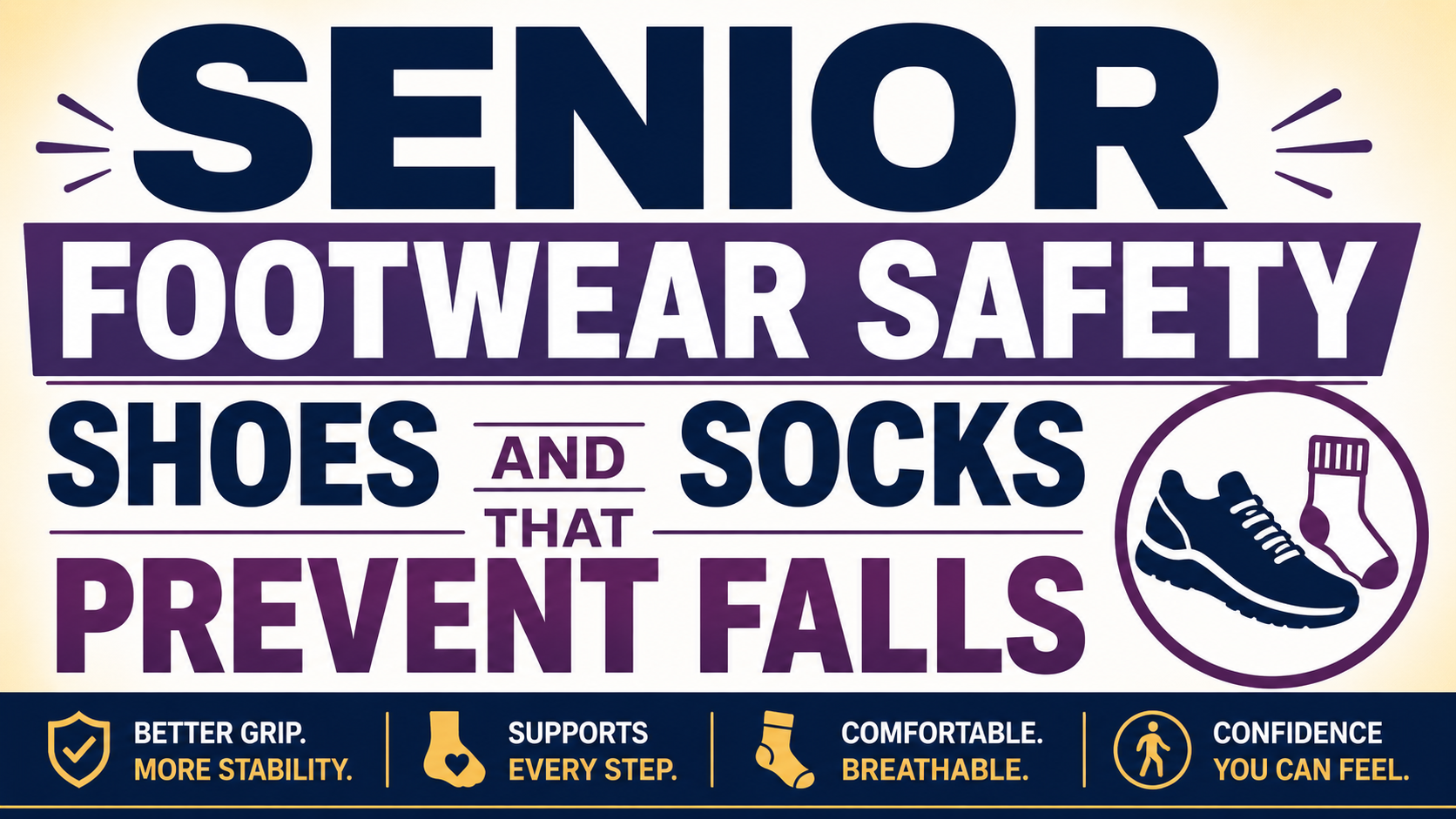
The kitchen floor — tile, vinyl, hardwood — is one of the smooth surfaces where indoor footwear traction matters most. Bare feet, standard socks, and loose slippers all provide minimal grip on these surfaces. As covered in our guide on best non-slip socks for seniors — non-slip grip socks with rubber sole patterns provide meaningful traction on smooth indoor floors. Proper shoes with non-slip rubber soles are even better. As covered in our guide on best shoes for seniors to prevent falls — the right footwear worn consistently throughout the day including in the kitchen addresses the traction deficit on every step.
→ Get the Non-Slip Grip Socks on Amazon
Use a Step Stool With Handle — Never a Chair
If overhead storage must be accessed — for items used occasionally — a step stool with a secure handle provides stability during the one step of height gain required. The handle gives something to hold during the ascent, the standing-at-height, and the descent. A kitchen chair used as a step stool has none of these safety features and is a fall risk every time it’s used.
The step stool should be stable — non-slip feet, appropriate weight rating, no wobble under load. Use one hand for climbing, one hand on the handle. Never reach so far that weight shifts off the stool platform. This is not a platform for extended overhead work — it’s a step for reaching items just above comfortable reach.
Sit Down for Extended Prep Work
Much kitchen preparation work doesn’t require standing. Chopping, peeling, stirring, mixing — all of these can be done seated at a kitchen table or counter-height stool. Standing fatigue that accumulates during extended preparation is reduced significantly when seated work is substituted for standing work wherever possible.
A counter-height stool that allows work at counter level while seated eliminates the standing fatigue of preparation work without requiring a lower surface. For anyone whose standing endurance has reduced, this single change extends the time kitchen tasks can be performed safely.
Adequate Lighting
Kitchen lighting needs to illuminate work surfaces adequately for the visual acuity of the person using them. Counter surfaces under upper cabinets are frequently in shadow from overhead lighting. Under-cabinet lighting is an inexpensive addition that eliminates these shadows — improving the visual information available for precise hand-eye coordination tasks and reducing the reaching into shadow that increases spill and accident risk.
The kitchen floor itself needs adequate lighting — so spills, obstacles, and floor surface changes are visible before they’re stepped on. Increase overhead lighting wattage if shadows on the floor are present during normal kitchen use.
Keep Frequently Used Items on the Counter
The toaster. The coffee maker. The items used every single morning. If they’re on the counter they require no reaching, no bending, no storage access — just use. The reaches and bends eliminated by counter placement are reaches and bends that can’t produce falls.
Counter clutter is the tradeoff. For most older adults that tradeoff is worth making — a counter with more items on it is a kitchen with fewer dangerous reaching movements per day.
Use Lightweight Cookware
Heavy cast iron and large heavy pots increase the physical demand and the divided-attention walking task involved in moving them from storage to stove to sink. Lightweight cookware — ceramic non-stick, lightweight aluminum — reduces these demands. For anyone whose arm and grip strength has changed, the difference between carrying a full cast iron skillet and a lightweight ceramic pan is significant in terms of both the effort required and the fall risk during carrying.
The Rollator Walker in the Kitchen
For anyone using a rollator walker for mobility assistance, the rollator’s seat provides an immediately available rest option during kitchen tasks — allowing seated rest without needing to move to a chair. The rollator also provides the bilateral arm support that makes carrying items less risky — placing items on the rollator basket rather than carrying them.
Our review of the best rollator walker for seniors covers the all-terrain option with carry basket we recommend.
→ Get the SOUNDFUSE Rollator Walker on Amazon
Automatic Pill Management Near the Kitchen
Many older adults take medications with meals — which means the kitchen or dining area is where medication management happens. An automatic pill dispenser that organizes and alerts for each dose eliminates the reaching into bottles, the reading of small print, and the cognitive management of medication timing that create distraction and error during meal preparation. Our review of the best automatic pill dispenser covers the 28-day option with alerts.
→ Get the Windtrace Pill Dispenser on Amazon

The Safety Net — Detection in the Kitchen Too
A kitchen fall — from reaching, from a wet floor, from fatigue during cooking — may leave the person on the floor near the stove, the sink, or in an area where a phone left on the counter is out of reach from the floor.
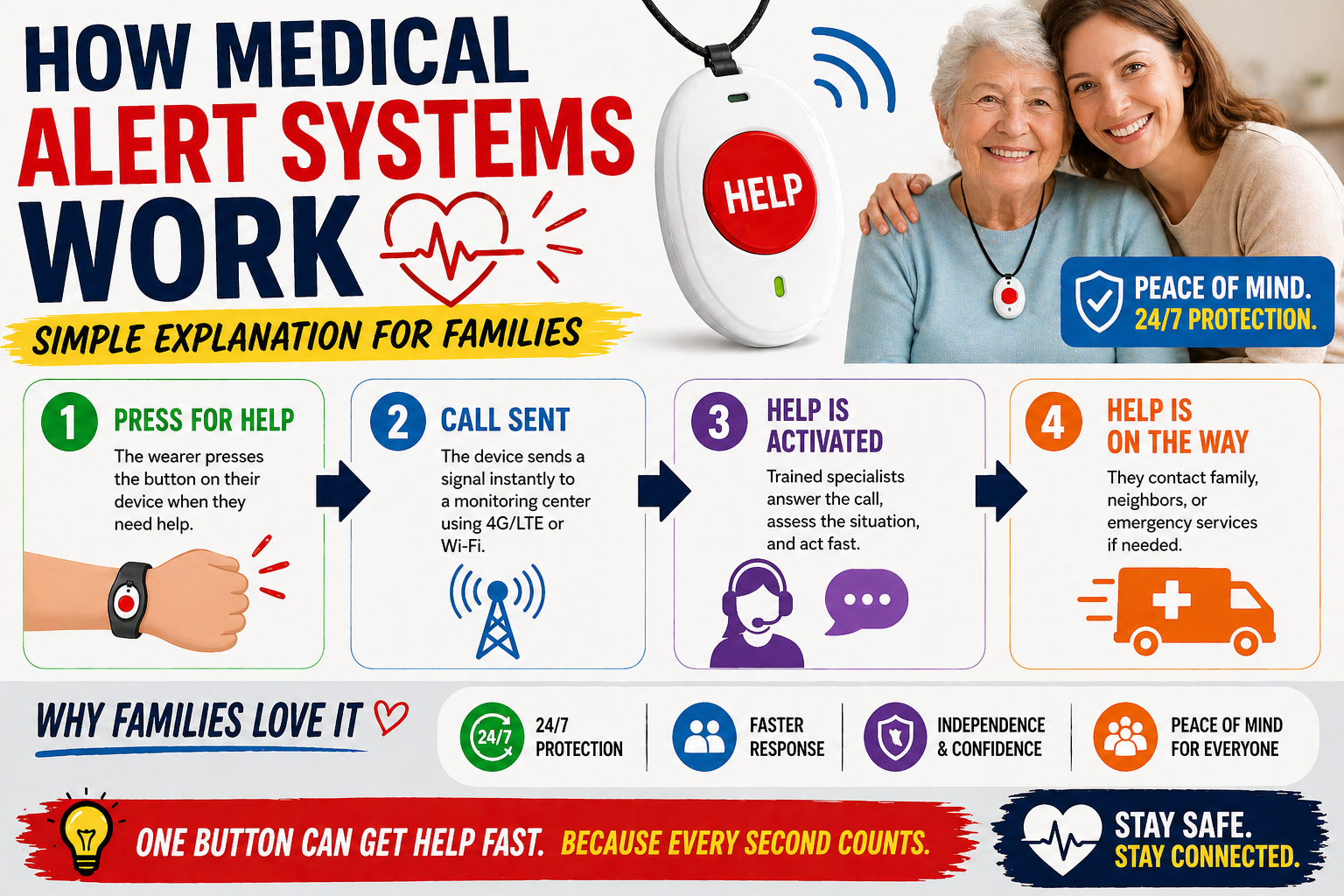
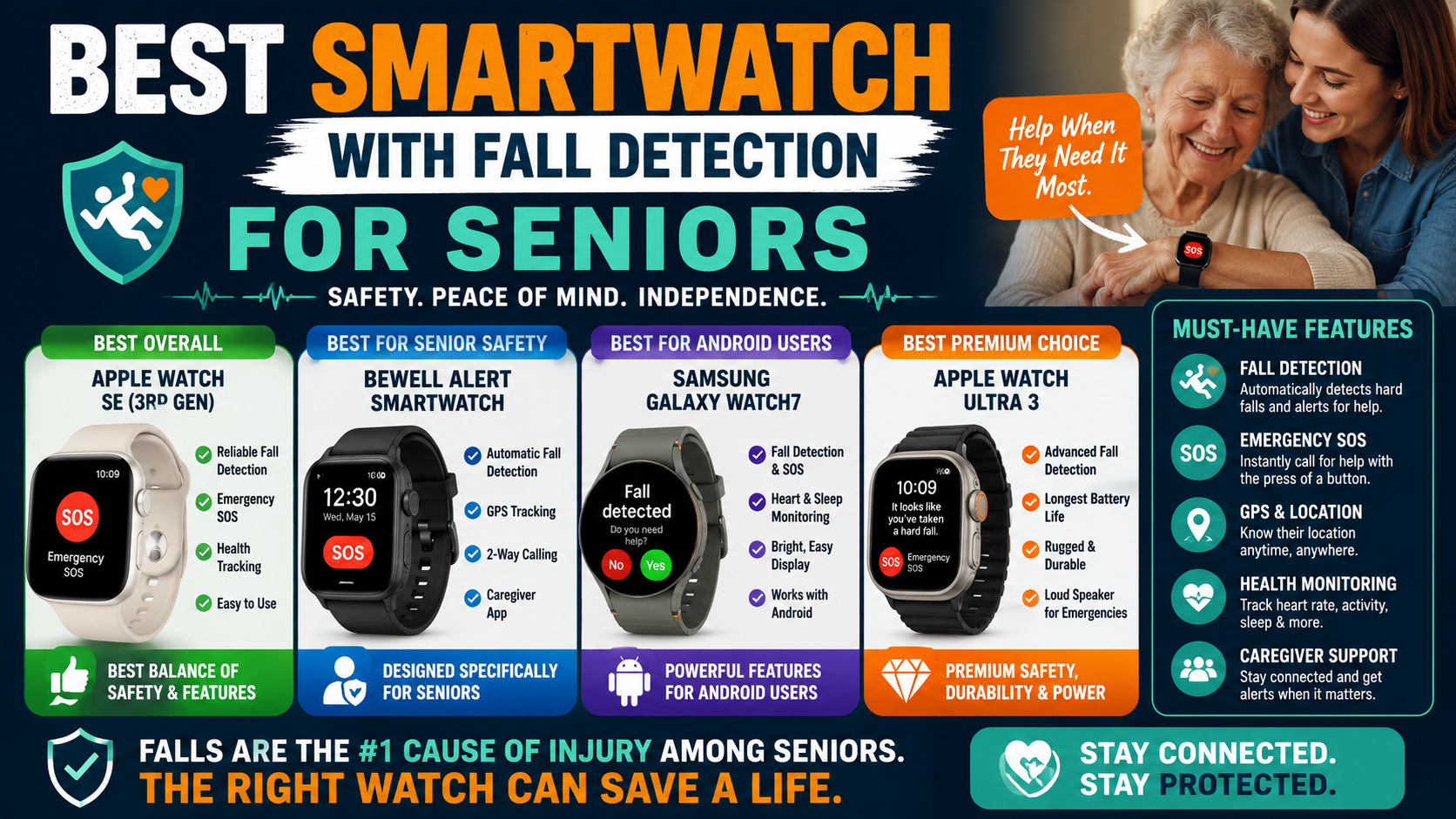
The SecuLife Smartwatch worn on the wrist is present in the kitchen during every cooking session, every morning coffee preparation, every meal. When a fall is detected the alert goes to family immediately with GPS location — without requiring the person to reach anything. As covered in our guide on what happens to seniors who fall and can’t get up — the time between a fall and discovery determines outcomes. The kitchen is not an exception to this.
→ Get the SecuLife Smartwatch on Amazon
Kitchen Safety for Seniors With Dementia
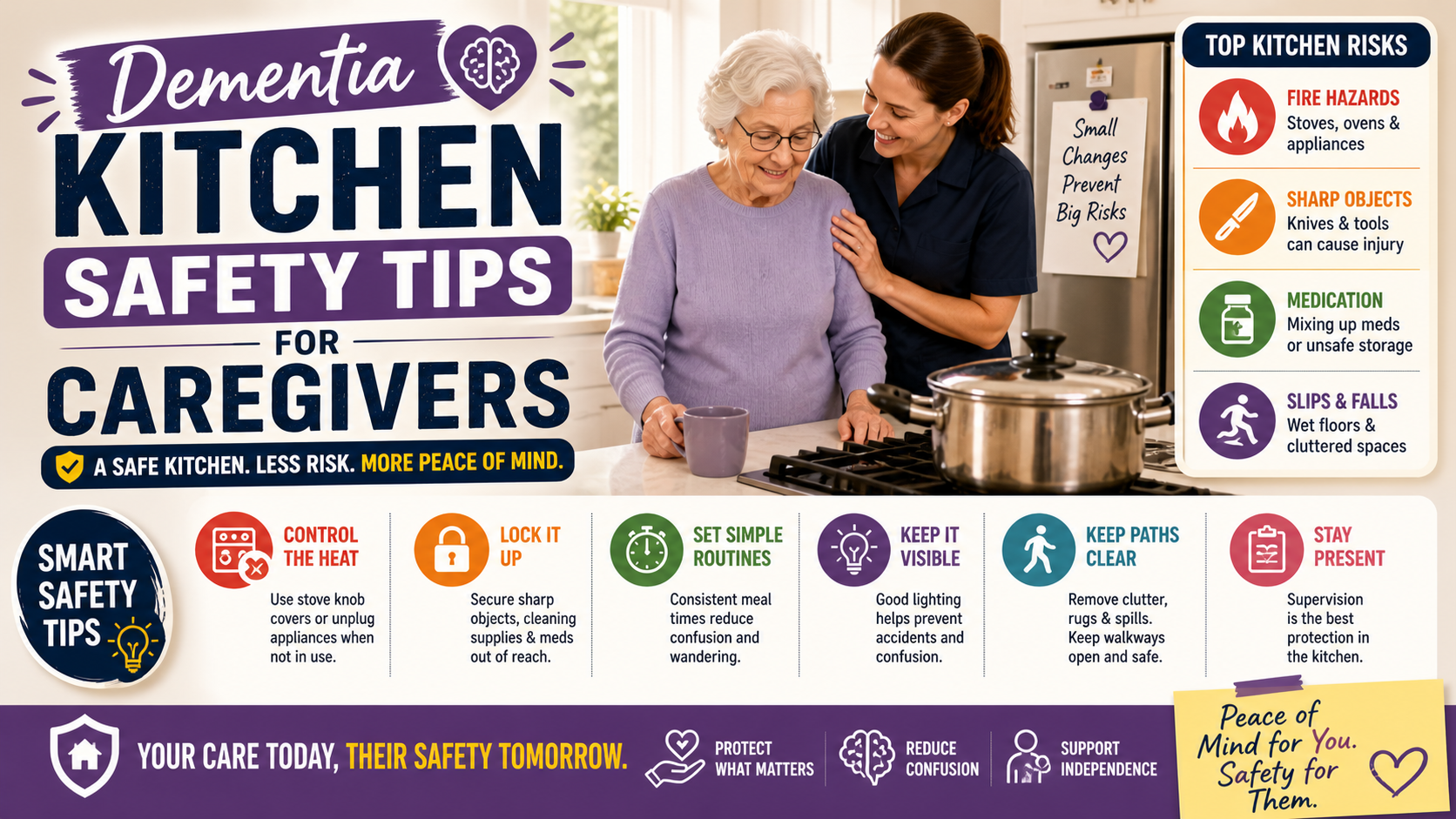
For seniors with any cognitive changes the kitchen safety picture includes additional specific concerns beyond fall prevention. Stove safety — the risk of leaving burners on, of forgetting food is cooking — is a significant dementia-specific kitchen hazard. Our complete guide on dementia kitchen safety tips for caregivers covers the staged approach matched to current cognitive level — from simple reminders in early dementia to stove knob removal and automatic shut-off devices in later stages.
The Kitchen Safety Assessment — Walk Through This Now
A kitchen safety assessment takes 15 minutes and reveals what to address first.
Storage check: Open every cabinet. Note every daily-use item stored overhead or at floor level. These are the items to relocate to hip-to-shoulder height storage.
Floor check: Walk through the kitchen and note every rug. Check each one — does it shift when stepped on? Does any edge curl? Any rug that moves or has a curled edge gets removed today.
Spill response check: Is there a cloth or paper towel within arm’s reach of the sink and stove? If not — position one there. The immediate cleanup rule only works when cleanup is immediately convenient.
Footwear check: What’s being worn in the kitchen? Standard socks? Slippers? Bare feet? Any of these needs to change to non-slip socks or proper shoes.
Lighting check: Are work surfaces adequately lit? Are there shadows on the counter? On the floor? Note what needs improvement.
Step stool check: If a step stool is being used — does it have a handle? Is it stable? If a chair is being used as a step stool — that changes today.
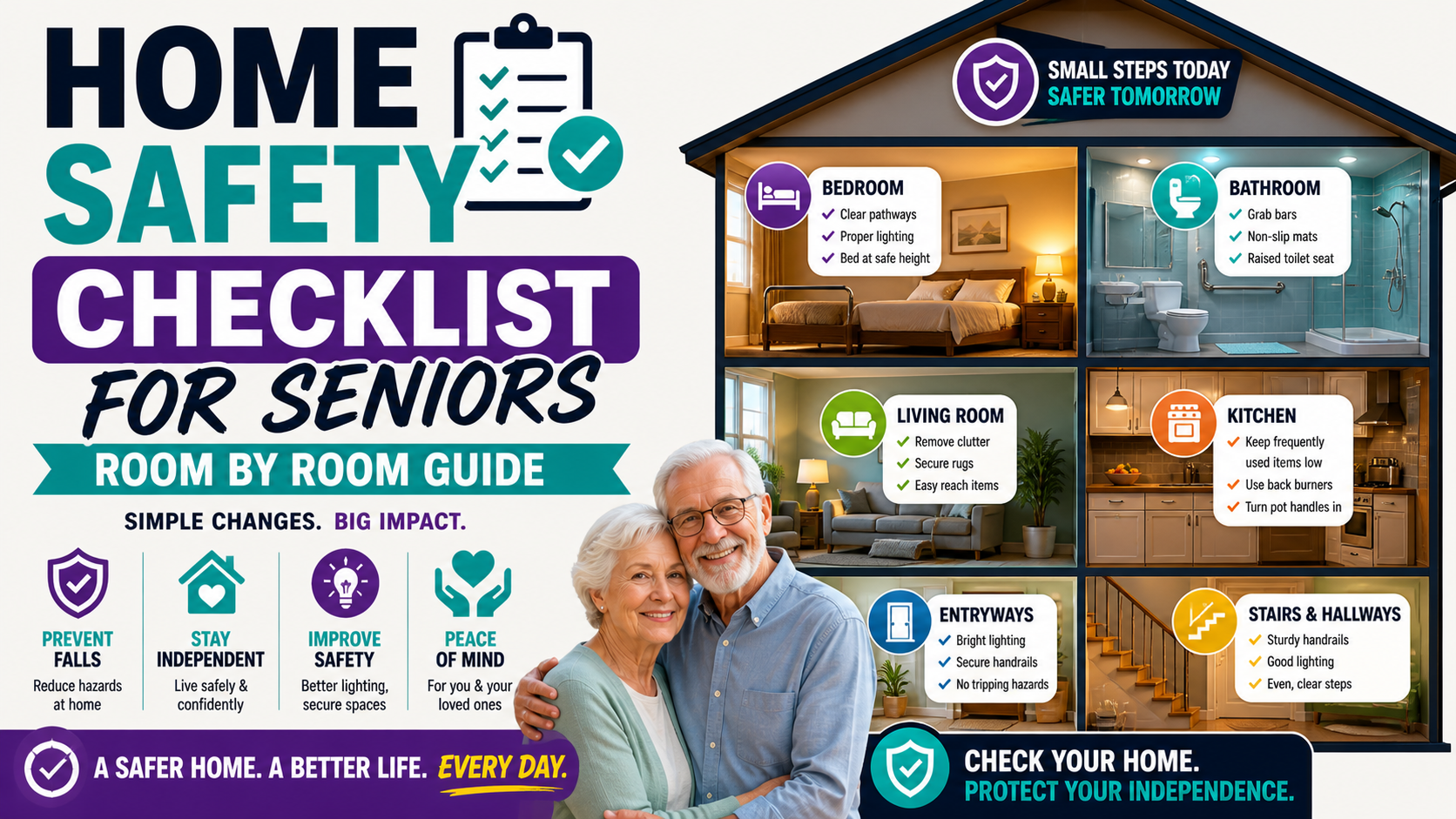
Our complete home safety checklist for seniors includes a kitchen section alongside every other room — use it for the systematic assessment. Our guide on how to fall-proof a home for seniors covers every room including the kitchen in priority order.
Frequently Asked Questions
Is the kitchen more or less dangerous than the bathroom for seniors?
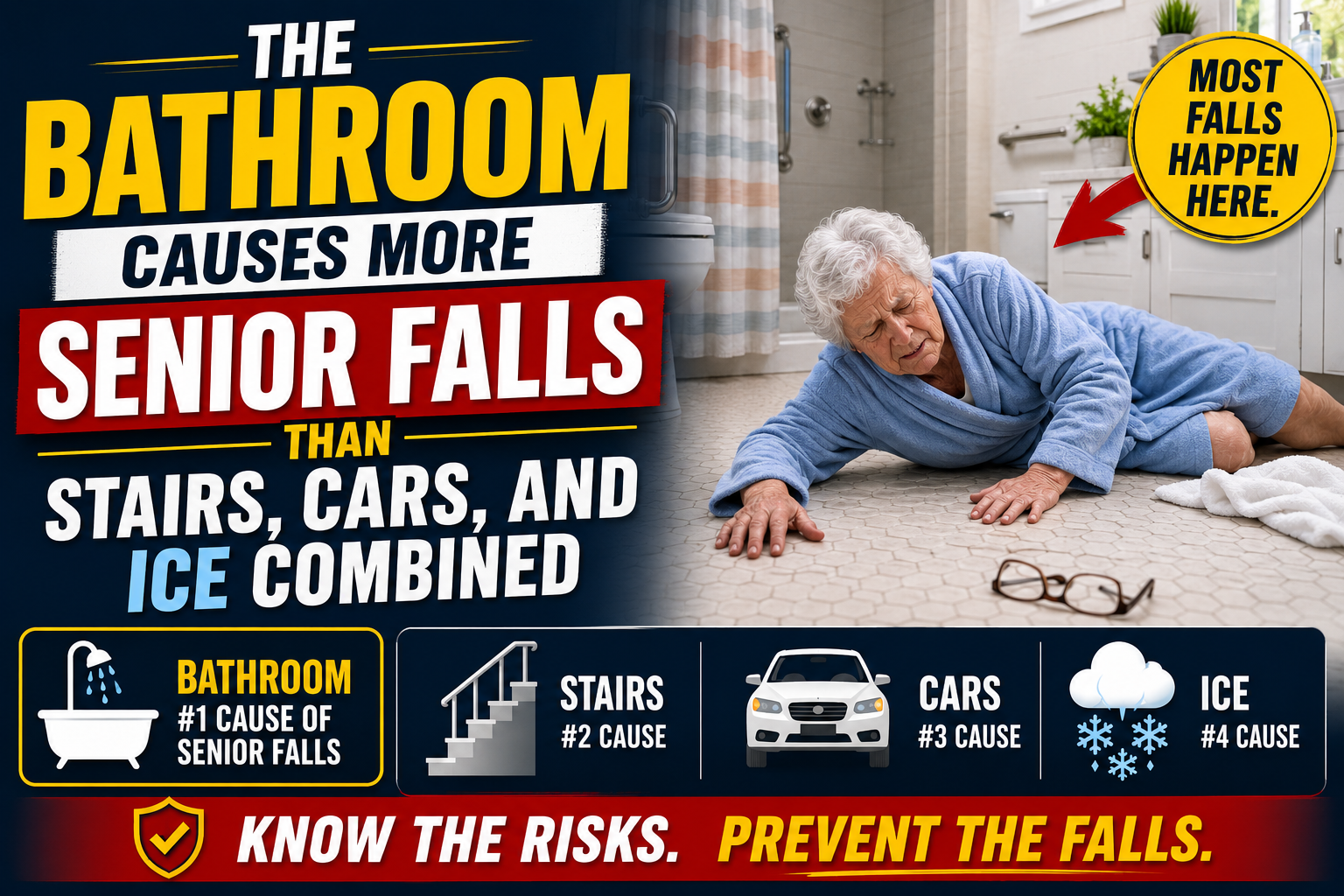
The bathroom is statistically more dangerous — approximately 80 percent of senior falls occur in the bathroom as covered in our guide on the bathroom causes more senior falls than stairs, cars, and ice combined. However the kitchen is the room where fall risk is most distributed across the full range of daily activities — making it the second priority for fall-prevention attention after the bathroom. Most families address neither room adequately.
What’s the single most impactful kitchen change?
Reorganizing storage to keep daily-use items between hip and shoulder height — eliminating overhead reaching and floor-level bending for the tasks that happen multiple times every day. This is free, permanent, and addresses the fall mechanism that occurs most frequently in kitchen use.
Should seniors avoid cooking to reduce fall risk?
No — cooking is an important part of independent living, cognitive engagement, and nutrition management. The goal is making cooking safer through the modifications in this guide, not eliminating it. Avoiding cooking to reduce fall risk trades one safety concern for several health and wellbeing ones. The right response to kitchen fall risk is kitchen modification, not kitchen avoidance.
What about kitchen gadgets marketed to seniors — are they worth it?
Some are genuinely useful — jar openers that don’t require grip strength, ergonomic utensil handles, electric can openers, lever-style faucets that don’t require twisting. These reduce the physical demands of specific tasks and are worth incorporating where they address genuine difficulties. They don’t address the primary fall risk factors covered in this guide — storage organization, floor hazards, footwear, and lighting — which deserve attention first.
My parent refuses to reorganize the kitchen they’ve had for decades. What do I do?
Start with the changes that don’t require agreement — remove the rugs during a visit, position cleaning supplies within reach, add under-cabinet lighting. These don’t require a major reorganization conversation. For the storage reorganization frame it as helping them find things more easily rather than a safety intervention — “let’s move the everyday dishes to where you don’t have to reach” lands differently than “the overhead cabinet is a fall risk.” Our guide on your parent said they’re fine covers navigating resistance to home changes specifically.
The Kitchen Is Worth Addressing
The bathroom gets addressed first — it should. The bedroom second. The stairs third. But the kitchen is where most older adults spend meaningful daily time performing tasks that create genuine fall risk — and it’s the room that most fall-prevention plans stop short of addressing.
The modifications here are mostly free or low-cost. Storage reorganization. Rug removal. Spill cleanup discipline. Appropriate footwear. Better lighting. A step stool with a handle. None of these require a contractor. Most can be done this weekend.
The kitchen that accumulates fall risk across every cooking session becomes genuinely safer with these changes — making independent meal preparation sustainable for longer rather than something that quietly becomes more dangerous with every passing month.
→ Get the Non-Slip Grip Socks on Amazon — for every hour in the kitchen
→ Get the SecuLife Smartwatch on Amazon — fall detection that works in the kitchen too
About the Author
Carol Simmons is a Certified Aging-in-Place Specialist (CAPS) who has assessed hundreds of kitchens as part of comprehensive home safety evaluations. The kitchen is the room where she consistently finds the most unaddressed fall risk relative to the amount of daily time spent in it — unsecured rugs in the most-used areas, daily items stored overhead, spill cleanup supplies across the room, and footwear that provides no traction on the tile or vinyl floor. These are all fixable without a renovation and without significant cost. She writes for Elder Safety Guide because the kitchen deserves the same attention that fall prevention programs give to the bathroom — and rarely gets it.