“Fine” is the word aging parents use to end the safety conversation. Here’s what it actually means — and what adult children can do regardless of what their parent says.
They said they’re fine.
They said it when you asked about the bruise on their arm. They said it when you noticed they were moving more slowly than the last visit. They said it when you asked whether they’d had any falls. They said it when you mentioned the grab bars that still haven’t been installed. They said it when you brought up the medical alert device you’ve been thinking about.
Fine. Everything is fine.
Here’s what “fine” actually means when an aging parent says it — and what the adult child who loves them and is quietly not convinced should do about it.
What “Fine” Means — and What It Doesn’t
When an older adult says they’re fine, they mean several things simultaneously. Understanding all of them is what allows an adult child to respond effectively rather than being either dismissed by the word or treating it as adversarial.
“Fine” Means “I Don’t Want to Lose Control of My Life”
This is the primary meaning. When a parent says they’re fine in response to safety concerns, they’re not reporting their health status. They’re protecting their autonomy. They’re communicating that they are aware of the conversation this concern could lead to — about moving, about help, about what happens if things get worse — and they don’t want to have that conversation.
“Fine” is a door-closing word. It’s meant to end the inquiry before it leads somewhere frightening. The fear behind it isn’t of falling — it’s of what acknowledging the possibility of falling leads to.
Understanding this changes how to respond. Arguing with “fine” — presenting evidence that things aren’t fine, listing the warning signs, making the case — pushes directly against the fear that produced the word. The more the case is made, the more the defenses strengthen.
A different approach works better. More on that below.
“Fine” Means “I Am Adapting and You Don’t See It”
Older adults are often adapting to physical changes in ways that are invisible to adult children who visit periodically. They’ve stopped using the stairs as much. They’ve rearranged the furniture to create more support points. They’ve changed how they get out of the shower. They’ve adjusted their walking pace on uneven ground.
From their perspective, they have been managing the changes. They have been “fine” — not because nothing has changed but because they’ve adapted to what has changed. When an adult child raises concerns about safety, the parent may genuinely feel that the concern doesn’t account for the adaptations that are already in place.
The response here is curiosity rather than advocacy. “What does your day look like — walk me through your morning routine” produces more useful information than “I’m worried you’re not safe.” The adaptations become visible. The gaps in the adaptations also become visible.
“Fine” Means “I Am Scared Too and I Don’t Want to Talk About It”
Not all “fine” is defensive. Some of it is protective — of the parent’s own emotional equilibrium. Acknowledging that things aren’t entirely fine means sitting with the reality of physical decline, of aging, of the future trajectory that physical changes point toward. That’s genuinely frightening.
“Fine” keeps the frightening conversation at bay. It’s not denial exactly — it’s self-protection. The parent who says they’re fine may be fully aware that things aren’t entirely fine and may be choosing not to dwell in that awareness.
The response here is gentleness rather than persistence. Acknowledging the difficulty of the conversation — “I know this isn’t fun to talk about” — before continuing it creates space that blunt safety advocacy doesn’t.
“Fine” Sometimes Means “I Don’t Notice What You’re Noticing”
Physical and cognitive changes that are gradual become invisible to the person experiencing them through the normalizing effect of daily familiarity. The parent who says they’re fine may genuinely not notice the changes that are visible to an adult child who sees them less frequently and therefore has better comparison data.
This isn’t denial. It’s the genuine perceptual reality of gradual change — each day slightly different from the last, the accumulation of those differences invisible within the experience of living through them but visible to someone who compares against a baseline months old.
Our guide on normal aging vs something worth worrying about covers the specific framework for distinguishing which changes merit concern and which represent normal aging. Our guide on signs your elderly parent needs more help at home covers the specific observations worth making during visits.


What “Fine” Costs
The word “fine” doesn’t stop the clock on what’s actually happening. It stops the conversation — which is different.
The bathroom remains unmodified. The morning getting-out-of-bed transition remains without a bed rail. The nighttime bathroom path remains dark. The medication causing morning dizziness continues at the same dose at the same time. The fall that was going to happen keeps its appointment — because the word “fine” stopped the conversation that would have prevented it, not the fall itself.
As we covered in our guide on the warning sign families miss until it’s too late — the window between warning signs and serious fall is real and finite. “Fine” consumes that window without closing the gap.
And as we covered in our guide on the phone call that comes after a senior falls — after the call, families implement in days what they didn’t implement in months of “fine.” The urgency was always justified. It just wasn’t felt until the call made it undeniable.



How to Respond to “Fine” — What Actually Works
These specific approaches work better than the advocacy approach that “fine” is designed to shut down.
Don’t Argue With It — Work Around It
Arguing with “fine” — “but I noticed the bruise” or “but you mentioned a slip last month” — positions the adult child as the person whose job it is to convince the parent that they’re not fine. This is a losing role. The parent didn’t say they were fine because they lack information. They said it to end the conversation.
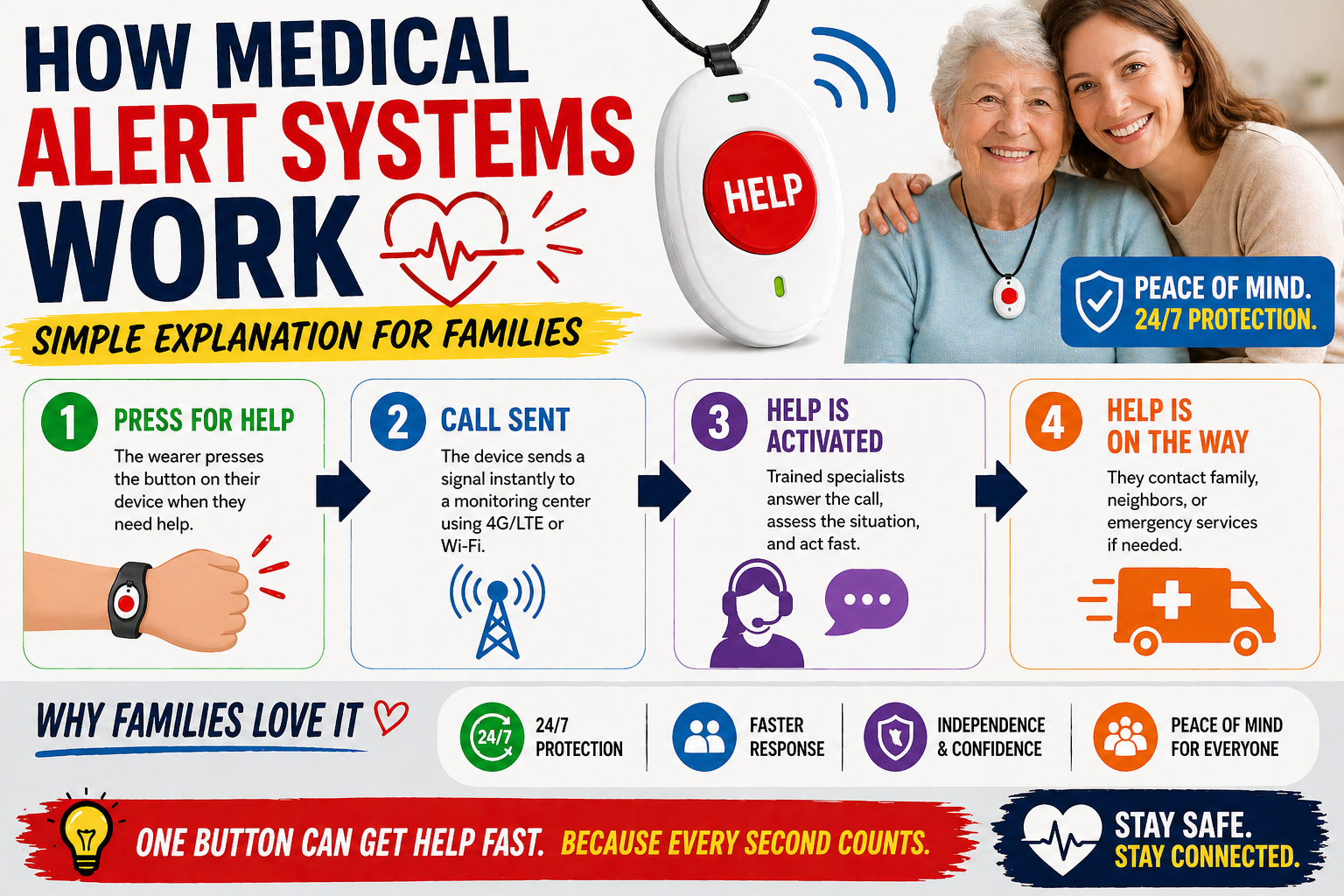
Working around it means pursuing goals that don’t require the parent to agree they’re not fine. A grab bar can be installed during a visit without requiring the parent to acknowledge they need it — framed as a home improvement, an upgrade, something you read about that seemed smart regardless of current need. A medical alert device can be presented as something you want for your peace of mind rather than their deficiency.
Actions don’t require agreement the way conversations do. An installed grab bar protects whether or not the parent agreed it was necessary.
Ask Questions Rather Than Making Statements
“How do you find getting out of bed in the morning?” produces more useful information and less defensiveness than “I think you need a bed rail.” Questions invite the parent into a conversation. Statements invite them to defend against a position.
The questions that work are specific rather than general. “How do you find the shower?” rather than “Are you safe in the bathroom?” “Do you ever feel dizzy when you first stand up?” rather than “I’m worried about your balance.” Specific questions produce specific answers. General questions produce “fine.”
Lead With What You Want For Them, Not What You’re Afraid Of
“I want you to be able to stay in your home for a long time and I’ve been thinking about what would help make that possible” is a completely different opening than “I’m worried about you living alone.” The first is an investment in their independence. The second is a challenge to it.
Everything in fall prevention can be framed as enabling independence rather than responding to its decline. Grab bars mean staying in their own bathroom. A medical alert device means going on walks without someone worrying. A bed rail means getting up safely without waiting for help. The same objects carry completely different emotional weight depending on the frame they arrive in.
Do What Doesn’t Require Permission
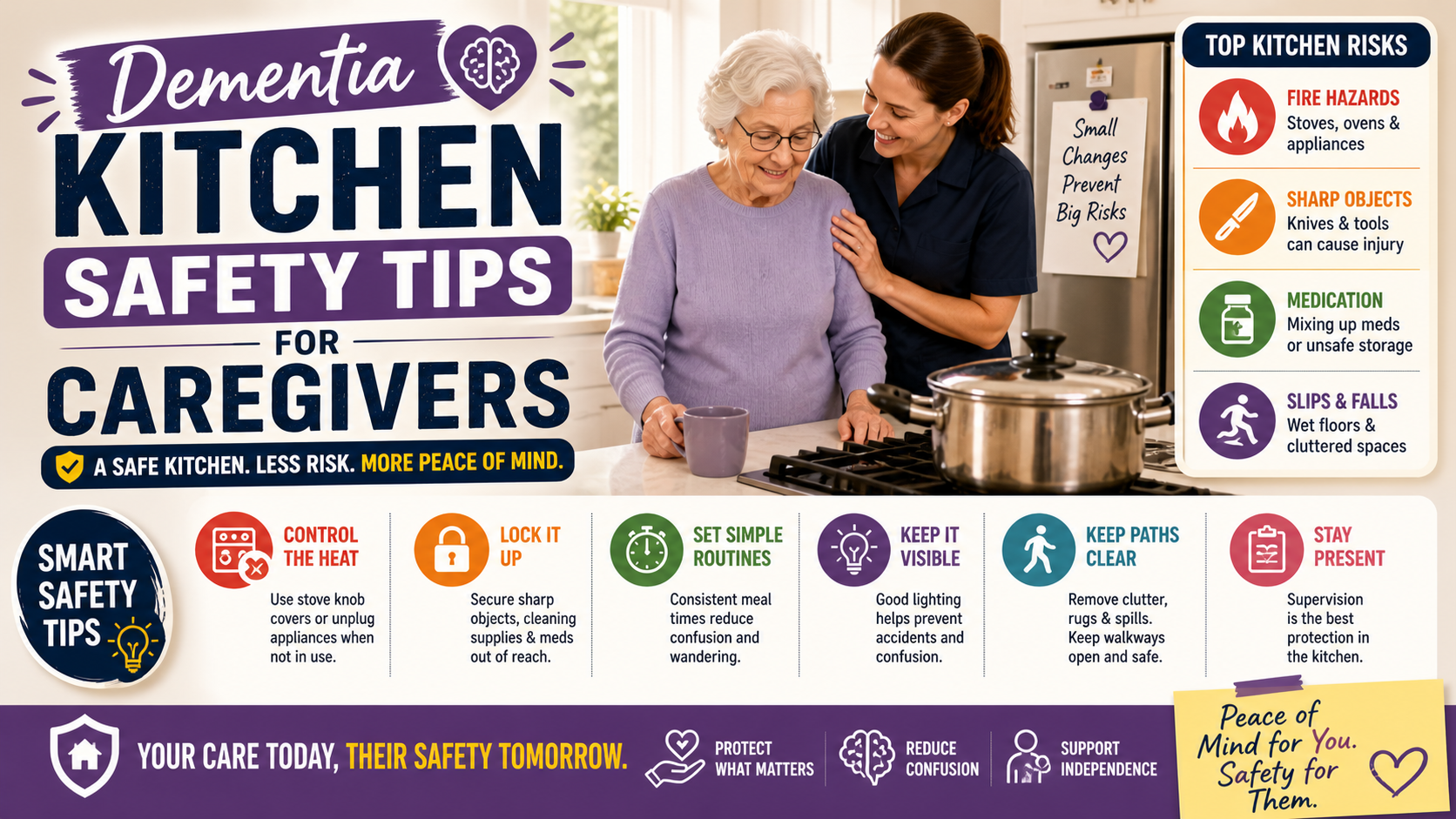
During a visit, without a lengthy conversation, certain things can simply be done. Unsecured rugs can be removed or secured. Cords can be routed away from walking paths. The refrigerator can be checked and expired food removed. A non-slip bath mat can replace the fabric one that’s been there for years. Night lights can be plugged into outlets on the path from bed to bathroom.
None of these require a parent to acknowledge they’re not fine. They’re improvements to the home environment that don’t demand agreement — they just happen, and they protect from the day they’re in place.
The modifications that do require conversation — grab bars, a medical alert device, a physician appointment specifically for fall risk — are worth pursuing separately, with the framing approaches above, after the no-conversation changes have been made.
Involve Their Physician
A physician who knows about fall risk — who has received specific observations from family about changes noticed during visits — can address fall prevention in a clinical context that carries different weight than family concern. “Your doctor thinks you should have grab bars in the bathroom” lands differently than “I think you should have grab bars in the bathroom.”
Communicate observations to the physician before appointments — through the patient portal, a note to the nurse, or directly if you accompany the parent to the visit. The physician who has this information can raise it in a way that your parent is more likely to receive.
Our guide on how to talk to a parent about a medical alert system covers these conversation approaches in full detail. Our comprehensive guide on how to help an elderly parent live safely alone covers everything from home modifications through legal planning.
The Things to Do Regardless of What They Say
Here’s the list that doesn’t depend on your parent’s agreement — the actions that protect them whether “fine” is the answer or not.
Do during the next visit without asking:
- Remove every unsecured rug from every walking area
- Route all cords away from walking paths
- Replace any fabric bath mat with a non-slip stone mat
- Plug auto-on night lights into bedroom, hallway, and bathroom outlets
- Check refrigerator for expired food and restock with easy options
- Check all medications are in order and note any questions for the physician
Order this week regardless of the conversation:
- Grab bars — install them during the next visit with or without a lengthy conversation about why
- Toilet safety rails — they arrive and install in ten minutes
- Bed rail — slides under the mattress, no tools, no conversation required for installation
→ Get the Toilet Safety Rails on Amazon
→ Get the Night Lights on Amazon
Present as a gift or for your peace of mind:
- The medical alert device with automatic fall detection — our guide on best gifts for seniors who live alone covers exactly how to frame safety products as gifts that get accepted
→ Get the SecuLife Smartwatch on Amazon



When “Fine” Has to Be Accepted
There’s an honest limit to this. An adult with full cognitive capacity has the right to make decisions about their own life — including decisions that carry risk that worries their children. Respecting autonomy means accepting that limit even when it’s frustrating.
What that acceptance looks like in practice: continue the conversation gently over time rather than dropping it after one rejection. Make the home modifications that don’t require agreement. Keep the relationship warm and connected — the relationship is the vehicle for every future conversation. Watch for changes that warrant escalating from gentle persistence to more urgent advocacy.
And build the safety net that protects regardless of what your parent says. The SecuLife Smartwatch that they’ve agreed to wear provides protection. The home modifications made during visits provide protection. The structured daily check-in that caps the long-lie clock provides protection.
Protection doesn’t require the parent’s acknowledgment that it’s needed. It just needs to be in place.


One More Thing About “Fine”
The parent who says they’re fine is almost always telling a version of the truth. They are, in their experience of their daily life, managing. They are not calling for help. They are not in obvious crisis. They feel — genuinely — that the situation is under control.
They’re also, in most cases, aging. Their balance is different than it was. Their strength is different. Their recovery from any physical challenge is slower. The home environment that was adequate at 70 is less adequate at 78. The margin between capacity and demand is thinner.
“Fine” doesn’t mean the same thing at 80 that it meant at 50. It means “I am managing within a narrower margin than I’m acknowledging, in an environment that hasn’t been adapted to that narrower margin, and I need you to love me enough to quietly close the gap without making me feel diminished.”
That’s what “fine” is asking for. And that’s exactly what the modifications in this guide — the grab bars, the bed rail, the night lights, the detection device — quietly provide.
About the Author
Margaret Holloway, RN spent 22 years in geriatric nursing hearing “fine” from patients whose families were sitting in waiting rooms outside having heard the same word weeks before. She also spent those years watching adult children who had learned to work around “fine” — who had installed the grab bars without making it a confrontation, who had put the night lights in without a lengthy conversation, who had given the smartwatch as a gift without making it about decline — keep their parents safe through years of independent living. “Fine” is the word that ends conversations. It doesn’t have to end action. She writes for Elder Safety Guide because the actions that matter most don’t require the word “fine” to change.