

The first thing my dad started losing wasn’t his wallet.
It was the TV remote.
At first, we all laughed.
A few days later, he couldn’t find his reading glasses.
The following week, it was his house keys.
Then one afternoon he called because he couldn’t find the cordless phone…
…while he was talking to me on it.
That was the moment I realized this wasn’t just about misplaced belongings anymore.
If your elderly parent keeps losing things, you’re probably asking yourself the same question I did.
Is this just normal aging?
Or is something more serious beginning to happen?
The truth is that everyone loses things occasionally.
The important question isn’t whether your parent misplaced something.
It’s whether losing things has become a noticeable change from how they’ve always been.
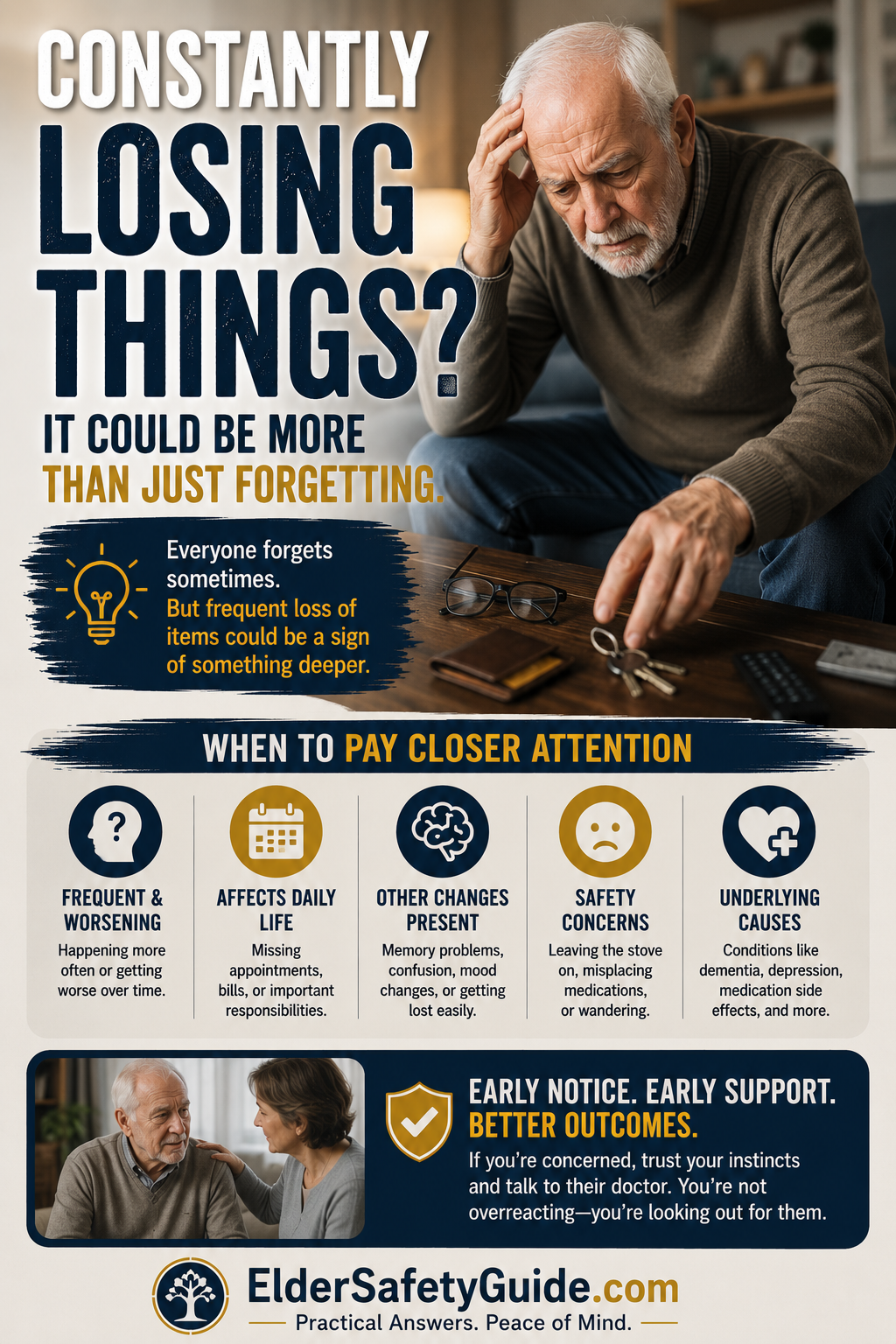
Everyone Misplaces Things Sometimes
Before jumping to the worst conclusion, I always remind families that forgetting where you left your glasses or keys happens at every age.
I’ve walked around my own house looking for my phone while it was sitting in my pocket.
That’s normal.
What concerns me is when someone begins losing important items far more often than they used to or struggles to retrace their steps to find them.
That’s when I start paying closer attention.


The Pattern Matters More Than The Item
One misplaced wallet isn’t usually alarming.
Neither is forgetting where you set down the remote.
What gets my attention is a growing pattern.
Maybe your parent is now regularly searching for:
- Their keys.
- Their wallet.
- Their glasses.
- Their medications.
- Their checkbook.
- Their phone.
Each item alone may not seem significant.
Together, they may suggest that daily routines are becoming more difficult.


Stress Can Affect Memory
One thing I’ve learned is that stress makes all of us more forgetful.
Older adults often deal with stress that family members don’t fully see.
Medical appointments.
Financial worries.
Loss of friends.
Reduced mobility.
Changes in independence.
When someone feels overwhelmed, it’s easier to forget where everyday items were placed.
Vision Problems Can Look Like Memory Problems
Sometimes the issue isn’t memory at all.
It’s eyesight.
I’ve known seniors who spent twenty minutes looking for something that was sitting right in front of them because their vision had gradually changed.
Poor lighting around the house can make this even worse.
Whenever I hear about someone constantly losing belongings, I also wonder whether they’ve had their vision checked recently.

Hearing Problems Can Add To The Confusion
This may sound unrelated, but hearing loss often affects attention.
When someone misses parts of conversations, they’re more likely to become distracted while completing everyday tasks.
Distraction leads to misplaced items.
It’s another reminder that memory isn’t always the only explanation.
Medication Changes Can Affect Concentration
Certain medications can make older adults feel sleepy, foggy, or less focused.
I’ve also seen situations where someone was accidentally missing doses or taking medications incorrectly, making concentration even more difficult.

If medication routines have become confusing, I recommend reading Elderly Parent Keeps Forgetting Medication When Should You Worry? because medication mistakes and memory concerns often appear together.
Are They Losing Things Or Forgetting The Story Behind Them?
One question I often ask families is this:
When your parent finds the missing item, do they remember how it got there?
For example, if they discover their keys in the refrigerator, do they immediately remember putting them there?
Or do they have absolutely no idea how they ended up there?
That difference can provide valuable clues.
Look For Other Changes Too
Losing things rarely happens in isolation.
Think about everything else you’ve noticed over the past few months.
Has your parent also:
- Started sleeping more?
- Lost weight?
- Been eating less?
- Stopped going out?
- Become more irritable?
- Started repeating stories?

When several changes begin appearing together, I stop thinking about isolated problems and start looking at the bigger picture. Loss of interest can be another important piece of that broader pattern, as explained in changes in an elderly parent’s motivation.

If your parent simply doesn’t seem like themselves anymore, spend some time reading My Elderly Parent Is Acting Different All of a Sudden What To Do because behavior changes often develop alongside memory concerns.


Missing Medications Creates A Different Level Of Concern
One thing I always ask is whether your parent is also losing pill bottles or forgetting where medications were placed.
That raises the stakes.
Medication mistakes can become dangerous very quickly.
If organizing prescriptions has become difficult, an automatic pill dispenser can make daily routines much simpler while reducing missed or double doses. It can also provide peace of mind for family members who worry about medication safety.
They May Be Hiding Their Struggles
I’ve noticed that many seniors become surprisingly good at covering up memory lapses.
If they lose something, they quietly keep searching until no one notices.
If they forget where they placed an item, they may invent a simple explanation rather than admit they don’t remember.

That’s one reason I encourage families to read Signs Your Elderly Parent Is Hiding Health Problems From You. What looks like a misplaced set of keys may actually be one of several subtle warning signs.


Don’t Immediately Take Over
When families notice memory changes, there’s often a temptation to solve every problem overnight.
Try not to do that.
Instead, look for simple ways to make everyday life easier.
Designate a specific place for keys.
Keep a basket by the front door for wallets and glasses.
Reduce clutter.
Small adjustments often make a surprising difference.
Trust What You’re Seeing
Most families don’t become concerned because of one missing item.
They become concerned because something feels different.
You know your parent’s routines.
You know what’s normal for them.
If losing things has become noticeably more frequent, don’t ignore that feeling.
It doesn’t automatically mean dementia.
It doesn’t automatically mean your parent can no longer live independently.
But it is worth paying attention to, especially if it’s happening alongside other changes you’ve already noticed.
The sooner families recognize patterns instead of isolated incidents, the more opportunities they usually have to step in, offer support, and help their loved one remain safe and independent.
About the Author
Michelle Harper is a senior care educator and family caregiver advocate for Elder Safety Guide. She writes about aging in place, memory concerns, home safety, and recognizing the subtle changes that often appear before a loved one needs additional support. Her goal is to help families make informed, compassionate decisions while preserving an older adult’s independence and dignity.