
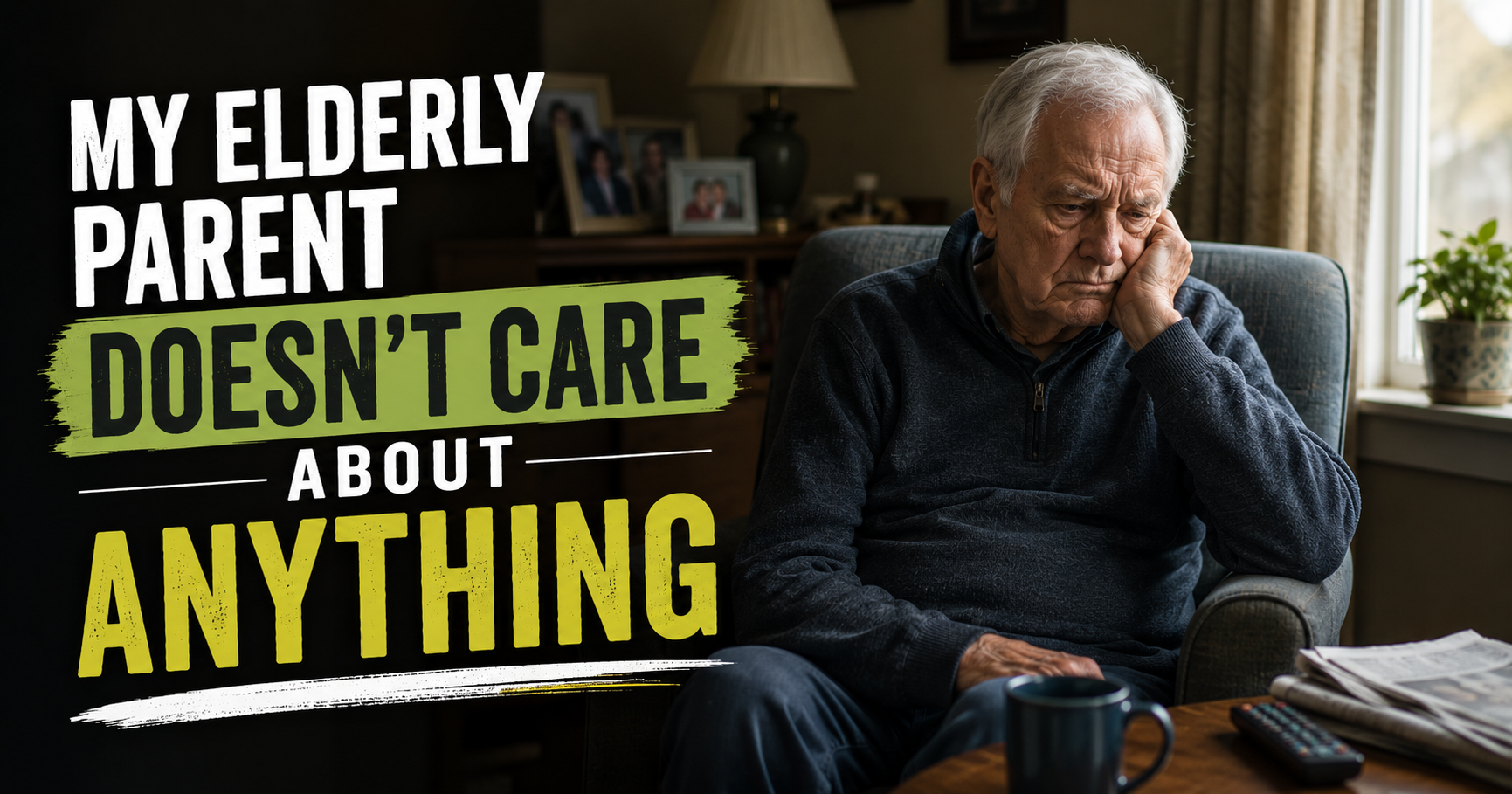
A few months ago, one of my friends called and asked a question I hadn’t heard before.
He didn’t tell me his mom was forgetting things.
He didn’t say she’d been diagnosed with anything.
Instead, he said something much simpler.
“It’s like she just doesn’t care anymore.”
She used to spend hours working in her flower beds.
Now the weeds were taller than the flowers.
She loved baking for the grandchildren.
Now she barely walked into the kitchen.
She never missed a birthday.
Now she forgot to call.
Nothing dramatic had happened overnight.
It was almost as if someone had slowly turned the brightness down in her life.
That conversation has stayed with me because I think a lot of families struggle to describe what they’re seeing.
Their parent isn’t necessarily confused.
They’re not always angry.
They may not even seem sick.
They just don’t seem interested anymore.
If you’ve been wondering why your elderly parent suddenly doesn’t seem to care about much of anything, I want you to know that you’re asking an important question.
One of the biggest lessons I’ve learned is that losing interest in life is usually a symptom of something else.
The challenge is figuring out what that “something else” might be.
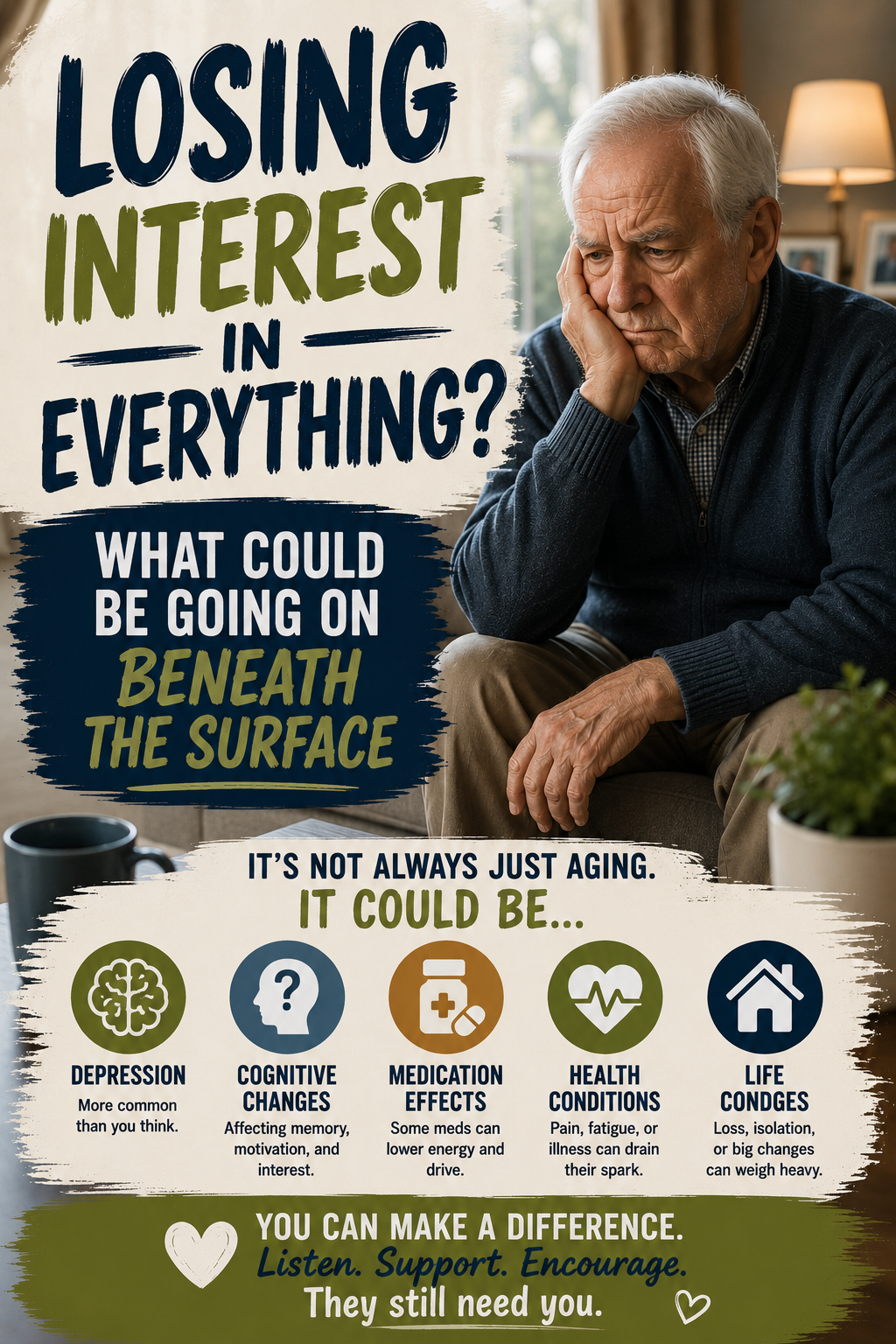
This Isn’t Usually About Laziness
One of the first mistakes I hear people make is describing an aging parent as lazy.
Personally, I try not to use that word.
Think about someone who spent forty years raising children, working full time, mowing the yard every weekend, fixing things around the house, and never sitting still.
People like that rarely wake up one morning and simply decide they no longer care.
When motivation disappears, I assume there’s a reason until proven otherwise.
That mindset has helped me understand aging much better.


I Always Start By Looking For Other Changes
Whenever a family tells me their parent has lost interest in everything, I don’t stop there.
Instead, I start asking questions.
Have they been sleeping more?
Have they lost weight?
Do they still leave the house?
Have they become more forgetful?
Are they keeping up with personal hygiene?
One change rarely tells the whole story.
Several changes together often explain much more.
If you’ve also noticed personality changes, I recommend reading My Elderly Parent Is Acting Different All of a Sudden What To Do because a loss of motivation is often only one piece of a larger pattern.
Sometimes They’re Simply Exhausted

One thing that surprised me while talking with caregivers over the years is how often fatigue changes someone’s personality. Fatigue can be an important part of the change, so signs of low energy in older adults may help you recognize what deserves closer attention.
Imagine feeling tired every single day.
Even enjoyable activities begin feeling like work.
Gardening.
Cooking.
Shopping.
Visiting family.
Eventually the easiest choice becomes doing nothing.

If your parent also spends much more time sleeping than they used to, I encourage you to read Why Is My Elderly Parent Sleeping All Day? because excessive fatigue and a loss of motivation frequently happen together.
Losing Purpose Changes Everything
Retirement sounds wonderful until you’ve lived it for several years.
Many older adults spend decades with routines that gave each day meaning.
Getting ready for work.
Taking care of children.
Helping neighbors.
Volunteering.
Fixing things around the house.
After those responsibilities disappear, some seniors struggle to replace them.
Without realizing it, they begin drifting through the day instead of living it.
I’ve seen people who looked physically healthy but quietly admitted they no longer felt like they had much of a reason to get up in the morning.
That doesn’t always mean they’re depressed.
Sometimes they’re simply searching for a new purpose.


Chronic Pain Drains More Than Energy
Pain changes people.
Not because they’re weak.
Because living with constant discomfort is exhausting.
I’ve known older adults who stopped fishing because standing hurt.
They stopped gardening because kneeling became impossible.
They stopped visiting family because riding in the car aggravated their back.
Eventually it looked like they’d lost interest.
The truth was much different.
They still cared.
Everything simply hurt too much.
Eating Less Can Affect Motivation Too
The body needs fuel.
When someone consistently eats very little, they often become weaker and more tired.
Energy drops.
Concentration suffers.
Even enjoyable activities begin feeling overwhelming.
If you’ve recently noticed your parent pushing food away or skipping meals altogether, take a look at My Elderly Parent Won’t Eat Much Anymore because poor nutrition and low motivation often reinforce each other.


Small Losses Add Up
Families usually notice the big changes.
They don’t always notice the dozens of small ones.
Maybe your parent can no longer read comfortably because their vision has changed.
Maybe hearing conversations has become frustrating.
Maybe they no longer trust themselves to drive after dark.
Each loss seems manageable by itself.
Together, they slowly shrink someone’s world.
Eventually, staying home becomes easier than facing one more reminder that life has changed.
Isolation Creates A Cycle
I’ve noticed that once someone begins staying home more often, it becomes surprisingly easy for isolation to take over.
They see fewer friends.
They hear fewer conversations.
They laugh less.
Days begin blending together.
The less they leave the house, the less they want to leave the house.
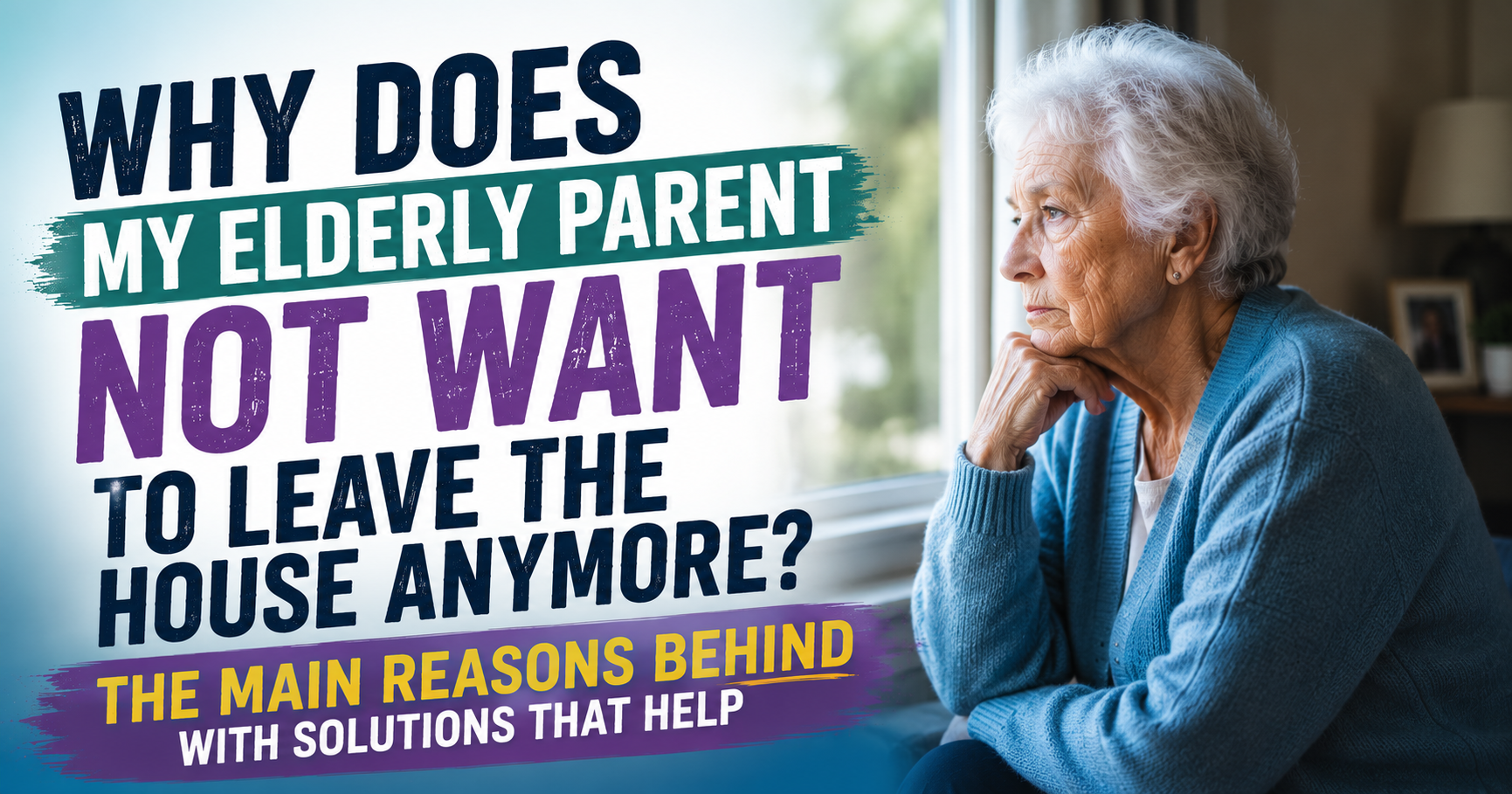
If this sounds familiar, I recommend reading My Elderly Parent Doesn’t Want to Leave the House Anymore because isolation often develops gradually instead of all at once.
Depression Doesn’t Always Look Like Sadness
This is probably one of the biggest misconceptions I hear.
People expect depression to look like crying.
Many older adults never cry.
Instead, they stop caring.
The yard becomes overgrown.
Laundry piles up.
Mail sits unopened.
Favorite hobbies disappear.
They don’t necessarily say they’re unhappy.
They simply stop participating in life the way they once did.
That’s one reason I encourage families to avoid dismissing these changes as “just getting older.”
They May Be Working Harder Than You Realize
One thing I’ve learned is that many seniors spend enormous amounts of energy simply trying to appear normal.
They’re hiding memory lapses.
Covering up pain.
Pretending they heard conversations they actually missed.
Trying not to worry their children.
That effort is exhausting.
Sometimes, by the time they’re home again, they have nothing left to give.

If you’ve wondered whether your parent is quietly covering up health concerns, spend some time reading Signs Your Elderly Parent Is Hiding Health Problems From You because I’ve found that many older adults become experts at hiding problems until they simply can’t anymore.


This Is Usually A Gradual Change
One thing I always tell families is to think back six months instead of six days.
Most people don’t lose interest in life overnight.
The changes usually happen so slowly that they’re almost impossible to notice while they’re happening.
Then one day you stop and realize…
Dad hasn’t gone fishing all summer.
Mom hasn’t baked in months.
The garden is full of weeds.
The phone rarely rings anymore.
Looking back, the signs were there all along.
They were simply quiet enough to escape everyone’s attention.
They May Be Grieving More Than You Realize
One thing I’ve learned is that grief doesn’t always happen right after someone dies.
Sometimes it shows up months later.
Sometimes it isn’t even connected to losing a person.
I’ve seen older adults grieve the loss of their health, their driver’s license, their independence, or the home they lived in for forty years.
Those losses are real.
When someone feels like they’re losing pieces of the life they built, it’s understandable that motivation can begin fading.
Instead of asking, “Why don’t you care anymore?” I think a better question is, “What have you lost that I may not fully understand?”
That simple shift in perspective can completely change the conversation.
Don’t Mistake Quietness For Contentment
Some older adults naturally become quieter with age.
There’s nothing wrong with enjoying a peaceful afternoon at home.
The problem is assuming that quiet automatically means content.
I’ve met seniors who smiled every time family visited.
Everyone thought they were doing fine.
After a longer conversation, they admitted they felt lonely nearly every day.
That’s why I never judge someone’s well-being by appearances alone.
I try to understand what life looks like when no one else is around.
Watch What They Stop Doing
I’ve found that the activities someone gives up often provide clues about what’s changing.
For example:
- A gardener stops watering flowers.
- A woodworker no longer enters the workshop.
- A church member suddenly stops attending services.
- A grandparent who always called now rarely picks up the phone.
Those aren’t random changes.
They’re pieces of a story.
The goal is figuring out what story they’re telling.
What I Would Do If This Were My Own Parent
If this were my own mom or dad, I wouldn’t begin by trying to fix everything.
I’d begin by observing.
I’d spend more time with them.
I’d share a meal.
I’d ride along to the grocery store.
I’d notice whether they still laugh at the same jokes.
I’d pay attention to whether they’re keeping up with everyday responsibilities.
Most importantly, I’d resist the urge to lecture.
People are much more likely to open up when they feel understood instead of judged.
Mistakes I See Families Make
One of the biggest mistakes is assuming the problem is simply old age.
Growing older changes people.
Giving up on life is different.
Another mistake is trying to motivate someone by criticizing them.
Comments like,
“You need to get out more.”
“You should start doing things again.”
“You’re just sitting around.”
usually create guilt instead of change.
I’ve found it’s much more helpful to stay curious.
Ask questions.
Listen carefully.
Try to understand what changed before trying to solve it.
Questions I’d Be Asking
Whenever I notice a parent losing interest in life, these are the questions that come to mind.
Are they sleeping well?
Are they eating enough?
Have they stopped seeing friends?
Do they still enjoy conversations?
Has pain become a daily problem?
Are they worried about falling?
Have they quietly stopped driving?
Each answer helps complete another piece of the puzzle.
What I’d Watch Over The Next Few Weeks
One thing I encourage families to do is watch for patterns instead of isolated events.
I’d pay attention to whether my parent:
- Begins eating even less.
- Stops bathing regularly.
- Misses appointments.
- Avoids answering the phone.
- Withdraws from grandchildren.
- Starts forgetting conversations.
- Loses interest in television, hobbies, or favorite activities.
If several of those changes begin appearing together, I stop thinking about motivation alone.
I start thinking about overall health and independence.
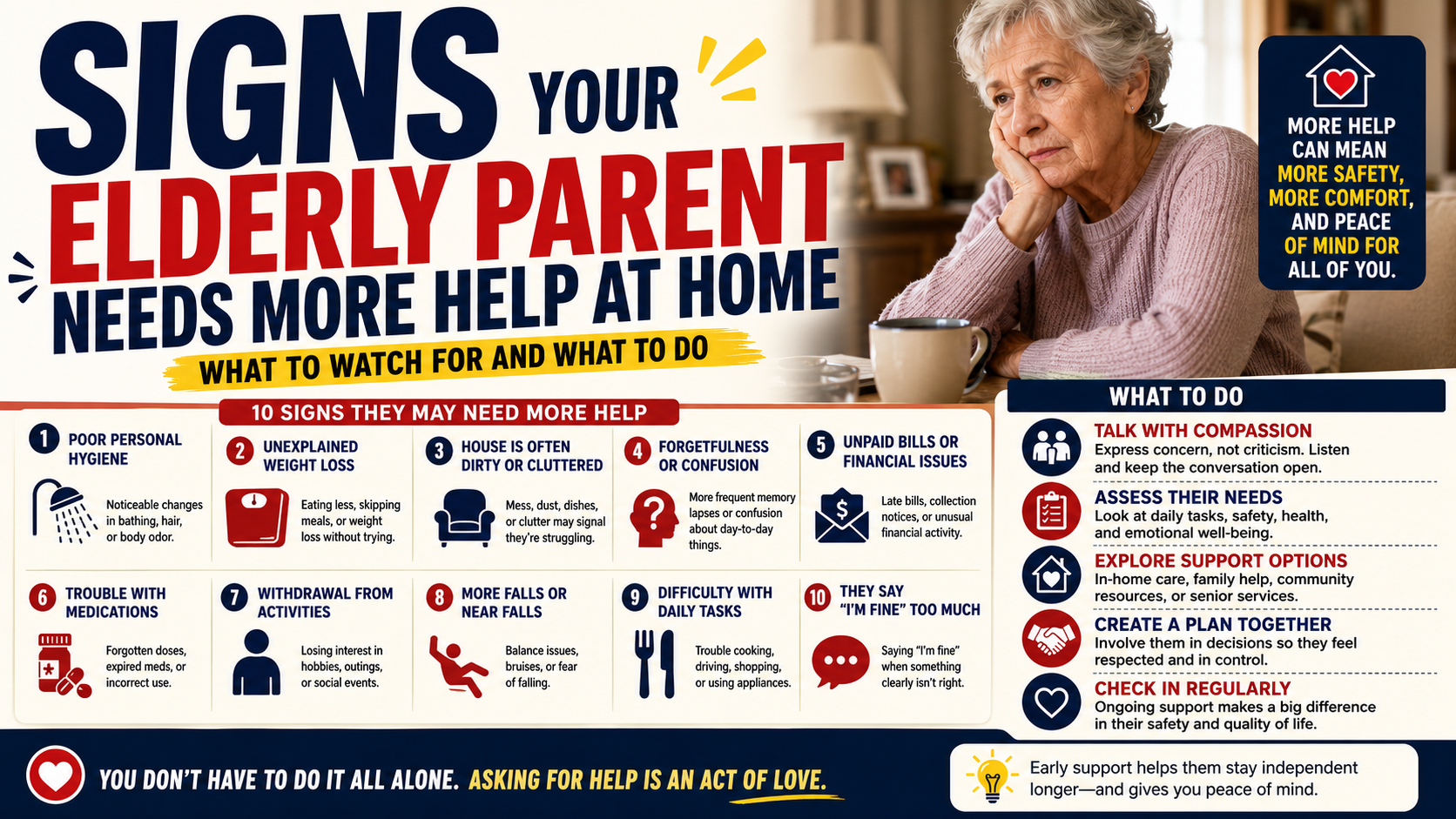
If you’ve started recognizing multiple warning signs, I recommend reading Signs Your Elderly Parent Needs More Help at Home because it brings many of these changes together and explains how they often overlap.
When Safety Starts Becoming Part Of The Conversation
Sometimes losing interest affects more than hobbies.
It affects safety.
Someone who no longer cares about cooking may stop eating balanced meals.
Someone who no longer cares about leaving the house may spend long days completely alone.
Someone who loses motivation may also stop reporting falls or new health problems.
If your parent spends long periods alone and you’re worried about emergencies, it’s worth comparing the best medical alert systems for seniors. The right system can provide peace of mind while helping an older adult remain independent.
You Can’t Force Someone To Care
This may be one of the hardest lessons for caregivers.
Love doesn’t always change behavior.
Logic doesn’t always change behavior.
Arguments almost never change behavior.
What often helps is understanding why the motivation disappeared in the first place.
Until that question is answered, every attempt to “fix” the problem is really just guessing.
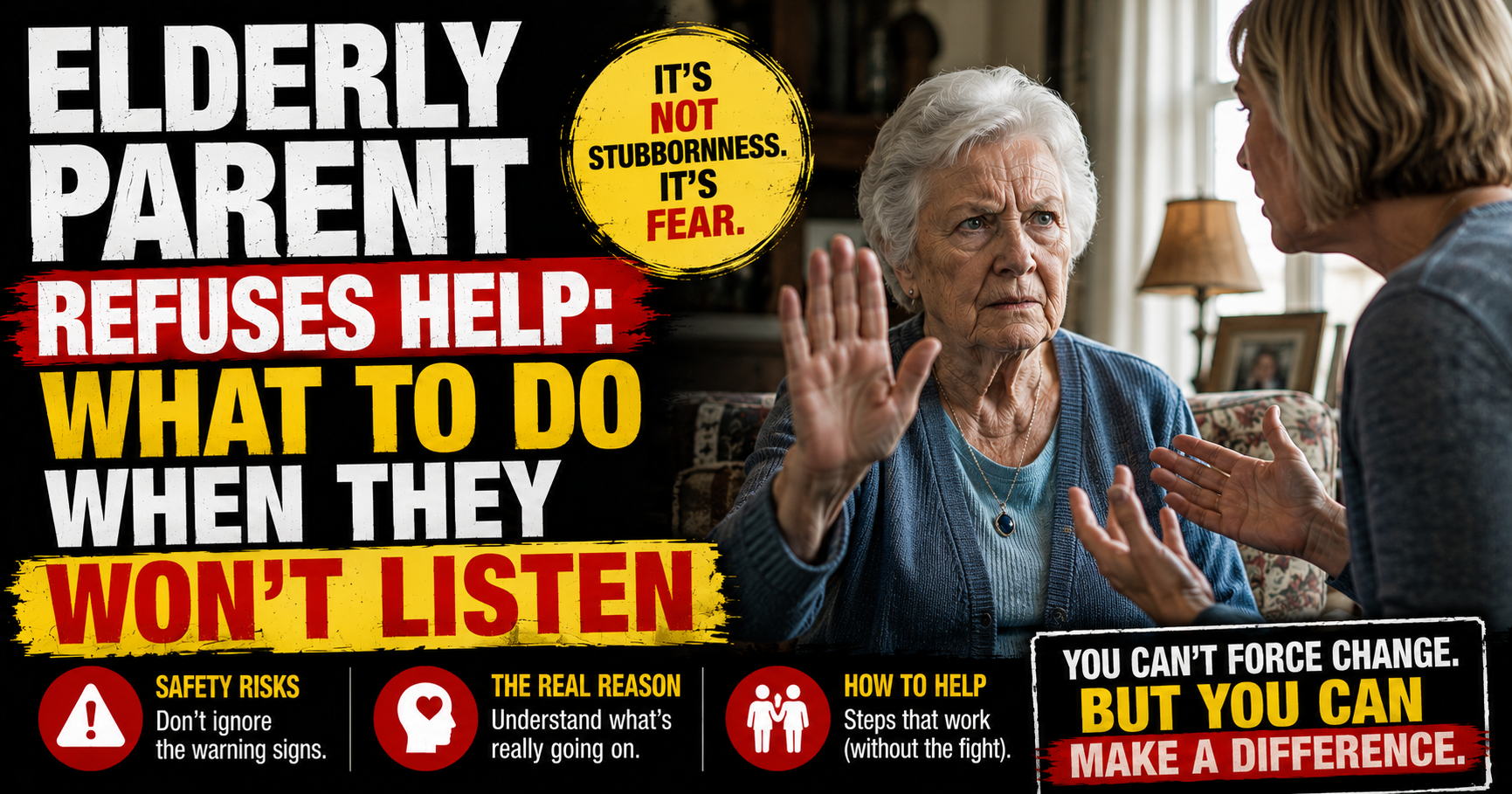
If every conversation about getting help turns into an argument, my guide on Elderly Parent Refuses Help. What To Do When They Won’t Listen may help you approach those conversations in a way that feels less confrontational.
When I’d Encourage A Medical Evaluation
If this loss of interest has appeared gradually over several months, I’d mention it during the next routine medical visit.
If it appeared suddenly over a few days or weeks, especially alongside confusion, personality changes, weakness, or significant weight loss, I’d contact their healthcare provider much sooner.
Doctors often learn valuable information from family members because you see changes that may not be obvious during a short office visit.
Don’t hesitate to share what you’ve been observing.
Those details matter.
Don’t Forget To Take Care Of Yourself
One thing I wish more caregivers understood is that watching someone slowly change is emotionally exhausting.
You may question yourself.
Wonder if you’re overreacting.
Feel guilty for becoming frustrated.
Or worry that you’re missing something important.
Those feelings are normal.
You don’t have to solve every problem overnight.
Simply paying attention, staying involved, and asking thoughtful questions already makes a tremendous difference.
Sometimes The Smallest Changes Tell The Biggest Story
Looking back, families rarely remember one dramatic moment.
They remember dozens of little moments.
The untouched garden.
The unopened mail.
The favorite hobby that quietly disappeared.
The invitations that were politely declined.
The phone calls that became shorter.
None of those changes seemed overwhelming by themselves.
Together, they revealed that something important had changed.
That’s why I encourage families to trust their instincts.
If your parent no longer seems interested in the people, hobbies, or routines they once loved, don’t dismiss it as “just getting older.”
Sometimes it’s temporary.
Sometimes it’s related to a treatable medical condition.
Sometimes it’s the first visible sign that they need more support than they’re ready to ask for.
The earlier you recognize those patterns, the more opportunities you’ll have to help your parent continue living safely, independently, and with the quality of life they deserve.
About the Author
Sarah Bennett is a senior care educator and family caregiver advocate for Elder Safety Guide. She specializes in helping adult children recognize the early signs of physical, emotional, and cognitive decline while supporting older adults who want to remain independent. Her writing focuses on practical guidance, compassionate caregiving, and helping families make confident decisions before small concerns become larger safety issues.