
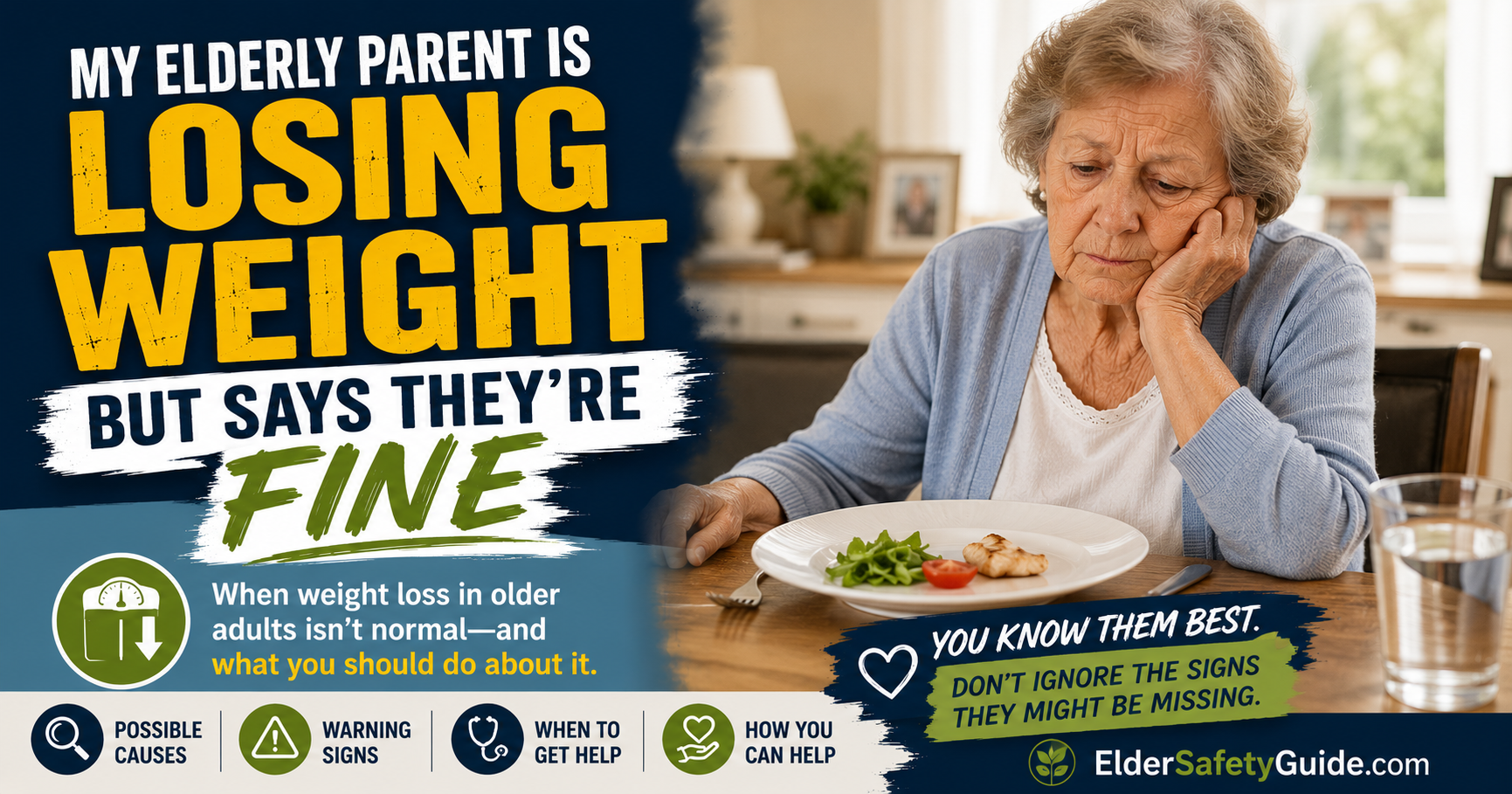
The first thing I noticed wasn’t that my dad looked sick.
It was that his favorite flannel shirt suddenly looked too big.
At first, I figured maybe he had been eating a little healthier or getting more exercise around the yard. When I mentioned it, he laughed and said, “I could probably stand to lose a few pounds anyway.”
A few weeks later, I noticed his belt had moved over another notch.
Then his wedding ring looked loose.
Then I opened his refrigerator and realized there wasn’t much food inside.
Looking back, the weight loss wasn’t the problem.
It was the clue.
I’ve learned that unexpected weight loss is one of the easiest changes for families to notice, but it’s also one of the easiest warning signs to dismiss. Many older adults explain it away by saying they’re just getting older, they don’t have much of an appetite anymore, or they simply aren’t as hungry as they used to be.
Sometimes that’s true.
Other times, unexplained weight loss is your parent’s way of asking for help without ever saying the words out loud.
A Few Pounds Isn’t Always Cause For Alarm
One of the first questions families ask is whether any weight loss should be concerning.
The answer depends on what changed.
If your parent intentionally started eating healthier after talking with their doctor, a little weight loss may be expected.

What concerns me is weight loss that seems to happen without any effort.
When someone who has weighed about the same for years suddenly starts looking thinner, their clothes fit differently, or family members begin commenting on it, I think it’s worth paying attention.
The number on the scale matters less than the change itself.


Many Seniors Don’t Realize They’re Losing Weight
This surprises a lot of people.
Older adults don’t always notice gradual changes.
They may not weigh themselves regularly.
They may buy loose-fitting clothes.
They may not look in the mirror every day the way younger people often do.
Sometimes it’s the adult children who notice first during a visit.
One daughter told me she knew something wasn’t right because her mom hugged her and “she just felt smaller.”
That simple observation eventually led to a doctor’s appointment that uncovered several health problems.

“I’m Just Not As Hungry Anymore”
This is probably the explanation I hear most often.
Appetite naturally changes with age.
Taste and smell become less sensitive.
Activity levels often decrease.
Many seniors simply don’t feel hungry as often.
But there is a difference between eating a little less and barely eating enough to maintain good health.
If your parent regularly skips meals or says they just aren’t interested in food anymore, don’t assume it’s simply part of getting older.
Eating Alone Changes Everything
Something many families overlook is loneliness.
Cooking for one person isn’t nearly as enjoyable as cooking for a family.
I’ve spoken with widows and widowers who admitted they stopped making real meals after losing their spouse.
Instead of preparing dinner, they might eat:
- A bowl of cereal
- A piece of toast
- Crackers
- A banana
Day after day.
Eventually the weight starts coming off.
The issue isn’t always illness.
Sometimes it’s simply that eating alone doesn’t feel worth the effort anymore.

Medication Problems Can Quietly Affect Appetite
One thing I’ve learned is that medication problems rarely stay isolated.
Certain prescriptions can change:
- Appetite
- Taste
- Energy levels
- Digestion
Some medications make food taste different.
Others cause nausea.
Some simply make people too tired to care about eating.
I’ve also seen seniors accidentally skip medications or take incorrect doses, making the problem even worse.

If you’ve noticed confusion around prescriptions, I recommend reading our guide on elderly parent keeps forgetting medication when should you worry. Medication mistakes and unexplained weight loss often appear together.
Hidden Health Problems Often Show Up This Way
One reason I take weight loss seriously is because it can be one of the earliest visible signs that something else is happening.
The challenge is that many seniors don’t talk about their symptoms.
They don’t want to worry their children.
They don’t want another doctor’s appointment.
And they certainly don’t want anyone suggesting they can’t live independently anymore.
Instead, they quietly adjust.
They eat less.
They sleep more.
They stop going places.
They tell everyone they’re fine.

If that sounds familiar, I encourage you to read Signs Your Elderly Parent Is Hiding Health Problems From You. In my experience, unexplained weight loss is often only one piece of a much larger puzzle.


Dental Problems Are More Common Than Families Realize
This is another issue that hides in plain sight.
Imagine trying to chew steak with sore gums.
Or crunchy vegetables with loose dentures.
Many seniors stop eating certain foods because eating hurts.
Instead of telling family members, they quietly switch to foods that require almost no chewing.
Unfortunately, those foods aren’t always the most nutritious.
I’ve met older adults who survived almost entirely on pudding, mashed potatoes, soup, and ice cream because those foods were comfortable to eat.
Over time, nutrition suffers.
Weight follows.
Watch What’s Actually In The Refrigerator
Whenever I visit an aging parent, I naturally glance inside the refrigerator.
Not because I’m snooping.
Because it tells a story.
A refrigerator filled with expired leftovers, spoiled milk, or almost no groceries often reveals much more than someone realizes.
It may tell you your parent isn’t shopping regularly anymore.
It may tell you cooking has become difficult.
Or it may simply tell you they’re no longer eating balanced meals.
Those small observations often become the beginning of an important conversation rather than evidence of a problem by themselves.


Sleeping More and Eating Less Often Go Together
Another pattern I’ve noticed is that families often mention excessive sleeping around the same time they notice weight loss.
A parent who sleeps most of the afternoon may naturally skip meals.
Reduced activity also lowers appetite.
Sometimes fatigue is simply part of recovering from an illness.
Other times, it’s another clue that something larger deserves attention.

If your parent has recently started spending much more time asleep than they used to, I recommend reading Why Is My Elderly Parent Sleeping All Day?. These two changes frequently appear together.
Don’t Ignore Your Instincts
One thing I’ve learned from talking with caregivers is that they often recognize something has changed long before they know exactly what it is.
They’ll say things like:
“She just doesn’t look like herself.”
“He seems smaller every time I visit.”
“I can’t explain it, but something feels different.”
Those instincts matter.
You don’t need to jump to the worst possible conclusion.
But you also shouldn’t convince yourself that obvious changes are simply part of aging without taking a closer look.
Sometimes noticing the change early is exactly what gives your parent the best chance to stay healthy, independent, and living at home for years to come.


Weight Loss Can Be One Of The First Signs That Daily Life Is Becoming More Difficult
One thing I’ve noticed over the years is that weight loss rarely happens by itself.
As families start paying closer attention, they often discover several other changes happening at the same time.
Maybe Mom has lost ten pounds.
Then you realize she’s also wearing the same clothes every day.
The house isn’t as clean as it used to be.
Mail is piling up on the kitchen table.
She forgot two doctor appointments this month.
None of those changes by themselves prove that something serious is happening.
Together, they paint a very different picture.
That’s why I encourage families to step back and look at everything that’s changing instead of focusing only on the number on the scale.
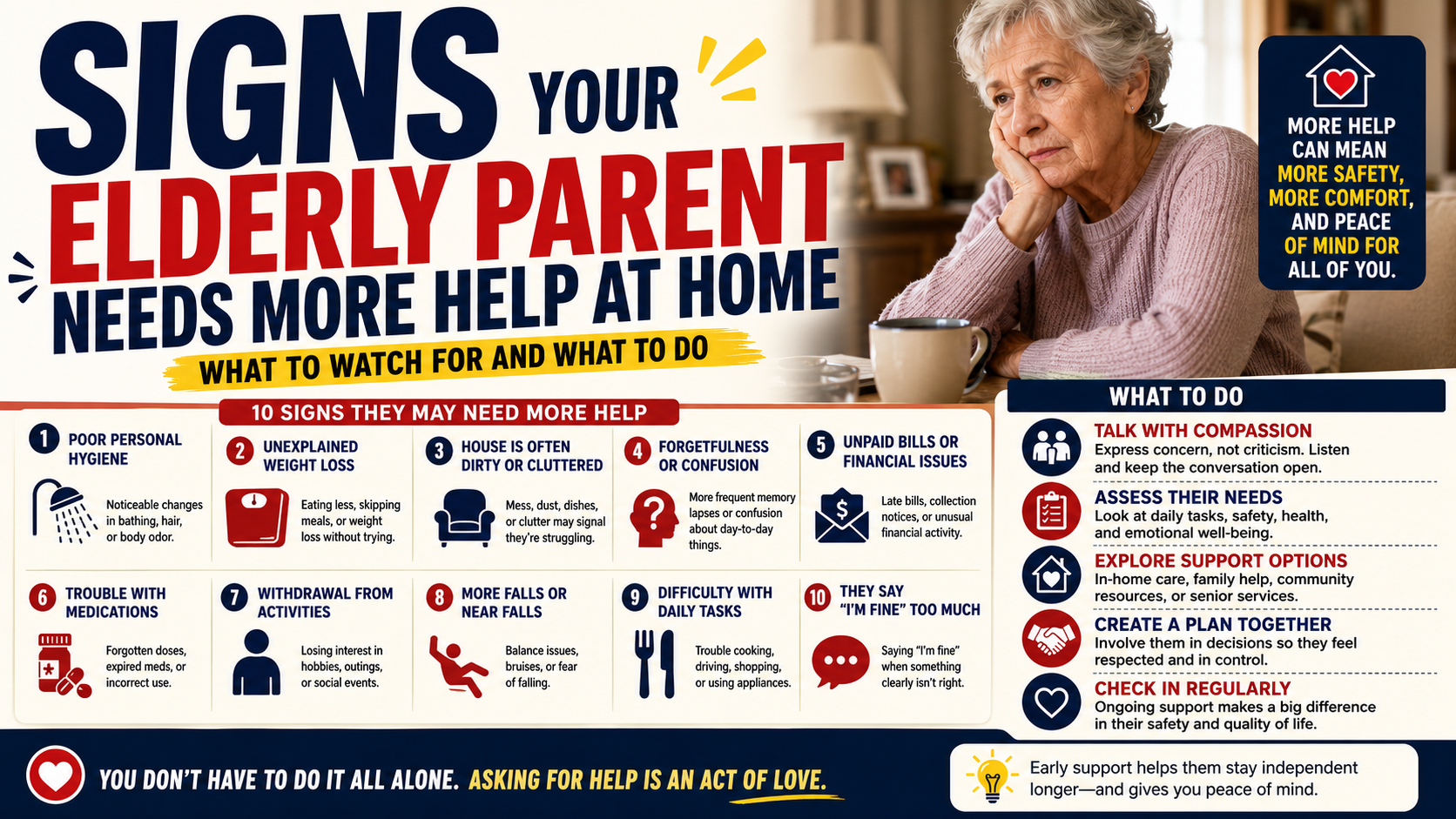
Our article on signs your elderly parent needs more help at home walks through many of the warning signs families often overlook until they begin happening all at once.
Sometimes The Problem Isn’t Food At All
It’s easy to assume that weight loss means someone isn’t eating enough.
Sometimes that’s exactly what’s happening.
Other times, food has very little to do with the problem.
I’ve seen unexplained weight loss caused by:
- Undiagnosed illnesses
- Medication side effects
- Depression
- Thyroid problems
- Difficulty swallowing
- Chronic infections
- Digestive disorders
- Poorly fitting dentures
That’s one reason I never recommend simply encouraging someone to “eat more.”
If an underlying medical condition is responsible, increasing calories won’t solve the real issue.
Watch For Changes In Energy
When families mention weight loss, I usually ask another question.
“Have you noticed any changes in their energy?”
Many tell me yes.
Their parent:
- Gets tired more easily.
- Doesn’t walk as much.
- Gives up hobbies.
- Spends more time sitting.
- Doesn’t seem interested in leaving the house.
Energy changes often provide valuable clues about what’s happening.
If you’ve also noticed your parent becoming unusually tired or sleeping most of the day, take a look at Why Is My Elderly Parent Sleeping All Day?. Excessive fatigue and weight loss frequently appear together.
Don’t Forget About Mental Health
Mental health affects physical health more than many people realize.
After retirement, the loss of a spouse, or major life changes, some seniors slowly begin withdrawing from daily routines.
They may stop:
- Cooking meals
- Grocery shopping
- Exercising
- Seeing friends
Eventually, eating becomes less important.
Weight loss follows.
Unfortunately, many families mistake depression for normal aging.
It isn’t.
What If They Keep Saying They’re Fine?
This is probably the most frustrating part for many families.
You can see the changes.
Other relatives notice them too.
Friends mention something seems different.
Yet your parent smiles and says:
“I’m fine.”
“I’ve always been thin.”
“I just don’t eat as much anymore.”
“I don’t need to see a doctor.”
I’ve learned that arguing rarely helps.
Instead of trying to convince them they’re wrong, ask gentle questions.
For example:
“What kinds of meals have you been enjoying lately?”
“Has food tasted different recently?”
“Have you noticed your clothes fitting differently?”
Questions often lead to conversations that accusations never will.
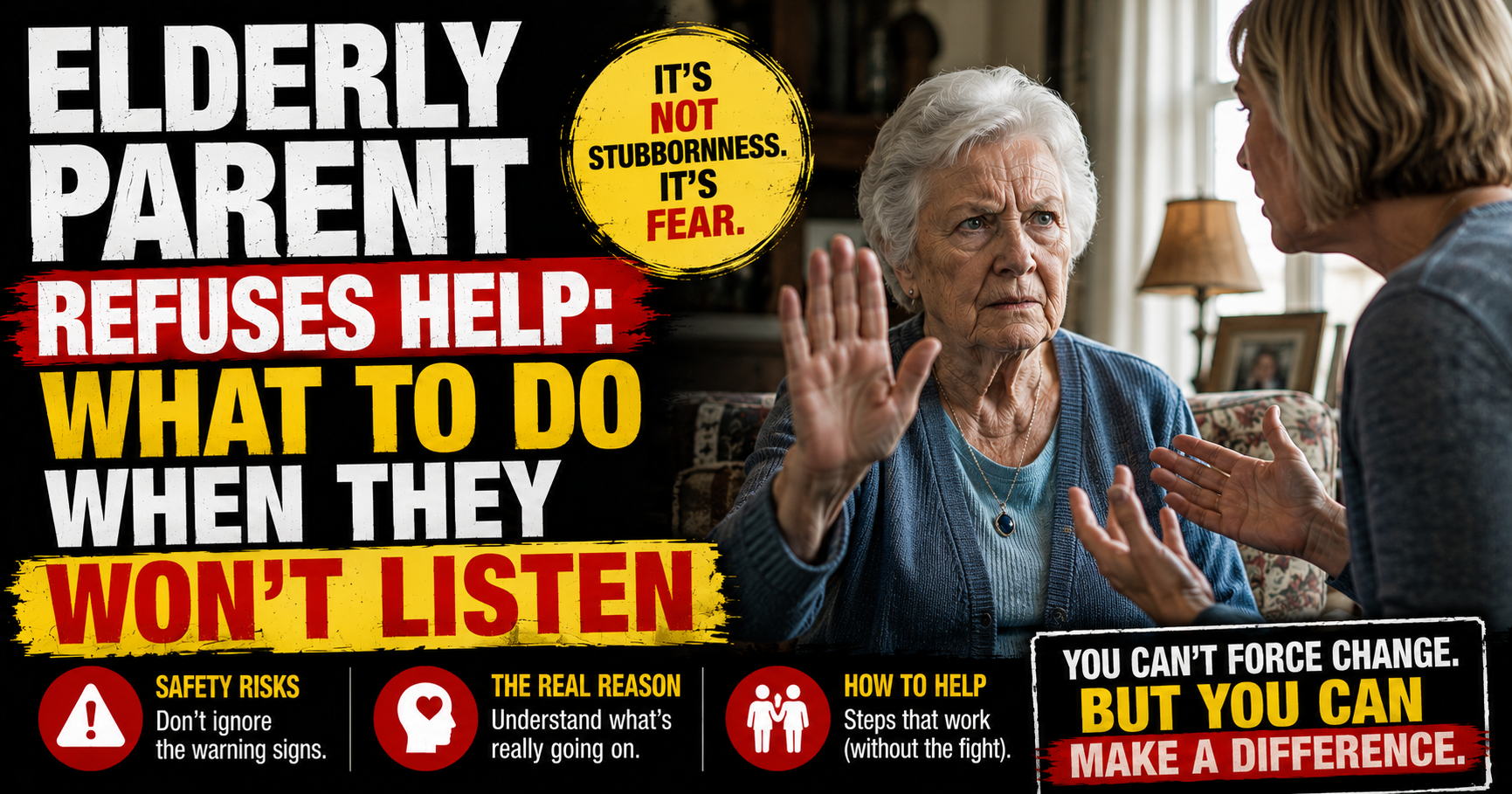
If every discussion turns into resistance, our article on elderly parent refuses help explains why older adults often push back even when they genuinely need support.
Living Far Away Makes It Harder
Distance creates another challenge.
If you only visit every few months, gradual weight loss may become much more noticeable.
You might immediately think:
“They look completely different.”
Meanwhile, your parent may not have noticed the slow changes at all.
For families who don’t live nearby, staying informed becomes much more difficult.

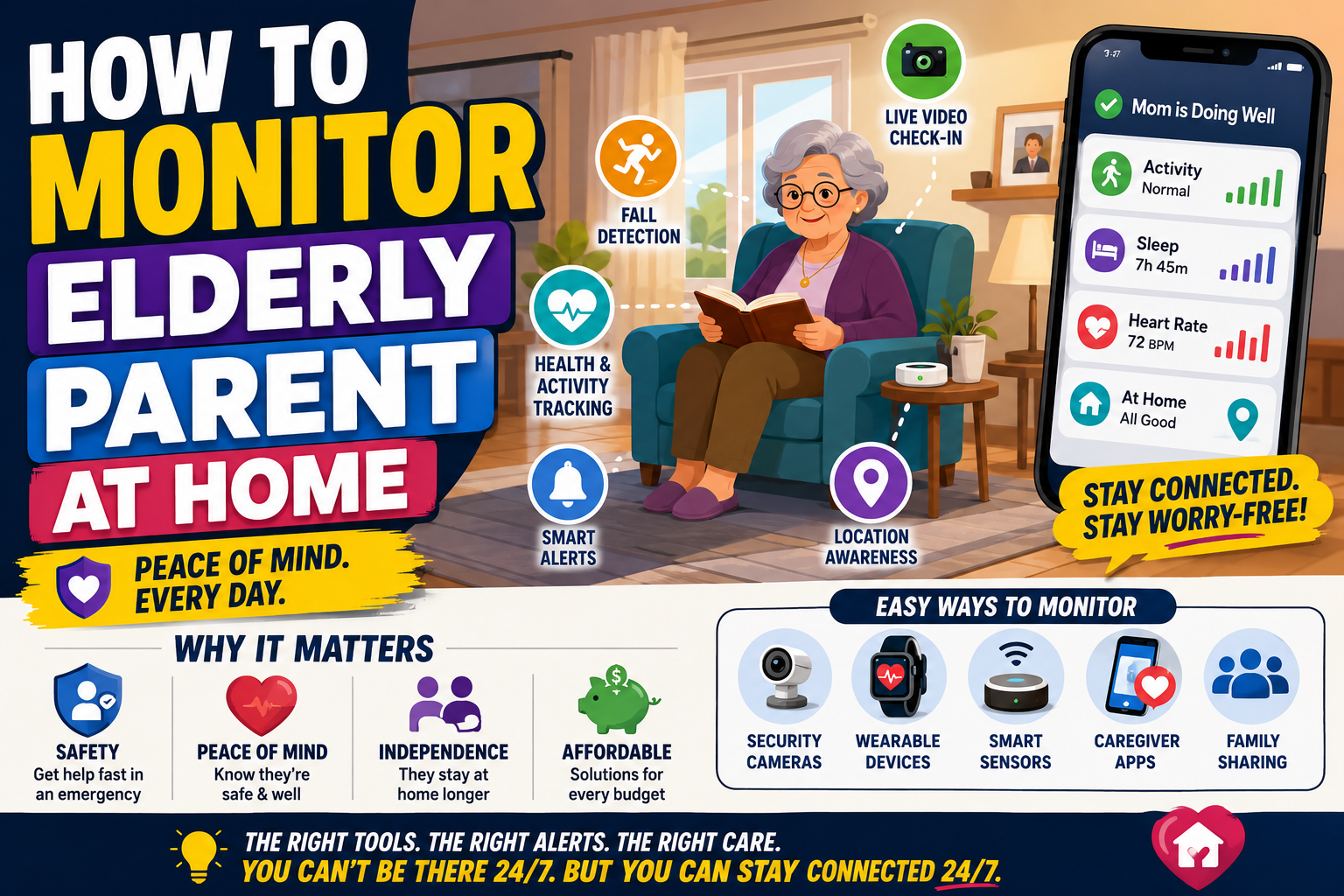
That’s why I often recommend reading how to help aging parents from a distance along with how to monitor an elderly parent at home.
Both articles offer practical ways to stay involved without making your parent feel like they’re constantly being watched.
When Weight Loss Should Never Be Ignored
I become much more concerned when unexplained weight loss happens alongside other changes such as:
- Frequent falls
- Confusion
- Missed medications
- Poor hygiene
- Memory problems
- Sleeping much more than usual
- Trouble driving
- Isolation from family and friends
One of these changes may not mean much by itself.
Several happening together deserve prompt medical attention.
How To Bring It Up Without Starting An Argument
One mistake I see over and over is families leading with fear.
They say things like:
“You’re losing too much weight.”
“You need to eat.”
“Something is wrong with you.”
Even though those comments come from love, they often make an older adult feel defensive.
I’ve had much better success when the conversation focuses on concern instead of criticism.
Try something like:
“I noticed your shirts look a little looser than they used to. Have you noticed that too?”
Or:
“I just wanted to check in because you seem to have less energy lately.”
Those conversations feel supportive rather than confrontational.
What You Can Do Right Now
If your parent is losing weight unexpectedly, don’t wait for a crisis before taking action.
Start with small steps.
Schedule a visit.
Share a meal together.
Look inside the refrigerator.
Ask about recent doctor appointments.
Watch how easily they move around the house.
Pay attention to whether they seem steady on their feet.
Small observations often reveal far more than direct questions.
The Goal Isn’t To Panic
I never want families to assume the worst.
Weight loss does not automatically mean cancer.
It does not automatically mean dementia.
It does not automatically mean someone can no longer live independently.
But it does deserve attention.
One of the biggest lessons I’ve learned is that families rarely regret checking on a concern early.
They often regret waiting until the problem becomes impossible to ignore.
If your instincts are telling you something has changed, trust them enough to ask questions, encourage a medical evaluation, and keep paying attention.
Those small conversations today may help prevent a much larger crisis tomorrow.
About the Author
Daniel Brooks is a senior safety educator and contributing writer for Elder Safety Guide. He focuses on helping families recognize the early signs of physical decline, nutrition concerns, fall risks, and changes that can affect an older adult’s ability to live safely at home. His goal is to provide practical, compassionate guidance that helps families make informed decisions while preserving their loved one’s independence and dignity.