A transfer bench and a shower chair solve different problems. Here’s who needs a transfer bench, what features matter, and why the Medline is our top pick.
A shower chair and a transfer bench solve different problems. Most people shopping for bathing safety equipment don’t know this distinction — and end up with the wrong product for their specific situation.
A shower chair sits entirely inside the shower or tub. It helps someone who can step into the shower but needs to sit while bathing. A transfer bench straddles the tub wall — half inside the tub, half outside. It helps someone who cannot safely step over the tub edge at all. The person sits on the outside section, slides across the bench into the tub, and never has to lift their leg over anything.
For anyone whose primary bathing challenge is the tub entry — the step-over that has become unsafe or impossible — a transfer bench is the right product. A shower chair is not. The Bathing Safety for Seniors — The Complete Guide explains how this tub-entry solution fits into safer washing, rinsing, and exit routines.
This guide covers what a transfer bench is, who needs one, what features matter, and the specific option we recommend.
The Transfer Bench We Recommend
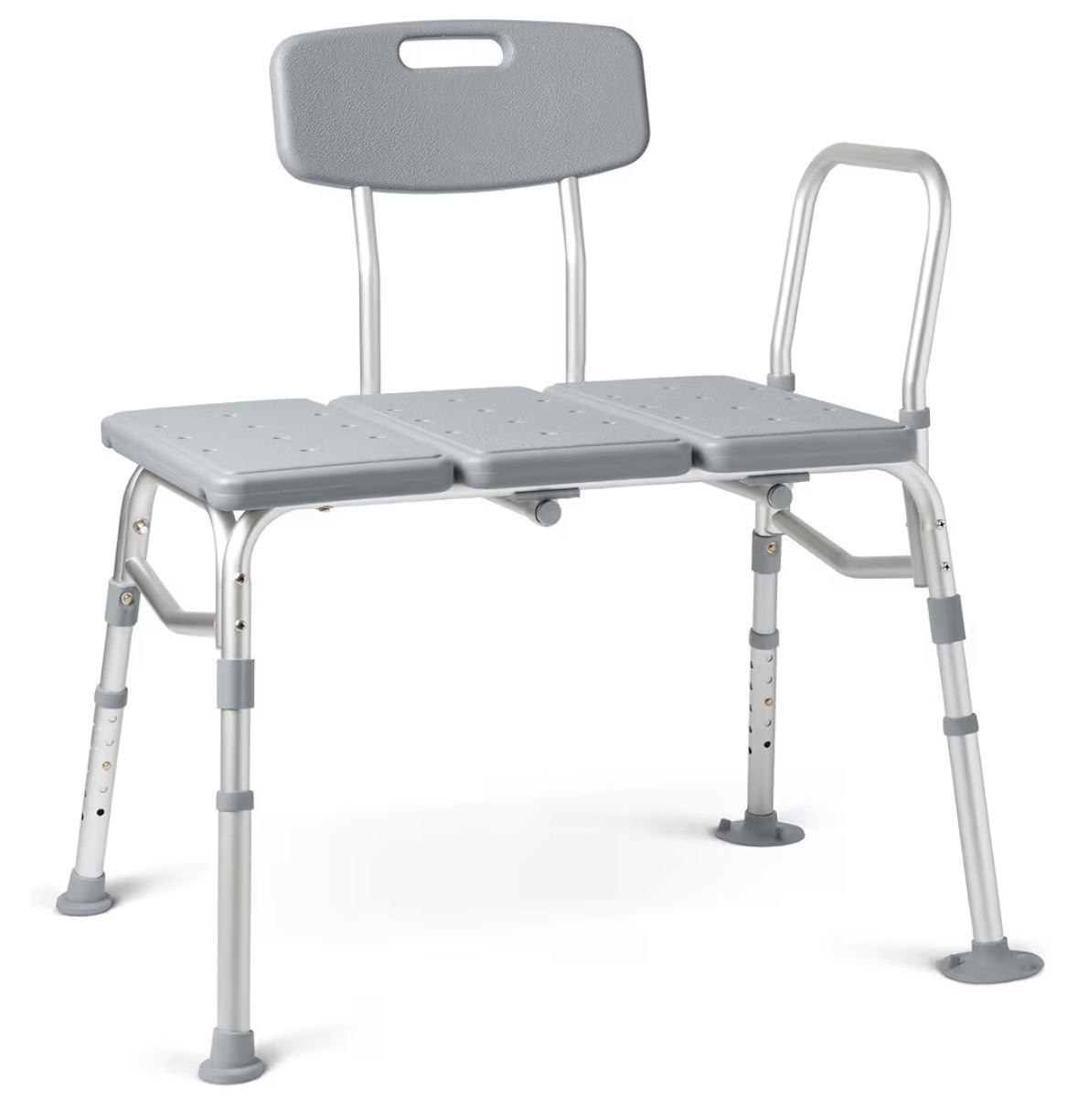
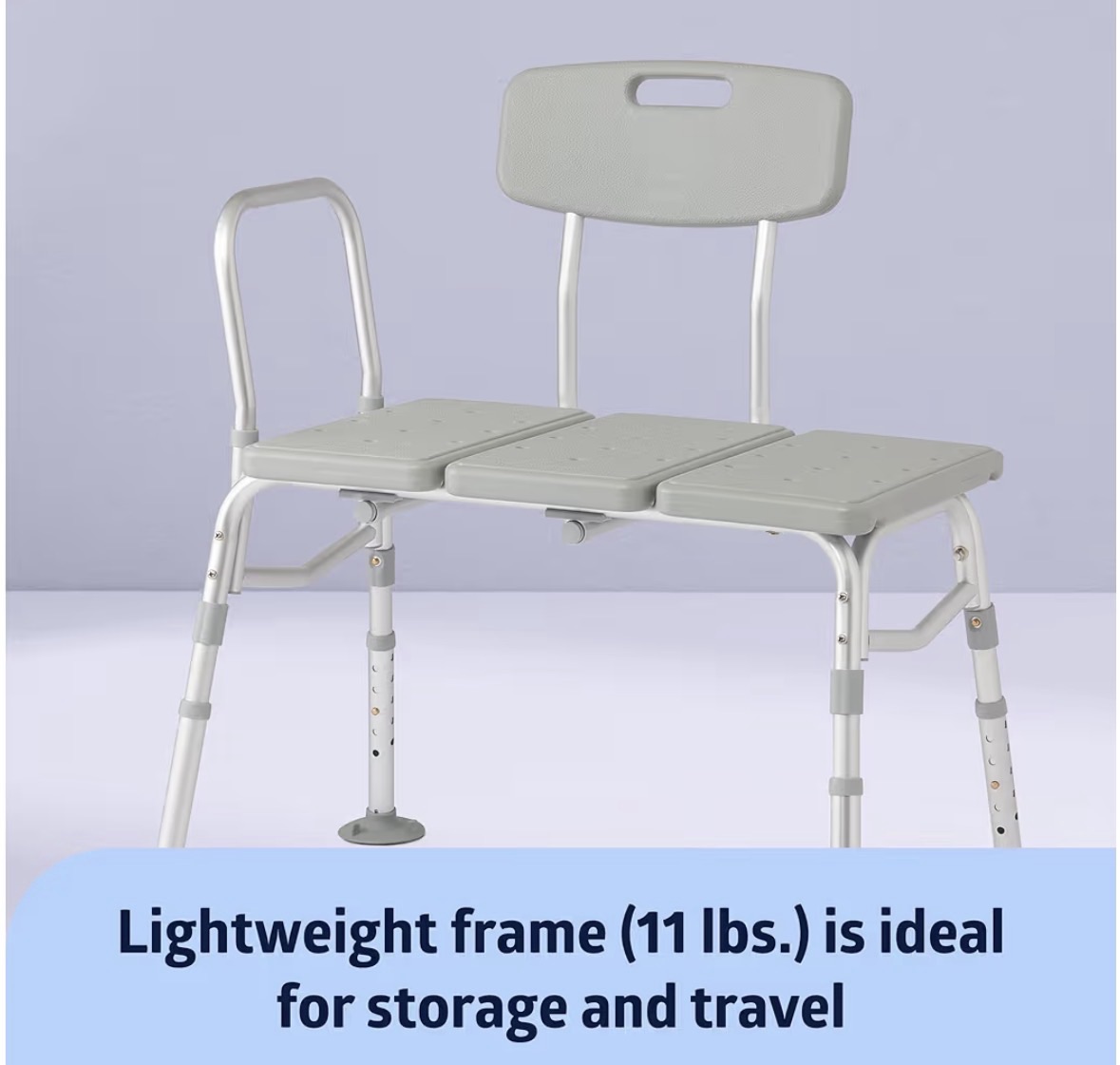
The Medline Transfer Bench is the specific option we recommend for most older adults — combining the features that matter most for safe tub transfers into a package that requires zero tools to assemble and accommodates a wide range of body sizes and tub configurations.
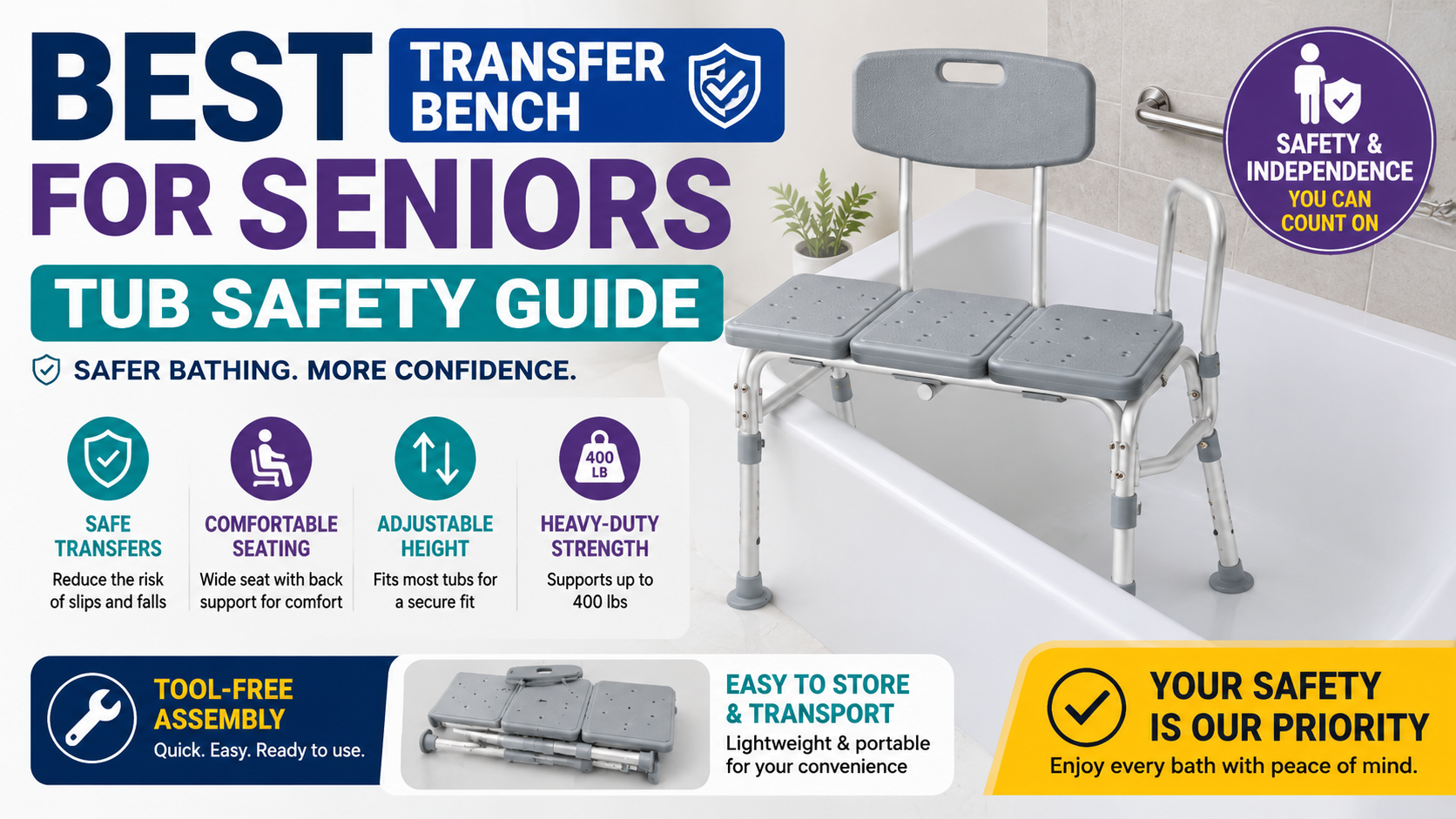
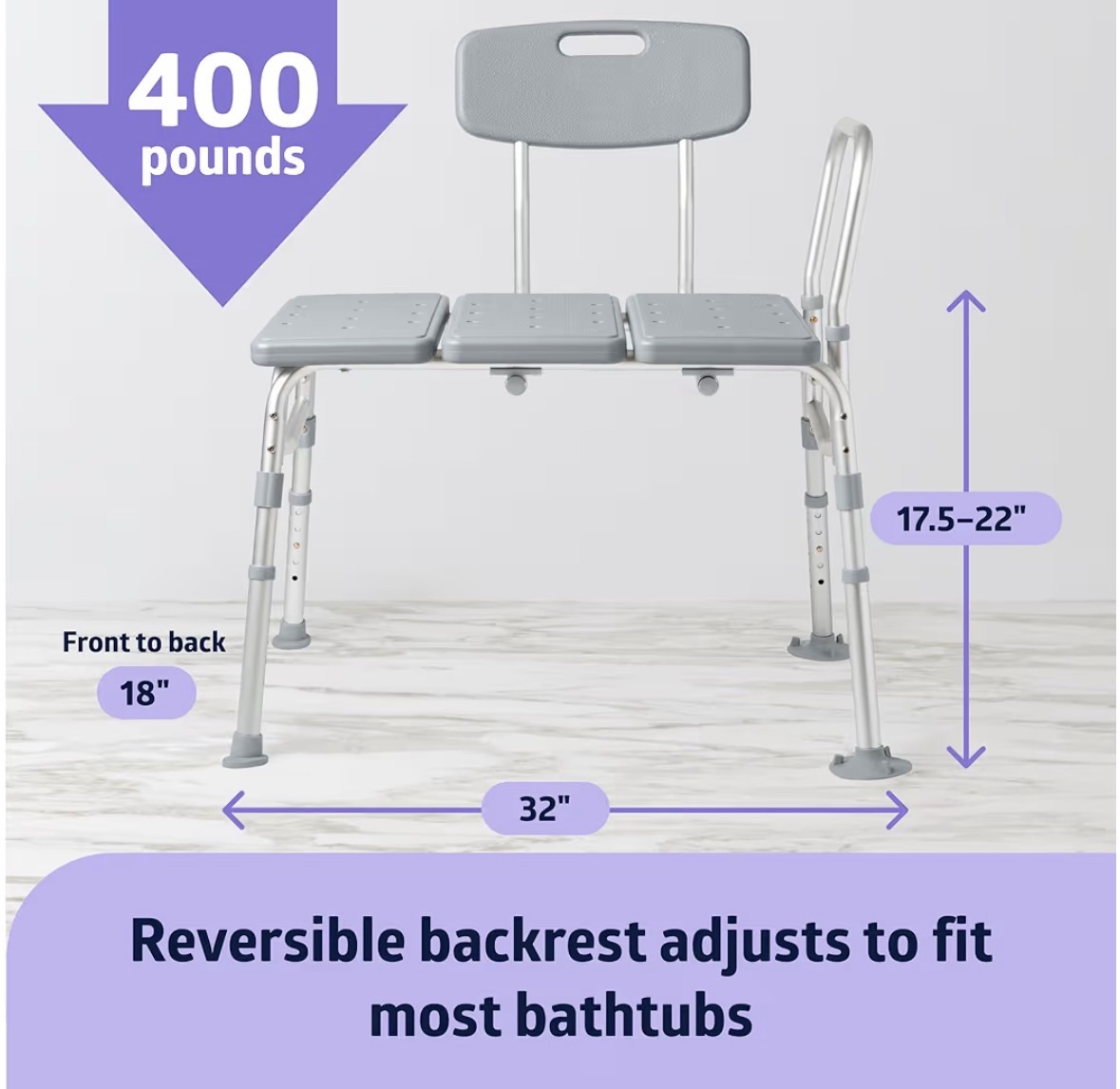
Heavy-duty 400-pound weight capacity provides genuine margin for most users — not the bare-minimum 250-pound rating that leaves little safety buffer. Slip-resistant feet grip both the wet tub floor inside and the bathroom floor outside. Tool-free assembly means it’s ready to use straight out of the box without any installation. Adjustable height legs accommodate different tub wall heights and user leg lengths. The back support provides trunk stability during bathing for anyone who needs it.
For the specific combination of high weight capacity, tool-free setup, slip-resistant feet, and back support — the Medline is the transfer bench that covers the most ground for the most users.
→ Get the Medline Transfer Bench on Amazon
Who Needs a Transfer Bench vs a Shower Chair
The decision between a transfer bench and a shower chair comes down to one question: can the person safely step over the tub edge?
A standard tub edge is 15 to 18 inches high — a significant step that requires balancing on one leg while the other lifts that height. For someone with hip replacement restrictions, significant balance reduction, severe arthritis, neurological conditions affecting leg lift, or any situation where that step-over has become unsafe or painful — the step-over is the problem. A shower chair doesn’t solve it because the step-over still has to happen to get to the chair.
A transfer bench eliminates the step-over completely. The person sits down outside the tub, slides to the inside position, and the step-over never happens. The tub wall is traversed in a seated position — a completely different physical demand from the standing step-over.
Choose a transfer bench if:
- Stepping over the tub edge has become unsafe or painful
- Hip replacement restrictions prohibit the hip flexion required for tub entry
- Significant balance reduction makes one-legged standing during tub entry risky
- Leg weakness makes the step-over unreliable
- Post-surgical recovery restricts lower-body movement
Choose a shower chair if:
- The person can step into the shower safely but needs to sit while bathing
- The bathroom has a walk-in shower rather than a tub
- Standing for the full duration of a shower is the problem, not tub entry
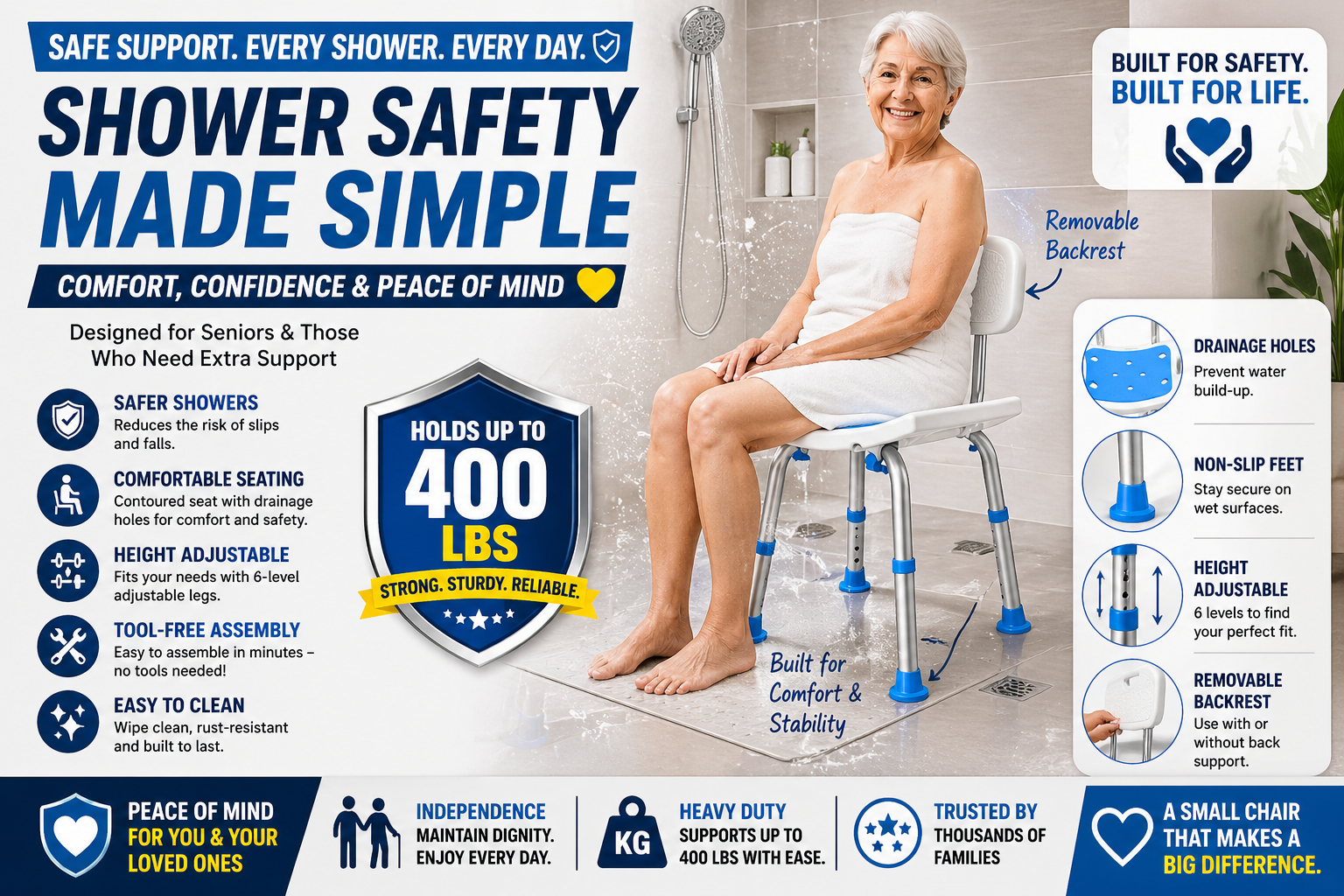
Our review of the best shower chair for seniors covers the shower chair option for those situations. This guide is specifically for the transfer bench.
How a Transfer Bench Works — The Sliding Transfer
Understanding the mechanics of a transfer bench transfer makes the feature decisions below more intuitive.
The transfer bench straddles the tub — two legs inside the tub, two legs on the bathroom floor outside. The seat extends over the tub wall, providing a continuous sitting surface from outside to inside. The person:
- Sits on the outside portion of the bench on the bathroom floor side
- Lifts legs over the tub edge one at a time — while seated, which requires much less hip flexion than a standing step-over
- Slides across the bench seat to the inside tub position
- Bathes from the seated inside position
- Reverses the sequence to exit
The key movement — lifting legs over the tub edge while seated — requires significantly less hip flexion and balance than the standing step-over. For someone with hip replacement restrictions the seated leg lift is typically within the permitted range of motion when the standing step-over isn’t. For someone with balance concerns the seated position during the leg lift eliminates the one-legged balance demand entirely.
What Features Matter — The Specific Criteria
Weight Capacity
Transfer benches bear the full weight of the person throughout the transfer and bathing sequence. Weight capacity is a non-negotiable safety specification — the bench must be rated for the person’s weight with meaningful margin above it. Standard transfer benches are rated for 250 to 300 pounds. Bariatric options are rated for 400 to 600 pounds. Never use a transfer bench at or near its rated capacity — choose one with capacity that provides genuine margin.
Adjustable Height
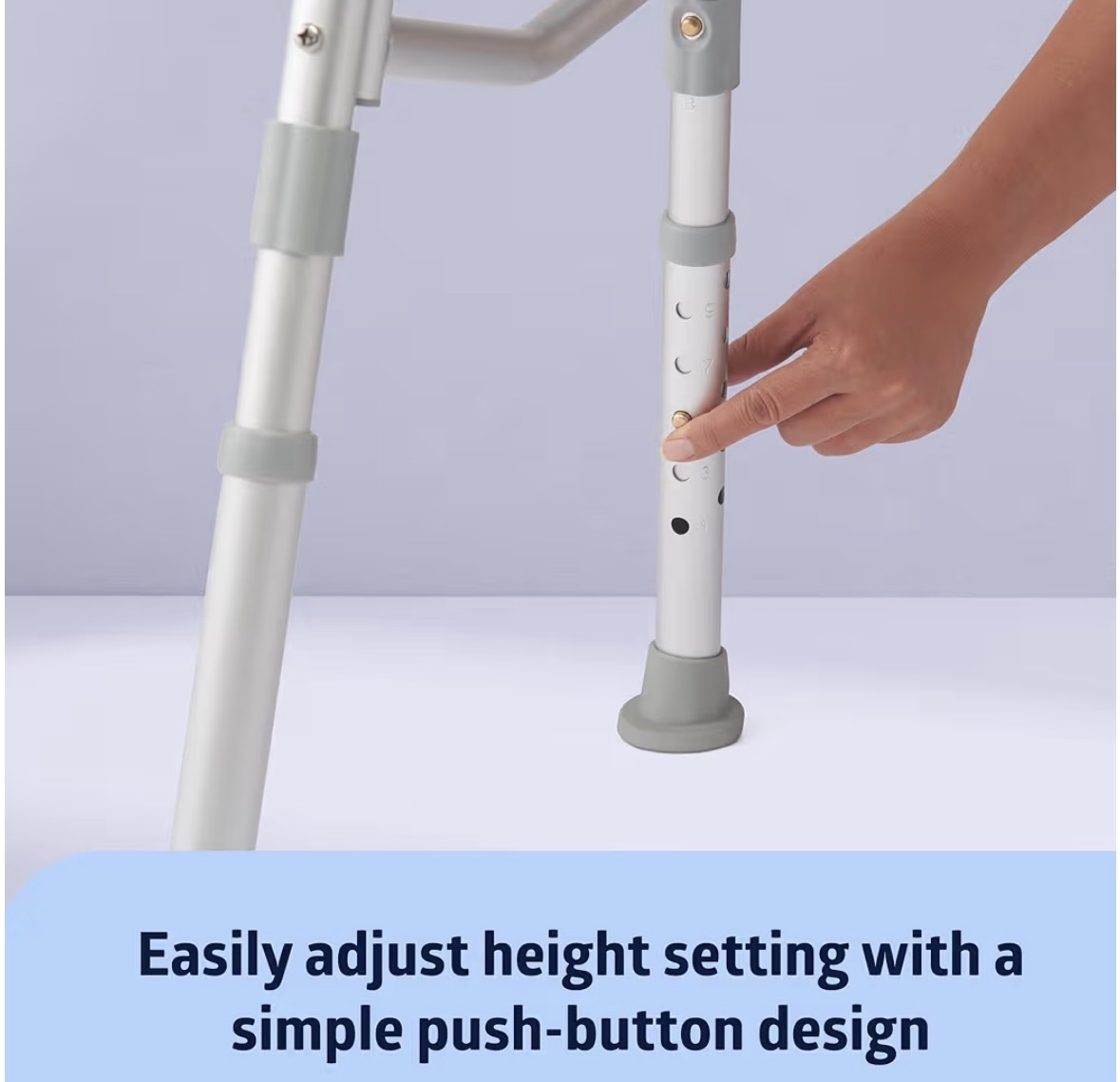
The bench height needs to match the person’s leg length for a comfortable seated position — feet flat on the floor on the outside section, comfortable sliding height relative to the tub floor on the inside section. Height adjustability in the legs accommodates different person heights and different tub configurations. Look for tool-free height adjustment that doesn’t require tools to set and doesn’t drift from the set position during use.
Back Support
A transfer bench with a back rest provides support during bathing that a backless bench doesn’t. For anyone with back pain, core weakness, or reduced trunk stability — back support is the difference between a bench that’s comfortable for the duration of a shower and one that becomes tiring. Some transfer benches are backless — appropriate for people with good trunk stability who don’t need support. Back support is the safer default for most older adults.
Armrests — Positioning Matters
Armrests on a transfer bench serve two functions — support during the sliding transfer and stability during bathing. The armrest on the tub-wall side is typically removable or hinged to allow the sliding transfer to happen without having to lift over an armrest. This removable or swing-away armrest is the feature that makes the transfer practical — a fixed armrest on the tub wall side blocks the sliding transfer entirely.
Confirm any transfer bench being considered has a removable or swing-away armrest on the tub-wall side before purchasing.
Non-Slip Seat Surface
The seat surface needs to be non-slip — the sliding transfer requires controlled movement across the seat, not uncontrolled sliding. A textured or contoured seat surface that allows deliberate sliding while preventing uncontrolled movement is the right balance. Smooth seats that slide too freely create instability. Seats that don’t slide at all make the transfer unnecessarily difficult.
Non-Slip Leg Tips
The four legs of the transfer bench — two inside the tub on a wet surface, two on the bathroom floor — need non-slip rubber tips that grip both surfaces reliably. The tub floor inside is wet and often has a textured surface. The bathroom floor outside may be tile or vinyl. The leg tips need to grip both surfaces without shifting during the weight-bearing of the transfer.
Drainage
The seat surface needs to drain rather than pooling water — both for comfort during use and to reduce the wet surface that the person slides across during transfer. Perforated or slatted seat surfaces drain effectively. Solid seat surfaces pool water and create a wetter, less comfortable transfer surface.
The Transfer Bench in the Complete Bathroom Safety System
A transfer bench addresses the tub entry problem. The complete bathroom safety system addresses every other bathroom fall risk alongside it.

Grab bars at the tub entry provide support during the seated leg-lift portion of the transfer — particularly useful when the tub wall is being traversed. As covered in our guide on most grab bars are installed in the wrong place — a grab bar on the wall at the tub entry, at the height reachable from a seated position, directly supports the transfer sequence.


A handheld shower head makes bathing from the seated transfer bench position practical — directing the spray to where the body is rather than requiring repositioning under a fixed head. Our review of the AquaCare Handheld Shower Head covers the specific option with a six-foot hose that provides full range from a seated position.

→ Get the AquaCare Handheld Shower Head on Amazon
A non-slip bath mat on the bathroom floor outside the tub — where the outside bench legs sit and where the person’s feet contact the floor during the transfer — addresses the wet floor traction on the exit side.
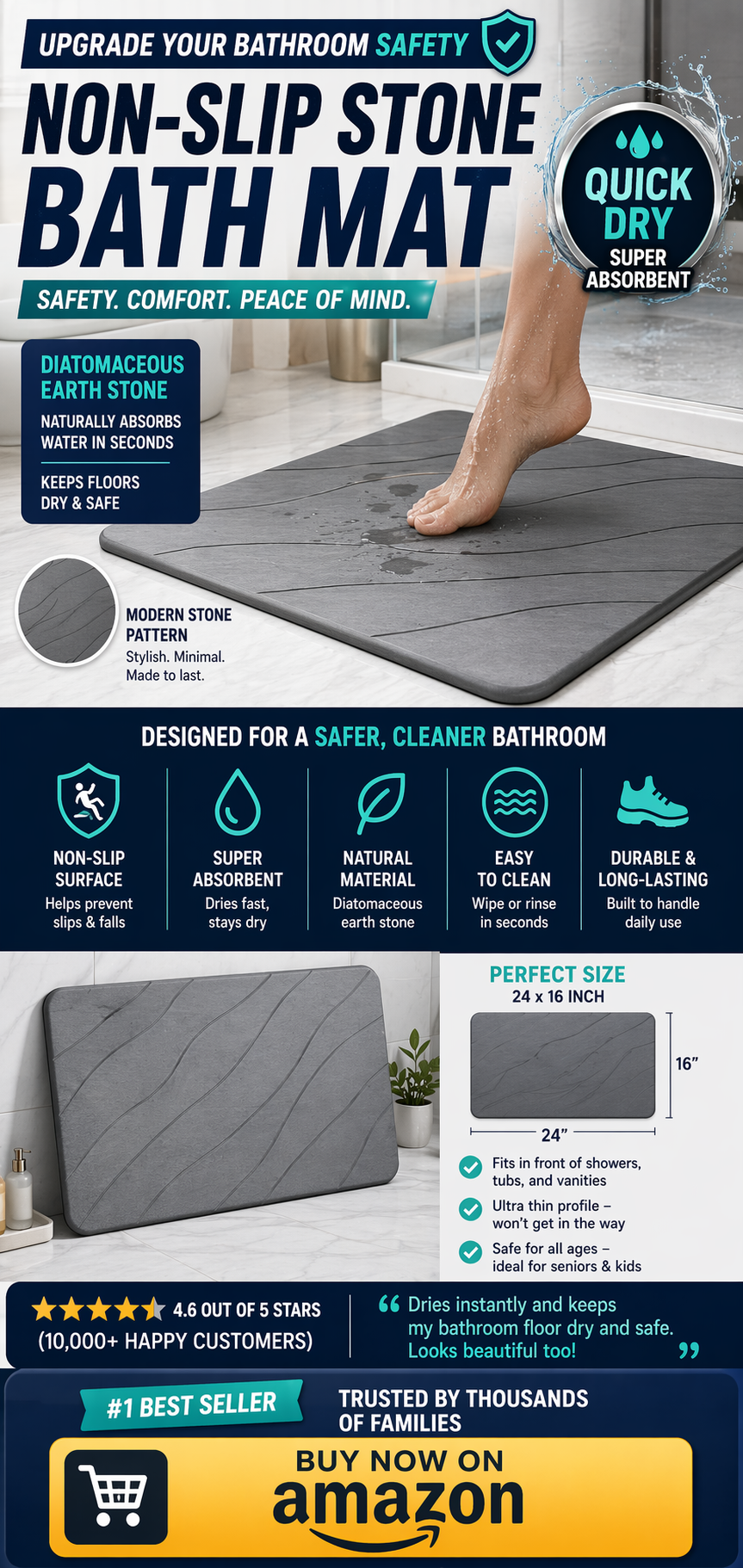
→ Get the Non-Slip Bath Mat on Amazon
The toilet safety rails for the toilet transfer that happens before and after every bathing session.

→ Get the Toilet Safety Rails on Amazon

For the complete bathroom picture our guide on how to make a bathroom safer for seniors covers every modification. Our complete guide on safe shower setup for elderly adults covers the shower and tub specifically.
Transfer Bench vs Walk-In Tub — When to Consider Each
For anyone whose tub entry has become unsafe a transfer bench is the first solution to consider — it’s affordable, requires no installation beyond placement, and is immediately reversible. A walk-in tub is a permanent, significant investment that makes sense when the bathing experience itself — soaking, hydrotherapy — is important alongside the safety consideration.
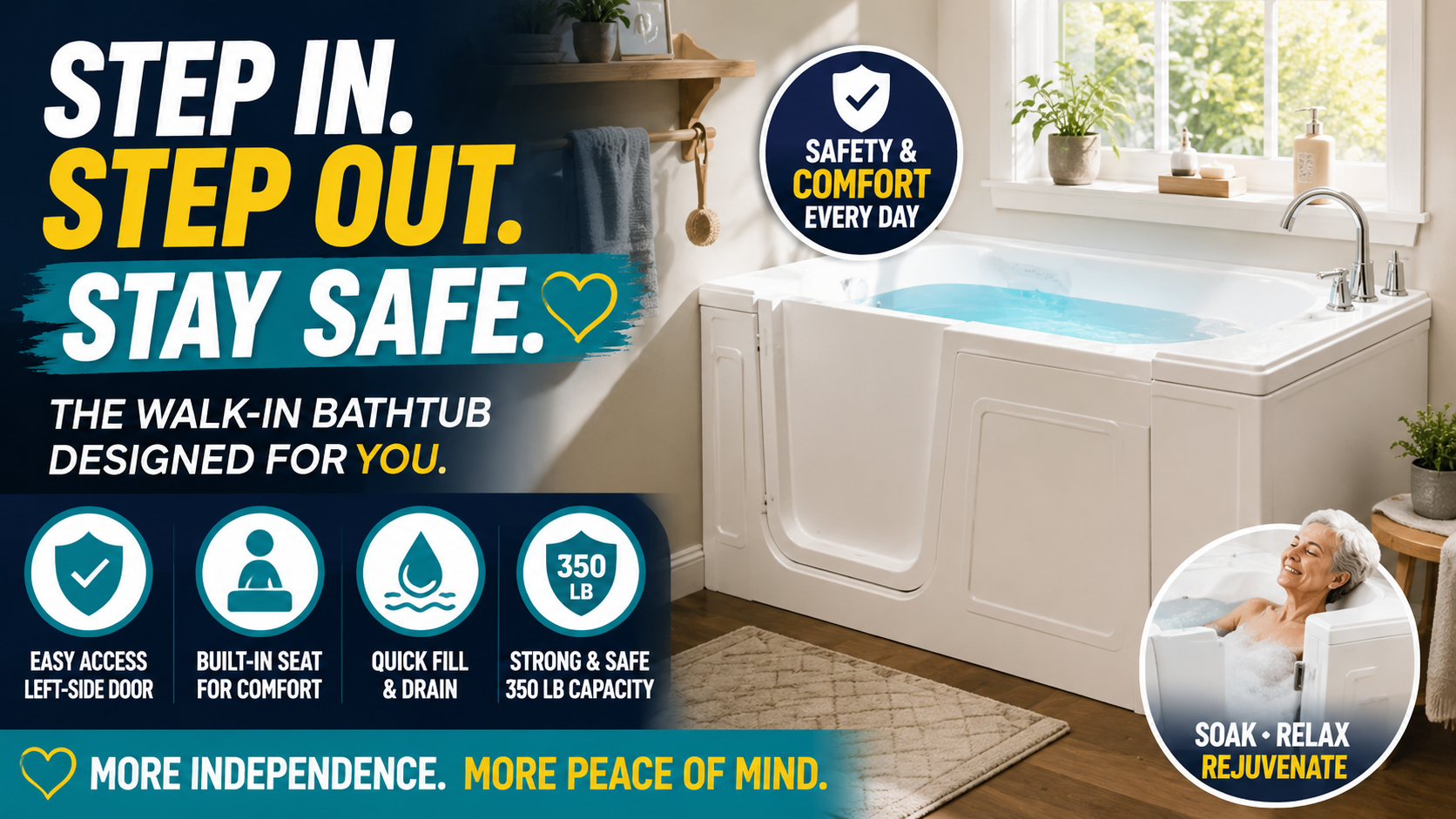
Our review of the walk-in bathtub covers the complete picture for anyone considering the permanent modification. For most situations a transfer bench addresses the safety concern at a fraction of the cost with zero installation required.
The Safety Net
A transfer bench addresses the tub entry and bathing safety components. For anyone living alone the detection safety net covers what happens if a fall occurs despite every modification.


The SecuLife Smartwatch worn on the wrist provides automatic fall detection during every bathing session — alerting family immediately with GPS location if a fall occurs. Our complete review at SecuLife Smartwatch Review covers every feature.
→ Get the SecuLife Smartwatch on Amazon
Frequently Asked Questions
Can a transfer bench be used in a shower as well as a tub?
A transfer bench is designed specifically for tub use — the straddling configuration requires a tub wall to straddle. In a walk-in shower without a threshold a standard shower chair is the appropriate seated bathing solution. Our review of the best shower chair for seniors covers the walk-in shower seated bathing option.
Does a transfer bench require any installation?
No — a transfer bench requires no drilling, no wall mounting, and no tools for placement. It sits on the tub edge and floor with the rubber-tipped legs holding it in position through friction and weight. It can be placed before each use and removed after if the tub is shared with others who don’t use it — though most users leave it in place permanently.
Is a transfer bench suitable for someone who uses a wheelchair?
Yes — the transfer bench is specifically useful for wheelchair users because it provides a continuous seat surface from wheelchair height to tub position. The wheelchair is positioned alongside the outside section of the bench, the person transfers from wheelchair to bench outside section, then slides to the inside tub position. The bench height should be adjusted to match the wheelchair seat height for the smoothest transfer.
How do I know if the transfer bench fits my tub?
Measure the tub wall height — the distance from the bathroom floor to the top of the tub edge. This determines whether the bench legs can be adjusted to straddle correctly with the seat at a comfortable height above the tub edge. Most transfer benches accommodate standard tub configurations with 15 to 18-inch tub wall heights. Check the specific product’s tub wall height range before purchasing.
What’s the difference between a transfer bench and a sliding transfer bench?
A standard transfer bench has a fixed seat surface — the person slides their own body across the seat during the transfer. A sliding transfer bench has a seat section that physically slides on the bench frame — the seat moves rather than the person sliding on a fixed surface. Sliding transfer benches reduce the friction of the transfer movement and are useful for anyone with limited upper body strength for the self-transfer push. Standard transfer benches are more common and appropriate for most situations.


The Right Tool for the Right Problem
→ Get the Medline Transfer Bench on Amazon — 400 lb capacity, tool-free assembly
A transfer bench is not a shower chair. A shower chair is not a transfer bench. Each solves a different problem — and using the wrong one for the situation either doesn’t solve the problem or creates a workaround that’s less safe than the right solution.
If the tub entry is the problem — the step-over that has become unsafe — a transfer bench is the right tool. It eliminates the step-over completely, requires no installation, costs a fraction of a walk-in tub renovation, and provides immediate bathing safety from the first use.
Combined with a handheld shower head, grab bars at the tub entry, a non-slip bath mat, and a medical alert device — it completes the bathing safety system for someone whose primary challenge is tub access rather than shower standing endurance.

Our complete guide on the complete senior safety guide covers every element of safe independent living alongside the specific bathroom modifications covered here.
About the Author
Carol Simmons is a Certified Aging-in-Place Specialist (CAPS) who regularly assesses bathing safety as part of comprehensive home evaluations. The transfer bench vs shower chair distinction is one she addresses in almost every assessment involving a tub — because families consistently arrive with the wrong product for the specific problem, or no product at all because they didn’t know transfer benches existed. She writes for Elder Safety Guide because the right product for the right problem makes an immediate, permanent difference — and knowing which product that is requires information that most families don’t have until someone tells them.