Most families worry about stairs and showers. The most dangerous daily moment for older adults is getting out of bed — and a $70 bed rail is all that prevents the fall that reveals it.
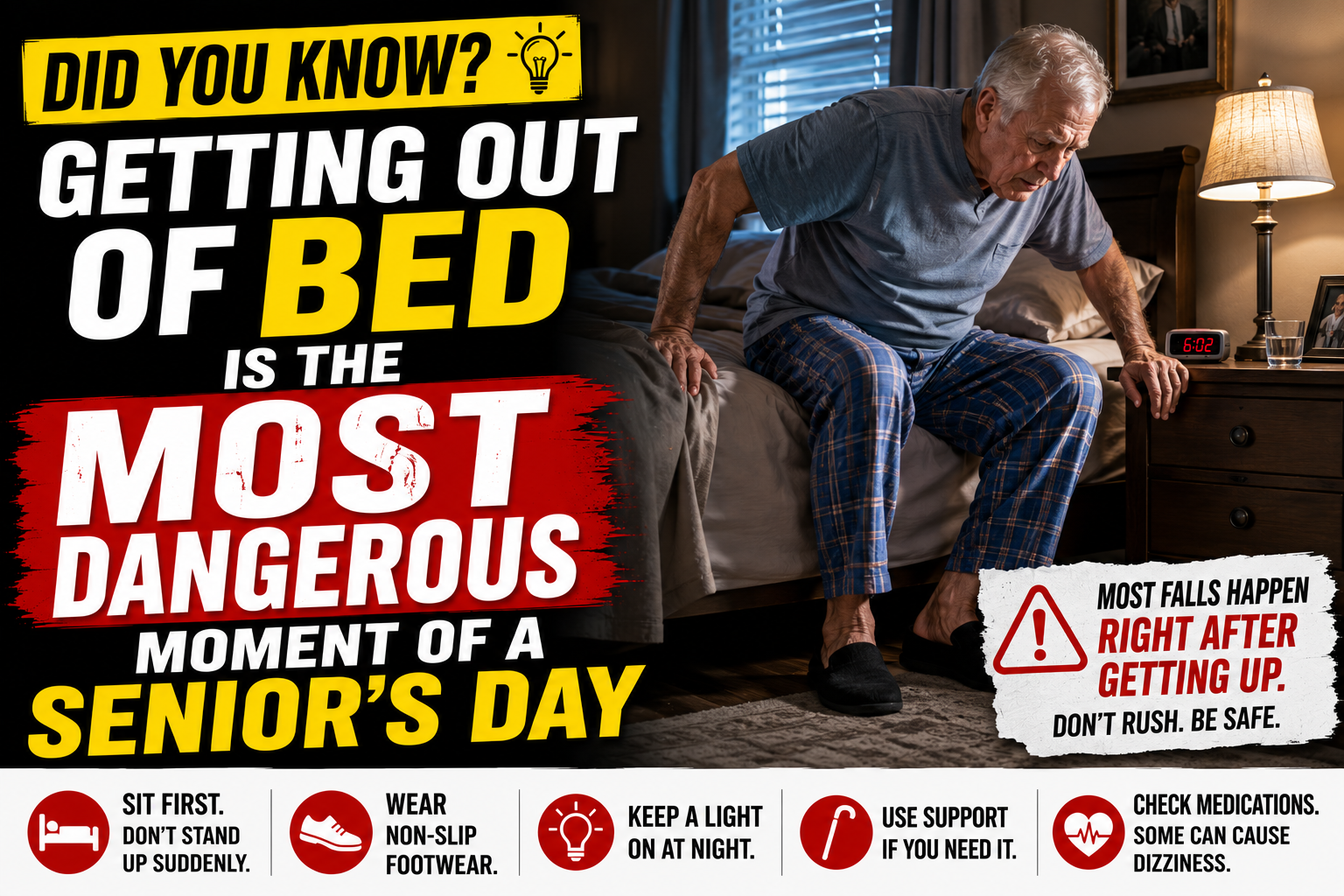
The most dangerous moment of an older adult’s day isn’t the shower. It isn’t the stairs. It isn’t the walk to the mailbox.
It’s getting out of bed.
Specifically it’s the first movement of the day — the transition from lying down to sitting to standing, performed before blood pressure has normalized, before alertness has fully returned, before the body has had time to adjust to the upright position that every subsequent activity requires.
And again at 2am when the bladder wins the argument and the person swings their legs over the side of a bed with no handrail into a dark room on the way to a bathroom they could navigate with their eyes closed — because they have been, essentially, every night for years.
A bed rail is a $50 to $80 device that provides a firm handle at exactly this moment. It is one of the most impactful fall prevention modifications available per dollar spent. And in most bedrooms it isn’t there.
What Actually Happens When You Get Out of Bed
The getting-out-of-bed sequence feels automatic because it has been repeated thousands of times. That automaticity conceals the specific physiological demands the sequence places on an aging body.
The Blood Pressure Problem
During sleep blood pressure drops — part of the normal circadian pattern of cardiovascular function during rest. When a person moves from lying to sitting to standing, the cardiovascular system must rapidly increase blood pressure to maintain adequate perfusion to the brain in the upright position.
In younger adults this response is fast and effective — blood pressure normalizes within seconds of standing. In older adults — particularly those on blood pressure medications, those who are dehydrated, or those with any degree of autonomic nervous system changes — this response is slower and less complete. The result is orthostatic hypotension — a drop in blood pressure on standing that produces dizziness, lightheadedness, and sometimes loss of consciousness or near-loss.
This is most pronounced first thing in the morning, when blood pressure has been suppressed during sleep for the longest uninterrupted period. The first standing of the day is the highest-risk orthostatic hypotension moment of every day.
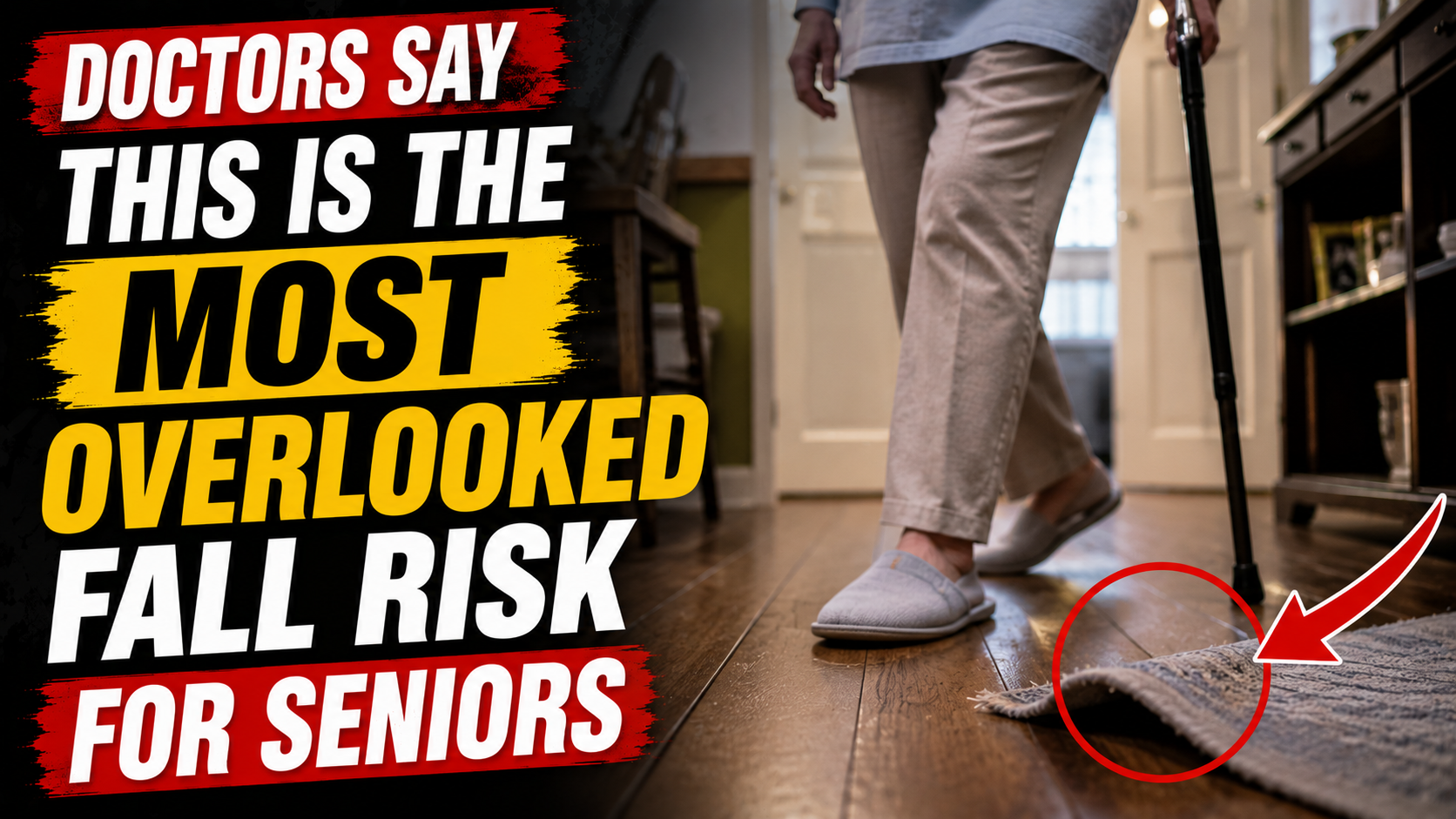
As we covered in our guide on the most overlooked fall risks for seniors and our guide on the #1 reason seniors fall at home, blood pressure medications compound this problem significantly — creating the specific scenario where a person stands up from bed and falls before taking a single step.
The Mattress Problem
Mattresses compress under body weight. When a person sits on the edge of a mattress and attempts to push to standing, the surface they’re pushing against — the mattress — moves away from them rather than providing a stable platform. The push-off force that would be effective from a firm surface is partially absorbed by the mattress, requiring significantly more leg strength to produce the same rising motion.
For a person whose leg strength has declined with age — which describes most people over 70 to some degree — the mattress compression that was never noticed at full strength becomes a significant barrier to safe rising. The instability at the moment of push-off, combined with orthostatic hypotension immediately after standing, creates a specific fall scenario that repeats twice or more every day.
A bed rail provides a firm, non-compressing surface to push against during the sitting-to-standing transition. It doesn’t replace leg strength — it supplements it, reducing the strength required to complete the transition safely. The difference in ease and stability during the rising movement is noticeable from the first use.
The Alertness Problem
Sleep inertia — the grogginess and cognitive impairment that follows waking — affects alertness, coordination, and reaction time for 15 to 60 minutes after waking, with the most severe effects in the first few minutes. The morning getting-out-of-bed sequence happens during peak sleep inertia — when alertness is at its lowest point of the day, coordination is most impaired, and the ability to catch a stumble or respond to dizziness is most reduced.
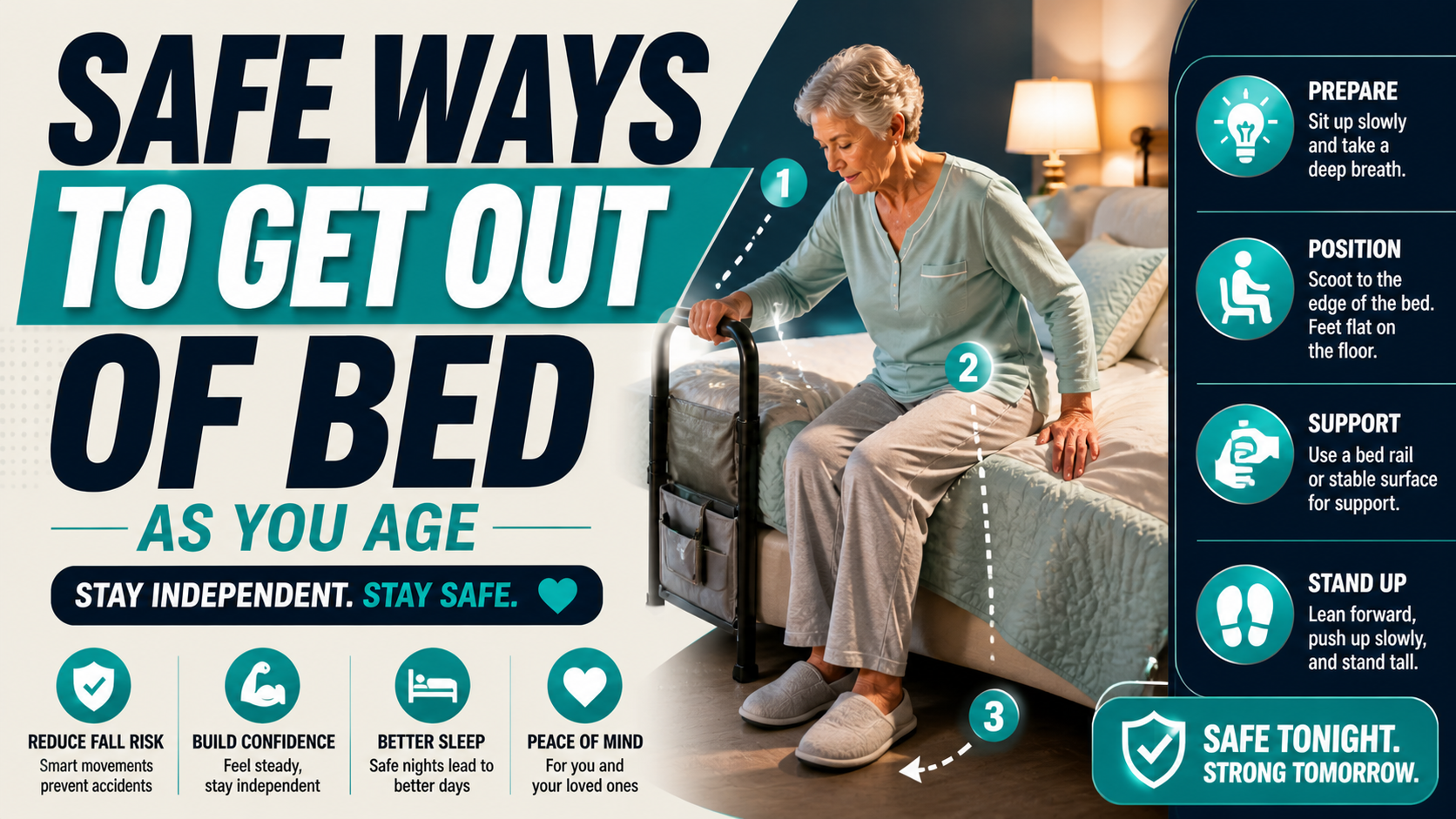
This is why the technique of sitting on the bed edge for 30 to 60 seconds before standing matters — it allows blood pressure to normalize partially before the orthostatic stress of full standing, and gives sleep inertia slightly more time to resolve before the most demanding movement of the morning is attempted. Our guide on safe ways to get out of bed as you age covers the complete technique in detail.
The Nighttime Multiplication of All Three Problems
The nighttime bathroom trip replicates all three problems — orthostatic hypotension, mattress compression instability, and sleep inertia — but with the addition of darkness, urgency that creates rushing, and the disorientation of being awakened from deep sleep rather than natural waking.
The 2am bathroom trip is when most nighttime falls in the bedroom occur. A person awakened urgently, getting up quickly, in a dark room, with the full combination of factors that make morning rising dangerous — compounded by urgency and darkness.
A bed rail is there during this moment. Night lights eliminate the darkness component. The technique of sitting before standing addresses the orthostatic hypotension. These three elements together — bed rail, night lights, technique — address the nighttime bathroom trip comprehensively. Our guide on senior bedroom safety tips for nighttime falls covers everything worth doing in the bedroom specifically.

What a Bed Rail Actually Does — and Doesn’t Do
Understanding exactly what a bed rail provides helps clarify why it matters and how to use it correctly.
What It Does
Provides a firm push-off surface. The primary function — a rigid handle at the correct height that allows pushing to standing from the seated position with significantly less leg strength required than pushing from the mattress alone.
Provides stabilization during the transition. The bed rail is there to hold during the transition — before standing, while standing, and in the first seconds after standing when orthostatic hypotension may be causing dizziness. Holding the rail during this window bridges the most vulnerable period.
Provides something to reach for in the dark. During a nighttime bathroom trip the bed rail is findable by touch — positioned at the correct location at the bed edge — without requiring a light to be turned on or the room to be navigated.
Keeps essentials within reach. Quality bed rails include a storage pocket for phone, glasses, and other nighttime essentials — reducing the unnecessary getting-up movements that themselves create fall risk.
What It Doesn’t Do
A bed rail doesn’t prevent all falls during the getting-up sequence. It doesn’t address the full bathroom path — that’s what night lights cover. It doesn’t address orthostatic hypotension on its own — that requires the sitting-before-standing technique and, for medication-related orthostatic hypotension, a physician conversation.
It’s one element of a complete nighttime safety approach — the most important element for the specific moment of getting out of bed, and one that works best alongside the other elements that address what comes before and after it.
The ASTM Standard — Why It Matters
Bed rails are medical devices — devices that body weight depends on during a vulnerable transition. The ASTM International standard for adult portable bed rails (ASTM F3186) sets minimum requirements for structural integrity, entrapment prevention, and load capacity that distinguish safety-designed bed rails from decorative alternatives.
A bed rail that fails during the getting-up transition — that collapses, pulls away from the mattress, or otherwise gives way when someone’s full weight bears against it — produces a fall that is more severe than no bed rail at all. The person was depending on it. Its failure is sudden and unexpected. The fall happens with the person already off-balance from the reaching movement toward the rail.
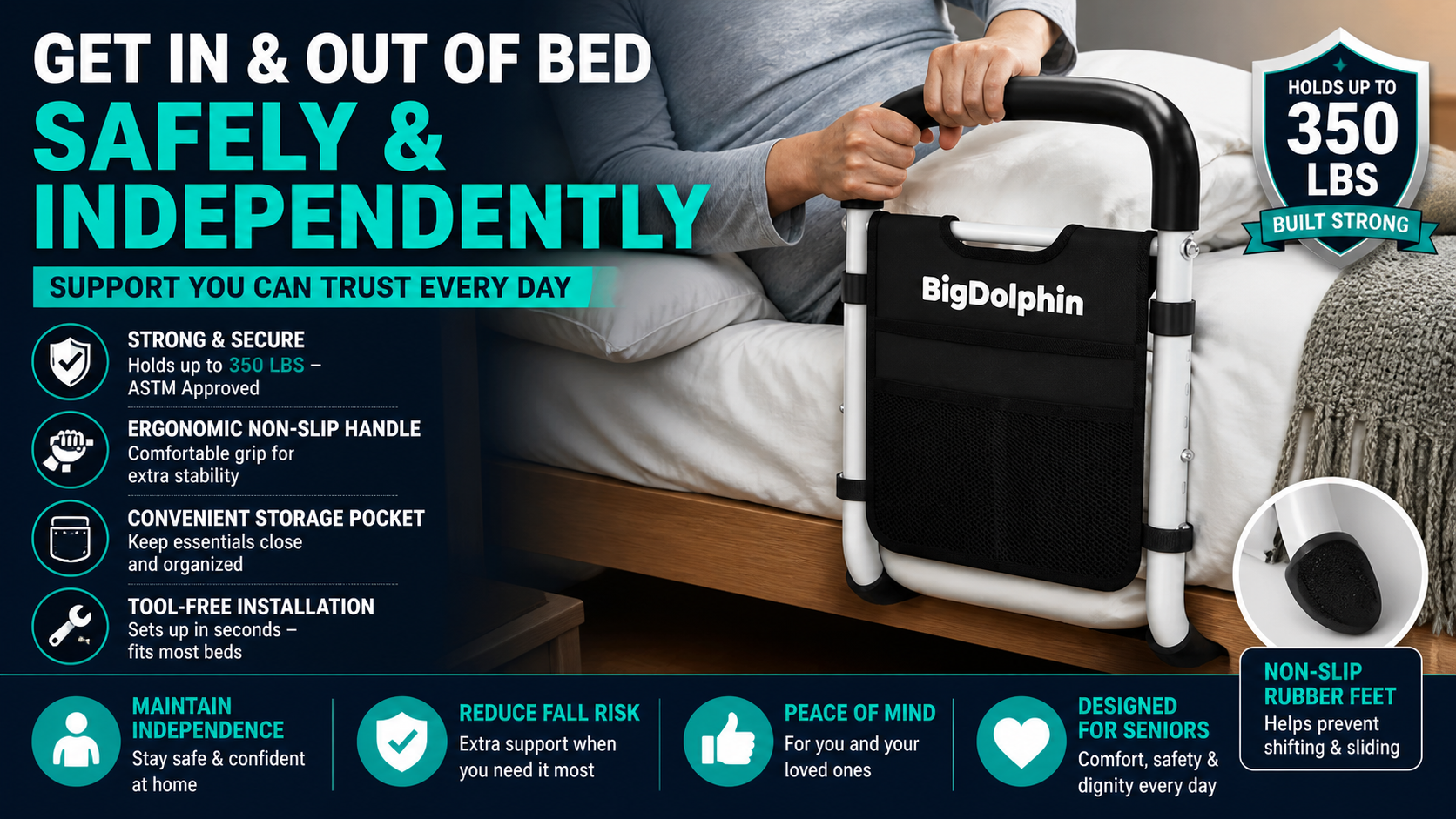
ASTM certification isn’t bureaucratic box-checking. It’s the standard that separates a bed rail that can be trusted with a 300-pound downward load from one that can’t. Our review of the best bed rail for seniors covers the ASTM-certified option we recommend — with the specific capacity and mounting design that makes it trustworthy in the moment it matters.

→ Get the ASTM Approved Bed Rail on Amazon
The Complete Nighttime Safety System
The bed rail addresses the getting-out-of-bed moment. A complete nighttime safety approach addresses everything from that moment through the bathroom trip and back.
The Bed Rail — Getting Out of Bed
The firm handle during the sitting-to-standing transition. Present during morning rising and every nighttime bathroom trip. ASTM certified for the load it will bear.
Night Lights — The Path
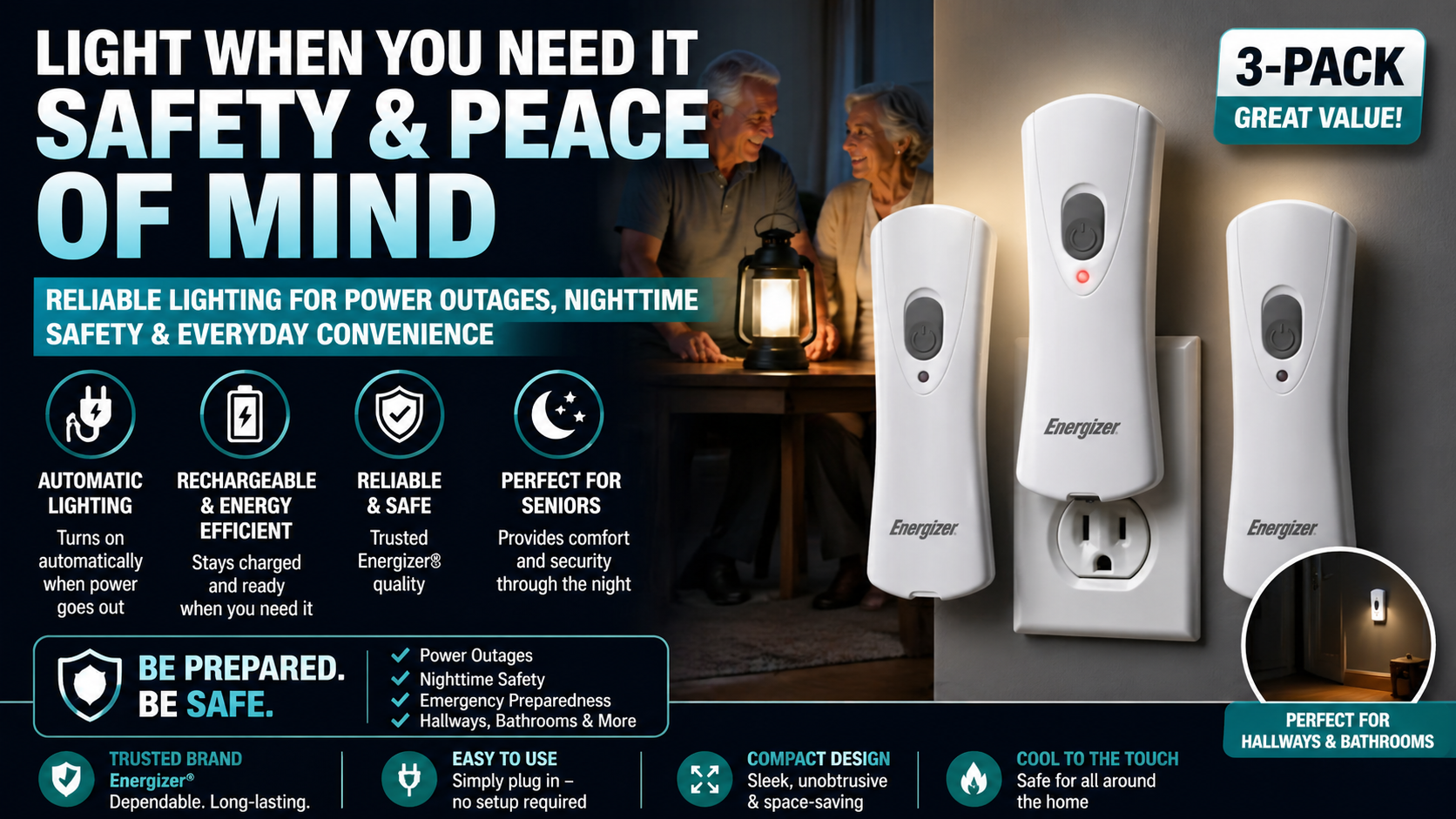
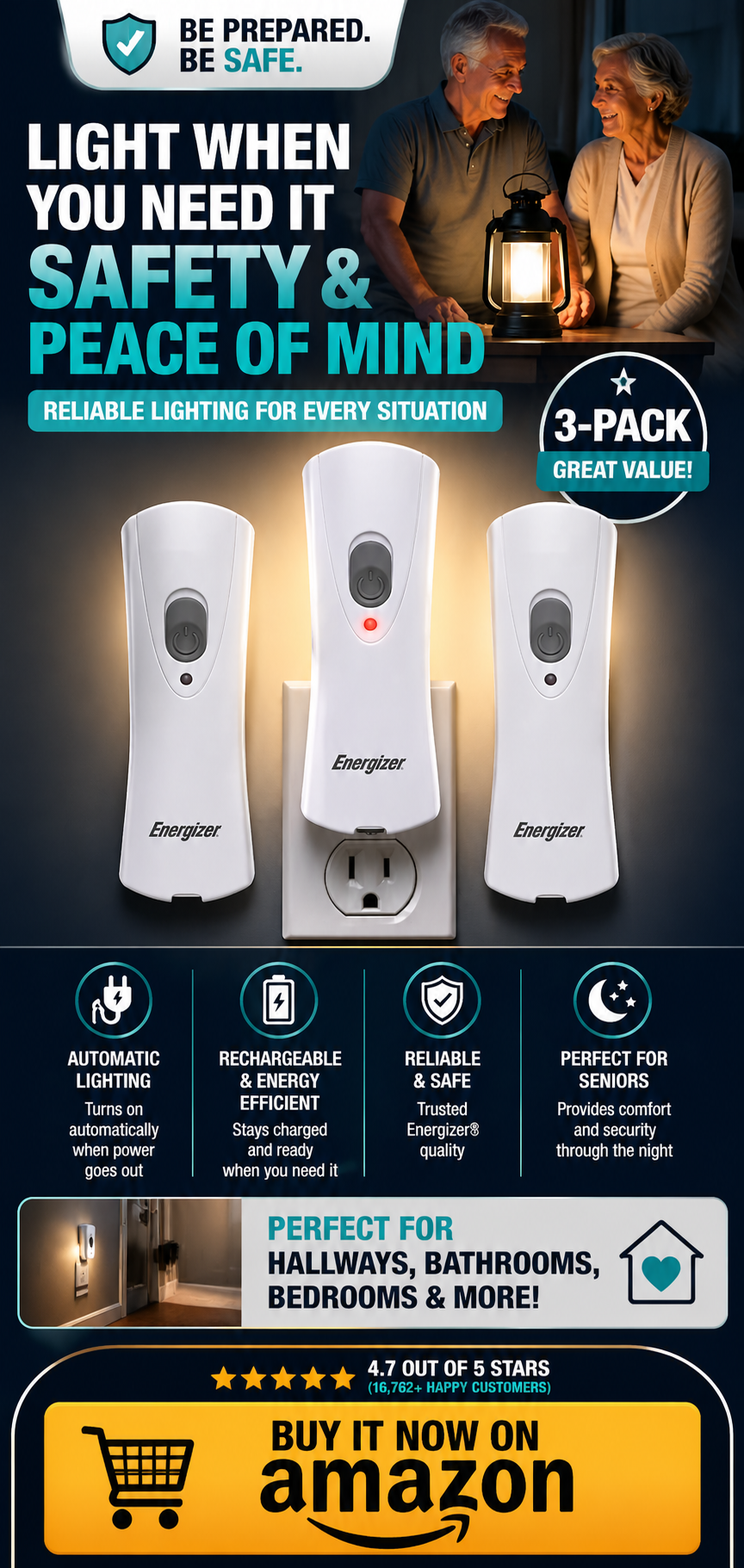
Auto-on night lights in the bedroom near the bed, in the hallway, and in the bathroom ensure the entire path is lit before feet touch the floor. Not after finding a switch in the dark. Before. Three units — one in each location — for under $50. Our review of the best auto-on rechargeable lights covers the option that also serves as power outage protection simultaneously.
→ Get the Auto-On Night Lights on Amazon
Bathroom Safety — The Destination

Grab bars at the toilet. Toilet safety rails. Non-slip bath mat. These address the bathroom transitions that follow the bedroom getting-up sequence. As we covered in our guide on the bathroom causes more senior falls than stairs, cars, and ice combined, the bathroom is the highest-risk destination of every nighttime trip.
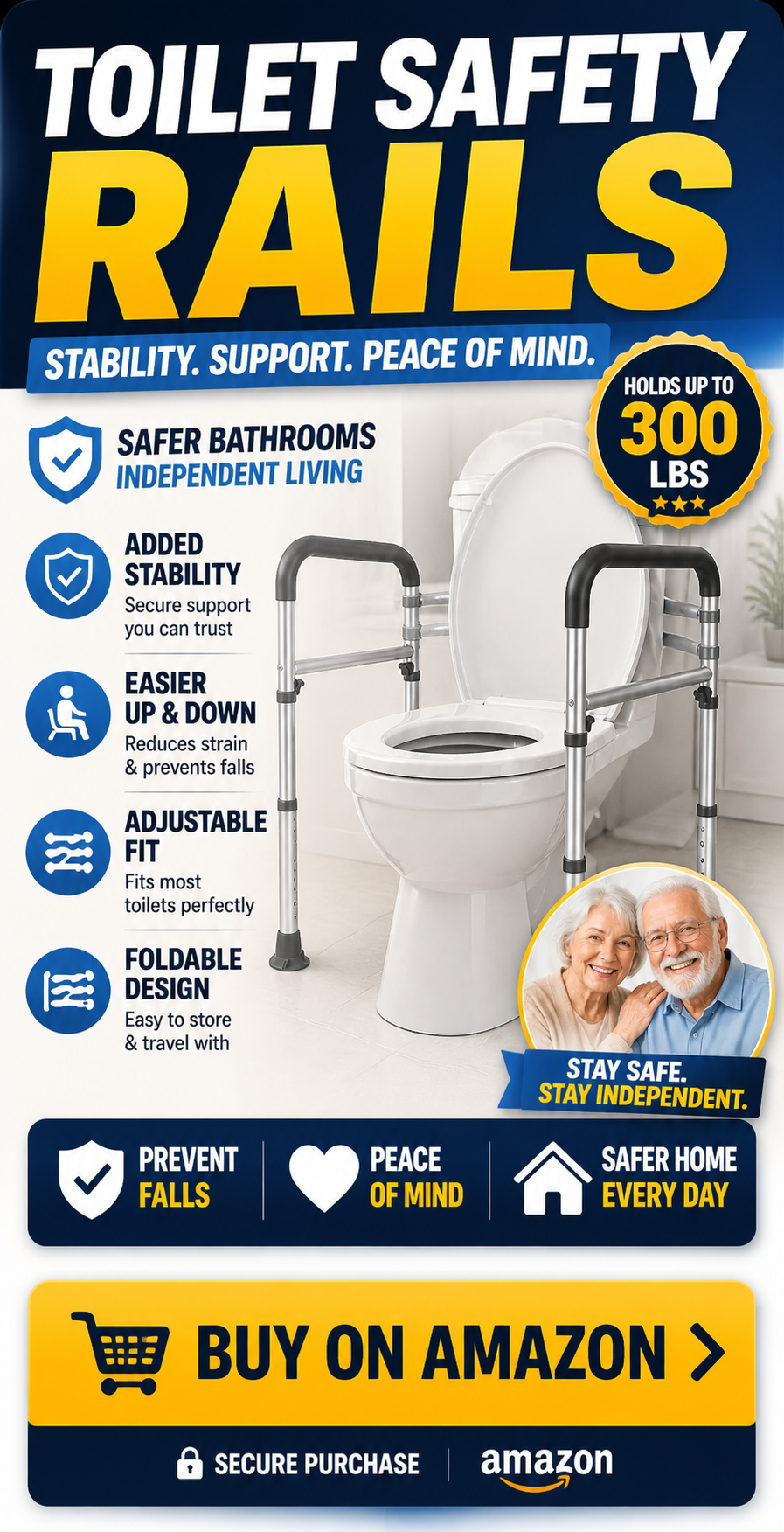
→ Get the Toilet Safety Rails on Amazon

Medical Alert Detection — The Safety Net
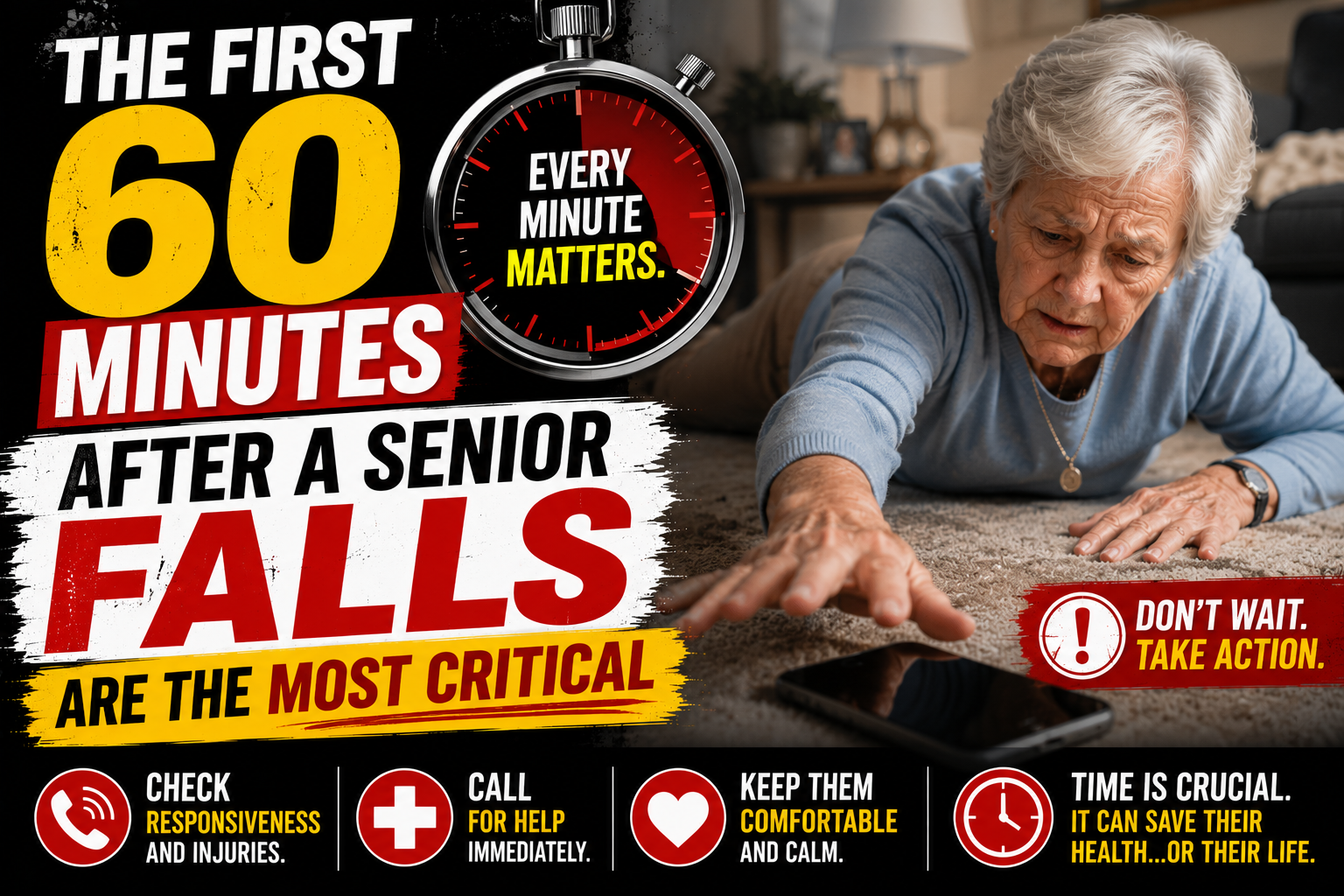

Even a complete nighttime safety system doesn’t eliminate all risk. For anyone living alone the gap between a nighttime fall and discovery is determined entirely by what detection is in place. The SecuLife Smartwatch worn through the night — or at minimum charged and put back on before the first nighttime bathroom trip — provides automatic fall detection that alerts family immediately. For what happens when the clock runs without detection our guide on the first 60 minutes after a senior falls covers the timeline in full.
→ Get the SecuLife Smartwatch on Amazon

The Technique — What to Do Until the Rail Arrives
While waiting for a bed rail to arrive — or as the permanent complement to a bed rail — the correct getting-out-of-bed technique meaningfully reduces fall risk at this transition.
- Wake fully before moving. Take 30 to 60 seconds after waking to let sleep inertia begin clearing before attempting to rise. Don’t swing legs over immediately on waking.
- Roll to the side first. Rather than sitting straight up from lying flat — which requires significant core strength — roll onto the side facing the edge of the bed first, then use the arms to push to sitting.
- Sit on the edge with feet flat on the floor. Pause in this seated position for 30 to 60 seconds. This allows blood pressure to begin normalizing before the full orthostatic stress of standing.
- Push to standing using the bed rail. Grip the rail firmly, lean forward slightly, and push to standing. Hold the rail for the first few seconds of standing while blood pressure completes its normalization.
- Move deliberately — don’t rush. The urgency of a nighttime bathroom trip creates the rushing that removes the margin for error. Moving deliberately takes 20 additional seconds and dramatically reduces fall risk.
This technique combined with a bed rail covers the getting-out-of-bed transition as completely as any non-medical intervention can. Our complete guide on safe ways to get out of bed as you age covers the complete technique with additional detail.
Who Needs a Bed Rail — The Honest Assessment
Not every older adult needs a bed rail immediately — though most benefit from one once balance and strength changes are noticeable. Here’s the honest assessment of when it moves from useful to important to essential.
Useful for: Anyone over 65 whose bed getting-up sequence involves any pushing from the mattress, any reaching for the headboard or nightstand, or any moment of instability during the transition. This describes most older adults.
Important for: Anyone who has had a near-miss during bed rising. Anyone on blood pressure medications who experiences morning dizziness. Anyone who gets up during the night for bathroom trips and navigates in low light. Anyone whose leg strength has noticeably reduced.
Essential for: Anyone who has fallen getting out of bed. Anyone who lives alone and whose morning getting-up is their highest-risk daily moment. Anyone whose nighttime bathroom trips are frequent enough that the cumulative risk across multiple trips per night is significant.
The honest version of this assessment puts a bed rail in the “important” category for most independently living older adults and in the “essential” category for a significant proportion. The question isn’t whether it would help. It’s whether it’s in place before the fall that reveals it was needed.

The Fall That a Bed Rail Prevents
There are no statistics for this fall. It doesn’t appear in any database. It didn’t happen — which is precisely why it doesn’t appear anywhere.
It’s the fall at 6:47am on a Tuesday that would have happened when an older adult pushed to standing from the edge of a mattress, felt the dizziness of orthostatic hypotension immediately, reached for something firm to stabilize against, and found — a bed rail. Not a nightstand that tipped. Not a mattress that compressed further under the reaching hand. A firm, load-rated, correctly positioned handle at exactly the right height.
The fall didn’t happen. Nothing was recorded. No ambulance was called. No family was frightened. No hospitalization occurred. No cascade began.
That’s what a bed rail does. It prevents the fall that would have happened — invisibly, permanently, for every morning and every nighttime bathroom trip for as long as the bed is slept in.
It costs $50 to $80. It takes five minutes to install. It slides under the mattress.
There is no reasonable argument for not having one.
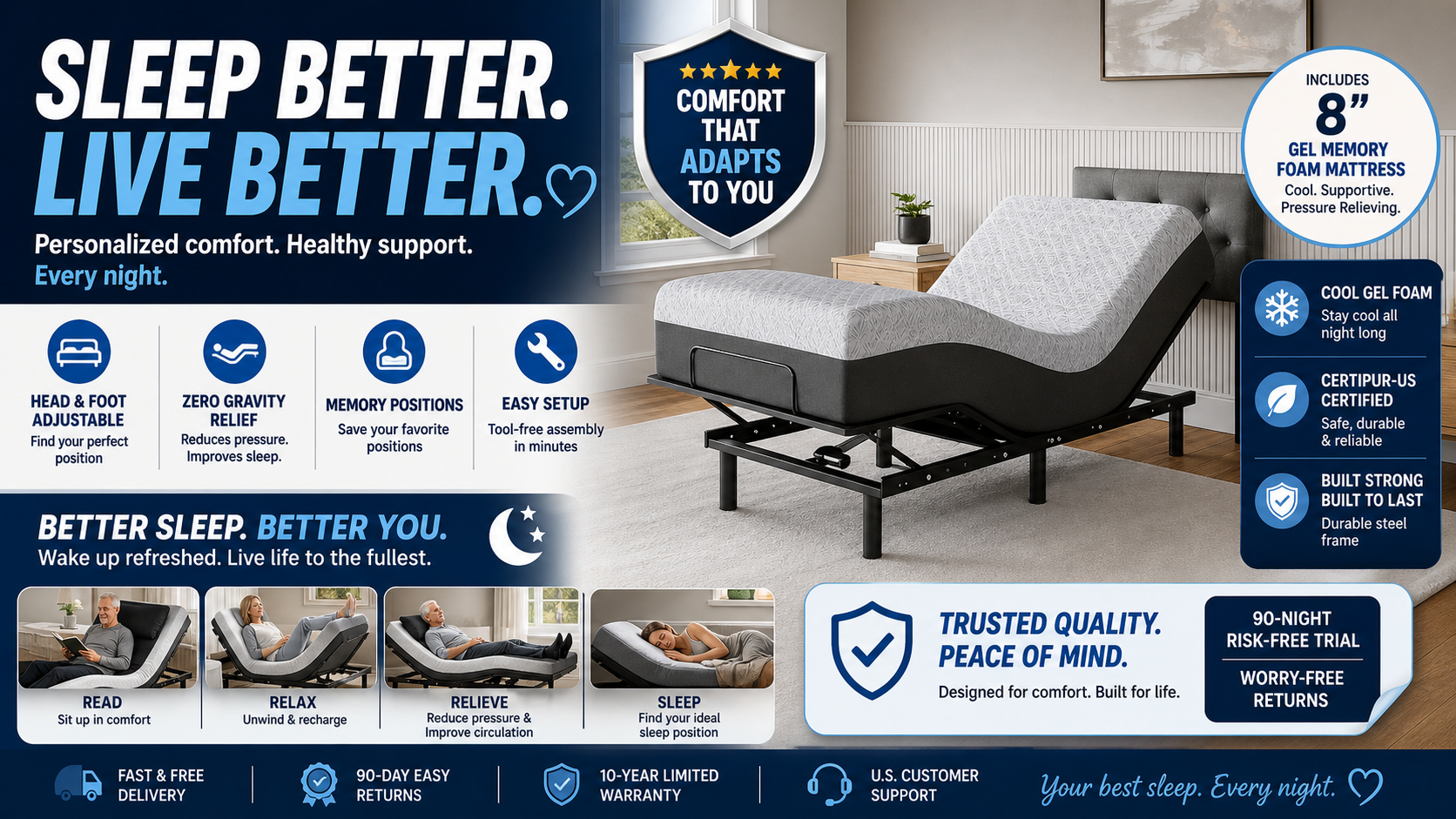
→ Get the ASTM Approved Bed Rail on Amazon
About the Author
Margaret Holloway, RN spent 22 years in geriatric nursing and can identify the getting-out-of-bed fall pattern in a patient history before finishing the admission assessment — the morning dizziness, the reaching for something that wasn’t there, the floor before a single step was taken. She has seen this pattern hundreds of times. She has seen it prevented by bed rails that were in place and not prevented by the absence of bed rails that hadn’t been installed yet. She writes for Elder Safety Guide because the getting-out-of-bed fall is one of the most common and most preventable in geriatric care — and a $70 device installed in five minutes is all that stands between the fall that happens and the fall that doesn’t.