Most families don’t know the hip fracture mortality statistics until they’re sitting in a hospital waiting room. Here’s what’s actually at stake — and the specific prevention plan that changes it.
A hip fracture in an older adult is not a broken bone. Not in the way most people think about broken bones — an injury, some recovery, back to normal.
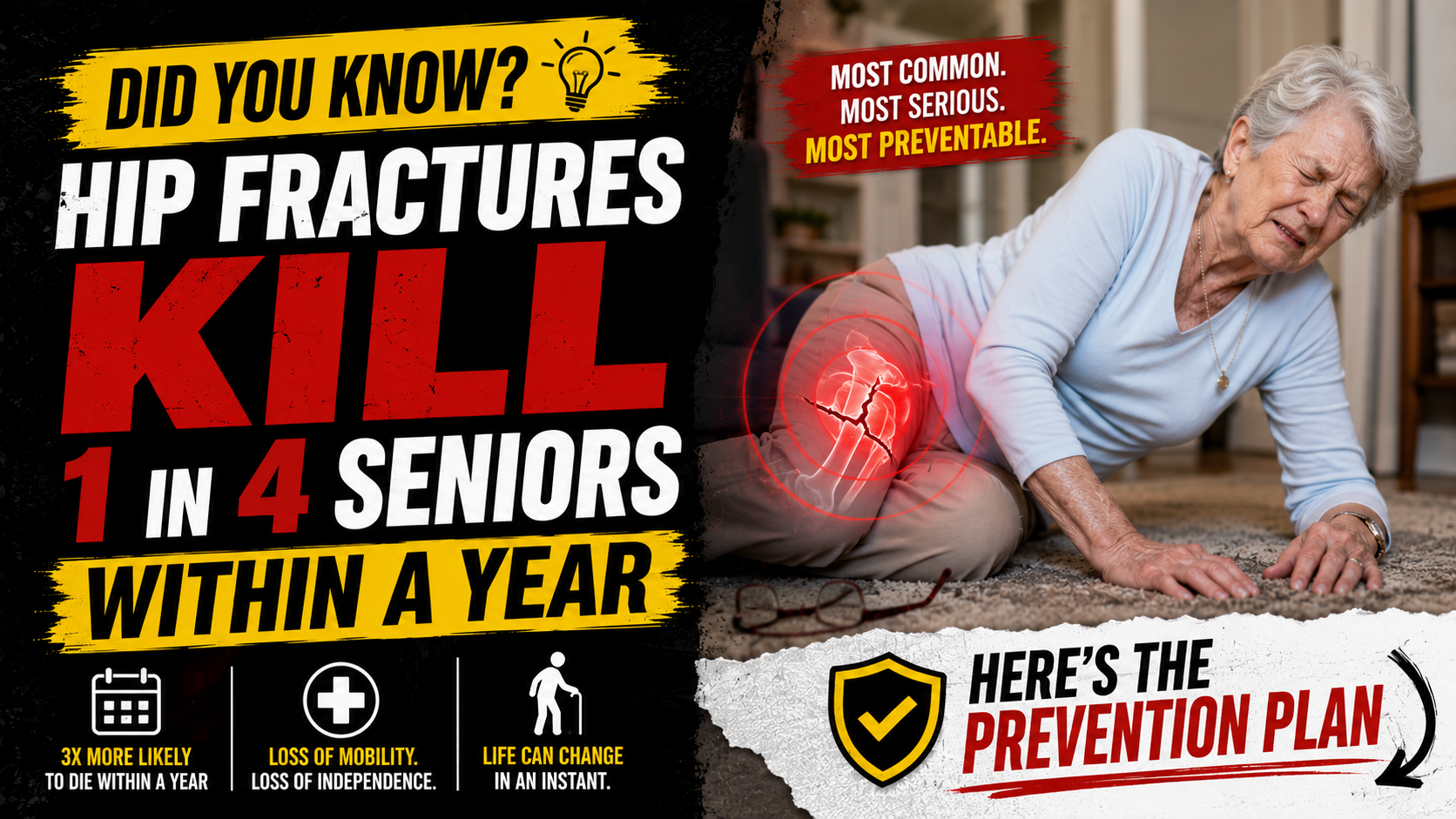
A hip fracture in an older adult is a life-altering event with a mortality rate that most families never know about until they’re sitting in a hospital waiting room. Within one year of a hip fracture, approximately one in four older adults is dead. Within five years, more than half.
These numbers are not from fringe research. They appear consistently across decades of peer-reviewed literature and are well known in geriatric medicine. They are not well known to most families — which means most families don’t understand what’s actually at stake in the fall prevention conversation.
This article covers what the hip fracture mortality statistics actually mean, why the consequences are so severe, and specifically what reduces the probability of the fall that causes one.
Why Hip Fractures Are So Deadly — The Cascade
Hip fractures don’t kill people directly — at least not usually. What kills people is the cascade of consequences that follows the fracture in a body that’s already managing the accumulated vulnerabilities of age.
The Surgery
Most hip fractures require surgical repair — either hip pinning to stabilize the fracture or hip replacement to remove and replace the damaged joint. Surgery in older adults — particularly those with pre-existing cardiac, pulmonary, or kidney conditions — carries significant operative and perioperative risk. Blood clots. Adverse anesthetic reactions. Cardiac stress. These risks are manageable for many patients but they’re present, and for frailer older adults the risks are substantially elevated.
The Immobility
Hip fracture surgery is followed by a period of reduced mobility during which the physiological effects of immobility begin accumulating rapidly. Muscle mass loss that accelerates the pre-existing sarcopenia. Cardiovascular deconditioning. Respiratory mechanics that become less efficient — increasing pneumonia risk with every day of reduced movement.
For older adults who were already at the margins of functional reserve before the fracture — managing chronic conditions, slowly declining in strength and balance — the immobility of hip fracture recovery pushes them below the threshold of independent function in ways that can be permanent.
Pneumonia — The Proximate Killer
Pneumonia acquired during or after hospitalization for hip fracture is one of the most consistent causes of hip fracture mortality — appearing in mortality statistics weeks after the fall itself in a way that doesn’t always make the causal connection obvious to families.
Reduced respiratory function from immobility and post-surgical recovery, combined with the immune suppression of surgical stress, creates the conditions for pneumonia in a population already less able to fight respiratory infection than younger patients. Hospital-acquired pneumonia in an older adult recovering from hip fracture is a serious, frequently fatal complication.
This is why the statistics look the way they do — 1 in 4 within a year. The fall happens. The surgery happens. The recovery begins. The pneumonia arrives three weeks later. The family is told it wasn’t related to the fall. But statistically it was — it’s part of the cascade.
The Psychological Decline
The cognitive and psychological impact of hip fracture in older adults is significant and often underappreciated. Delirium — acute confusion — is common after hip fracture surgery and associated with accelerated long-term cognitive decline. Depression following hip fracture is nearly universal in some degree and significantly affects recovery effort and outcomes.
The loss of independence, the pain, the disruption to identity and routine, and the confrontation with mortality that a hip fracture represents produce psychological consequences that affect physical recovery — reduced motivation for rehabilitation, reduced compliance with therapy, and the generalized decline in will that happens when someone’s sense of themselves as a capable, independent person is severely disrupted.
Failure to Return to Prior Function
Of the approximately 75 percent of older adults who survive the first year after hip fracture, roughly half do not return to their pre-fracture level of function. They move from independent living to assisted living. From walking without aids to walkers or wheelchairs. From managing their own daily life to depending on others for personal care they previously handled themselves.
This is the outcome that’s often not captured in mortality statistics but that represents a profound and irreversible change in the quality and nature of daily life. The hip fracture didn’t kill them. It permanently changed what their life looks like — in ways they would not have chosen and cannot undo.


Who Is Most at Risk
Hip fractures are not equally distributed across the older adult population. Understanding the specific risk factors helps identify who most urgently needs fall prevention measures in place.
Women — Especially Post-Menopausal
Women account for approximately 75 percent of hip fractures in older adults — driven primarily by the accelerated bone density loss that follows menopause. Estrogen plays a protective role in bone density maintenance, and its loss at menopause initiates a period of relatively rapid bone loss that continues throughout the post-menopausal decades.
Bone density assessment — DEXA scanning — and osteoporosis management through medication, calcium, vitamin D, and weight-bearing exercise are specifically indicated for post-menopausal women and directly affect hip fracture risk.
People With Osteoporosis
Osteoporosis — reduced bone density below a defined threshold — significantly increases the probability that a fall produces a fracture rather than a bruise. The same fall from standing height that produces no fracture in a person with normal bone density may produce a hip fracture in a person with osteoporosis.
Osteoporosis management — through medication, nutrition, and weight-bearing exercise — reduces fracture risk from falls that do occur. It’s not just fall prevention. It’s fracture prevention — reducing the consequences of falls that prevention doesn’t eliminate.
People With Previous Falls
As we covered in our guide on the warning sign families miss until it’s too late, a previous fall more than doubles the risk of a subsequent fall. Each subsequent fall carries the same hip fracture risk as the first — meaning the cumulative risk across multiple falls is substantially higher than any single fall probability suggests.
People on High-Risk Medications
The medications that increase fall risk — blood pressure medications, sleep medications, diuretics, antidepressants — increase hip fracture risk by increasing the probability of the fall that causes one. A falls-focused medication review that reduces fall risk directly reduces hip fracture risk through the same mechanism.
People Who Live Alone
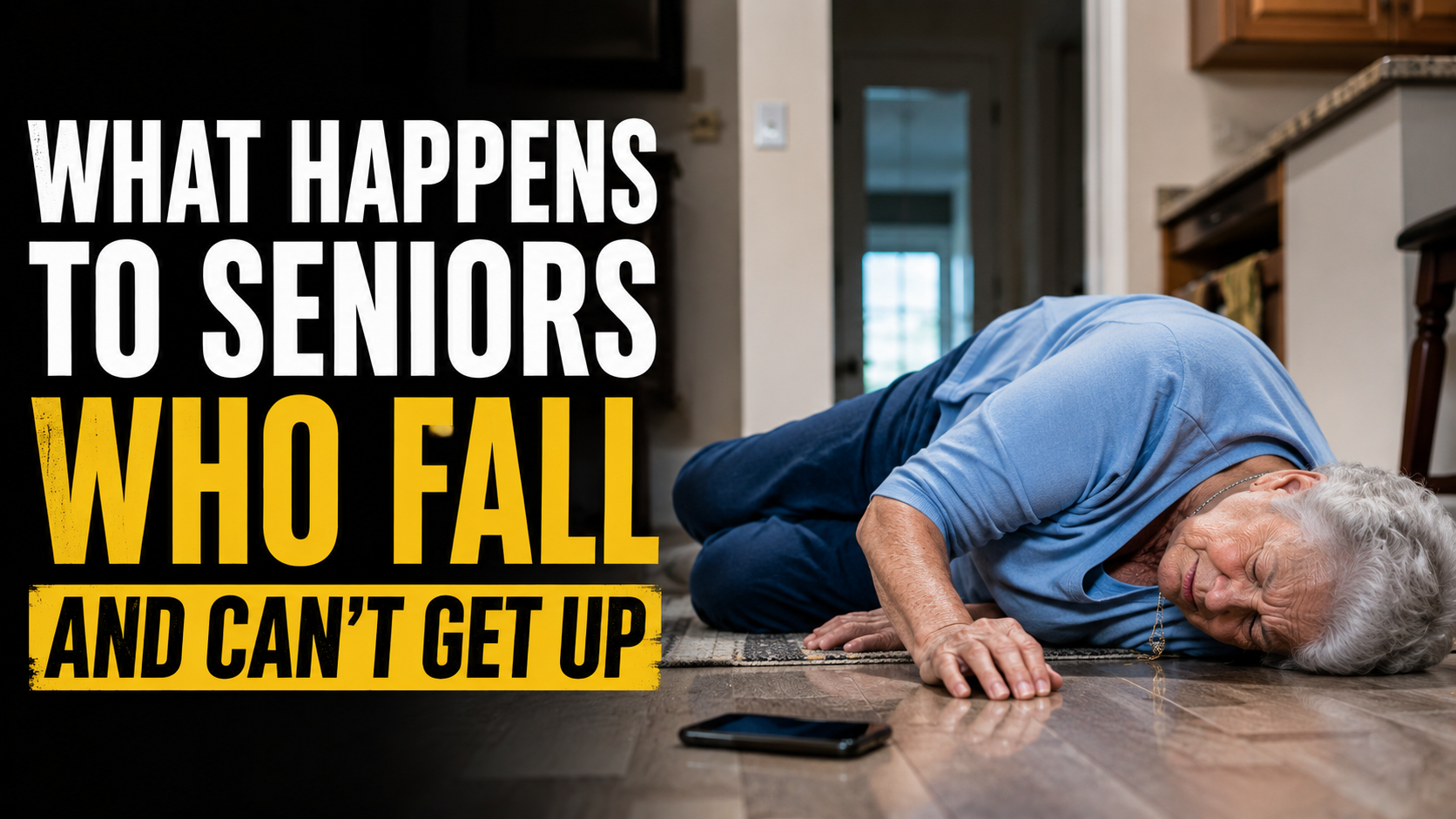
Living alone doesn’t increase the probability of a fall directly — but it significantly affects outcomes when a fall does occur. The long lie that follows a fall in a solo-living older adult — as we covered in our guide on what happens to seniors who fall and can’t get up — produces its own cascade of consequences that compounds the hip fracture itself.

What Actually Prevents Hip Fractures
Hip fracture prevention operates at two levels — preventing the falls that cause fractures, and reducing the probability that a fall produces a fracture when it occurs. Both matter.
Preventing the Fall
The fall prevention interventions with the strongest evidence — exercise, medication review, home modification, vision care — directly reduce hip fracture risk by reducing fall frequency. Everything we’ve covered across our fall prevention guides applies here with the specific motivation of hip fracture risk added to the general fall risk motivation.
Our complete guide on fall prevention tips at home covers the complete evidence-based approach. Our guide on senior fall prevention products that actually work covers the specific products ranked by impact. Our guide on 1 in 3 seniors falls every year covers the full statistical picture of fall risk and prevention.
Bathroom Safety — Highest Priority
The bathroom is where the highest-risk falls occur — wet surfaces, one-legged transitions, hard floors. Bathroom falls are among the most likely to produce hip fractures because of the hard surfaces on which the fall lands and the awkward body positions during the transitions where falls occur.
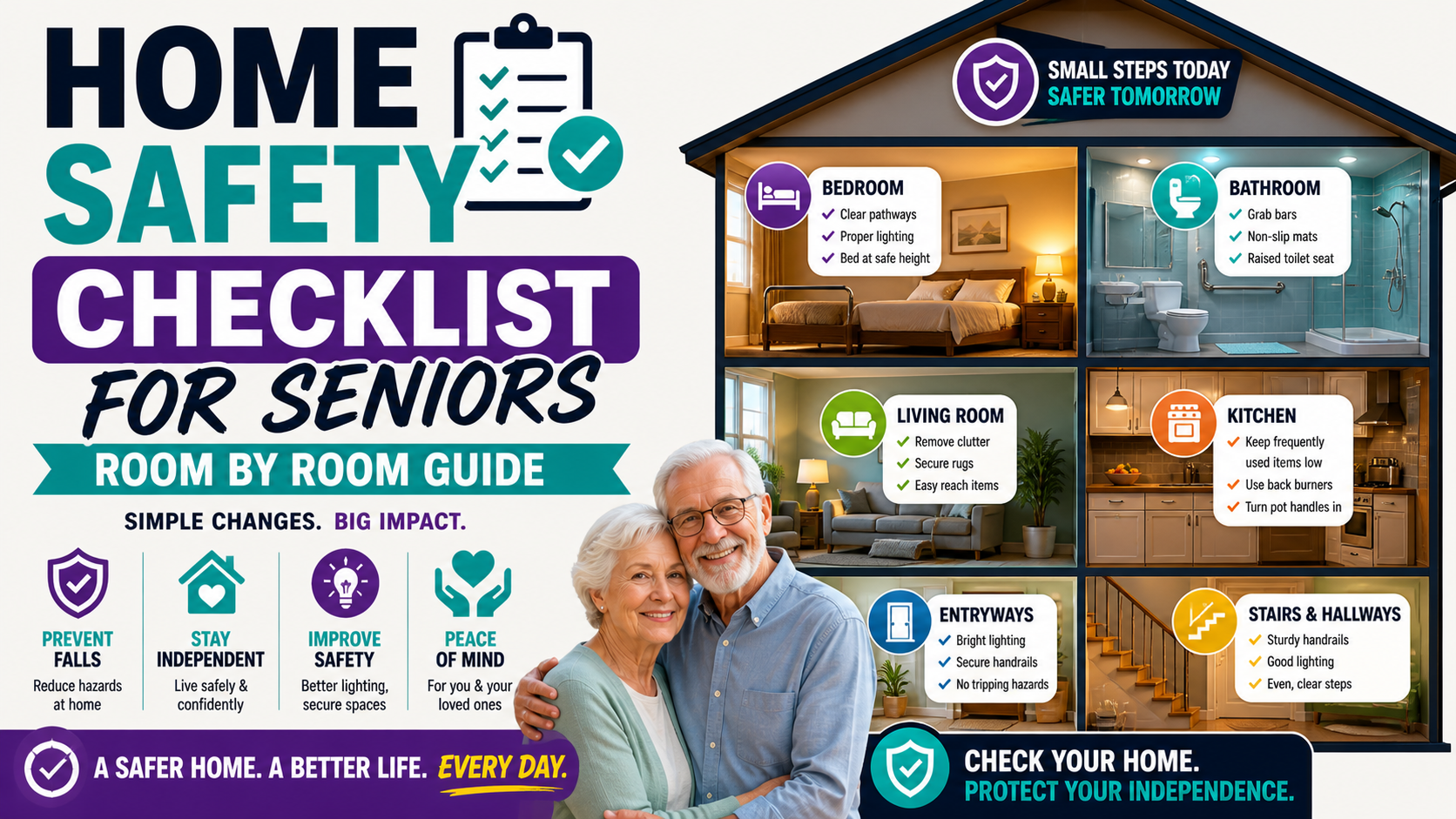
Grab bars at the shower entry and toilet. Non-slip bath mat. Shower chair. Toilet safety rails. Night lights on the path from bedroom to bathroom. As we covered in our guide on your parent’s bathroom is more dangerous than you realize, most bathrooms have none of these modifications in place.
→ Get the Shower Chair on Amazon
→ Get the Toilet Safety Rails on Amazon
Reducing Fracture Risk From Falls That Occur
Osteoporosis assessment and management. A DEXA scan identifies current bone density and fracture risk. For those with osteopenia or osteoporosis, medical management — through bisphosphonate medications, calcium, vitamin D, and weight-bearing exercise — reduces the probability that a fall produces a fracture. This is worth discussing specifically with the managing physician in the context of hip fracture risk.
Vitamin D adequacy. Vitamin D deficiency is both independently associated with increased fall risk and with reduced bone density. Assessment and supplementation for deficiency addresses both simultaneously — a two-for-one intervention that’s worth pursuing for most older adults.
Hip protectors. Padded undergarments designed to absorb hip impact during a fall have mixed research support — they work when worn but are poorly adhered to consistently. For older adults at very high hip fracture risk who will actually wear them consistently they reduce fracture probability from falls that do occur. For most people consistent wearing is the limiting factor on their effectiveness.
What Families Should Do With This Information
The hip fracture mortality statistics aren’t meant to frighten. They’re meant to calibrate — to give the fall prevention conversation the appropriate weight relative to what’s actually at stake.
When a family doesn’t install grab bars because it feels like a big project, or doesn’t pursue a medication review because the next appointment isn’t for three months, or doesn’t get a medical alert device because they’re not sure it’s really necessary yet — the calculation they’re making is implicitly about cost and inconvenience versus benefit.
The benefit side of that calculation includes: preventing the fall that causes the fracture. Preventing the fracture from the fall that occurs. Ensuring rapid response if the fall occurs anyway. Reducing the cascade of consequences that produces the 1 in 4 mortality statistic.
Against a $30 bath mat, a $50 set of toilet rails, and a $20/month medical alert service — the calculation looks different when the full benefit is visible.
The Immediate Action List
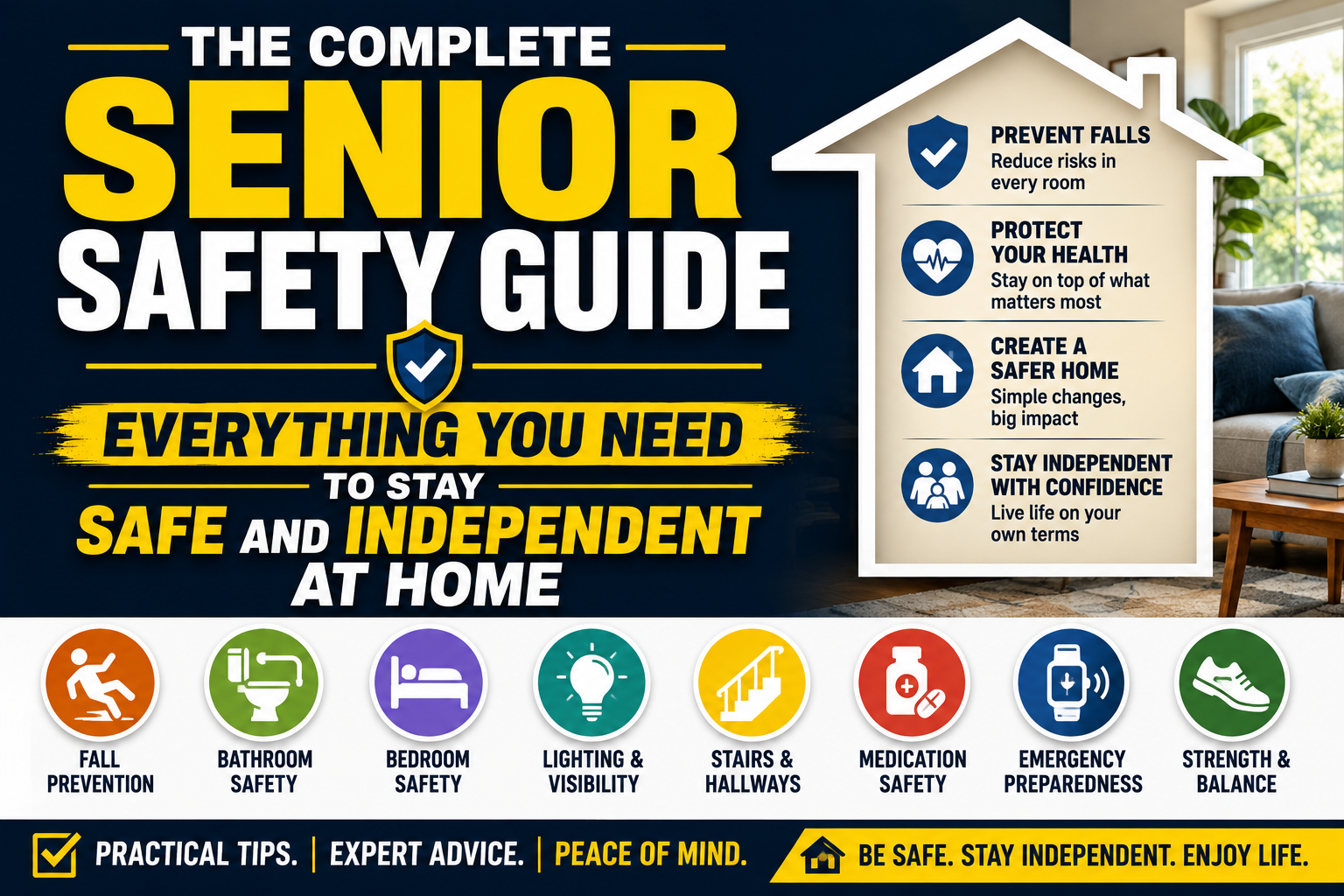
For any older adult with fall risk — which includes any older adult over 65 — these specific actions reduce hip fracture risk directly.
This week:
- Order grab bars for bathroom shower entry and toilet position
- Order non-slip bath mat and toilet safety rails
- Get medical alert device with automatic fall detection in place
- Remove every unsecured rug and cord from walking areas
This month:
- Schedule a DEXA bone density scan if not done in the past two years — particularly for women over 65
- Request a falls-focused medication review from the prescribing physician
- Discuss vitamin D status and supplementation with their physician
- Schedule vision check if more than a year since the last one
- Install grab bars correctly — our guide on most grab bars are installed in the wrong place covers positioning precisely
Ongoing:
- Balance and strength exercise — the highest-evidence fall prevention intervention
- Consistent fluid intake — dehydration increases fall risk as covered in our guide on the most overlooked fall risk for seniors
- Medical alert device worn every day — charged nightly, on every morning
The Safety Net That Limits the Cascade
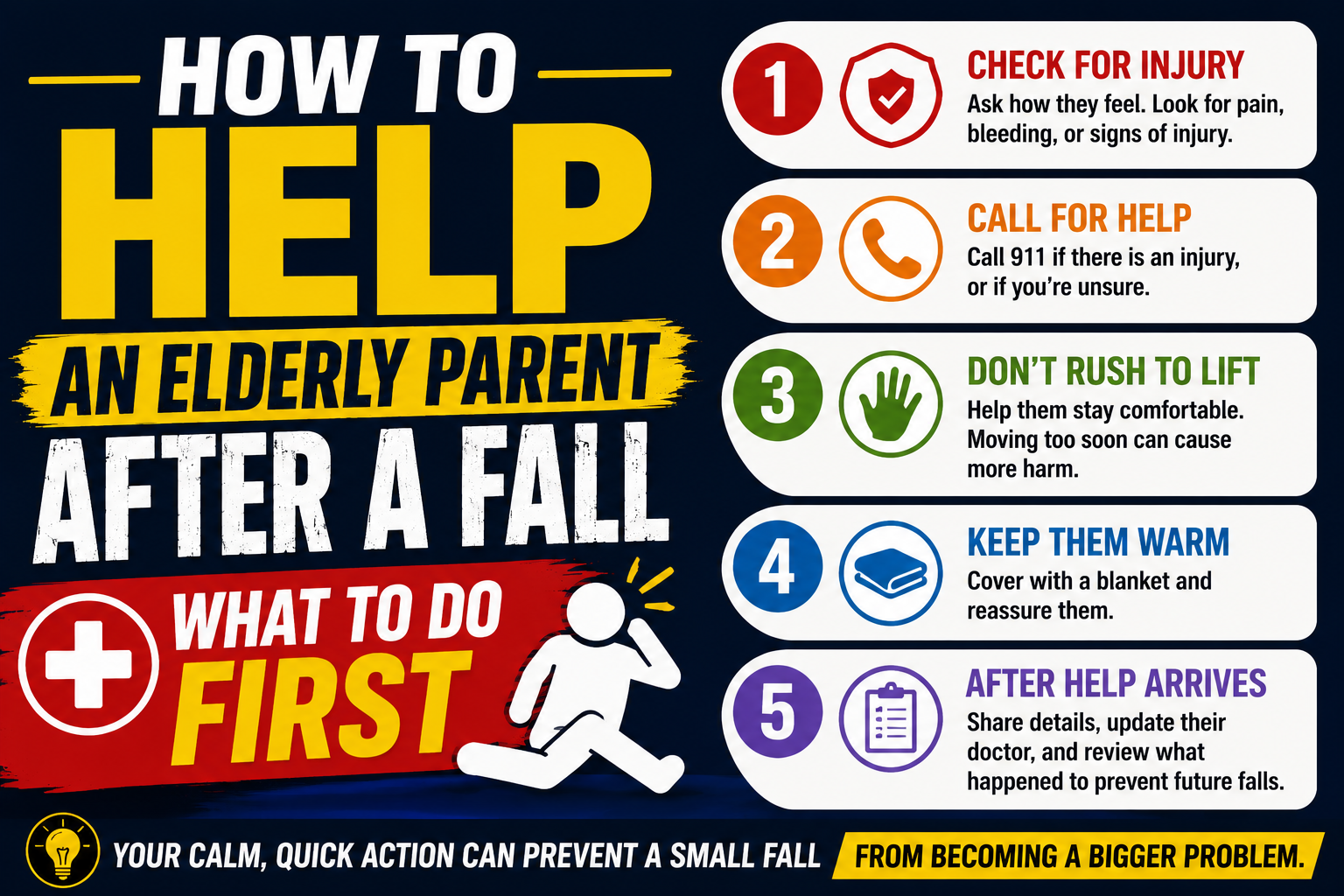
Even with every prevention measure in place, some falls will occur. For those falls the most important additional variable is how quickly help arrives — because the long lie that follows a fall when no one knows compounds the hip fracture itself with the consequences of extended time on the floor.
The SecuLife Smartwatch closes that gap — automatic fall detection that alerts family immediately with GPS location, without requiring any action from the person who has fallen. For anyone at hip fracture risk — which is any older adult with fall risk — it’s the safety net that limits the cascade when prevention doesn’t fully succeed.
Our complete review at SecuLife Smartwatch Review covers every feature. Our guide on best medical alert system for seniors living alone covers the solo-living safety picture specifically.
→ Get the SecuLife Smartwatch on Amazon
The Fall That Doesn’t Happen
The 1 in 4 mortality statistic is what hip fractures produce when falls aren’t prevented. It’s not what they produce in every case — and it’s not what they produce when the right prevention measures are in place and the right response is available when prevention isn’t enough.
The fall that doesn’t happen because grab bars were installed doesn’t appear in any statistic. The fall that happened but was responded to in minutes rather than hours because a wearable detection device was in place doesn’t appear in the 1 in 4. The fall that happened but didn’t produce a fracture because osteoporosis was managed doesn’t appear there either.
Prevention doesn’t show up in the numbers because it’s what the numbers are counting the absence of. But it’s real. It’s achievable. And it starts with understanding what’s actually at stake — which is now what you know.
About the Author
Margaret Holloway, RN spent 22 years in geriatric nursing watching the hip fracture cascade unfold in patients whose families hadn’t known the mortality statistics before the fall and who learned them in the worst possible context. She has sat with families who couldn’t understand how a fall had become what it became. She writes for Elder Safety Guide because understanding what hip fractures actually involve — before a fall occurs — changes the weight families give to prevention measures that can feel optional until they aren’t.