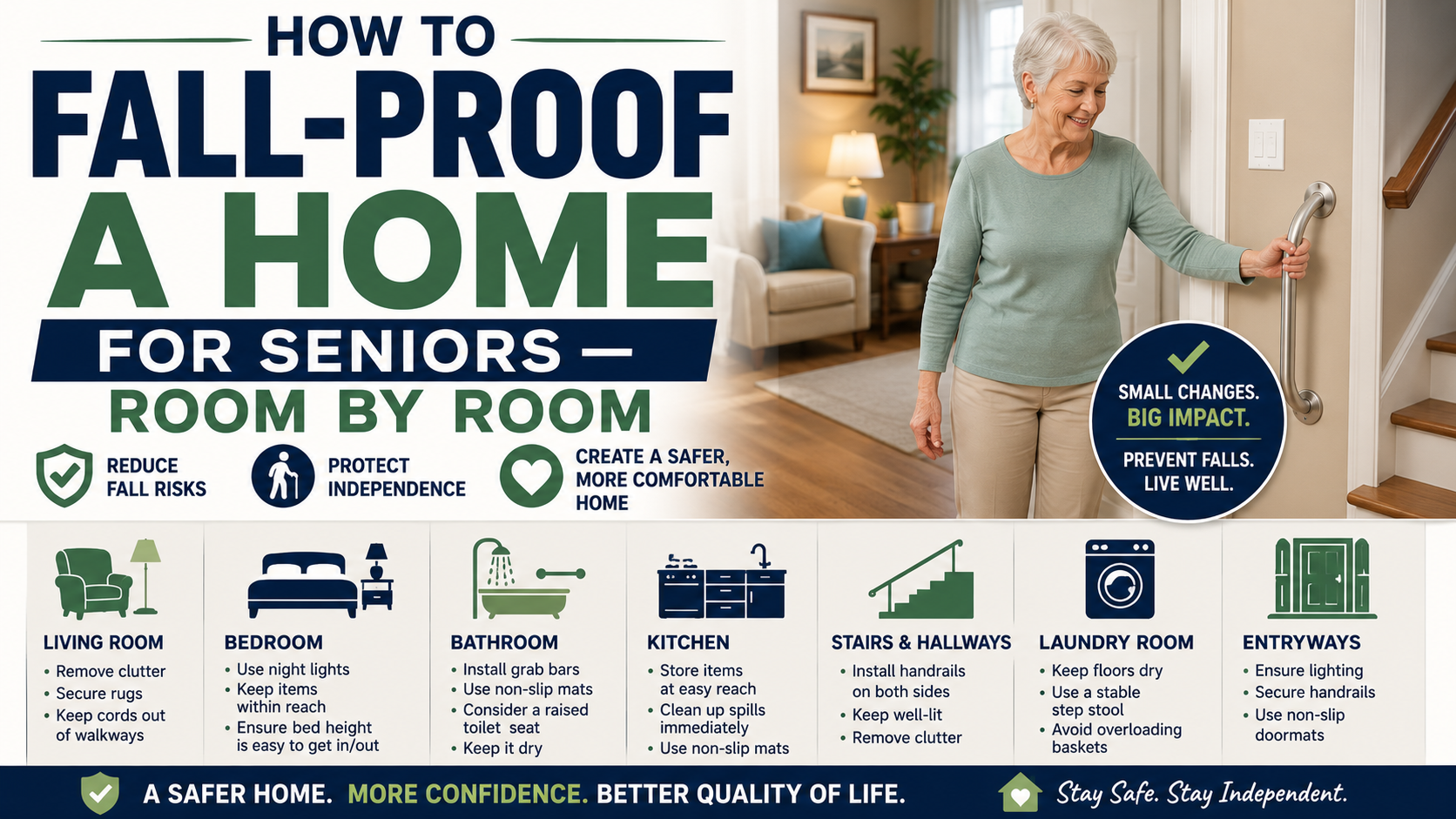
A walk-in bathtub costs $3,000 to $15,000 installed. Here’s the honest guide to who genuinely benefits, who should consider alternatives, and what the real costs are.
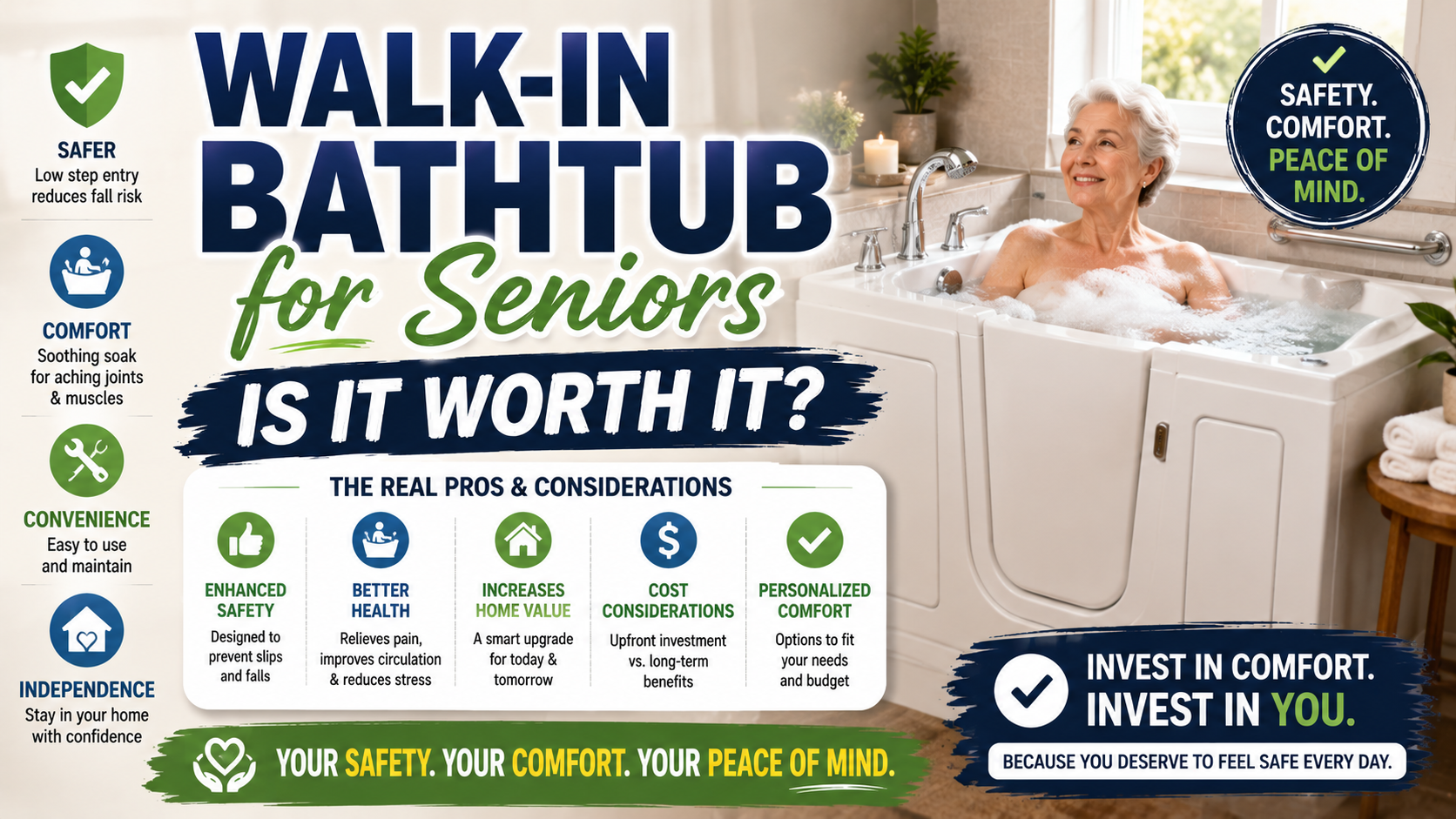
A walk-in bathtub is one of the most significant bathroom modifications available for older adults — and one of the most significant investments. Prices range from $2,000 to $15,000 installed. The decision deserves more than a catalog description and a sales pitch.
This guide covers everything worth knowing before making that decision — what a walk-in bathtub actually is, who genuinely benefits from one, who doesn’t, what the real costs are, and what the alternatives are when a walk-in tub isn’t the right answer.
What a Walk-In Bathtub Actually Is
A walk-in bathtub has a door built into the side of the tub — typically a hinged door that swings inward — allowing entry without stepping over a standard tub wall. The person opens the door, steps into the tub, closes the door, and then fills the tub. The door seal prevents water from leaking through.
This design eliminates the step-over that makes standard tub entry dangerous for older adults with balance limitations, hip restrictions, or leg weakness. The standard tub wall — 15 to 18 inches high — requires balancing on one leg while lifting the other that full height. A walk-in tub’s low threshold or step-in entry reduces this to a manageable 2 to 4 inches or completely eliminates it in some models.
Types of Walk-In Tubs
Soaking tubs — standard warm water bathing without therapeutic jets. The most affordable walk-in tub option. Addresses the entry safety issue without the additional features of more complex models.
Air jet tubs — jets that circulate warm air bubbles through the water, producing a gentle massaging effect. Lower maintenance than water jets since air doesn’t carry the contamination risk of water recirculation systems.
Water jet tubs — traditional hydrotherapy jets that recirculate water under pressure. More powerful therapeutic effect than air jets. Higher maintenance requirement — jets must be cleaned regularly to prevent bacterial contamination.
Combination systems — both air and water jets in one tub. Maximum therapeutic versatility at the highest price point.


Who Genuinely Benefits From a Walk-In Tub
A walk-in tub is worth its significant cost for a specific population. Being honest about who that is prevents expensive purchases that don’t match the actual need.
People Who Value Soaking Baths Specifically
The walk-in tub’s primary advantage over a walk-in shower is the soaking bath experience — full-body immersion in warm water that provides comfort, warmth, and for those with arthritis or muscle pain, genuine therapeutic relief. If soaking baths are an important part of daily comfort and routine that the person is reluctant to give up — a walk-in tub preserves that experience safely.
If the person primarily showers and rarely soaks — a walk-in shower conversion or a transfer bench addresses the safety issue at a fraction of the cost without changing a bathing behavior they don’t prioritize.
People With Arthritis, Fibromyalgia, or Chronic Muscle Pain
Hydrotherapy — warm water immersion with or without jets — has genuine evidence for pain relief in arthritis and fibromyalgia. For someone whose primary motivation is therapeutic pain management through soaking, the walk-in tub’s hydrotherapy features provide daily value that justifies the higher cost.
People Who Cannot Safely Use a Standard Tub — And Prefer Bathing to Showering
For someone who has become unable to safely step over a standard tub wall and who specifically wants tub bathing rather than showering — a walk-in tub is the direct solution. The alternative — a transfer bench — provides safe tub access at much lower cost but requires a more complex transfer sequence that not everyone can manage comfortably.

Who Should Consider Alternatives Instead
A walk-in tub is not the right solution for every bathing safety concern. These specific situations call for alternatives that address the actual need more effectively or affordably.
If the Primary Problem Is Shower Safety — Not Tub Entry

A walk-in shower conversion addresses shower safety more completely than a walk-in tub — eliminating the threshold entirely, providing a fully open bathing space, and accommodating grab bars, shower chairs, and handheld shower heads in a configuration optimized for standing or seated showering. For practical guidance on choosing and positioning these features, see grab bars, shower chairs, and handheld shower heads.

As covered in our guide on best walk-in shower for seniors — a curbless walk-in shower is often the highest-impact aging-in-place bathroom modification available, addressing the most dangerous bathroom transitions in the most permanent way.
If the Budget Doesn’t Support a Walk-In Tub
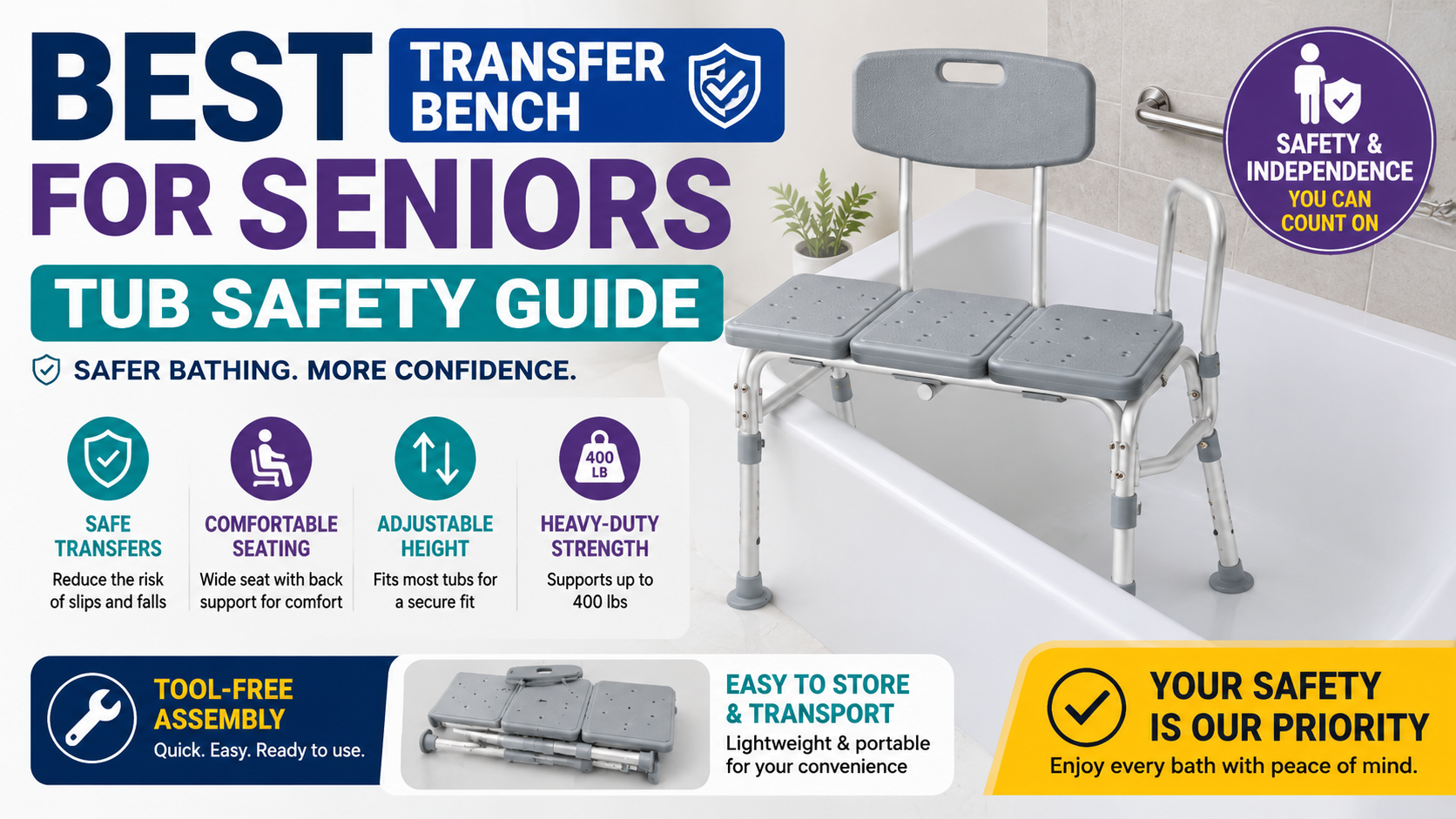
A transfer bench provides safe tub access for someone who cannot step over the tub wall — at a fraction of the cost of a walk-in tub with zero installation required. As covered in our guide on the best transfer bench for seniors — the person sits outside the tub and slides to the inside position without any standing step-over.
The transfer bench doesn’t provide the soaking bath experience of a walk-in tub — but it addresses the tub entry safety issue immediately and affordably while a longer-term decision about a walk-in tub is considered.
If Cognitive Decline Is Present
Walk-in tubs require the person to enter the tub, close the door, and then fill the tub — meaning they sit in an empty tub while it fills and must drain the tub before opening the door to exit. This sequence requires memory, sequencing ability, and patience that dementia can impair. A person with significant dementia who enters the tub and forgets to close the door, or opens the door before draining, creates a serious safety situation.

For someone with dementia a walk-in shower with caregiver-assisted bathing is typically safer than a walk-in tub. Our guide on home safety tips for seniors with dementia covers the complete bathing safety picture for this population.
The Real Costs — What to Expect
Walk-in tub pricing is one of the least transparent in the home modification industry. Here’s the honest picture.
Product Cost
- Basic soaking walk-in tub: $1,500 to $3,000
- Air jet model: $3,000 to $6,000
- Water jet model: $4,000 to $8,000
- Combination air and water jet: $6,000 to $12,000
Installation Cost
Walk-in tub installation is a significant plumbing and construction project — removing the existing tub, modifying plumbing connections, installing the new tub, and finishing the surround. Professional installation typically adds $1,000 to $3,000 to the product cost. Total installed costs of $3,000 to $15,000 depending on model and local labor rates are realistic.
Operating Costs
Walk-in tubs require more hot water than standard tubs — the larger volume takes longer to fill and requires more water heater capacity. For households with standard water heaters that struggle to fill the tub with adequately hot water, a water heater upgrade adds cost. Jet system maintenance — cleaning, occasional jet replacement — adds ongoing maintenance costs.
What the Price Doesn’t Cover
Many walk-in tub advertisements emphasize low product prices while underemphasizing installation costs, surround finishing, potential water heater upgrades, and the cost of a fast-fill faucet needed to reduce the time sitting in an empty or cooling tub during filling. Get a total installed quote — product plus all installation and finishing — before comparing options.


The “Wet Entry” Problem — The Honest Limitation
The walk-in tub’s design creates a limitation worth understanding before purchase: you must enter and exit a dry tub, fill it while inside, and drain it before exiting. The fill and drain times for a walk-in tub — typically 10 to 15 minutes to fill, 5 to 8 minutes to drain — mean the person sits in an empty tub while it fills and waits for it to drain before they can safely exit.
Sitting in an empty tub during filling creates a temperature management challenge — the person gets cold before the water rises, or must fill with very hot water to allow for cooling during filling. Waiting for the tub to drain after bathing means sitting in a cooling tub. For someone with cold sensitivity or circulation issues this waiting period is a genuine quality-of-life concern.
Fast-fill faucets and inline water heaters reduce these wait times — and are worth including in any walk-in tub installation — but they add to the total cost.
Our Walk-In Tub Recommendation
For families who have decided a walk-in tub is the right choice for their specific situation — the FerdY Floridian is the option we recommend. Our complete review covers the specific features, installation considerations, and exactly what to expect from this model.
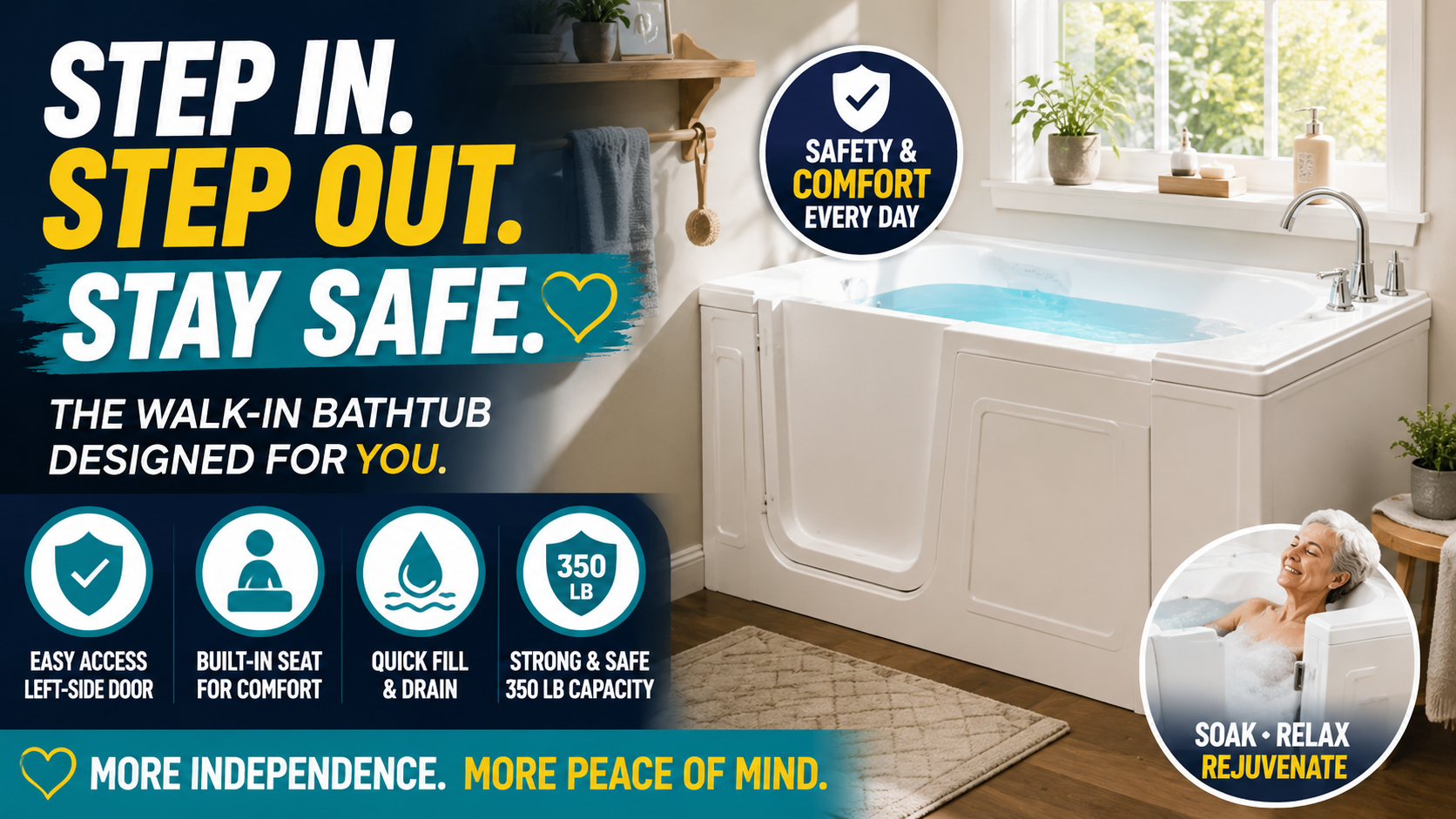
Walk-In Bathtub Review — Is It Right for Your Home?
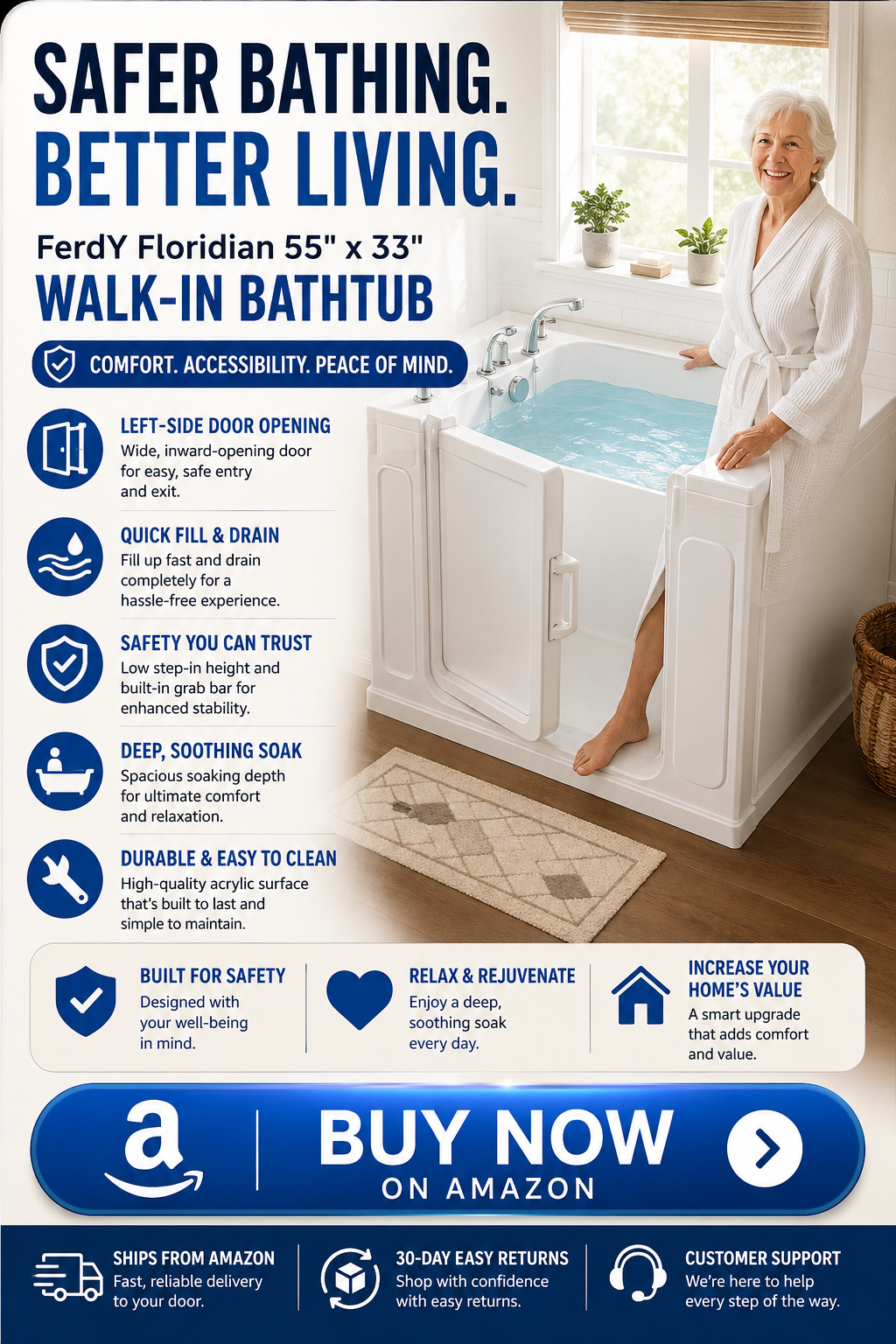
→ Get the FerdY Floridian Walk-In Bathtub on Amazon
The Complete Bathing Safety Picture
Whether a walk-in tub is right or not — the complete bathing safety system includes modifications that address every stage of the bathing routine alongside the tub entry solution.
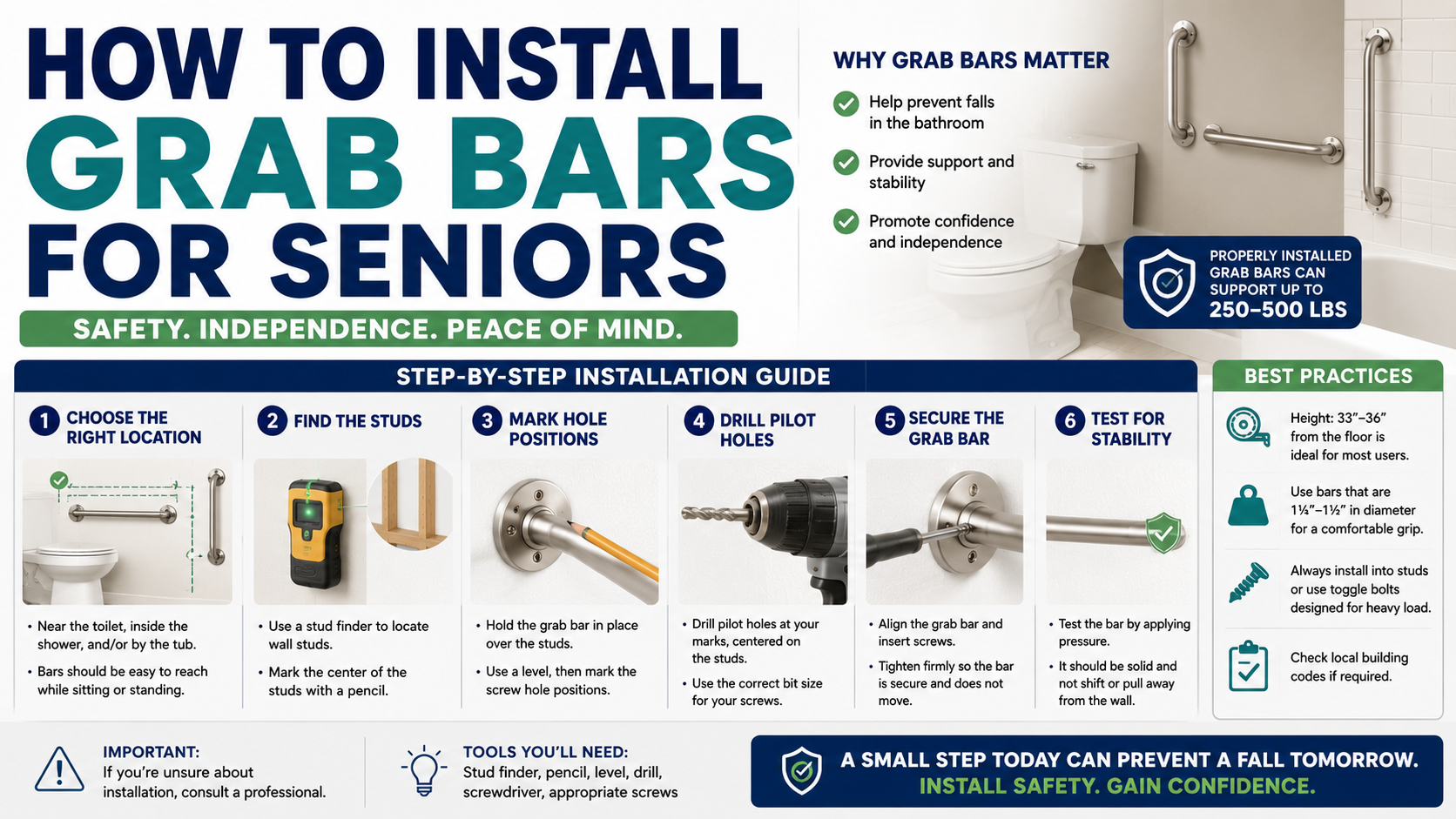
Grab bars at the tub entry and back wall provide support during entry, exit, and repositioning inside the tub. Our installation guide at how to install grab bars for seniors covers the complete DIY process.
A handheld shower head makes rinsing and hair washing manageable from inside the walk-in tub — the six-foot hose on the AquaCare reaches every position without requiring repositioning.

→ Get the AquaCare Handheld Shower Head on Amazon
A non-slip bath mat outside the tub covers the exit transition. Toilet safety rails address the toilet transfer that happens before and after every bathing session.

→ Get the Toilet Safety Rails on Amazon

And the medical alert safety net — the SecuLife Smartwatch worn on the wrist during every bath provides automatic fall detection in the bathroom where a fall is most likely and most effectively concealed from anyone who might respond.
→ Get the SecuLife Smartwatch on Amazon
Frequently Asked Questions
Does Medicare cover walk-in tubs?
Original Medicare does not cover walk-in tubs — they are not classified as durable medical equipment under standard Medicare coverage. Some Medicare Advantage plans include home modification benefits that may offset the cost — check your specific plan. Medicaid waiver programs in some states cover home modifications for eligible recipients. VA home modification grants cover walk-in tub installation for qualifying veterans. The Eldercare Locator at 1-800-677-1116 can identify local assistance programs.
How long does walk-in tub installation take?
Professional walk-in tub installation typically takes one to two days — removing the existing tub on day one, installing and finishing the new tub on day two. The bathroom is unavailable during installation. Having an alternative bathing arrangement for two days is worth planning before scheduling installation.
Is a walk-in tub safe for someone who uses a wheelchair?
Walk-in tubs are not designed for wheelchair transfer — the entry door and tub configuration don’t accommodate wheelchair-to-tub transfers. For wheelchair users a roll-in shower with appropriate grab bars, fold-down shower seat, and handheld shower head is the appropriate accessible bathing solution.
What is the weight capacity of most walk-in tubs?
Most standard walk-in tubs are rated for 300 to 400 pounds. Bariatric models are available with higher weight capacities. Always confirm the specific model’s weight rating before purchase — the seat and door seal are the components most affected by weight beyond the rated capacity.
Can a walk-in tub be installed in any bathroom?
Walk-in tubs require specific minimum space — most models require a space similar to a standard 60-inch tub, though some compact models are available for smaller bathrooms. The plumbing connections must be compatible or modified. A professional measurement and assessment before purchase confirms whether your specific bathroom can accommodate the model being considered.


The Right Decision for the Right Situation
A walk-in bathtub is worth its significant investment for someone who values soaking baths, benefits from hydrotherapy, and cannot safely use a standard tub. It is not the right answer for someone whose primary concern is shower safety, who rarely soaks, or whose budget makes the alternatives more practical.
The decision deserves honest assessment against the alternatives — transfer bench for budget-conscious tub access, walk-in shower for shower-focused aging in place, or simple bathroom modifications for someone who can still manage tub entry with support.

Our complete review of the FerdY Floridian Walk-In Bathtub covers the specific product in full detail — features, installation, what to expect, and who it’s right for. Our complete guide on bathing safety for seniors covers the full picture of safe bathing across every bathroom configuration.
About the Author
Carol Simmons is a Certified Aging-in-Place Specialist (CAPS) who has guided many families through the walk-in tub decision — including many who arrived convinced a walk-in tub was what they needed and left with a transfer bench or walk-in shower recommendation instead, and many who arrived uncertain and left with a clear case for the walk-in tub’s specific benefits. The decision is genuinely situation-dependent — and the families who make it well are the ones who understand both the benefits and the limitations honestly before committing to the investment. She writes for Elder Safety Guide because the walk-in tub category has more marketing than honest guidance — and families making a $5,000 to $15,000 decision deserve the honest version.