
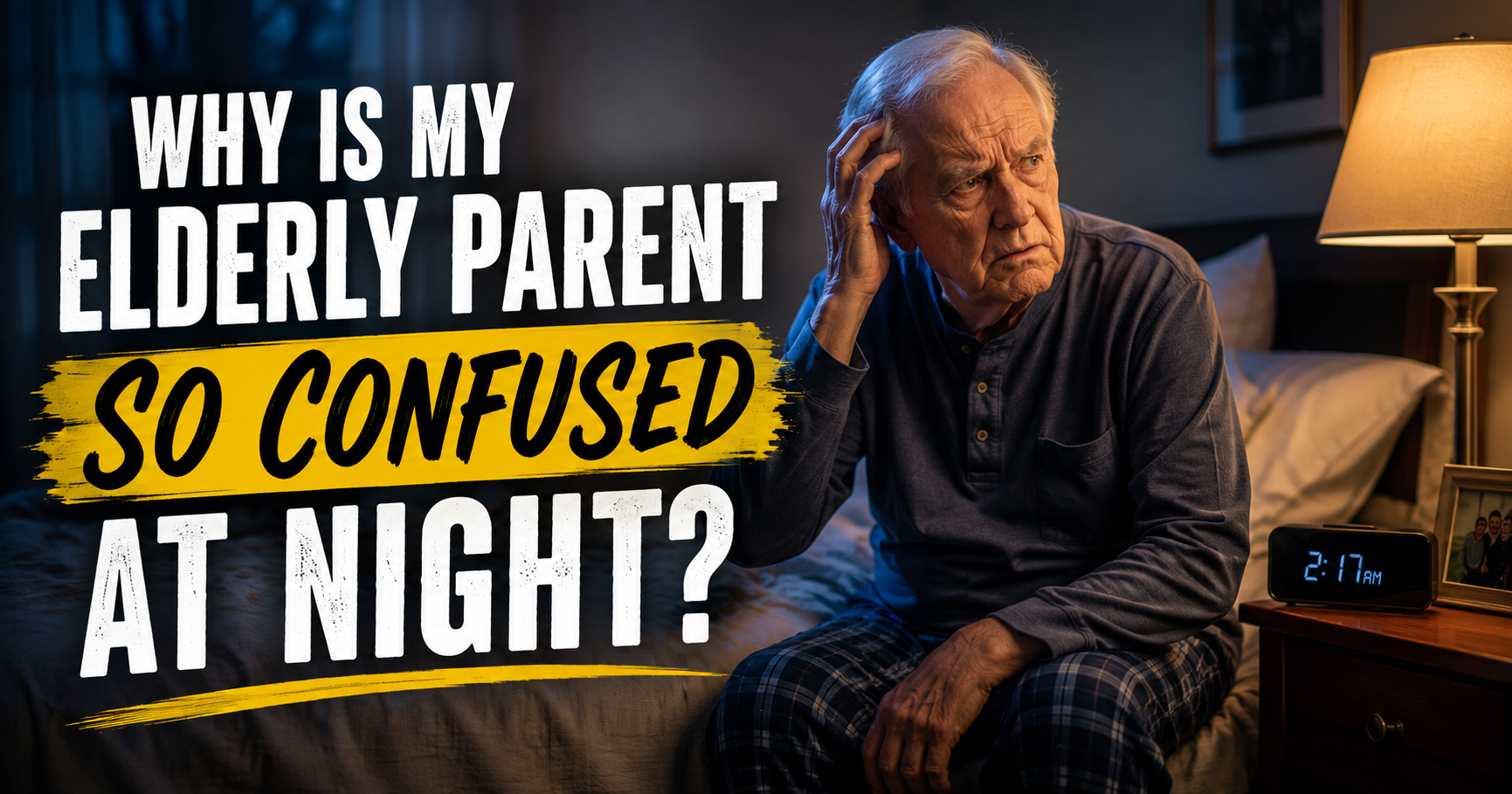
One evening my phone rang just after 9:00.
It was a friend who sounded completely overwhelmed.
He said, “My mom is perfectly normal most of the day, but every evening it’s like someone flips a switch.”
She became confused.
She insisted people had been inside her house.
She couldn’t remember what day it was.
By the next morning, she seemed almost completely back to normal.
He asked me something I hear from families all the time.
“How can someone seem fine during the day and so confused at night?”
If you’ve been asking yourself that same question, you’re not alone.
Nighttime confusion is one of the most unsettling changes families notice because it often seems to appear without warning.
The good news is that there are several possible explanations.
The important thing is understanding what might be causing the change and recognizing when it’s time to seek medical advice.

Start By Looking At The Pattern
The first thing I always ask is whether the confusion truly happens only at night.
Does your parent wake up feeling clear-headed?
Do conversations seem perfectly normal throughout most of the day?
Then, sometime during the evening, do they suddenly seem forgetful, anxious, or confused?
That pattern matters.
Whenever symptoms appear at roughly the same time every day, I pay close attention because it often provides clues about what’s happening.


Fatigue Changes How The Brain Functions
One of the simplest explanations is also one of the most common.
By evening, everyone is tired.
For older adults, that fatigue can become much more noticeable.
After an entire day of thinking, walking, making decisions, and processing information, the brain may simply have less energy left.
That can make memory problems seem much worse than they did earlier in the day.


Poor Sleep Often Makes Evenings Worse
Ironically, someone who sleeps poorly at night may become exhausted by evening even if they spend time napping during the day.
I’ve noticed many families describe nighttime confusion around the same time they realize their parent has started sleeping much more than usual.

If that’s happening in your family, I recommend reading Why Is My Elderly Parent Sleeping All Day? because daytime fatigue and nighttime confusion often affect each other.
The House Feels Different After Dark
Think about how different your own home feels once the sun goes down.
Rooms become darker.
Shadows appear.
Depth perception changes.
Outside noises seem louder.
For someone whose vision isn’t as sharp as it once was, those changes can make familiar surroundings feel unfamiliar.
That uncertainty alone can increase confusion and anxiety.

Changes In Routine Can Make Things Worse
Older adults often depend on predictable routines.
Dinner.
Television.
Medication.
Bedtime.
When that routine changes, confusion sometimes becomes more noticeable.
I’ve seen families accidentally create more evening stress by changing schedules without realizing how important those routines had become.
Medication Timing Can Matter
Some medications are taken in the evening.
Others begin wearing off late in the day.
Either situation can affect how someone feels after dinner.
I’ve also seen confusion increase because medications were accidentally skipped or taken twice.

If medication routines have become difficult, spend some time reading Elderly Parent Keeps Forgetting Medication When Should You Worry?. Medication mistakes sometimes explain changes families first notice during the evening.


They May Not Tell You What’s Happening
One thing I’ve learned is that older adults don’t always admit they’re becoming confused.
Instead, they quietly try to hide it.
If they can’t remember something, they change the subject.
If they’re uncertain where they are, they wait for someone else to speak first.
Many families never realize how much effort their parent is putting into covering up these moments.

That’s why I encourage people to read Signs Your Elderly Parent Is Hiding Health Problems From You. Confusion is often one of the symptoms older adults try hardest to keep private.
Memory Changes Often Become More Noticeable At Night
One thing I’ve noticed is that families often describe memory problems becoming much more obvious during the evening hours.
A parent who seemed perfectly fine at lunch may suddenly begin asking the same question several times after dinner.

If repeated conversations have become more common, take a look at My Elderly Parent Keeps Repeating the Same Stories because memory changes and nighttime confusion frequently overlap.
Anxiety Can Increase After Sunset
Evenings tend to be quieter.
Visitors go home.
The television gets turned off.
The house becomes still.
For someone already feeling uncertain, that quiet can make worries feel much bigger.
I’ve seen older adults become increasingly anxious after dark simply because there were fewer distractions.
Pay Attention To Other Changes
Nighttime confusion rarely appears completely by itself.
Think about everything else you’ve noticed recently.
Has your parent also:
- Become more forgetful?
- Lost weight?
- Been sleeping more?
- Become unusually angry?
- Started losing important belongings?
- Refused help?
Those changes together often tell a much clearer story than nighttime confusion alone.

If your parent simply doesn’t seem like themselves anymore, I recommend reading My Elderly Parent Is Acting Different All of a Sudden What To Do because looking at behavior as a whole often helps families recognize important patterns.


When Nighttime Confusion Creates Safety Concerns
This is where I start thinking beyond confusion itself.
If your parent becomes disoriented after dark, ask yourself:
Are they safely moving around the house?
Could they accidentally leave the stove on?
Might they wander outside?
Would they know how to call for help if they fell?
These are practical questions, not reasons to panic.
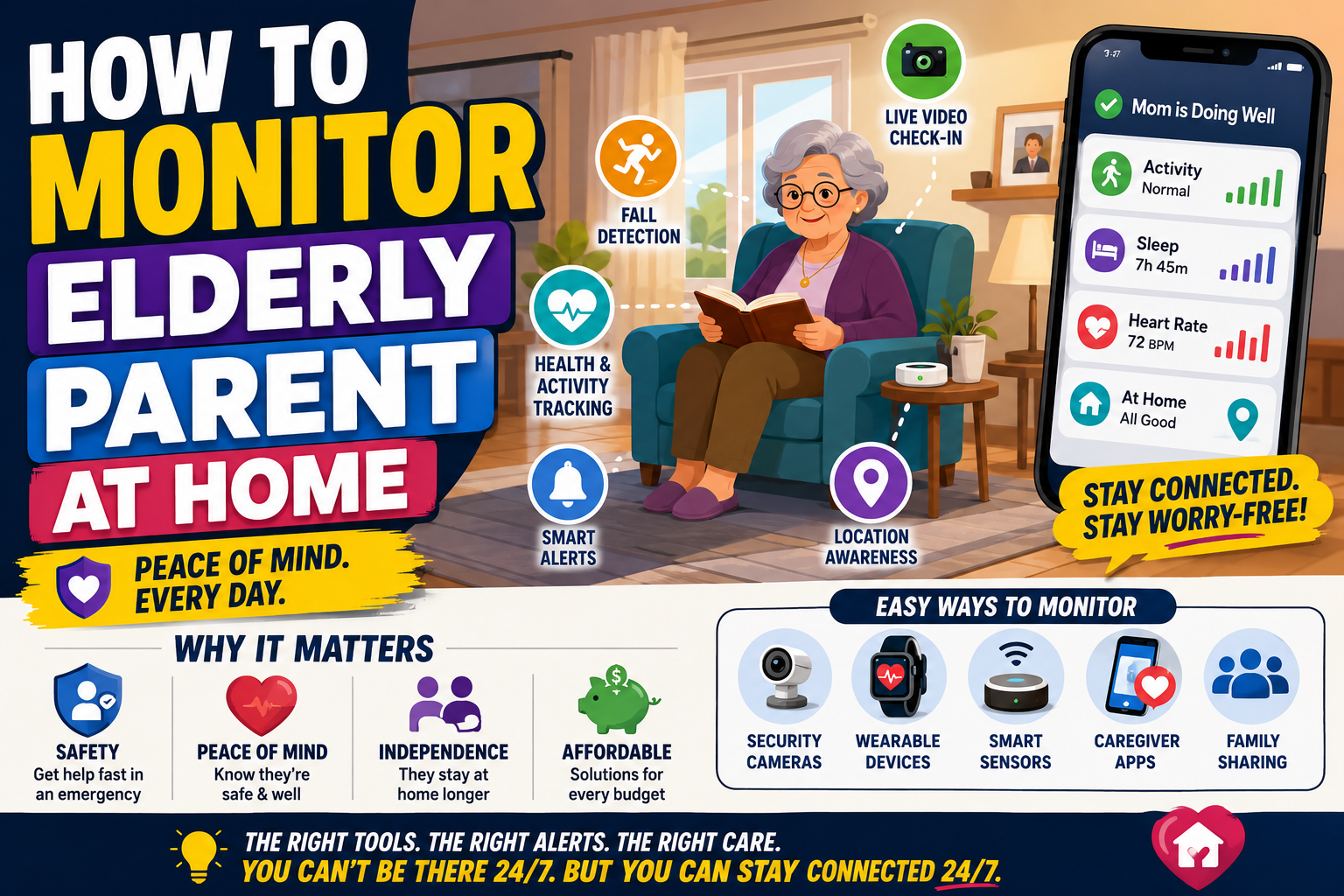
If you’re becoming concerned about what happens after bedtime, our guide on How to Monitor an Elderly Parent at Home offers several ways to improve safety while still respecting independence.
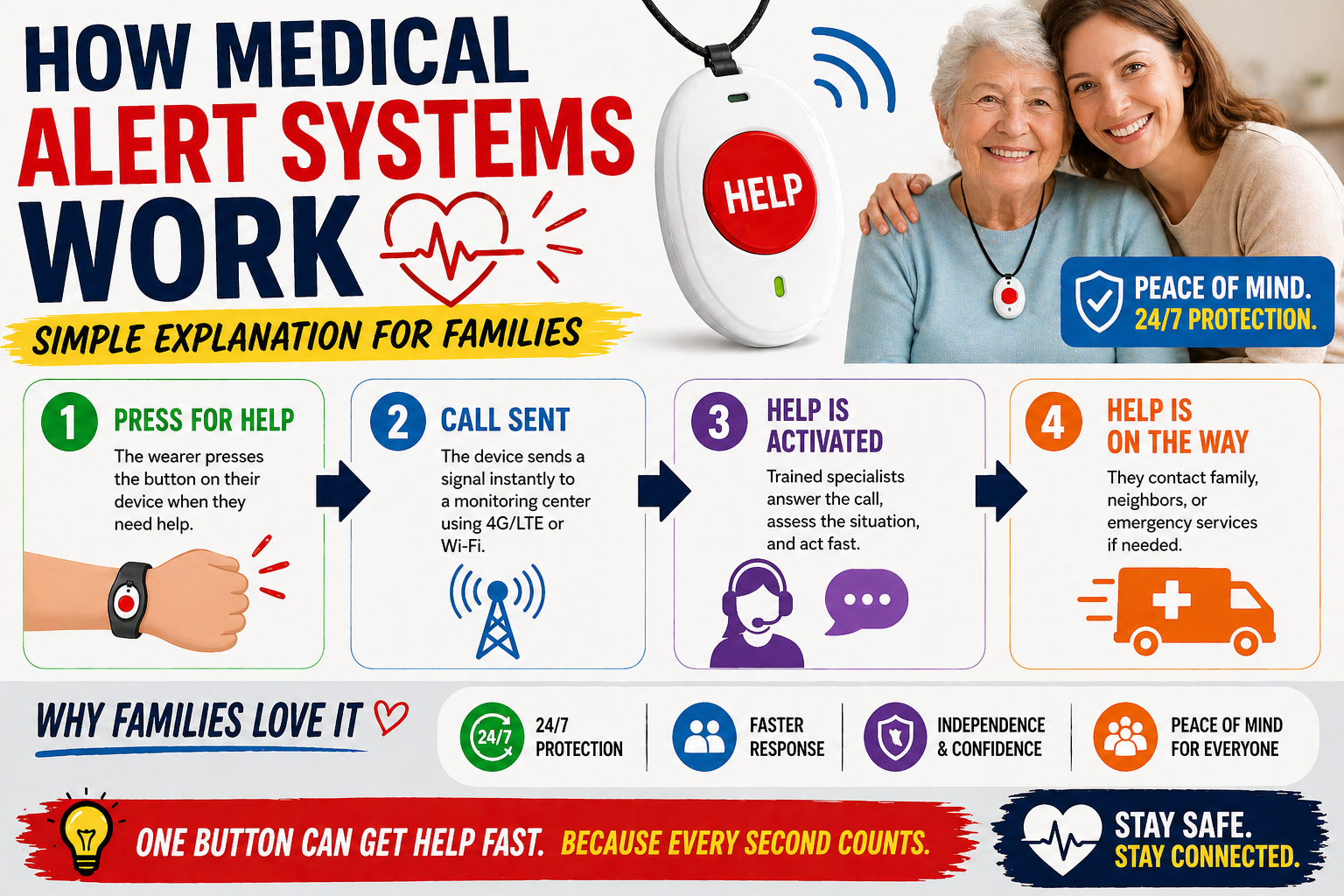
For some families, this is also the point where a medical alert system becomes worth considering, especially if nighttime falls or wandering are becoming realistic concerns.
Don’t Wait Until The Next Morning To Forget About It
One mistake I see families make is dismissing nighttime confusion because everything seems normal again the next day.
Try writing down exactly what happened.
What time did it start?
What did your parent say?
How long did it last?
Was anything different that day?
Those notes can be incredibly helpful when discussing the situation with a healthcare provider.
Trust What You’re Seeing
Families often tell me they worried they were imagining things because their parent looked perfectly fine the next morning.
Trust your observations.
You know what’s normal for your parent.
Most nighttime confusion doesn’t appear without a reason.
Sometimes it’s something relatively simple.
Sometimes it’s the first visible sign that your parent needs a little more support than they did a few months ago.
Pay attention to the pattern.
Keep asking gentle questions.
And remember that noticing these changes early gives your family the best opportunity to find answers before a small concern becomes a much larger one.
About the Author
Jennifer Collins is a senior care educator and aging-in-place advocate for Elder Safety Guide. She writes about caregiver challenges, memory changes, home safety, and recognizing the subtle signs that an older adult may need additional support. Her goal is to help families make confident, compassionate decisions that protect both safety and independence.