
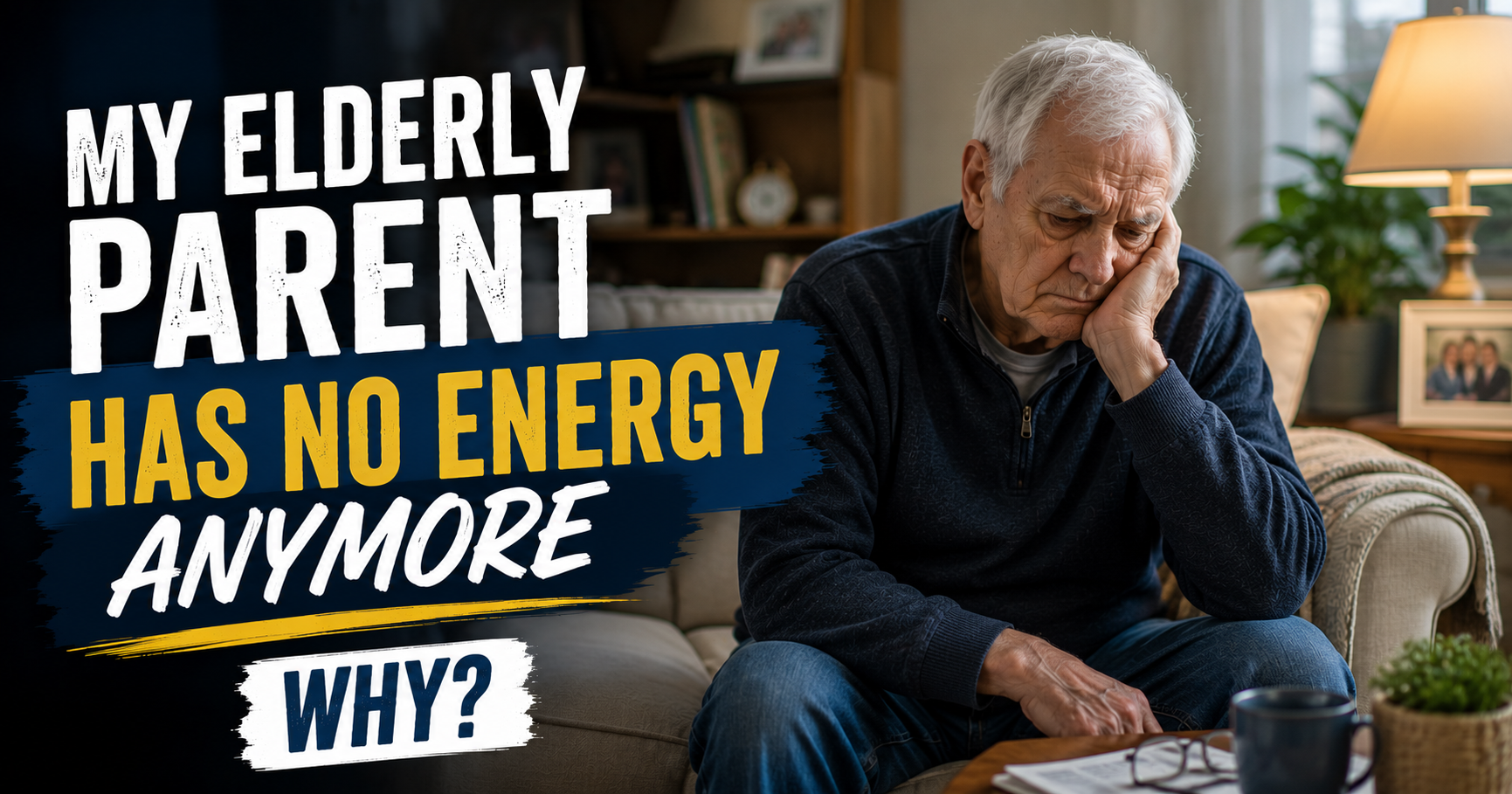
I remember standing in my parents’ driveway one Saturday afternoon, watching my dad stop halfway across the yard just to catch his breath.
This was the same man who used to spend entire weekends splitting firewood, mowing several acres, and fixing anything that broke around the house.
Now he’d walked less than fifty feet and looked completely worn out.
When I asked if he was feeling okay, he smiled and said something I hear older adults say all the time.
“I’m just getting old.”
Maybe he was.
But something about that answer didn’t sit right with me.
Over the next few months, I noticed other changes.
He wasn’t working in the garage anymore.
He stopped meeting friends for breakfast.
His favorite fishing poles gathered dust.
Instead of staying busy, he spent more time sitting in his recliner.
Looking back, the lack of energy wasn’t the only thing that had changed.
It was simply the first thing I noticed.
If you’re asking why your elderly parent suddenly seems to have no energy anymore, I think you’re asking exactly the right question.
Low energy can certainly happen as people grow older.
But it can also be one of the earliest signs that something else deserves attention.
The challenge is figuring out which one you’re seeing.

Growing Older Doesn’t Automatically Mean Giving Up
One of the biggest misconceptions I hear is that slowing down and constantly feeling exhausted are simply part of aging.
While it’s true that most people notice some decline in stamina over the years, healthy older adults should still be able to enjoy daily life.
They may move a little slower.
They may need more breaks.
But they shouldn’t suddenly lose all interest in the activities they once loved simply because they’ve reached a certain age.
Whenever I hear a family say,
“Dad just has no energy anymore,”
I immediately begin wondering what else has changed.


I Rarely Look At Fatigue By Itself
One thing I’ve learned is that symptoms almost never arrive alone.
When someone loses energy, I begin looking for patterns.
Has your parent started sleeping much later than they used to?
Have they lost weight?
Are they skipping meals?
Have they become less interested in hobbies?
Have they stopped leaving the house?
Each answer helps tell the story.
If your parent simply doesn’t seem like themselves anymore, I recommend reading My Elderly Parent Is Acting Different All of a Sudden because fatigue is often only one part of a much larger change.

Poor Sleep Is Often The First Place I Look
It sounds strange, but people who feel exhausted all day aren’t always sleeping well at night.
I’ve known older adults who spent ten or twelve hours in bed yet woke up feeling like they hadn’t slept at all.
Conditions like sleep apnea, chronic pain, medication side effects, and frequent nighttime bathroom trips can all leave someone feeling completely drained by morning.
Eventually they begin taking naps.
Those naps make nighttime sleep even worse.
Before long, a frustrating cycle develops.
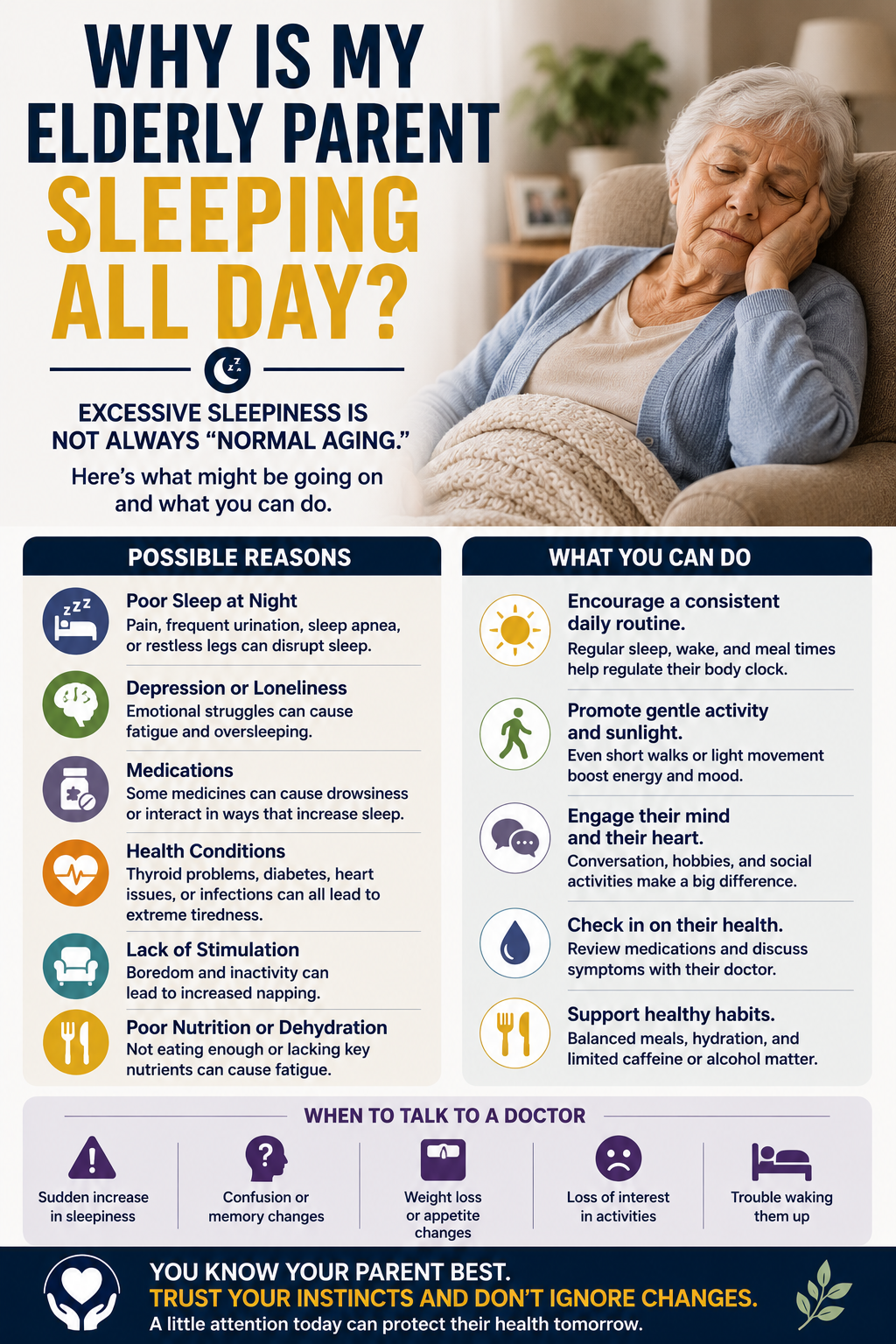
If your parent has also begun spending much of the day asleep, my article on Why Is My Elderly Parent Sleeping All Day? explains why excessive daytime sleepiness deserves a closer look.
Eating Less Means Less Energy
Our bodies can’t run without fuel.
One thing I see families overlook is how quickly poor nutrition affects energy levels.
If someone begins skipping breakfast, eating only toast for lunch, and picking at dinner, their body simply isn’t getting what it needs.
The result is often weakness, fatigue, and less motivation to stay active.
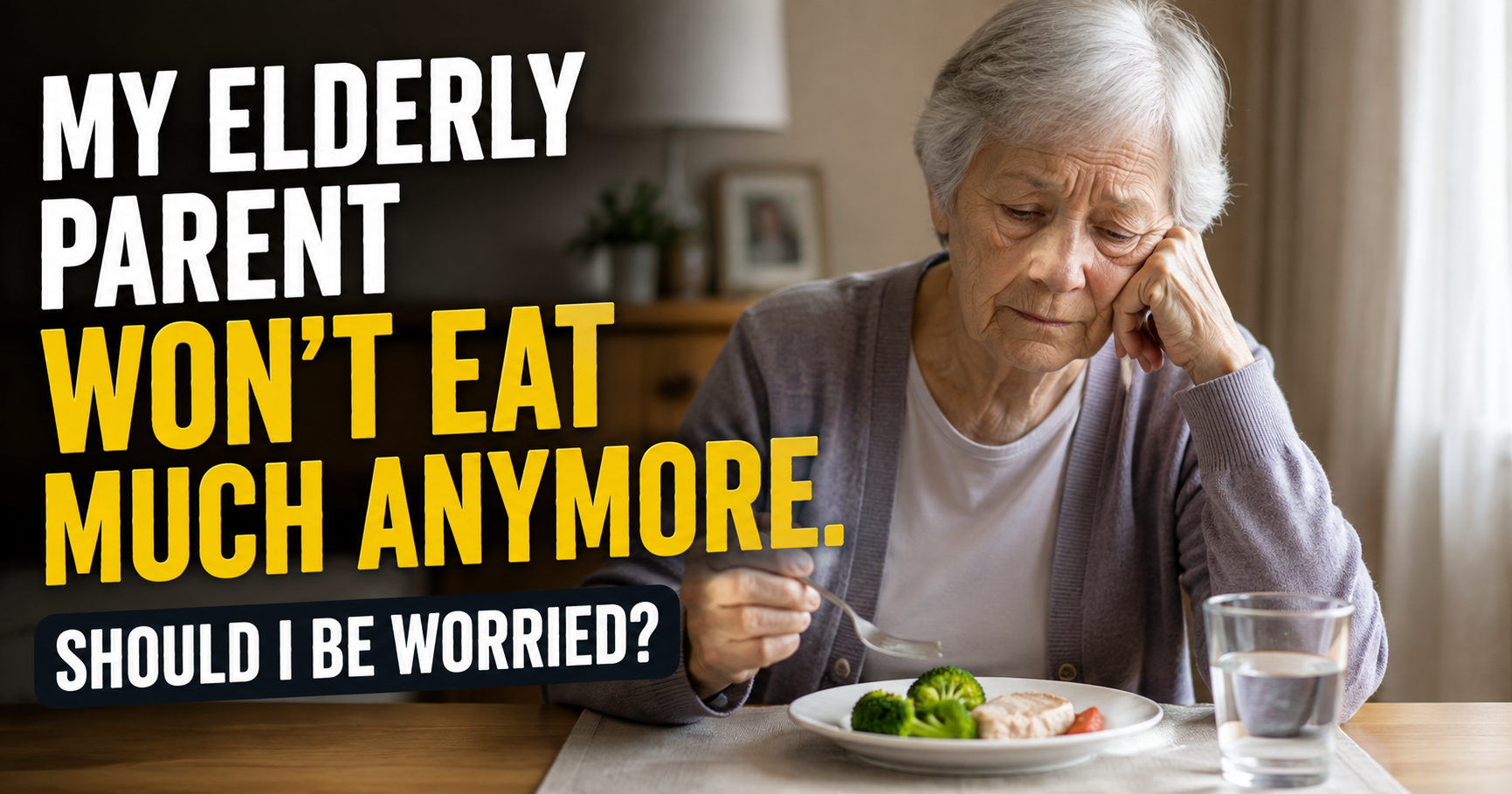
If you’ve recently noticed your parent pushing food away or saying they just aren’t hungry anymore, spend a few minutes reading My Elderly Parent Won’t Eat Much Anymore because appetite changes and low energy frequently go hand in hand.


Weight Loss Changes Strength Faster Than Many Families Realize
I’ve watched older adults lose ten or fifteen pounds without thinking much about it.
Then suddenly they struggle to stand from a chair.
Walking across the house becomes tiring.
Stairs feel impossible.
Small amounts of weight loss can represent a significant loss of muscle, especially in older adults.
That’s one reason I never ignore unexplained weight loss.

If your parent has become noticeably thinner while also feeling weaker, take a look at My Elderly Parent Is Losing Weight but Says They’re Fine because these changes often appear together.
Pain Quietly Drains Energy
One thing I’ve noticed is that families often underestimate how exhausting chronic pain can be.
Imagine hurting every time you stand.
Every time you bend over.
Every time you climb stairs.
Eventually your body begins avoiding movement altogether.
It isn’t laziness.
It’s self-protection.
The difficult part is that many seniors never tell anyone how much pain they’re actually living with.
Instead, they simply stop doing the things they once enjoyed.


They May Be Spending Energy Hiding Their Symptoms
I’ve met older adults who worked incredibly hard to appear perfectly fine whenever family visited.
They smiled.
Made conversation.
Insisted everything was going well.
Then after everyone left, they spent the rest of the afternoon recovering because they had used every bit of energy they had.
Sometimes what looks like low motivation is actually someone using all of their strength trying to convince everyone else they’re okay.

If you’ve wondered whether your parent is quietly covering up health concerns, I recommend reading Signs Your Elderly Parent Is Hiding Health Problems From You because many older adults become remarkably skilled at hiding physical changes.
Losing Interest And Losing Energy Often Happen Together
One thing I find fascinating is how difficult it can be to tell which came first.
Did your parent lose energy because they stopped doing things?
Or did they stop doing things because they lost energy?
In reality, it’s often both.
Less activity leads to less strength.
Less strength makes activity harder.
Before long, the cycle feeds itself.
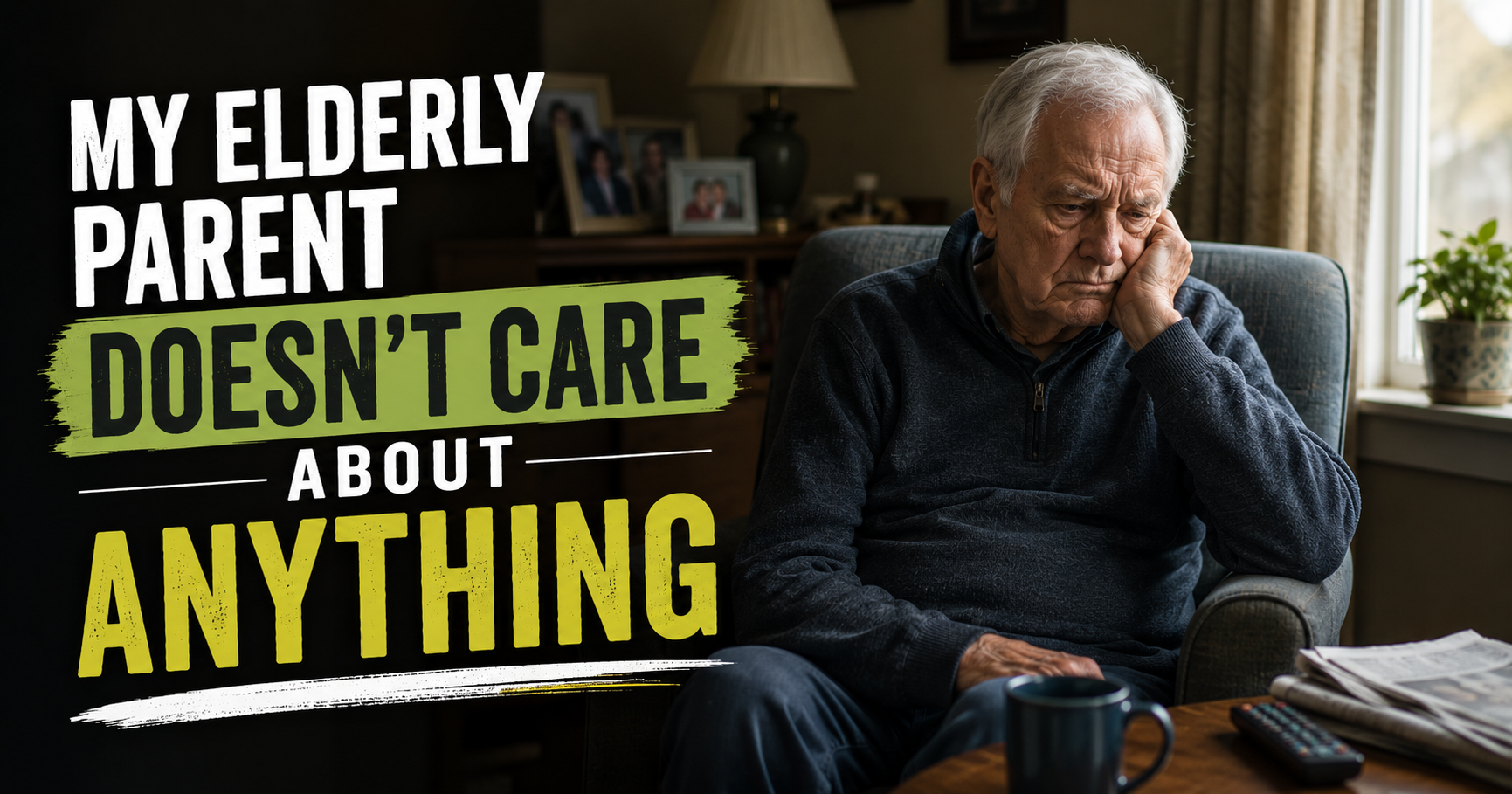
If your parent also seems to have lost interest in hobbies, family gatherings, or everyday routines, spend some time reading My Elderly Parent Doesn’t Care About Anything Anymore because low energy and loss of motivation frequently overlap in ways families don’t expect.


Sometimes The First Sign Is They Stop Going Places
One of the earliest clues I notice is that an older adult slowly begins turning down invitations.
Lunch with friends becomes “maybe next week.”
Church attendance becomes less regular.
Family dinners become shorter.
Eventually they stop going altogether.
Many families assume they simply prefer staying home.
Sometimes that’s true.
Other times, they’re staying home because they simply don’t have the energy they once had.
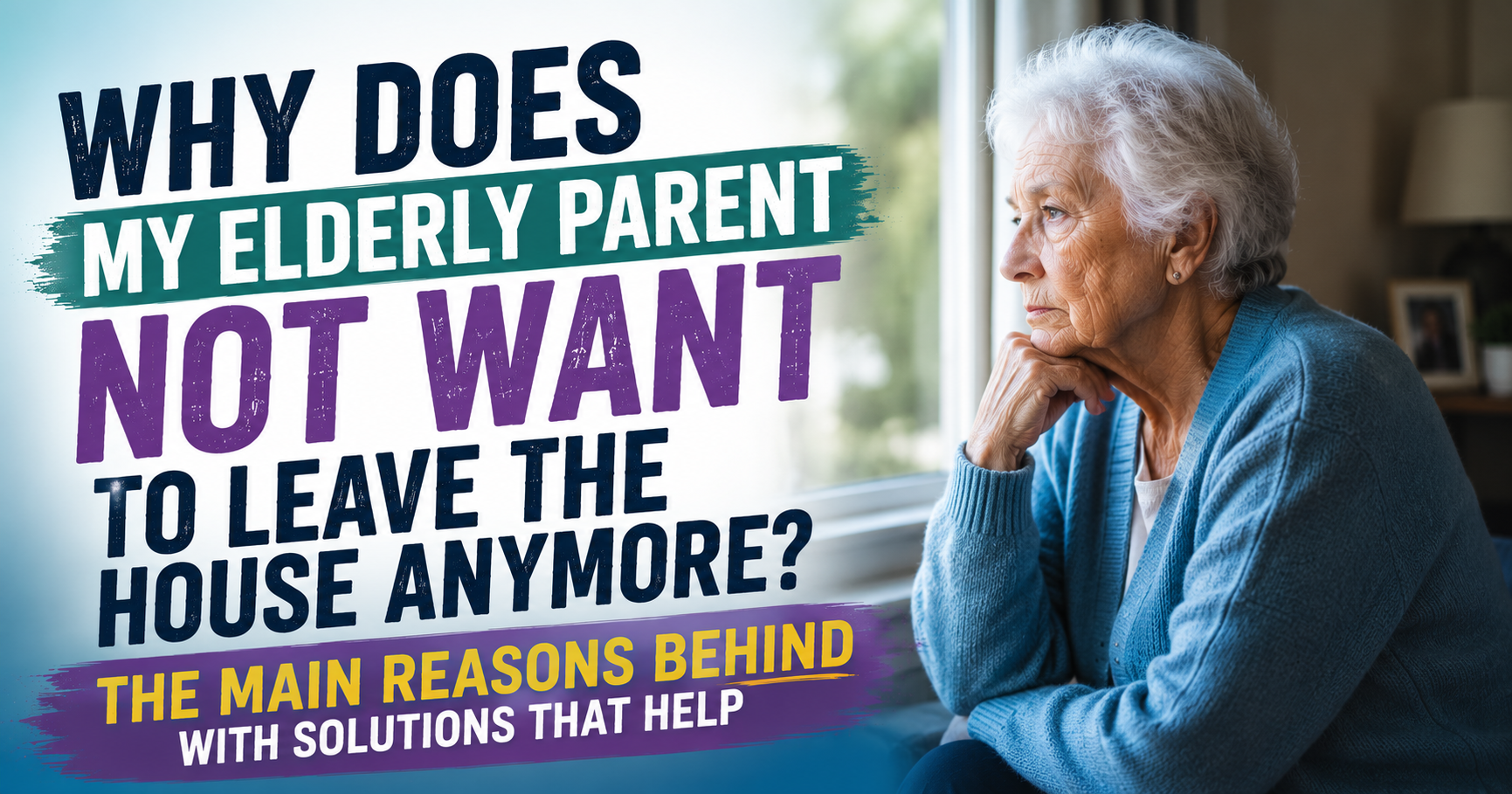
If you’ve noticed that your parent rarely wants to leave the house anymore, My Elderly Parent Doesn’t Want to Leave the House Anymore explains why that change deserves attention instead of being dismissed as a normal part of aging.
One Thing That Has Always Stood Out To Me
One thing I’ve noticed after talking with many caregivers is that almost nobody calls because of fatigue alone.
Instead, they say things like:
“Dad has no energy…and he’s sleeping all day.”
“Mom is always tired…and she’s losing weight.”
“He just sits in his chair now…and doesn’t answer the phone anymore.”
Those combinations matter.
Fatigue is often the symptom families notice first.
The real story usually becomes clear only after looking at everything else that’s changing.


Low Energy Can Sometimes Be A Sign Of Depression
One topic I never want families to overlook is depression.
Many people picture depression as someone crying or talking about feeling hopeless.
In older adults, it often looks completely different.
I’ve seen depression show up as someone sleeping more, eating less, avoiding friends, neglecting hobbies, and saying they just don’t have the energy to do anything anymore.
That’s one reason I never assume low energy is simply part of getting older.
Sometimes the body is tired.
Sometimes the mind is carrying a weight no one else can see.
The encouraging news is that depression is treatable, and recognizing it early can make a tremendous difference.
Dehydration Can Leave Someone Feeling Completely Drained
One thing that surprised me when I first started learning about older adults was how common dehydration really is.
Many seniors don’t feel thirsty the way they did when they were younger.
Others intentionally drink less because they’re worried about needing the bathroom too often.
Even mild dehydration can leave someone feeling weak, dizzy, tired, and mentally foggy.
If your parent suddenly seems to have very little energy, don’t overlook something as simple as asking how much they’re actually drinking throughout the day.
Sometimes the smallest habits make a much bigger difference than people expect.
Medication Side Effects Are Often Overlooked
Whenever an older adult suddenly starts feeling exhausted, I immediately wonder whether anything has changed with their medications.
A new prescription.
A dosage adjustment.
Even certain medications they’ve taken for years.
Some medicines can cause drowsiness.
Others can lower blood pressure enough to make standing or walking feel exhausting.
I’ve also seen situations where someone wasn’t taking medications correctly, making fatigue even worse.
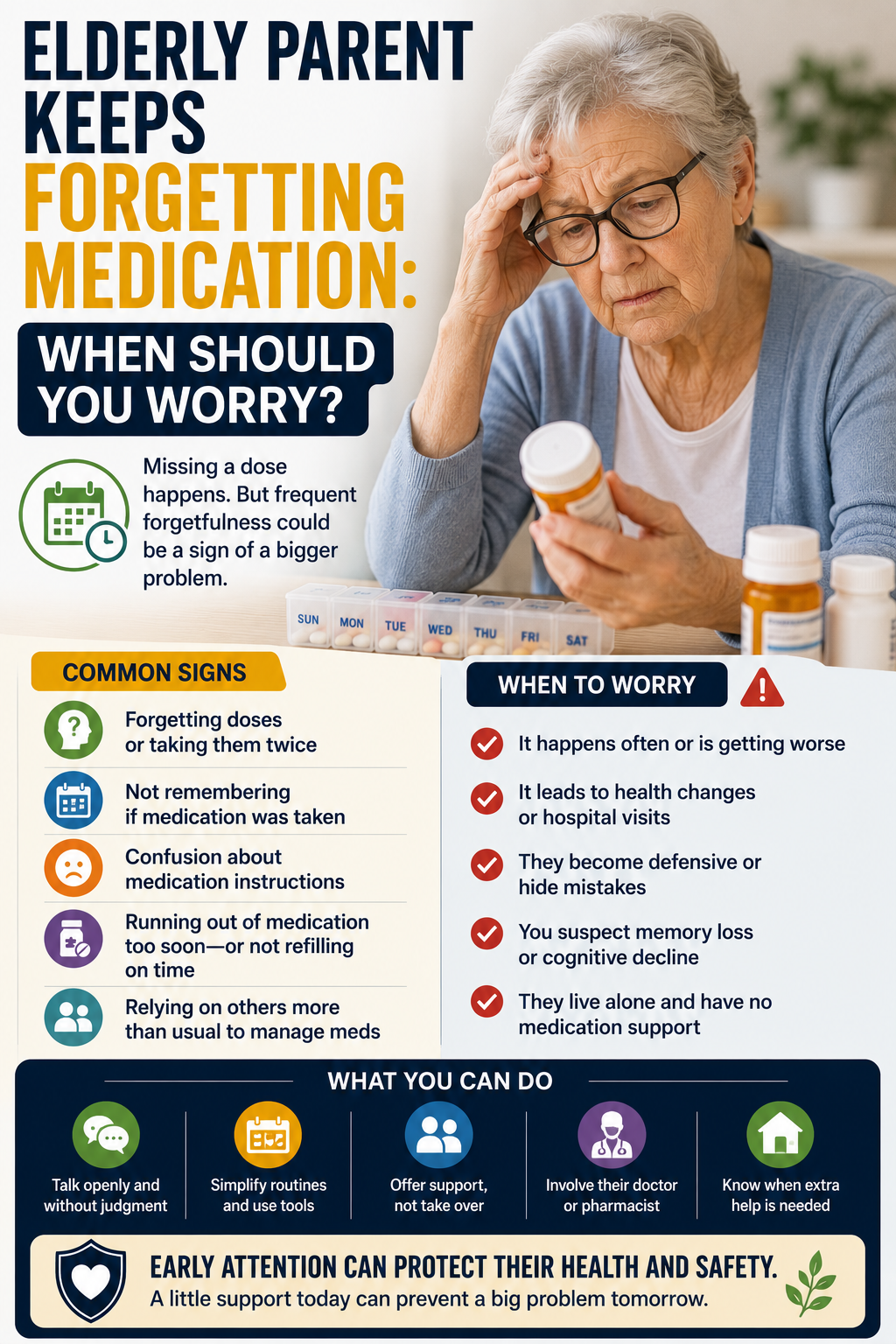
If medication routines have become confusing, I recommend reading My Elderly Parent Keeps Forgetting Medication. When Should You Worry? because missed doses, double doses, and medication confusion can all contribute to low energy.
Heart And Lung Problems Can Reduce Stamina
One thing families sometimes notice before anything else is that their parent becomes winded much more easily.
Walking across the yard.
Taking groceries inside.
Climbing a few steps.
Activities that once seemed effortless suddenly require several rest breaks.
That doesn’t automatically mean something serious is happening, but it does deserve attention, especially if the change is new or getting worse.
Whenever energy levels drop dramatically, it’s important to think about the whole picture instead of assuming age is the only explanation.
What This Looked Like In My Experience
One thing I’ve noticed after talking with many caregivers is that almost nobody calls because their parent is “just tired.”
Instead, they tell me something like this.
“My mom has no energy anymore, she’s sleeping until noon, barely eating, and doesn’t seem interested in seeing anyone.”
Or…
“My dad says he’s just getting older, but he’s lost weight, stopped fishing, and spends most of the day sitting in his recliner.”
It’s almost always several small changes happening together.
Each one seems manageable by itself.
Together, they tell a very different story.
That’s why I encourage families to step back and look at everything that’s changed over the past several months instead of focusing on one symptom alone.
What I Would Do If This Were My Own Parent
If this were my own mom or dad, I wouldn’t immediately start searching for one single cause.
I’d start gathering information.
I’d spend more time with them.
I’d notice how easily they move around the house.
I’d watch whether they become tired after simple activities.
I’d pay attention to what they’re eating.
I’d ask how they’re sleeping.
I’d notice whether they still enjoy conversations and hobbies.
Then I’d write those observations down before the next medical appointment.
Those details may seem small, but they often help healthcare providers recognize patterns that aren’t obvious during a short office visit.
Mistakes I See Families Make
One mistake is assuming that fatigue is simply something every older adult has to live with.
Sometimes that’s true.
Many times, it isn’t.
Another mistake is encouraging someone to simply “push through it.”
If low energy is being caused by illness, poor nutrition, medication side effects, depression, or another medical condition, pushing harder rarely solves the problem.
Finally, I see families focus so much on getting their parent moving again that they forget to ask why they stopped moving in the first place.
That question usually leads to much better answers.
When Fatigue Starts Affecting Safety
There comes a point when low energy becomes more than an inconvenience.
Someone who feels weak may avoid taking showers because they’re afraid of falling.
They may stop cooking because standing becomes exhausting.
They may skip grocery shopping because walking through the store feels overwhelming.
Those changes can slowly affect nearly every part of daily life.
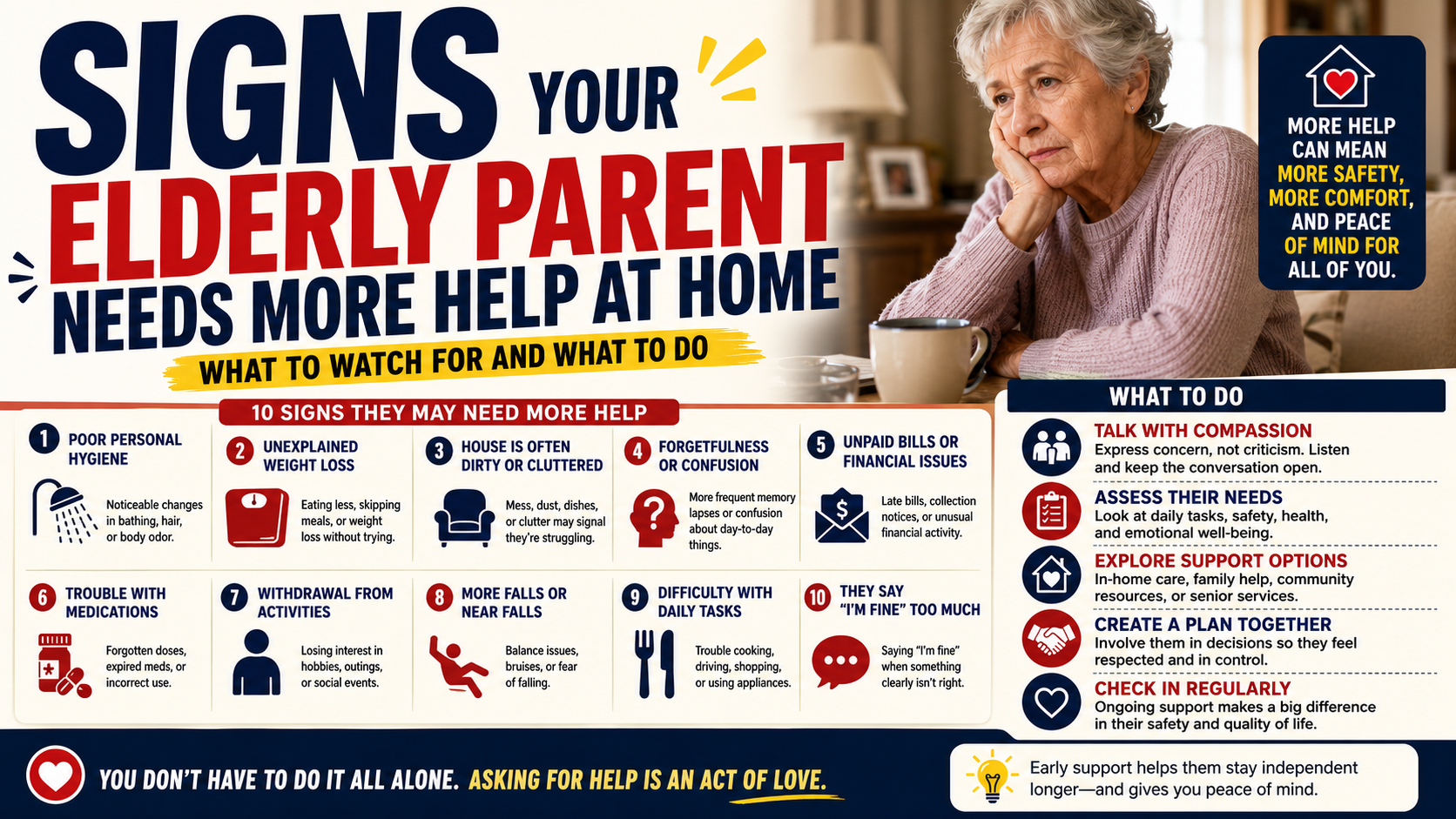
If you’re beginning to wonder whether your parent can safely continue living alone, Signs Your Elderly Parent Needs More Help at Home can help you recognize when several small concerns are becoming one larger issue.
For families who worry about falls or medical emergencies, this is also a good time to compare your guide to the best medical alert systems for seniors. The right system won’t restore someone’s energy, but it can provide peace of mind while helping them remain independent.
When I’d Encourage A Medical Evaluation
If my parent had been slowly slowing down over several years, I’d bring it up during the next routine appointment.
If the fatigue appeared suddenly, became much worse over a short period of time, or was accompanied by symptoms like chest pain, severe shortness of breath, fainting, confusion, or significant weight loss, I wouldn’t wait.
I’d contact their healthcare provider as soon as possible.
Sudden changes in energy deserve prompt attention because they’re sometimes the first visible sign of a medical problem that needs treatment.
Trust The Changes You’re Seeing
One thing I’ve learned is that adult children are often the first people to recognize subtle changes.
You know how active your parent used to be.
You know whether they were always outside working, visiting friends, or keeping busy.
If that’s changed, trust what you’re seeing.
Most older adults don’t wake up one morning with no energy.
The change usually develops gradually.
A shorter walk.
An extra nap.
One skipped outing.
A little less interest in hobbies.
Then one day you realize your parent has become a completely different version of themselves than they were six months ago.
That’s why paying attention matters.
Low energy isn’t always caused by something serious.
But it should never be dismissed simply because someone says, “I’m just getting old.”
The earlier families recognize these changes, the more opportunities they have to find answers, address treatable problems, and help the people they love continue living safe, active, and meaningful lives.
About the Author
Daniel Brooks is a senior care educator and contributing writer for Elder Safety Guide. He specializes in helping families recognize the early signs of declining health, reduced independence, and changes in daily functioning. His work focuses on practical caregiver education, aging in place, and helping adult children make confident decisions before small concerns become larger safety challenges.