

The first time I realized something had changed wasn’t because my mom told me she wasn’t hungry.
It was because I noticed her refrigerator looked exactly the same as it had the week before.
The milk hadn’t moved.
The leftovers were untouched.
The fruit bowl was still full.
When I asked if she’d eaten lunch, she smiled and said, “I just wasn’t very hungry today.”
At first, I didn’t think much of it.
But then I noticed the same answer the next week.
And the week after that.
Looking back, eating less wasn’t the real problem.
It was one of the first clues that something else was changing.
If you’ve found yourself wondering why your elderly parent won’t eat much anymore, you’re asking an important question. While appetite naturally changes with age, a noticeable loss of interest in food should never be dismissed without taking a closer look.

Appetite Naturally Changes As We Get Older
One thing I’ve learned is that many families assume every change in eating is a medical emergency.
Fortunately, that’s not always the case.
As people get older, they often become less active.
Their metabolism slows.
Taste and smell may not be as strong as they once were.
Because of that, many older adults simply don’t feel hungry as often.
A smaller appetite by itself isn’t always a problem.
The concern starts when the change is sudden or your parent begins eating far less than they normally would.


The Change Is Often More Important Than The Amount
I pay much more attention to changes than numbers.
Maybe your dad has always eaten small meals.
That’s probably normal for him.
But if someone who has always enjoyed breakfast suddenly starts skipping it every morning, that’s worth noticing.
Small changes are often the first clues that something bigger is happening.


Eating Alone Isn’t The Same
One thing that doesn’t get talked about enough is how much companionship affects eating.
Many seniors spent decades cooking for a spouse or raising a family.
After losing a husband or wife, preparing a full meal for one person simply doesn’t feel the same.
I’ve talked with older adults who admitted they stopped cooking almost entirely because they no longer saw the point.
Instead, dinner became crackers, toast, or a bowl of cereal.
Over time, those habits can lead to poor nutrition and declining health.
Weight Loss Often Follows
When someone consistently eats less, weight loss usually isn’t far behind.
Sometimes families notice loose clothing before they realize their parent has been skipping meals for weeks.

If you’ve already noticed your parent becoming thinner, I recommend reading My Elderly Parent Is Losing Weight but Says They’re Fine because unexplained weight loss is often connected to appetite changes.


Medication Side Effects Can Reduce Appetite
Certain medications affect much more than pain or blood pressure.
Some reduce appetite.
Others cause nausea or dry mouth.
Some leave a person feeling so tired that preparing food becomes exhausting.
I’ve also seen situations where medication mistakes contributed to eating problems because a parent wasn’t taking prescriptions correctly.
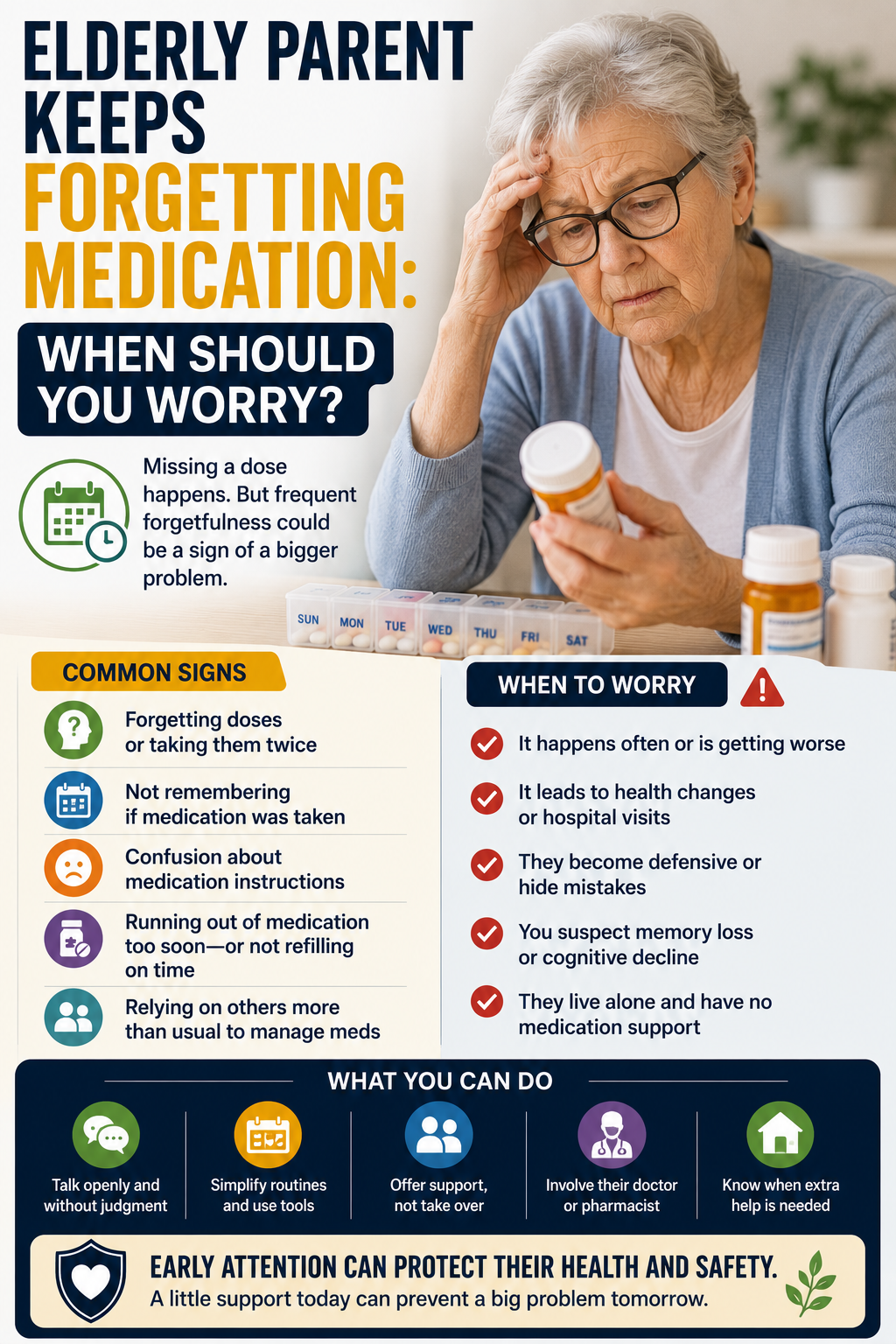
If that sounds familiar, my article on Elderly Parent Keeps Forgetting Medication When Should You Worry? explains why medication management deserves careful attention.
Dental Problems Make Eating Difficult
Families often overlook the mouth.
Loose dentures.
Sore gums.
Broken teeth.
Pain while chewing.
All of these can make eating uncomfortable.
Instead of talking about it, many seniors quietly avoid foods that are difficult to chew.
Eventually they begin eating less overall.
If your parent suddenly avoids meat, fresh vegetables, or crunchy foods, dental discomfort may be playing a role.


Trouble Swallowing Can Be Scary
Some older adults become afraid to eat because swallowing has become difficult.
They may cough while eating.
Take unusually small bites.
Drink excessive amounts of water with every meal.
Or avoid certain foods completely.
These changes deserve prompt medical attention because swallowing problems can increase the risk of choking and poor nutrition.
Hidden Health Problems Can Affect Appetite
Loss of appetite is sometimes one of the earliest signs that an older adult isn’t feeling well.
The challenge is that many seniors don’t tell anyone.
Instead, they quietly eat less and hope things improve.

If your parent insists everything is fine despite obvious changes, take a few minutes to read Signs Your Elderly Parent Is Hiding Health Problems From You. I’ve found that appetite changes are often only one piece of a much larger picture.


Depression Can Change Eating Habits
Depression doesn’t always look like sadness.
Sometimes it looks like a refrigerator full of untouched food.
Older adults experiencing depression often lose interest in activities they once enjoyed, including cooking and eating.
When I hear families say, “Mom just doesn’t seem interested in anything anymore,” I start wondering about more than appetite.
Fatigue Makes Meals Feel Like Work
Preparing a meal requires energy.
Shopping.
Cooking.
Cleaning.
Standing.
Washing dishes.
Someone who feels exhausted may skip meals simply because the entire process feels overwhelming.

If your parent has become much sleepier than they used to be, I recommend reading Why Is My Elderly Parent Sleeping All Day? because excessive fatigue and appetite changes often occur together.

Isolation Often Leads To Poor Nutrition
One thing I’ve noticed is that seniors who stop getting out of the house often begin eating less as well.
They aren’t stopping by the grocery store.
They’re not meeting friends for lunch.
They aren’t picking up fresh produce every few days.
Instead, they start relying on whatever happens to be in the pantry.
Over time, those choices can affect both nutrition and appetite.

If your parent rarely wants to leave home anymore, I recommend reading My Elderly Parent Doesn’t Want to Leave the House Anymore. Social isolation and poor eating habits often go hand in hand.
Memory Problems Can Affect Eating More Than Families Realize
Eating is something most of us do automatically.
But when memory begins changing, even simple routines can become difficult.
I’ve seen older adults forget whether they already ate lunch, become confused about what foods are in the refrigerator, or lose track of time and accidentally skip meals altogether.
Sometimes they simply don’t recognize that they’re hungry until much later in the day.

If you’ve also noticed repeated conversations, forgotten appointments, or other memory changes, take a look at My Elderly Parent Keeps Repeating the Same Stories. Small memory changes often appear long before families realize how much daily life has been affected.
Watch The Kitchen Instead Of Asking Questions
One thing I’ve learned is that kitchens usually tell the truth.
A parent might tell you they’re eating just fine.
Meanwhile, you notice:
- Fresh food spoiling before it’s opened.
- Expired milk sitting in the refrigerator.
- Very little fresh produce.
- Empty cabinets.
- Frozen dinners stacked in the freezer.
Those observations often provide more helpful information than asking, “Have you been eating?”
Try to observe without making your parent feel like they’re being inspected.
Dehydration Often Happens Alongside Poor Eating
Families usually focus on food.
Water often gets forgotten.
Many older adults simply don’t feel thirsty the way they once did.
If someone is eating less and drinking less at the same time, fatigue, dizziness, weakness, and confusion can become much worse.
Pay attention to whether water glasses stay full throughout the day or if beverages are barely touched.
What If They Say They Aren’t Hungry?
This is probably the answer I hear most often.
“I’m just not hungry.”
That may be true.
But I’d still want to understand why.
Rather than saying, “You need to eat more,” try asking gentle questions.
“What sounds good today?”
“Have foods been tasting different lately?”
“Would you rather eat smaller meals more often?”
Questions invite conversation.
Arguments usually end it.
When Should You Become Concerned?
I become much more concerned when poor appetite appears alongside other changes such as:
- Noticeable weight loss.
- Sleeping much more than usual.
- Frequent falls.
- Forgetting medications.
- Poor personal hygiene.
- Increasing confusion.
- Isolation from family and friends.
- Changes in personality.
Several of those together usually tell me this isn’t simply about food anymore.
Don’t Ignore Changes In Behavior
Sometimes the appetite problem isn’t actually about eating.
It’s part of a larger change in how your parent is functioning day to day.
Maybe they’ve become quieter.
Less interested in hobbies.
More forgetful.
Or they simply don’t seem like themselves anymore.

If you’ve had that feeling recently, I encourage you to read My Elderly Parent Is Acting Different All of a Sudden What to Do. Looking at behavior as a whole often provides valuable clues that families might otherwise miss.
What You Can Do To Help
One thing I’ve learned is that small changes are usually easier to accept than major ones.
Instead of immediately trying to overhaul your parent’s diet, start with simple ideas.
You might:
- Share a meal together once or twice each week.
- Offer foods they’ve always enjoyed.
- Keep healthy snacks within easy reach.
- Ask whether grocery shopping has become difficult.
- Encourage a medical checkup if the appetite change is new.
The goal isn’t forcing someone to eat.
The goal is understanding why they’ve stopped.
Trust What You’re Seeing
Many families tell me they worried they were overreacting.
Then, months later, they discovered there really had been an underlying problem.
That’s why I encourage people to trust their observations.
If your parent suddenly isn’t eating the way they always have, don’t dismiss it simply because they insist they’re fine.
Small changes often appear long before a medical diagnosis.
Paying attention now may help prevent a much bigger problem later.
About the Author
Rachel Bennett is a senior care educator and contributing writer for Elder Safety Guide. She focuses on healthy aging, nutrition, caregiver education, and helping families recognize the early warning signs that an older adult may need additional support. Her goal is to provide practical, compassionate guidance that helps seniors maintain their independence while giving families the confidence to act before small concerns become major challenges.