A walk-in shower is one of the highest-impact aging in place upgrades available. Here’s what to look for, what it costs, and whether it’s the right move for your bathroom.
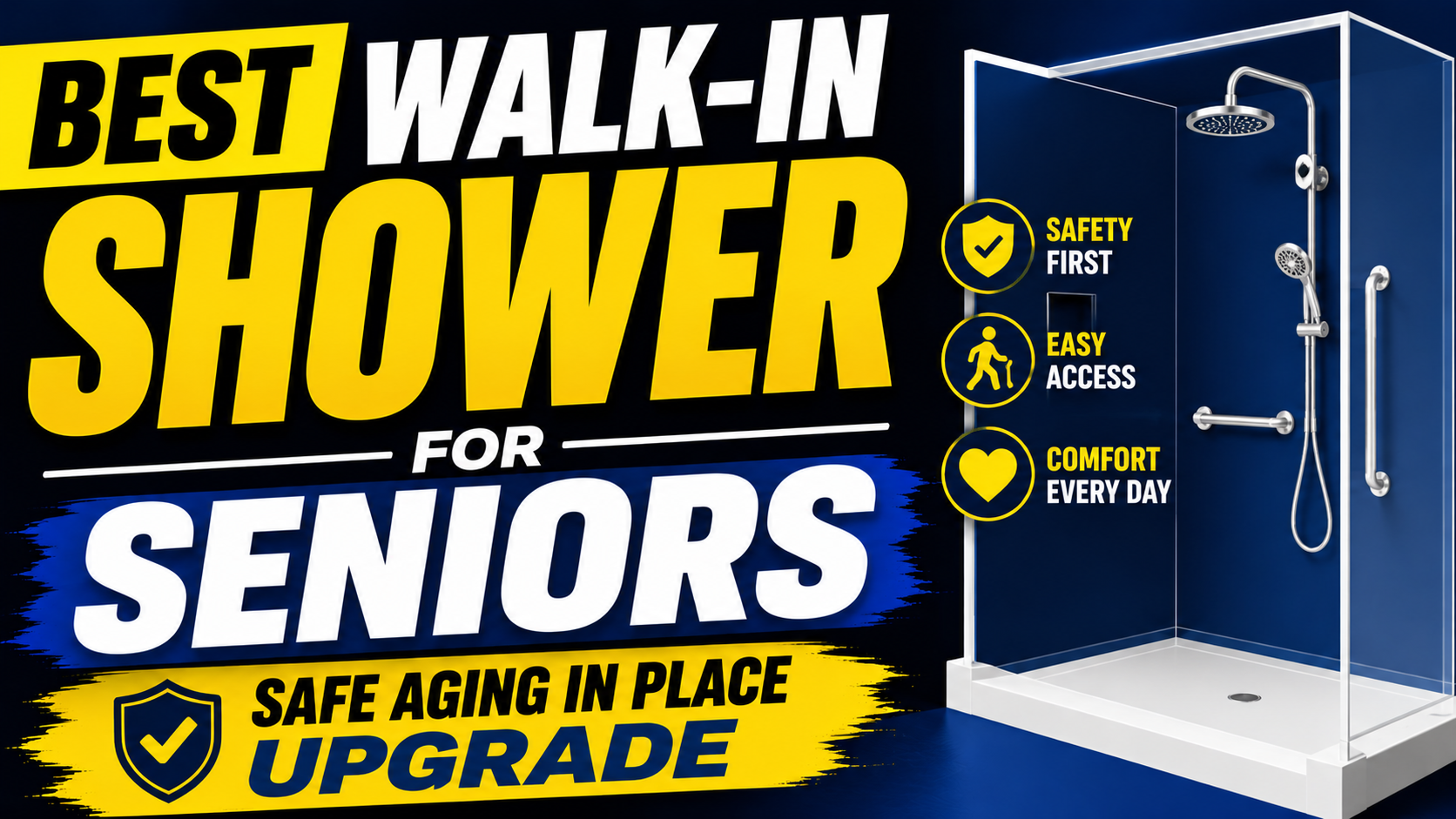
Of all the home modifications available for aging in place, a walk-in shower conversion consistently ranks as one of the highest-impact and most appreciated upgrades. Not because it’s the cheapest — it isn’t. Not because it’s the easiest — it requires real construction. But because it addresses the single most dangerous room in the home in the most complete way available, and because the daily quality-of-life improvement is immediately and permanently noticeable.
A curbless walk-in shower eliminates the step-over threshold that makes standard shower and tub entry one of the most fall-prone daily transitions for older adults. No threshold to step over. No awkward one-legged balance moment. Walk in. Shower. Walk out. The dangerous transition simply doesn’t exist anymore.
This guide covers what a walk-in shower conversion involves, what it costs, what features matter most for senior safety, and how to decide whether it’s the right upgrade for your specific situation.
Walk-In Shower vs Standard Shower — What Actually Changes
The term walk-in shower gets used loosely so it’s worth being specific about what the meaningful distinction is for senior safety.
The Threshold — The Key Difference
A standard shower has a threshold — a raised edge typically 2 to 4 inches high that must be stepped over to enter. For a younger person this is unremarkable. For an older adult with any balance reduction, hip tightness, or reduced leg lift capacity, stepping over a threshold while simultaneously managing wet surfaces and a small enclosed space is a genuine fall risk that happens every single day.
A curbless shower — the gold standard for aging in place bathroom design — has no threshold. The shower floor is flush with the bathroom floor, with a gentle slope toward the drain. Entry requires only walking forward. No step. No balance challenge. No fall risk at the transition.
This single design difference is what makes walk-in shower conversion one of the highest-impact aging in place modifications available. It eliminates a daily fall risk that nothing else short of a complete shower redesign can address.
Low-Threshold vs Zero-Threshold
Not all walk-in showers are fully curbless. Some have a low threshold — 1 inch or less — rather than a completely flush floor. For most older adults a 1-inch threshold is manageable — substantially safer than a standard 2 to 4-inch threshold while being simpler to waterproof than a fully flush design.
A fully flush zero-threshold shower is the ideal for long-term aging in place and for wheelchair accessibility. A low-threshold shower is a meaningful improvement at lower construction complexity.
What Makes a Walk-In Shower Safe for Seniors
The threshold elimination is the primary safety feature — but a complete safe shower setup for seniors includes several elements working together. Our complete guide on safe shower setup for elderly adults covers the full picture. Here’s what matters specifically in a walk-in shower design.
Grab Bars — Correctly Positioned
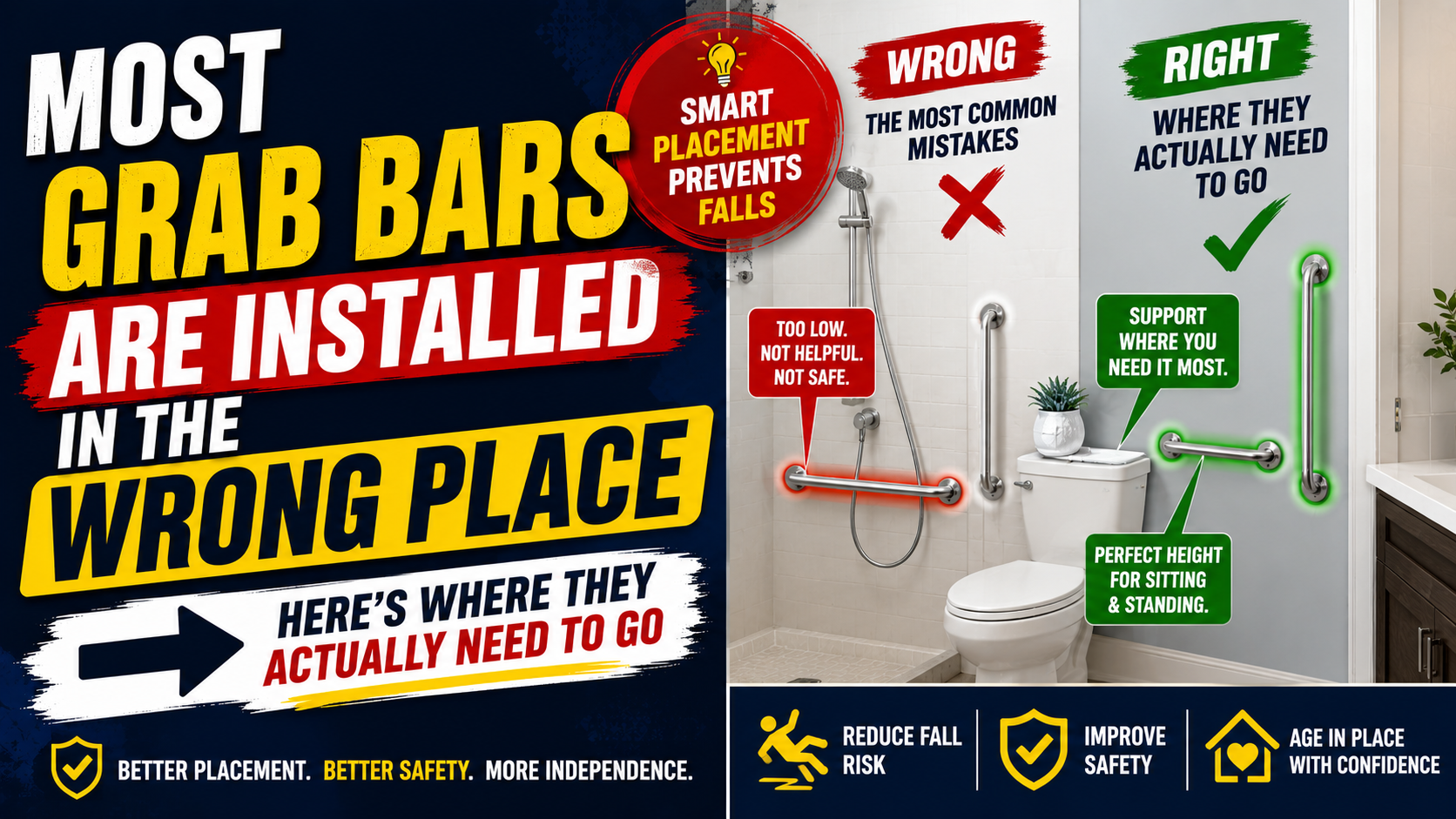
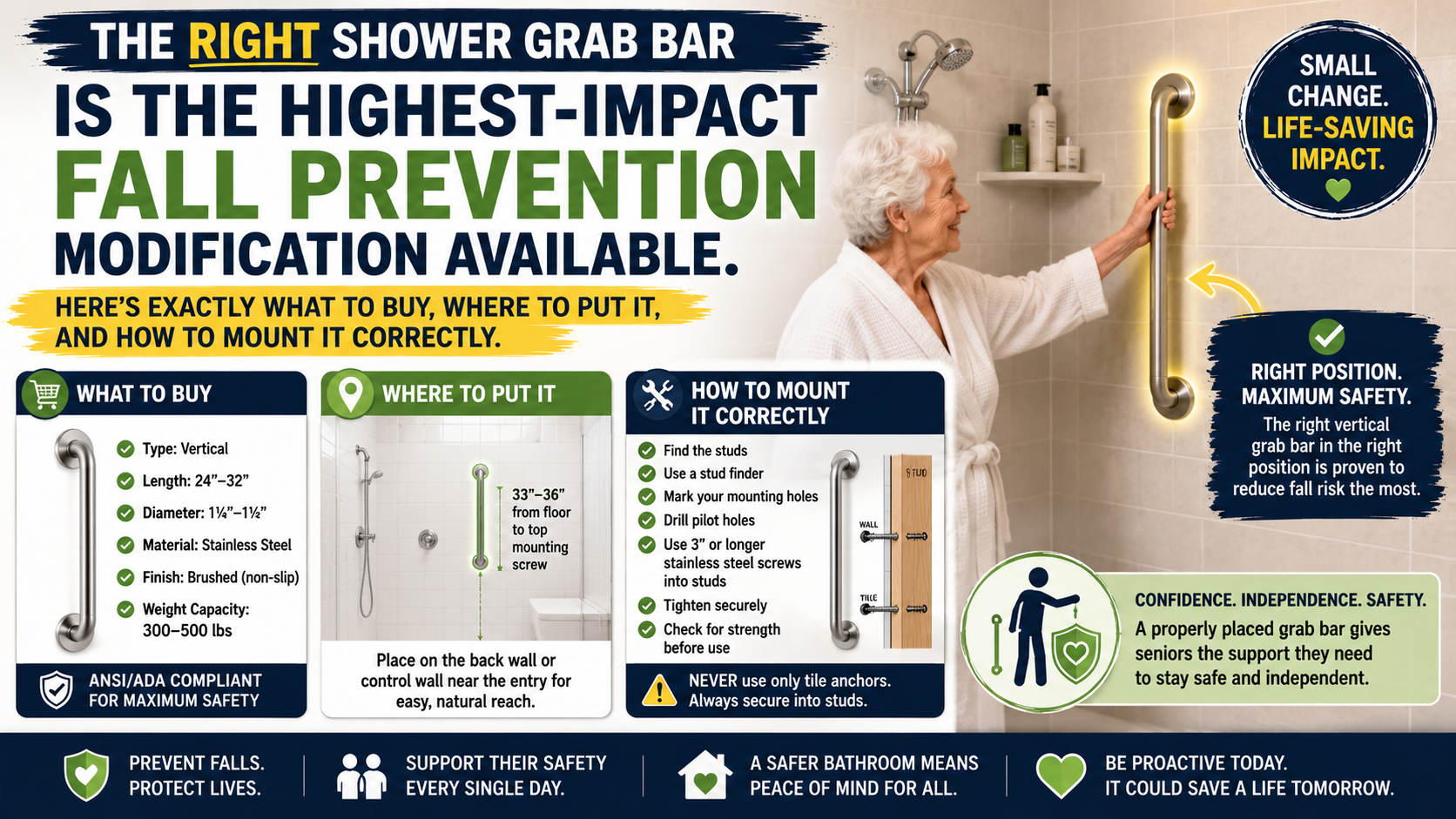
A walk-in shower without grab bars addresses the entry transition but not the stability needs during showering itself. Every walk-in shower for senior use should include grab bars at specific positions — at the shower entry, on the back wall at hip height, and on the side wall near the shower chair if one is used.
Grab bars must be mounted into wall studs or with appropriate load-rated anchors — not into tile alone. This is one of the most common installation mistakes and one that turns a safety feature into a hazard when it fails under body weight.
Our review of the best grab bars for seniors covers the specific products worth buying. Our grab bar placement guide covers exact positions with measurements.
Read our review: Best Grab Bars for Seniors — What to Buy and Where to Put Them
Built-In Shower Seat
A built-in teak or tile bench seat — designed into the shower during construction — is superior to a freestanding shower chair in several ways. It doesn’t move. It doesn’t take up floor space when not in use. It looks like part of the bathroom rather than a medical addition. And it’s available every time it’s needed without requiring setup.
Built-in seats should be positioned at a height that allows comfortable sitting with feet flat on the floor — typically 17 to 19 inches from the shower floor. Depth of at least 15 inches allows comfortable seated showering. A fold-down wall-mounted seat is an alternative for smaller showers where floor space is limited.
For existing showers where a built-in seat isn’t being added, a quality freestanding shower chair provides the same seated showering safety benefit. Our review of the best shower chair for seniors covers the portable option we recommend.
→ Get the Shower Chair on Amazon
Non-Slip Shower Floor
A curbless floor design requires careful attention to the shower floor surface — because the floor that provides drainage also needs to provide traction. Smooth tile becomes dangerously slippery when wet. Textured tile, small-format tile with more grout lines, or non-slip tile specifically designed for wet areas provides the traction that keeps the fall risk low throughout the shower — not just at the entry.
The slope toward the drain should be gentle enough to be barely noticeable during showering — typically 1/4 inch per foot — but consistent enough to keep water moving toward the drain rather than pooling on the floor.
Handheld Shower Head
A handheld shower head — detachable from its mount and directable during use — transforms the shower experience for anyone using a shower seat. Rinsing becomes possible without repositioning under a fixed spray. It also makes caregiver-assisted showering significantly more manageable when that becomes necessary.
A long hose — 60 inches minimum — provides the range needed for comfortable use from both seated and standing positions. A pause function that stops flow without losing the temperature setting reduces water waste during the shower.
Proper Drainage
A curbless shower requires a drain system capable of handling the full shower flow without water escaping onto the bathroom floor — because there’s no threshold to contain it. Linear drains along one wall or point drains in the center both work with different floor slope configurations. The drain capacity and floor slope need to be designed together to ensure the shower functions correctly.
This is one of the areas where professional design and installation matters most — a curbless shower with inadequate drainage isn’t just ineffective, it creates water damage to the bathroom floor and subfloor over time.
Adequate Shower Size
A walk-in shower for senior use should be large enough to accommodate a shower seat and maneuver comfortably — minimum 36 by 36 inches, with 36 by 48 inches or larger being more practical. For wheelchair accessibility, 60 by 30 inches with a roll-in configuration is the standard. More space is better — a shower that feels cramped discourages use of the seat and makes the space harder to navigate.


Walk-In Shower Conversion — What It Involves
A walk-in shower conversion is a real construction project. Understanding what it involves helps set realistic expectations for cost, timeline, and disruption.
Converting From a Standard Shower
Converting an existing standard shower to a curbless walk-in involves removing the existing threshold and potentially the existing shower pan, waterproofing the floor area appropriately for a curbless design, ensuring adequate drainage slope toward the drain, installing new tile or non-slip flooring, and adding grab bars and a built-in seat if included. This is typically a one to three day project for an experienced bathroom contractor.
Converting From a Tub/Shower Combination
Converting a standard tub/shower combination to a walk-in shower is a more significant project — removing the tub, reconfiguring the plumbing if needed, waterproofing a larger area, and building out the shower enclosure. This is typically a two to five day project and involves more significant plumbing work than a shower-only conversion.
This conversion also permanently removes the bathtub — worth considering whether soaking baths are something the household wants to retain. For those who want both a walk-in shower and bathing capability, our review of the walk-in bathtub covers the option that provides tub bathing with safe entry.
Professional Installation Is Non-Negotiable
A walk-in shower conversion is not a DIY project for most homeowners. Waterproofing a curbless shower — ensuring water doesn’t penetrate the subfloor — requires specific materials and techniques that must be applied correctly. An improperly waterproofed curbless shower creates water damage that can be expensive to repair and may require tearing out the shower to address. Hire a licensed contractor with specific bathroom renovation experience and references for walk-in shower work.
Walk-In Shower Cost — What to Expect
Cost varies significantly based on the scope of conversion, existing bathroom configuration, materials chosen, and local labor rates. Here are realistic ranges.
Standard Shower to Curbless Walk-In
- Basic conversion — threshold removal, drainage modification, basic tile: $1,500 to $3,000
- Mid-range conversion — full floor replacement, quality tile, grab bars, handheld shower head: $3,000 to $6,000
- Full renovation — complete shower rebuild, built-in seat, premium tile, linear drain, all safety features: $6,000 to $12,000
Tub/Shower to Walk-In Shower Conversion
- Basic conversion — tub removal, shower enclosure, basic tile: $3,000 to $6,000
- Mid-range conversion — full build-out with quality materials and safety features: $6,000 to $10,000
- Premium conversion — large format tile, linear drain, built-in seat, frameless glass, all features: $10,000 to $20,000+
What Drives Cost Up
- Existing plumbing that needs reconfiguration
- Subfloor damage discovered during demolition
- Premium tile and materials
- Frameless glass enclosure vs curtain or framed glass
- Built-in bench seat vs freestanding chair
- Linear drain vs point drain
- High local labor rates
What Drives Cost Down
- Keeping existing plumbing locations
- Standard tile sizes and materials
- Curtain or basic framed glass rather than frameless
- Freestanding shower chair rather than built-in seat
- Existing bathroom in good condition with no surprises



Walk-In Shower vs Walk-In Bathtub — Which Is Right
For families deciding between a walk-in shower conversion and a walk-in bathtub installation, the decision comes down primarily to whether soaking baths are important to the person’s daily routine and wellbeing.
Choose walk-in shower if:
- Showering is the primary bathing method
- The person doesn’t particularly value soaking baths
- The bathroom needs to remain functional for other household members
- Budget favors the lower cost of shower conversion over bathtub installation
Choose walk-in bathtub if:
- Soaking baths are an important part of daily comfort and routine
- The person specifically wants the bathing experience rather than showering
- Therapeutic hydrotherapy jets are desired
Our complete review of the walk-in bathtub covers the FerdY Floridian option in full detail for families where soaking baths matter.
Modifications That Work Alongside a Walk-In Shower
A walk-in shower addresses shower entry and showering safety. The complete bathroom safety picture includes additional elements that work alongside it.
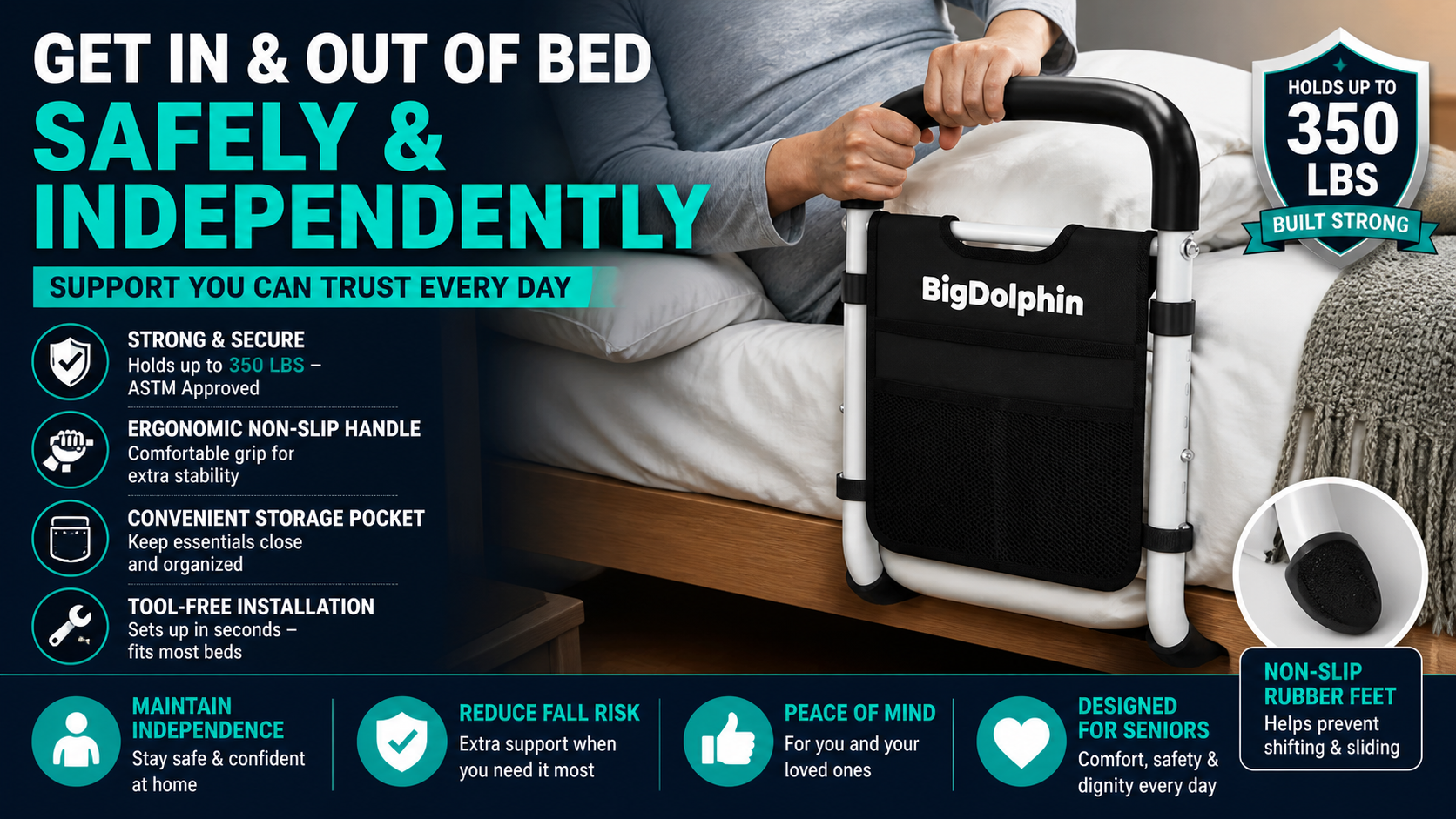
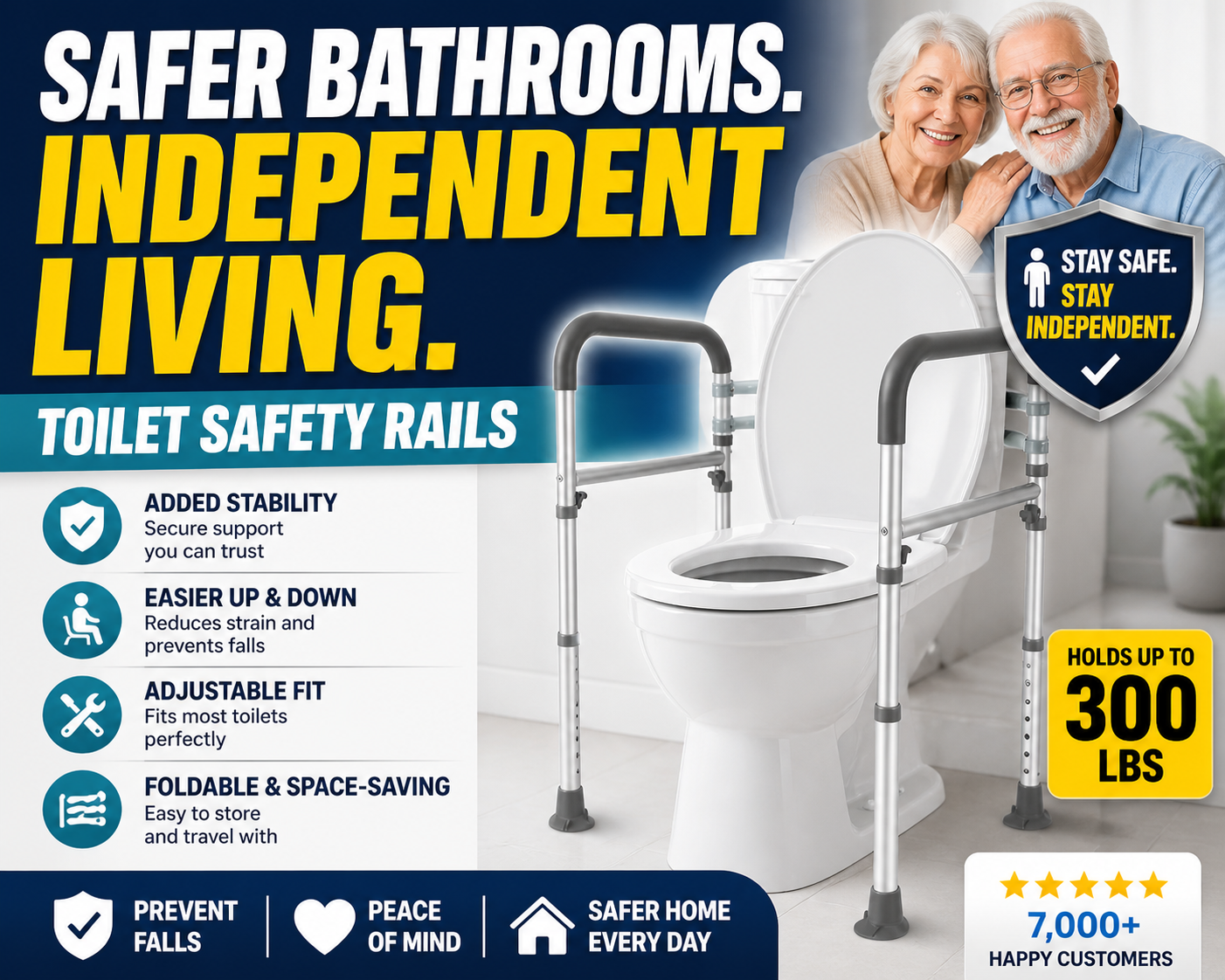
Toilet safety rails address the multiple daily toilet transfers that are independently risky. Our review of the best toilet safety rails covers the option that installs without tools.
→ Get the Toilet Safety Rails on Amazon
Read our review: Best Toilet Safety Rails for Seniors
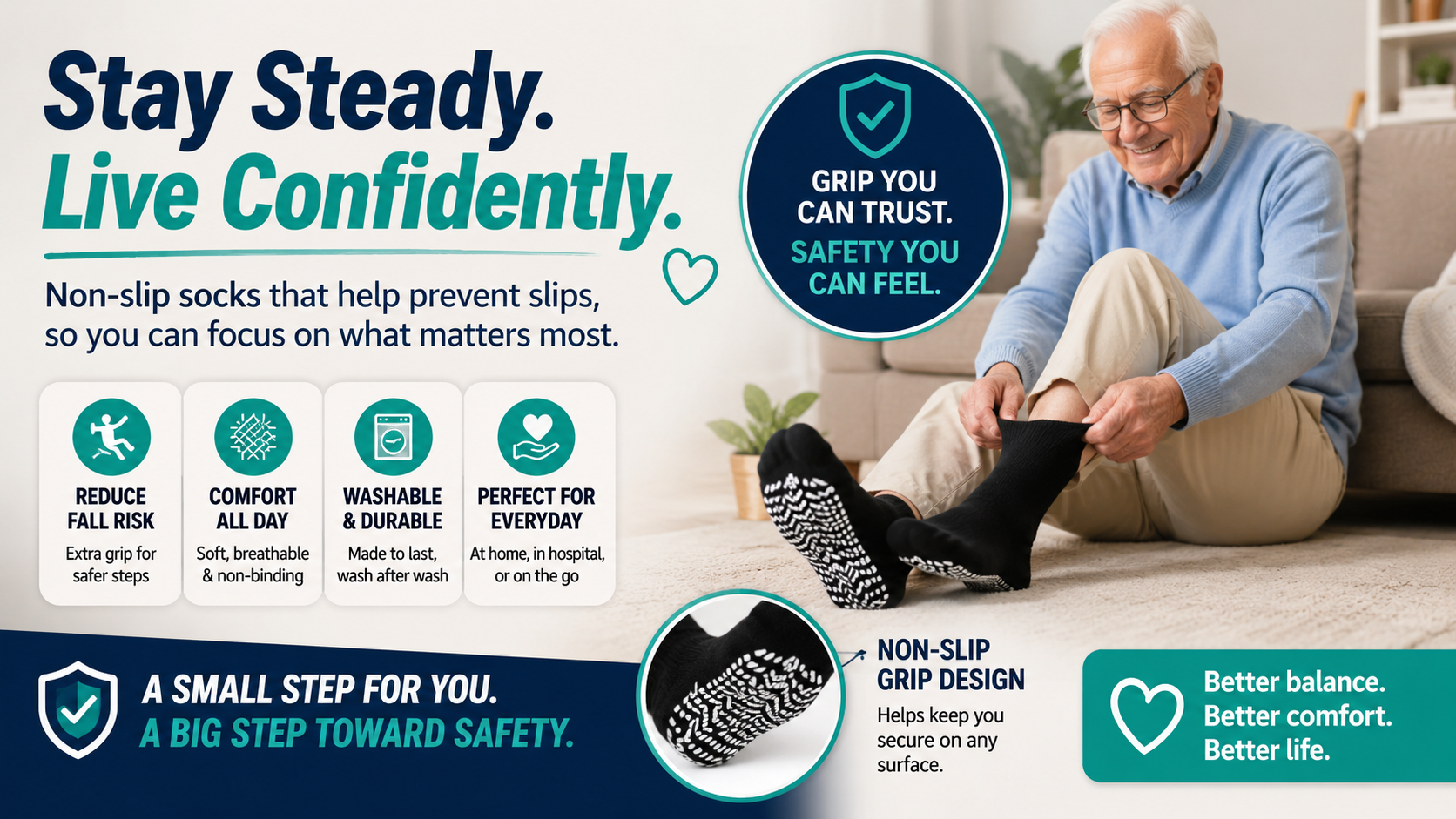
Non-slip bath mat outside the shower exit addresses the step-out transition. Our review of the best non-slip bath mat for seniors covers why most mats fail and what actually works.
→ Get the Diatomaceous Earth Bath Mat on Amazon
Read our review: Best Non-Slip Bath Mat for Seniors
Night lighting ensures the bathroom is never completely dark for nighttime visits. Our review of the best auto-on rechargeable lights covers the option that works as a night light and power outage light simultaneously.
→ Get the Auto-On Night Lights on Amazon
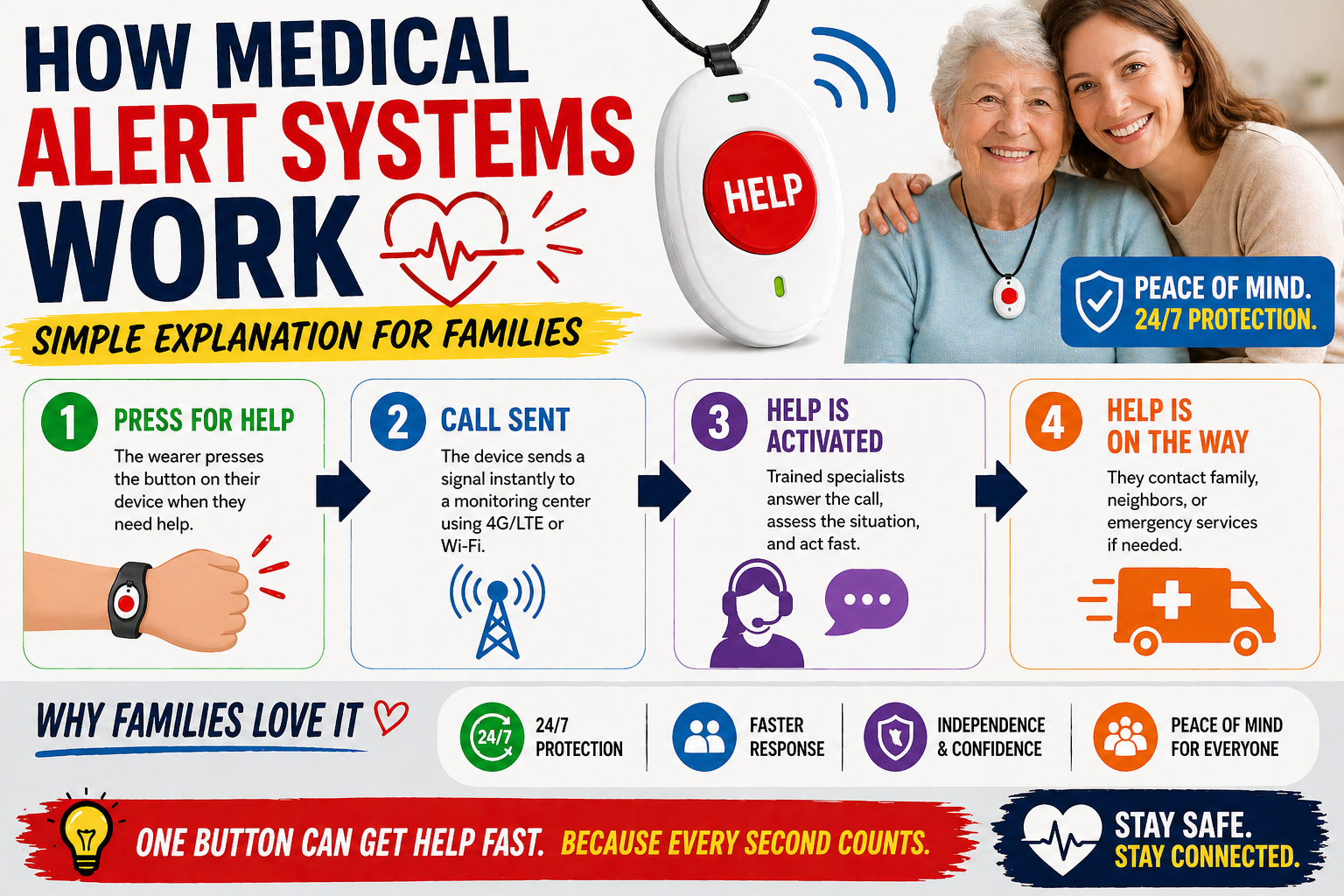
Medical alert device ensures that if a fall occurs despite every modification, help is called immediately. The SecuLife Smartwatch is worn on the wrist — including in the bathroom — and detects falls automatically. Our full review: SecuLife Smartwatch Review
→ Get the SecuLife Smartwatch on Amazon
Funding and Assistance for Walk-In Shower Conversions
A walk-in shower conversion is a significant expense that assistance programs may help offset for eligible individuals.
Veterans may access home modification funding through the VA’s Specially Adapted Housing grant program and the Home Improvements and Structural Alterations benefit. Contact the VA directly or work with a VA-accredited claims agent to understand eligibility.
Medicaid waiver programs in many states cover home modifications for eligible recipients — contact your state’s Medicaid office or local Area Agency on Aging.
USDA Rural Development offers grants and loans for home repairs including accessibility modifications for eligible rural homeowners.
State and local programs vary significantly — the Eldercare Locator (1-800-677-1116) connects families with local resources including home modification assistance programs.
HSA and FSA funds may be applicable with appropriate medical documentation — confirm with your account administrator before assuming eligibility.

Walk-In Shower Planning Checklist
- ☐ Existing shower or tub/shower combination assessed — which conversion type is appropriate
- ☐ Minimum shower dimensions confirmed — 36×36 minimum, larger preferred
- ☐ Curbless vs low-threshold design decided based on budget and waterproofing complexity
- ☐ Drain type selected — linear or point, appropriate for floor slope configuration
- ☐ Non-slip tile specified for shower floor
- ☐ Grab bar positions planned — entry, back wall, near seat
- ☐ Built-in seat or freestanding chair decided
- ☐ Handheld shower head included in design
- ☐ Licensed contractor with walk-in shower experience identified — minimum three quotes
- ☐ Assistance program eligibility checked
- ☐ Interim safety measures in place during construction — shower chair in alternative bathroom
Frequently Asked Questions
How long does a walk-in shower conversion take?
A standard shower to curbless conversion typically takes one to three days of contractor work. A tub/shower to walk-in shower conversion typically takes three to five days. A full bathroom renovation including the walk-in shower can take one to three weeks depending on scope and contractor schedule. During construction the bathroom is typically unavailable — having an alternative bathroom available or arranging temporary alternatives is important for households with only one bathroom.
Will a walk-in shower reduce my home’s resale value?
In most markets a well-executed walk-in shower conversion maintains or increases home value — it’s a desirable feature for a broad range of buyers including the growing aging-in-place demographic. A poorly executed conversion with waterproofing issues can create problems. Tub removal is the main consideration for families with young children who want a home with bathing options — in a multi-bathroom home this is less of a concern. In a single-bathroom home without any other tub option it may affect appeal to families with young children.
Can I add a walk-in shower to a small bathroom?
Yes — but minimum dimensions matter. A shower of less than 36 by 36 inches is too small for safe senior use with a shower seat. In very small bathrooms a fold-down wall-mounted shower seat rather than a freestanding chair or built-in bench maximizes usable space. A bathroom remodeling contractor experienced with accessibility modifications can advise on the best configuration for your specific space.
Is a walk-in shower safe for someone who uses a wheelchair?
A curbless or zero-threshold shower designed with adequate width — minimum 60 inches for wheelchair roll-in — and a fold-down shower seat provides wheelchair-accessible bathing. The shower also needs a handheld shower head, grab bars at appropriate heights for seated use, and a non-slip floor. An occupational therapist specializing in accessibility can provide specific recommendations for individual wheelchair users and their specific functional needs.
What’s the difference between a walk-in shower and a roll-in shower?
A roll-in shower is a specific type of walk-in shower designed for wheelchair users — with sufficient width for a wheelchair to enter and maneuver inside, typically 60 inches or wider, and with all design elements optimized for wheelchair use including lower grab bar heights and appropriate shower head positioning. A walk-in shower is the broader category that includes any shower without a threshold or with a very low threshold — not all of which are sized or designed for wheelchair access. For ambulatory seniors a standard walk-in shower is typically adequate. For wheelchair users a specifically designed roll-in configuration is needed.
For tub entry specifically — a transfer bench is the solution most families don’t know exists. Rather than stepping over the tub wall, the person sits outside the tub and slides across to the inside position. No step-over required. Our complete guide on the Best Transfer Bench for Seniors covers who needs one, what features matter, and the specific option we recommend.
A handheld shower head makes every other shower modification more effective — directing the spray where the body is rather than requiring the body to move to the spray. For shower chair users and anyone with limited mobility it’s one of the highest impact-to-cost upgrades available. Our review of the AquaCare Handheld Shower Head covers the six-foot hose, eight spray modes, and anti-clog design that make it the top pick for senior bathrooms.


The Upgrade Worth Making
A walk-in shower conversion is one of the few home modifications that improves both daily safety and daily quality of life simultaneously — making showering safer AND more comfortable and enjoyable. For a modification that gets used every single day that combination of benefits is exceptional.
It costs more than a shower chair or grab bars. It requires real construction rather than a weekend project. But for families planning to stay in their home long-term it’s one of the most enduring investments available in aging in place home modification — providing daily benefits for as long as the home is lived in.
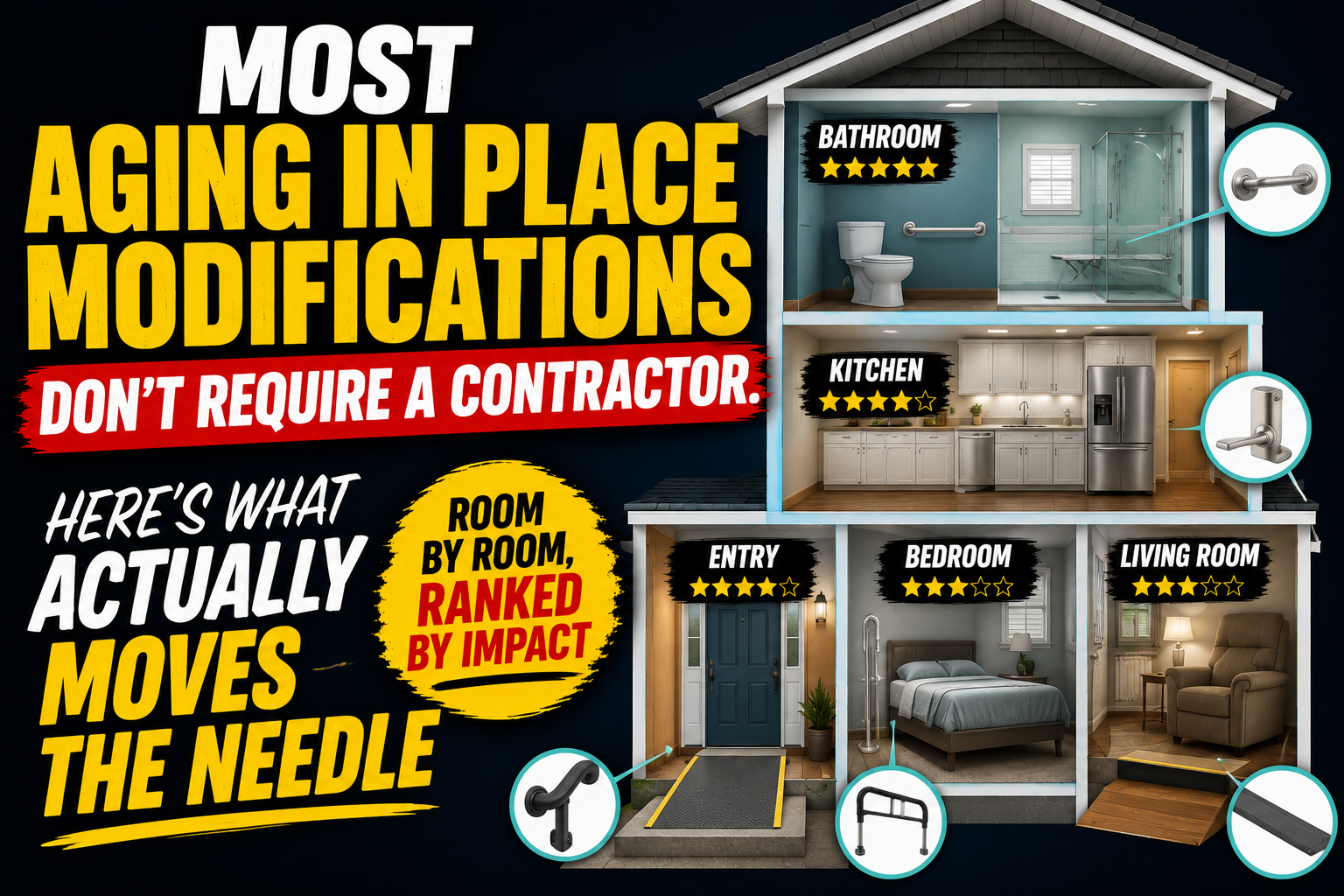
Start with the modifications that don’t require construction — grab bars, shower chair, non-slip mat — while planning the walk-in shower conversion. The immediate modifications address the risk now. The conversion addresses it permanently.
→ Get the Grab Bars on Amazon — while you plan the bigger renovation
→ Get the Shower Chair on Amazon — immediate seated showering safety
→ Get the SecuLife Smartwatch on Amazon — the safety net for every bathroom visit
About the Author
Carol Simmons is a Certified Aging-in-Place Specialist (CAPS) who has specified and overseen dozens of walk-in shower conversions as part of comprehensive aging in place home modifications. She writes for Elder Safety Guide to give families the honest, complete guidance they need to make informed decisions about significant home investments — including what these projects actually cost, what they actually involve, and when they’re genuinely worth it.