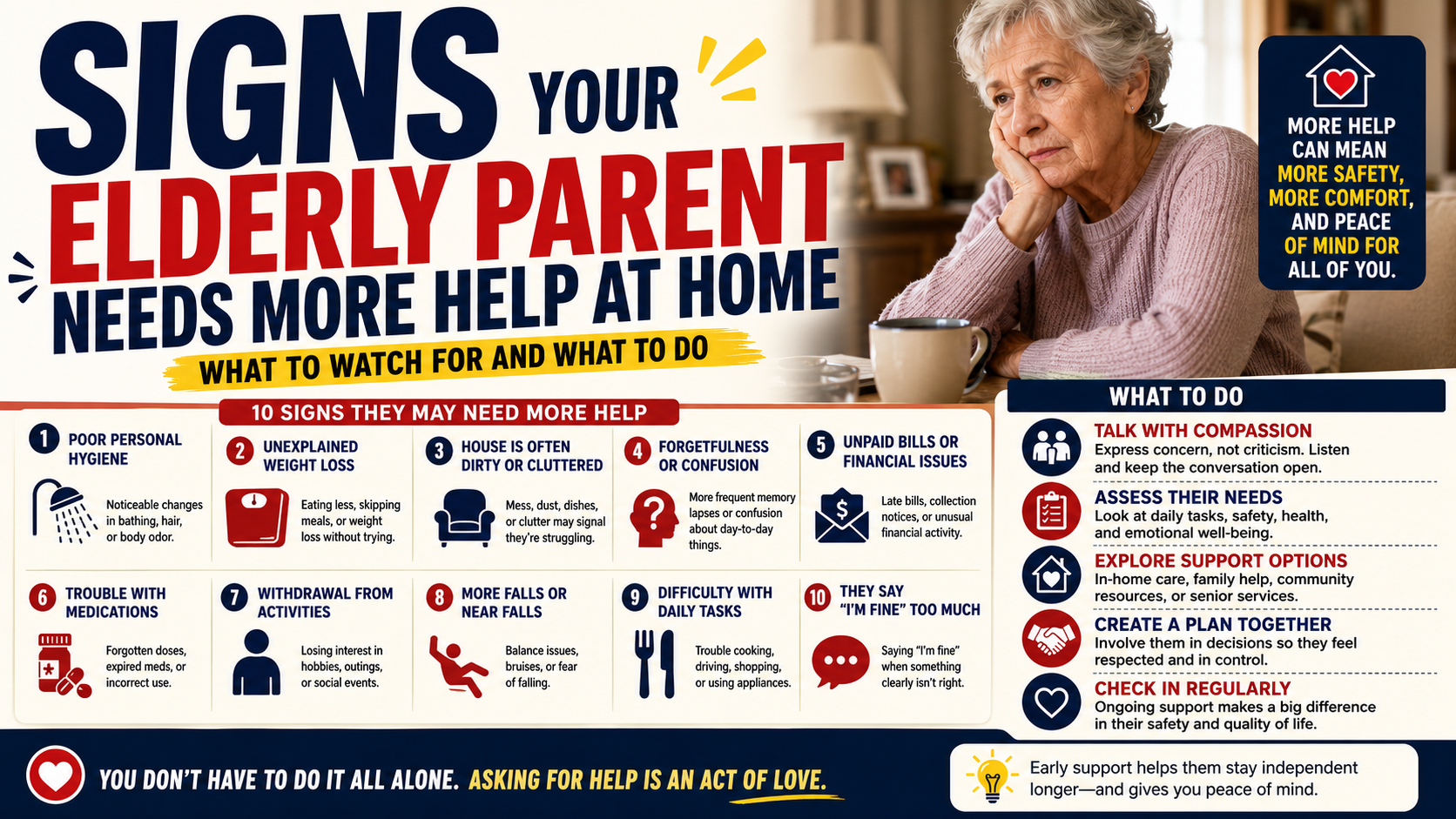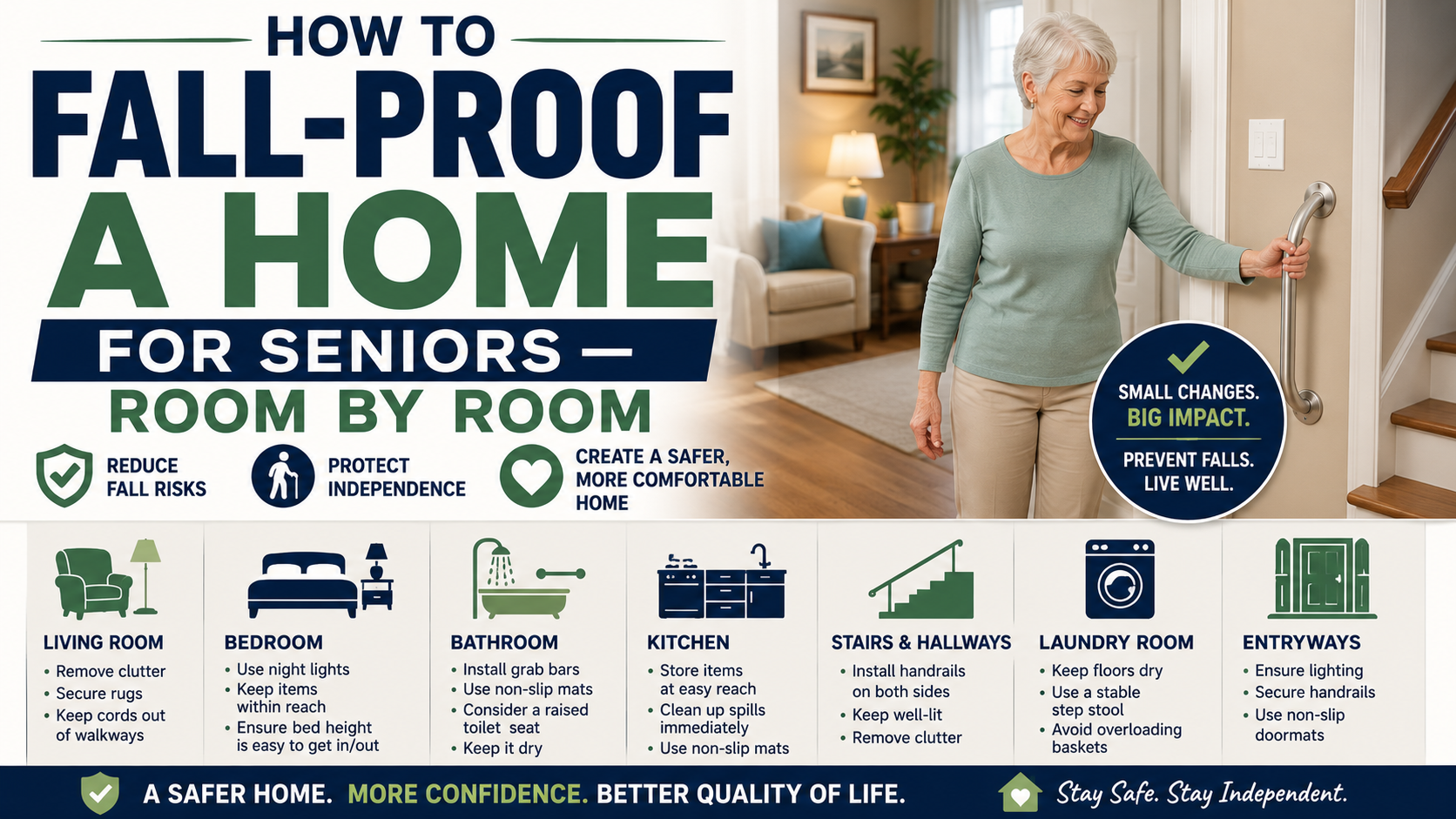
If your elderly parent has fallen, the next few hours matter enormously. Here’s exactly what to do — from the immediate response through the prevention plan that stops the next one.
Your parent has fallen. Maybe you were there when it happened. Maybe you got the call. Maybe they mentioned it casually — days later, minimizing it — and you’re only now realizing the full weight of what they told you.
However you found out, you’re here now trying to figure out what to do. What to check. What to say. What to change. How to make sure this isn’t the fall that becomes the one that changes everything permanently.
This guide covers exactly that — in the right order, without panic, with the specific actions that matter most in the hours, days, and weeks after a fall.
Immediate Response — The First 30 Minutes
If you’re reading this because a fall just happened, start here. If the fall was days ago, skip to the next section.
Don’t Move Them Immediately
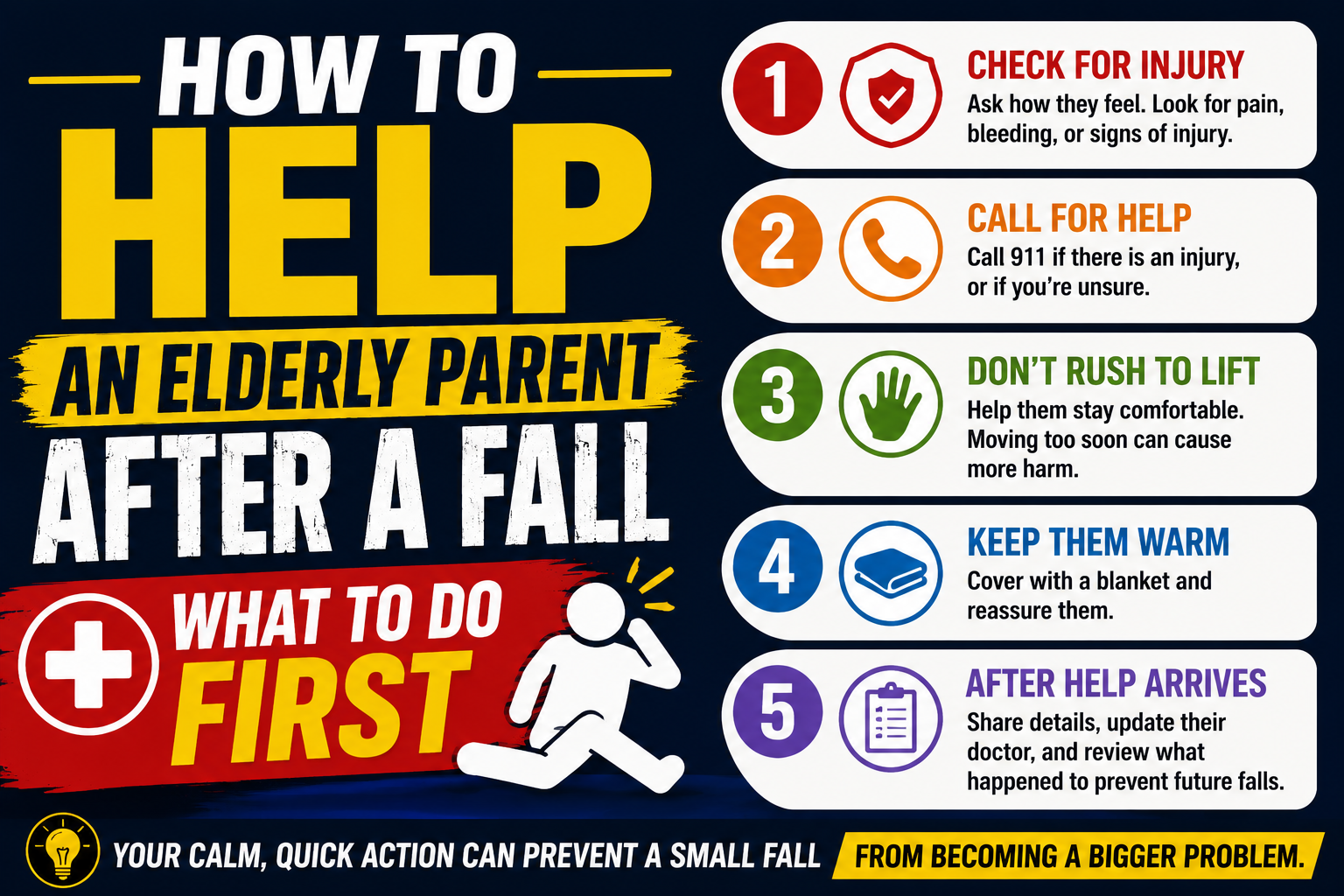
The instinct when someone falls is to help them up immediately. Resist it. Moving someone who has fallen before assessing for injury can worsen a fracture, spinal injury, or head injury that wasn’t apparent from the fall itself.
First, talk to them. Ask if they’re in pain and where. Ask if they can move their arms and legs. Look for obvious signs of injury — deformity, severe pain with movement, inability to bear weight on a limb. Check for head injury — did they hit their head? Are they confused in a way that’s different from normal?
Call Emergency Services If Any of These Are Present
- Loss of consciousness — even briefly
- Head injury or complaint of head pain
- Severe pain anywhere — particularly hip, back, or neck
- Inability to move a limb or bear weight
- Confusion significantly beyond their baseline
- Visible deformity suggesting fracture
- Numbness or tingling in arms or legs
If any of these are present call 911. Do not attempt to move them. Keep them warm — a blanket over them — and calm until emergency services arrive. Stay on the line with the dispatcher.
If No Serious Injury Is Apparent — Helping Them Up Safely
If your parent is alert, oriented, reporting no severe pain, and able to move all limbs — you can assist them in getting up. The correct sequence prevents a second injury during the getting-up process.
- Bring a sturdy chair to their side before attempting to get up
- Have them roll to their side rather than trying to sit straight up
- Help them push to a hands-and-knees position
- Move the chair in front of them so they can use it for support
- Help them place one foot flat on the floor — the stronger leg first
- Support them as they push to standing using the chair for support
- Once standing, help them move directly to a seat — don’t have them stand in the open while you arrange things
If they cannot get to hands-and-knees, cannot bear weight on either leg, or are in significant pain during this process — stop. Call 911. What seemed like a minor fall may have caused an injury that wasn’t immediately apparent.
After They’re Up — The Immediate Check
Once your parent is seated and stable, do a calm, thorough check. Ask about pain everywhere — not just where they landed. Check for bruising and swelling that may be developing. Ask specifically about hip pain — hip fractures sometimes produce relatively mild immediate pain before the full severity becomes apparent. Ask about head pain, dizziness, or visual changes.
Any new pain, bruising, or neurological symptom — dizziness, confusion, vision change — that appeared after the fall warrants medical evaluation even if the fall initially seemed minor.

The First 24 Hours — What Needs to Happen
Medical Evaluation — Don’t Skip This
Any fall in an older adult warrants medical evaluation — even one that appears to have caused no significant injury. This is not an overreaction. It’s the appropriate response to an event that has documented clinical significance beyond the immediate injury.
A physician who examines your parent after a fall can identify injuries that weren’t apparent at the scene — hip fractures that are painful but not immediately debilitating, head injuries with delayed symptoms, rib fractures that only become apparent with deep breathing. They can also document the fall in the medical record — which triggers the clinical response that should follow every fall, including medication review, physical therapy referral, and formal fall risk assessment.
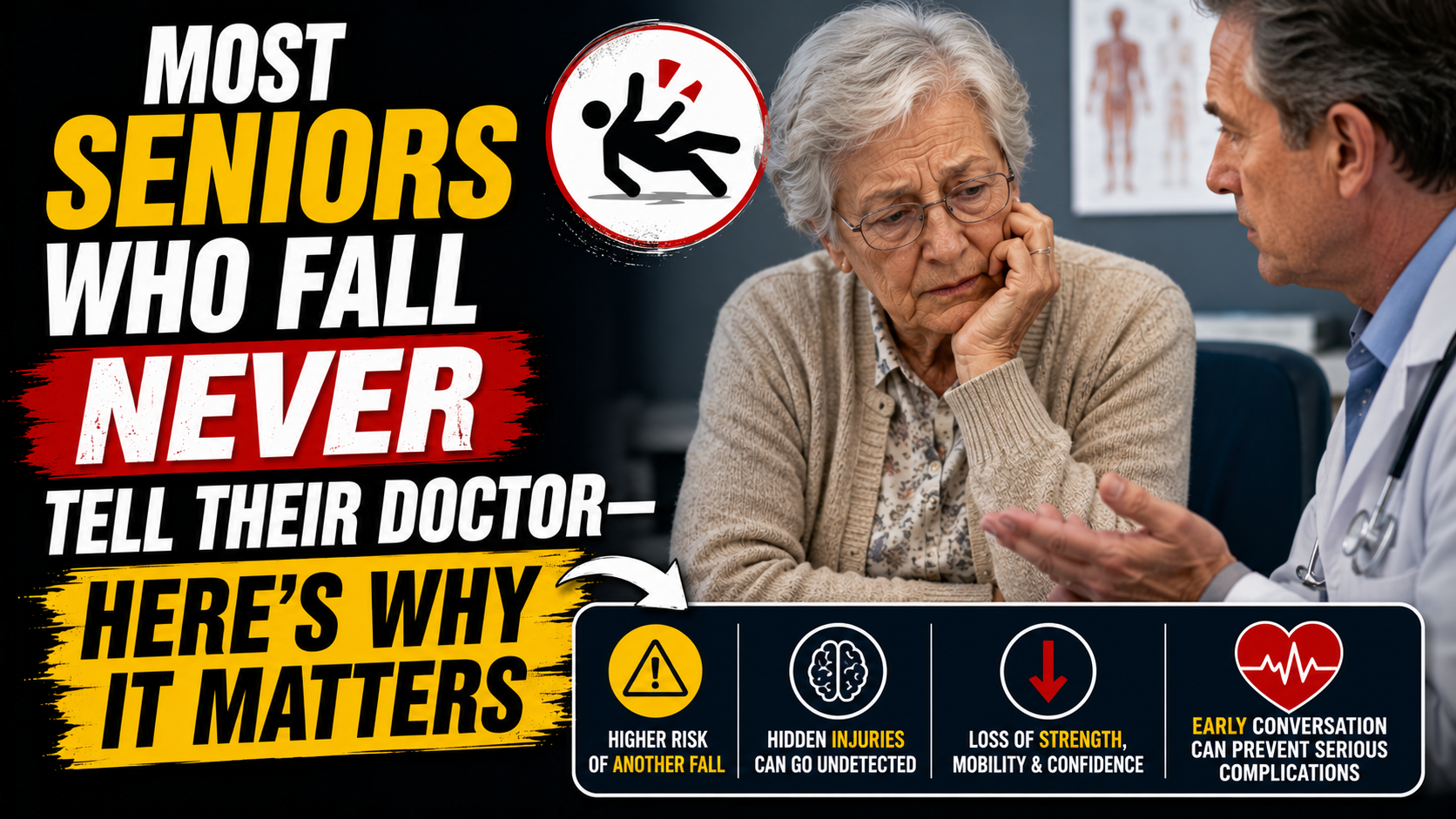
As we covered in our guide on most seniors who fall never tell their doctor — the fall that doesn’t make it into the medical record is the fall that doesn’t get addressed clinically. The physician who knows about the fall can order the physical therapy, conduct the medication review, and make the specialist referrals that meaningfully reduce the risk of the next fall. The one who doesn’t know cannot.
If your parent resists medical evaluation — “I’m fine, it was nothing” — our guide on your parent said they’re fine covers exactly what that word means and how to navigate the resistance effectively.
Watch for Delayed Symptoms
Several serious fall-related injuries have delayed symptom onset that makes the first 24 to 72 hours after a fall a critical monitoring window.
Subdural hematoma — bleeding between the brain and skull — can produce symptoms hours to days after a head injury, even one that seemed minor. Watch for increasing headache, confusion, personality change, weakness on one side of the body, or speech difficulty in the days after a fall involving a head impact. Any of these warrants immediate emergency evaluation.
Hip fracture — some hip fractures produce relatively modest initial pain that worsens over hours as swelling develops and the fracture becomes more apparent. If your parent is increasingly unable to bear weight on one leg or reports worsening hip or groin pain in the hours after a fall, seek medical evaluation promptly.
Rib fractures — often not apparent immediately, becoming painful with deep breaths and movement in the hours after a fall on the chest or side.
Document Everything
Write down — today, while details are fresh — exactly what happened. Where the fall occurred. What your parent was doing at the time. What they landed on. Whether they hit their head. What they said immediately after. Any medications they had recently taken. Any dizziness or feeling unwell they had mentioned before the fall.
This documentation serves the physician at the upcoming appointment and serves as a baseline reference if symptoms develop over subsequent days. The details that seem obvious today become fuzzy within a week.
The First Week — Addressing What Caused It
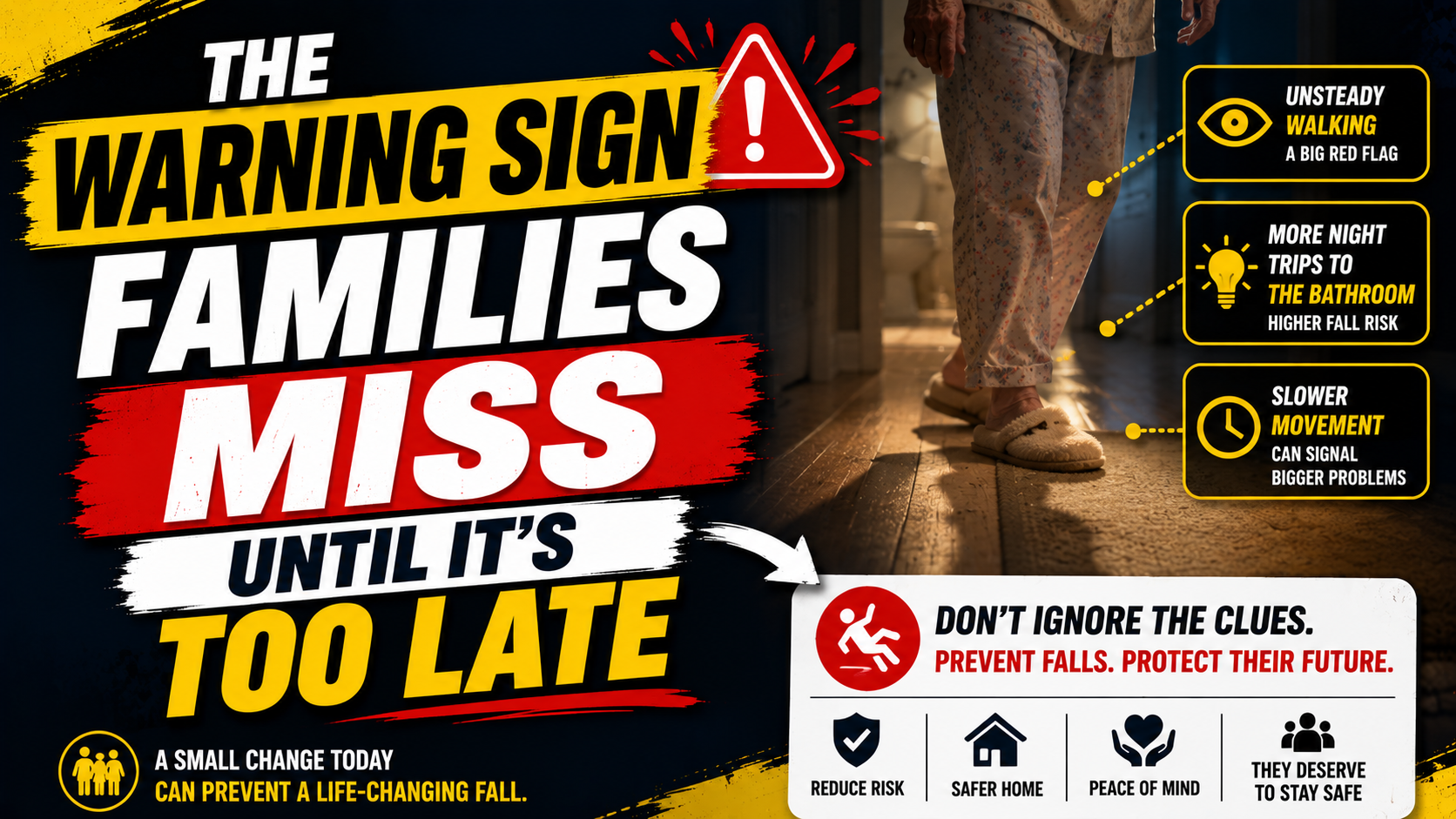
The most important thing that happens in the week after a fall isn’t recovery from the fall itself. It’s identifying and addressing the factors that caused it — because as we covered in our guide on the warning sign families miss until it’s too late, a first fall more than doubles the risk of a second. The window between the first fall and the second is when everything in this section matters most.
Request a Falls-Focused Medication Review
Call the physician’s office — today, not at the next scheduled appointment — and request a “falls-focused medication review” using those exact words. This prompts a review specifically evaluating which medications have fall-risk side effects and whether timing, dosing, or alternatives might reduce that risk.

As we covered in our guide on the #1 reason seniors fall at home — medication is the single most significant modifiable fall risk factor. Blood pressure medications causing orthostatic hypotension. Sleep medications reducing morning alertness and coordination. Diuretics increasing nighttime bathroom frequency. A timing adjustment — not necessarily a medication change — frequently produces meaningful risk reduction from this one conversation.
Walk Through the Home — With Fresh Eyes
The fall happened somewhere specific — in a specific room, during a specific activity, in a specific set of conditions. Understanding exactly what happened helps identify what to change. But the home assessment should go beyond the fall location to every room where fall risk exists.

Our home safety checklist for seniors gives you a systematic room-by-room assessment tool. Work through it this week. Note everything that needs addressing. Prioritize by impact.
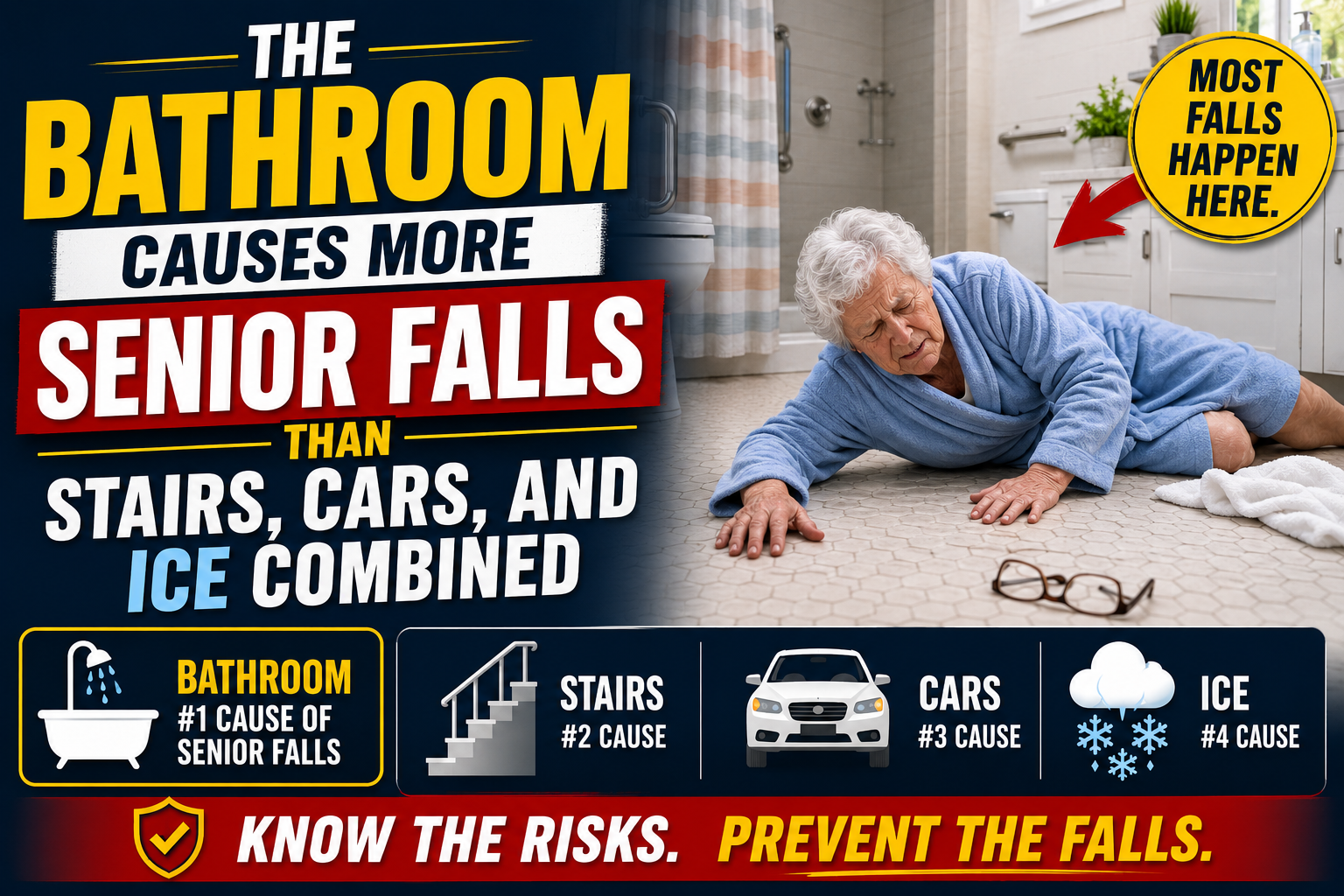
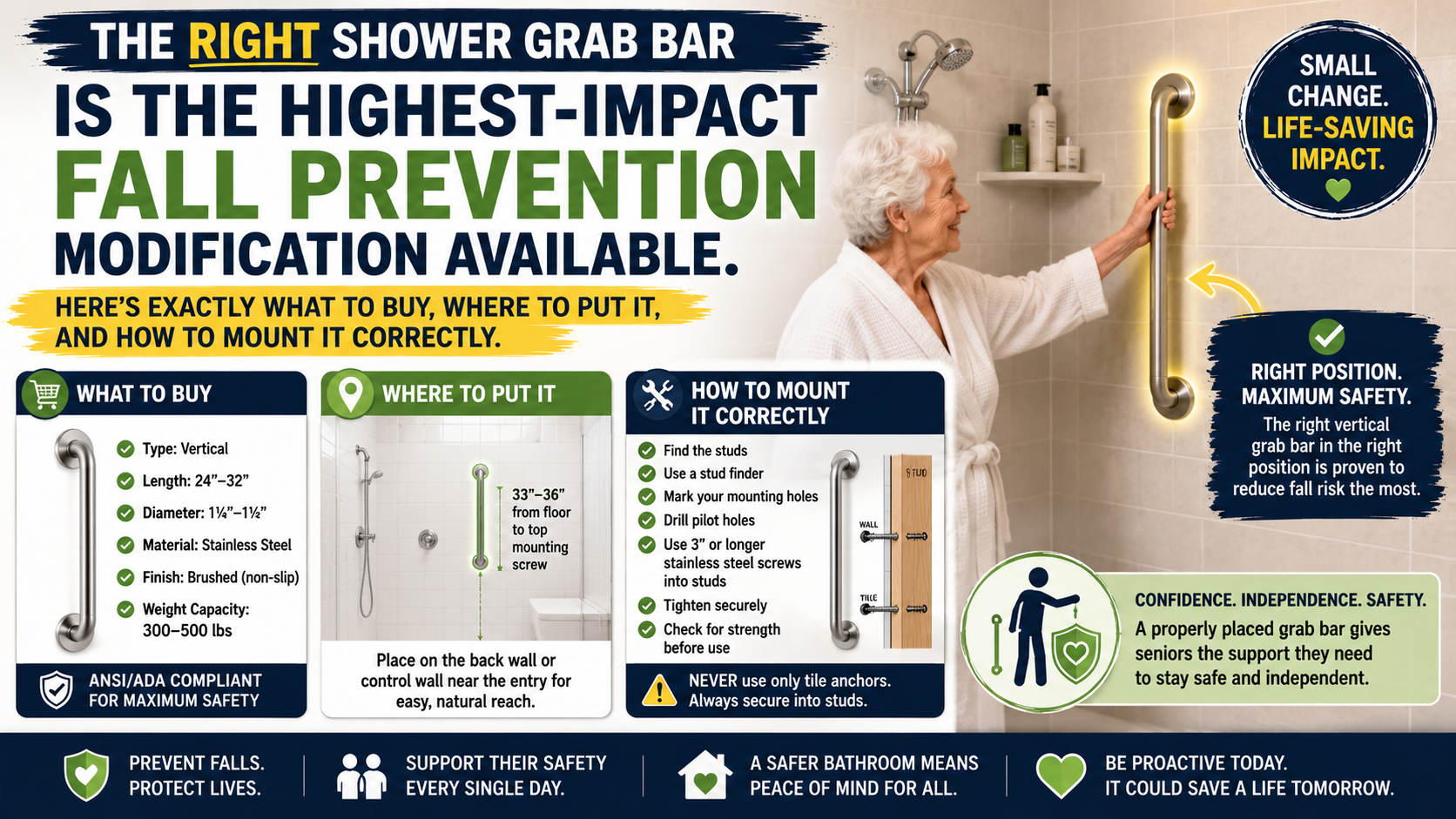
The bathroom is the highest priority regardless of where this fall occurred — as we covered in our guide on the bathroom causes more senior falls than stairs, cars, and ice combined. If grab bars aren’t installed at the shower entry and next to the toilet, that changes this week.
Address the Bathroom This Week
Grab bars at the shower entry and next to the toilet. A non-slip bath mat that stays completely in place. Toilet safety rails. A shower chair. Night lights on the path from bedroom to bathroom. These five modifications address the highest-risk daily transitions in the highest-risk room in the home.
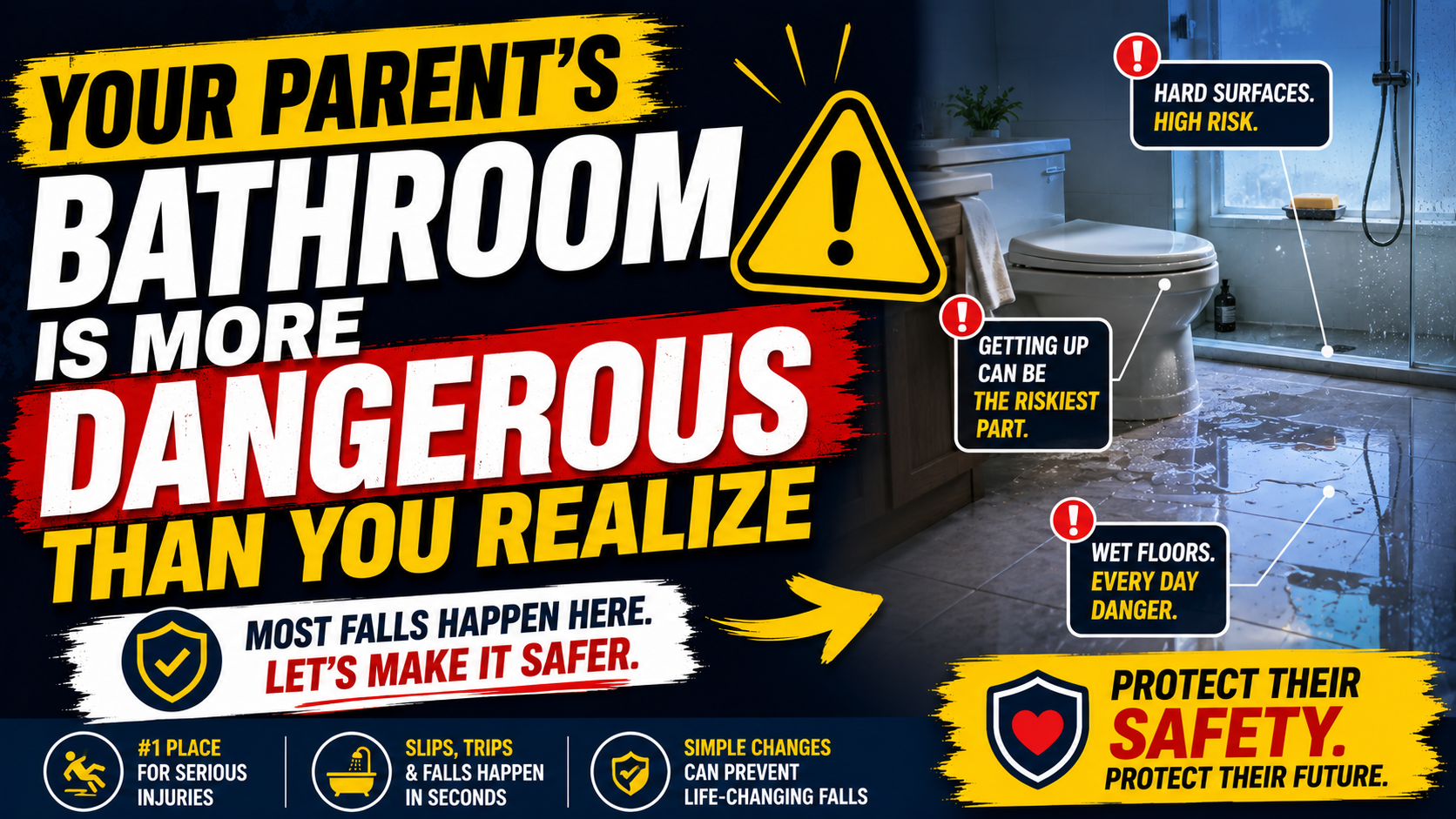
Our guide on your parent’s bathroom is more dangerous than you realize covers exactly why each matters. Our guide on most grab bars are installed in the wrong place covers exactly where they need to go. Our complete guide on safe shower setup for elderly adults covers the shower specifically.


→ Get the Toilet Safety Rails on Amazon

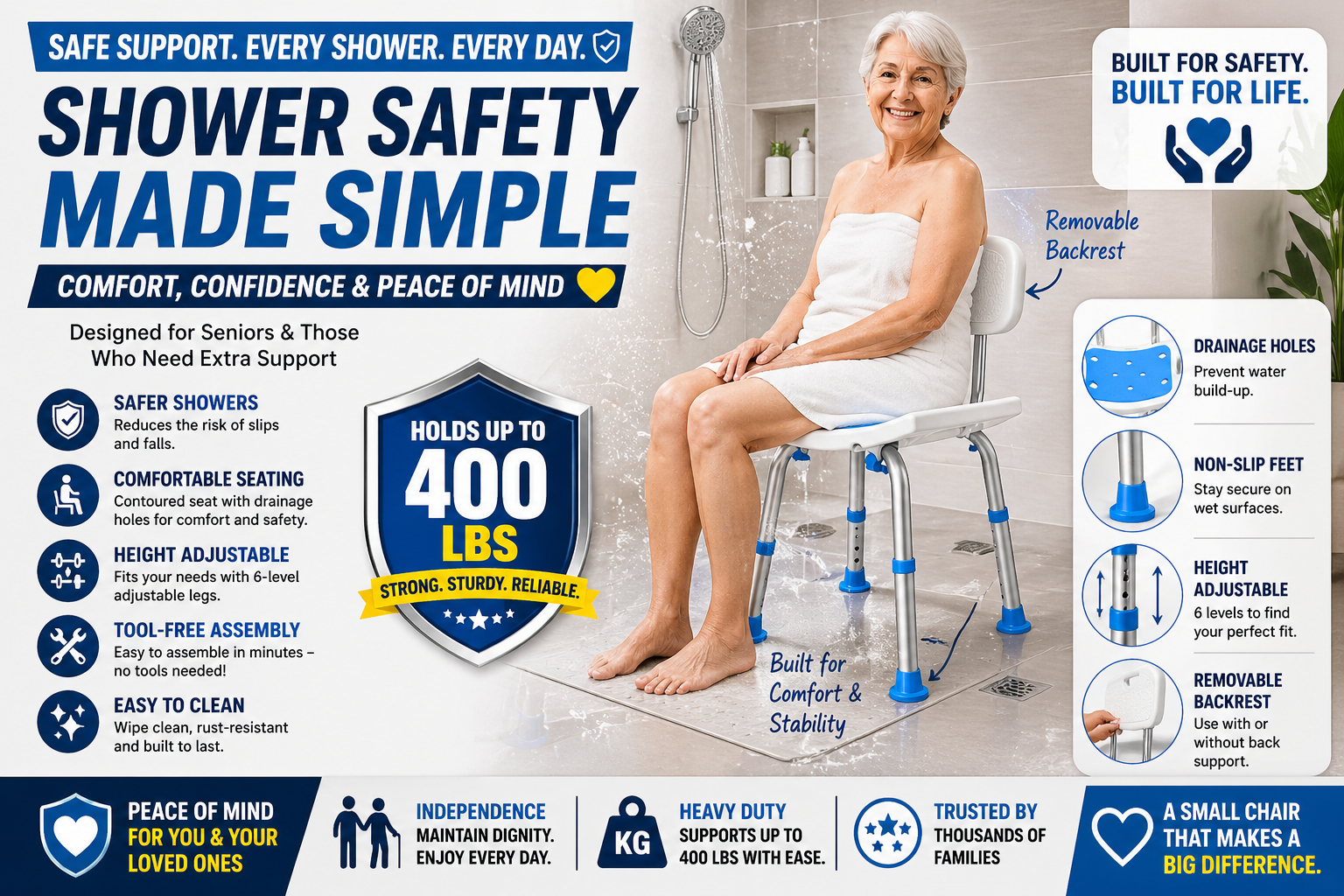
→ Get the Shower Chair on Amazon
Address the Bedroom This Week
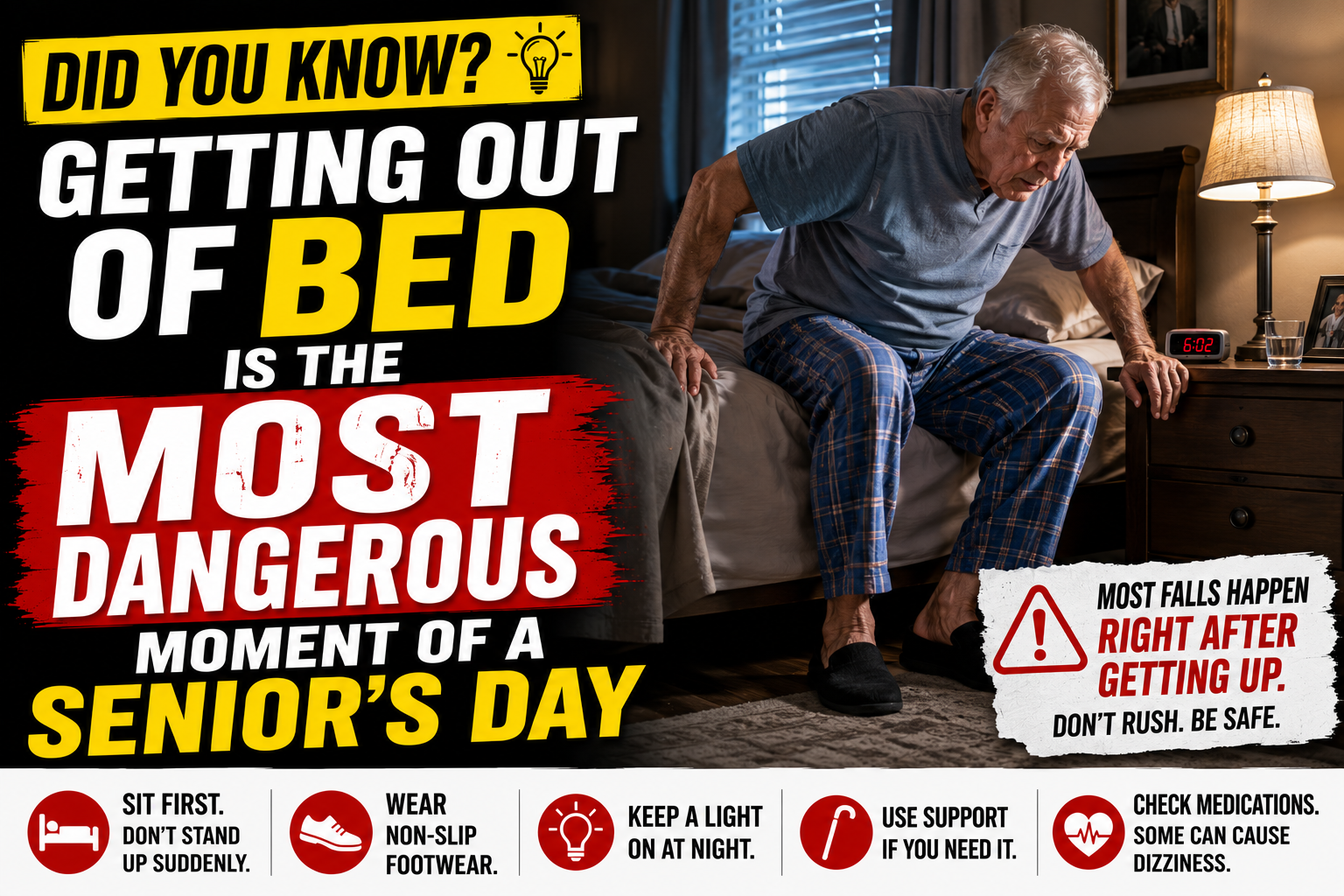
A bed rail on the exit side of the bed. Auto-on night lights in the bedroom, hallway, and bathroom. As covered in our guide on getting out of bed is the most dangerous moment of a senior’s day — the morning getting-up transition and the nighttime bathroom trip are the two highest-risk daily moments for most older adults.

→ Get the Night Lights on Amazon
Get a Medical Alert Device in Place — This Week
This is the most important single action of the entire post-fall period. A fall has just happened. The risk of a second fall is now more than double what it was before the first. The gap between a fall happening and help arriving is determined entirely by what safety measures are in place — and for anyone living alone that gap just became impossible to ignore.
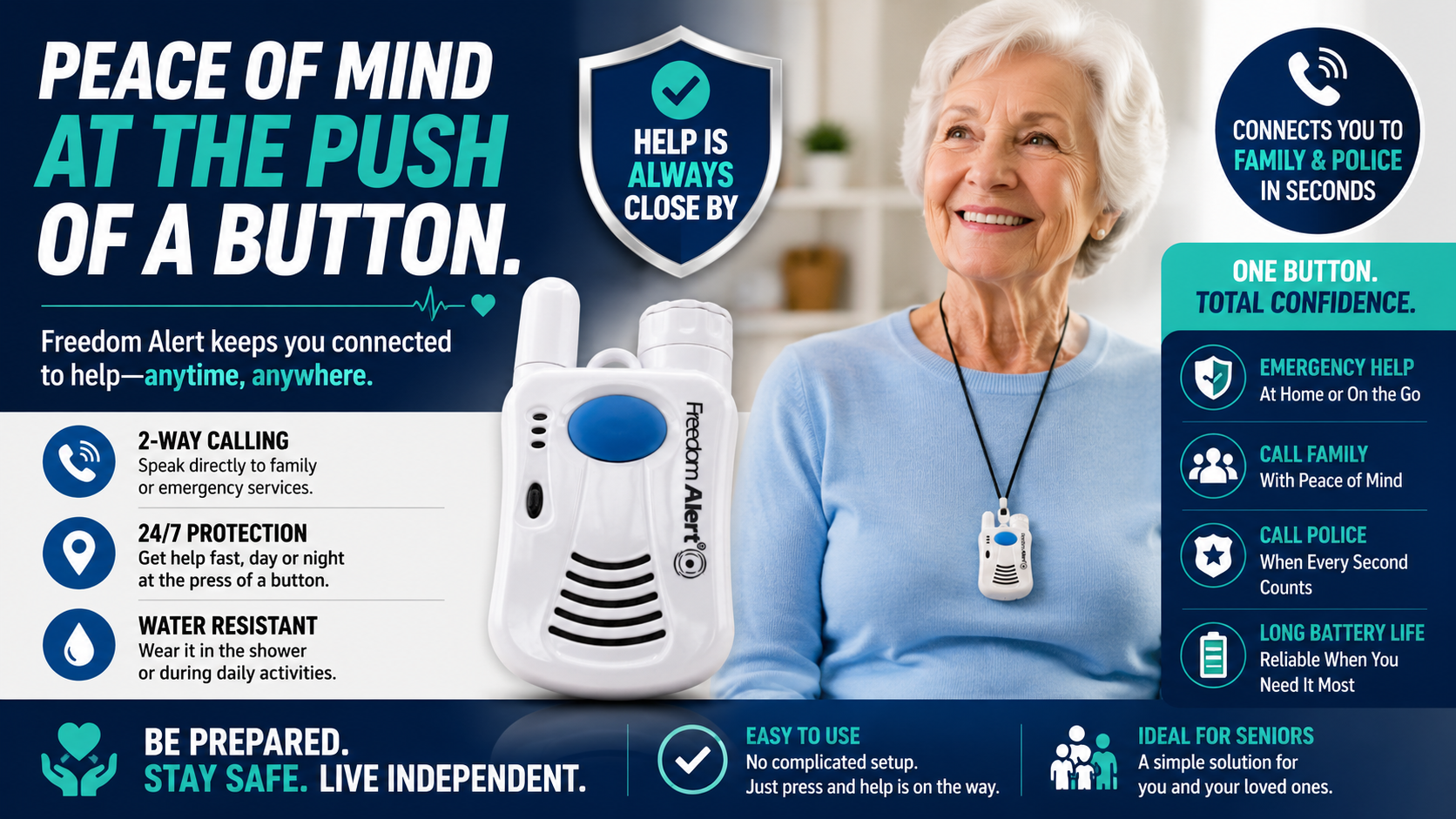
The SecuLife Smartwatch provides automatic fall detection — alerting family immediately with GPS location without requiring any action from the person who has fallen. It goes on the wrist in the morning and it’s there during the shower, the nighttime bathroom trip, the morning walk — everywhere the falls that matter most are likely to happen.
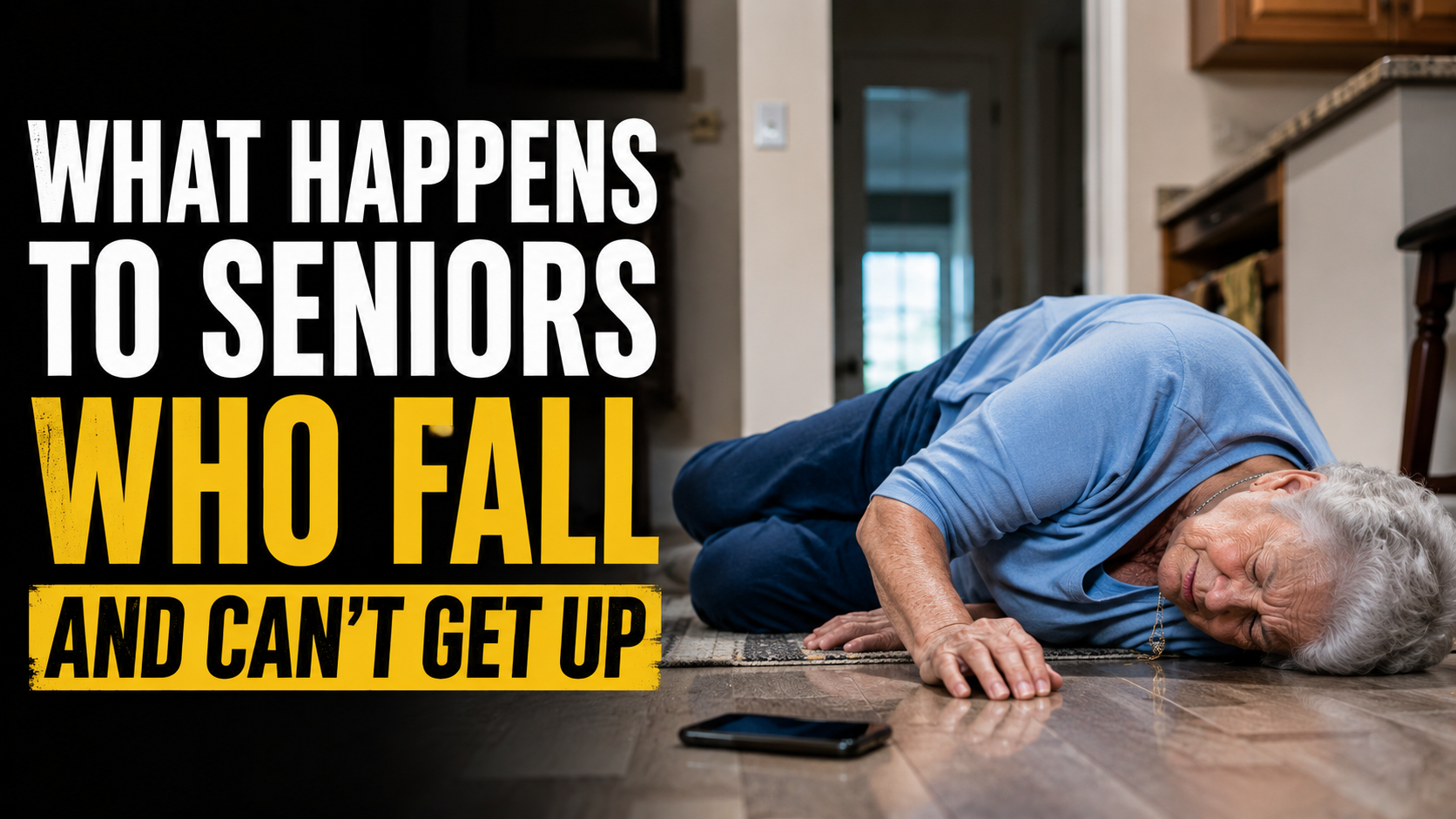
As we covered in our guide on what happens to seniors who fall and can’t get up and our guide on the first 60 minutes after a senior falls are the most critical — the duration between a fall and discovery independently predicts outcome. Closing that gap to seconds rather than hours is the single most important post-fall safety measure available.

Our complete review at SecuLife Smartwatch Review covers every feature. Our guide on best medical alert system for seniors living alone covers the complete solo-living safety picture.
→ Get the SecuLife Smartwatch on Amazon
The Conversation You Need to Have
A fall changes the conversation about safety. Before the fall “I’m fine” could be accepted with some ambivalence. After a fall the evidence that things aren’t entirely fine is physical and documented. This is actually a window — not a comfortable one, but a real one — where the conversation about safety measures that previously got deflected has more room to land.
What to Say
Lead with care rather than fear. “I want to make sure we do everything possible to keep you in your home and keep you safe” is a different opening than “I’m worried this is going to happen again and I don’t know what to do.”
Be specific about what you’re proposing rather than general about your worry. “I want to get grab bars installed in the bathroom this weekend and I’d like to get you the SecuLife watch — can we do that together?” is actionable. “We need to make some changes” is not.
Acknowledge the fall directly without dramatizing it. Treating it as the serious event it is — while not treating it as a catastrophe — gives it the weight it deserves without producing the defensiveness that comes from feeling like a fall is being used as evidence of incapacity.
If They Resist
Our guide on your parent said they’re fine covers the specific strategies that work when resistance is the response. The key insight: actions don’t require agreement the way conversations do. The grab bars can be installed during a visit without requiring your parent to acknowledge they’re necessary. The bath mat can be replaced without a lengthy conversation. The night lights can be plugged in without a debate.
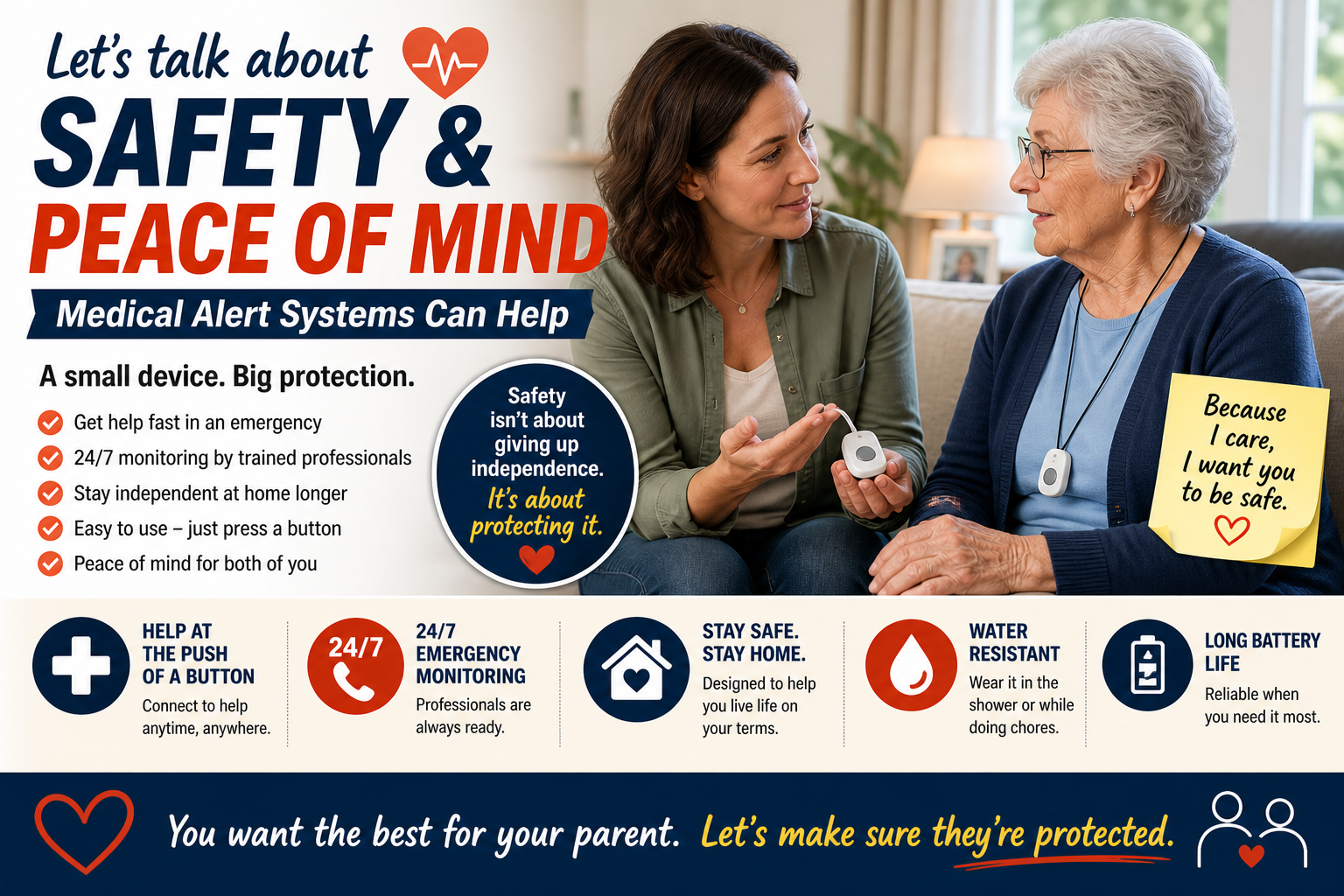
Our guide on how to talk to a parent about a medical alert system covers the specific framings that work for the device most seniors initially resist.
The Weeks After — Building the Complete Safety System
The immediate post-fall period is for crisis response and highest-priority modifications. The weeks that follow are for building the complete safety system that addresses every major fall risk factor.
Physical Therapy Referral
Request a physical therapy referral specifically for fall prevention and gait assessment — covered by Medicare with documented fall history. A physical therapist assesses the specific balance and strength deficits that contributed to the fall and creates a targeted program to address them. This is not optional after a fall — it’s the clinical response that meaningfully reduces the risk of the next one.
Vision Check
Schedule a vision check if one hasn’t been done in the past year. Reduced depth perception and contrast sensitivity directly affect balance and spatial awareness. An outdated prescription is a fall risk factor worth correcting.
Hydration Assessment
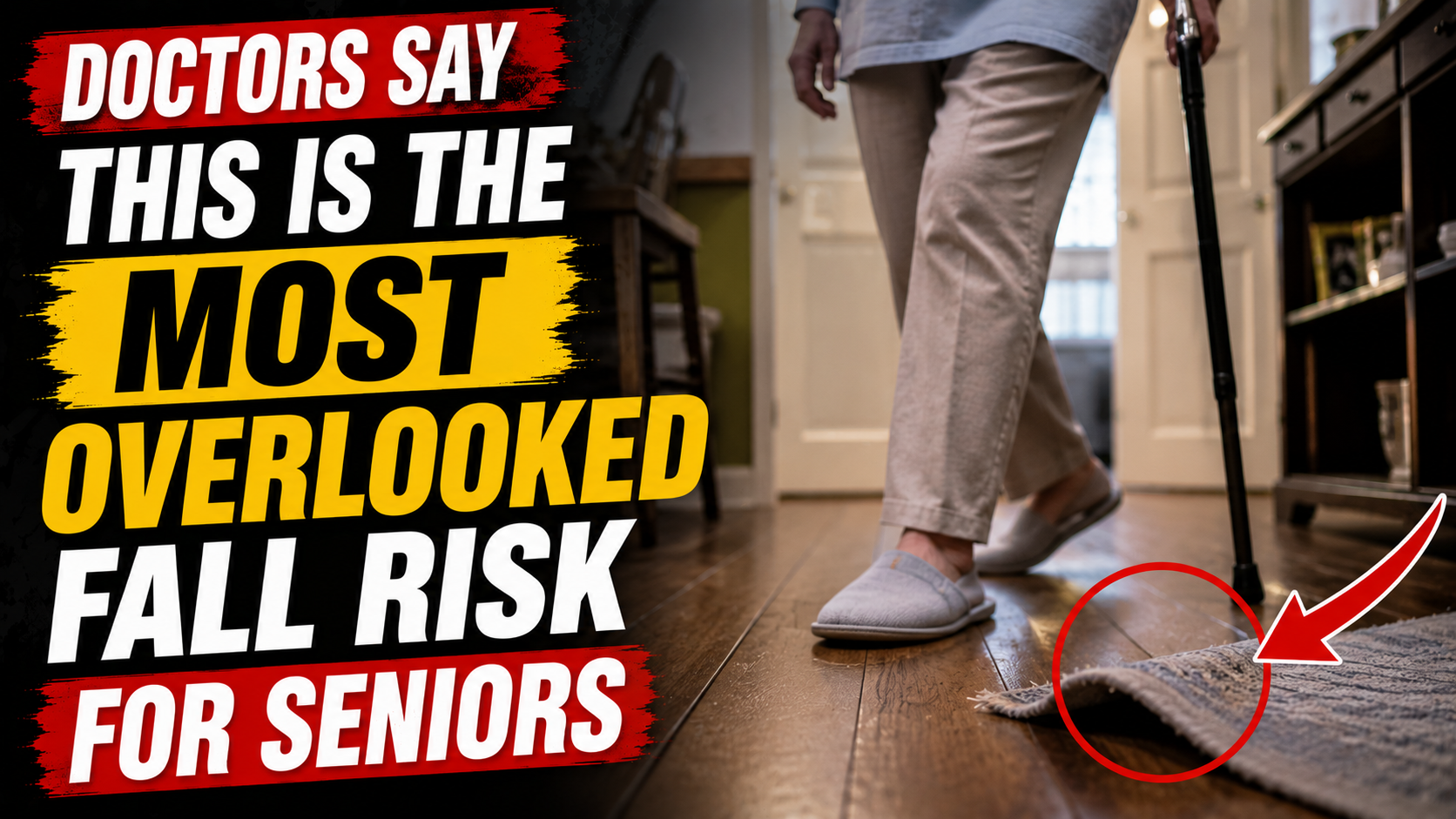
As covered in our guide on the most overlooked fall risk for seniors — dehydration produces orthostatic hypotension through blood volume reduction and impairs the muscle function and cognitive alertness that prevent falls. Consistent fluid intake throughout the day — not dependent on a thirst signal that may not be reliable — is a genuine fall prevention intervention worth establishing as a daily routine.
Exercise Program
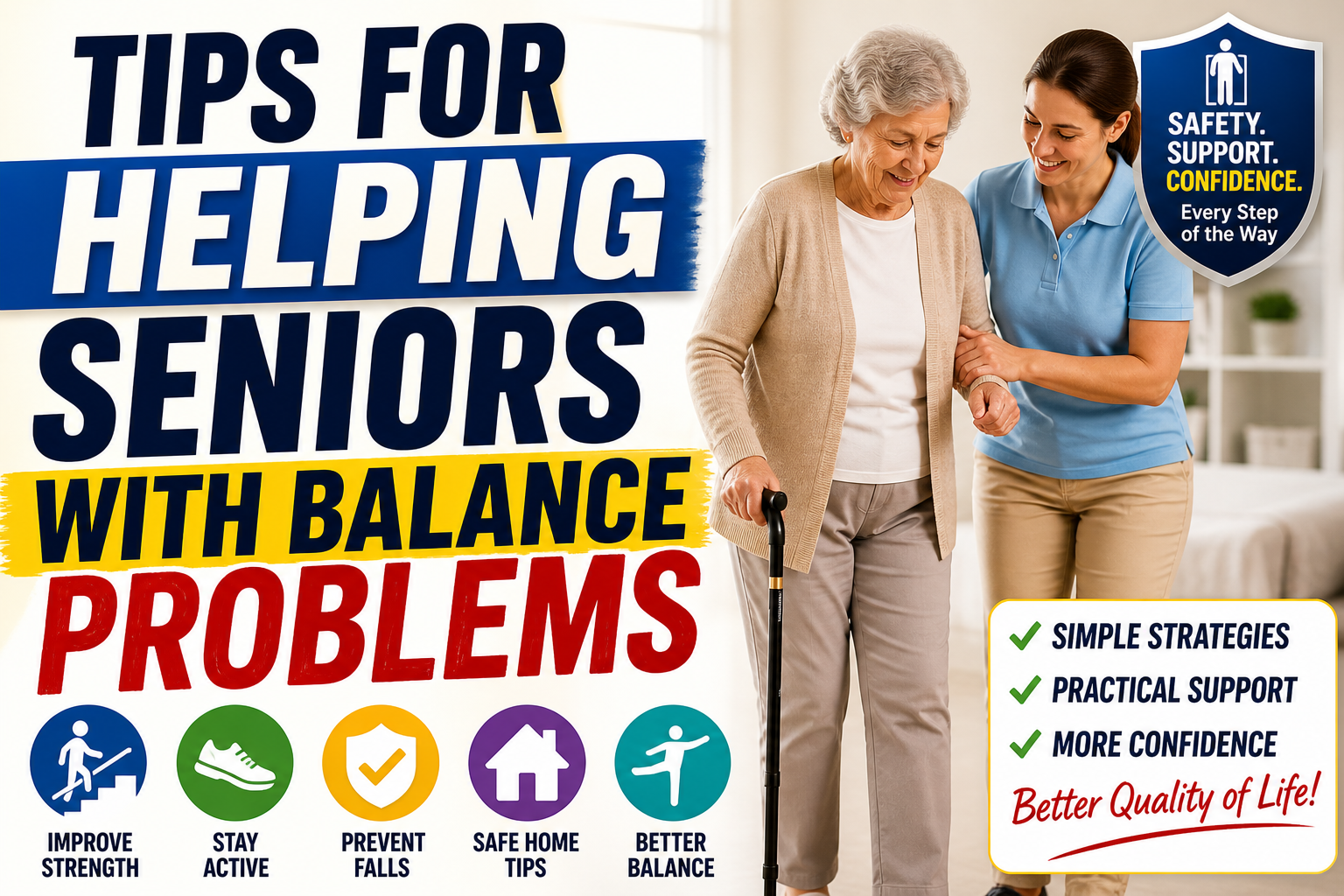
Balance and strength exercise specifically targeting the muscle groups used in fall prevention reduces fall rates by 20 to 30 percent in research studies. Tai Chi has the strongest evidence. A physical therapist provides the personalized program. Our guide on tips for balance problems covers the exercise interventions with the strongest evidence for real-world fall prevention.
Complete Home Safety Assessment
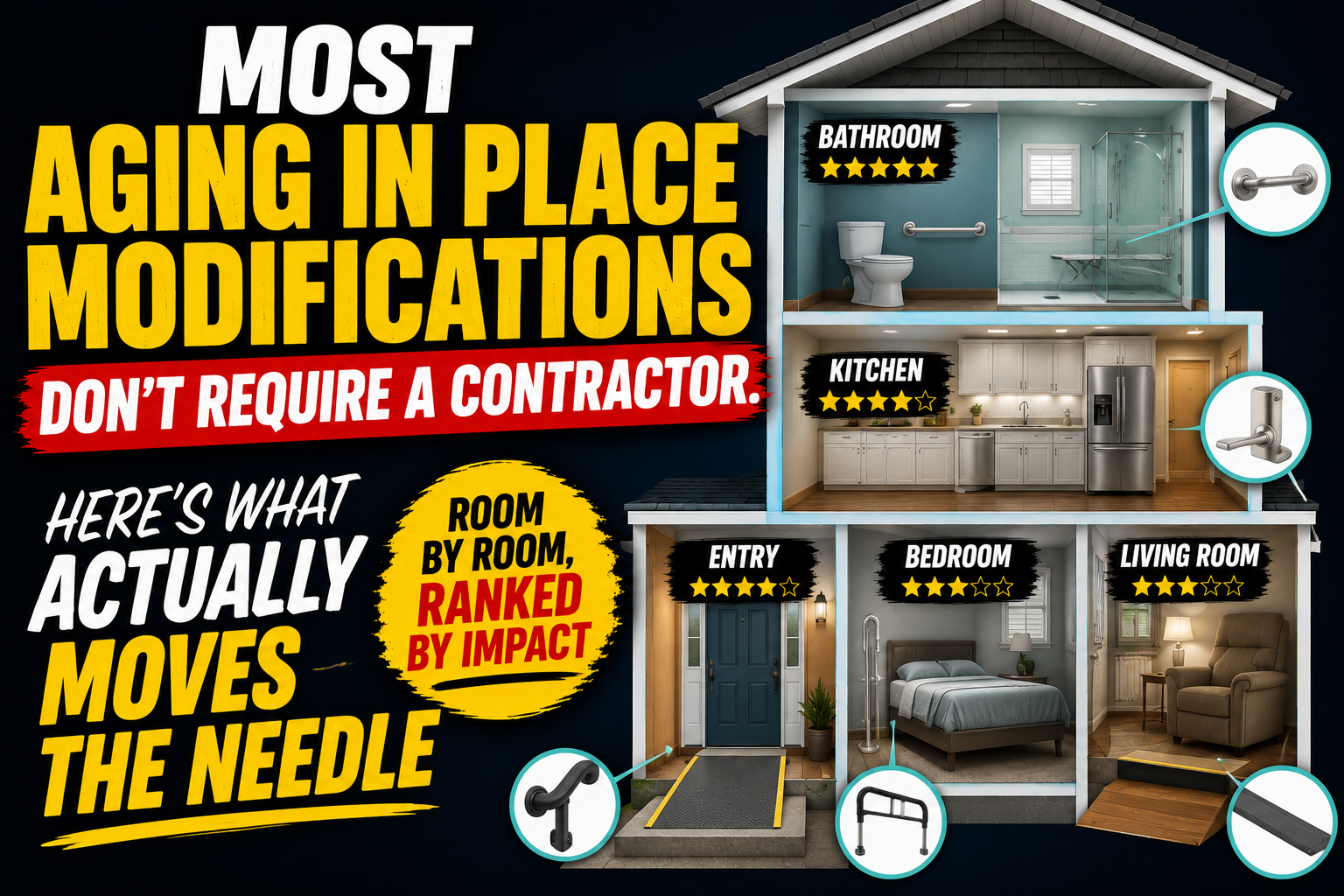
Work through our complete home safety checklist systematically — every room, every modification in priority order. Address the highest-impact items first per our guide on home modifications ranked by impact. Our comprehensive guide on how to help an elderly parent live safely alone covers the complete picture of what a thorough safety response looks like.
Addressing the Fear of Falling
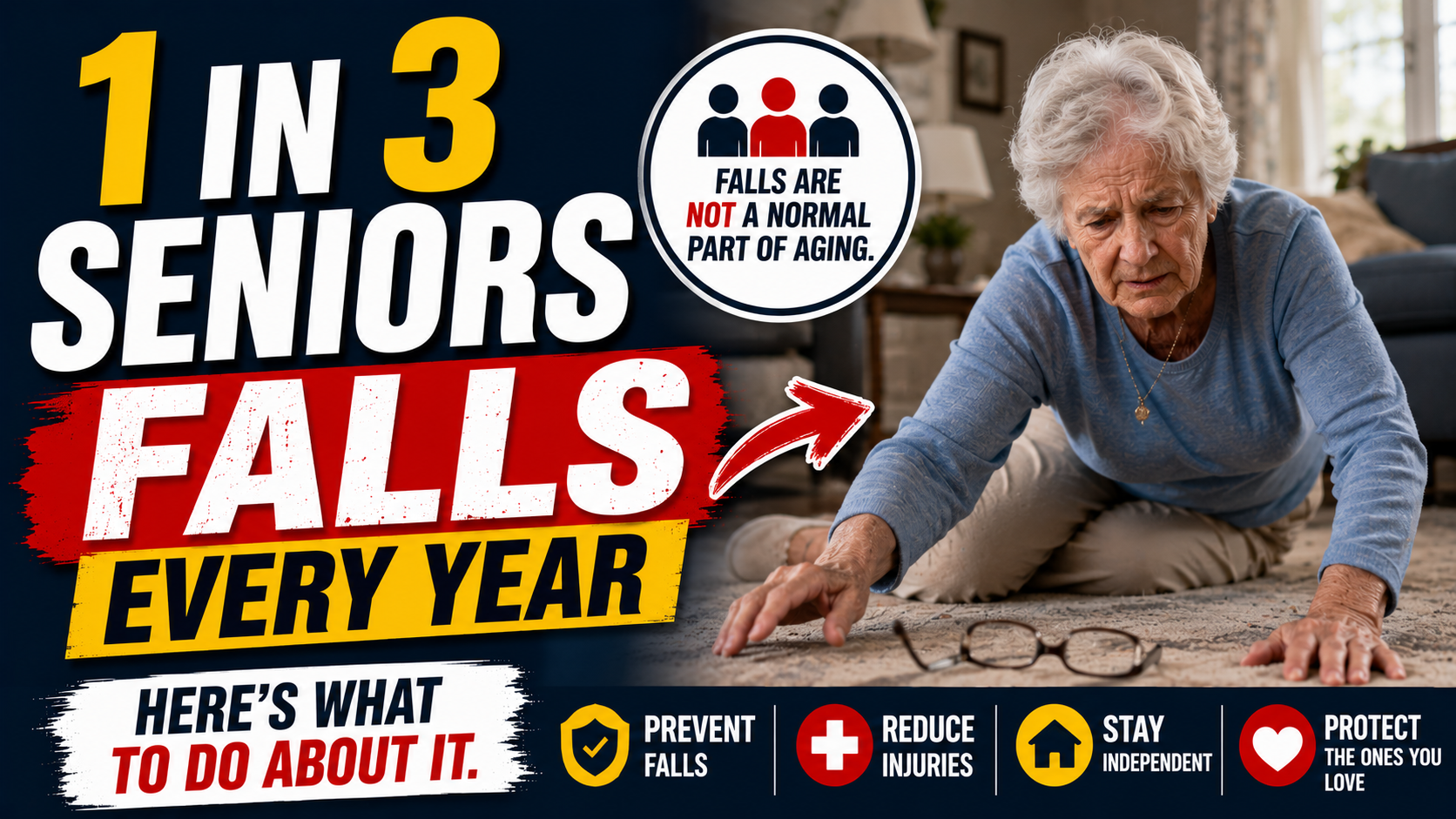
As covered in our guide on 1 in 3 seniors falls every year — fear of falling following a fall affects approximately 50 percent of older adults who have experienced one and is itself a fall risk factor. The protective movement and activity avoidance that fear produces reduces the strength and balance that prevent falls — creating a self-reinforcing cycle.
The response to fall-related fear isn’t rest and caution. It’s the physical therapy that addresses the underlying balance deficit, the home modifications that address the environmental risks, and the detection technology that provides the reassurance that if something does happen help will arrive quickly.
A parent who knows that their bathroom is properly modified, that a medical alert device will alert family automatically if they fall, and that a physical therapist is working on their balance specifically — has genuine reasons for reduced fear. Not false reassurance. Real structural reasons that the situation is safer than it was before the fall.
That combination — modifications plus detection plus rehabilitation — is what allows continued active, independent living after a fall rather than the withdrawal and activity restriction that compounds risk.

The Complete Post-Fall Checklist
Immediate (same day):
- Assess for injury — call 911 if any serious signs present
- Help them up safely using the sequence above — or call 911 if they can’t
- Get medical evaluation — urgent care or physician same day or next day
- Document exactly what happened while details are fresh
- Monitor for delayed symptoms — head pain, increasing confusion, worsening hip pain
This week:
- Request falls-focused medication review by name
- Order and install grab bars — shower entry and toilet position
- Order toilet safety rails, non-slip bath mat, shower chair
- Order bed rail and auto-on night lights
- Order and configure medical alert device with automatic fall detection
- Remove all unsecured rugs and cords from walking areas
- Have the direct conversation about safety measures
This month:
- Physical therapy referral — request specifically for fall prevention
- Vision check — schedule if more than a year since the last
- Complete home safety assessment using the room-by-room checklist
- Establish consistent fluid intake routine
- Identify and start a balance exercise program
- Establish structured daily check-in routine
Ongoing:
- Medical alert device worn every day — charged nightly
- Balance exercise consistently — every week
- Six-month home safety reassessments
- Medical alert device functioning confirmed regularly
Frequently Asked Questions
My parent fell but says they’re fine and doesn’t want a doctor. What do I do?
Any fall in an older adult warrants medical evaluation regardless of how minor it seems. Head injuries and hip fractures specifically can have delayed symptom onset — seeming minor initially and worsening over hours. Frame the medical visit as a precaution you need for your own peace of mind rather than evidence that something is seriously wrong. “I just need to know you’ve been checked — will you do that for me?” is harder to refuse than “you need to see a doctor.” Our guide on your parent said they’re fine covers this resistance in full detail.
How long does recovery from a fall typically take?
Recovery depends entirely on what injuries resulted. A fall with no significant injury — bruising, soreness — typically resolves physically within one to two weeks. Falls causing fractures involve surgical repair and rehabilitation that may take three to six months to achieve maximum recovery. The psychological recovery — addressing fear of falling and rebuilding confidence in movement — often takes longer than the physical recovery and is the component most commonly under-addressed in post-fall care.
Should I consider having my parent move in with me after a fall?
A single fall is rarely sufficient reason for a living situation change if the underlying risk factors can be addressed and appropriate safety measures put in place. The more productive response to a first fall is implementing the modifications and safety measures in this guide — which often make continued independent living genuinely safe rather than just hopefully so. Our guide on how to talk to an aging parent about moving covers when moving becomes the right conversation and how to have it without damaging the relationship.
My parent fell and now refuses to do anything differently. What are my options?
Adults with full cognitive capacity have the right to make decisions about their own lives — including decisions that carry risk that worries their children. Your options are: do what doesn’t require their agreement (install the modifications during visits, plug in the night lights, replace the bath mat), continue the conversation gently and consistently without ultimatums, involve their physician who carries different authority than a worried adult child, and ensure the detection technology that protects them regardless of their cooperation is in place.
How do I know if my parent needs more help than I can provide after a fall?
The signals that care needs have exceeded what can be arranged at home include: repeated falls despite modifications being in place, cognitive decline severe enough that unsupervised living creates consistent safety emergencies, an injury that requires a level of daily care you can’t provide, and your own burnout reaching a point where the care you’re providing isn’t sustainable. Our guide on caregiver burnout covers the sustainability question honestly.

The Fall That Happened and the Fall That Doesn’t
The fall that just happened cannot be undone. What can be determined now — by the actions taken in this window — is whether it becomes the first of many or the event that prompted the changes that prevented the next one.
Most families who act on the guidance in this article — medication review, bathroom modifications, bed rail, medical alert device, physical therapy — look back at the fall as the thing that finally made the safety conversation happen. Not a tragedy. A turning point.
The families who don’t act look back at it differently. As the warning they didn’t take seriously enough. As the thing that, in retrospect, was followed six weeks later by the fall that changed everything.
The turning point version is available right now. Everything in this guide makes it more likely.
→ Get the Grab Bars on Amazon — the highest-impact bathroom modification
→ Get the Bed Rail on Amazon — for every morning and every nighttime trip
→ Get the Toilet Safety Rails on Amazon
→ Get the Night Lights on Amazon
About the Author
Margaret Holloway, RN spent 22 years in geriatric nursing treating the consequences of falls and working with families in the critical post-fall window. She watched families who acted on that window keep their parents safely at home through years of independent living that might otherwise have ended prematurely. She watched families who didn’t act arrive back at the hospital six weeks later for the second fall that was more serious than the first. The difference between those two groups was almost always the same — what happened in the week after the first fall. This guide is what she wishes every family had in that week. She writes for Elder Safety Guide because the post-fall window is real, it’s finite, and the families who use it well are the ones who get more time.