Most senior falls happen at home — not outside, not on stairs, not on ice. Here’s exactly why home is the most dangerous place and the eight specific fixes that change it.
Ask most families where they worry about an older parent falling and they’ll describe outdoor scenarios. Icy sidewalks. Uneven parking lots. Steps outside a restaurant. The hazards that feel dangerous because they announce themselves.
The data tells a completely different story.
The majority of serious falls in older adults happen inside the home — in familiar rooms, during routine activities, on surfaces navigated thousands of times without incident. The home is the most dangerous environment most older adults occupy — not because it’s inherently treacherous but because familiarity makes its hazards invisible and because most homes have never been modified to match the changing physical capacity of the people living in them.
Here’s exactly why home falls dominate the statistics — and the eight specific fixes that address the most common causes.
Why Home Falls Are More Common and More Serious Than Outdoor Falls
Two factors make home falls uniquely dangerous compared to outdoor falls — hazard invisibility and discovery delay.
Hazard Invisibility
Outdoor hazards announce themselves. Icy pavement looks different from dry pavement. An uneven sidewalk is visible from several steps away. Steps at a building entrance are expected and approached with attention. The brain receives advance warning and prepares — slowing down, increasing attention, planning each step more carefully.
Home hazards are invisible through familiarity. The bath mat has been in the same spot for three years. The rug in the hallway has been there for a decade. The route from bed to bathroom has been walked thousands of times in the dark without incident. The automatic, habitual nature of home navigation means these surfaces are approached without the heightened attention that outdoor navigation produces — even when the physical capacity to manage them safely has quietly changed.
Discovery Delay
An outdoor fall is typically witnessed — by a passerby, another shopper, a neighbor. Help arrives quickly. The gap between the fall and discovery is measured in minutes.
A home fall in a solo-living older adult may not be discovered for hours. As covered in our guide on the first 60 minutes after a senior falls are the most critical — the physiological consequences of lying on the floor begin accumulating within 30 minutes. The home fall that isn’t discovered quickly is the home fall that produces cascading consequences beyond the initial injury.
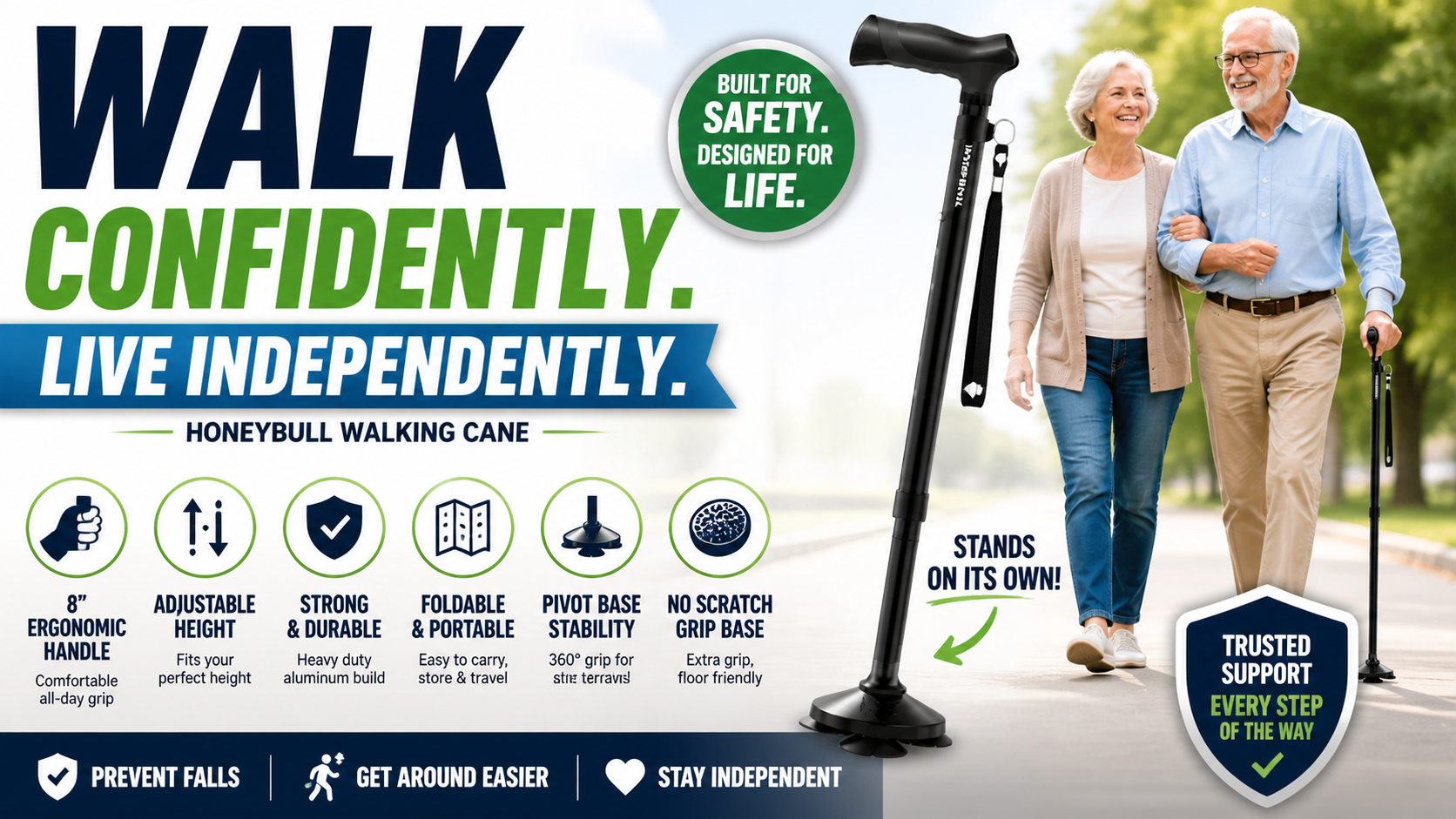

The 8 Most Common Causes of Home Falls — And the Specific Fix for Each
Fix #1 — Socks on Smooth Floors
Standard cotton socks on hardwood, tile, or laminate flooring provide almost zero traction. Every step involves slight sliding that balance reflexes normally manage automatically — but as those reflexes slow with age, the margin for error shrinks. A sudden larger slide — from a wet patch, a slightly uneven surface, or simply a step that lands differently — exceeds the available corrective capacity and produces a fall.
This is one of the most consistently overlooked indoor fall risk factors — present in virtually every home, costing nothing to address, and almost never mentioned in standard fall prevention conversations.
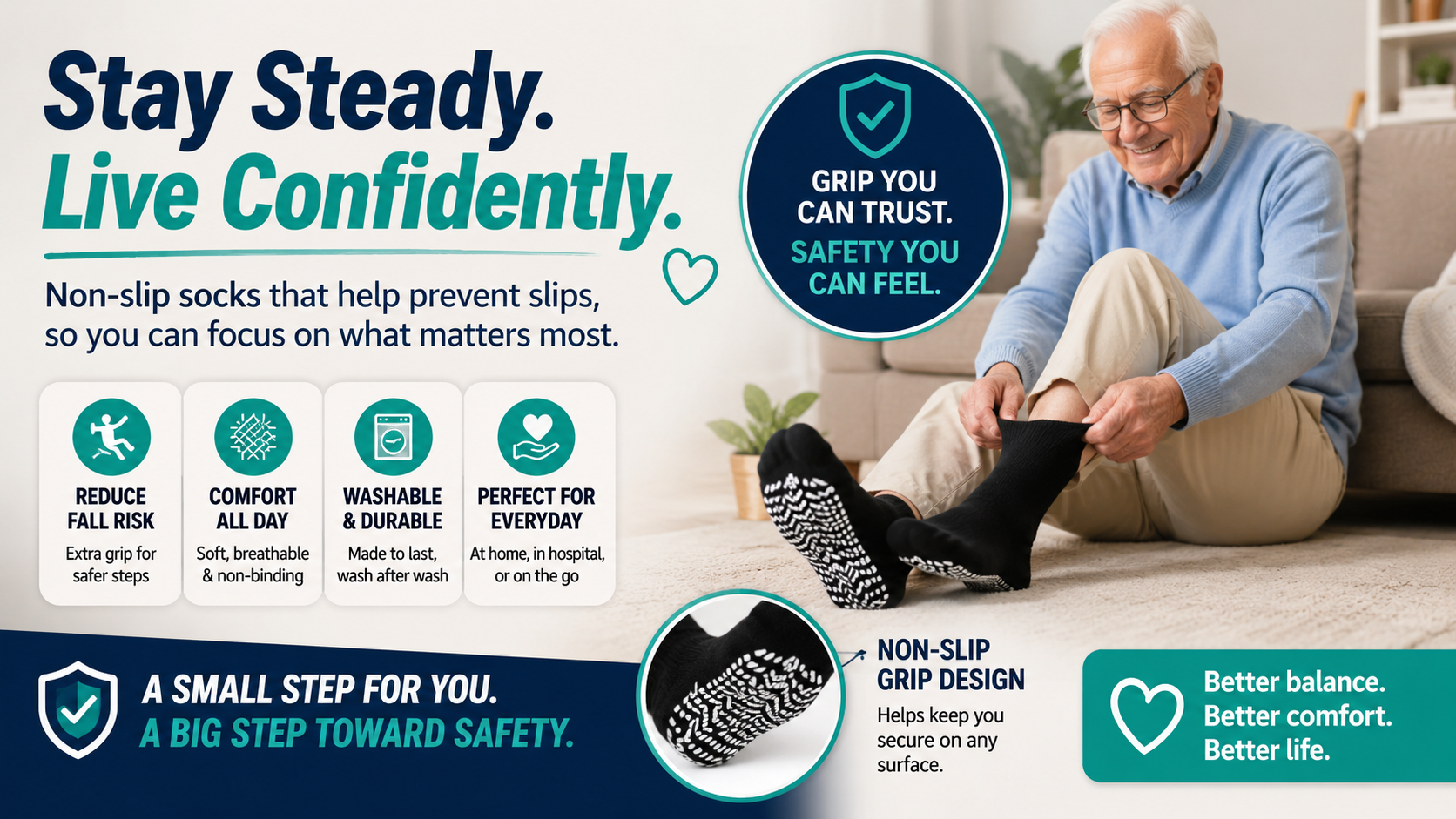
The fix: Non-slip grip socks worn consistently on smooth floors. Rubber or silicone grip patterns on the sole create traction that standard socks don’t provide — dramatically reducing the sliding that contributes to indoor falls throughout the day and during nighttime bathroom trips.
Our complete review of the best non-slip socks for seniors covers why footwear inside the home matters more than most people realize and the specific option we recommend.
→ Get the Artfasion Non-Slip Grip Socks on Amazon
Fix #2 — Unsecured Rugs
Area rugs that shift under a foot — even slightly — are one of the most common fall mechanisms in the home. A curling edge. A lifting corner. A rug that moves two inches under a foot, moving with walking momentum. Any of these can produce a fall that happens faster than any corrective response is possible.
The fix is free: remove every unsecured rug from every walking area. No rug is worth a fall. For rugs that must stay, non-slip backing combined with double-sided tape on all edges — tested by pressing firmly at every corner — is the minimum acceptable approach. When in doubt, remove it.
Fix #3 — The Unmodified Bathroom
As covered in our guide on the bathroom causes more senior falls than stairs, cars, and ice combined — approximately 80 percent of falls in older adults occur in the bathroom. Wet surfaces, one-legged transitions, hard floors, and confined spaces combine into a daily risk environment that most bathrooms have never been modified to address.
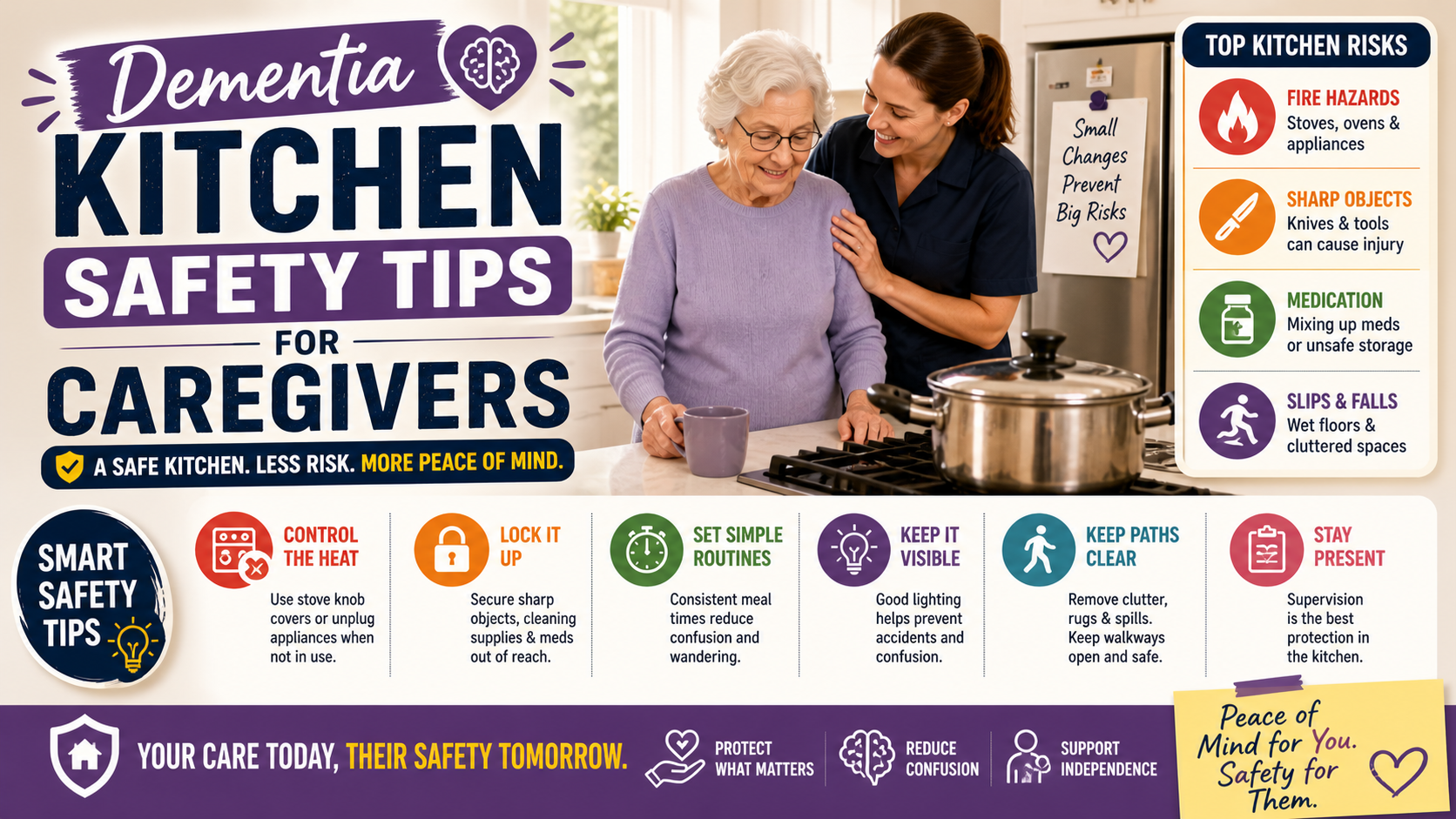
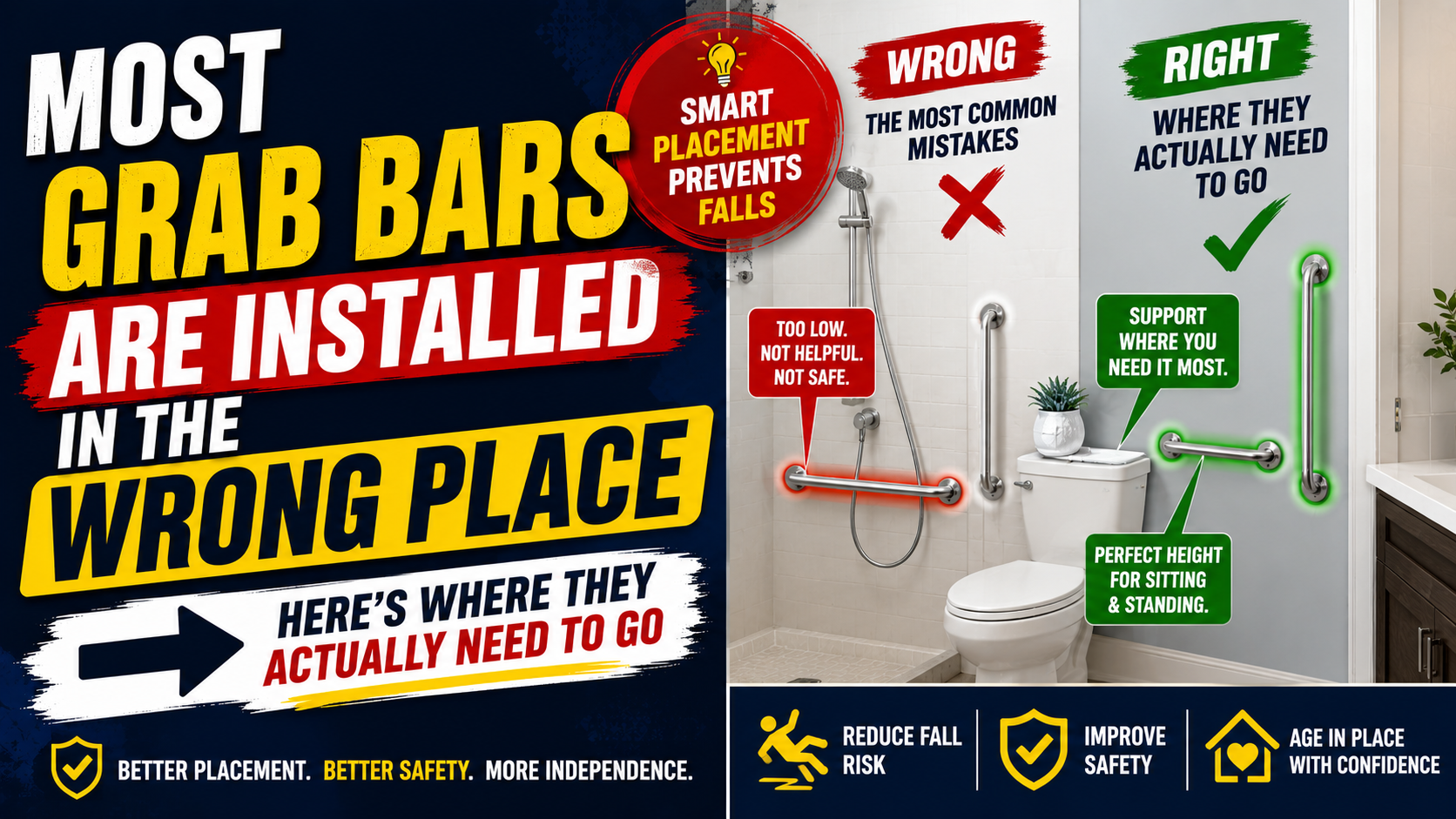
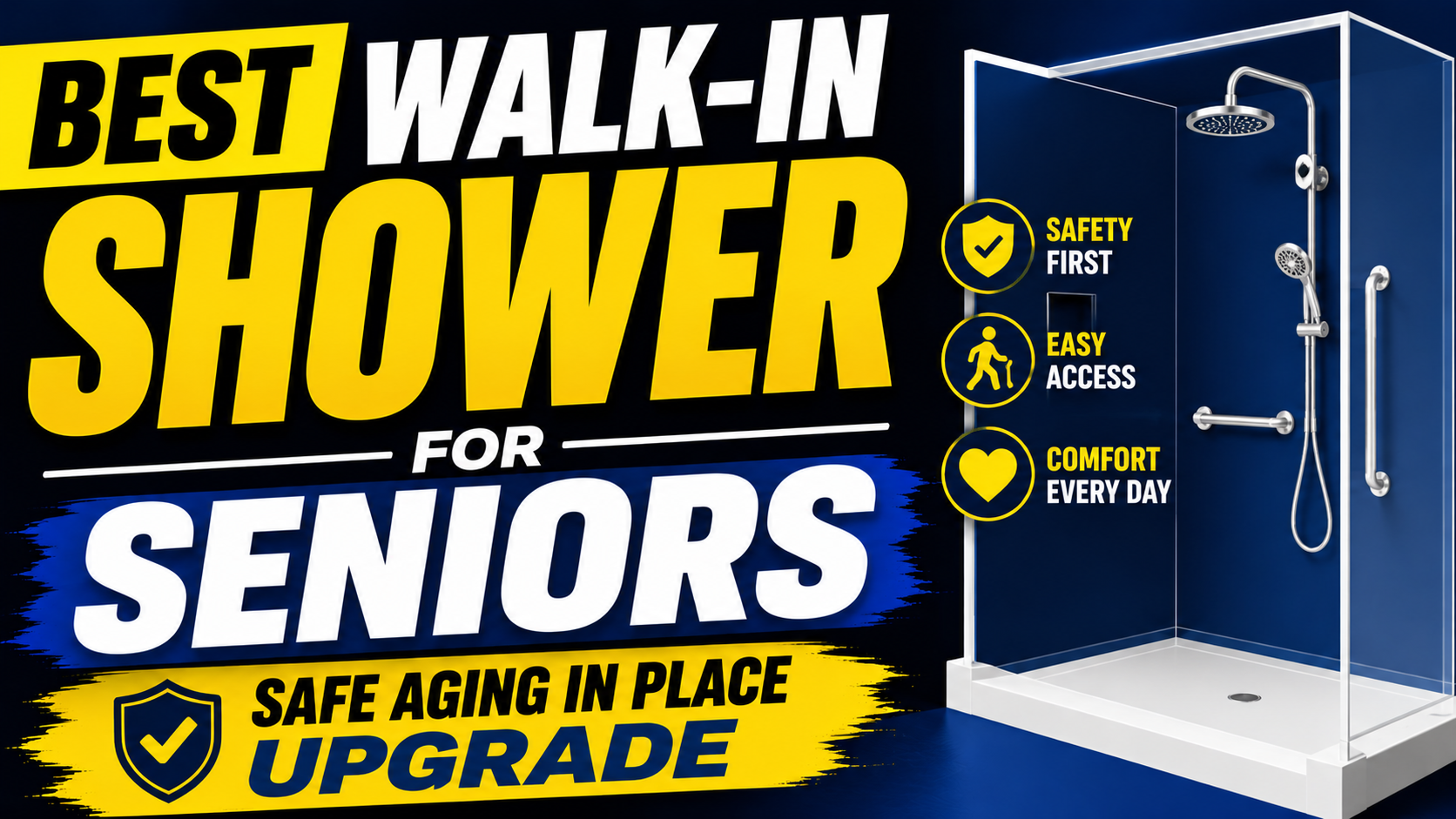
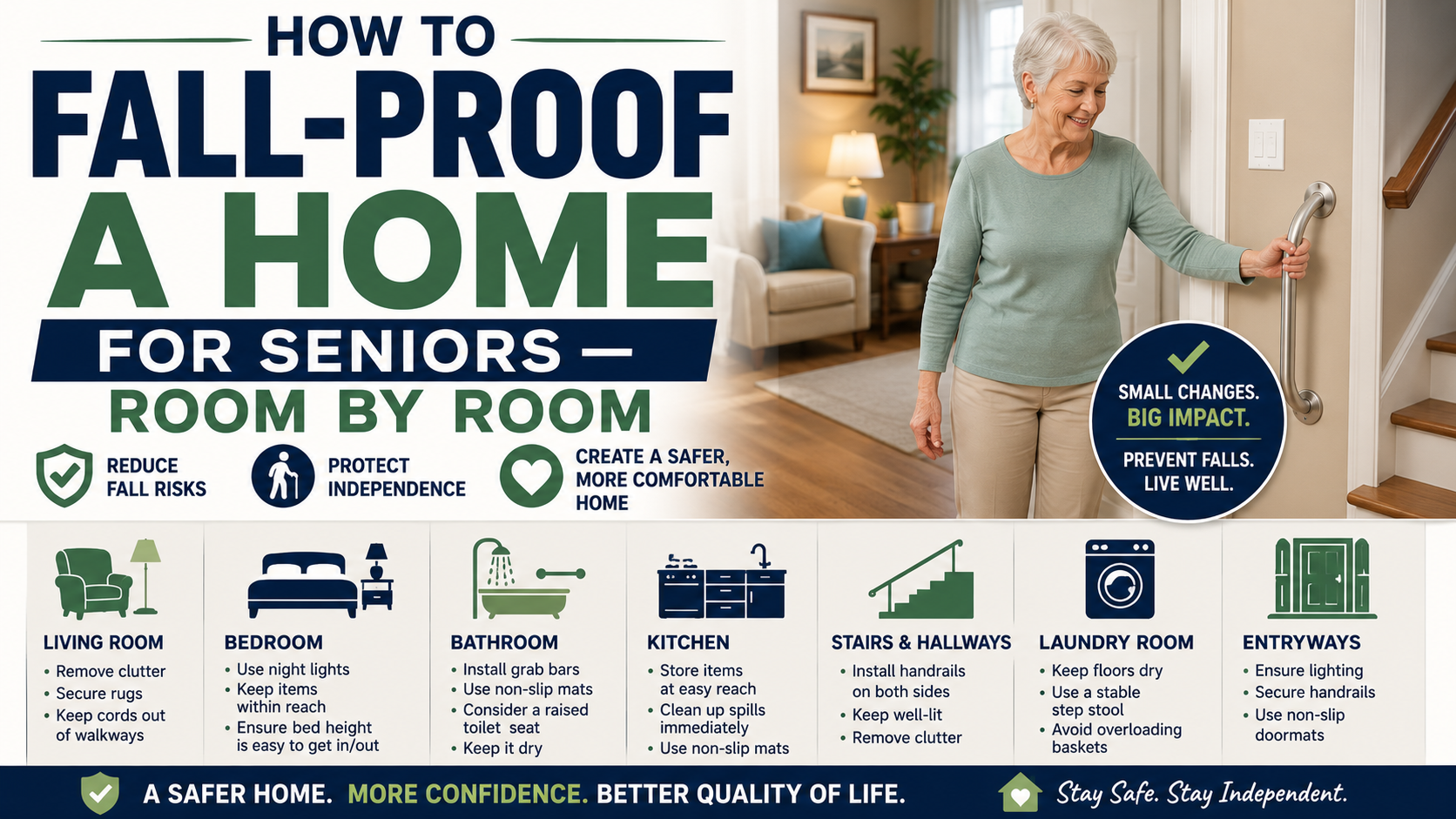
The fix: Grab bars at the shower entry and next to the toilet. A non-slip bath mat outside the shower that stays completely in place. Toilet safety rails. A shower chair. These four modifications address every major bathroom fall mechanism.
Our guide on your parent’s bathroom is more dangerous than you realize covers the full risk picture. Our guide on most grab bars are installed in the wrong place covers exactly where they need to go.
→ Get the Non-Slip Bath Mat on Amazon
→ Get the Toilet Safety Rails on Amazon
→ Get the Shower Chair on Amazon
Fix #4 — The Dark Nighttime Path
The nighttime bathroom trip — often in complete or near-complete darkness, half-asleep, sometimes urgent — is the highest-risk single event in most older adults’ daily routines. The combination of reduced alertness, orthostatic hypotension from the horizontal-to-vertical transition, and darkness removing the visual contribution to balance creates a fall risk profile that repeats multiple times per week.
The fix: Auto-on night lights covering the complete path from bed to bathroom — bedroom, hallway, bathroom. Three units that activate automatically before you’re moving through the space. Not after finding a switch in the dark. Before. Under $50 for complete path coverage.
Our review of the best auto-on rechargeable lights covers the option that also serves as power outage protection simultaneously.
→ Get the Auto-On Night Lights 3-Pack on Amazon
Fix #5 — Getting Out of Bed
As covered in our guide on getting out of bed is the most dangerous moment of a senior’s day — the morning getting-up transition combines orthostatic hypotension, sleep inertia, and the instability of pushing from a compressible mattress surface into the highest-risk single moment of most older adults’ days. It repeats every morning and during every nighttime bathroom trip.
The fix: A bed rail on the exit side of the bed. A firm, load-rated handle to push against during the sit-to-stand transition — reducing the strength required and providing stabilization during the dizziness window immediately after standing.
Our review of the best bed rail for seniors covers the ASTM-certified option we recommend. Our guide on safe ways to get out of bed as you age covers the correct technique.
Fix #6 — Medication Effects
As covered in our guide on the #1 reason seniors fall at home — medication is the single most significant modifiable fall risk factor. Blood pressure medications causing orthostatic hypotension. Sleep medications reducing morning alertness. Diuretics increasing nighttime bathroom frequency. These effects are most pronounced at home — during the transitions where their physical consequences most directly intersect with fall risk.
The fix: Request a falls-focused medication review from your physician — using those exact words. Timing adjustments frequently reduce medication-related fall risk without changing the medications themselves. This single conversation produces more fall risk reduction than almost any other single intervention available.
Fix #7 — Poor Indoor Lighting
What feels adequately lit may be genuinely insufficient for reduced visual acuity. Shadows that obscure floor-level hazards. Doorways where the light switch is on the far side of a dark room. Stair treads without adequate contrast between the step surface and the edge. These lighting inadequacies are invisible when familiar — and become visible only when a fall reveals them.
The fix: Increase wattage in dim rooms. Add lamps to dark corners. Ensure light switches are accessible before entering rooms rather than requiring navigation into darkness. Add stair lighting with switches at both top and bottom. Our guide on how to prevent falls on stairs covers stair lighting specifically.
Fix #8 — No Safety Net for When Prevention Isn’t Enough
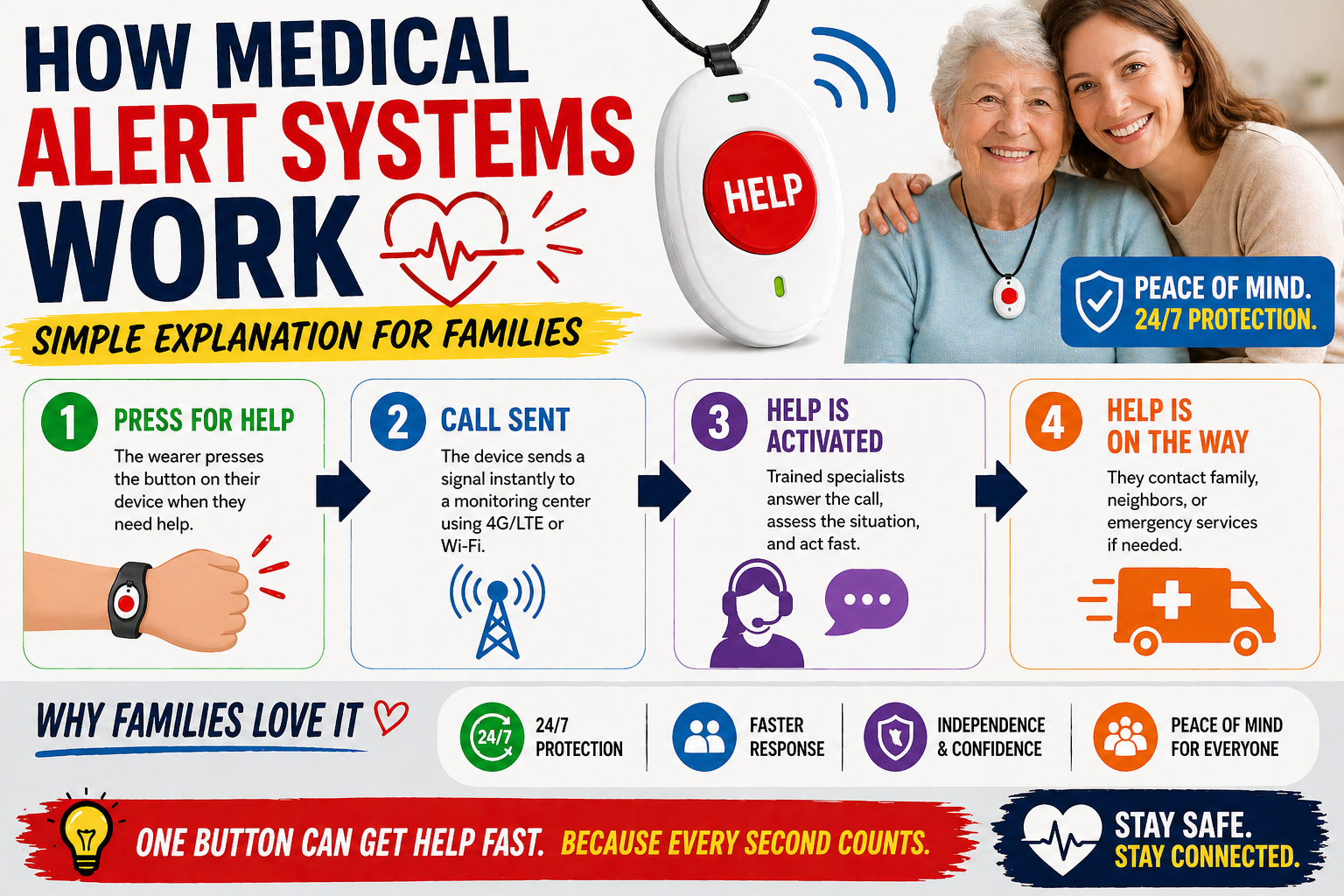
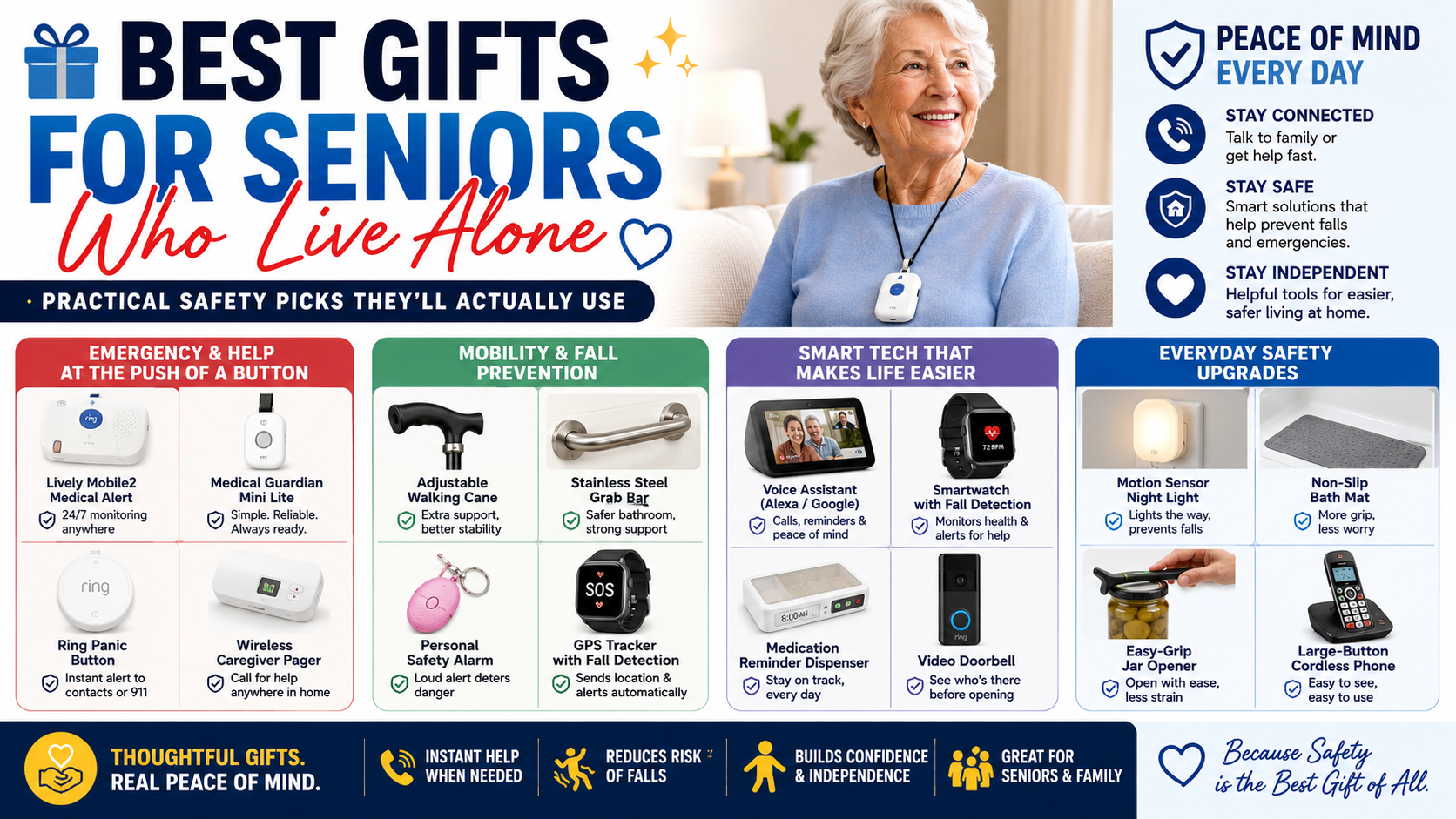
Every fix above reduces the probability of a home fall. None eliminates it entirely. The gap between prevention and complete safety is where a medical alert device with automatic fall detection lives — providing the protection that determines what happens when a fall occurs despite every other measure in place.
For anyone living alone, this is the fix that matters most for outcomes after a fall. The SecuLife Smartwatch detects falls automatically — alerting family immediately with GPS location without requiring any action from the person who has fallen. Worn on the wrist it goes everywhere in the home including the bathroom and the bedroom during every nighttime trip.
Our complete review at SecuLife Smartwatch Review covers every feature worth knowing. Our guide on best medical alert system for seniors living alone covers the complete solo-living safety picture.
→ Get the SecuLife Smartwatch on Amazon
The Compounding Effect — Why All Eight Matter
Each fix above addresses one specific fall cause. But falls in older adults are almost always multifactorial — several risk factors present simultaneously, each contributing to a cumulative risk that exceeds what any single factor would produce alone.
Standard socks on smooth floors alone might not cause a fall. Standard socks on smooth floors, combined with poor lighting, combined with getting up quickly from bed with orthostatic hypotension, combined with no grab bar to reach for in the bathroom — that combination produces the fall that each individual factor alone might not have.
This is why the comprehensive approach matters more than addressing any single factor. Each fix removes one layer of risk from the compounding stack. More fixes removed means more layers of protection added. The home that has all eight fixes in place is dramatically safer than the home with only three — not incrementally safer, dramatically safer.
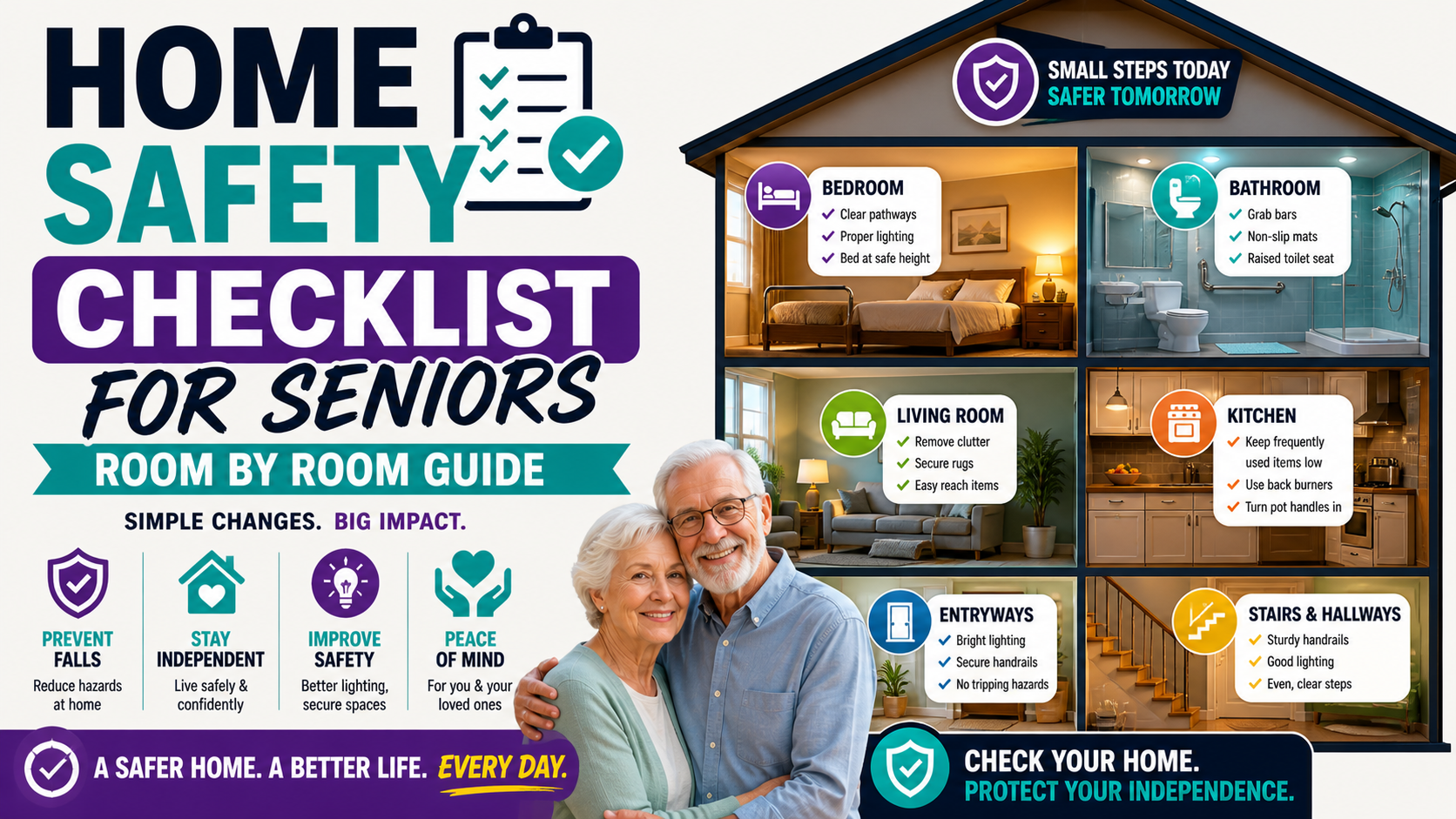
Our comprehensive guide on the complete senior safety guide covers every element of home safety in one resource. Our home safety checklist gives you the systematic assessment tool. And our guide on senior fall prevention products that actually work covers every product ranked by real-world impact.
The Fix That’s Free — Start Today
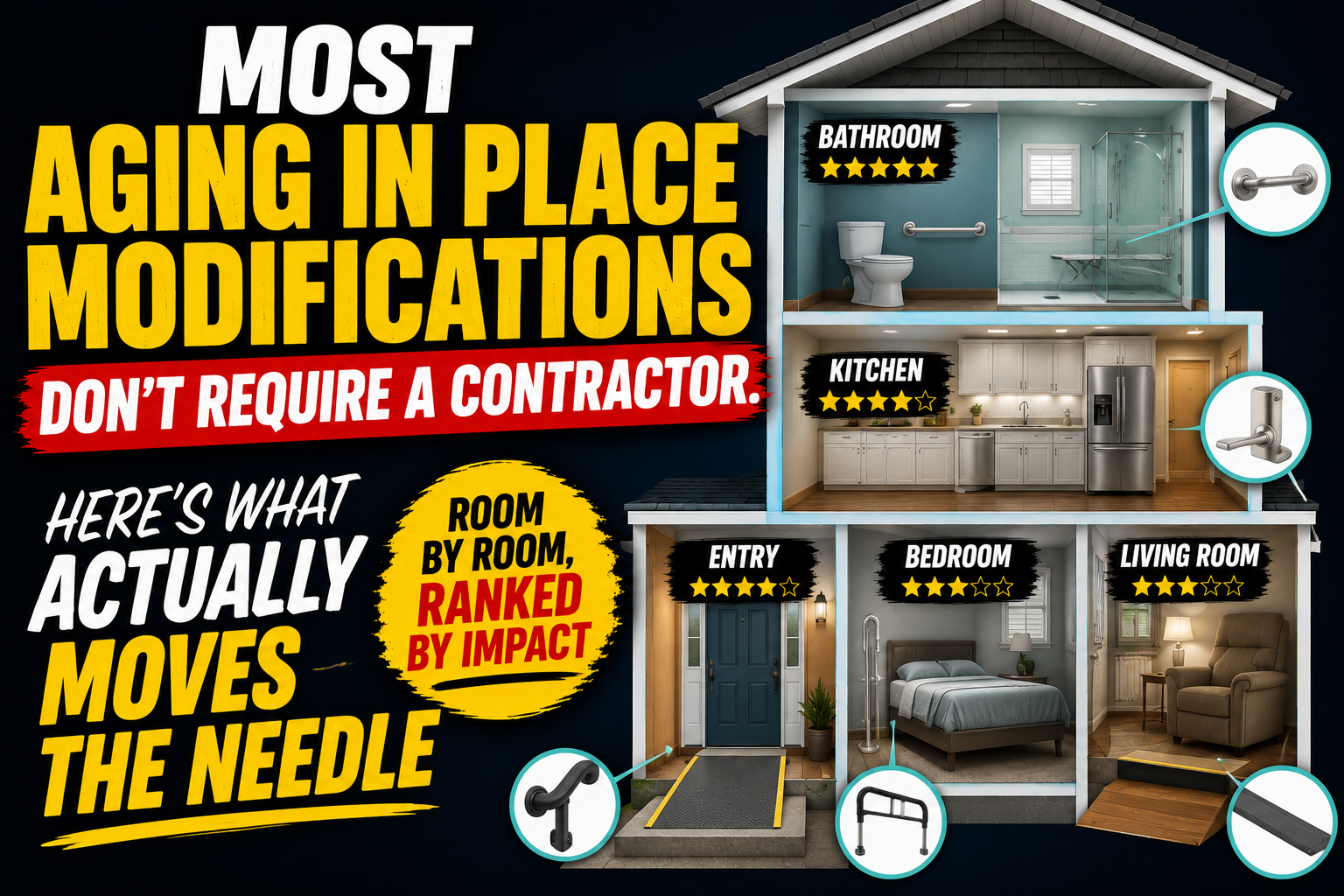
Of the eight fixes above several require no purchase and no installation — they require only action today.
Walk through the home and remove every unsecured rug from every walking area. Route every cord away from every walking path. Check every room’s lighting and identify the dark spots. These three actions are free, take two hours, and address real fall risk immediately.
The fix that costs the least and gets overlooked most is non-slip socks. A product that costs less than a restaurant meal, addresses a daily fall risk that exists on every smooth floor in the home, and starts working from the moment it’s worn.
Our complete review of the best non-slip socks for seniors covers why footwear inside the home matters more than most people realize — and why this simple swap is one of the most underused fall prevention measures available.

The Complete Home Fix List
Here’s everything from this guide in a single actionable list — in order of ease so you can start immediately and build from there.
Free — do today:
- Remove every unsecured rug from every walking area
- Route all cords along walls and away from walking paths
- Check lighting in every room and identify dark spots
- Request falls-focused medication review from physician this week
Low cost — order this week:
- Non-slip grip socks for daily indoor wear
- Auto-on night lights for bedroom, hallway, and bathroom
- Non-slip bath mat outside the shower
- Toilet safety rails — tool-free installation
- Bed rail — slides under mattress, no tools required
Moderate investment — this month:
- Grab bars at shower entry and next to toilet — professional installation recommended
- Shower chair for seated showering
- Medical alert device with automatic fall detection

Frequently Asked Questions
Why do most senior falls happen at home rather than outside?
Two primary reasons — hazard invisibility and discovery delay. Familiar home environments make hazards invisible through routine while outdoor hazards announce themselves and trigger heightened attention. Home falls also go undiscovered significantly longer than outdoor falls, producing worse outcomes from the same initial injury. The combination makes home falls both more common and more serious than outdoor falls in older adults.
What is the single most important home fall prevention fix?
Grab bars at the shower entry and next to the toilet — these two modifications address the highest-frequency, highest-consequence transitions in the highest-risk room in the home. If only one category of modification gets made, bathroom grab bars in the correct positions are it. Our guide on most grab bars are installed in the wrong place covers exact positioning.
How much does it cost to fully fix the home fall risks covered here?
The free and low-cost fixes — rug removal, cord management, non-slip socks, night lights, bath mat, toilet rails, bed rail — total approximately $150 to $250 in product costs with no installation labor. Adding grab bars with professional installation brings the total to approximately $400 to $600. The medical alert device adds $100 to $200 upfront plus a monthly service fee. For a genuinely comprehensive home fall safety system the total investment is typically $500 to $800 — compared to an average emergency room visit cost of $1,500 to $3,000 before any treatment.
My parent refuses to make any changes. What do I do?
Start with the changes that don’t require their agreement. Remove unsecured rugs during a visit. Replace the bath mat. Plug in night lights. These require no conversation and no consent — they just happen. Our guide on your parent said they’re fine covers exactly how to navigate resistance to home safety changes.
Are home falls really more dangerous than outdoor falls?
For outcomes — yes. The discovery delay from home falls in solo-living older adults produces physiological consequences that outdoor falls witnessed by others don’t. As covered in our guide on what happens to seniors who fall and can’t get up — the time on the floor independently predicts outcome separate from the injury itself. Home falls that aren’t discovered quickly consistently produce worse outcomes than outdoor falls of equivalent initial severity.
The Home Is Where Safety Starts
The home is where most older adults spend most of their time. It’s where they’re most comfortable, most independent, and most at risk. The hazards that accumulate as physical capacity changes and the home doesn’t are the hazards that produce the falls that change everything.
Eight fixes. Some free. Some under $50. One important investment in detection technology. All of them addressable over a single focused weekend.
The home that was the most dangerous environment becomes the safest one — specifically because it was addressed rather than assumed to be fine.
→ Get the Non-Slip Grip Socks on Amazon — start with the easiest fix today
→ Get the Grab Bars on Amazon — the highest-impact bathroom fix
→ Get the SecuLife Smartwatch on Amazon — the safety net when prevention isn’t enough
About the Author
Tom Garrett spent eight years as an EMT responding to fall calls — the vast majority of which were home falls, not outdoor ones. He arrived at homes where the hazard that caused the fall was obvious in retrospect — the rug that shifted, the dark bathroom navigated without lights, the bed without a rail, the smooth floors in socks. In almost every case the family said the same thing: they had known about the hazard and hadn’t gotten around to addressing it. He writes for Elder Safety Guide because “getting around to it” has a deadline that arrives without warning — and the eight fixes in this guide are all that stand between a home fall that hasn’t happened yet and the one that has.