The kitchen is the most dangerous room for someone with dementia. Here are the specific changes caregivers need to make to prevent burns, fires, and accidents.
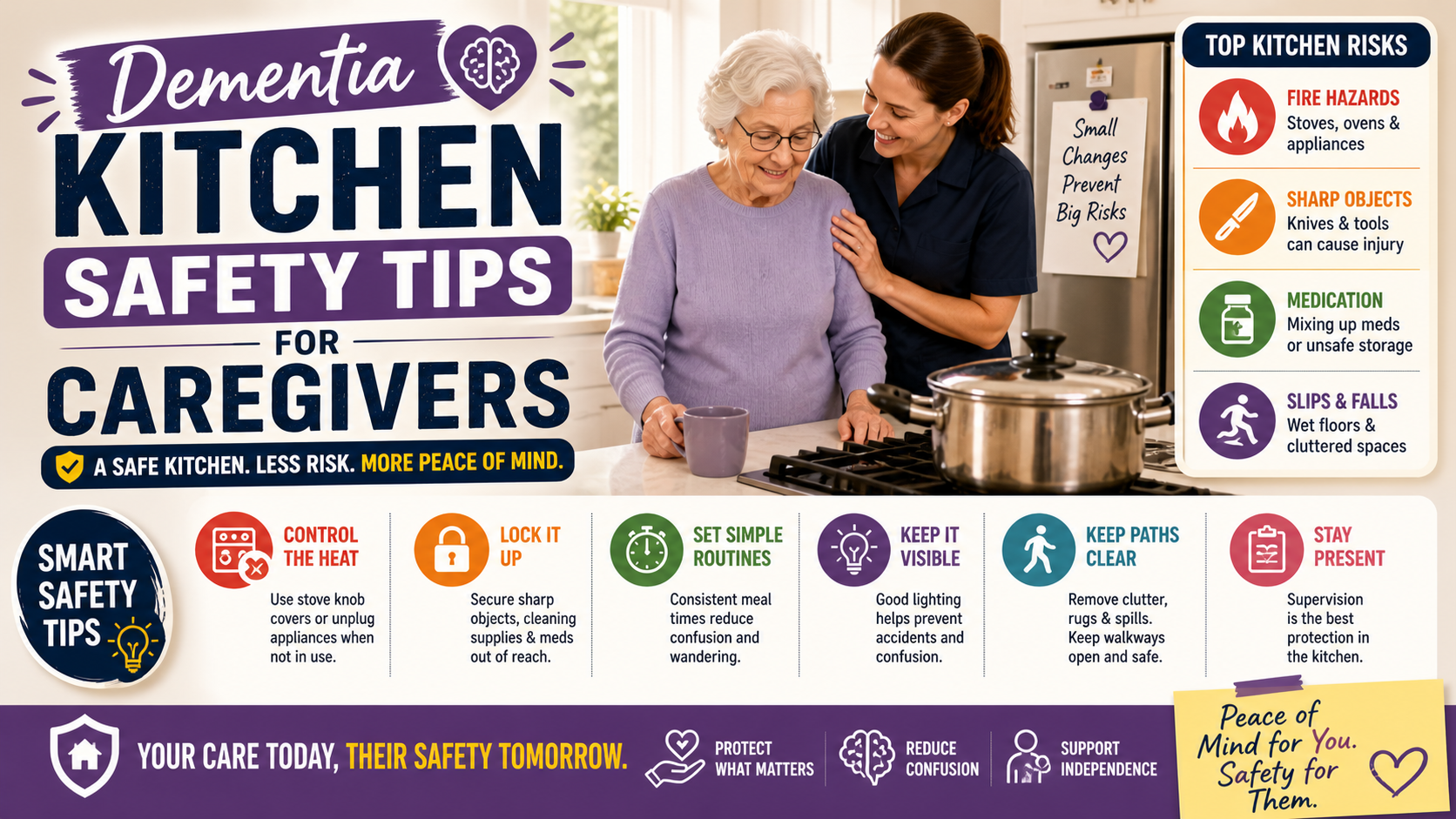
The kitchen is the most dangerous room in the home for a person with dementia — and it’s the room where well-meaning caregivers most often make the mistake of waiting too long to intervene. The stove gets left on. The kettle boils dry. A sharp knife gets picked up for no clear reason. A cleaning product stored under the sink gets mistaken for a drink.
These aren’t hypothetical risks. They’re the incidents that send people with dementia to emergency rooms and that end home living prematurely for families who weren’t prepared.
The goal of this guide is to give caregivers a specific, staged action plan for kitchen safety — what to address at each stage of dementia, why each measure matters, and how to implement changes without unnecessary conflict.
Why the Kitchen Demands Special Attention in Dementia
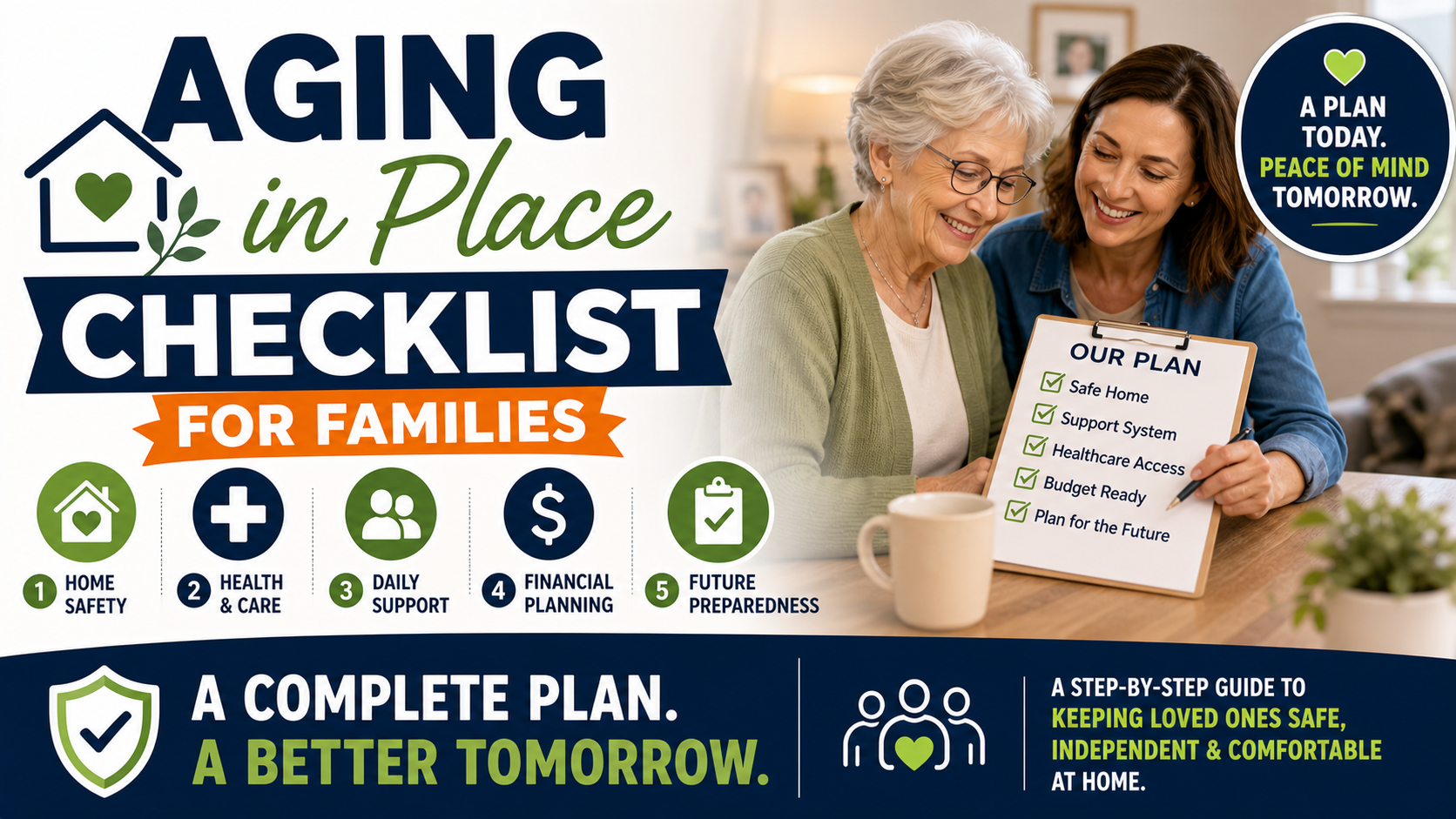
Standard senior home safety focuses on fall prevention — grab bars, non-slip surfaces, better lighting. The kitchen safety risks created by dementia go significantly beyond falls. They include fire, burns, poisoning, and nutritional harm — all of which require different modifications than fall prevention alone. These dementia-specific risks are best coordinated with a family aging-in-place planning guide that also covers broader home safety and support needs.
The Stove Problem
A person with dementia may turn on a burner and walk away with no memory of having done so. They may turn on burners they aren’t using because the act of turning knobs feels familiar and purposeful even without a cooking intention. They may put something on the stove and become distracted, returning to find it scorched or flaming.
The stove is responsible for the majority of kitchen fires and burns in households managing dementia. It is the highest priority kitchen safety issue and the one that requires the most decisive intervention.
Hazardous Substance Confusion

Dementia affects the ability to identify substances correctly. A cleaning product in a bottle may be mistaken for a beverage. Expired or spoiled food may not be recognized as unsafe. Medications may be double-dosed because the first dose isn’t remembered. Items that are obviously distinct to an unimpaired person may be completely indistinguishable to someone with moderate to advanced dementia. For families concerned about repeated or double doses, automatic medication dispensing options can add structure to the medication routine.
Reduced Awareness of Danger
A hot burner, a sharp knife, or a boiling kettle represents an obvious hazard to anyone with intact cognition. For a person with dementia the recognition of danger — this is hot, this is sharp, this will hurt — may not be reliably present. They may touch a hot surface without recognizing the warning signal of heat. They may handle sharp objects without awareness of the risk.
Nutritional Risk
Dementia affects appetite, meal planning, and the recognition of hunger. A person with dementia living independently or with limited supervision may not eat adequately — forgetting to eat, eating the same food repeatedly, not recognizing that food is spoiled, or losing interest in food entirely. Nutritional decline accelerates both physical and cognitive deterioration.

Stage-Based Approach — Matching Interventions to Current Needs
The appropriate kitchen safety interventions depend on the current stage of dementia. Over-restricting too early creates unnecessary conflict and resistance. Under-restricting too late creates genuine danger. Here’s a staged framework.
Early Stage — Supervised Independence With Safety Modifications
In early-stage dementia cooking may still be possible with appropriate supervision and environmental modifications. The person retains significant capability and maintaining participation in familiar activities like cooking has genuine cognitive and emotional benefit. The goal at this stage is making independent cooking safer rather than eliminating it.
Key modifications at this stage:
- Remove stove knobs when the person is in the kitchen unsupervised — replace them for supervised cooking
- Install an automatic stove shutoff device that cuts power after a set period of inactivity
- Move cleaning products and medications out of kitchen cabinets to locked storage elsewhere
- Label cabinet contents clearly with large text or photos
- Set up a simple meal routine that reduces the complexity of cooking decisions
- Check the refrigerator regularly and remove expired or spoiled food
Middle Stage — Supervised Cooking Only, Increased Restrictions
In middle-stage dementia unsupervised use of the stove or sharp implements is no longer appropriate. The person may still participate in meal preparation with direct supervision — simple tasks like stirring, setting the table, or preparing simple items — but independent cooking creates unacceptable risk.
Key modifications at this stage:
- Stove disabled when caregiver is not in the kitchen — knobs removed or power disconnected at the breaker
- Sharp knives and scissors moved to locked storage
- All cleaning products and medications in locked cabinets
- Microwave as the primary independent cooking option — with supervision for hot items
- Pre-prepared meals that require minimal preparation
- Refrigerator lock or alarm to prevent unsupervised access to spoiled food
Advanced Stage — Full Caregiver Preparation, No Independent Kitchen Access
In advanced dementia the person should not be in the kitchen unsupervised. All meal preparation is handled by the caregiver. The kitchen may need to be secured against unsupervised entry — a simple door alarm or lock at the kitchen entrance provides notification or delay for someone attempting to enter alone.
Stove Safety — The Highest Priority
Every kitchen safety plan for dementia starts with the stove. Here are the specific options available at different points in the progression.
Stove Knob Removal
The simplest and most immediately effective stove safety measure is removing the knobs when the stove is not in supervised use. Most stove knobs pull straight off without tools. With no knobs in place the burners cannot be turned on regardless of intent or confusion. Keep the knobs in a location accessible to the caregiver but not to the person with dementia.
This approach allows continued supervised use of the stove — the caregiver replaces the knobs for cooking and removes them immediately after — while eliminating unsupervised access entirely.
Stove Knob Covers
Stove knob covers that require a specific action to remove — typically a squeeze-and-turn motion — can be left in place permanently. They prevent impulsive or accidental burner activation while allowing supervised use without removing and replacing knobs each time.
Automatic Stove Shutoff Devices
Several devices on the market connect to the stove’s power supply and cut power automatically after a set period of inactivity — typically 5 to 10 minutes with no movement detected near the stove. These are particularly useful for early-stage dementia where some supervised cooking independence is still appropriate but the risk of forgetting a burner is real.
Disconnecting Power at the Breaker
For middle to advanced stage dementia the most reliable stove safety measure is simply turning off the breaker that powers the stove when it isn’t in supervised use. This requires no special equipment and cannot be circumvented. The caregiver switches the breaker on for supervised cooking and off when done.
Induction Cooktops as an Alternative
Induction cooktops heat through magnetic fields rather than open flame or radiant heat — the surface itself doesn’t get hot, only the pot does. This eliminates the burn risk from touching the cooking surface and reduces fire risk. For early-stage dementia where some cooking independence is still maintained, switching from a traditional stove to an induction cooktop reduces the severity of potential incidents even when supervision lapses briefly.
Sharp Objects — Storage and Access
Kitchen knives, scissors, skewers, graters, and other sharp implements need to be managed based on the person’s current stage and behavior patterns.
Early Stage
Sharp implements can remain in standard storage with monitoring. If the person is still cooking with supervision, access to appropriate tools during those supervised sessions is reasonable. Watch for any concerning handling patterns — reaching for knives without cooking purpose, confusion about what tools are for — as signals to move to the next stage of restriction.
Middle to Advanced Stage
Sharp implements move to locked storage — a drawer with a child-proof lock, a locked knife block, or a separate locked cabinet. This isn’t about assuming the person is dangerous. It’s about removing a hazard from an environment where it may be encountered and handled without full awareness of the risk.
Keep one or two appropriate implements accessible for supervised use — a single paring knife in a visible location that the caregiver can monitor — rather than locking everything away in a way that makes supervised cooking unnecessarily complicated.


Hazardous Substances — Locked Storage Is Non-Negotiable
From the point of diagnosis all medications and cleaning products should be in locked storage in the kitchen. This is not a middle or late stage modification — it’s an early stage baseline that should be in place before any incidents occur.
Cleaning Products
Products stored under the kitchen sink — dish soap, cleaning sprays, dishwasher pods — are particularly high risk because they’re in familiar-looking containers at accessible height. Dishwasher pods have been ingested by people with dementia who mistake them for food items. All cleaning products move to a locked cabinet from the point of diagnosis.
Medications
Medications should never be stored in the kitchen — even if this was a longstanding household practice. The kitchen is an environment where eating and drinking behaviors are automatic and where the visual distinction between a medication bottle and a food container may not be reliably made by a person with dementia.
A locked medication dispenser in a non-kitchen location provides organized, controlled medication access without kitchen storage risk.
Alcohol
Alcohol stored in the kitchen — cooking wine, spirits used for baking — should be moved to locked storage. The interaction between alcohol and dementia medications can be serious, and a person with dementia may not recognize a cooking ingredient as alcohol.
Food Safety — Managing Nutrition and Spoilage
Nutritional management is a critical and often overlooked aspect of kitchen safety for dementia. Poor nutrition accelerates both physical and cognitive decline and creates secondary safety risks — weakness, dizziness, and reduced alertness all increase fall risk.
Regular Refrigerator Checks
Check the refrigerator at every visit or daily if possible. Remove expired and spoiled food promptly — a person with dementia may not recognize spoilage and may eat anything that’s accessible. Pay particular attention to leftovers, which may be reheated repeatedly or kept well past safe storage times.
Simple Visible Meal Options
Keep clearly labeled, simple, ready-to-eat food options at accessible height in the refrigerator and pantry — food that can be eaten without preparation or with minimal preparation. When the path to eating is simple and obvious, nutritional intake is more reliable than when it requires planning and cooking steps the person with dementia can no longer manage.
Meal Delivery and Preparation Services
Meal delivery services — either prepared meal delivery or caregiver-prepared meals stored for the week — provide reliable nutrition without requiring the person with dementia to manage meal preparation independently. This is worth considering earlier in the progression than most families do, before nutritional decline has become a documented problem.
Monitoring Eating Patterns
Watch for signs of inadequate nutrition — weight loss, reduced energy, increased confusion — which may indicate that the person isn’t eating adequately even when food is available. A person with dementia may forget they haven’t eaten, lose interest in food, or be unable to complete the sequence of steps needed to prepare even simple meals.
The Kitchen and Fall Prevention
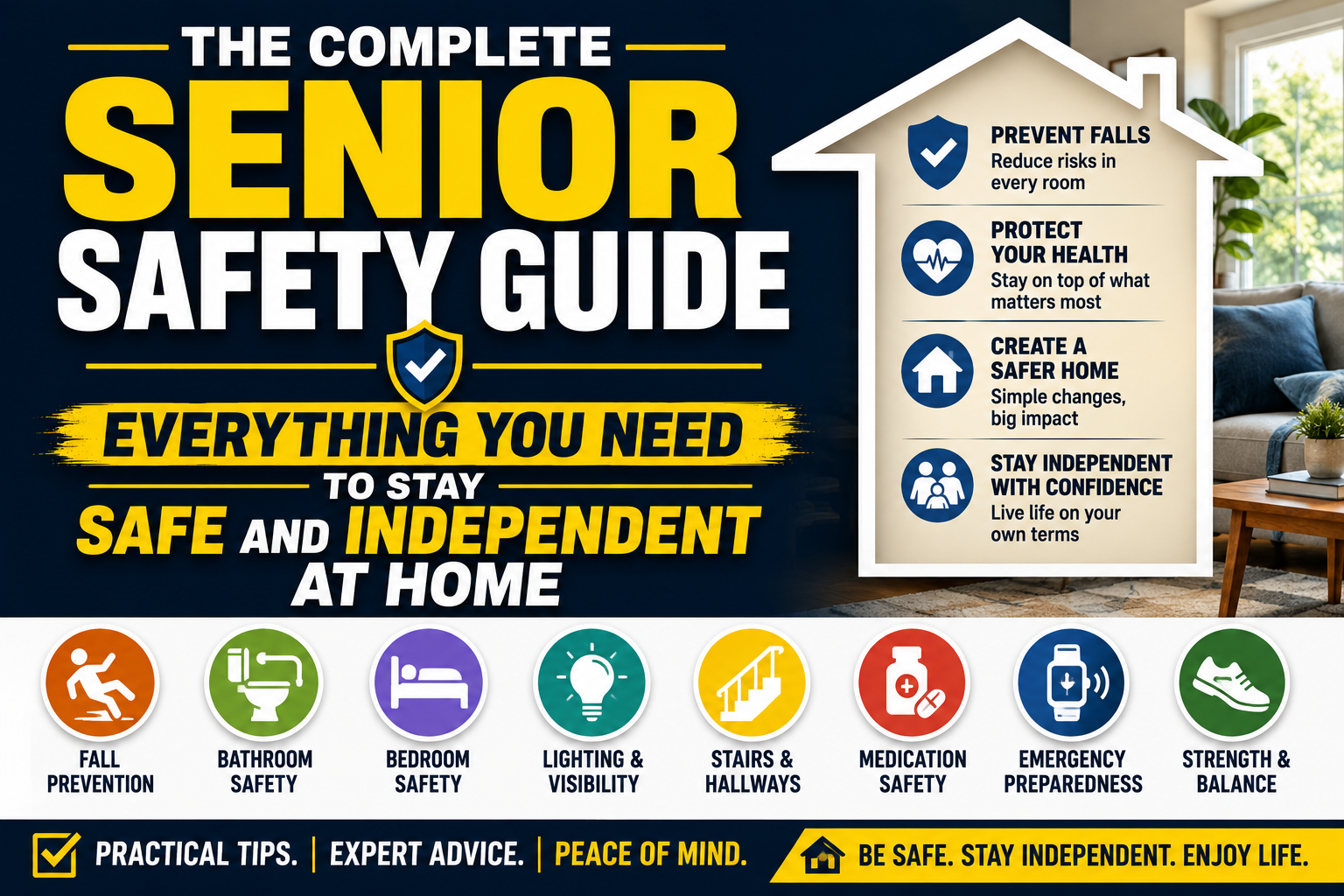
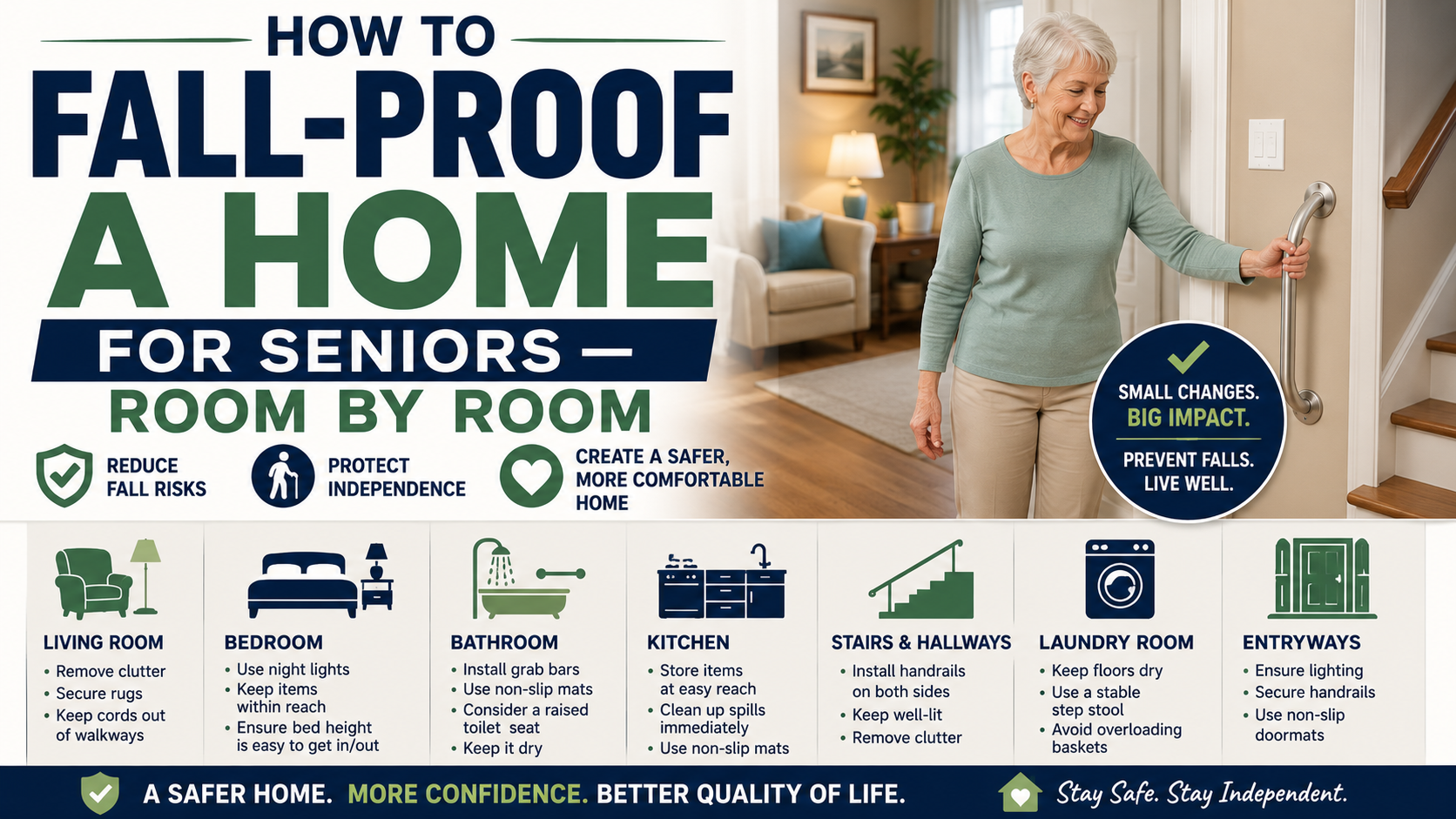
Beyond the dementia-specific risks, the kitchen presents standard fall hazards that apply to any older adult — wet floors, reaching overhead, carrying items while walking. For someone with dementia these risks are compounded by reduced awareness of hazards and reduced ability to respond to them. These kitchen concerns can be assessed alongside the other rooms in this whole-home senior safety advice.
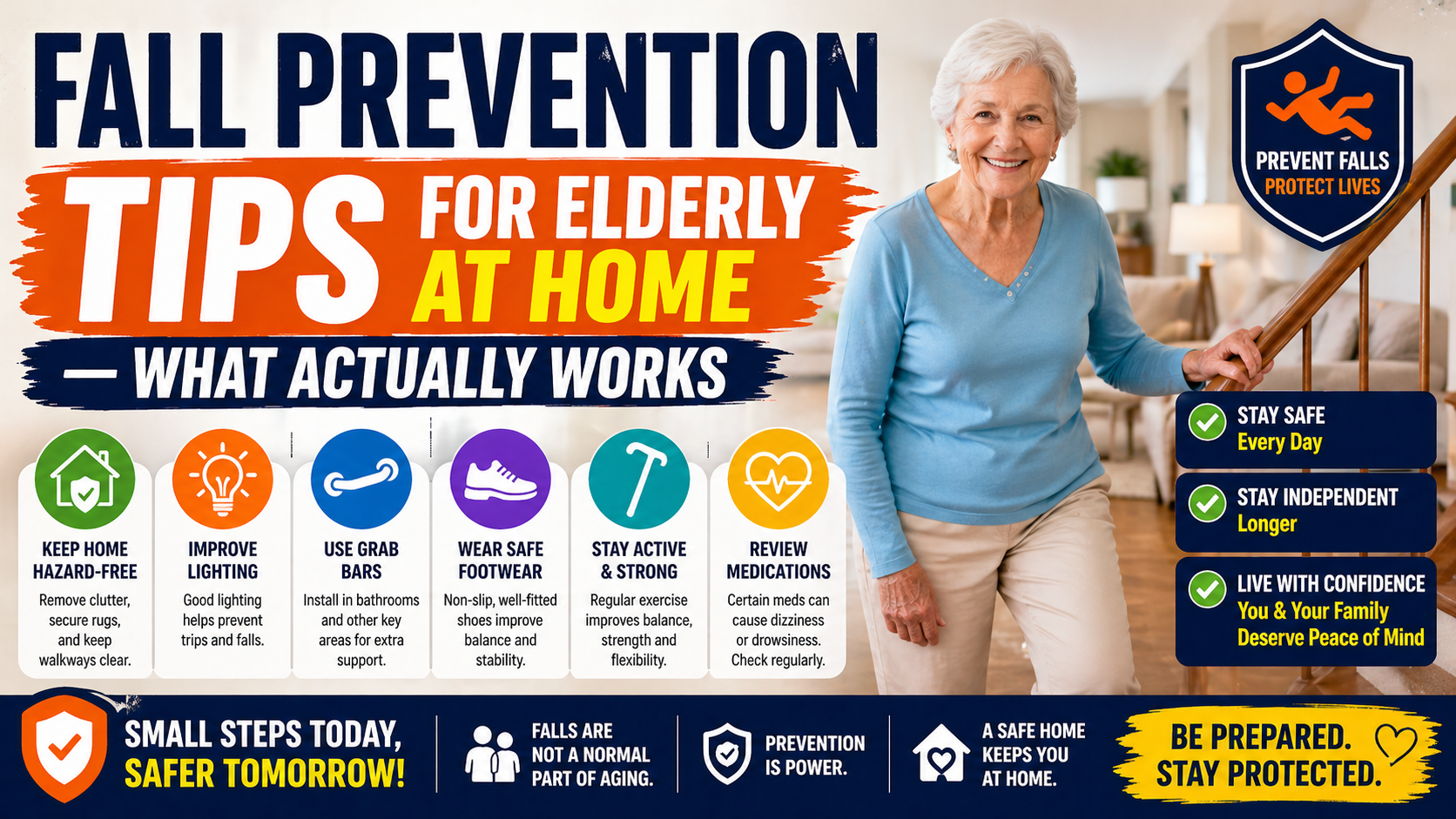
Key kitchen fall prevention measures include keeping the floor clear and dry at all times, organizing storage so daily items are between hip and shoulder height, and ensuring adequate lighting throughout the kitchen. Our comprehensive guide on fall prevention at home covers the full picture and our home safety checklist includes a kitchen section worth working through systematically.
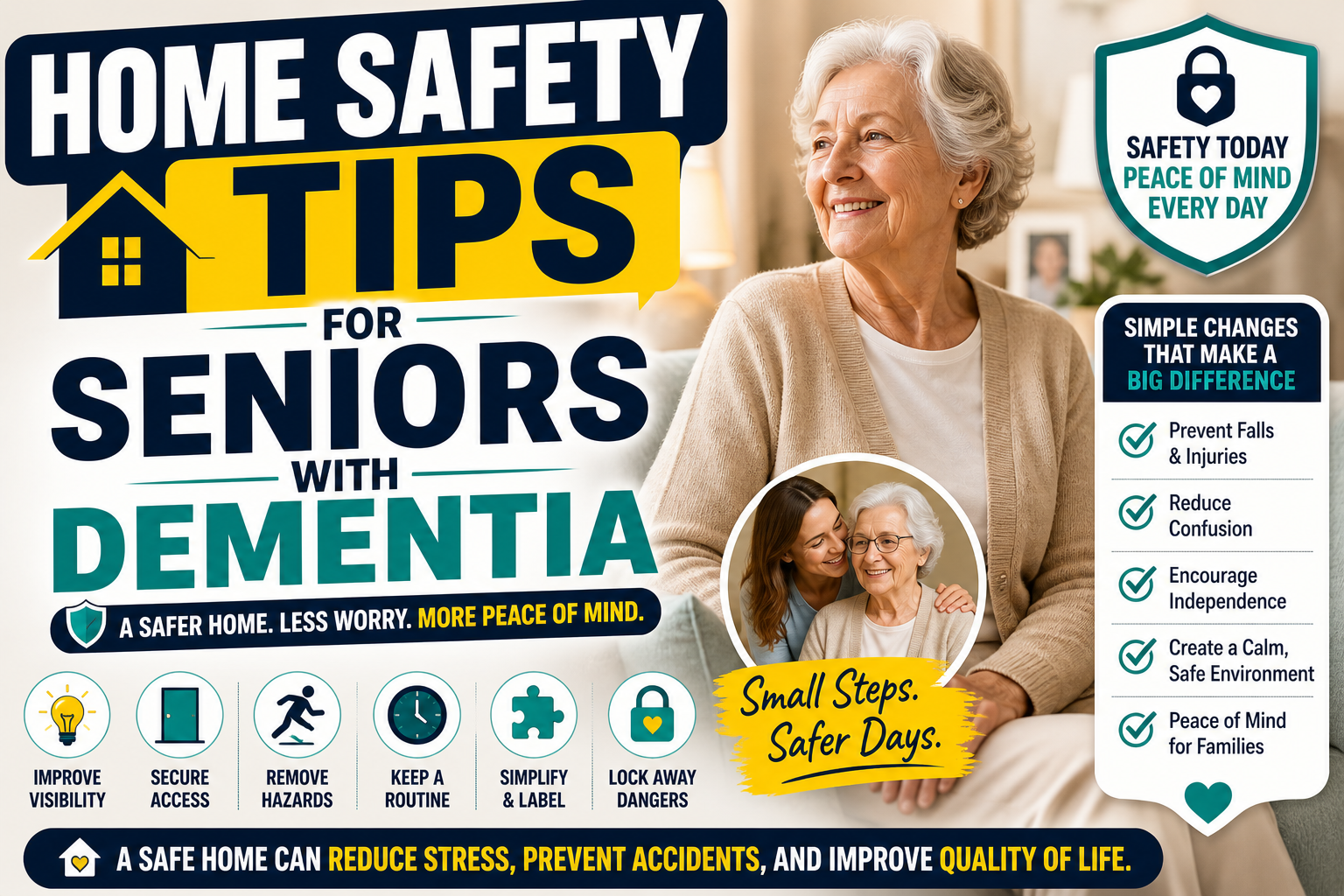
For the complete picture of dementia home safety beyond the kitchen our guide on home safety tips for seniors with dementia covers every room. Wandering management is covered in our guide on wandering prevention for dementia and nighttime safety in our guide on keeping a parent with dementia safe at night.

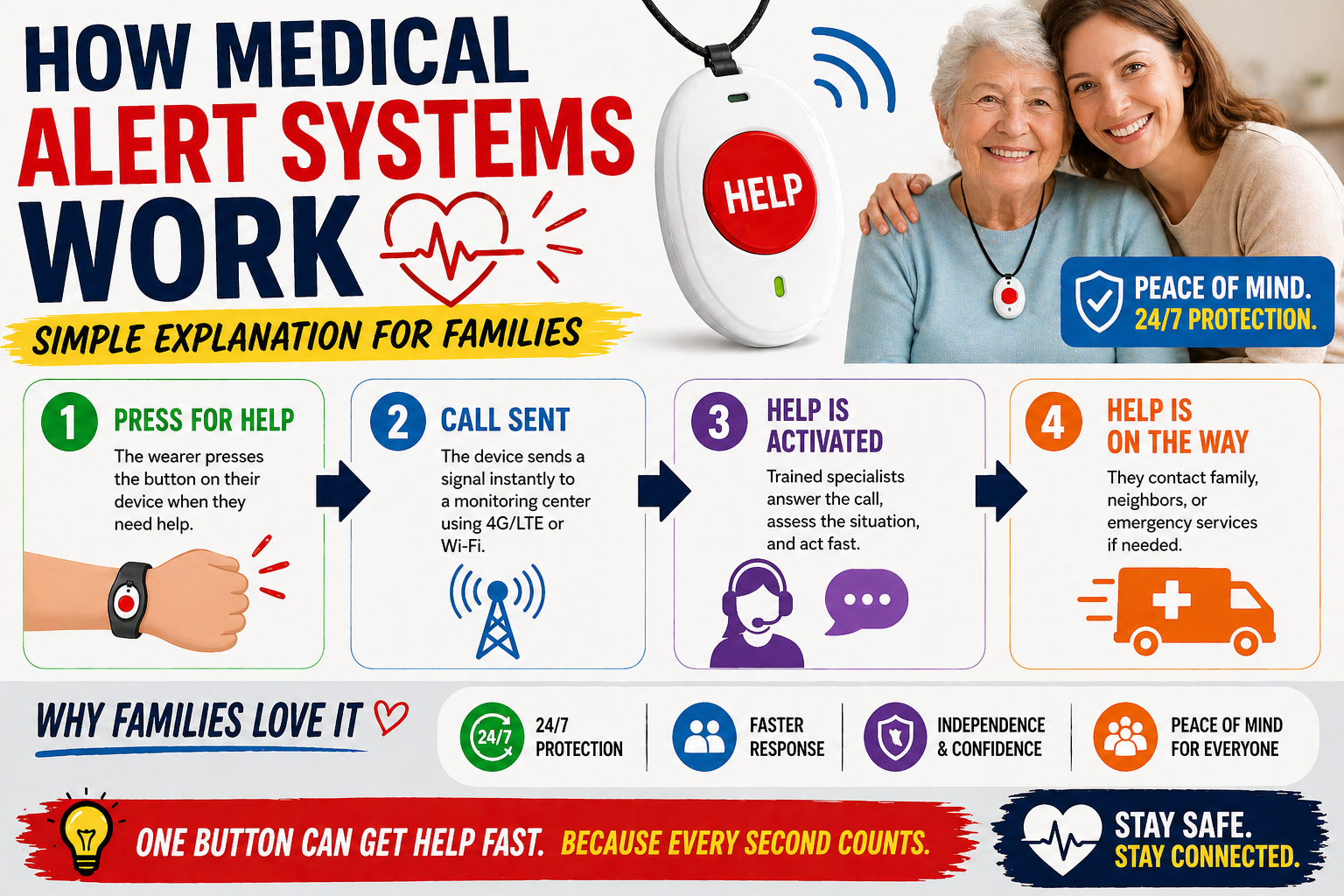
And regardless of every kitchen and home safety measure in place, automatic fall detection provides the safety net for when something happens anyway. The SecuLife Smartwatch detects falls automatically and alerts family members immediately — worn on the wrist so it’s there in the kitchen during cooking activities and everywhere else throughout the day.
→ See the SecuLife Smartwatch on Amazon
Having the Conversation About Kitchen Restrictions
Removing kitchen access — particularly cooking access — can feel to a person with dementia like a profound loss of identity and independence. Cooking is often a deeply meaningful activity connected to decades of caring for family. Restricting it requires sensitivity alongside decisiveness.
Lead with involvement rather than restriction where possible. Even when independent cooking is no longer safe, participation in meal preparation — stirring, setting the table, washing vegetables, choosing between two options — preserves a sense of contribution and familiarity without the safety risks of independent stove use.
Frame restrictions around the equipment rather than the person. “The stove isn’t working right now” or “we’re trying a new way of cooking” creates less conflict than “you can’t use the stove anymore.” For a person with dementia who won’t retain the explanation anyway, framing that reduces immediate distress is more important than factual accuracy about the reason.
Introduce restrictions gradually. Moving from full kitchen access to full restriction all at once creates more resistance than staged restrictions introduced incrementally as the situation warrants. Each step feels smaller and less like a loss.
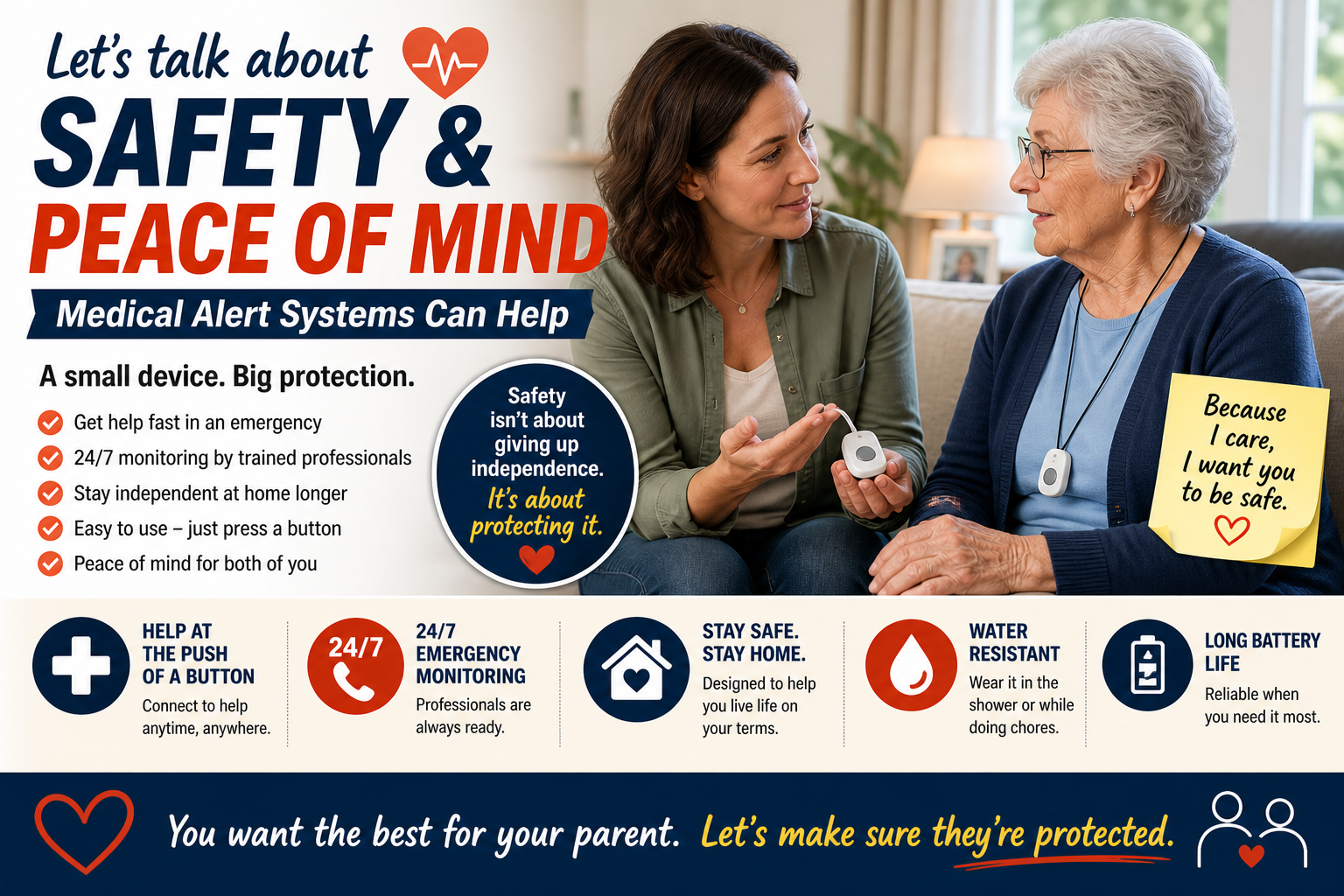
For guidance on navigating these conversations more broadly our guide on how to talk to a parent about safety measures covers the principles that apply across all difficult safety conversations with older adults.
Kitchen Safety Checklist for Dementia Caregivers
Immediate — all stages:
- All medications out of kitchen and in locked storage
- All cleaning products in locked cabinet
- Refrigerator checked and cleared of expired food
- Simple labeled food options at accessible height
- Automatic stove shutoff device installed or stove knob covers in place
Middle stage additions:
- Sharp knives and scissors in locked storage
- Stove knobs removed when caregiver not present
- Microwave as primary independent cooking option
- Meal delivery or pre-prepared meal system in place
- Alcohol in locked storage
Advanced stage additions:
- Stove breaker off when not in supervised use
- Kitchen entry alarm or lock for unsupervised access
- All meal preparation handled by caregiver
- Nutrition monitoring in place — weight tracked regularly
Frequently Asked Questions
When should I stop letting someone with dementia cook independently?
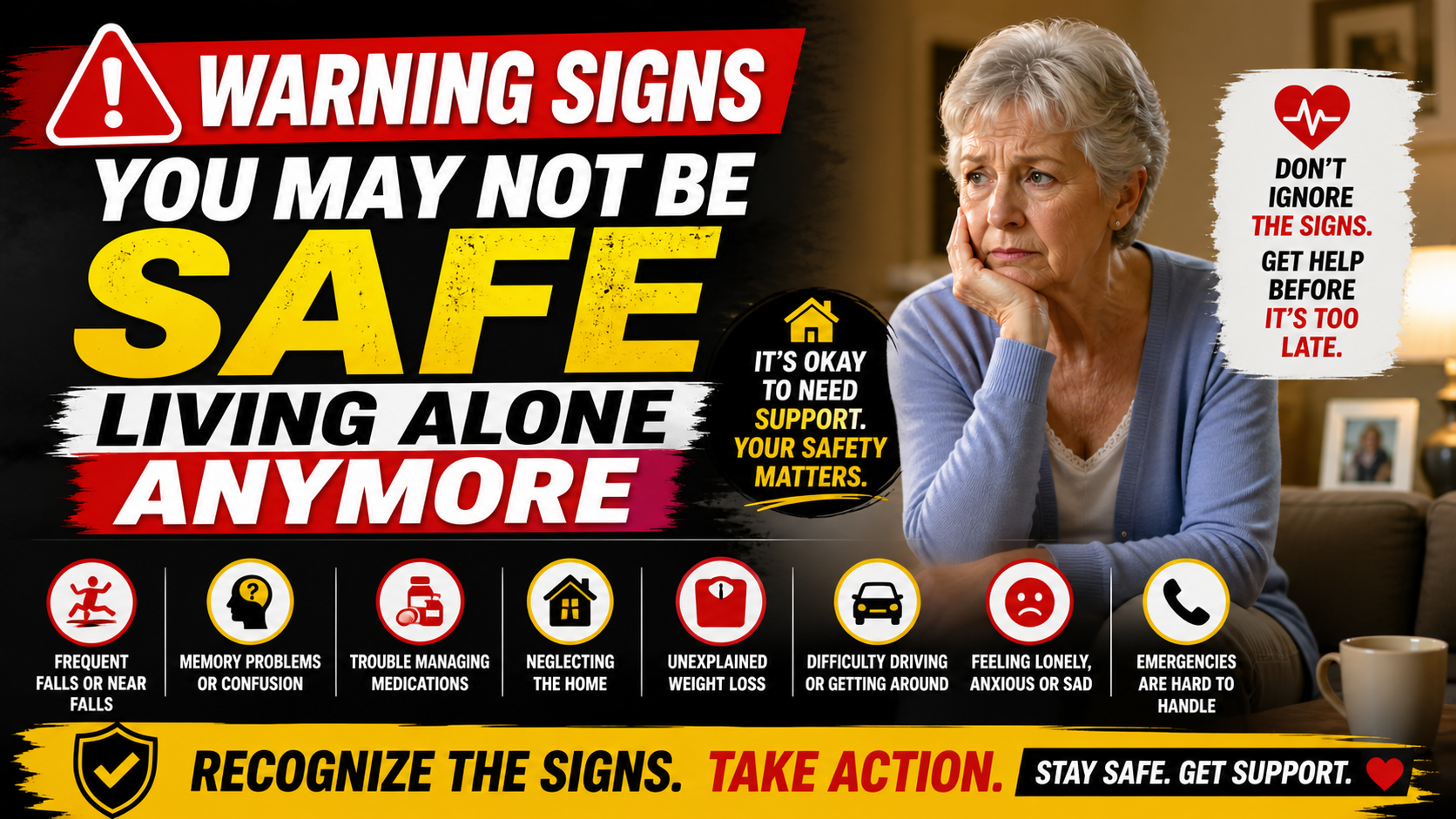
The signal to end unsupervised cooking is the first incident of a stove being left on, food being burned without the person being aware, or confusion about what’s cooking or why. You don’t need a dangerous incident to make this decision — behavioral signals like repeatedly checking the stove without cooking purpose, confusion about appliance operation, or difficulty following a simple recipe are sufficient indicators that unsupervised cooking has become unsafe. Kitchen incidents like these are among the practical cognitive warning signs at home that families should evaluate before a crisis forces a decision.
How do I stop someone with dementia from using the stove without a major conflict?
Remove the knobs. If there are no knobs there’s nothing to turn and nothing to argue about. “The knobs aren’t working” is a simpler and less confrontational explanation than any discussion of safety and capability. For someone who won’t retain the explanation, framing that reduces immediate distress is more important than accuracy. Replace the knobs for supervised cooking, remove them immediately after.
Is a microwave safe for someone with dementia to use independently?
A microwave is generally safer than a stove for a person with dementia because it doesn’t produce open flame or prolonged radiant heat. However microwave use does carry risks — superheating liquids, overheating food, confusion about how long to heat something. Simple microwave-safe containers with clear instructions, monitoring for safe use patterns, and avoiding anything requiring significant time or temperature judgment makes microwave use more manageable. As dementia progresses even microwave use may require supervision.
What do I do if my parent insists on cooking despite safety concerns?
Focus on what they can still do rather than what they can’t. Supervised participation in meal preparation — with you handling the stove and knife work while they contribute in other ways — preserves the identity and activity without the safety risk. Redirect the conversation from “you can’t cook” to “let’s cook together.” For someone whose dementia means they won’t retain the explanation, the equipment solution — no knobs available — sidesteps the conflict without requiring sustained agreement.
How often should I check the refrigerator and pantry for safety?

Every visit for caregivers who don’t live with the person, or every two to three days for daily caregivers. Look for expired food, spoiled leftovers, unusual items that have been placed there, and signs that eating patterns have changed — more food than expected suggesting not eating, less food suggesting eating everything indiscriminately. Weight monitoring at regular intervals provides an objective measure of whether nutritional intake is adequate. Families making these periodic visits can also benefit from the structured remote-caregiving practices in Every visit for caregivers who don't live with the person.

A Safer Kitchen — Starting Today
Kitchen safety for dementia doesn’t require waiting for an incident to motivate action. The modifications in this guide — particularly stove safety and hazardous substance storage — should be in place from the point of diagnosis and updated as the condition progresses.
Start with the immediate actions on the checklist. Lock up cleaning products and medications today. Address the stove this week. Build from there as the situation evolves.
The kitchen can remain a meaningful part of daily life — a place of familiar activity and participation — with the right modifications in place. It doesn’t have to become a source of danger.
→ Get the SecuLife Smartwatch on Amazon — fall detection for every room including the kitchen
About the Author
Margaret Holloway, RN spent 22 years in geriatric nursing including significant experience working with dementia patients across hospital and community settings. She has seen firsthand how kitchen incidents — preventable ones — become the turning point that ends home living for families who weren’t prepared. She writes for Elder Safety Guide to give caregivers the specific, staged guidance they need before those incidents happen.