Standard emergency preparedness doesn’t account for the specific vulnerabilities of older adults. Here’s exactly what seniors living alone need — from medications to lighting to medical alert coverage.
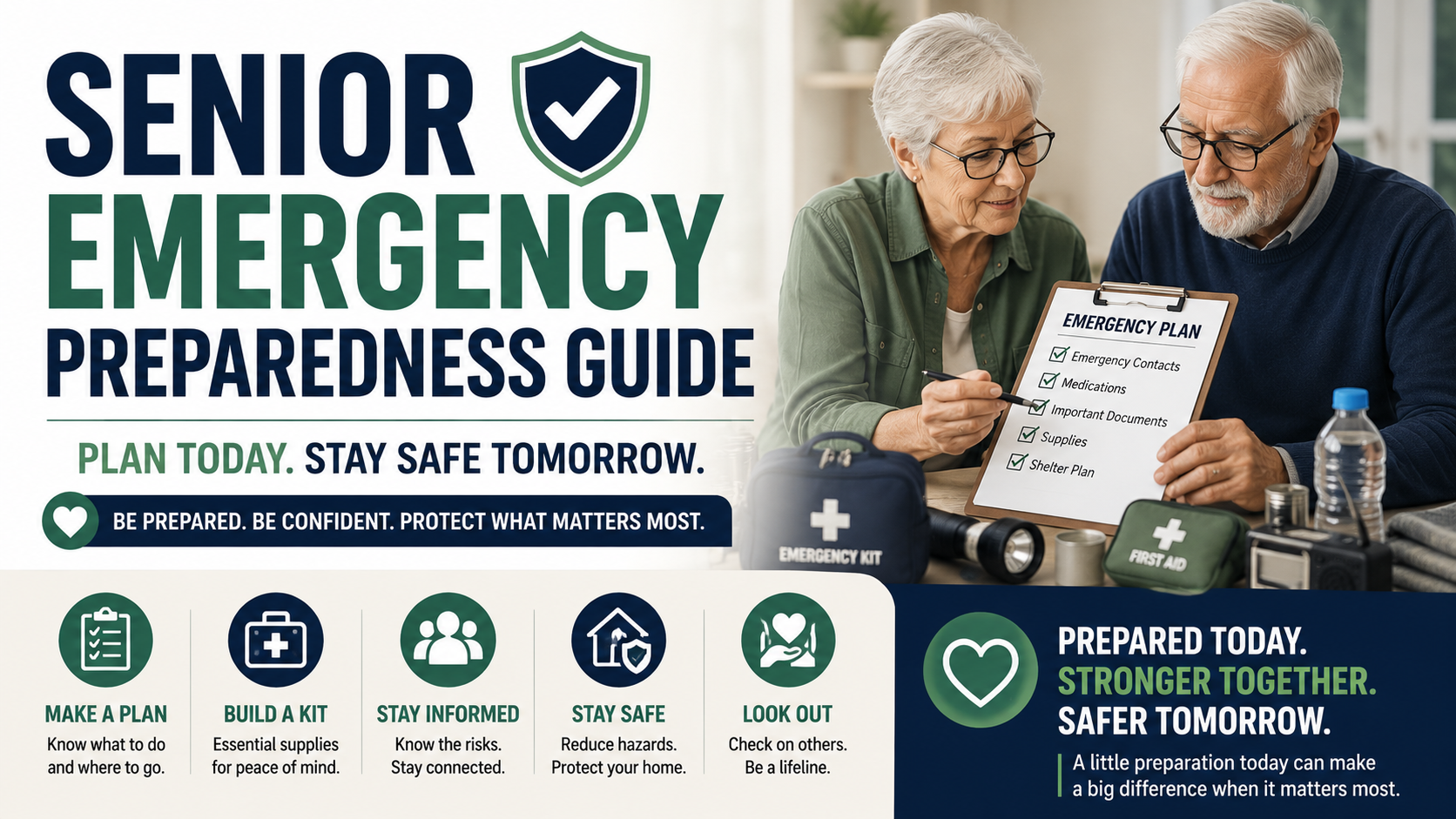
Most families spend significant time thinking about their elderly parent’s daily safety — the bathroom modifications, the medical alert device, the fall prevention measures. Far fewer think about what happens when the daily safety systems fail simultaneously — when the power goes out, when a storm keeps emergency services from arriving quickly, when the routines that make independent living work are disrupted for days rather than hours.
Emergency preparedness for older adults living alone is not the same as general household emergency preparedness. The specific vulnerabilities of older adults — medication dependence, medical device reliance, reduced mobility, greater sensitivity to temperature extremes, higher fall risk in unfamiliar or disrupted environments — require specific preparation that generic emergency planning doesn’t address.
This guide covers exactly what older adults and their families need to prepare for emergencies — the specific supplies, the specific plans, and the specific technology that makes the difference between an emergency that’s managed and one that becomes a crisis.
Why Older Adults Are Specifically Vulnerable in Emergencies
Understanding the specific vulnerabilities helps explain why the preparation in this guide goes beyond a standard emergency kit.
Medication Dependence
Most older adults take multiple medications daily — for blood pressure, heart conditions, diabetes, thyroid function, and dozens of other conditions. Missing even one or two days of critical medications can produce serious health consequences. Emergencies that disrupt pharmacy access — storms that close roads, power outages that prevent travel — create medication gaps that have direct health consequences for older adults in ways they don’t for people on no daily medications.
Medical Device Reliance
CPAP machines for sleep apnea. Power wheelchairs and scooters. Stair lifts. Oxygen concentrators. Home medical devices that depend on electrical power become non-functional in a power outage — trapping people in parts of their home, disrupting sleep, and in the case of oxygen concentrators creating immediate medical emergencies.
Temperature Sensitivity
Older adults are significantly more vulnerable to both heat and cold than younger adults. The thermoregulatory efficiency that maintains core body temperature in temperature extremes decreases with age. A power outage in summer that removes air conditioning or in winter that removes heating creates life-threatening temperature conditions for older adults in timeframes that would merely be uncomfortable for younger people.
Reduced Mobility in Disrupted Environments
The home modifications that make independent living safe — grab bars, night lights, clear pathways — are calibrated to the normal home environment. In an emergency that disrupts that environment — debris on the floor, non-functioning lights, furniture moved for shelter or warmth — the familiar environment becomes unfamiliar and more dangerous. Fall risk increases significantly when the environmental adaptations that support safe movement are disrupted.
Social Isolation
Older adults who live alone have less built-in emergency support than those who live with others. The neighbor who checks in periodically may not be reachable. The family member who provides regular assistance may be dealing with their own emergency situation. The support network that functions in normal conditions may be disrupted at exactly the moment when emergency support is most needed.
The Emergency Preparedness Kit for Seniors — Specific to Their Needs
A standard emergency kit contains water, non-perishable food, a flashlight, and a first aid kit. A senior-specific emergency kit addresses the specific vulnerabilities above in addition to those basics.
Medications — The Most Critical Element
A minimum seven-day supply of every daily medication should be maintained as part of emergency preparedness. Ideally a 30-day emergency supply — particularly for medications that require prior authorization or specialty pharmacy ordering and that can’t be replaced quickly.
Practical implementation: when a 30-day prescription reaches 7 to 10 days remaining, refill rather than waiting until it runs out. The rolling supply this creates maintains a meaningful buffer. For controlled substances that can’t be filled early, discuss emergency supply options with the prescribing physician — some states have emergency supply provisions.
Keep a written medication list — medication name, dose, frequency, prescribing physician, pharmacy — in the emergency kit and accessible to family members. In an emergency where the person cannot communicate this information, this list becomes critical for medical providers.
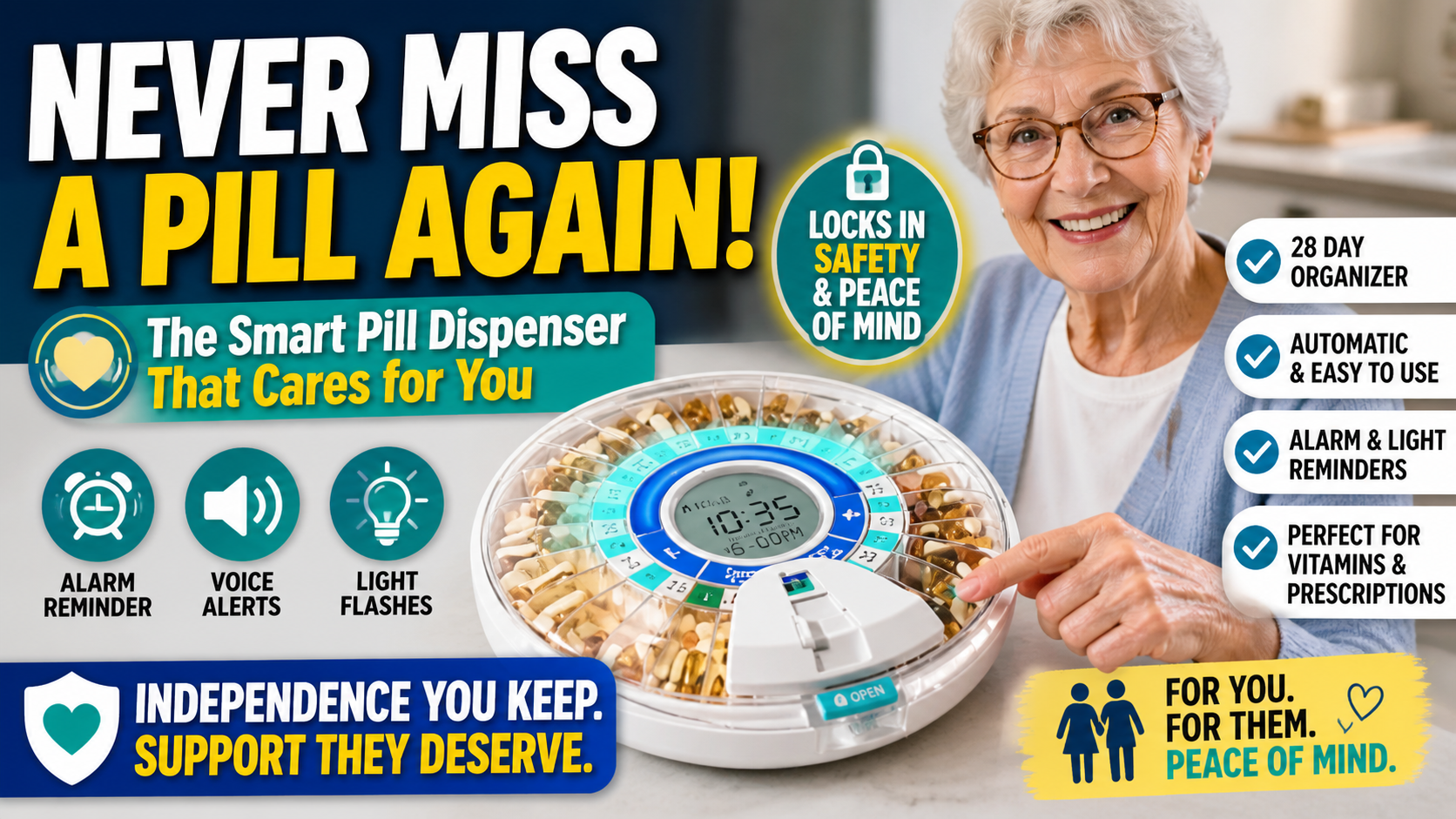
An automatic pill dispenser that organizes medications by day eliminates the confusion about what has and hasn’t been taken during a stressful emergency period — when the routine that normally governs medication timing is disrupted. Our review of the best automatic pill dispenser for seniors covers the 28-day smart lock option we recommend.
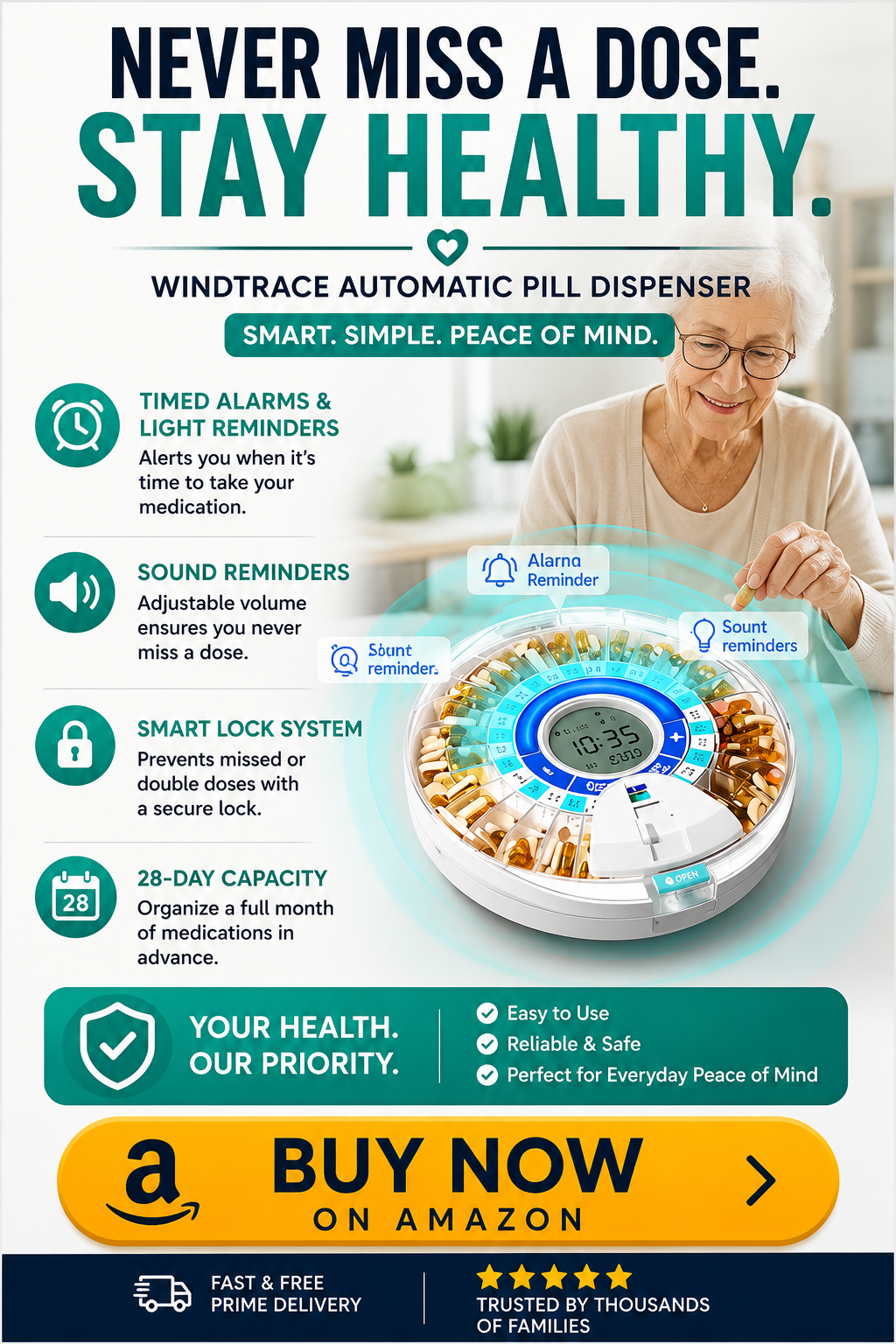
→ Get the Windtrace Pill Dispenser on Amazon
Emergency Lighting — Non-Negotiable
Power outages are one of the most common emergency scenarios — and for an older adult navigating a home in complete darkness, a power outage dramatically increases fall risk. Every normal environmental support — night lights, pathway lighting, stair lighting — disappears simultaneously.
Rechargeable auto-on lights that activate immediately when power fails are the most important single emergency preparedness item for fall prevention during outages. They function as normal night lights every night and switch to full brightness automatically when power cuts — requiring no action from the person in the home.
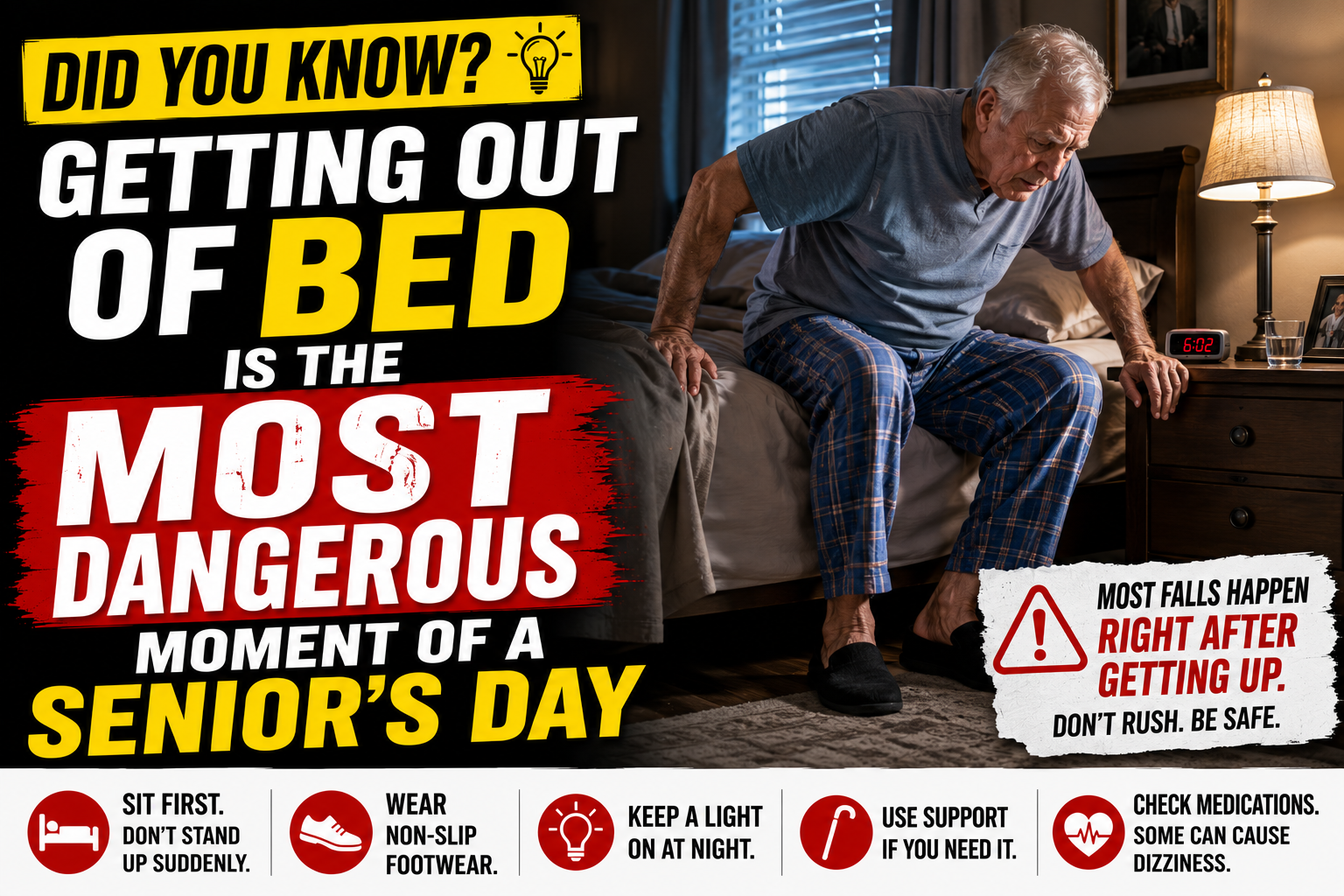
As covered in our guide on getting out of bed is the most dangerous moment of a senior’s day — the nighttime bathroom trip in the dark is the highest-risk daily scenario under normal conditions. A power outage that eliminates all lighting during a nighttime bathroom trip creates an acutely dangerous situation.
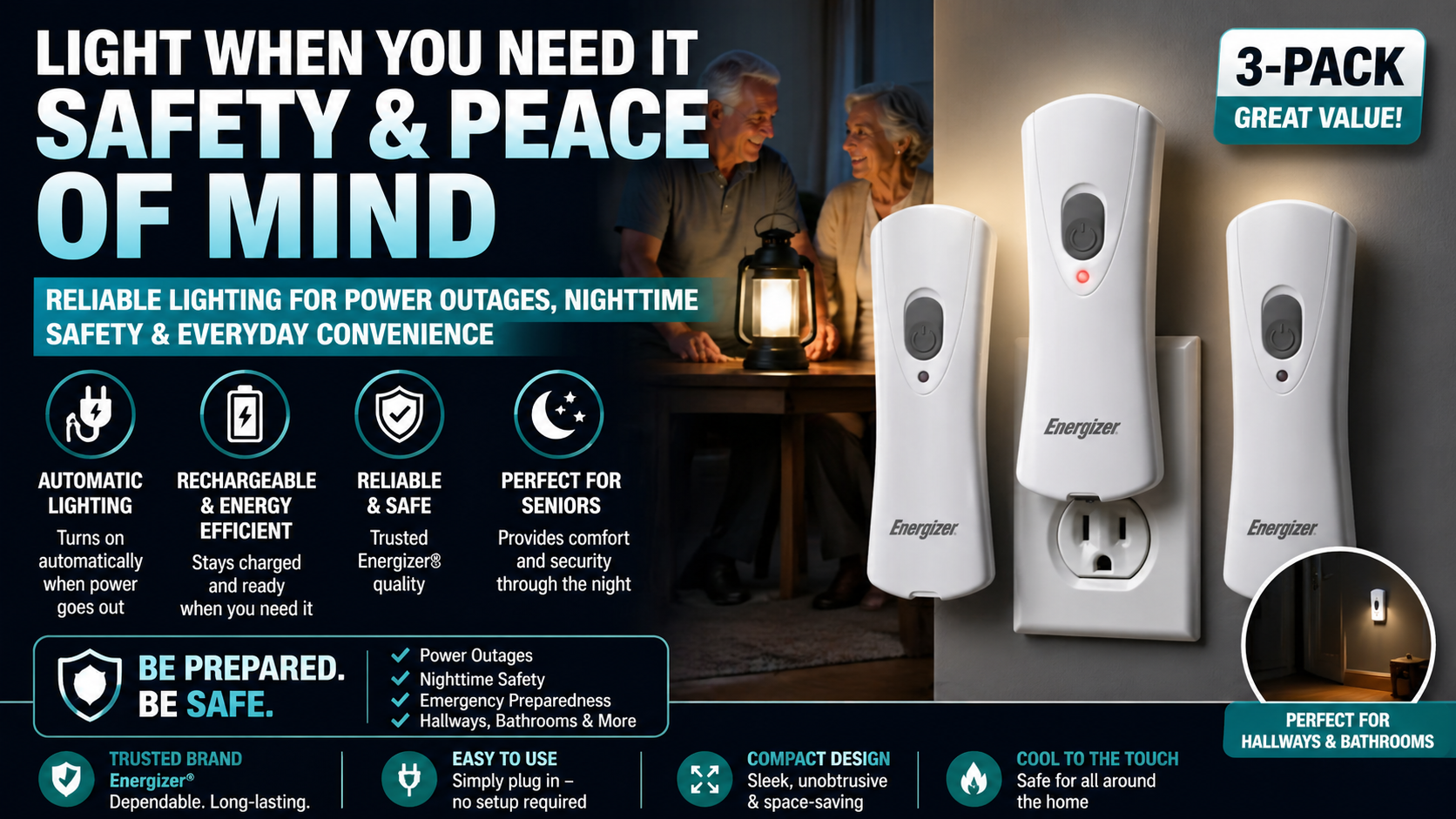
Three units minimum — bedroom, hallway, bathroom — covering the complete path. Our review of the best auto-on rechargeable lights covers exactly the option designed for this scenario.
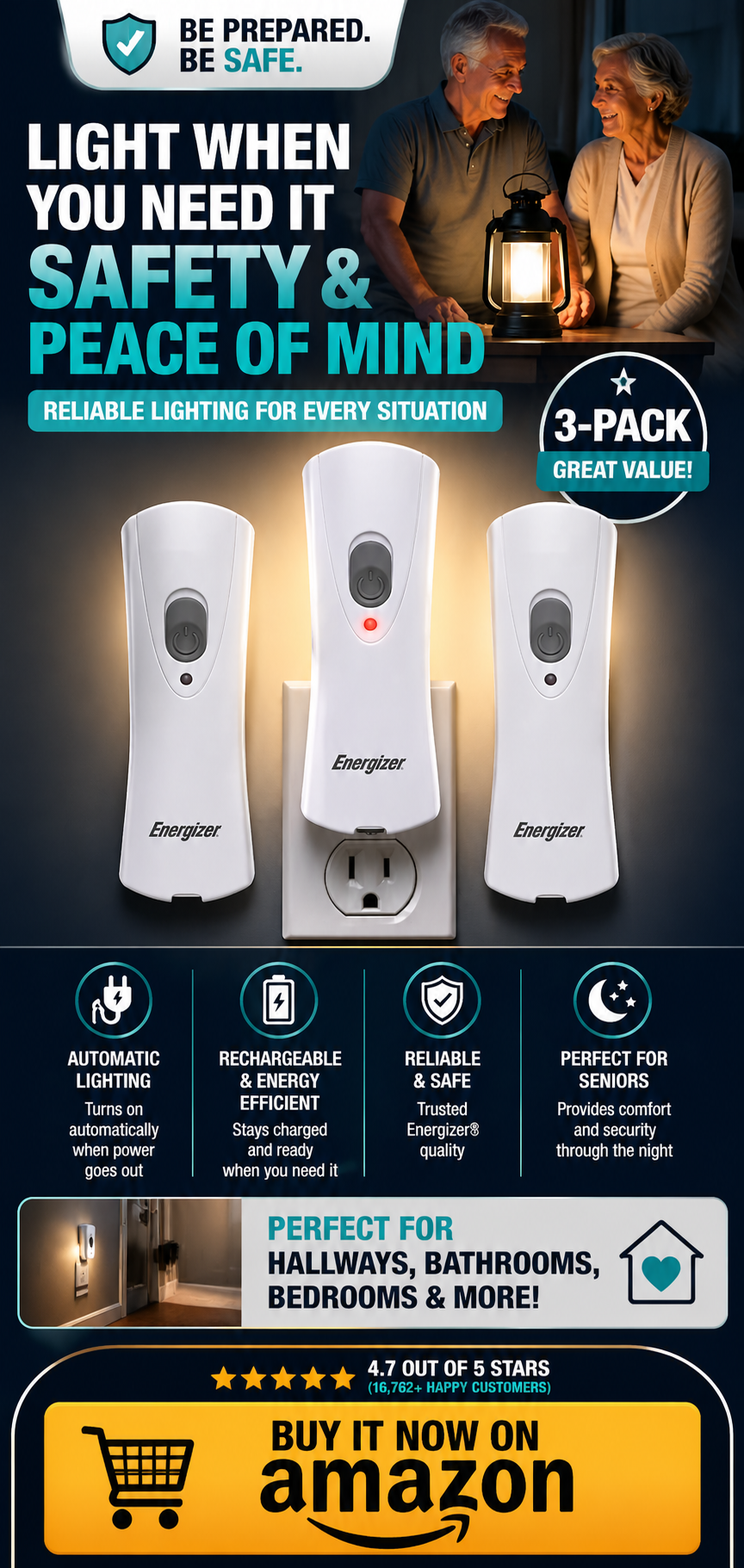
→ Get the Energizer Auto-On 3-Pack on Amazon
Medical Alert Device With Cellular Operation
A landline-based medical alert system becomes non-functional when phone lines are disrupted. A home Wi-Fi-based system becomes non-functional when internet service is disrupted. Either of these disruptions is common in the emergency scenarios — storms, earthquakes, widespread power outages — where medical alert coverage matters most.
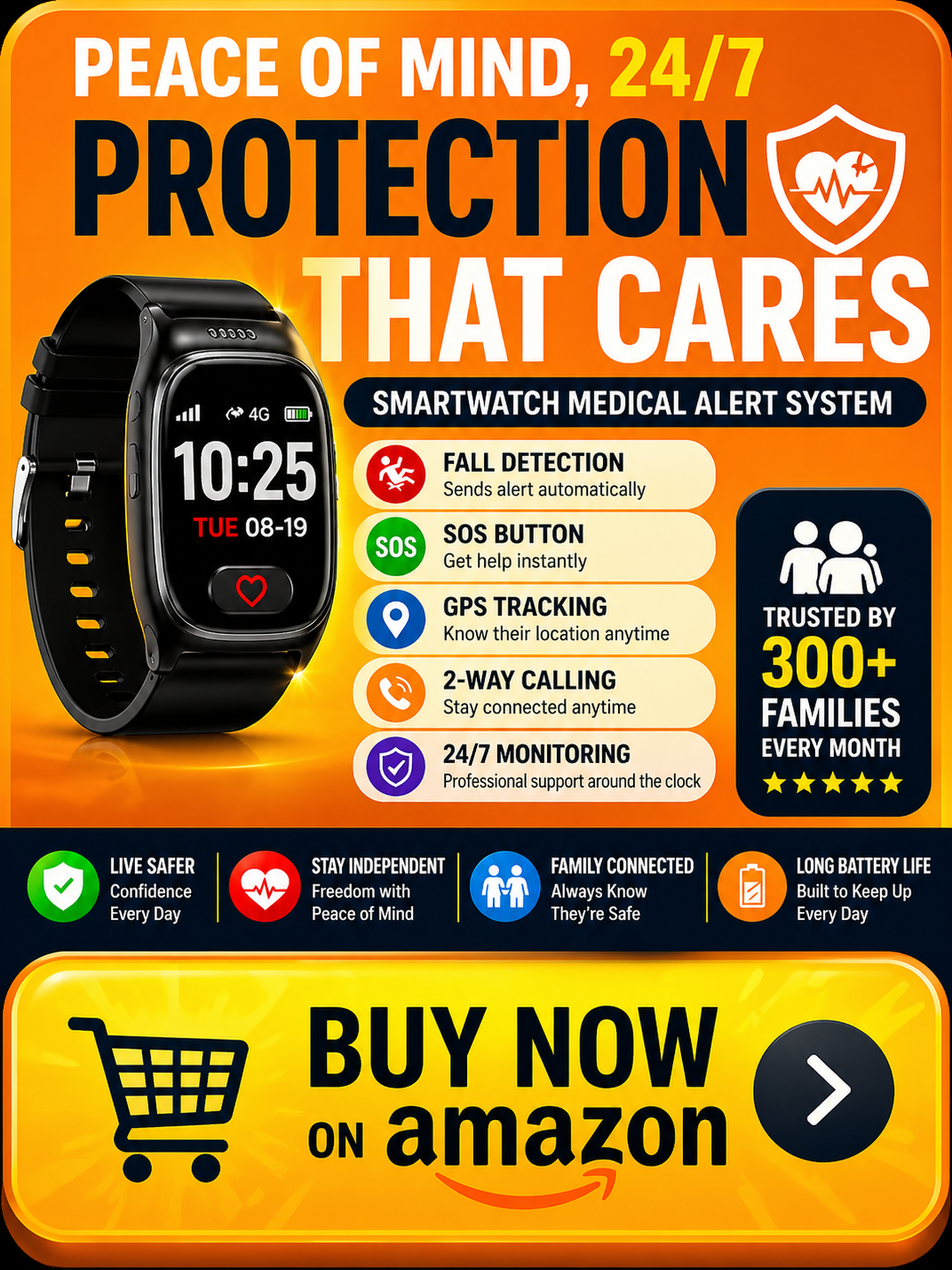
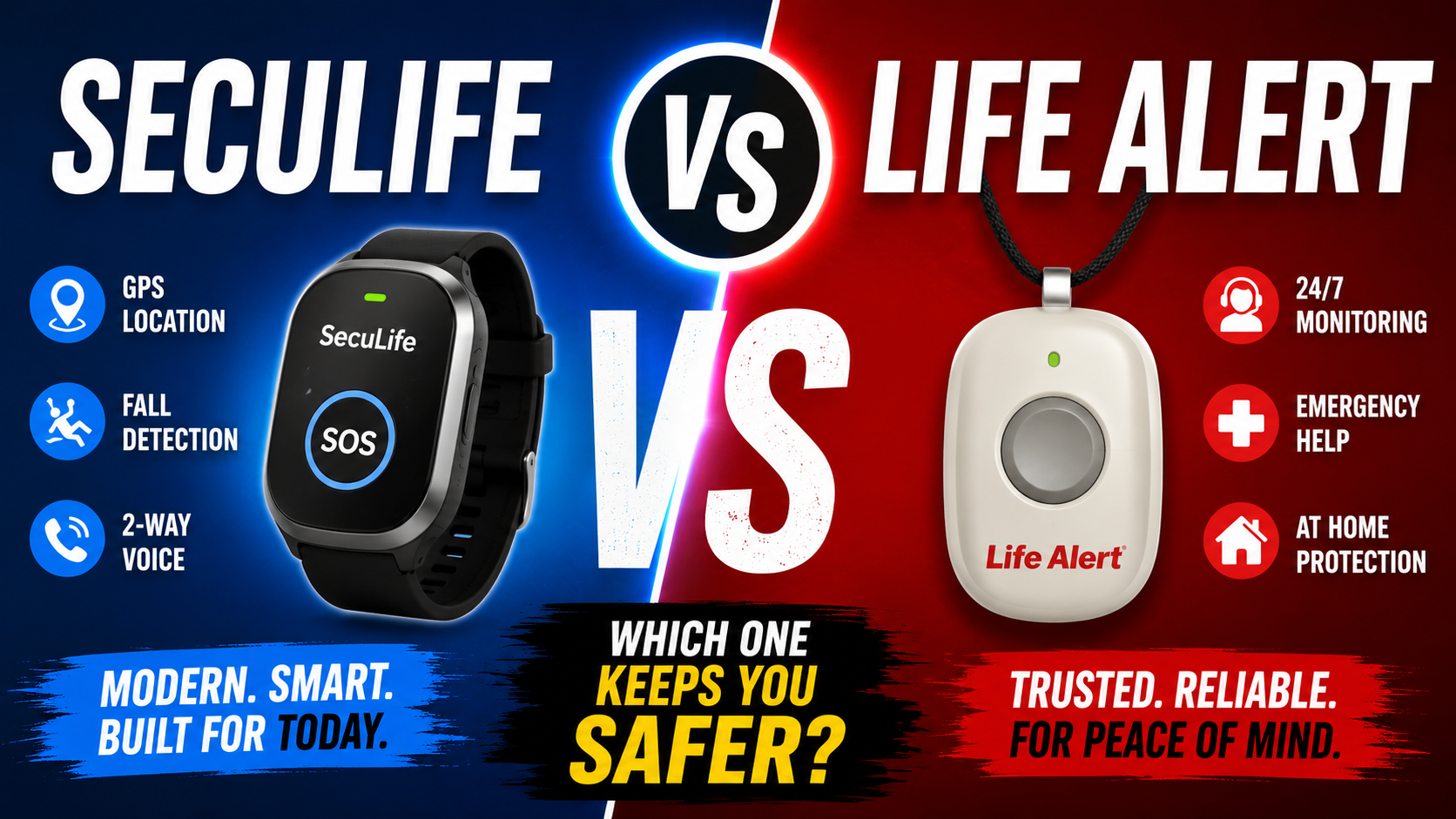
A cellular medical alert device operates on cell tower infrastructure that is typically more resilient than landline or internet service in emergencies. The SecuLife Smartwatch operates on its own cellular connection — independent of home internet, independent of landline service, and with GPS tracking that works regardless of home infrastructure status. In an emergency where home systems are disrupted, wrist-worn cellular detection remains operational.
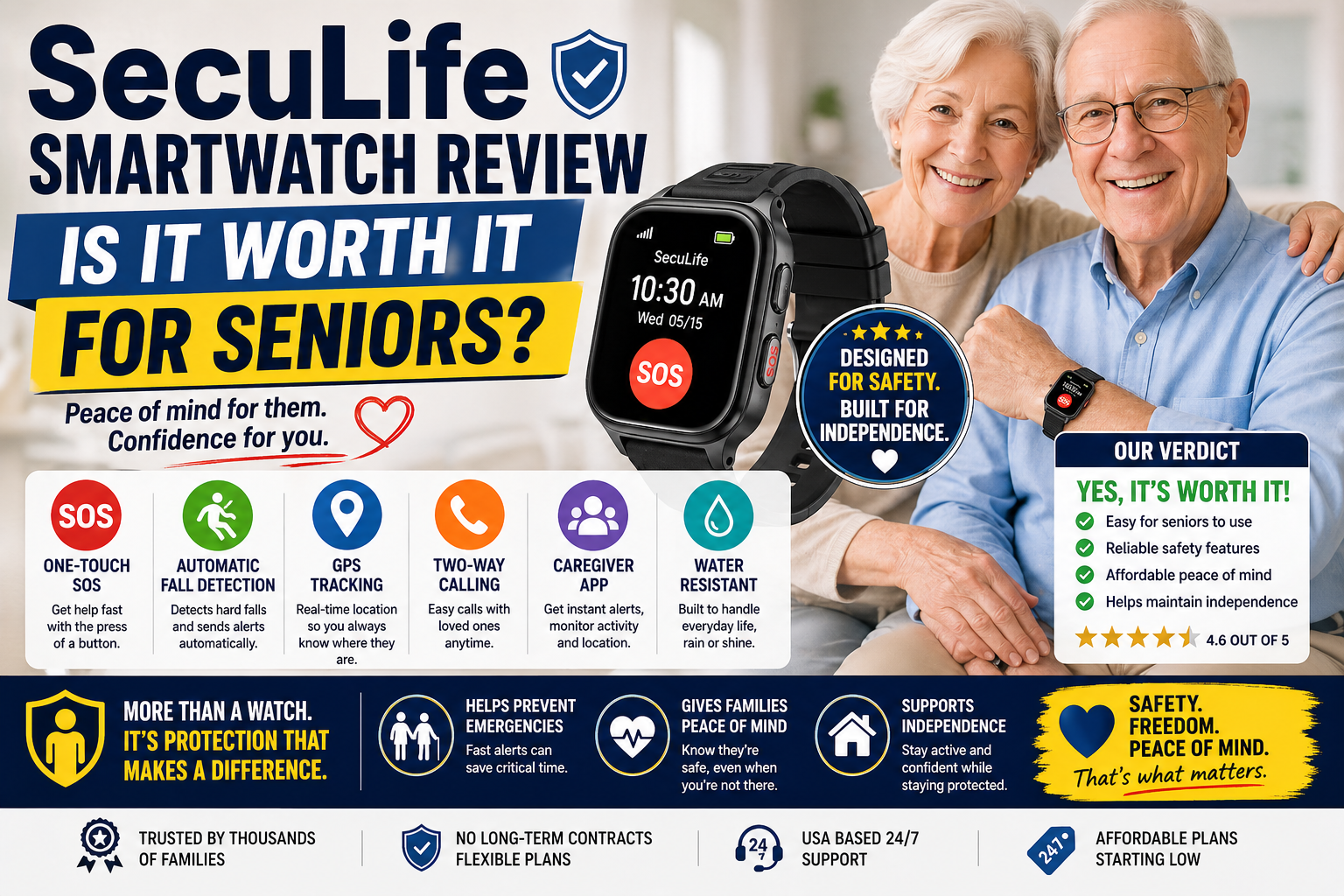
Our complete review at SecuLife Smartwatch Review covers every feature. Our guide on best medical alert system for seniors living alone covers the complete solo-living safety picture.
→ Get the SecuLife Smartwatch on Amazon
Water Supply
One gallon per person per day — minimum three days, ideally seven — stored in clean containers. For older adults who may have fluid restrictions from cardiac or kidney conditions, discuss emergency water intake with their physician before an emergency rather than during one.
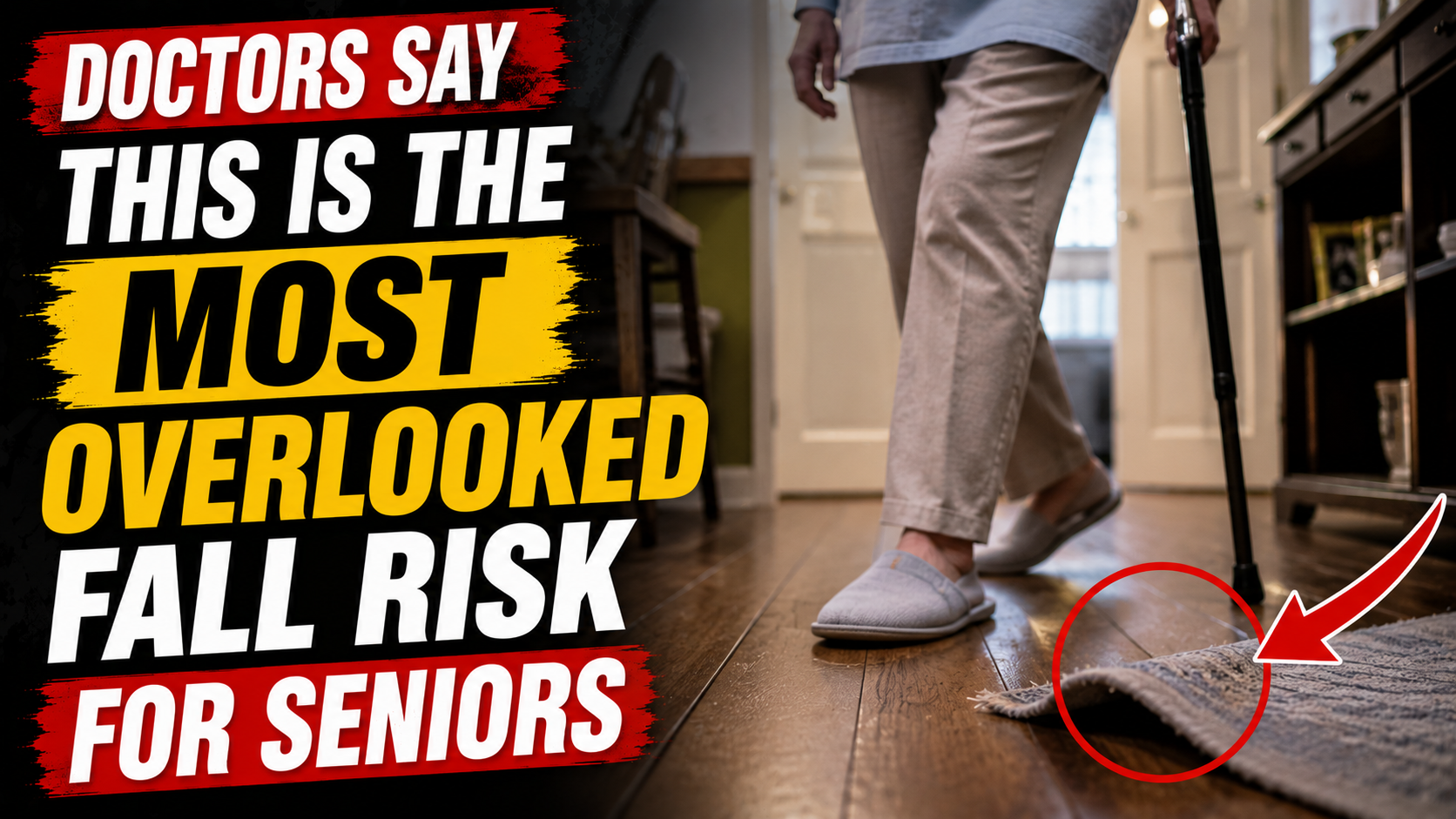
Dehydration risk is elevated during emergencies — stress increases fluid requirements, normal drinking routines are disrupted, and access to beverages may be limited. As covered in our guide on the most overlooked fall risk for seniors — dehydration produces orthostatic hypotension that directly increases fall risk. In an emergency where environmental fall risks are also elevated, dehydration management is doubly important.
Non-Perishable Food — Appropriate for the Individual
Standard emergency food recommendations don’t account for the dietary restrictions common in older adults — low sodium for cardiac conditions, carbohydrate management for diabetes, soft textures for dental issues or swallowing difficulties. Emergency food supplies should be appropriate for the individual’s specific dietary needs rather than generic emergency food that may be medically inappropriate.
A minimum three-day supply of appropriate foods — seven days preferred — that require no cooking or minimal preparation. Many emergency scenarios involve no power for cooking appliances. Foods that can be eaten at room temperature without preparation are the most reliably accessible.
Warmth and Cooling
For winter power outages: extra blankets rated for the temperature extremes possible in the local climate. A sleeping bag rated for below-freezing temperatures if the local winter climate warrants it. Hand warmers for immediate use. Awareness of the nearest warming shelter and how to get there.
For summer power outages: battery-powered fans. Awareness of the nearest cooling center and how to get there. Ice in a cooler to help manage temperature if power outage extends beyond several hours. Recognition that heat stroke in older adults can develop faster and at lower temperatures than in younger adults.
Important Documents
A waterproof bag containing copies of: identification, insurance cards, medication list, physician contact information, medical power of attorney, advance directive, emergency contact list. These documents become critically important in emergency medical situations and are often unavailable when the home is inaccessible or when the person cannot communicate.

The Emergency Communication Plan
Emergency preparedness isn’t only about supplies. It’s about who knows what is happening and how to reach each other when normal communication methods may be disrupted.
Designated Out-of-Area Contact
Local phone lines are often more disrupted in emergencies than long-distance lines. Designating an out-of-area contact — a family member or friend in another region — who serves as the communication hub means that family members in the same affected area can relay information through someone who can receive it reliably.
Check-In Protocol
Establish a specific check-in protocol before any emergency makes it necessary. Who calls whom. At what times. What the escalation plan is if check-in isn’t completed. This is a version of the structured daily check-in that we recommend as part of general senior safety planning — with the additional urgency of an emergency context where normal routines may be disrupted.
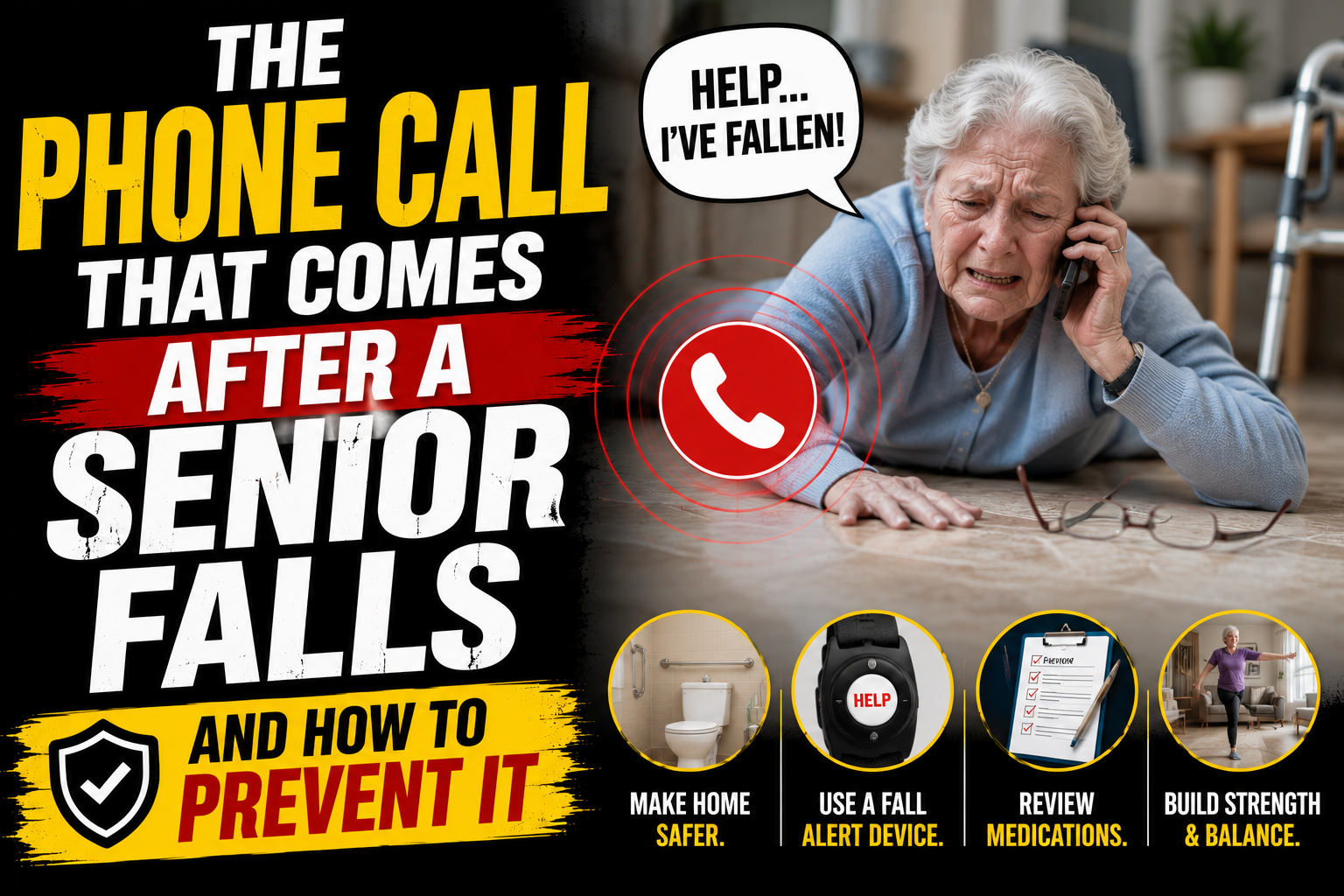
As covered in our guide on the phone call that comes after a senior falls — the gap between when something goes wrong and when someone knows determines outcomes. In an emergency that gap may be longer than usual. A specific communication plan with defined escalation steps reduces that gap even when normal communication is disrupted.
Neighbor Network
At least two neighbors should know your parent, have your contact information, and know to check on them during emergencies when you cannot reach them directly. This local human network provides a check layer that technology cannot replicate when infrastructure is disrupted.
Have the explicit conversation before an emergency: “If there’s a major storm or power outage and you can’t reach us, would you be willing to check on Mom? Here’s our number.” Most neighbors are glad to agree when specifically asked.
Home-Specific Emergency Planning
The home itself requires emergency-specific planning beyond the general kit.
Know Where Everything Is in the Dark
In a power outage the home becomes unfamiliar — familiar visual landmarks disappear and spatial navigation becomes more demanding. Practice navigating the essential path — bedroom to bathroom, bedroom to exit — in the dark or with minimal light before an emergency makes it necessary.
Position emergency lighting and flashlights in locations findable by touch in complete darkness. The auto-on lights that activate automatically eliminate the need to find anything — but a backup flashlight in a consistent, findable location is a secondary safety measure worth having.
Heating and Cooling Backup
Know which rooms in the home retain heat best in winter — typically interior rooms with the most insulation. In a winter power outage, consolidating to the warmest room and using blankets conserves body heat better than trying to maintain temperature throughout the home.
Know whether the home has any non-electric heating option — wood stove, gas fireplace — and whether it’s in functioning condition. Carbon monoxide detectors are essential if any combustion heating source is in use.
Stair Lift and Powered Mobility Device Backup
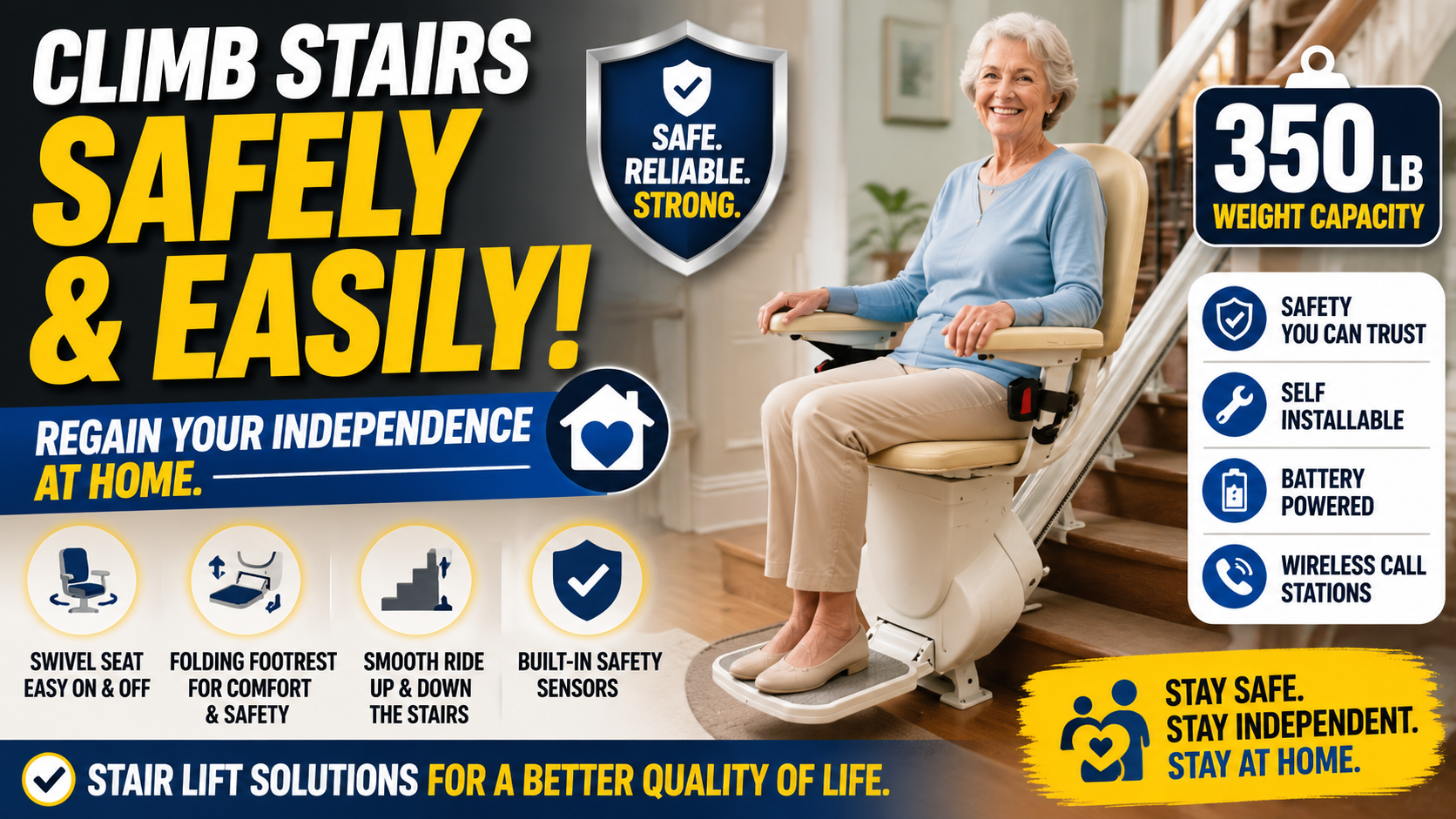
Anyone who depends on a stair lift for floor access needs a plan for power outages. Most quality stair lifts — including the AmeriGlide Rave 2 — have battery backup systems that allow operation during power outages. Confirm whether your specific stair lift has battery backup and test it periodically.
For power wheelchairs and scooters, keep batteries charged to at least 50 percent at all times — not just when planning to use them. An emergency that requires mobility may arise when the device is partially discharged.
Evacuation Plan
Know the evacuation routes from the home. Know the location of the nearest emergency shelter and how to get there — including an alternative if the primary route is blocked. Know whether mobility limitations require adaptive transportation for evacuation and identify those resources before an emergency.
Contact your local emergency management office — most jurisdictions have special needs registries for people who may need evacuation assistance. Registering before an emergency means emergency services know who needs help and where.
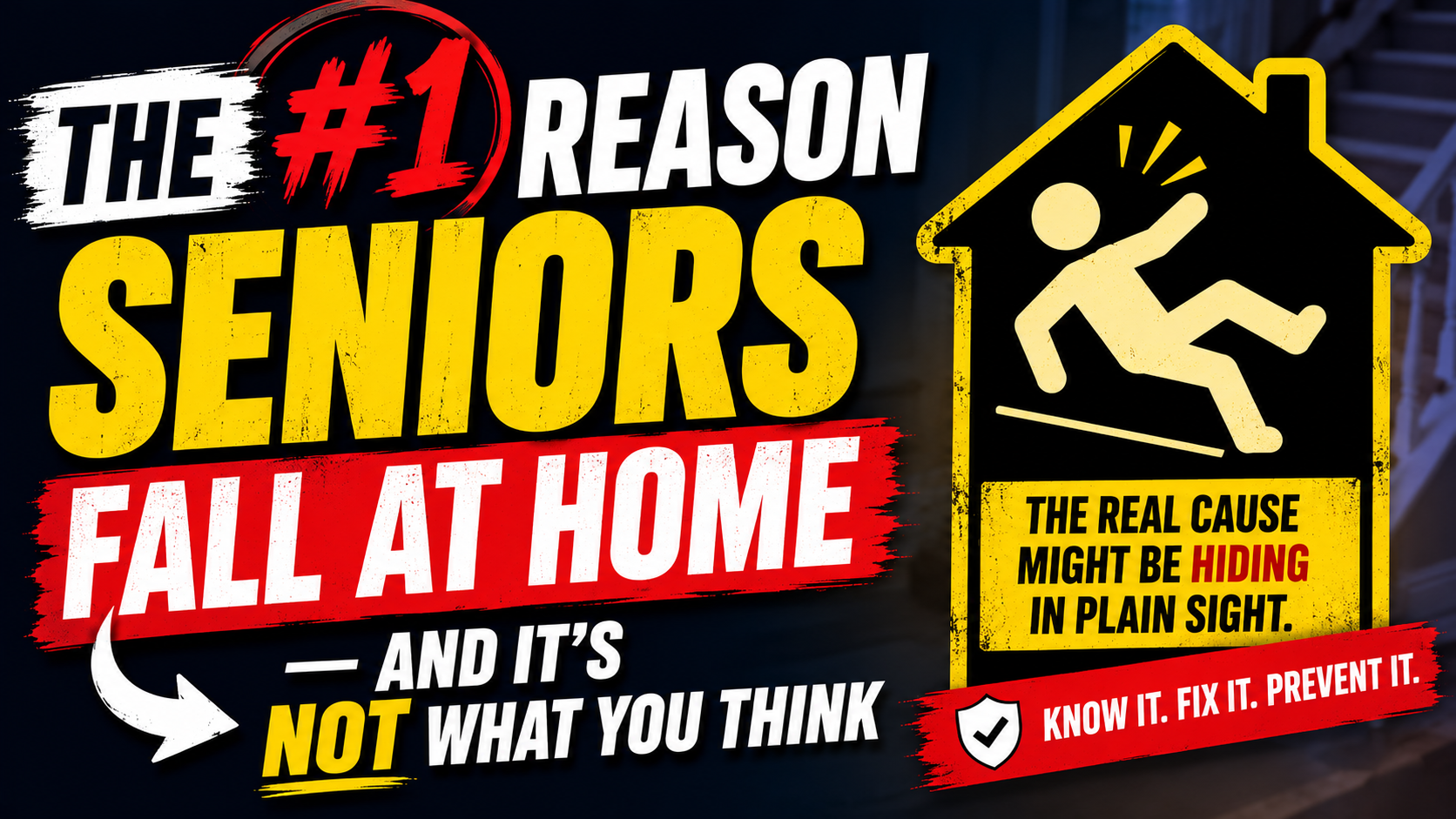
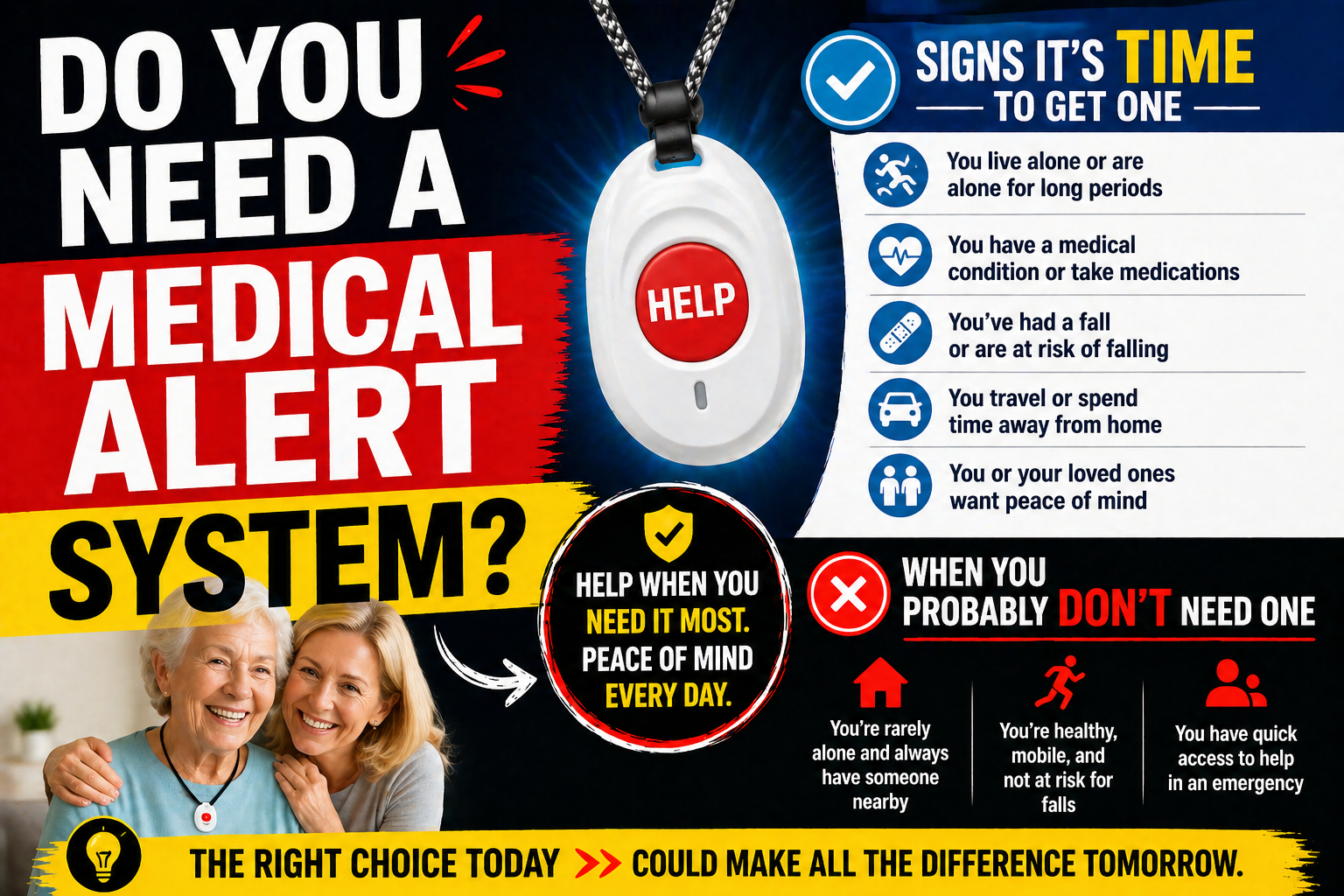
The Medical Alert Device During Emergencies — Why Cellular Matters
In a widespread emergency the infrastructure that standard home medical alert systems depend on may be disrupted. Landlines go down. Internet service fails. The base unit in the living room that normally provides 24/7 coverage becomes non-functional.
A wrist-worn cellular medical alert device continues operating as long as cell service is available — which in most emergencies is longer than landline and internet service. Fall detection continues working. GPS tracking continues working. SOS calling continues working.
Emergency scenarios are also scenarios where falls are more likely — disrupted lighting, unfamiliar navigation, elevated stress, possible temperature effects on cognition and coordination. The scenario where medical alert coverage matters most is also the scenario where home-based systems are most likely to be disrupted.
This is one of the strongest arguments for cellular wrist-worn fall detection over home base unit systems — the coverage that persists through the disrupted conditions of an actual emergency rather than working only under normal conditions when the risk is lower.
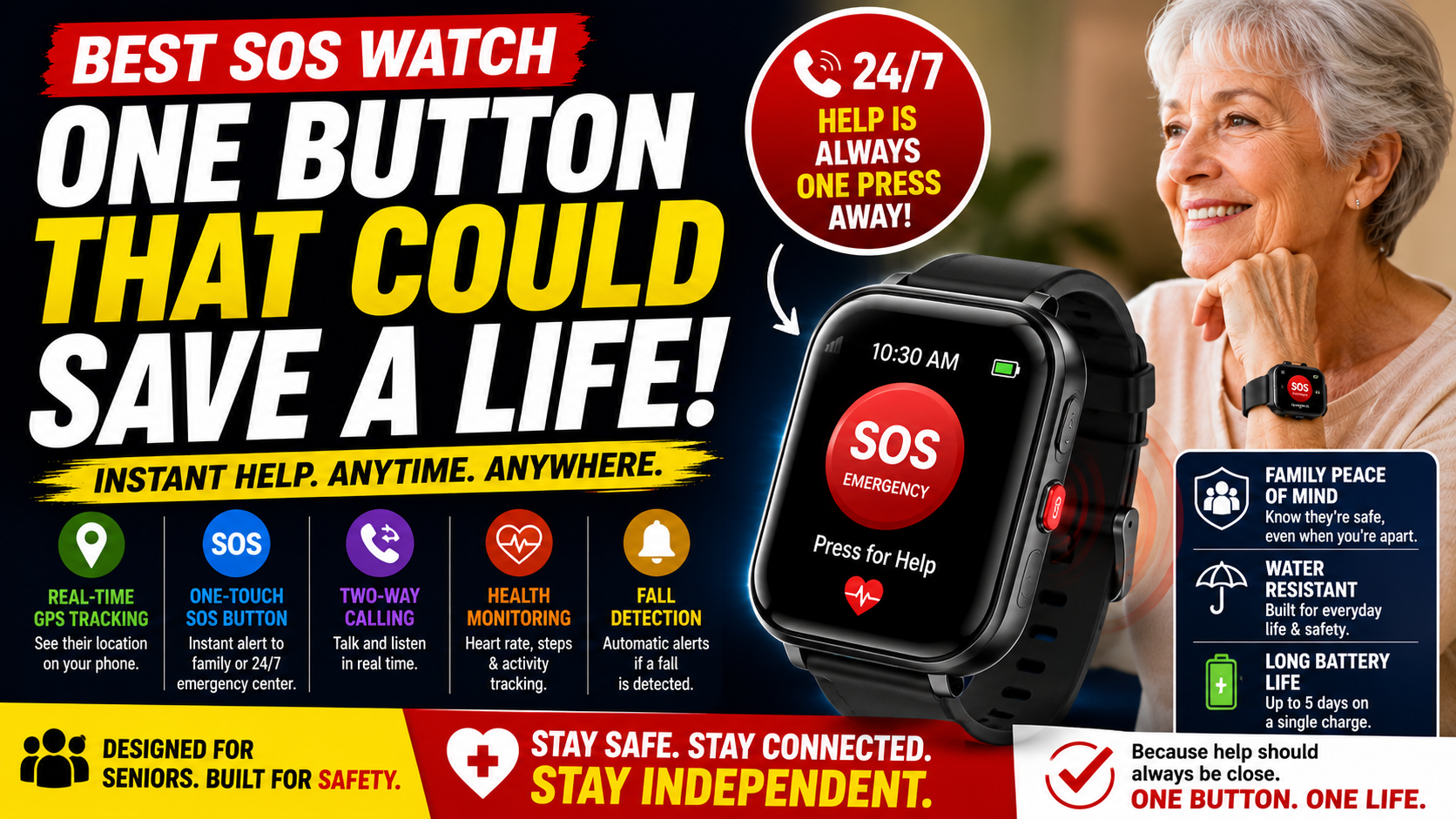
Our guide on best SOS watch for seniors covers the features that matter most. Our guide on can a smartwatch replace a medical alert system covers the comparison between approaches.
The Ring Doorbell During Emergencies
A video doorbell provides specific emergency value that most families don’t think about until they need it — the ability to see who is at the door without approaching it, to communicate with emergency responders or neighbors without opening the door, and to verify that a delivery of emergency supplies has arrived.
During emergencies when going to the door may not be safe — when a stranger’s identity needs to be verified before the door is opened, when a family member needs to see that their parent is mobile and visible inside the home — the Ring doorbell’s two-way video and remote access provide a communication layer that a phone call alone doesn’t.
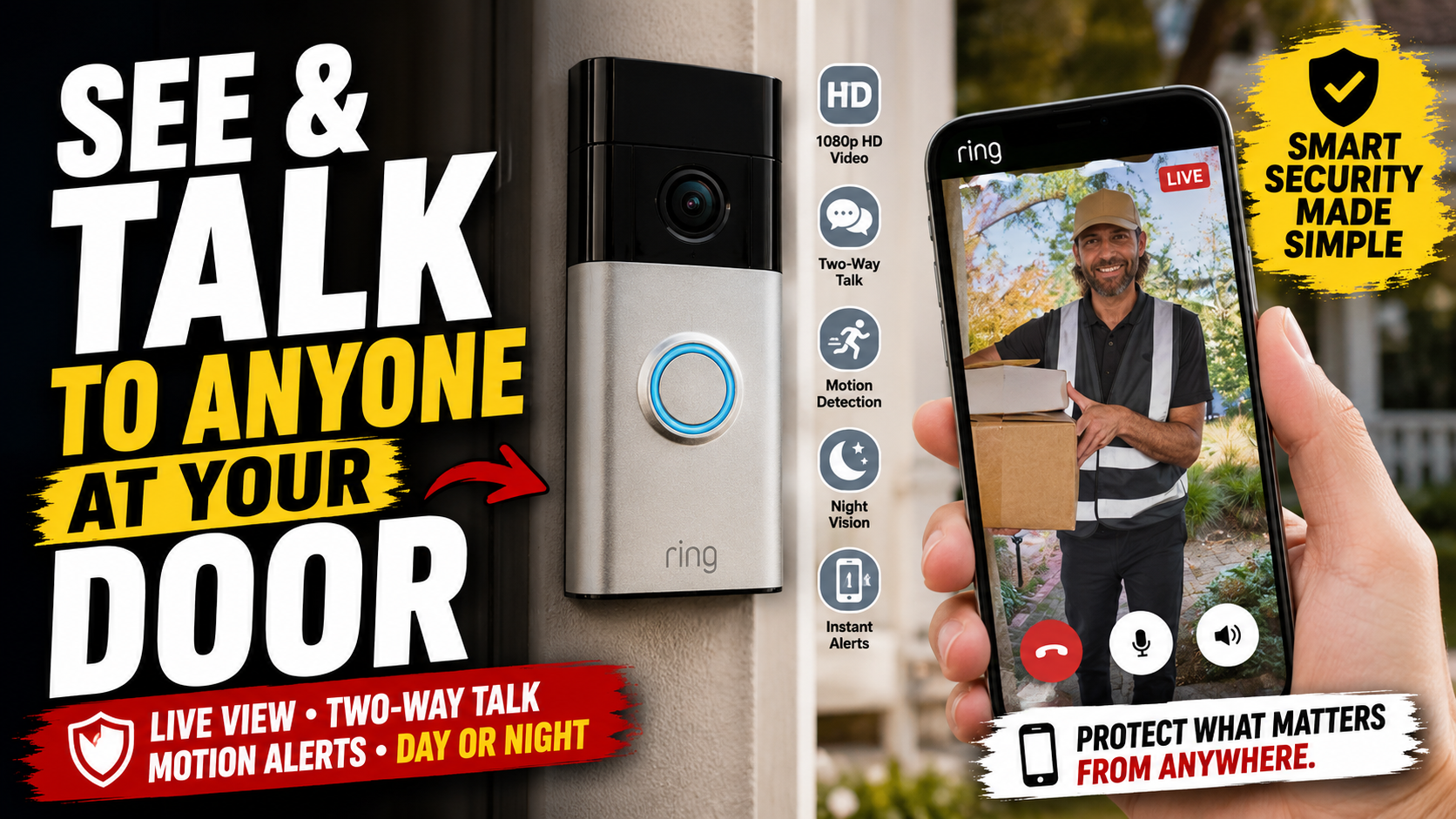
Our review of the Ring Battery Doorbell covers every feature including the remote family access that makes it useful during emergencies.
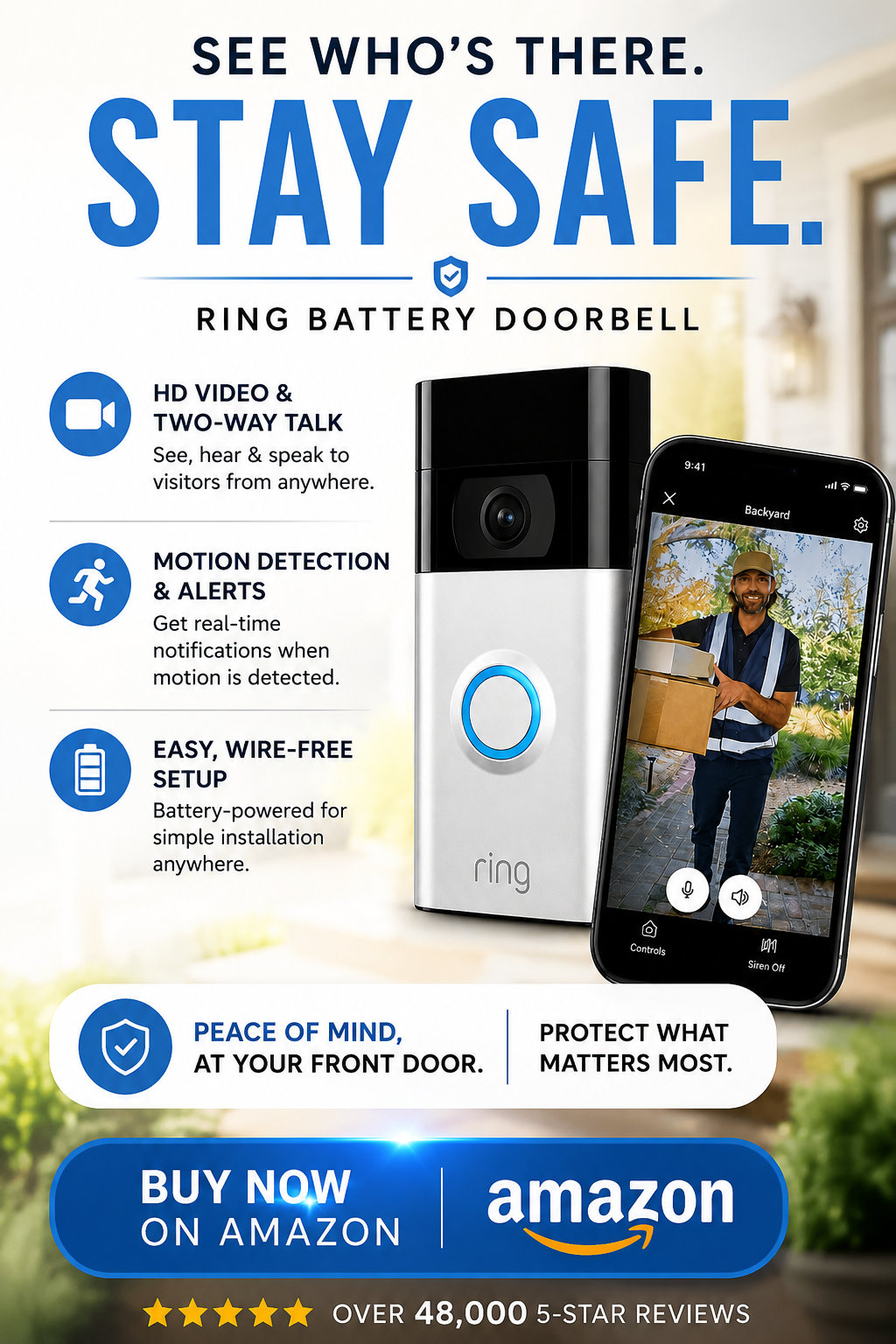
→ Get the Ring Battery Doorbell on Amazon
Emergency Preparedness Checklist for Seniors
Supplies:
- Seven-day medication supply maintained and current
- Written medication list in emergency kit
- Auto-on rechargeable lights in bedroom, hallway, and bathroom
- Backup flashlight in consistent, findable location
- Seven-day water supply — one gallon per day
- Three to seven day appropriate non-perishable food supply
- Extra blankets and warmth supplies for potential power outage
- Battery-powered fan for summer outages
- Important documents in waterproof container
- First aid kit with appropriate supplies
- Battery-powered or hand-crank radio for emergency alerts
- Portable phone charger kept charged
Technology:
- Cellular medical alert device in use — not home base unit only
- Stair lift battery backup confirmed and tested
- Power wheelchair/scooter battery maintained above 50%
- Video doorbell operational with family remote access configured
Planning:
- Out-of-area contact designated and informed
- Emergency check-in protocol established with family
- Two neighbors identified and explicitly asked to check in during emergencies
- Evacuation route planned and practiced
- Nearest emergency shelter location known
- Special needs registry contacted if evacuation assistance needed
- Stair lift or mobility device backup plan confirmed
- Local emergency management office contacted for special needs registration
Having the Emergency Preparedness Conversation
Emergency preparedness planning requires the same conversation approach as other senior safety topics — framed around independence and capability rather than fear and decline.
“I’ve been thinking about making sure we’re prepared for anything — power outages, storms, that kind of thing. Can we put a plan together?” is a different opening than “I’m worried about what would happen if there was an emergency and you were alone.”
Practical preparedness planning — assembling the kit, establishing the check-in protocol, identifying the neighbors — gives everyone concrete actions that feel like capability rather than concession. Being prepared is something competent, independent people do. Framing it that way makes the conversation significantly easier.
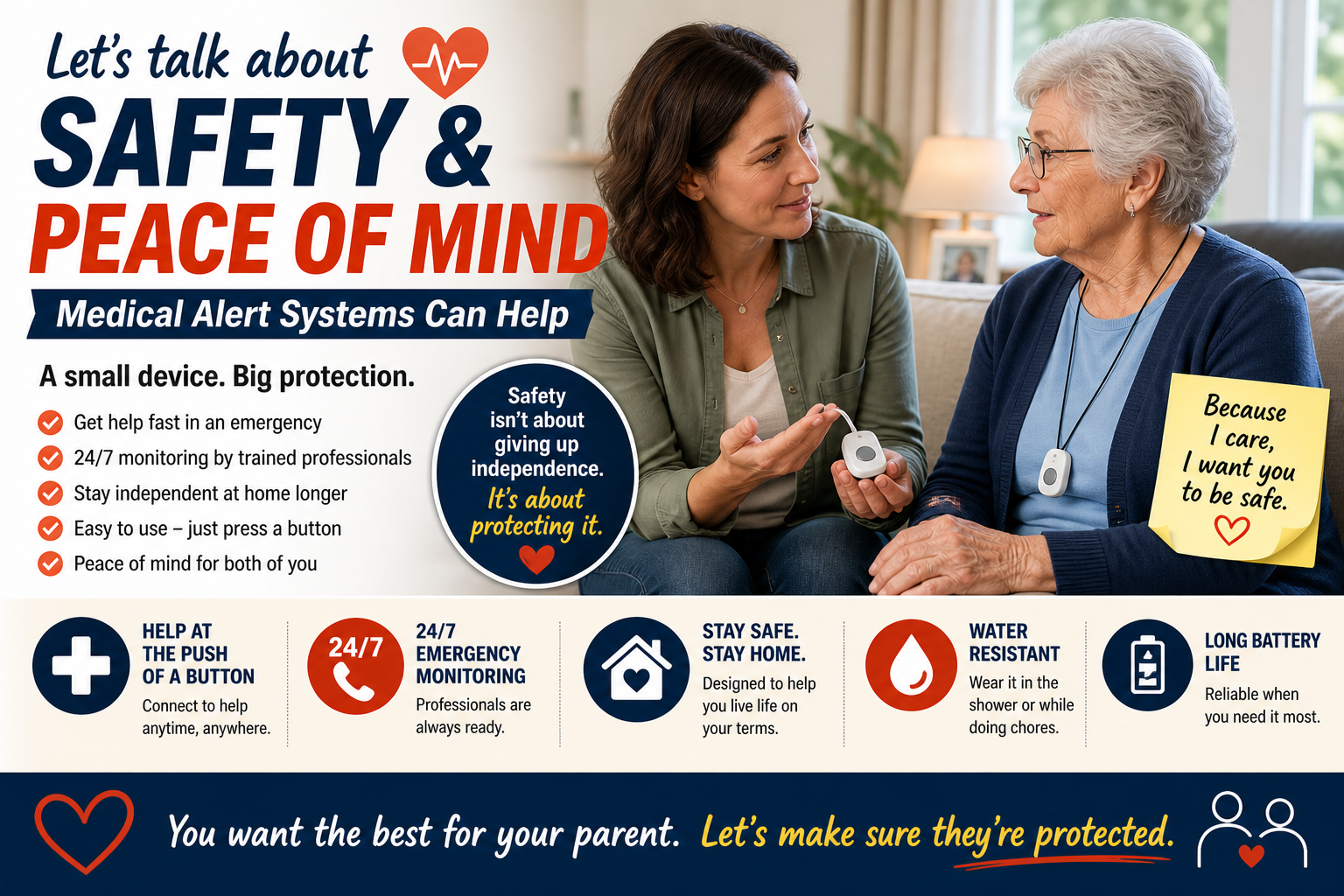
Our guide on how to talk to a parent about safety measures covers the conversation principles that apply across all of these discussions. Our comprehensive guide on how to help an elderly parent live safely alone covers the complete picture of proactive safety planning.
Frequently Asked Questions
How much medication should I keep as an emergency supply?
A minimum seven-day supply of every daily medication is the baseline recommendation. A 30-day supply is preferable for critical medications — heart medications, blood pressure medications, diabetes medications — where missing doses has immediate health consequences. Work with the prescribing physician and pharmacy to establish a refill schedule that maintains this buffer. Medicare Part D and most insurance plans allow refills when 75 to 80 percent of the previous supply has been used — use this window consistently to maintain a rolling buffer.
What if my parent’s home medical device requires power?
CPAP machines, oxygen concentrators, power wheelchairs, and similar devices have specific emergency power considerations. Battery backup units are available for most CPAP machines. Portable oxygen concentrators exist as alternatives for fixed units. Power wheelchairs have limited range on battery alone. For any life-sustaining electrical medical device contact the manufacturer about emergency power options and notify your local utility company — most have medical baseline programs and priority restoration for customers with life-sustaining equipment. Register with local emergency management as well.
Should I add my parent to a special needs registry?
Yes — if they have any mobility limitation, medical device dependence, or other factor that would require assistance during evacuation. Most county emergency management offices maintain special needs or access and functional needs registries. Registration is free and means emergency services have advance knowledge of who needs assistance and where they are. Contact your local emergency management office or search “[county name] special needs emergency registry” to find the registration process.
How do I maintain emergency supplies without them expiring?
Use a rotation system — when supplies are used in daily life, replace them with fresh stock and move the older supply to the emergency kit. Check expiration dates on food and medication supplies every six months — calendar reminders work well for this. Water stored in commercial sealed containers lasts indefinitely. Water stored in repurposed containers should be refreshed every six to twelve months.
What’s the most important emergency preparedness step if I can only do one thing?
Get the auto-on rechargeable lights in place — bedroom, hallway, and bathroom. A power outage that plunges the home into darkness is the most common emergency scenario for most older adults and the one most directly linked to fall risk. Auto-on lights that activate immediately when power fails address this without requiring any action during the emergency itself. They also serve as night lights every night under normal conditions — making them a dual-purpose investment that provides value every single night, not just during emergencies.
Prepared Is Protected
Emergency preparedness for older adults living alone isn’t about expecting the worst. It’s about ensuring that when disruption occurs — and it will, eventually — the specific vulnerabilities that make older adults more emergency-sensitive have been anticipated and addressed before they’re tested.
The medication supply that covers a week of pharmacy inaccessibility. The lights that activate when the power goes out. The cellular medical alert device that keeps working when home systems fail. The neighbors who know to check in. The family communication plan that functions when normal channels don’t.
These preparations take an afternoon to assemble and provide coverage for years. The emergency that tests them may never come — or it may come tomorrow. Either way, being prepared is being protected.
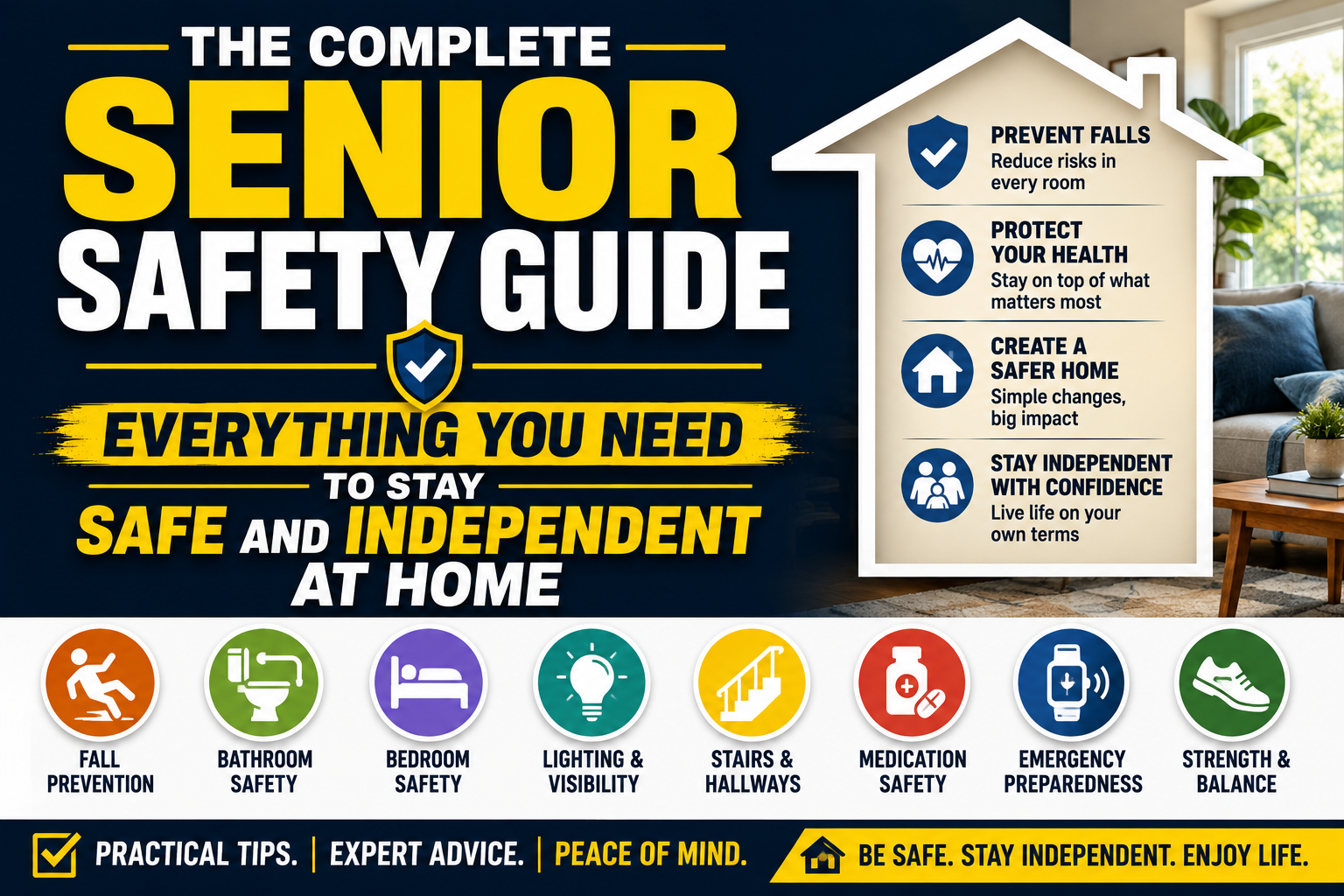
For the complete senior safety picture our complete senior safety guide covers every element of safe independent living in one comprehensive resource. Our aging in place checklist covers emergency preparedness alongside every other planning category.
→ Get the Auto-On Night Lights on Amazon — the most important emergency preparedness item for seniors
→ Get the SecuLife Smartwatch on Amazon — cellular fall detection that works when home systems don’t
→ Get the Pill Dispenser on Amazon — medication management that works during emergency disruption
About the Author
Tom Garrett spent eight years as an EMT responding to calls that were made worse — sometimes catastrophically worse — by inadequate emergency preparedness. The power outage that left an older adult navigating in complete darkness. The storm that cut off medication refill access for a week. The fall that happened because the environmental supports that made daily life safe were suddenly unavailable. Emergency preparedness for older adults isn’t a generic checklist — it’s a specific response to specific vulnerabilities that become acute exactly when normal systems fail. He writes for Elder Safety Guide because preparation before the emergency is what determines outcomes during it.