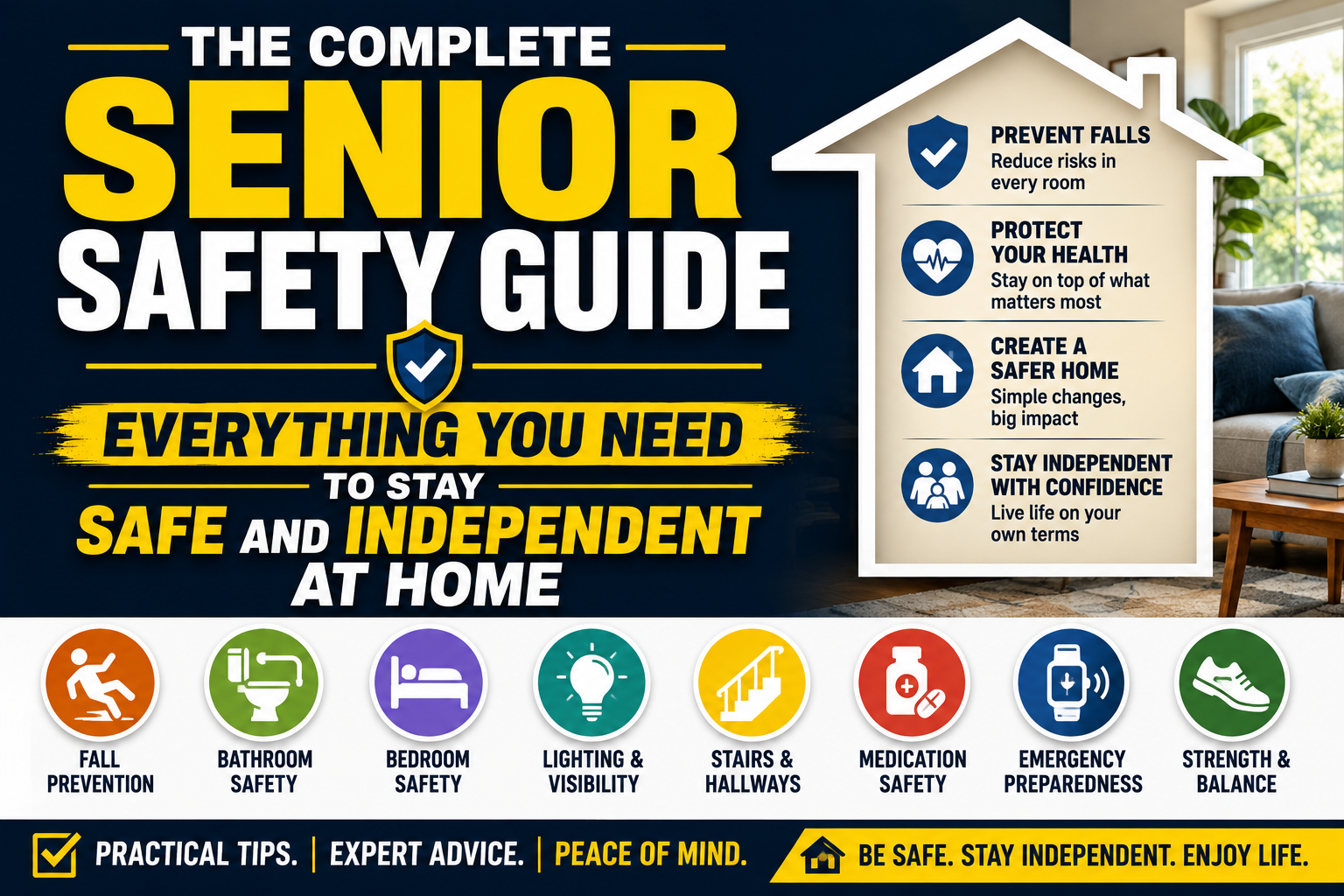
Everything older adults need to know to stay safe and independent at home — bathroom safety, fall prevention, medical alerts, mobility, health management and more in one complete guide.
You want to stay in your own home. On your own terms. For as long as possible.
That’s not an unreasonable goal. It’s the goal of the vast majority of older adults — and it’s achievable for most people who approach it the right way. Not by pretending nothing has changed. Not by ignoring the risks that come with aging in a home that was designed for a younger body. But by addressing those risks specifically, practically, and without making a bigger deal of them than they are.
This guide covers everything worth knowing about staying safe and independent at home — the bathroom modifications that matter most, the bedroom transitions that catch most people off guard, the fall risks that nobody talks about, the health management that keeps everything else working, and the technology that provides the safety net when prevention isn’t enough.
It’s written for you — not for your family to read about you. Because the person who benefits most from this information is the person who acts on it. And you’re the one who decides what happens in your own home.
Start Here — The Honest Truth About Staying Independent
Independent living as you get older isn’t about pretending nothing has changed. It’s about being honest enough with yourself about what has changed — and smart enough to address it — so you stay in control of your own life rather than having something force the issue.
The older adults who stay in their own homes the longest aren’t the ones who avoided thinking about safety. They’re the ones who thought about it clearly, made the modifications that mattered, put the right equipment in place, and kept the conversation going with their doctors and families — before anything forced their hand.
The families who manage their parents’ safety most successfully are the ones whose parents let them help with the things that actually matter — the bathroom modifications, the fall detection device, the medication review — so those conversations never had to happen in a hospital waiting room.
Everything in this guide is about keeping you in your own home, in your own life, on your own terms. That’s the goal. These are the steps that achieve it.
Your Bathroom — The Most Important Room to Address First
If you read nothing else in this guide, read this section. The bathroom is statistically the most dangerous room in any home for older adults — and the room where the most impactful, most affordable modifications are available.
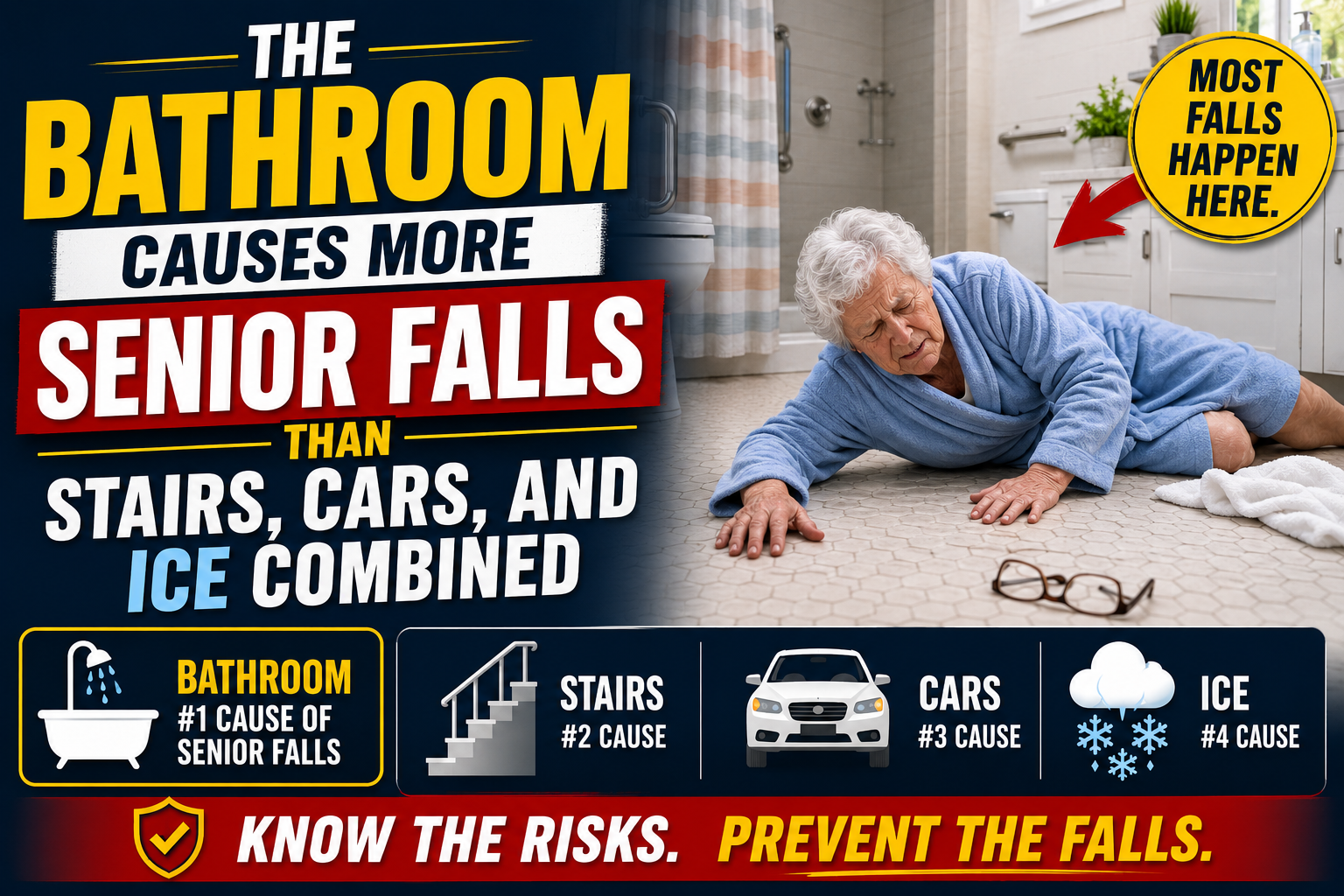
As covered in our guide on the bathroom causes more senior falls than stairs, cars, and ice combined — approximately 80 percent of falls in older adults occur in the bathroom. Wet surfaces, one-legged transitions, hard floors, and confined spaces combine into a daily risk that most bathrooms have never been modified to address.
Grab Bars — The Single Most Important Modification
A grab bar at your shower entry is the highest-impact safety modification available in any home. Not a towel bar. Not something to lean against. A load-rated grab bar — rated for 250 pounds or more — mounted into wall studs, positioned inside the shower at the height your hand reaches naturally during the entry motion.
As covered in our guide on the grab bar that wasn’t there, the falling hand that reaches for support and finds nothing is one of the most consistent patterns in serious bathroom fall reports. The bar that’s there when your hand reaches for it changes that outcome completely.
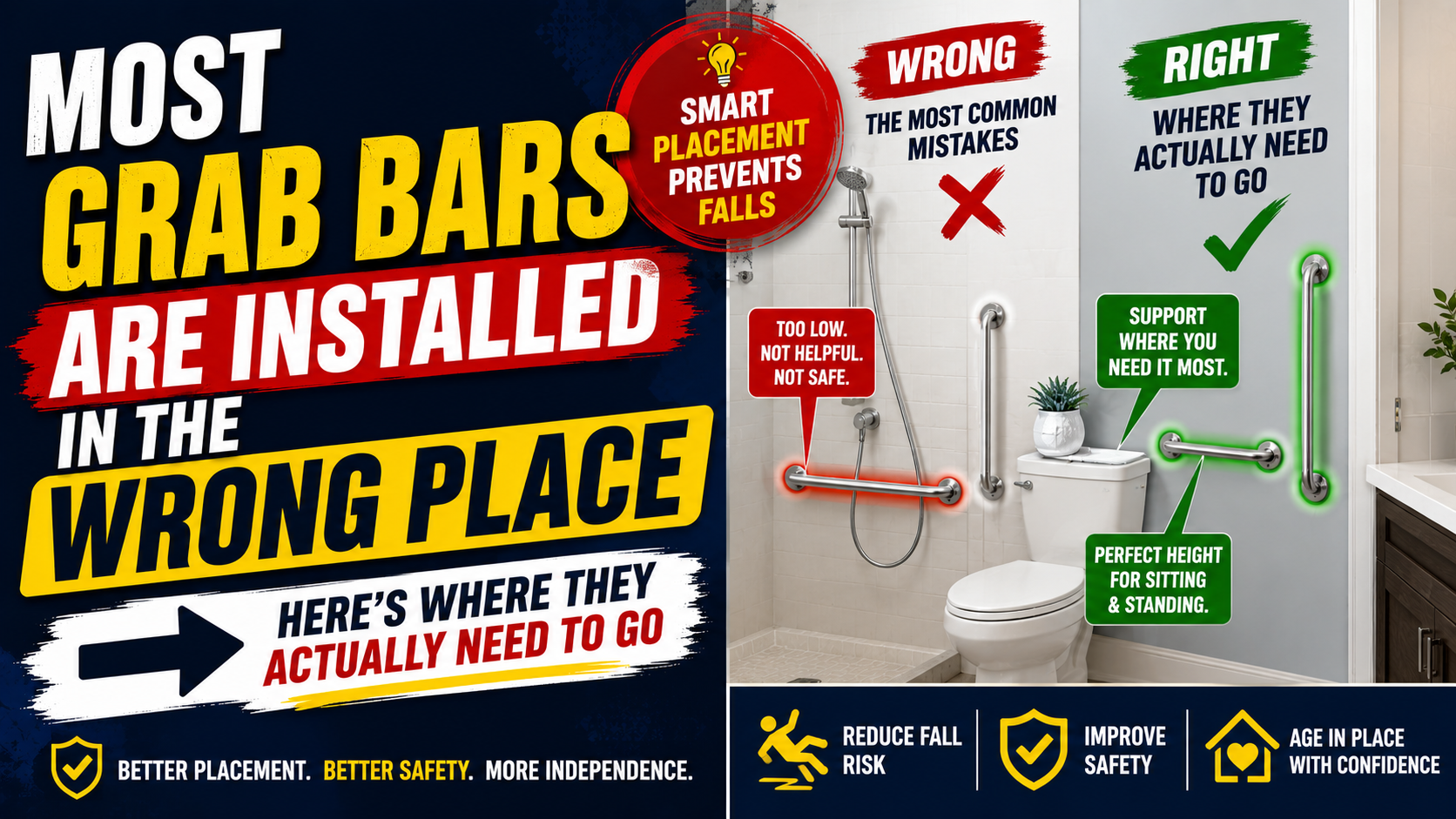
You need three bars: one at the shower entry inside the shower, one on the shower back wall at hip height, and one adjacent to the toilet for the rising movement. Our guide on most grab bars are installed in the wrong place covers exactly where each one needs to go. Our review of the best grab bars for seniors covers what to buy.
Toilet Safety Rails
Getting on and off the toilet happens multiple times every day — and the sit-to-stand movement from a low surface is one of the most physically demanding daily transitions you make. Toilet safety rails with armrests transform this from a balance challenge into a supported, managed movement. No tools required for installation. Fits any toilet. Immediate difference from the first use.
Our review of the best toilet safety rails covers the specific option we recommend.
→ Get the Toilet Safety Rails on Amazon
Non-Slip Bath Mat
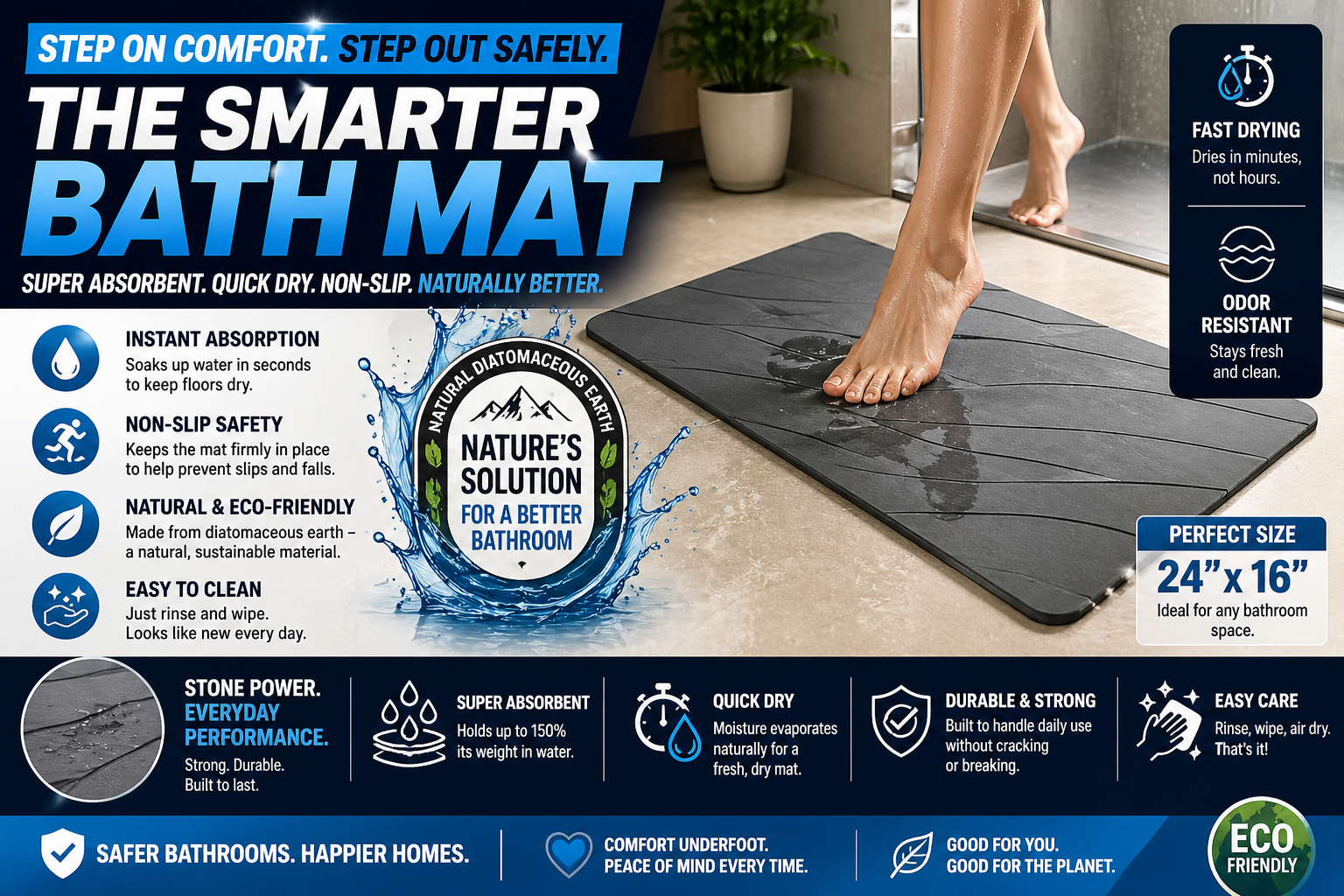
The moment of stepping out of the shower onto a bath mat that shifts under your first wet step is one of the most common fall mechanisms in the bathroom. Most fabric bath mats fail this test. A diatomaceous earth stone mat absorbs water instantly, never shifts under load, and maintains its grip permanently.
Our review of the best non-slip bath mat for seniors covers why most mats fail and what to use instead.
→ Get the Diatomaceous Earth Bath Mat on Amazon
Shower Chair
Standing in a wet shower for the full duration of showering places sustained balance demands on you every single day. A shower chair eliminates that risk by allowing you to shower seated — which is also more comfortable and less physically tiring than standing. Most people who try a shower chair prefer it.
Our review of the best shower chair for seniors covers the specific product worth buying.
→ Get the Shower Chair on Amazon
For the complete bathroom safety picture our guide on how to make a bathroom safer for seniors covers every modification worth making. Our complete guide on safe shower setup for elderly adults covers the shower specifically in full detail. And our guide on your parent’s bathroom is more dangerous than you realize covers the full risk picture with the statistics that put it in context.
Your Bedroom — The Danger That Happens Every Morning
As covered in our guide on getting out of bed is the most dangerous moment of a senior’s day — the morning getting-up sequence is the highest-risk daily transition for most older adults. Blood pressure that hasn’t normalized from sleep. The compression of a mattress that provides no firm push-off surface. The sleep inertia that reduces alertness and coordination in those first minutes.
Bed Rail
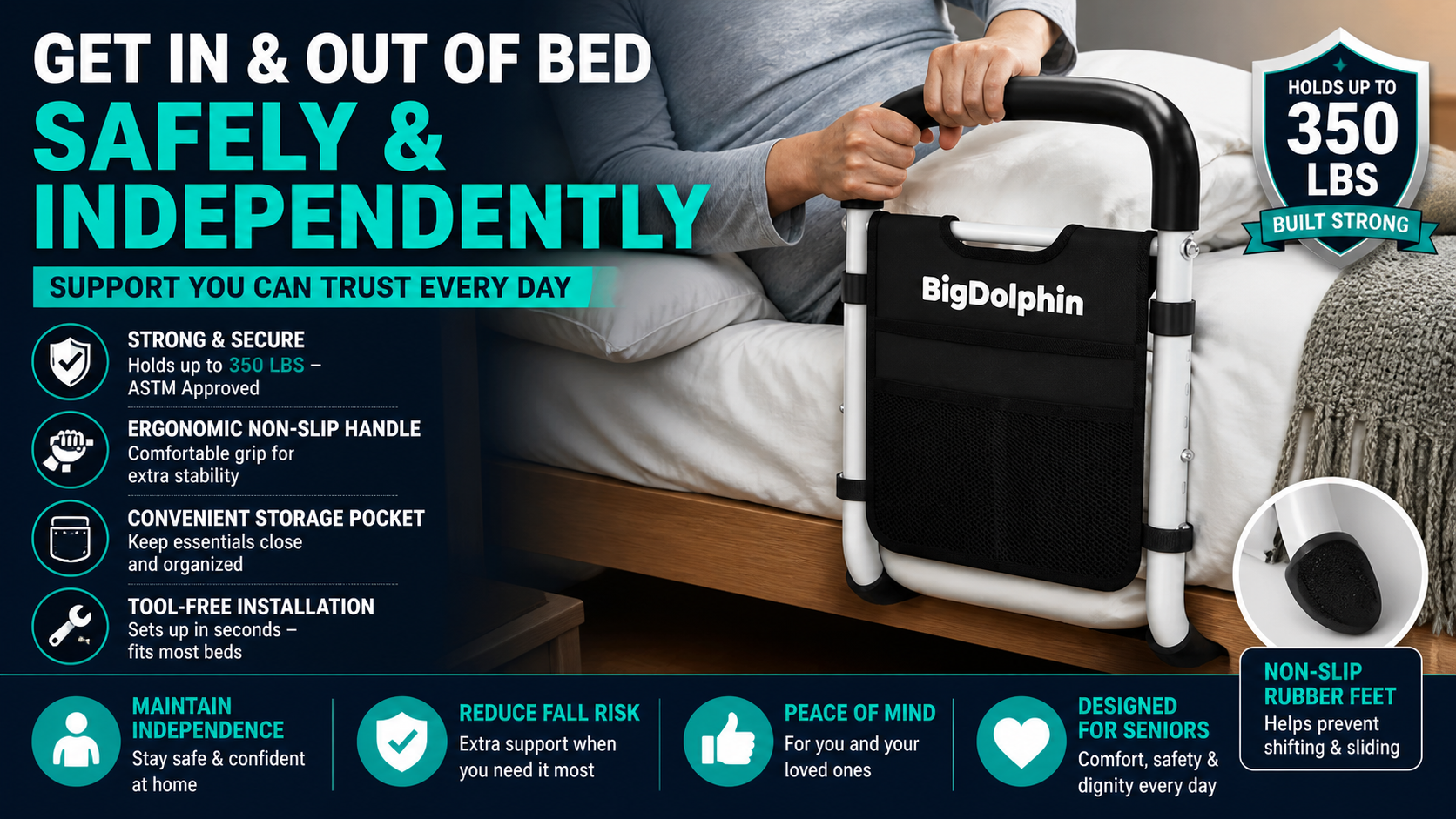
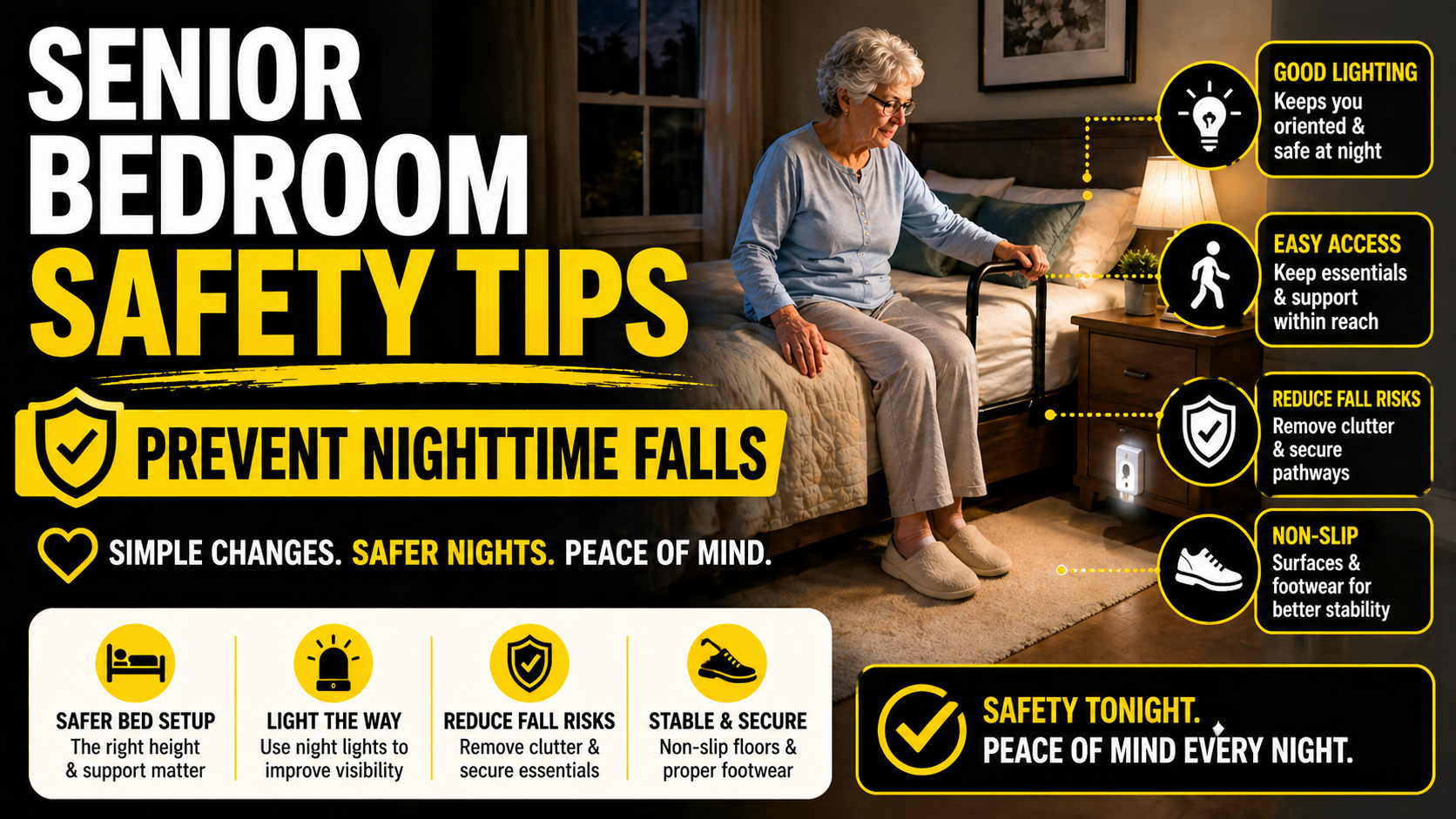
A bed rail on the exit side of your bed provides a firm, non-compressing handle to push against during the sit-to-stand transition — reducing the leg strength required and providing stabilization during the first seconds of standing when orthostatic hypotension may be producing dizziness. It’s there during every morning getting-up and every nighttime bathroom trip.
Our review of the best bed rail for seniors covers the ASTM-certified option we recommend. Our guide on safe ways to get out of bed as you age covers the technique that works alongside it.
Night Lights on the Path to the Bathroom
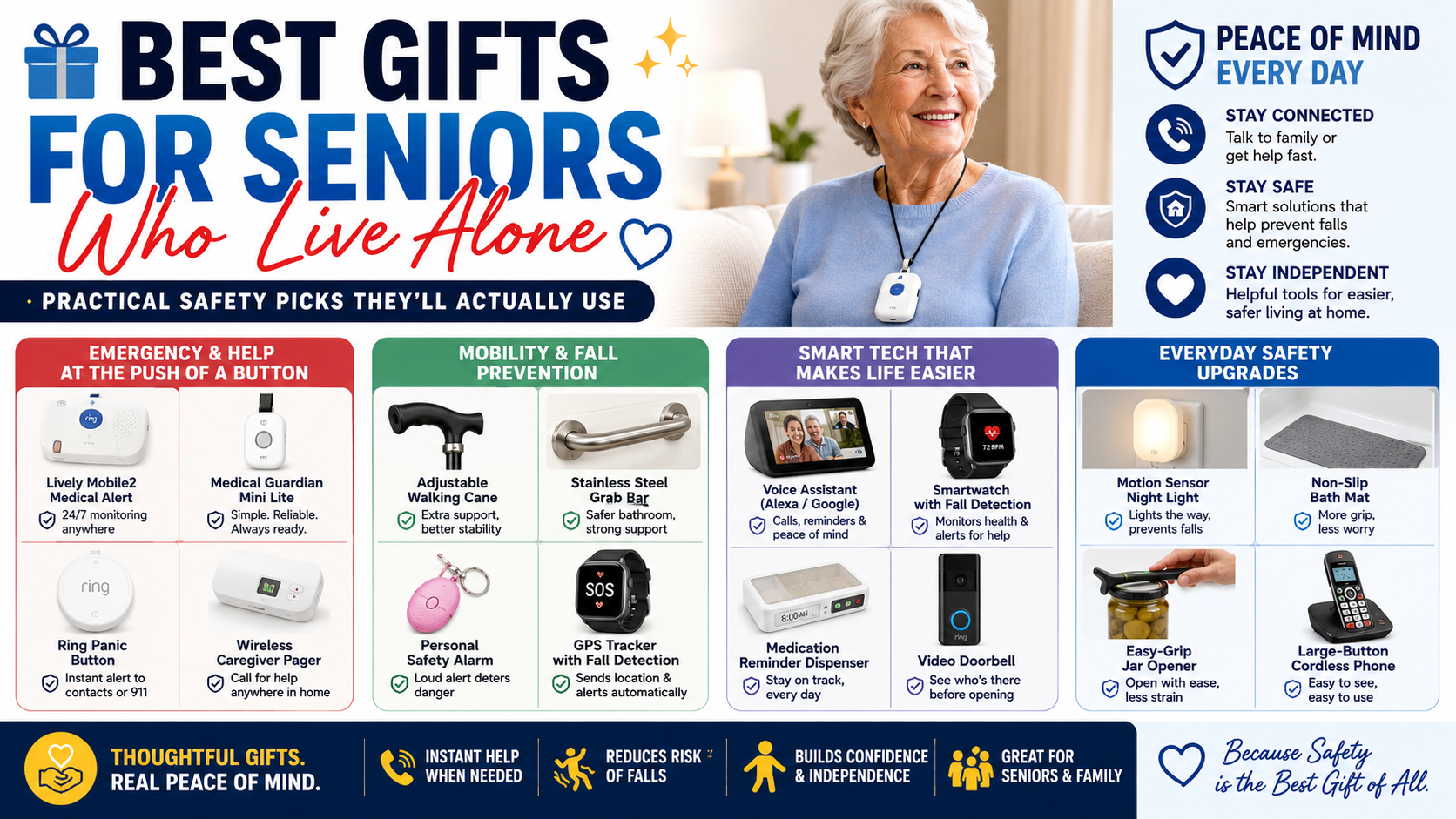
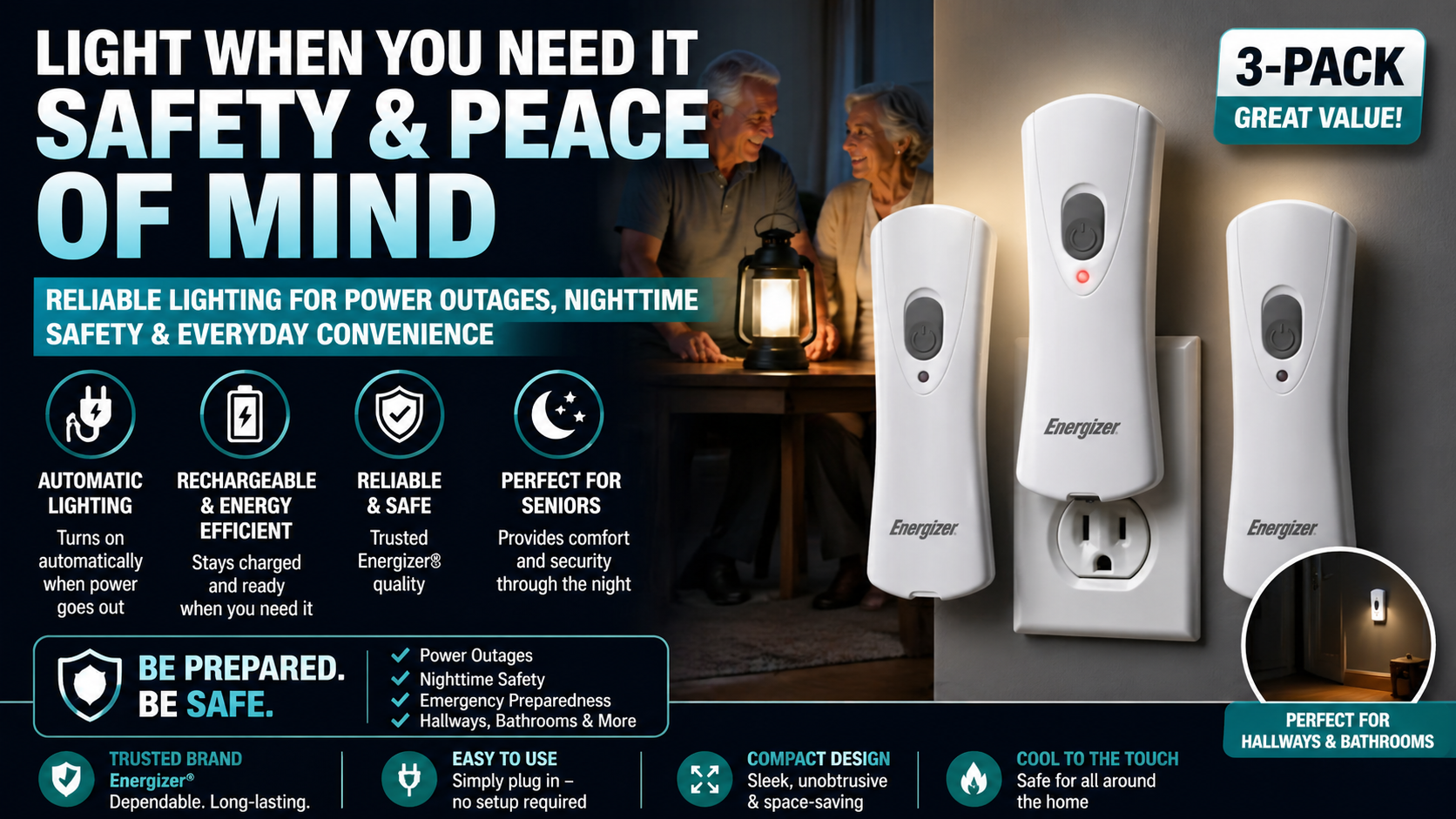
The nighttime bathroom trip — in the dark, half-asleep, often urgent — is one of the highest-risk events of any given day. The path from your bed to your bathroom needs to be lit automatically before you’re moving through it — not after finding a switch in the dark. Auto-on night lights in your bedroom, hallway, and bathroom provide complete path lighting for under $50.
Our review of the best auto-on rechargeable lights covers the option that doubles as power outage protection simultaneously.
→ Get the Auto-On Night Lights on Amazon
For the complete bedroom safety picture our guide on senior bedroom safety tips for nighttime falls covers every modification worth making.
Your Home — Addressing Every Room
The bathroom and bedroom are the highest priorities. The rest of the home has its own fall risks worth addressing systematically.
Clear Every Walking Path
Unsecured rugs are one of the most common fall hazards in the home — and one of the most invisible because familiarity makes them disappear from conscious awareness. Remove every unsecured rug from every walking area. Route all cords along walls. Keep every walking path completely clear.
Stairs — Both Handrails and Treads
Most home staircases have a handrail on only one side. A second handrail on the opposite wall gives you bilateral support throughout the full stair run — both sides available regardless of direction of travel. Non-slip treads with contrasting color make step edges clearly visible. Our complete guide on how to prevent falls on stairs covers every modification worth making.
Lighting Throughout
What feels adequately lit may be genuinely insufficient for your visual acuity. Increase wattage, add lamps to dark corners, ensure light switches are accessible before entering each room rather than after navigating into a dark space.
The Complete Home Assessment
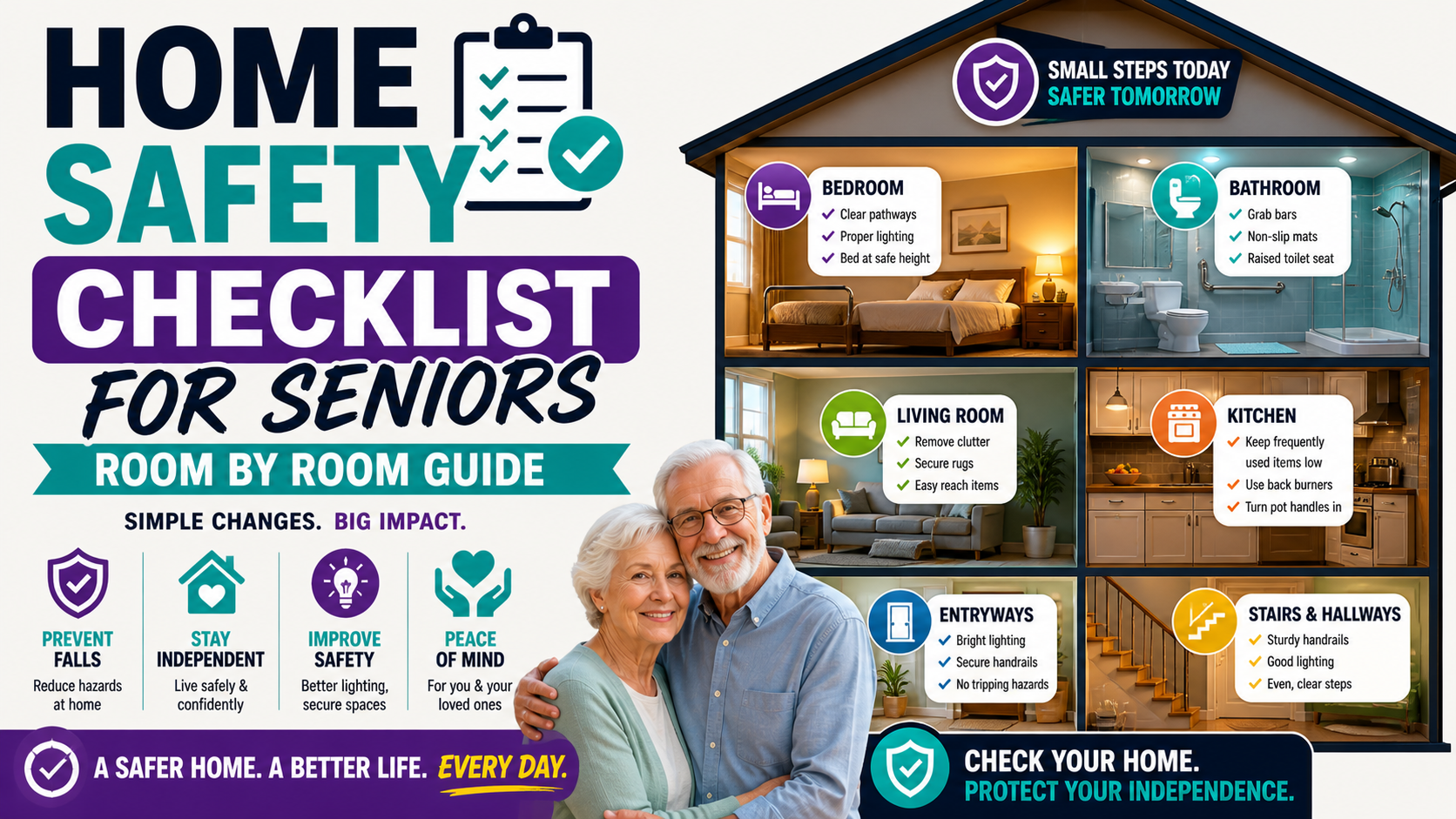
Our home safety checklist for seniors gives you a systematic room-by-room assessment tool. Our guide on how to make your home safer as you age covers the complete modification picture. Our guide on simple home modifications for aging in place ranked by impact tells you what to do first.

Fall Prevention — The Complete Picture
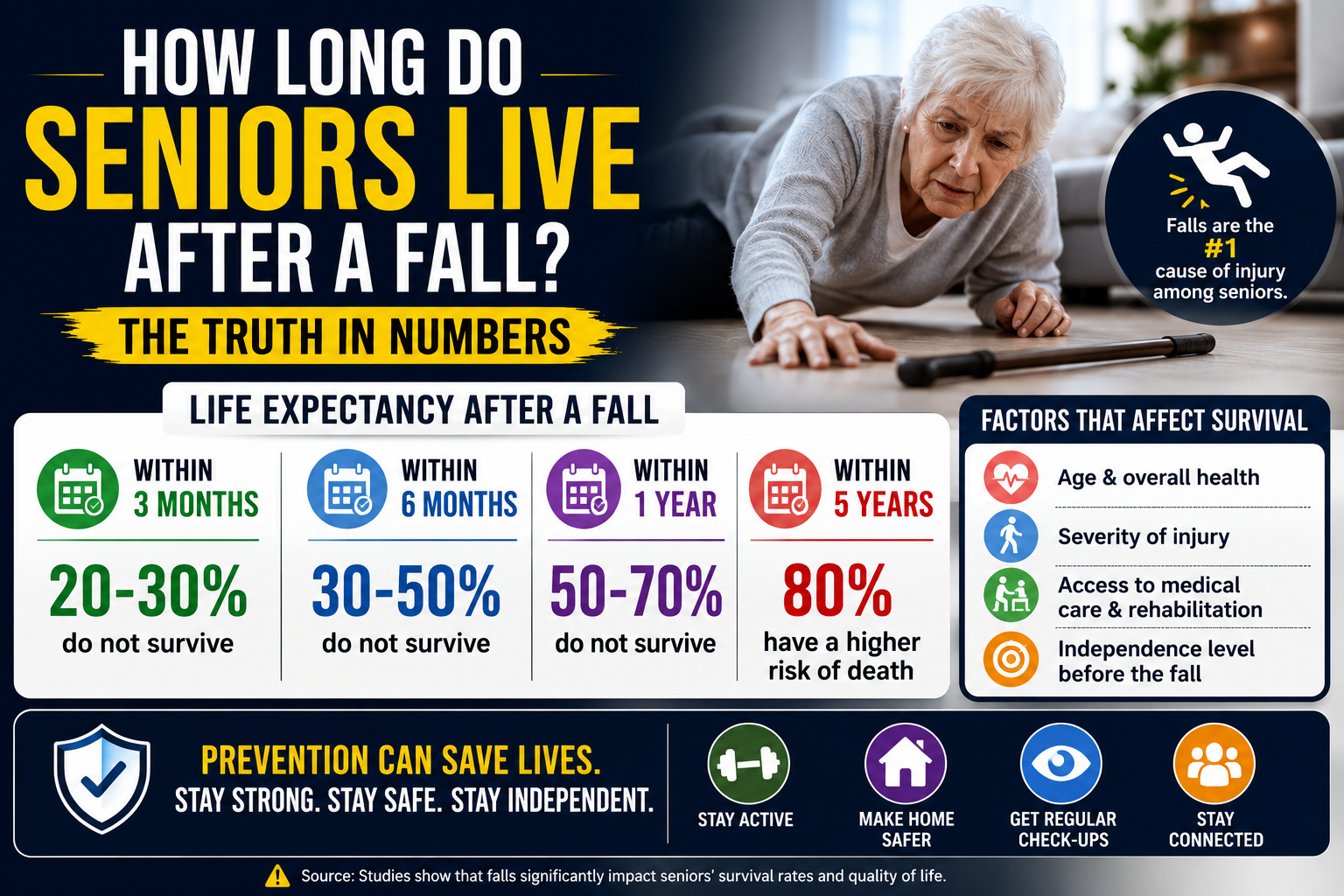
As covered in our guide on 1 in 3 seniors falls every year — falls are the most common cause of both fatal and nonfatal injuries in older adults. Understanding what causes them is what makes prevention actionable.
Medication — The #1 Cause Most People Don’t Know About
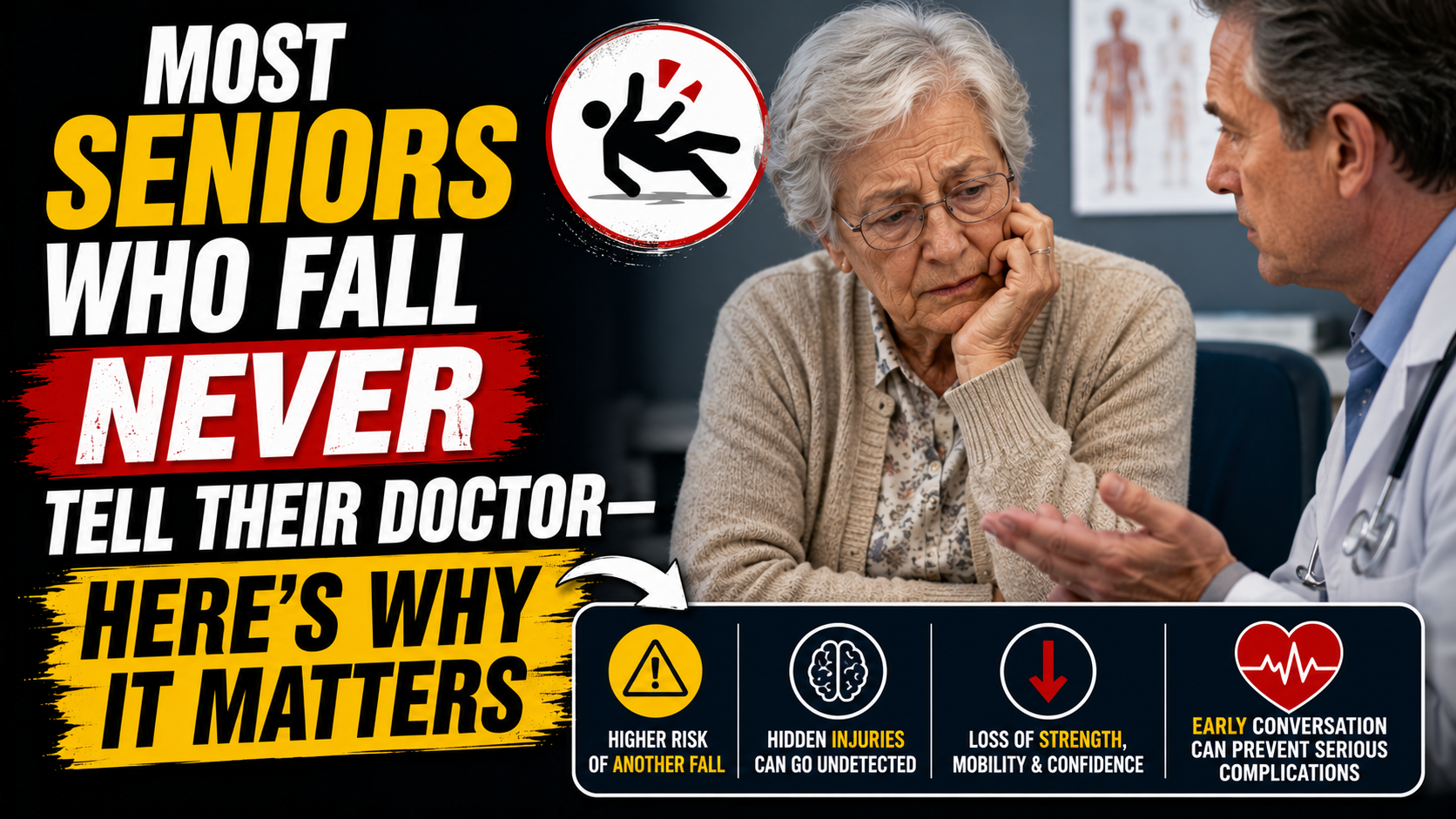
As we covered in our guide on the #1 reason seniors fall at home — medication is the single most significant modifiable fall risk factor. Blood pressure medications causing orthostatic hypotension. Sleep medications reducing morning alertness. Diuretics increasing nighttime bathroom frequency. A falls-focused medication review with your physician — requested by name using those exact words — frequently produces timing adjustments that meaningfully reduce fall risk without changing medications.
Dehydration — The Overlooked Risk
As covered in our guide on the most overlooked fall risk for seniors — dehydration reduces blood volume, produces orthostatic hypotension, impairs muscle function, and reduces cognitive alertness. The thirst mechanism becomes less reliable with age meaning you may be regularly mildly dehydrated without knowing it. Consistent fluid intake throughout the day — not dependent on thirst — is a genuine fall prevention intervention.
Balance and Strength Exercise
Exercise specifically targeting balance and leg strength reduces fall rates by 20 to 30 percent in research studies — the highest-evidence fall prevention intervention available. Tai Chi specifically has the strongest research base. Physical therapy provides a personalized program for specific deficits. Our guide on tips for balance problems covers the interventions with the strongest evidence.
Vision
Your visual system is one of three systems your brain uses to maintain balance. An outdated glasses prescription is a genuine fall risk factor. Annual vision checks and current prescriptions are fall prevention interventions, not just visual comfort ones.
Footwear
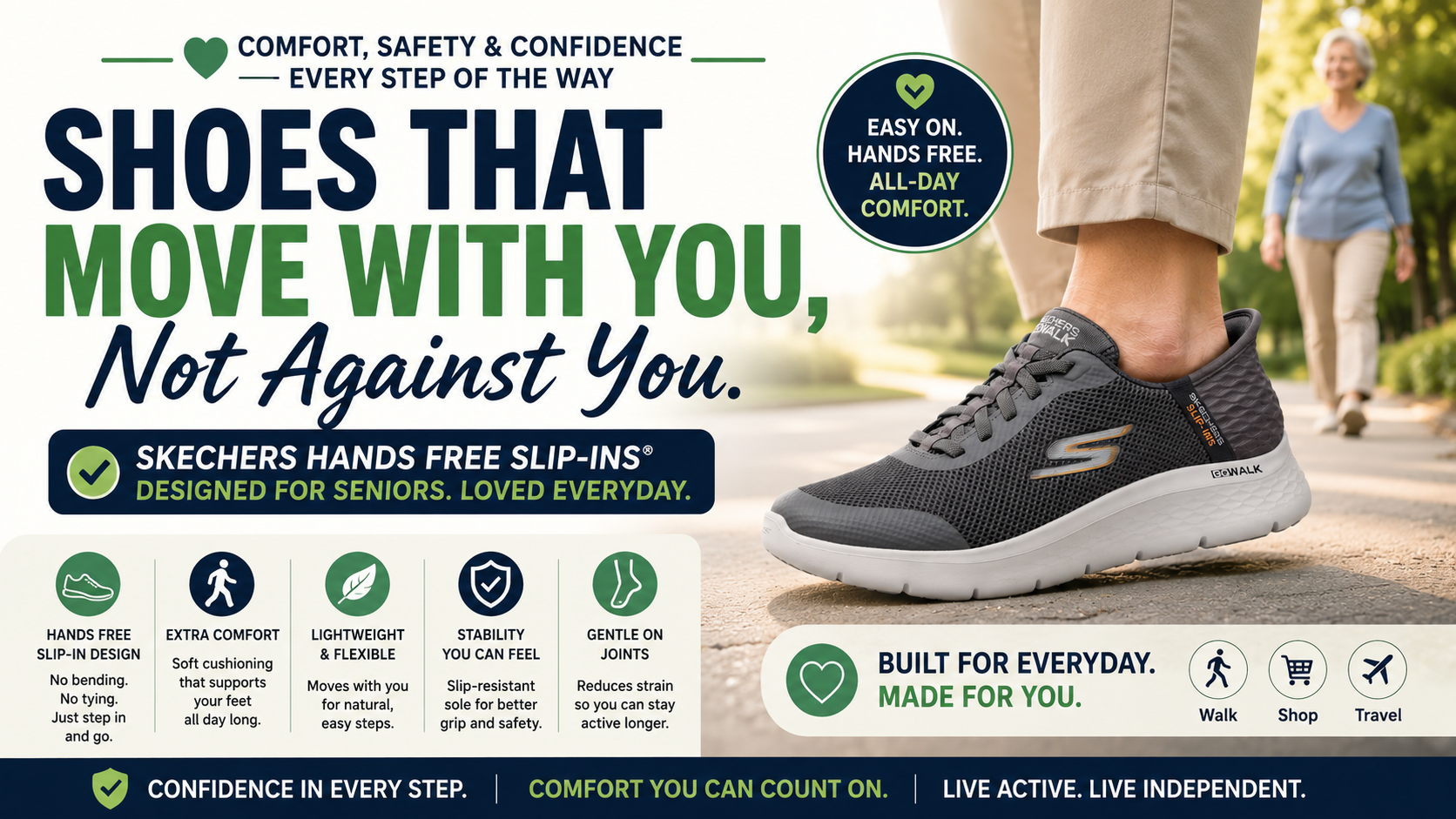
Inside your home, wear supportive shoes with non-slip rubber soles rather than socks on smooth floors or loose slippers that don’t secure to your foot. Footwear is one of the most consistently underestimated fall risk factors in the home.
For the complete fall prevention picture our guide on fall prevention tips at home covers every factor worth addressing. Our guide on senior fall prevention products that actually work covers the specific products ranked by real-world impact.
The Safety Net — What Happens If You Fall
Prevention reduces falls. It doesn’t eliminate them. The question worth answering honestly: if you fell right now and couldn’t get up, how long before someone knew?
As covered in our guide on what happens to seniors who fall and can’t get up — the duration on the floor is an independent predictor of outcome. And as covered in our guide on the first 60 minutes after a senior falls are the most critical — specific physiological consequences accumulate with every passing hour.
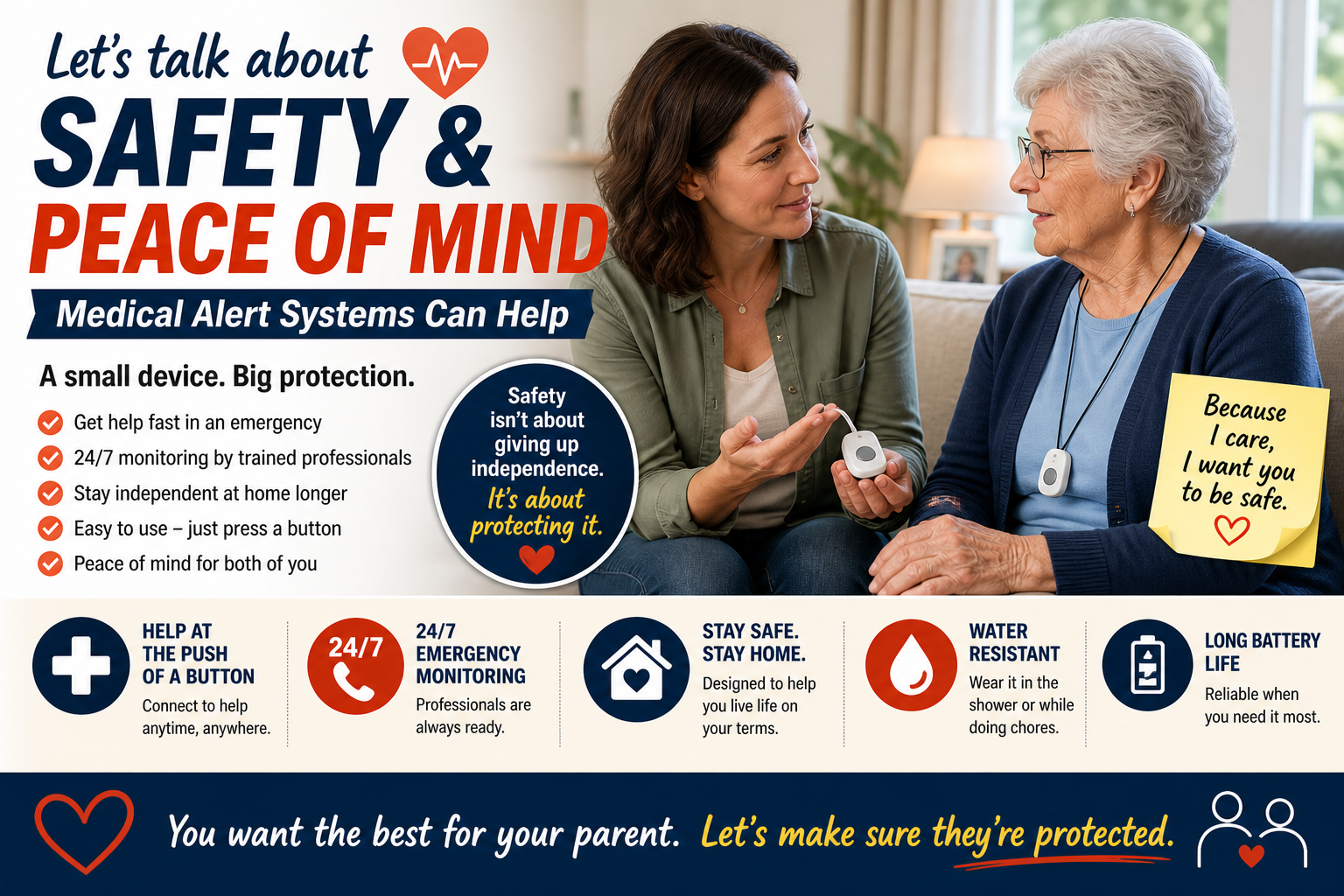
Medical Alert Device With Automatic Fall Detection
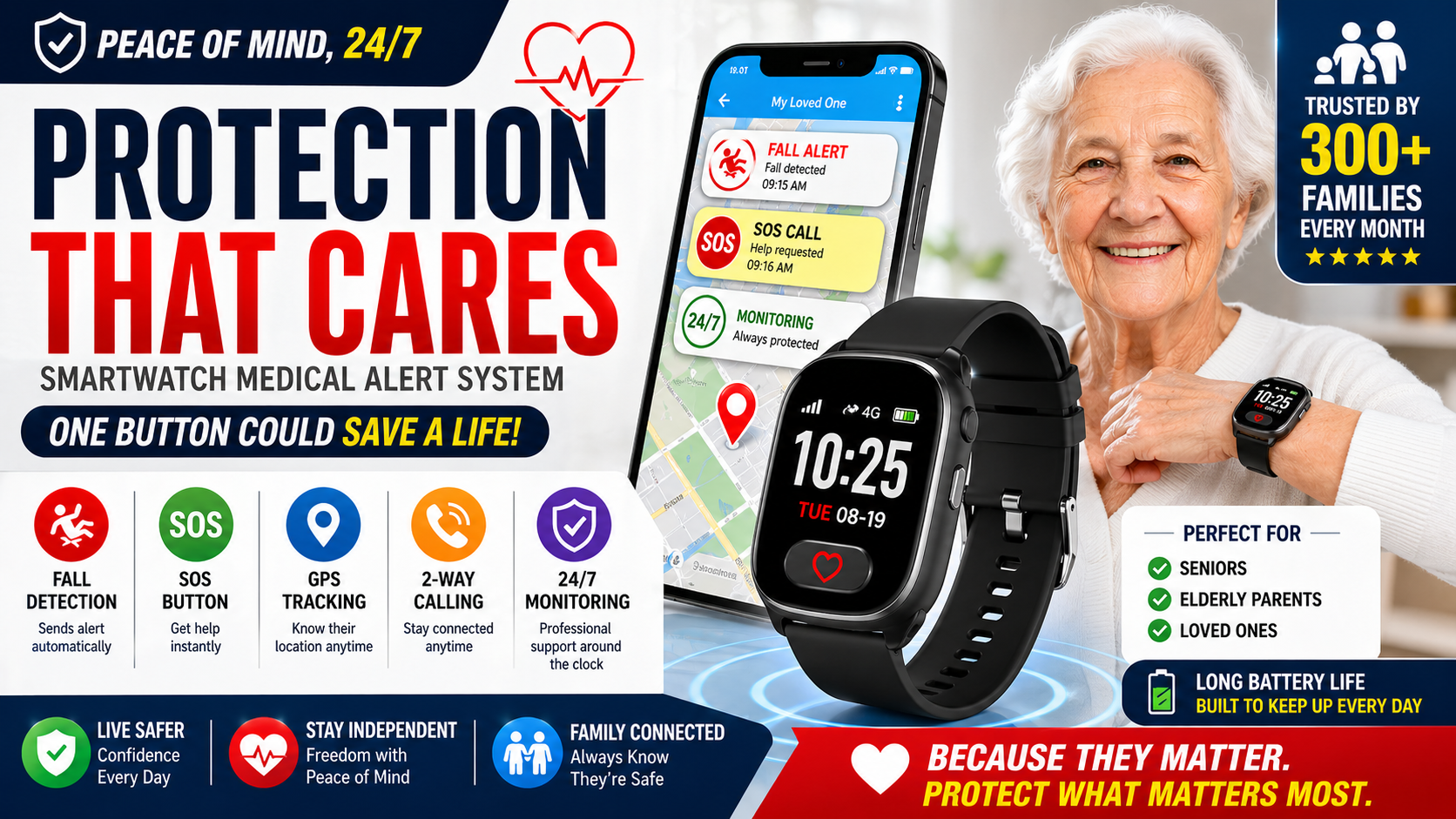
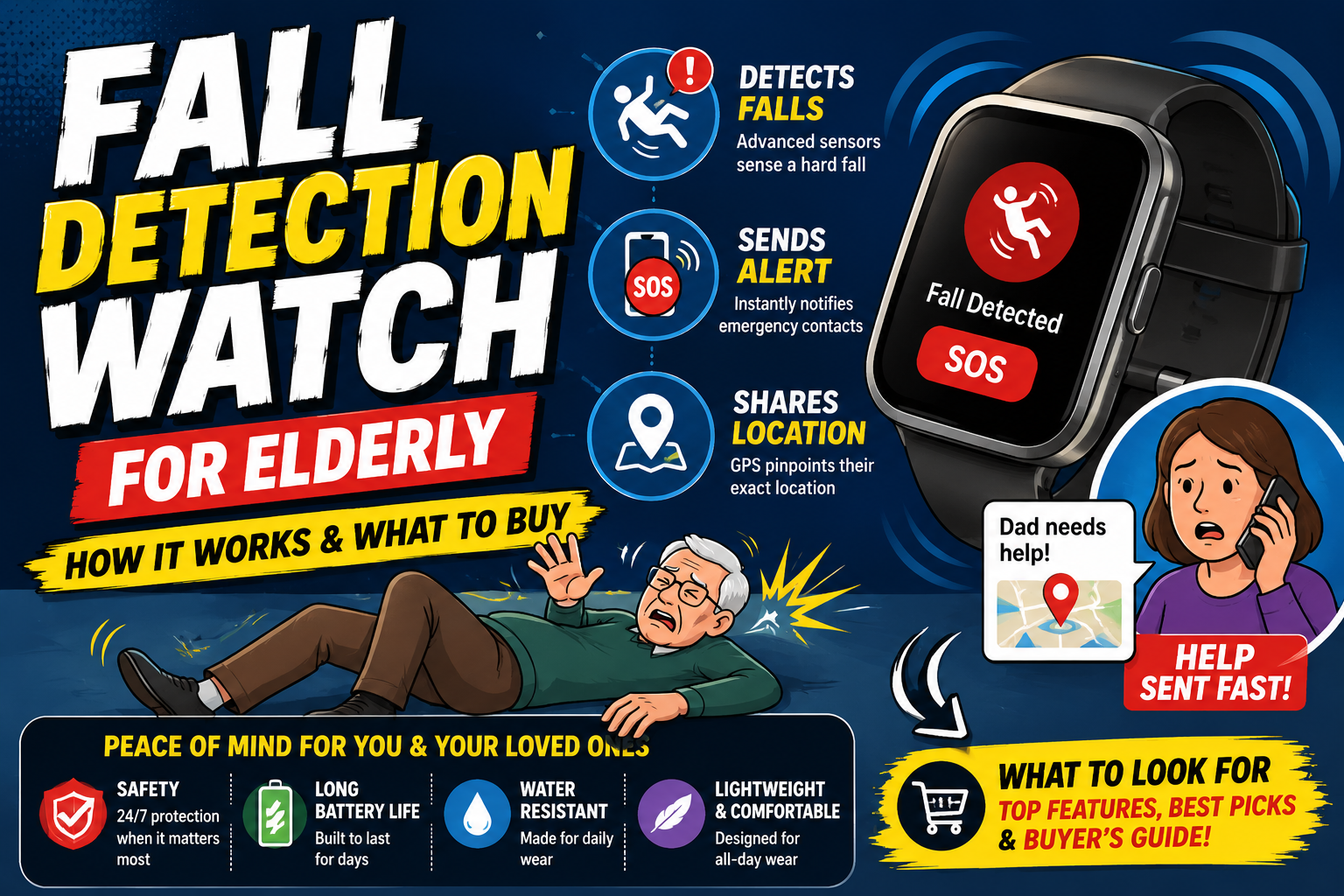
A medical alert device with automatic fall detection closes the gap between a fall happening and help arriving — to seconds rather than hours. Automatic detection means the alert goes out even if you can’t press a button — even if you’re unconscious, disoriented, or simply can’t reach anything.
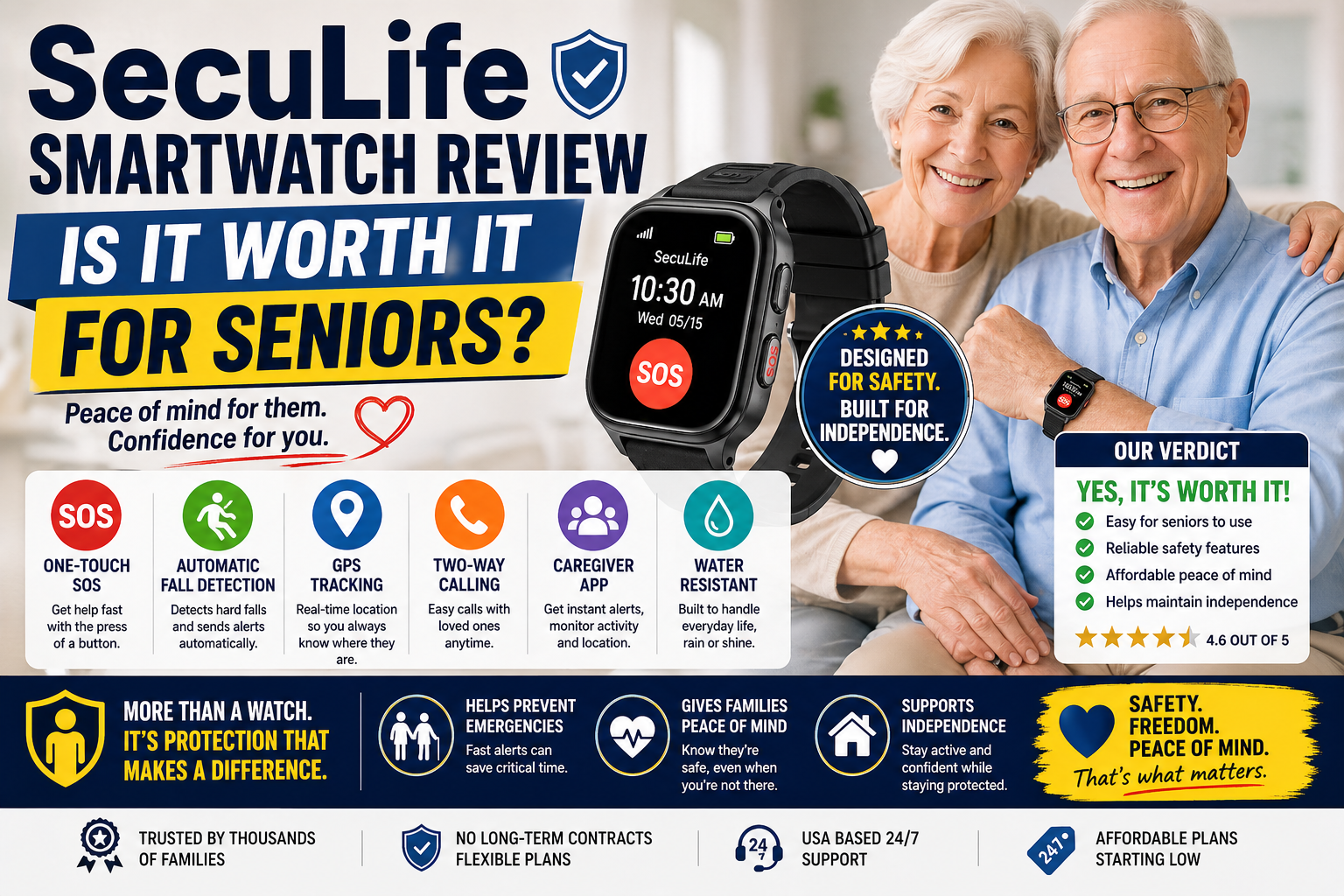
The SecuLife Smartwatch delivers this from the wrist — worn like a regular watch, providing fall detection, GPS location sharing, SOS calling, and two-way communication anywhere with cell coverage. Our complete review at SecuLife Smartwatch Review covers every feature. Our guides on best medical alert smartwatch for seniors, best smartwatch for seniors, best GPS watch for elderly parents, and best SOS watch for seniors cover every angle of this decision.
→ Get the SecuLife Smartwatch on Amazon
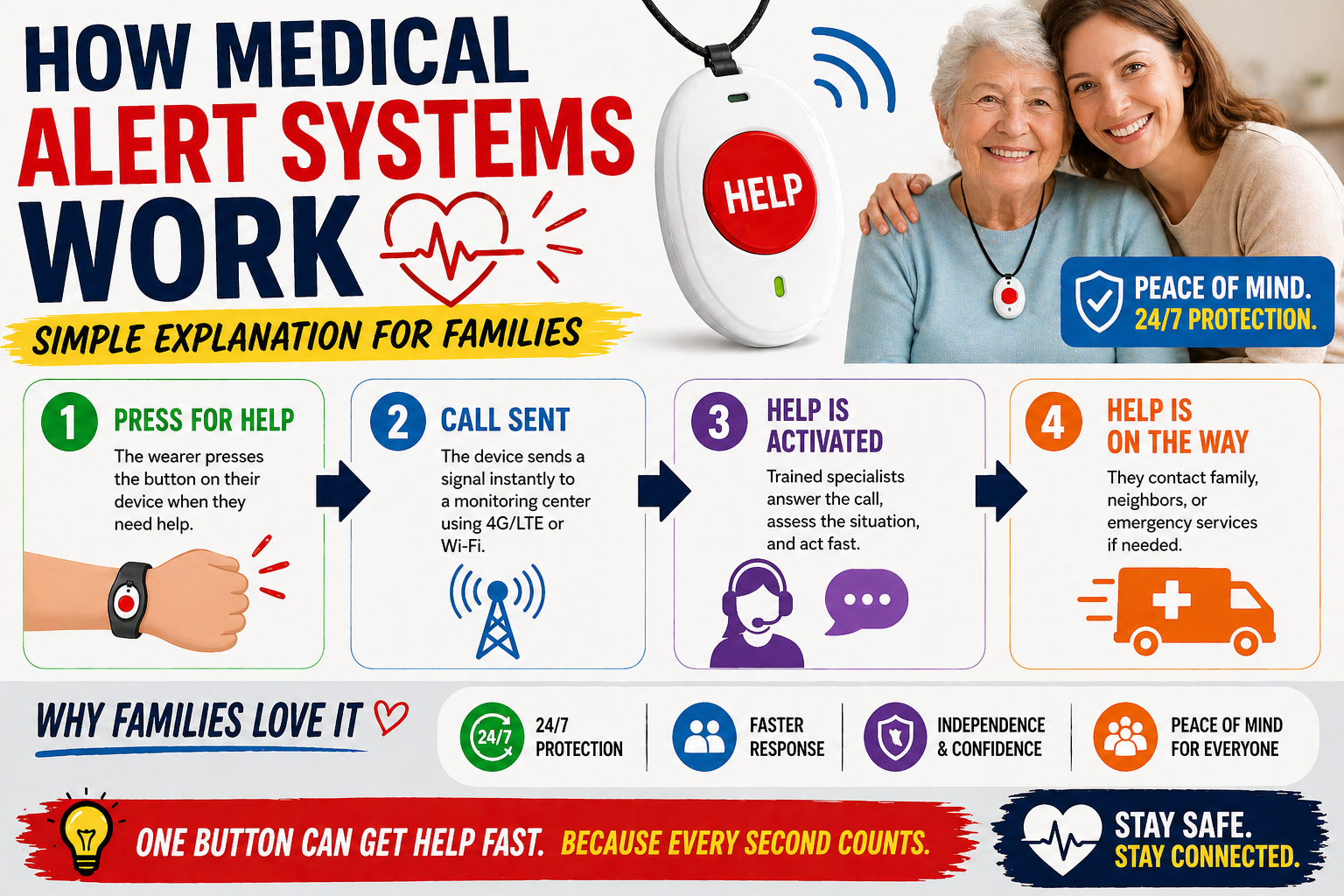
Our guide on signs it’s time for a medical alert system covers how to assess the timing. Our guide on how much a medical alert system costs covers the financial picture. Our guide on how medical alert systems work covers the mechanics clearly.
Mobility — Staying Active and Moving Safely
Staying active is one of the most powerful things you can do for your health, your cognition, and your independence. The right mobility equipment extends what’s possible — it doesn’t limit it.
Walking Cane
If your balance has changed noticeably — you reach for walls more than you used to, uneven surfaces require more caution — a walking cane used proactively is one of the highest-impact mobility interventions available. A third point of ground contact meaningfully improves stability. The foldable format means it goes everywhere you go.
Our review of the best walking cane for seniors covers the free-standing foldable option we recommend.
→ Get the HONEYBULL Walking Cane on Amazon
Rollator Walker
If bilateral support is needed, rest breaks during walks are necessary, or you want to walk longer distances with more confidence — a rollator walker with a built-in seat extends your range significantly. The all-terrain 8-inch wheels handle outdoor surfaces reliably.
Our review of the best rollator walker for seniors covers the SOUNDFUSE option we recommend.
→ Get the SOUNDFUSE Rollator Walker on Amazon
Our guide on tips for helping seniors with balance problems covers the exercise and mobility approach comprehensively.
Health Management — Staying Ahead of Problems
Proactive health management is one of the four foundations of successful independent living. These specific health actions directly affect fall risk, physical function, and independence sustainability.
Medication Review for Fall Risk
Ask your physician specifically for a “falls-focused medication review” — those exact words. This prompts a review specifically evaluating which medications have fall-risk side effects and whether timing adjustments might reduce them. This single conversation produces meaningful results more consistently than almost any other medical intervention in fall prevention.
Blood Pressure Monitoring at Home
Daily blood pressure readings at home — particularly readings taken sitting and then immediately standing — reveal the orthostatic hypotension that may be contributing to dizziness and falls without your physician knowing about it. Our review of the best blood pressure monitor for seniors covers the Bluetooth-connected option that logs readings automatically.
→ Get the iHealth Blood Pressure Monitor on Amazon
Medication Management
Medication errors — missed doses, double doses, wrong timing — directly increase fall risk and health instability. An automatic pill dispenser removes human memory from medication management. Our review of the best automatic pill dispenser for seniors covers the 28-day smart lock option.
→ Get the Windtrace Pill Dispenser on Amazon
Hearing
Hearing loss is associated with increased fall risk through increased cognitive load that competes with balance processing. If hearing aids have been recommended and you haven’t been wearing them consistently — or if you’ve been putting off addressing hearing reduction — our reviews of the best rechargeable hearing aids and best hearing amplifier cover the accessible options at different price points.
→ Get the EarCentric Hearing Aids on Amazon
Our guide on elderly safety tips for independent living covers the complete health management picture alongside home modifications and technology.
Aging in Place — Making It Work Long-Term
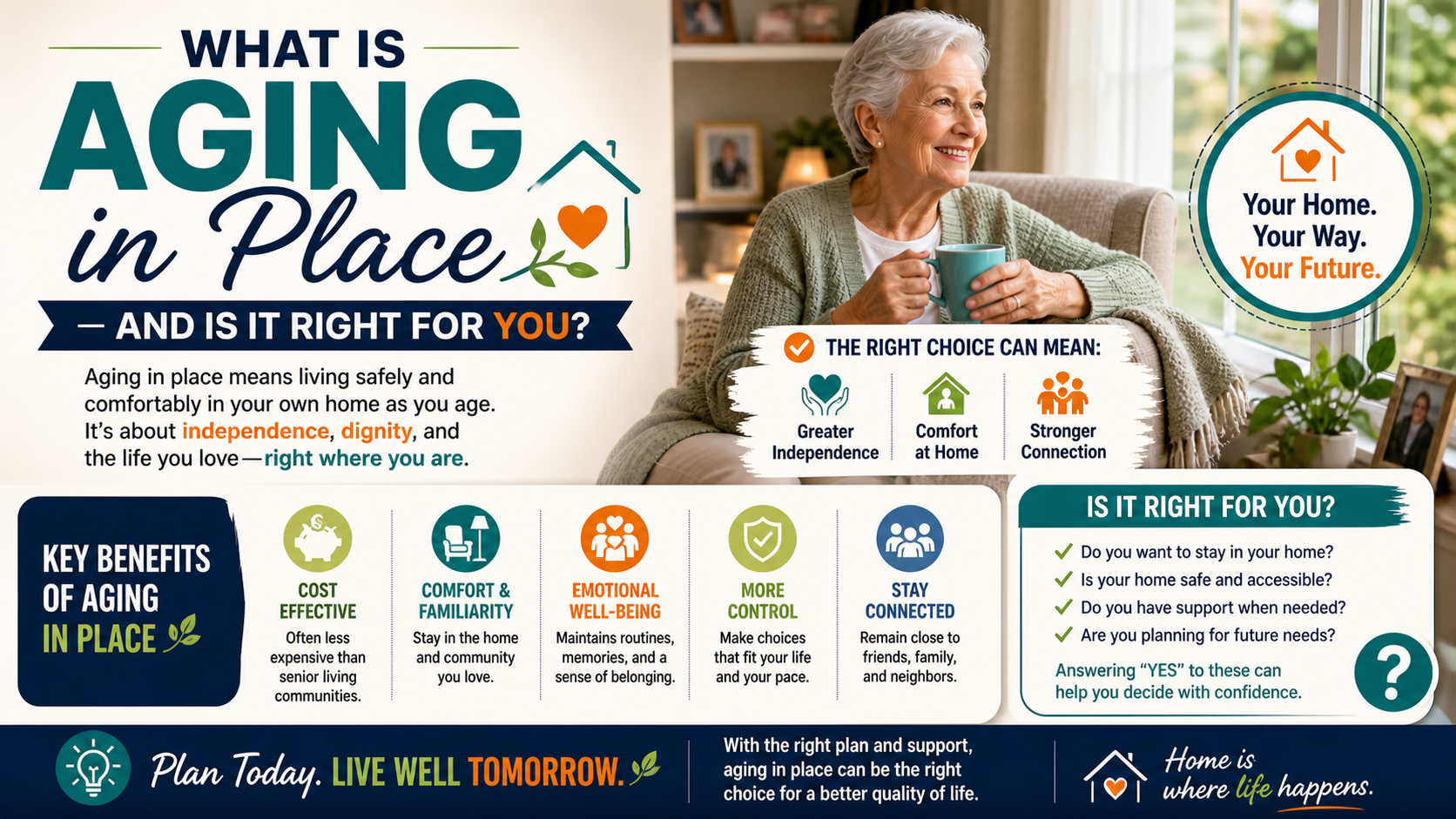
Aging in place — staying in your own home as your needs evolve — is what most older adults want and what most can achieve with the right approach. It requires planning rather than assuming.
Our guide on what is aging in place covers the complete picture — what it actually means, what makes it work, what makes it fail, and how to assess honestly whether it’s the right choice for your situation. Our comprehensive aging in place checklist covers every planning category — home safety, legal, financial, support systems, and health management — in one systematic resource.
The Four Foundations of Successful Aging in Place
A safe home environment — addressed in the sections above and through our complete guide on home modifications ranked by impact.
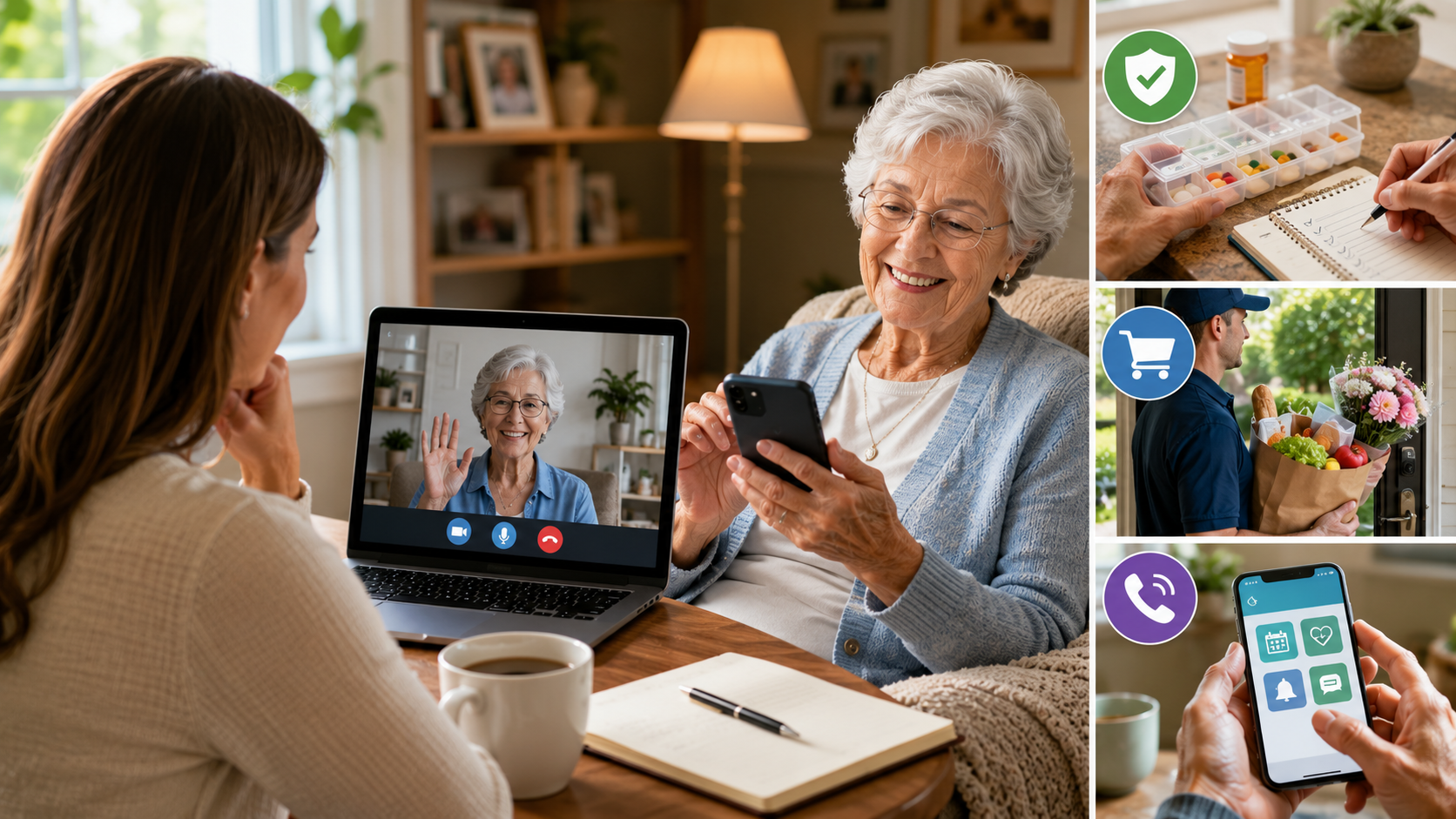
A support network — family, neighbors, friends, and professional services that provide coverage without requiring you to manage everything alone.
Appropriate technology — medical alert device, video doorbell, medication management, home monitoring. Our review of the Ring Battery Doorbell covers the visitor safety and package monitoring technology worth having.
→ Get the Ring Battery Doorbell on Amazon
Proactive health management — the medication reviews, vision checks, and exercise that maintain the physical capacity independent living requires.
When to Consider Bigger Modifications
Some aging in place situations benefit from larger modifications — a stair lift for multi-story homes where stairs have become a genuine challenge, a walk-in shower conversion that eliminates the threshold entirely, a walk-in bathtub for safe soaking baths.
Our review of the AmeriGlide Rave 2 Stair Lift covers the self-installable option. Our guide on best walk-in shower for seniors covers the renovation that eliminates the shower threshold entirely. Our review of the walk-in bathtub covers safe soaking bath options. And our guide on how much a stair lift costs covers the honest pricing picture.
Comfort and Quality of Life — Safety and Living Well Together
Safety isn’t separate from quality of life. The right equipment improves both simultaneously.
Power Lift Recliner
If getting up from your chair or couch has become difficult — if you push off from armrests, reach for nearby furniture, or feel unstable during the rising motion — a power lift recliner handles the physical work of the transition for you. It also provides heat therapy, massage, and independent position control for hours of daily comfortable sitting. Our review of the best power lift recliner for seniors covers the MCombo triple motor option.
→ Get the MCombo Power Lift Recliner on Amazon
Adjustable Bed
An adjustable bed base that elevates the head reduces acid reflux, snoring, and back pain during sleep — improving sleep quality that directly affects daytime alertness, balance, and fall risk. Head elevation also assists the morning getting-up transition by reducing the distance from lying to sitting. Our review of the best adjustable bed for seniors covers the Celestial Aurora option.
→ Get the Celestial Aurora Adjustable Bed on Amazon
If Dementia Is Part of the Picture
If cognitive changes are present — yours or someone you’re caring for — the safety picture has additional specific dimensions worth addressing.
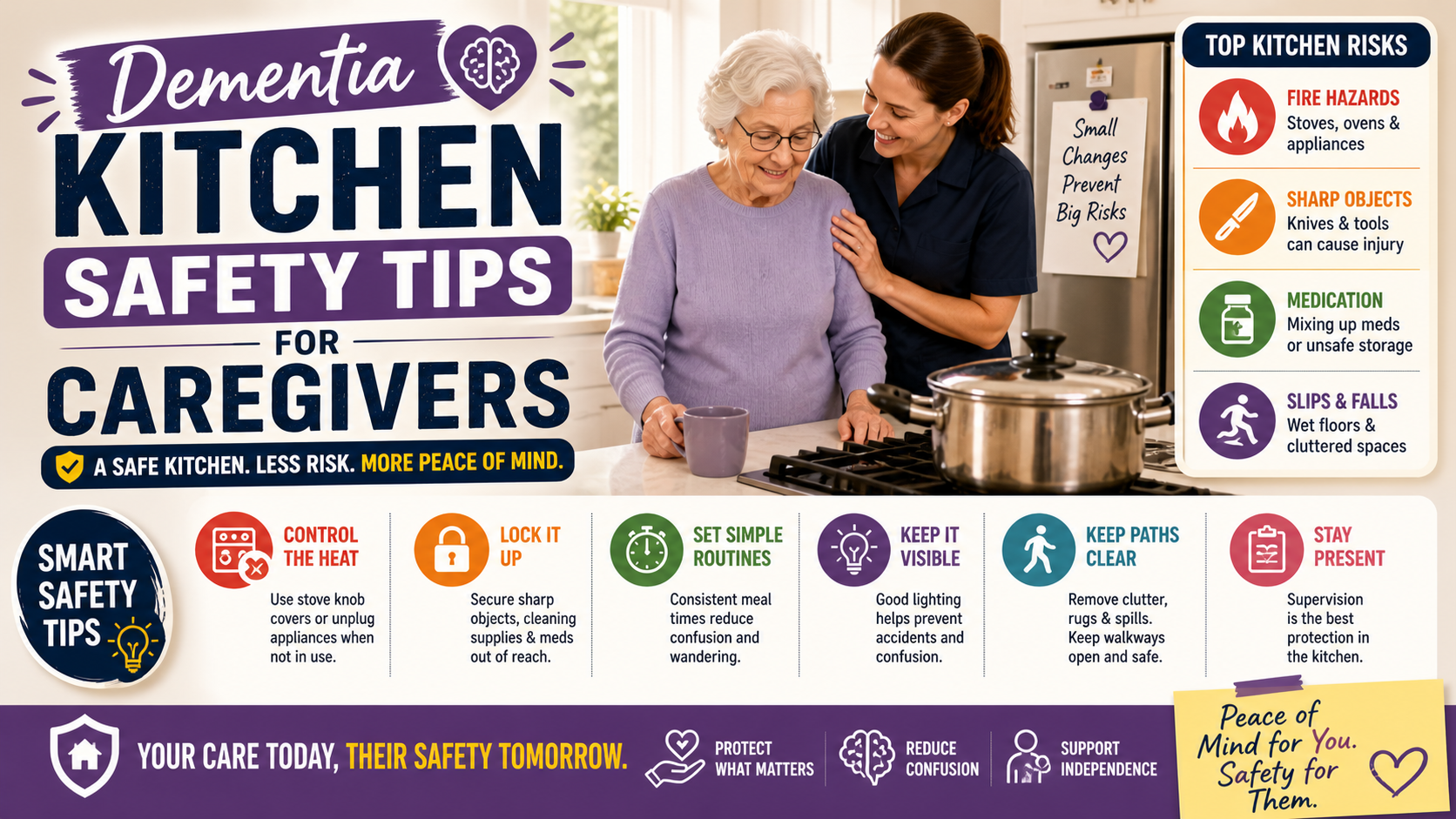
Our guide on home safety tips for seniors with dementia covers every room with dementia-specific modifications. Our guide on wandering prevention for seniors with dementia covers the GPS and environmental modifications that address wandering risk before it occurs. Our guide on keeping a parent with dementia safe at night covers the highest-risk period specifically. And our guide on dementia kitchen safety tips covers the most dangerous room for cognitive changes.
Understanding What’s Normal and What Warrants Attention
Knowing which changes to take seriously and which to accept as normal aging is one of the most useful things you can know. Our guide on normal aging vs something worth worrying about covers the specific framework geriatric nurses use to make this distinction across memory, balance, sleep, vision, mood, and physical changes.
And if you’ve had a fall — or noticed warning signs that one may be coming — our guide on warning signs you may not be safe living alone anymore covers what to watch for and what each signal actually means.
For the Families Reading This Alongside You
If a family member shared this guide with you — or if you’re reading it together — there’s a section of this site written specifically for them.
Our guide on how to help an elderly parent live safely alone covers everything from their perspective — how to assess the situation, how to have the conversation, what to do first, and how to build the support system that makes independent living sustainable. Our guide on signs your elderly parent needs more help at home covers the specific observations worth making during visits. And our guide on caregiver burnout covers the sustainability of the caregiver role honestly.
If the conversation about safety has been difficult — if “I’m fine” has been the consistent answer to genuine concern — our guide on your parent said they’re fine covers what that word actually means and what families can do regardless of what their parent says. Our guide on how to talk to a parent about a medical alert system covers the specific framings that work for the devices most seniors resist.

The Complete Action Plan — What to Do First
Everything in this guide matters. Not everything can be done simultaneously. Here’s the priority order for maximum impact.
This weekend — highest impact, lowest effort:
- Remove every unsecured rug and clear every cord from walking paths — free and immediate
- Order grab bars for shower entry and next to toilet
- Order toilet safety rails — tool-free installation when they arrive
- Order non-slip bath mat
- Order bed rail
- Order auto-on night lights — three units for bedroom, hallway, bathroom
This month:
- Install grab bars — correctly positioned per our placement guide
- Get a medical alert device with automatic fall detection in place and configured
- Request falls-focused medication review from your physician
- Schedule vision check if more than a year since the last one
- Identify a balance exercise program and start it
Ongoing:
- Exercise consistently — balance and strength, every week
- Hydrate consistently — not dependent on thirst
- Wear the medical alert device every day — charged nightly, on every morning
- Six-month home safety reassessments using our home safety checklist
You Get to Decide
Everything in this guide is in service of one goal: keeping you in your own home, in your own life, making your own decisions — for as long as possible.
The older adults who stay independent longest are not the ones who were the healthiest or the luckiest. They’re the ones who took the risks seriously, made the modifications, put the right equipment in place, kept the conversation going with their doctors — and kept showing up for themselves the way they showed up for everyone else in their lives.
You are the person this guide is for. You are the one who decides what happens in your home. You are the one whose choices today determine what tomorrow looks like.
The information is here. The products are linked. The action plan is clear.
What you do with it is entirely up to you.
→ Get the Grab Bars on Amazon — start with the highest-impact modification
→ Get the SecuLife Smartwatch on Amazon — the safety net every independent senior needs
→ Get the Toilet Safety Rails on Amazon
→ Get the Night Lights on Amazon
About the Author
Margaret Holloway, RN spent 22 years in geriatric nursing working with older adults at every stage of independent living — from the early modifications that extended it by years to the serious falls that ended it prematurely. The difference between those two outcomes was almost never health or luck. It was information and action. The people who stayed in their homes longest were the ones who had the right information and acted on it — before something forced the issue. This guide is that information. She writes for Elder Safety Guide because every older adult who wants to stay in their own home deserves the specific, honest guidance that makes it actually achievable.